Foram encontradas 265 questões
Resolva questões gratuitamente!
Junte-se a mais de 4 milhões de concurseiros!


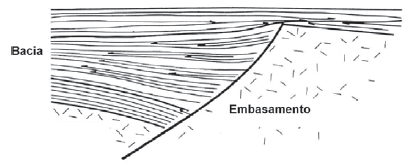
CARTWRIGHT, J. In: ROBERTS, A.M., et al. (eds). The Geometry of Normal Faults. Geological Society, London. Special Publication, n. 56, p. 29-40. 1991. Adaptado.
Na seção geológica acima, estão interpretadas superfícies estratais de natureza sísmica (sismo-horizontes) de uma bacia.
Com relação a essa bacia, identifica-se que ela apresenta (contém) uma
Considerando-se um corpo rochoso submetido à tensão, analise as afirmativas a seguir.
I - Quanto maior a temperatura a que esteja submetido um corpo rochoso, menor será o limite de tensão ao qual ele responde elasticamente.
II - Quanto maior a pressão confinante a que esteja submetido um corpo rochoso, maior será o limite de tensão ao qual ele responde elasticamente.
III - Quanto maior a pressão de fluidos a que esteja submetido um corpo rochoso, maior será o limite de tensão ao qual ele responde plasticamente.
Está correto APENAS o que se afirma em
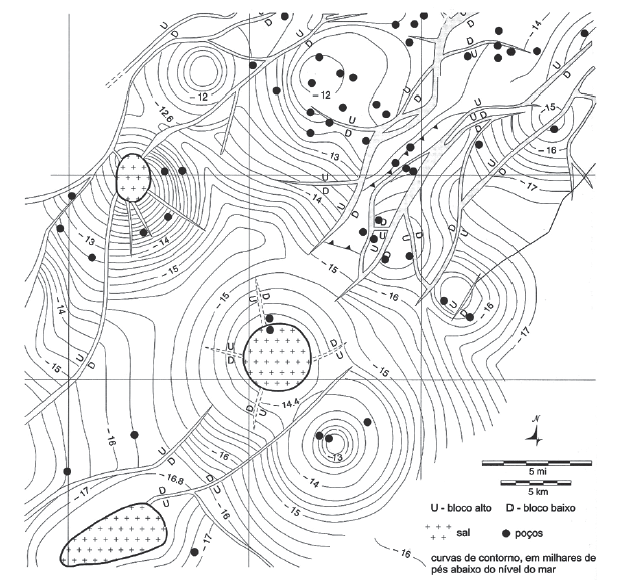
Considerando-se o mapa acima, que apresenta as curvas de contorno de um horizonte interno à Fm. Frio, característica da região do golfo do México, tem-se que

DAVIS, G.H.; REYNOLDS, S.J. Structural Geology of Rocks and Regions (second edition). John Wiley & Sons, Inc, 1996. p.369. Adaptado.
Na figura acima, o conjunto de estruturas e de feições geológicas, representado em planta, foi gerado em um regime
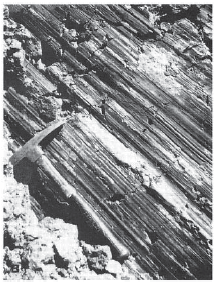
DAVIS, G.H.; REYNOLDS, S.J. Structural Geology of Rocks and Regions (second edition). John Wiley & Sons, Inc, 1996. p.12. Adaptado.
A figura acima apresenta um plano de falha estriado, com mergulho alto, correspondente a uma falha
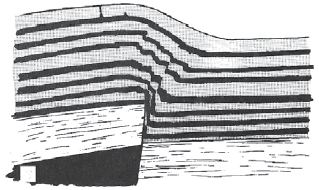
DAVIS, G.H.; REYNOLDS, S.J. Structural Geology of Rocks and Regions (second edition). John Wiley & Sons, Inc, 1996. p.420. Adaptado.
As estruturas observadas correspondem a uma
Gerald Herbert
With crude still hemorrhaging into the Gulf of Mexico, deep-water drilling might seem taboo just now. In fact, extreme oil will likely be the new normal. Despite the gulf tragedy, the quest for oil and gas in the most difficult places on the planet is just getting underway. Prospecting proceeds apace in the ultradeepwater reserves off the coasts of Ghana and Nigeria, the sulfur-laden depths of the Black Sea, and the tar sands of Venezuela’s Orinoco Basin. Brazil’s Petrobras, which already controls a quarter of global deepwater operations, is just starting to plumb its 9 to 15 billion barrels of proven reserves buried some four miles below the Atlantic. The reason is simple: after a century and a half of breakneck oil prospecting, the easy stuff is history. Blistering growth in emerging nations has turned the power grid upside down. India and China will consume 28 percent of global energy by 2030, triple the juice they required in 1990. China is set to overtake the U.S. in energy consumption by 2014. And now that the Great Recession is easing, the earth’s hoard of conventional oil is waning even faster. The International Energy Agency reckons the world will need to find 65 million additional barrels a day by 2030. If the U.S. offshore-drilling moratorium drags on, look for idled rigs heading to other shores. Available in: Retrieved on: June 19, 2011.
A respeito da ocorrência da forma verbal houvesse, desacada no trecho, teceram-se os seguintes comentários:
I - A forma verbal houvesse, nessa estrutura, tem valor de existisse, e se apresenta como verbo impessoal.
II - O verbo haver, quando impessoal, transmite sua impessoalidade a auxiliares.
III - A forma verbal houvesse, nesse trecho, desempenha uma função de verbo auxiliar.
É correto o que se afirma em
Gerald Herbert
With crude still hemorrhaging into the Gulf of Mexico, deep-water drilling might seem taboo just now. In fact, extreme oil will likely be the new normal. Despite the gulf tragedy, the quest for oil and gas in the most difficult places on the planet is just getting underway. Prospecting proceeds apace in the ultradeepwater reserves off the coasts of Ghana and Nigeria, the sulfur-laden depths of the Black Sea, and the tar sands of Venezuela’s Orinoco Basin. Brazil’s Petrobras, which already controls a quarter of global deepwater operations, is just starting to plumb its 9 to 15 billion barrels of proven reserves buried some four miles below the Atlantic. The reason is simple: after a century and a half of breakneck oil prospecting, the easy stuff is history. Blistering growth in emerging nations has turned the power grid upside down. India and China will consume 28 percent of global energy by 2030, triple the juice they required in 1990. China is set to overtake the U.S. in energy consumption by 2014. And now that the Great Recession is easing, the earth’s hoard of conventional oil is waning even faster. The International Energy Agency reckons the world will need to find 65 million additional barrels a day by 2030. If the U.S. offshore-drilling moratorium drags on, look for idled rigs heading to other shores. Available in: Retrieved on: June 19, 2011.
Comparing Texts I and II,
O uso do termo “diferenciada” com sentido negativo ressuscita o preconceito de classe
“Você já viu o tipo de gente que fica ao redor das estações do metrô? Drogados, mendigos, uma gente diferenciada.” As palavras atribuídas à psicóloga Guiomar Ferreira, moradora há 26 anos do bairro Higienópolis, em São Paulo, colocaram lenha na polê- mica sobre a construção de uma estação de metrô na região, onde se concentra parte da elite paulistana. Guiomar nega ser a autora da frase. Mas a autoria, convenhamos, é o de menos. A menção a camelôs e usuários do transporte público ressuscitou velhos preconceitos de classe, e pode deixar como lembran- ça a volta de um clichê: o termo “diferenciada”. A palavra nunca fora usada até então com viés pejorativo no Brasil. Habitava o jargão corporativo e publicitário, sendo usada como sinônimo vago de algo “especial”, “destacado” ou “diferente” (sempre para melhor). – Não me consta que já houvesse um “diferenciado” negativamente marcado. Não tenho nenhum conhecimento de existência desse “clichê”. Parece-me que a origem, aí, foi absolutamente episódica, nascida da infeliz declaração – explica Maria Helena Moura Neves, professora da Unesp de Araraquara (SP) e do Mackenzie. Para a professora, o termo pode até ganhar as ruas com o sentido negativo, mas não devido a um deslizamento semântico natural. Por natural, entenda-se uma direção semântica provocada pela configuração de sentido do termo originário. No verbo “diferenciar”, algo que “se diferencia” será bom, ao contrário do que ocorreu com o verbo “discriminar”, por exemplo. Ao virar “discriminado”, implicou algo negativo. Maria Helena, porém, não crê que a nova acepção de “diferenciado” tenha vida longa. – Não deve vingar, a não ser como chiste, aquelas coisas que vêm entre aspas, de brincadeira – emenda ela. [...] MURANO, Edgard. Disponível em: . Acesso em: 05 jul. 2011. Adaptado
“A palavra nunca fora usada até então com viés pejorativo no Brasil." (L. 13-14)
A outra possibilidade de escritura, na forma passiva, na qual o sentido NÃO se altera é:
O uso do termo “diferenciada” com sentido negativo ressuscita o preconceito de classe
“Você já viu o tipo de gente que fica ao redor das estações do metrô? Drogados, mendigos, uma gente diferenciada.” As palavras atribuídas à psicóloga Guiomar Ferreira, moradora há 26 anos do bairro Higienópolis, em São Paulo, colocaram lenha na polê- mica sobre a construção de uma estação de metrô na região, onde se concentra parte da elite paulistana. Guiomar nega ser a autora da frase. Mas a autoria, convenhamos, é o de menos. A menção a camelôs e usuários do transporte público ressuscitou velhos preconceitos de classe, e pode deixar como lembran- ça a volta de um clichê: o termo “diferenciada”. A palavra nunca fora usada até então com viés pejorativo no Brasil. Habitava o jargão corporativo e publicitário, sendo usada como sinônimo vago de algo “especial”, “destacado” ou “diferente” (sempre para melhor). – Não me consta que já houvesse um “diferenciado” negativamente marcado. Não tenho nenhum conhecimento de existência desse “clichê”. Parece-me que a origem, aí, foi absolutamente episódica, nascida da infeliz declaração – explica Maria Helena Moura Neves, professora da Unesp de Araraquara (SP) e do Mackenzie. Para a professora, o termo pode até ganhar as ruas com o sentido negativo, mas não devido a um deslizamento semântico natural. Por natural, entenda-se uma direção semântica provocada pela configuração de sentido do termo originário. No verbo “diferenciar”, algo que “se diferencia” será bom, ao contrário do que ocorreu com o verbo “discriminar”, por exemplo. Ao virar “discriminado”, implicou algo negativo. Maria Helena, porém, não crê que a nova acepção de “diferenciado” tenha vida longa. – Não deve vingar, a não ser como chiste, aquelas coisas que vêm entre aspas, de brincadeira – emenda ela. [...] MURANO, Edgard. Disponível em: . Acesso em: 05 jul. 2011. Adaptado
Dentre os verbos encontrados no Texto II, qual é aquele que apresenta SOMENTE uma forma irregular?
Palavras consideradas difíceis, como “engalanada”, já não atraem muitos autores de escola de samba. A busca agora é pela comunicação direta. Em 2011, “vai” será a palavra mais repetida nos desfiles das 12 escolas do Grupo Especial: 19 vezes no total. Em seguida, uma variação do mesmo verbo: “vou”, com dez repetições. Essa também será a incidência de “vida” e “amor” (dez vezes cada uma). “Luz” e “mar” (nove vezes) fecham o pódio das mais populares de 2011. Isto sem considerar as repetições de uma mesma música, uma vez que ela não muda durante todo o desfile das escolas. Outrora clássicas, palavras como “relicário” e “divinal” só aparecerão uma vez cada uma. E “engalanado”, que já teve seus dias de estrela, ficará mesmo de fora dos desfiles do Grupo Especial. Para especialistas, as palavras mais usadas atualmente são curtas, chamam o público e motivam os componentes. – “Vai” é a clara tentativa do compositor de empolgar e envolver a plateia desde o concurso das escolas, quando tem que mostrar às comissões julgadoras que suas músicas têm capacidade de empolgar. “Vou” está na linha de “vai”: chama, motiva. Quanto a “vida” e “amor”, refletem o otimismo do carnaval. Nenhuma palavra fica no campo semântico do pessimismo, tristeza. E “mundo” deixa claro o aspecto grandioso, assim como “céu” – disse o jornalista Marcelo de Mello, jurado do estandarte de Ouro desde 1993. Dudu Botelho, compositor do Salgueiro, é um dos compositores dos sambas de 2007, 2008 e 2011. O samba de sua escola, aliás, tem três das seis palavras mais recorrentes: “vida”, “luz” e “mar”: – O compositor tenta, através da letra, estimular o componente e a comunidade a se inserir no roteiro do enredo. Todas as palavras mais repetidas no carnaval estão entre as mais usadas nos sambas das últimas campeãs dos anos 2000. “Terra” foi a mais escolhida (11 vezes). Em seguida, apareceram “vou” e “pra” (nove vezes); “luz”, “mar”, e “fé” (oito); “Brasil” (sete); e “vai”, “amor”, “carnaval” e “liberdade” (seis); e “vida” (cinco). Para Marcelo de Mello, a repetição das mesmas palavras indica um empobrecimento das letras: – O visual ganhou um peso grande. A última escola que venceu um campeonato por causa do samba foi o Salgueiro em 1993, com o refrão “explode coração”. MOTTA, Cláudio. Repique das mesmas palavras. O Globo, 09 fev. 2011. Adaptado.
O substantivo incidência vem do verbo incidir. Dos verbos a seguir, o único que segue esse mesmo paradigma é
Palavras consideradas difíceis, como “engalanada”, já não atraem muitos autores de escola de samba. A busca agora é pela comunicação direta. Em 2011, “vai” será a palavra mais repetida nos desfiles das 12 escolas do Grupo Especial: 19 vezes no total. Em seguida, uma variação do mesmo verbo: “vou”, com dez repetições. Essa também será a incidência de “vida” e “amor” (dez vezes cada uma). “Luz” e “mar” (nove vezes) fecham o pódio das mais populares de 2011. Isto sem considerar as repetições de uma mesma música, uma vez que ela não muda durante todo o desfile das escolas. Outrora clássicas, palavras como “relicário” e “divinal” só aparecerão uma vez cada uma. E “engalanado”, que já teve seus dias de estrela, ficará mesmo de fora dos desfiles do Grupo Especial. Para especialistas, as palavras mais usadas atualmente são curtas, chamam o público e motivam os componentes. – “Vai” é a clara tentativa do compositor de empolgar e envolver a plateia desde o concurso das escolas, quando tem que mostrar às comissões julgadoras que suas músicas têm capacidade de empolgar. “Vou” está na linha de “vai”: chama, motiva. Quanto a “vida” e “amor”, refletem o otimismo do carnaval. Nenhuma palavra fica no campo semântico do pessimismo, tristeza. E “mundo” deixa claro o aspecto grandioso, assim como “céu” – disse o jornalista Marcelo de Mello, jurado do estandarte de Ouro desde 1993. Dudu Botelho, compositor do Salgueiro, é um dos compositores dos sambas de 2007, 2008 e 2011. O samba de sua escola, aliás, tem três das seis palavras mais recorrentes: “vida”, “luz” e “mar”: – O compositor tenta, através da letra, estimular o componente e a comunidade a se inserir no roteiro do enredo. Todas as palavras mais repetidas no carnaval estão entre as mais usadas nos sambas das últimas campeãs dos anos 2000. “Terra” foi a mais escolhida (11 vezes). Em seguida, apareceram “vou” e “pra” (nove vezes); “luz”, “mar”, e “fé” (oito); “Brasil” (sete); e “vai”, “amor”, “carnaval” e “liberdade” (seis); e “vida” (cinco). Para Marcelo de Mello, a repetição das mesmas palavras indica um empobrecimento das letras: – O visual ganhou um peso grande. A última escola que venceu um campeonato por causa do samba foi o Salgueiro em 1993, com o refrão “explode coração”. MOTTA, Cláudio. Repique das mesmas palavras. O Globo, 09 fev. 2011. Adaptado.
A repetição das mesmas palavras indica um empobrecimento das letras __________ o visual ganhou um peso grande.
A respeito do emprego desse conectivo, analise as afirmações a seguir.
I - O conectivo adequado seria porque, uma vez que estabelece uma relação de causa.
II - O conectivo adequado seria por que, uma vez que se reconhecem aqui duas palavras.
III - O conectivo levaria acento, porquê, já que pode ser substituído pelo termo “o motivo", ou “a razão".
É correto o que se afirma em
Palavras consideradas difíceis, como “engalanada”, já não atraem muitos autores de escola de samba. A busca agora é pela comunicação direta. Em 2011, “vai” será a palavra mais repetida nos desfiles das 12 escolas do Grupo Especial: 19 vezes no total. Em seguida, uma variação do mesmo verbo: “vou”, com dez repetições. Essa também será a incidência de “vida” e “amor” (dez vezes cada uma). “Luz” e “mar” (nove vezes) fecham o pódio das mais populares de 2011. Isto sem considerar as repetições de uma mesma música, uma vez que ela não muda durante todo o desfile das escolas. Outrora clássicas, palavras como “relicário” e “divinal” só aparecerão uma vez cada uma. E “engalanado”, que já teve seus dias de estrela, ficará mesmo de fora dos desfiles do Grupo Especial. Para especialistas, as palavras mais usadas atualmente são curtas, chamam o público e motivam os componentes. – “Vai” é a clara tentativa do compositor de empolgar e envolver a plateia desde o concurso das escolas, quando tem que mostrar às comissões julgadoras que suas músicas têm capacidade de empolgar. “Vou” está na linha de “vai”: chama, motiva. Quanto a “vida” e “amor”, refletem o otimismo do carnaval. Nenhuma palavra fica no campo semântico do pessimismo, tristeza. E “mundo” deixa claro o aspecto grandioso, assim como “céu” – disse o jornalista Marcelo de Mello, jurado do estandarte de Ouro desde 1993. Dudu Botelho, compositor do Salgueiro, é um dos compositores dos sambas de 2007, 2008 e 2011. O samba de sua escola, aliás, tem três das seis palavras mais recorrentes: “vida”, “luz” e “mar”: – O compositor tenta, através da letra, estimular o componente e a comunidade a se inserir no roteiro do enredo. Todas as palavras mais repetidas no carnaval estão entre as mais usadas nos sambas das últimas campeãs dos anos 2000. “Terra” foi a mais escolhida (11 vezes). Em seguida, apareceram “vou” e “pra” (nove vezes); “luz”, “mar”, e “fé” (oito); “Brasil” (sete); e “vai”, “amor”, “carnaval” e “liberdade” (seis); e “vida” (cinco). Para Marcelo de Mello, a repetição das mesmas palavras indica um empobrecimento das letras: – O visual ganhou um peso grande. A última escola que venceu um campeonato por causa do samba foi o Salgueiro em 1993, com o refrão “explode coração”. MOTTA, Cláudio. Repique das mesmas palavras. O Globo, 09 fev. 2011. Adaptado.
O emprego da palavra repique no título do Texto I revela a intenção de
Palavras consideradas difíceis, como “engalanada”, já não atraem muitos autores de escola de samba. A busca agora é pela comunicação direta. Em 2011, “vai” será a palavra mais repetida nos desfiles das 12 escolas do Grupo Especial: 19 vezes no total. Em seguida, uma variação do mesmo verbo: “vou”, com dez repetições. Essa também será a incidência de “vida” e “amor” (dez vezes cada uma). “Luz” e “mar” (nove vezes) fecham o pódio das mais populares de 2011. Isto sem considerar as repetições de uma mesma música, uma vez que ela não muda durante todo o desfile das escolas. Outrora clássicas, palavras como “relicário” e “divinal” só aparecerão uma vez cada uma. E “engalanado”, que já teve seus dias de estrela, ficará mesmo de fora dos desfiles do Grupo Especial. Para especialistas, as palavras mais usadas atualmente são curtas, chamam o público e motivam os componentes. – “Vai” é a clara tentativa do compositor de empolgar e envolver a plateia desde o concurso das escolas, quando tem que mostrar às comissões julgadoras que suas músicas têm capacidade de empolgar. “Vou” está na linha de “vai”: chama, motiva. Quanto a “vida” e “amor”, refletem o otimismo do carnaval. Nenhuma palavra fica no campo semântico do pessimismo, tristeza. E “mundo” deixa claro o aspecto grandioso, assim como “céu” – disse o jornalista Marcelo de Mello, jurado do estandarte de Ouro desde 1993. Dudu Botelho, compositor do Salgueiro, é um dos compositores dos sambas de 2007, 2008 e 2011. O samba de sua escola, aliás, tem três das seis palavras mais recorrentes: “vida”, “luz” e “mar”: – O compositor tenta, através da letra, estimular o componente e a comunidade a se inserir no roteiro do enredo. Todas as palavras mais repetidas no carnaval estão entre as mais usadas nos sambas das últimas campeãs dos anos 2000. “Terra” foi a mais escolhida (11 vezes). Em seguida, apareceram “vou” e “pra” (nove vezes); “luz”, “mar”, e “fé” (oito); “Brasil” (sete); e “vai”, “amor”, “carnaval” e “liberdade” (seis); e “vida” (cinco). Para Marcelo de Mello, a repetição das mesmas palavras indica um empobrecimento das letras: – O visual ganhou um peso grande. A última escola que venceu um campeonato por causa do samba foi o Salgueiro em 1993, com o refrão “explode coração”. MOTTA, Cláudio. Repique das mesmas palavras. O Globo, 09 fev. 2011. Adaptado.
A única oposição que NÃO aparece na matéria é
Palavras consideradas difíceis, como “engalanada”, já não atraem muitos autores de escola de samba. A busca agora é pela comunicação direta. Em 2011, “vai” será a palavra mais repetida nos desfiles das 12 escolas do Grupo Especial: 19 vezes no total. Em seguida, uma variação do mesmo verbo: “vou”, com dez repetições. Essa também será a incidência de “vida” e “amor” (dez vezes cada uma). “Luz” e “mar” (nove vezes) fecham o pódio das mais populares de 2011. Isto sem considerar as repetições de uma mesma música, uma vez que ela não muda durante todo o desfile das escolas. Outrora clássicas, palavras como “relicário” e “divinal” só aparecerão uma vez cada uma. E “engalanado”, que já teve seus dias de estrela, ficará mesmo de fora dos desfiles do Grupo Especial. Para especialistas, as palavras mais usadas atualmente são curtas, chamam o público e motivam os componentes. – “Vai” é a clara tentativa do compositor de empolgar e envolver a plateia desde o concurso das escolas, quando tem que mostrar às comissões julgadoras que suas músicas têm capacidade de empolgar. “Vou” está na linha de “vai”: chama, motiva. Quanto a “vida” e “amor”, refletem o otimismo do carnaval. Nenhuma palavra fica no campo semântico do pessimismo, tristeza. E “mundo” deixa claro o aspecto grandioso, assim como “céu” – disse o jornalista Marcelo de Mello, jurado do estandarte de Ouro desde 1993. Dudu Botelho, compositor do Salgueiro, é um dos compositores dos sambas de 2007, 2008 e 2011. O samba de sua escola, aliás, tem três das seis palavras mais recorrentes: “vida”, “luz” e “mar”: – O compositor tenta, através da letra, estimular o componente e a comunidade a se inserir no roteiro do enredo. Todas as palavras mais repetidas no carnaval estão entre as mais usadas nos sambas das últimas campeãs dos anos 2000. “Terra” foi a mais escolhida (11 vezes). Em seguida, apareceram “vou” e “pra” (nove vezes); “luz”, “mar”, e “fé” (oito); “Brasil” (sete); e “vai”, “amor”, “carnaval” e “liberdade” (seis); e “vida” (cinco). Para Marcelo de Mello, a repetição das mesmas palavras indica um empobrecimento das letras: – O visual ganhou um peso grande. A última escola que venceu um campeonato por causa do samba foi o Salgueiro em 1993, com o refrão “explode coração”. MOTTA, Cláudio. Repique das mesmas palavras. O Globo, 09 fev. 2011. Adaptado.
I - Se u x w = u x v então w = v
II - Se u x v = 0 então u = kv para algum k real
III - Se (u x v) x w = 0 então u x v = 0
Está correto APENAS o que se declara em



 Conheça nossos planos