Selecionar segmento
Estude com questões de diferentes segmentos
Atenção: Isso limpará todos os campos já preenchidos no filtro!
Foram encontradas 1.499 questões
Resolva questões gratuitamente!
Junte-se a mais de 4 milhões de concurseiros!


Q56335
Arquitetura
Para a reabilitação urbanística de uma área degradada na periferia de uma metrópole brasileira, propôs-se um "Caderno de Tipologias de Vias" estabelecendo uma hierarquia viária para todo o bairro. Das posturas adotadas, a menos indicada é:
Q56334
Arquitetura
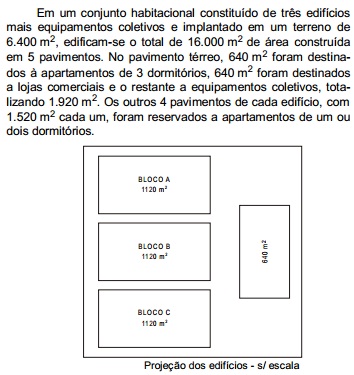
A taxa de ocupação e o coeficiente de aproveitamento são, respectivamente,
Q56333
Arquitetura
A área de projeção e a área computável são, em m²:
Q56332
Arquitetura
As linhas principais de um telhado são: cumeeiras, espigões, rincões e calhas. É INCORRETO afirmar que:
Q56331
Arquitetura
A vegetação, quando projetada simultaneamente à edificação, pode valorizar ou encobrir o volume arquitetônico.
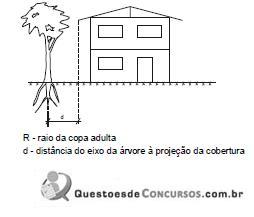
A distância mínima recomendada (d), em m, é igual a
A distância mínima recomendada (d), em m, é igual a
Q56330
Arquitetura
No projeto paisagístico de um estacionamento é recomendável:
Q56329
Arquitetura
A distância mínima recomendável, em cm, do centro de uma banheira e conseqüentemente do eixo do chuveiro até a parede mais próxima deve ser:
Q56328
Arquitetura
O número mínimo recomendável de espaço livre, ao redor de uma cama, em cm, é:
Q56327
Arquitetura
Nas zonas de tráfego intenso, a preocupação com a proteção acústica tem adquirido cada vez mais importância. O tipo de isolamento menos eficiente é:
Q56326
Arquitetura
Com o objetivo de proteger os taludes contra o desprendimento, escorregamento e rastejo, algumas medidas devem ser evitadas como:
Q56325
Arquitetura
Considere a configuração topográfica.
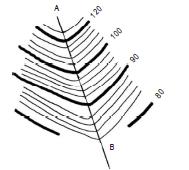
É correto afirmar que ela representa
É correto afirmar que ela representa
Q56324
Arquitetura
A largura da escada, bem como a largura do piso e altura do degrau, em uma residência unifamiliar, devem ser:
Q56323
Arquitetura
Um fator muito importante no desenvolvimento de um projeto arquitetônico é a acústica interna. A boa audibilidade
Q56322
Arquitetura
No projeto de sistema viário urbano, é correto afirmar que:
Q56321
Arquitetura
Quanto ao uso de alvenaria estrutural em edifícios ou mesmo residências térreas, é INCORRETO afirmar que:
Q56320
Arquitetura
Por causa da variação de clima e temperatura no Brasil, cabe ao arquiteto contribuir para minimizar a diferença de temperatura externa e interna em uma determinada região. NÃO é uma solução adequada para o clima
Q56319
Arquitetura
O detalhe mais correto, técnica e arquitetonicamente, para impermeabilizar e rematar uma platibanda de cobertura é:
Q56318
Arquitetura
O arquiteto especifica o emprego da caixilharia de um edifício baseado, principalmente, na sua
Q56317
Arquitetura
Em construções litorâneas (à beira do mar) é recomendável que o sol atinja os cômodos de dormir no período
Q56316
Arquitetura
Com relação aos diversos tipos de lâmpadas disponíveis no mercado com suas variadas características, é correto afirmar que:

 Conheça nossos planos