Questões de Concurso
Para engenheiro ambiental
Foram encontradas 5.367 questões
Resolva questões gratuitamente!
Junte-se a mais de 4 milhões de concurseiros!


Ano: 2026
Banca:
VUNESP
Órgão:
Prefeitura de São José do Rio Preto - SP
Prova:
VUNESP - 2026 - Prefeitura de São José do Rio Preto - SP - Engenheiro Ambiental Sanitarista |
Q3850137
Engenharia Ambiental e Sanitária
As cidades A, B e C estão localizadas ao longo de um
mesmo rio e obtiveram, respectivamente, os valores de
turbidez, cloro residual e número de incidência de Hepatite descritos a seguir:
(Hudson Jr., “Water Clarification Processes: Practical Design and Evaluation”, 1981. Em: Richter, C.A., Água: métodos e tecnologia de tratamento, 2021)
Considerando os dados apresentados, assinale a alternativa correta.
(Hudson Jr., “Water Clarification Processes: Practical Design and Evaluation”, 1981. Em: Richter, C.A., Água: métodos e tecnologia de tratamento, 2021)
Considerando os dados apresentados, assinale a alternativa correta.
Ano: 2026
Banca:
VUNESP
Órgão:
Prefeitura de São José do Rio Preto - SP
Prova:
VUNESP - 2026 - Prefeitura de São José do Rio Preto - SP - Engenheiro Ambiental Sanitarista |
Q3850136
Engenharia Ambiental e Sanitária
Um município do interior paulista realizou o monitoramento de um curso d’água, o que integrou um projeto
de recuperação de área degradada. As margens desse
rio tiveram sua mata ciliar substituída por pastagens e
solos compactados. O projeto restaurou 5 hectares de
mata ciliar, ao longo de 2 km do rio, e teve por objetivo
restaurar o processo de infiltração de água e reduzir o
escoamento superficial.
Durante o monitoramento, obteve-se os seguintes valores, respectivamente, antes e após a restauração:
Infiltração média: 6 mm/h e 12 mm/h.
Escoamento superficial médio: 14 mm/h e 7 mm/h.
Vazão de pico: 18 m3/s e 10 m3/s.
Segundo o exposto, com relação aos efeitos sobre o balanço hídrico e comportamento do corpo d´água, é correto afirmar que
Durante o monitoramento, obteve-se os seguintes valores, respectivamente, antes e após a restauração:
Infiltração média: 6 mm/h e 12 mm/h.
Escoamento superficial médio: 14 mm/h e 7 mm/h.
Vazão de pico: 18 m3/s e 10 m3/s.
Segundo o exposto, com relação aos efeitos sobre o balanço hídrico e comportamento do corpo d´água, é correto afirmar que
Ano: 2026
Banca:
VUNESP
Órgão:
Prefeitura de São José do Rio Preto - SP
Prova:
VUNESP - 2026 - Prefeitura de São José do Rio Preto - SP - Engenheiro Ambiental Sanitarista |
Q3850135
Engenharia Ambiental e Sanitária
Um município tem clima tropical com estação chuvosa no
verão e seca no inverno, apresentando para os meses de
janeiro e agosto, nessa ordem, os valores de:
Precipitação: 250 mm e 25 mm.
Evapotranspiração potencial: 150 mm e 120 mm.
Armazenamento inicial: 60 mm e 80 mm.
Capacidade de água disponível: 100 mm e 100 mm.
Com base nos dados informados, quais são, respectivamente, os valores de excedente hídrico de janeiro e de deficiência hídrica de agosto do município?
Precipitação: 250 mm e 25 mm.
Evapotranspiração potencial: 150 mm e 120 mm.
Armazenamento inicial: 60 mm e 80 mm.
Capacidade de água disponível: 100 mm e 100 mm.
Com base nos dados informados, quais são, respectivamente, os valores de excedente hídrico de janeiro e de deficiência hídrica de agosto do município?
Ano: 2026
Banca:
VUNESP
Órgão:
Prefeitura de São José do Rio Preto - SP
Prova:
VUNESP - 2026 - Prefeitura de São José do Rio Preto - SP - Engenheiro Ambiental Sanitarista |
Q3850134
Engenharia Ambiental e Sanitária
Para mapeamento de uso e cobertura do solo, utilizaram-se diferentes bandas de uma imagem de satélite,
a qual foi classificada em um Sistema de Informação
Geográfica (SIG) que suporta a leitura de imagens de
até 32 bits, mas que classifica imagens de até 8 bits.
A partir do exposto, assinale a alternativa com características corretas da imagem classificada.
A partir do exposto, assinale a alternativa com características corretas da imagem classificada.
Ano: 2026
Banca:
VUNESP
Órgão:
Prefeitura de São José do Rio Preto - SP
Prova:
VUNESP - 2026 - Prefeitura de São José do Rio Preto - SP - Engenheiro Ambiental Sanitarista |
Q3850133
Engenharia Ambiental e Sanitária
No contexto do sistema de coordenadas, é correto afirmar que, no Sistema de
Ano: 2026
Banca:
VUNESP
Órgão:
Prefeitura de São José do Rio Preto - SP
Prova:
VUNESP - 2026 - Prefeitura de São José do Rio Preto - SP - Engenheiro Ambiental Sanitarista |
Q3850132
Engenharia Ambiental e Sanitária
Em um Sistema de Informação Geográfica (SIG) utilizou-se como base uma imagem de sensoriamento
remoto orbital e digitalizou-se um lago, uma estrada e
fontes de lançamento de efluentes.
Nesse projeto, associou-se informações como tipo de pavimento, vazão de efluentes e condutividade da água. A partir do exposto, pode-se afirmar corretamente que
Nesse projeto, associou-se informações como tipo de pavimento, vazão de efluentes e condutividade da água. A partir do exposto, pode-se afirmar corretamente que
Ano: 2026
Banca:
VUNESP
Órgão:
Prefeitura de São José do Rio Preto - SP
Prova:
VUNESP - 2026 - Prefeitura de São José do Rio Preto - SP - Engenheiro Ambiental Sanitarista |
Q3850131
Engenharia de Telecomunicações
Assinale a alternativa correta sobre o Sistema Global de
Navegação por Satélite.
Ano: 2026
Banca:
VUNESP
Órgão:
Prefeitura de São José do Rio Preto - SP
Prova:
VUNESP - 2026 - Prefeitura de São José do Rio Preto - SP - Engenheiro Ambiental Sanitarista |
Q3850130
Engenharia Ambiental e Sanitária
A respeito das características ecológicas do município de
São José do Rio Preto, pode-se afirmar que ele
Ano: 2026
Banca:
VUNESP
Órgão:
Prefeitura de São José do Rio Preto - SP
Prova:
VUNESP - 2026 - Prefeitura de São José do Rio Preto - SP - Engenheiro Ambiental Sanitarista |
Q3850129
Engenharia Ambiental e Sanitária
No projeto de recuperação de uma área degradada,
propôs-se a utilização de espécies florestais nativas que
promovam a presença de polinizadores e aumentem a
infiltração de água no solo, visando
Ano: 2026
Banca:
VUNESP
Órgão:
Prefeitura de São José do Rio Preto - SP
Prova:
VUNESP - 2026 - Prefeitura de São José do Rio Preto - SP - Engenheiro Ambiental Sanitarista |
Q3850120
Matemática
Um quadrado de 18 cm2
de área está no interior de um
triângulo retângulo de hipotenusa AB, tendo 3 de seus
vértices sobre os lados do triângulo. Esse quadrado dividiu o triângulo em 4 regiões: as regiões triangulares R1
e R2
; a região R3
, que é um quadrilátero não convexo, e
que também tem 18 cm2
de área; e a quarta região, sendo o próprio quadrado, conforme mostra a figura.
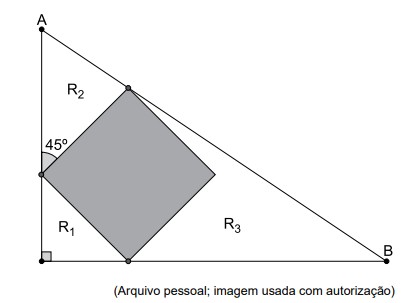
Sabendo que a área da região R2 excede em 3 cm2 a área da região R1, a medida da hipotenusa AB é igual a
Sabendo que a área da região R2 excede em 3 cm2 a área da região R1, a medida da hipotenusa AB é igual a
Ano: 2026
Banca:
VUNESP
Órgão:
Prefeitura de São José do Rio Preto - SP
Prova:
VUNESP - 2026 - Prefeitura de São José do Rio Preto - SP - Engenheiro Ambiental Sanitarista |
Q3850119
Matemática
Um centro de tecnologia processou em um mesmo com- rascunho
putador os resultados de 3.300 testes relativos a uma
pesquisa, alguns denominados de teste A, e os demais,
de teste B. Esse computador processou esses testes
ininterruptamente por 52 horas e 30 minutos, sendo que
o tempo de processamento de cada teste A era de 1 minuto e 4 segundos, e de cada teste B era de 49 segundos.
A diferença entre os números de testes A e B dessa pesquisa é igual a
A diferença entre os números de testes A e B dessa pesquisa é igual a
Ano: 2026
Banca:
FGV
Órgão:
AMAZUL
Provas:
FGV - 2026 - AMAZUL - Advogado
|
FGV - 2026 - AMAZUL - Contador |
FGV - 2026 - AMAZUL - Designer Gráfico |
FGV - 2026 - AMAZUL - Analista de Administração |
FGV - 2026 - AMAZUL - Engenheiro Mecatrônico |
FGV - 2026 - AMAZUL - Analista de Desenvolvimento de Sistemas |
FGV - 2026 - AMAZUL - Engenheiro Naval |
FGV - 2026 - AMAZUL - Engenheiro de Computação |
FGV - 2026 - AMAZUL - Médico do Trabalho |
FGV - 2026 - AMAZUL - Psicólogo |
FGV - 2026 - AMAZUL - Analista de Infraestrutura de Tecnologia da Informação |
FGV - 2026 - AMAZUL - Engenheiro de Controle da Qualidade |
FGV - 2026 - AMAZUL - Analista de Negócios |
FGV - 2026 - AMAZUL - Arquiteto |
FGV - 2026 - AMAZUL - Auditor |
FGV - 2026 - AMAZUL - Analista de Recursos Humanos |
FGV - 2026 - AMAZUL - Engenheiro Ambiental |
FGV - 2026 - AMAZUL - Engenheiro de Materiais |
FGV - 2026 - AMAZUL - Especialista de Radioproteção |
FGV - 2026 - AMAZUL - Engenheiro Nuclear |
FGV - 2026 - AMAZUL - Engenheiro de Produção |
FGV - 2026 - AMAZUL - Engenheiro Civil |
FGV - 2026 - AMAZUL - Engenheiro Controle e Automação |
FGV - 2026 - AMAZUL - Físico |
FGV - 2026 - AMAZUL - Engenheiro Químico |
FGV - 2026 - AMAZUL - Engenheiro de Telecomunicações |
FGV - 2026 - AMAZUL - Engenheiro de Segurança do Trabalho |
FGV - 2026 - AMAZUL - Engenheiro Eletricista |
FGV - 2026 - AMAZUL - Engenheiro Eletrônico |
FGV - 2026 - AMAZUL - Meteorologista |
FGV - 2026 - AMAZUL - Químico |
FGV - 2026 - AMAZUL - Tecnólogo em Fabricação Mecânica |
FGV - 2026 - AMAZUL - Engenheiro de Energia |
FGV - 2026 - AMAZUL - Engenheiro Mecânico |
Q3846042
Inglês
Texto associado
READ THE TEXT AND ANSWER THE FOLLOWING QUESTION
Social Dimensions of Climate Change
Extreme weather events are deeply intertwined with global
patterns of inequality. The poorest and most vulnerable people
bear the brunt of climate change impacts yet contribute the least
to the crisis. As the impacts of climate change mount, millions of
vulnerable people face disproportionate challenges in terms of
loss of jobs; physical harm; disease; mental health effects; food
insecurity; access to water; migration and forced displacement;
loss of shelter, assets, and community ties, and other related risks.
Some people are more vulnerable to climate change than others.
For example, workers in sectors such as agriculture, fishing, and
tourism rely on natural resources that are particularly sensitive to
increasingly unpredictable weather and seasonal patterns.
Female-headed households, children, persons with
disabilities, Indigenous Peoples and ethnic minorities, landless
tenants, migrant workers, displaced persons, older people, and
other socially marginalized groups often have fewer financial and
other resources to cope with and recover from shocks which might
threaten their wellbeing and the wellbeing of their families. The
root causes of their vulnerability lie in a combination of their
geographical locations; their financial, socio-economic, cultural,
and social status; and their access to resources, services, and
decision-making power.
The poor are often not just among the most vulnerable to climate
change, but also disproportionately impacted by measures to
address it. These impacts can include increased costs of living, loss
of livelihoods, and limited access to resources and support
systems, which exacerbate existing inequalities and poverty
trends. In the absence of well-designed and citizen-centered
policies, efforts to tackle climate change can have unintended
consequences for the livelihoods of certain groups, including
placing a higher financial burden on poor households […].
While much progress has been made on the science and the types
of policies needed to support a transition to low carbon, climateresilient development, a challenge facing many countries is
engaging citizens who are concerned that they will be unfairly
impacted by climate policies. Citizen-centered programs play a
vital role in ensuring that resources are used efficiently. Engaging
people in shaping climate action is equally critical for achieving
lasting impact. This means ensuring transparency, access to
information, and active citizen engagement on climate risks and
green growth. Such involvement can help build public support to
reduce climate impacts, overcome behavioral and political barriers
to decarbonization, as well as foster both new ideas and a sense of
ownership over solutions.
Moreover, communities bring unique perspectives, skills, and a
wealth of knowledge to the challenge of strengthening resilience
and addressing climate change. They should be engaged as
partners in resilience-building rather than being regarded merely
as beneficiaries. Research and experience show that community
leaders can successfully set priorities, influence ownership, as well
as design and implement investment programs that are responsive
to their community’s own needs. A 2022 report by the
Intergovernmental Panel on Climate Change (IPCC) recognizes the
value of diverse forms of knowledge — such as scientific,
Indigenous, and local knowledge — in building climate resilience.
Innovations in the architecture of climate finance can connect
communities and marginalized groups to the policy, technical, and
financial assistance that they need for locally relevant and
effective development outcomes.
From: https://www.worldbank.org/en/topic/social-dimensions-of-climate-change
The modal verb in “They should be engaged as partners” (5th
paragraph) indicates a(n):
Ano: 2026
Banca:
FGV
Órgão:
AMAZUL
Provas:
FGV - 2026 - AMAZUL - Advogado
|
FGV - 2026 - AMAZUL - Contador |
FGV - 2026 - AMAZUL - Designer Gráfico |
FGV - 2026 - AMAZUL - Analista de Administração |
FGV - 2026 - AMAZUL - Engenheiro Mecatrônico |
FGV - 2026 - AMAZUL - Analista de Desenvolvimento de Sistemas |
FGV - 2026 - AMAZUL - Engenheiro Naval |
FGV - 2026 - AMAZUL - Engenheiro de Computação |
FGV - 2026 - AMAZUL - Médico do Trabalho |
FGV - 2026 - AMAZUL - Psicólogo |
FGV - 2026 - AMAZUL - Analista de Infraestrutura de Tecnologia da Informação |
FGV - 2026 - AMAZUL - Engenheiro de Controle da Qualidade |
FGV - 2026 - AMAZUL - Analista de Negócios |
FGV - 2026 - AMAZUL - Arquiteto |
FGV - 2026 - AMAZUL - Auditor |
FGV - 2026 - AMAZUL - Analista de Recursos Humanos |
FGV - 2026 - AMAZUL - Engenheiro Ambiental |
FGV - 2026 - AMAZUL - Engenheiro de Materiais |
FGV - 2026 - AMAZUL - Especialista de Radioproteção |
FGV - 2026 - AMAZUL - Engenheiro Nuclear |
FGV - 2026 - AMAZUL - Engenheiro de Produção |
FGV - 2026 - AMAZUL - Engenheiro Civil |
FGV - 2026 - AMAZUL - Engenheiro Controle e Automação |
FGV - 2026 - AMAZUL - Físico |
FGV - 2026 - AMAZUL - Engenheiro Químico |
FGV - 2026 - AMAZUL - Engenheiro de Telecomunicações |
FGV - 2026 - AMAZUL - Engenheiro de Segurança do Trabalho |
FGV - 2026 - AMAZUL - Engenheiro Eletricista |
FGV - 2026 - AMAZUL - Engenheiro Eletrônico |
FGV - 2026 - AMAZUL - Meteorologista |
FGV - 2026 - AMAZUL - Químico |
FGV - 2026 - AMAZUL - Tecnólogo em Fabricação Mecânica |
FGV - 2026 - AMAZUL - Engenheiro de Energia |
FGV - 2026 - AMAZUL - Engenheiro Mecânico |
Q3846041
Inglês
Texto associado
READ THE TEXT AND ANSWER THE FOLLOWING QUESTION
Social Dimensions of Climate Change
Extreme weather events are deeply intertwined with global
patterns of inequality. The poorest and most vulnerable people
bear the brunt of climate change impacts yet contribute the least
to the crisis. As the impacts of climate change mount, millions of
vulnerable people face disproportionate challenges in terms of
loss of jobs; physical harm; disease; mental health effects; food
insecurity; access to water; migration and forced displacement;
loss of shelter, assets, and community ties, and other related risks.
Some people are more vulnerable to climate change than others.
For example, workers in sectors such as agriculture, fishing, and
tourism rely on natural resources that are particularly sensitive to
increasingly unpredictable weather and seasonal patterns.
Female-headed households, children, persons with
disabilities, Indigenous Peoples and ethnic minorities, landless
tenants, migrant workers, displaced persons, older people, and
other socially marginalized groups often have fewer financial and
other resources to cope with and recover from shocks which might
threaten their wellbeing and the wellbeing of their families. The
root causes of their vulnerability lie in a combination of their
geographical locations; their financial, socio-economic, cultural,
and social status; and their access to resources, services, and
decision-making power.
The poor are often not just among the most vulnerable to climate
change, but also disproportionately impacted by measures to
address it. These impacts can include increased costs of living, loss
of livelihoods, and limited access to resources and support
systems, which exacerbate existing inequalities and poverty
trends. In the absence of well-designed and citizen-centered
policies, efforts to tackle climate change can have unintended
consequences for the livelihoods of certain groups, including
placing a higher financial burden on poor households […].
While much progress has been made on the science and the types
of policies needed to support a transition to low carbon, climateresilient development, a challenge facing many countries is
engaging citizens who are concerned that they will be unfairly
impacted by climate policies. Citizen-centered programs play a
vital role in ensuring that resources are used efficiently. Engaging
people in shaping climate action is equally critical for achieving
lasting impact. This means ensuring transparency, access to
information, and active citizen engagement on climate risks and
green growth. Such involvement can help build public support to
reduce climate impacts, overcome behavioral and political barriers
to decarbonization, as well as foster both new ideas and a sense of
ownership over solutions.
Moreover, communities bring unique perspectives, skills, and a
wealth of knowledge to the challenge of strengthening resilience
and addressing climate change. They should be engaged as
partners in resilience-building rather than being regarded merely
as beneficiaries. Research and experience show that community
leaders can successfully set priorities, influence ownership, as well
as design and implement investment programs that are responsive
to their community’s own needs. A 2022 report by the
Intergovernmental Panel on Climate Change (IPCC) recognizes the
value of diverse forms of knowledge — such as scientific,
Indigenous, and local knowledge — in building climate resilience.
Innovations in the architecture of climate finance can connect
communities and marginalized groups to the policy, technical, and
financial assistance that they need for locally relevant and
effective development outcomes.
From: https://www.worldbank.org/en/topic/social-dimensions-of-climate-change
The verb in “efforts to tackle climate change” (3rd paragraph) is
semantically equivalent to:
Ano: 2026
Banca:
FGV
Órgão:
AMAZUL
Provas:
FGV - 2026 - AMAZUL - Advogado
|
FGV - 2026 - AMAZUL - Contador |
FGV - 2026 - AMAZUL - Designer Gráfico |
FGV - 2026 - AMAZUL - Analista de Administração |
FGV - 2026 - AMAZUL - Engenheiro Mecatrônico |
FGV - 2026 - AMAZUL - Analista de Desenvolvimento de Sistemas |
FGV - 2026 - AMAZUL - Engenheiro Naval |
FGV - 2026 - AMAZUL - Engenheiro de Computação |
FGV - 2026 - AMAZUL - Médico do Trabalho |
FGV - 2026 - AMAZUL - Psicólogo |
FGV - 2026 - AMAZUL - Analista de Infraestrutura de Tecnologia da Informação |
FGV - 2026 - AMAZUL - Engenheiro de Controle da Qualidade |
FGV - 2026 - AMAZUL - Analista de Negócios |
FGV - 2026 - AMAZUL - Arquiteto |
FGV - 2026 - AMAZUL - Auditor |
FGV - 2026 - AMAZUL - Analista de Recursos Humanos |
FGV - 2026 - AMAZUL - Engenheiro Ambiental |
FGV - 2026 - AMAZUL - Engenheiro de Materiais |
FGV - 2026 - AMAZUL - Especialista de Radioproteção |
FGV - 2026 - AMAZUL - Engenheiro Nuclear |
FGV - 2026 - AMAZUL - Engenheiro de Produção |
FGV - 2026 - AMAZUL - Engenheiro Civil |
FGV - 2026 - AMAZUL - Engenheiro Controle e Automação |
FGV - 2026 - AMAZUL - Físico |
FGV - 2026 - AMAZUL - Engenheiro Químico |
FGV - 2026 - AMAZUL - Engenheiro de Telecomunicações |
FGV - 2026 - AMAZUL - Engenheiro de Segurança do Trabalho |
FGV - 2026 - AMAZUL - Engenheiro Eletricista |
FGV - 2026 - AMAZUL - Engenheiro Eletrônico |
FGV - 2026 - AMAZUL - Meteorologista |
FGV - 2026 - AMAZUL - Químico |
FGV - 2026 - AMAZUL - Tecnólogo em Fabricação Mecânica |
FGV - 2026 - AMAZUL - Engenheiro de Energia |
FGV - 2026 - AMAZUL - Engenheiro Mecânico |
Q3846040
Inglês
Texto associado
READ THE TEXT AND ANSWER THE FOLLOWING QUESTION
Social Dimensions of Climate Change
Extreme weather events are deeply intertwined with global
patterns of inequality. The poorest and most vulnerable people
bear the brunt of climate change impacts yet contribute the least
to the crisis. As the impacts of climate change mount, millions of
vulnerable people face disproportionate challenges in terms of
loss of jobs; physical harm; disease; mental health effects; food
insecurity; access to water; migration and forced displacement;
loss of shelter, assets, and community ties, and other related risks.
Some people are more vulnerable to climate change than others.
For example, workers in sectors such as agriculture, fishing, and
tourism rely on natural resources that are particularly sensitive to
increasingly unpredictable weather and seasonal patterns.
Female-headed households, children, persons with
disabilities, Indigenous Peoples and ethnic minorities, landless
tenants, migrant workers, displaced persons, older people, and
other socially marginalized groups often have fewer financial and
other resources to cope with and recover from shocks which might
threaten their wellbeing and the wellbeing of their families. The
root causes of their vulnerability lie in a combination of their
geographical locations; their financial, socio-economic, cultural,
and social status; and their access to resources, services, and
decision-making power.
The poor are often not just among the most vulnerable to climate
change, but also disproportionately impacted by measures to
address it. These impacts can include increased costs of living, loss
of livelihoods, and limited access to resources and support
systems, which exacerbate existing inequalities and poverty
trends. In the absence of well-designed and citizen-centered
policies, efforts to tackle climate change can have unintended
consequences for the livelihoods of certain groups, including
placing a higher financial burden on poor households […].
While much progress has been made on the science and the types
of policies needed to support a transition to low carbon, climateresilient development, a challenge facing many countries is
engaging citizens who are concerned that they will be unfairly
impacted by climate policies. Citizen-centered programs play a
vital role in ensuring that resources are used efficiently. Engaging
people in shaping climate action is equally critical for achieving
lasting impact. This means ensuring transparency, access to
information, and active citizen engagement on climate risks and
green growth. Such involvement can help build public support to
reduce climate impacts, overcome behavioral and political barriers
to decarbonization, as well as foster both new ideas and a sense of
ownership over solutions.
Moreover, communities bring unique perspectives, skills, and a
wealth of knowledge to the challenge of strengthening resilience
and addressing climate change. They should be engaged as
partners in resilience-building rather than being regarded merely
as beneficiaries. Research and experience show that community
leaders can successfully set priorities, influence ownership, as well
as design and implement investment programs that are responsive
to their community’s own needs. A 2022 report by the
Intergovernmental Panel on Climate Change (IPCC) recognizes the
value of diverse forms of knowledge — such as scientific,
Indigenous, and local knowledge — in building climate resilience.
Innovations in the architecture of climate finance can connect
communities and marginalized groups to the policy, technical, and
financial assistance that they need for locally relevant and
effective development outcomes.
From: https://www.worldbank.org/en/topic/social-dimensions-of-climate-change
“Yet” in “yet contribute the least” (1st paragraph) introduces an
idea of:
Ano: 2026
Banca:
FGV
Órgão:
AMAZUL
Provas:
FGV - 2026 - AMAZUL - Advogado
|
FGV - 2026 - AMAZUL - Contador |
FGV - 2026 - AMAZUL - Designer Gráfico |
FGV - 2026 - AMAZUL - Analista de Administração |
FGV - 2026 - AMAZUL - Engenheiro Mecatrônico |
FGV - 2026 - AMAZUL - Analista de Desenvolvimento de Sistemas |
FGV - 2026 - AMAZUL - Engenheiro Naval |
FGV - 2026 - AMAZUL - Engenheiro de Computação |
FGV - 2026 - AMAZUL - Médico do Trabalho |
FGV - 2026 - AMAZUL - Psicólogo |
FGV - 2026 - AMAZUL - Analista de Infraestrutura de Tecnologia da Informação |
FGV - 2026 - AMAZUL - Engenheiro de Controle da Qualidade |
FGV - 2026 - AMAZUL - Analista de Negócios |
FGV - 2026 - AMAZUL - Arquiteto |
FGV - 2026 - AMAZUL - Auditor |
FGV - 2026 - AMAZUL - Analista de Recursos Humanos |
FGV - 2026 - AMAZUL - Engenheiro Ambiental |
FGV - 2026 - AMAZUL - Engenheiro de Materiais |
FGV - 2026 - AMAZUL - Especialista de Radioproteção |
FGV - 2026 - AMAZUL - Engenheiro Nuclear |
FGV - 2026 - AMAZUL - Engenheiro de Produção |
FGV - 2026 - AMAZUL - Engenheiro Civil |
FGV - 2026 - AMAZUL - Engenheiro Controle e Automação |
FGV - 2026 - AMAZUL - Físico |
FGV - 2026 - AMAZUL - Engenheiro Químico |
FGV - 2026 - AMAZUL - Engenheiro de Telecomunicações |
FGV - 2026 - AMAZUL - Engenheiro de Segurança do Trabalho |
FGV - 2026 - AMAZUL - Engenheiro Eletricista |
FGV - 2026 - AMAZUL - Engenheiro Eletrônico |
FGV - 2026 - AMAZUL - Meteorologista |
FGV - 2026 - AMAZUL - Químico |
FGV - 2026 - AMAZUL - Tecnólogo em Fabricação Mecânica |
FGV - 2026 - AMAZUL - Engenheiro de Energia |
FGV - 2026 - AMAZUL - Engenheiro Mecânico |
Q3846039
Inglês
Texto associado
READ THE TEXT AND ANSWER THE FOLLOWING QUESTION
Social Dimensions of Climate Change
Extreme weather events are deeply intertwined with global
patterns of inequality. The poorest and most vulnerable people
bear the brunt of climate change impacts yet contribute the least
to the crisis. As the impacts of climate change mount, millions of
vulnerable people face disproportionate challenges in terms of
loss of jobs; physical harm; disease; mental health effects; food
insecurity; access to water; migration and forced displacement;
loss of shelter, assets, and community ties, and other related risks.
Some people are more vulnerable to climate change than others.
For example, workers in sectors such as agriculture, fishing, and
tourism rely on natural resources that are particularly sensitive to
increasingly unpredictable weather and seasonal patterns.
Female-headed households, children, persons with
disabilities, Indigenous Peoples and ethnic minorities, landless
tenants, migrant workers, displaced persons, older people, and
other socially marginalized groups often have fewer financial and
other resources to cope with and recover from shocks which might
threaten their wellbeing and the wellbeing of their families. The
root causes of their vulnerability lie in a combination of their
geographical locations; their financial, socio-economic, cultural,
and social status; and their access to resources, services, and
decision-making power.
The poor are often not just among the most vulnerable to climate
change, but also disproportionately impacted by measures to
address it. These impacts can include increased costs of living, loss
of livelihoods, and limited access to resources and support
systems, which exacerbate existing inequalities and poverty
trends. In the absence of well-designed and citizen-centered
policies, efforts to tackle climate change can have unintended
consequences for the livelihoods of certain groups, including
placing a higher financial burden on poor households […].
While much progress has been made on the science and the types
of policies needed to support a transition to low carbon, climateresilient development, a challenge facing many countries is
engaging citizens who are concerned that they will be unfairly
impacted by climate policies. Citizen-centered programs play a
vital role in ensuring that resources are used efficiently. Engaging
people in shaping climate action is equally critical for achieving
lasting impact. This means ensuring transparency, access to
information, and active citizen engagement on climate risks and
green growth. Such involvement can help build public support to
reduce climate impacts, overcome behavioral and political barriers
to decarbonization, as well as foster both new ideas and a sense of
ownership over solutions.
Moreover, communities bring unique perspectives, skills, and a
wealth of knowledge to the challenge of strengthening resilience
and addressing climate change. They should be engaged as
partners in resilience-building rather than being regarded merely
as beneficiaries. Research and experience show that community
leaders can successfully set priorities, influence ownership, as well
as design and implement investment programs that are responsive
to their community’s own needs. A 2022 report by the
Intergovernmental Panel on Climate Change (IPCC) recognizes the
value of diverse forms of knowledge — such as scientific,
Indigenous, and local knowledge — in building climate resilience.
Innovations in the architecture of climate finance can connect
communities and marginalized groups to the policy, technical, and
financial assistance that they need for locally relevant and
effective development outcomes.
From: https://www.worldbank.org/en/topic/social-dimensions-of-climate-change
The idiom in “bear the brunt of climate change impacts” (1st
paragraph) means to:
Ano: 2026
Banca:
FGV
Órgão:
AMAZUL
Provas:
FGV - 2026 - AMAZUL - Advogado
|
FGV - 2026 - AMAZUL - Contador |
FGV - 2026 - AMAZUL - Designer Gráfico |
FGV - 2026 - AMAZUL - Analista de Administração |
FGV - 2026 - AMAZUL - Engenheiro Mecatrônico |
FGV - 2026 - AMAZUL - Analista de Desenvolvimento de Sistemas |
FGV - 2026 - AMAZUL - Engenheiro Naval |
FGV - 2026 - AMAZUL - Engenheiro de Computação |
FGV - 2026 - AMAZUL - Médico do Trabalho |
FGV - 2026 - AMAZUL - Psicólogo |
FGV - 2026 - AMAZUL - Analista de Infraestrutura de Tecnologia da Informação |
FGV - 2026 - AMAZUL - Engenheiro de Controle da Qualidade |
FGV - 2026 - AMAZUL - Analista de Negócios |
FGV - 2026 - AMAZUL - Arquiteto |
FGV - 2026 - AMAZUL - Auditor |
FGV - 2026 - AMAZUL - Analista de Recursos Humanos |
FGV - 2026 - AMAZUL - Engenheiro Ambiental |
FGV - 2026 - AMAZUL - Engenheiro de Materiais |
FGV - 2026 - AMAZUL - Especialista de Radioproteção |
FGV - 2026 - AMAZUL - Engenheiro Nuclear |
FGV - 2026 - AMAZUL - Engenheiro de Produção |
FGV - 2026 - AMAZUL - Engenheiro Civil |
FGV - 2026 - AMAZUL - Engenheiro Controle e Automação |
FGV - 2026 - AMAZUL - Físico |
FGV - 2026 - AMAZUL - Engenheiro Químico |
FGV - 2026 - AMAZUL - Engenheiro de Telecomunicações |
FGV - 2026 - AMAZUL - Engenheiro de Segurança do Trabalho |
FGV - 2026 - AMAZUL - Engenheiro Eletricista |
FGV - 2026 - AMAZUL - Engenheiro Eletrônico |
FGV - 2026 - AMAZUL - Meteorologista |
FGV - 2026 - AMAZUL - Químico |
FGV - 2026 - AMAZUL - Tecnólogo em Fabricação Mecânica |
FGV - 2026 - AMAZUL - Engenheiro de Energia |
FGV - 2026 - AMAZUL - Engenheiro Mecânico |
Q3846038
Inglês
Texto associado
READ THE TEXT AND ANSWER THE FOLLOWING QUESTION
Social Dimensions of Climate Change
Extreme weather events are deeply intertwined with global
patterns of inequality. The poorest and most vulnerable people
bear the brunt of climate change impacts yet contribute the least
to the crisis. As the impacts of climate change mount, millions of
vulnerable people face disproportionate challenges in terms of
loss of jobs; physical harm; disease; mental health effects; food
insecurity; access to water; migration and forced displacement;
loss of shelter, assets, and community ties, and other related risks.
Some people are more vulnerable to climate change than others.
For example, workers in sectors such as agriculture, fishing, and
tourism rely on natural resources that are particularly sensitive to
increasingly unpredictable weather and seasonal patterns.
Female-headed households, children, persons with
disabilities, Indigenous Peoples and ethnic minorities, landless
tenants, migrant workers, displaced persons, older people, and
other socially marginalized groups often have fewer financial and
other resources to cope with and recover from shocks which might
threaten their wellbeing and the wellbeing of their families. The
root causes of their vulnerability lie in a combination of their
geographical locations; their financial, socio-economic, cultural,
and social status; and their access to resources, services, and
decision-making power.
The poor are often not just among the most vulnerable to climate
change, but also disproportionately impacted by measures to
address it. These impacts can include increased costs of living, loss
of livelihoods, and limited access to resources and support
systems, which exacerbate existing inequalities and poverty
trends. In the absence of well-designed and citizen-centered
policies, efforts to tackle climate change can have unintended
consequences for the livelihoods of certain groups, including
placing a higher financial burden on poor households […].
While much progress has been made on the science and the types
of policies needed to support a transition to low carbon, climateresilient development, a challenge facing many countries is
engaging citizens who are concerned that they will be unfairly
impacted by climate policies. Citizen-centered programs play a
vital role in ensuring that resources are used efficiently. Engaging
people in shaping climate action is equally critical for achieving
lasting impact. This means ensuring transparency, access to
information, and active citizen engagement on climate risks and
green growth. Such involvement can help build public support to
reduce climate impacts, overcome behavioral and political barriers
to decarbonization, as well as foster both new ideas and a sense of
ownership over solutions.
Moreover, communities bring unique perspectives, skills, and a
wealth of knowledge to the challenge of strengthening resilience
and addressing climate change. They should be engaged as
partners in resilience-building rather than being regarded merely
as beneficiaries. Research and experience show that community
leaders can successfully set priorities, influence ownership, as well
as design and implement investment programs that are responsive
to their community’s own needs. A 2022 report by the
Intergovernmental Panel on Climate Change (IPCC) recognizes the
value of diverse forms of knowledge — such as scientific,
Indigenous, and local knowledge — in building climate resilience.
Innovations in the architecture of climate finance can connect
communities and marginalized groups to the policy, technical, and
financial assistance that they need for locally relevant and
effective development outcomes.
From: https://www.worldbank.org/en/topic/social-dimensions-of-climate-change
Based on the text, mark the statements below as TRUE (T) or FALSE
(F).
( ) Harsh climate conditions exert a uniform impact across populations.
( ) Supporting citizen involvement is key to building commitment.
( ) At this stage, the challenges have been wholly addressed and handled.
The statements are, respectively:
( ) Harsh climate conditions exert a uniform impact across populations.
( ) Supporting citizen involvement is key to building commitment.
( ) At this stage, the challenges have been wholly addressed and handled.
The statements are, respectively:
Ano: 2026
Banca:
FGV
Órgão:
AMAZUL
Provas:
FGV - 2026 - AMAZUL - Advogado
|
FGV - 2026 - AMAZUL - Contador |
FGV - 2026 - AMAZUL - Designer Gráfico |
FGV - 2026 - AMAZUL - Analista de Administração |
FGV - 2026 - AMAZUL - Engenheiro Mecatrônico |
FGV - 2026 - AMAZUL - Analista de Desenvolvimento de Sistemas |
FGV - 2026 - AMAZUL - Engenheiro Naval |
FGV - 2026 - AMAZUL - Engenheiro de Computação |
FGV - 2026 - AMAZUL - Médico do Trabalho |
FGV - 2026 - AMAZUL - Psicólogo |
FGV - 2026 - AMAZUL - Analista de Infraestrutura de Tecnologia da Informação |
FGV - 2026 - AMAZUL - Engenheiro de Controle da Qualidade |
FGV - 2026 - AMAZUL - Analista de Negócios |
FGV - 2026 - AMAZUL - Arquiteto |
FGV - 2026 - AMAZUL - Auditor |
FGV - 2026 - AMAZUL - Analista de Recursos Humanos |
FGV - 2026 - AMAZUL - Engenheiro Ambiental |
FGV - 2026 - AMAZUL - Engenheiro de Materiais |
FGV - 2026 - AMAZUL - Especialista de Radioproteção |
FGV - 2026 - AMAZUL - Engenheiro Nuclear |
FGV - 2026 - AMAZUL - Engenheiro de Produção |
FGV - 2026 - AMAZUL - Engenheiro Civil |
FGV - 2026 - AMAZUL - Engenheiro Controle e Automação |
FGV - 2026 - AMAZUL - Físico |
FGV - 2026 - AMAZUL - Engenheiro Químico |
FGV - 2026 - AMAZUL - Engenheiro de Telecomunicações |
FGV - 2026 - AMAZUL - Engenheiro de Segurança do Trabalho |
FGV - 2026 - AMAZUL - Engenheiro Eletricista |
FGV - 2026 - AMAZUL - Engenheiro Eletrônico |
FGV - 2026 - AMAZUL - Meteorologista |
FGV - 2026 - AMAZUL - Químico |
FGV - 2026 - AMAZUL - Tecnólogo em Fabricação Mecânica |
FGV - 2026 - AMAZUL - Engenheiro de Energia |
FGV - 2026 - AMAZUL - Engenheiro Mecânico |
Q3846037
Segurança da Informação
No contexto de segurança da informação, mais especificamente
sobre malwares, associe corretamente o cada item numerado no
primeiro bloco (variando de 1 a 4) às lacunas do segundo bloco.
1. Cavalo de troia (trojan horse)
2. Verme (worm)
3. Bomba lógica (logic bomb)
4. Zumbi (zombie, bot)
( ) Execução autônoma com capacidade de replicação automática e propagação entre sistemas conectados.
( ) Malware ativado por condição predefinida após período hibernado.
( ) Ataque a outras máquinas executado por software malicioso instalado em host comprometido.
( ) Software aparentemente útil que possui desvio oculto e malicioso de finalidade.
Assinale a opção que corretamente associa o nome do malware no primeiro bloco e a característica apresentada no segundo bloco.
1. Cavalo de troia (trojan horse)
2. Verme (worm)
3. Bomba lógica (logic bomb)
4. Zumbi (zombie, bot)
( ) Execução autônoma com capacidade de replicação automática e propagação entre sistemas conectados.
( ) Malware ativado por condição predefinida após período hibernado.
( ) Ataque a outras máquinas executado por software malicioso instalado em host comprometido.
( ) Software aparentemente útil que possui desvio oculto e malicioso de finalidade.
Assinale a opção que corretamente associa o nome do malware no primeiro bloco e a característica apresentada no segundo bloco.
Ano: 2026
Banca:
FGV
Órgão:
AMAZUL
Provas:
FGV - 2026 - AMAZUL - Advogado
|
FGV - 2026 - AMAZUL - Contador |
FGV - 2026 - AMAZUL - Designer Gráfico |
FGV - 2026 - AMAZUL - Analista de Administração |
FGV - 2026 - AMAZUL - Engenheiro Mecatrônico |
FGV - 2026 - AMAZUL - Analista de Desenvolvimento de Sistemas |
FGV - 2026 - AMAZUL - Engenheiro Naval |
FGV - 2026 - AMAZUL - Engenheiro de Computação |
FGV - 2026 - AMAZUL - Médico do Trabalho |
FGV - 2026 - AMAZUL - Psicólogo |
FGV - 2026 - AMAZUL - Analista de Infraestrutura de Tecnologia da Informação |
FGV - 2026 - AMAZUL - Engenheiro de Controle da Qualidade |
FGV - 2026 - AMAZUL - Analista de Negócios |
FGV - 2026 - AMAZUL - Arquiteto |
FGV - 2026 - AMAZUL - Auditor |
FGV - 2026 - AMAZUL - Analista de Recursos Humanos |
FGV - 2026 - AMAZUL - Engenheiro Ambiental |
FGV - 2026 - AMAZUL - Engenheiro de Materiais |
FGV - 2026 - AMAZUL - Especialista de Radioproteção |
FGV - 2026 - AMAZUL - Engenheiro Nuclear |
FGV - 2026 - AMAZUL - Engenheiro de Produção |
FGV - 2026 - AMAZUL - Engenheiro Civil |
FGV - 2026 - AMAZUL - Engenheiro Controle e Automação |
FGV - 2026 - AMAZUL - Físico |
FGV - 2026 - AMAZUL - Engenheiro Químico |
FGV - 2026 - AMAZUL - Engenheiro de Telecomunicações |
FGV - 2026 - AMAZUL - Engenheiro de Segurança do Trabalho |
FGV - 2026 - AMAZUL - Engenheiro Eletricista |
FGV - 2026 - AMAZUL - Engenheiro Eletrônico |
FGV - 2026 - AMAZUL - Meteorologista |
FGV - 2026 - AMAZUL - Químico |
FGV - 2026 - AMAZUL - Tecnólogo em Fabricação Mecânica |
FGV - 2026 - AMAZUL - Engenheiro de Energia |
FGV - 2026 - AMAZUL - Engenheiro Mecânico |
Q3846036
Redes de Computadores
No que concerne aos conceitos relacionados a redes de
computadores, assinale a alternativa que apresenta uma
associação incorreta.
Ano: 2026
Banca:
FGV
Órgão:
AMAZUL
Provas:
FGV - 2026 - AMAZUL - Advogado
|
FGV - 2026 - AMAZUL - Contador |
FGV - 2026 - AMAZUL - Designer Gráfico |
FGV - 2026 - AMAZUL - Analista de Administração |
FGV - 2026 - AMAZUL - Engenheiro Mecatrônico |
FGV - 2026 - AMAZUL - Analista de Desenvolvimento de Sistemas |
FGV - 2026 - AMAZUL - Engenheiro Naval |
FGV - 2026 - AMAZUL - Engenheiro de Computação |
FGV - 2026 - AMAZUL - Médico do Trabalho |
FGV - 2026 - AMAZUL - Psicólogo |
FGV - 2026 - AMAZUL - Analista de Infraestrutura de Tecnologia da Informação |
FGV - 2026 - AMAZUL - Engenheiro de Controle da Qualidade |
FGV - 2026 - AMAZUL - Analista de Negócios |
FGV - 2026 - AMAZUL - Arquiteto |
FGV - 2026 - AMAZUL - Auditor |
FGV - 2026 - AMAZUL - Analista de Recursos Humanos |
FGV - 2026 - AMAZUL - Engenheiro Ambiental |
FGV - 2026 - AMAZUL - Engenheiro de Materiais |
FGV - 2026 - AMAZUL - Especialista de Radioproteção |
FGV - 2026 - AMAZUL - Engenheiro Nuclear |
FGV - 2026 - AMAZUL - Engenheiro de Produção |
FGV - 2026 - AMAZUL - Engenheiro Civil |
FGV - 2026 - AMAZUL - Engenheiro Controle e Automação |
FGV - 2026 - AMAZUL - Físico |
FGV - 2026 - AMAZUL - Engenheiro Químico |
FGV - 2026 - AMAZUL - Engenheiro de Telecomunicações |
FGV - 2026 - AMAZUL - Engenheiro de Segurança do Trabalho |
FGV - 2026 - AMAZUL - Engenheiro Eletricista |
FGV - 2026 - AMAZUL - Engenheiro Eletrônico |
FGV - 2026 - AMAZUL - Meteorologista |
FGV - 2026 - AMAZUL - Químico |
FGV - 2026 - AMAZUL - Tecnólogo em Fabricação Mecânica |
FGV - 2026 - AMAZUL - Engenheiro de Energia |
FGV - 2026 - AMAZUL - Engenheiro Mecânico |
Q3846035
Sistemas Operacionais
O Registro do Windows organiza informações do sistema e dos
usuários em uma estrutura hierárquica.
Considerando a forma como o registro é estruturado, assinale a opção correta.
Considerando a forma como o registro é estruturado, assinale a opção correta.
Ano: 2026
Banca:
FGV
Órgão:
AMAZUL
Provas:
FGV - 2026 - AMAZUL - Advogado
|
FGV - 2026 - AMAZUL - Contador |
FGV - 2026 - AMAZUL - Designer Gráfico |
FGV - 2026 - AMAZUL - Analista de Administração |
FGV - 2026 - AMAZUL - Engenheiro Mecatrônico |
FGV - 2026 - AMAZUL - Analista de Desenvolvimento de Sistemas |
FGV - 2026 - AMAZUL - Engenheiro Naval |
FGV - 2026 - AMAZUL - Engenheiro de Computação |
FGV - 2026 - AMAZUL - Médico do Trabalho |
FGV - 2026 - AMAZUL - Psicólogo |
FGV - 2026 - AMAZUL - Analista de Infraestrutura de Tecnologia da Informação |
FGV - 2026 - AMAZUL - Engenheiro de Controle da Qualidade |
FGV - 2026 - AMAZUL - Analista de Negócios |
FGV - 2026 - AMAZUL - Arquiteto |
FGV - 2026 - AMAZUL - Auditor |
FGV - 2026 - AMAZUL - Analista de Recursos Humanos |
FGV - 2026 - AMAZUL - Engenheiro Ambiental |
FGV - 2026 - AMAZUL - Engenheiro de Materiais |
FGV - 2026 - AMAZUL - Especialista de Radioproteção |
FGV - 2026 - AMAZUL - Engenheiro Nuclear |
FGV - 2026 - AMAZUL - Engenheiro de Produção |
FGV - 2026 - AMAZUL - Engenheiro Civil |
FGV - 2026 - AMAZUL - Engenheiro Controle e Automação |
FGV - 2026 - AMAZUL - Físico |
FGV - 2026 - AMAZUL - Engenheiro Químico |
FGV - 2026 - AMAZUL - Engenheiro de Telecomunicações |
FGV - 2026 - AMAZUL - Engenheiro de Segurança do Trabalho |
FGV - 2026 - AMAZUL - Engenheiro Eletricista |
FGV - 2026 - AMAZUL - Engenheiro Eletrônico |
FGV - 2026 - AMAZUL - Meteorologista |
FGV - 2026 - AMAZUL - Químico |
FGV - 2026 - AMAZUL - Tecnólogo em Fabricação Mecânica |
FGV - 2026 - AMAZUL - Engenheiro de Energia |
FGV - 2026 - AMAZUL - Engenheiro Mecânico |
Q3846034
Redes de Computadores
Considerando a família de protocolos da arquitetura TCP/IP,
assinale a opção que corretamente apresenta o protocolo que
implementa a técnica de "lease" ou "leasing", na qual a concessão
de um endereço IP pelo servidor a um cliente deve ser renovada
antes de expirada.

 Conheça nossos planos