Selecionar segmento
Estude com questões de diferentes segmentos
Atenção: Isso limpará todos os campos já preenchidos no filtro!
Foram encontradas 2.049 questões
Resolva questões gratuitamente!
Junte-se a mais de 4 milhões de concurseiros!


Ano: 2023
Banca:
FGV
Órgão:
SEE-MG
Prova:
FGV - 2023 - SEE-MG - Professor de Educação Básica (PEB) - Língua Inglesa |
Q2291639
Inglês
Texto associado
READ TEXT I AND ANSWER QUESTION
Text I
English Language Learning In Brazil
According to the BNCC1
, learning English enables students to
engage and participate in a globalized and pluralistic world. It
allows students to develop a critical mindset and exercise their
citizenship rights while expanding the possibilities of interaction
and mobility. In this sense, the BNCC outlines three critical
implications for the English curriculum. The first is the globalized
nature of English, in which the concepts of language, territory
and culture are reconsidered since English speakers are no longer
found only in countries where English is the official language. The
second implication concerns broadening the definition of literacy,
bringing the concept of “multi-literacies” to the Brazilian
curriculum as students expand their linguistic knowledge, and
English becomes a symbolic asset for Brazilians to express
themselves in a different language. Finally, the third implication
concerns different teaching approaches, which implies embracing
the culture and traditions of the language, not only the formal
grammatical standards, breaking with aspects related to
“correctness”, “accuracy”, and “proficiency”.
[…]
Even in a challenging context, it is clear that Brazil has made
significant progress by approving a new and flexible curriculum
for upper secondary schools and putting English mandatory in the
standard part of the curriculum. However, major efforts are still
required to ensure the smooth implementation of this reform,
which the pandemic and the difficulties in coordination across
the national and subnational levels have already hindered.
1BNCC: Base Nacional Comum Curricular
Adapted from: https://www.thedialogue.org/analysis/english-language-learning-inbrazil/
The excerpt “major efforts are still required” (2nd paragraph)
is in the
Ano: 2023
Banca:
FGV
Órgão:
SEE-MG
Prova:
FGV - 2023 - SEE-MG - Professor de Educação Básica (PEB) - Língua Inglesa |
Q2291638
Inglês
Texto associado
READ TEXT I AND ANSWER QUESTION
Text I
English Language Learning In Brazil
According to the BNCC1
, learning English enables students to
engage and participate in a globalized and pluralistic world. It
allows students to develop a critical mindset and exercise their
citizenship rights while expanding the possibilities of interaction
and mobility. In this sense, the BNCC outlines three critical
implications for the English curriculum. The first is the globalized
nature of English, in which the concepts of language, territory
and culture are reconsidered since English speakers are no longer
found only in countries where English is the official language. The
second implication concerns broadening the definition of literacy,
bringing the concept of “multi-literacies” to the Brazilian
curriculum as students expand their linguistic knowledge, and
English becomes a symbolic asset for Brazilians to express
themselves in a different language. Finally, the third implication
concerns different teaching approaches, which implies embracing
the culture and traditions of the language, not only the formal
grammatical standards, breaking with aspects related to
“correctness”, “accuracy”, and “proficiency”.
[…]
Even in a challenging context, it is clear that Brazil has made
significant progress by approving a new and flexible curriculum
for upper secondary schools and putting English mandatory in the
standard part of the curriculum. However, major efforts are still
required to ensure the smooth implementation of this reform,
which the pandemic and the difficulties in coordination across
the national and subnational levels have already hindered.
1BNCC: Base Nacional Comum Curricular
Adapted from: https://www.thedialogue.org/analysis/english-language-learning-inbrazil/
The word “citizenship” (1st paragraph) is formed by
Ano: 2023
Banca:
FGV
Órgão:
SEE-MG
Prova:
FGV - 2023 - SEE-MG - Professor de Educação Básica (PEB) - Língua Inglesa |
Q2291637
Inglês
Texto associado
READ TEXT I AND ANSWER QUESTION
Text I
English Language Learning In Brazil
According to the BNCC1
, learning English enables students to
engage and participate in a globalized and pluralistic world. It
allows students to develop a critical mindset and exercise their
citizenship rights while expanding the possibilities of interaction
and mobility. In this sense, the BNCC outlines three critical
implications for the English curriculum. The first is the globalized
nature of English, in which the concepts of language, territory
and culture are reconsidered since English speakers are no longer
found only in countries where English is the official language. The
second implication concerns broadening the definition of literacy,
bringing the concept of “multi-literacies” to the Brazilian
curriculum as students expand their linguistic knowledge, and
English becomes a symbolic asset for Brazilians to express
themselves in a different language. Finally, the third implication
concerns different teaching approaches, which implies embracing
the culture and traditions of the language, not only the formal
grammatical standards, breaking with aspects related to
“correctness”, “accuracy”, and “proficiency”.
[…]
Even in a challenging context, it is clear that Brazil has made
significant progress by approving a new and flexible curriculum
for upper secondary schools and putting English mandatory in the
standard part of the curriculum. However, major efforts are still
required to ensure the smooth implementation of this reform,
which the pandemic and the difficulties in coordination across
the national and subnational levels have already hindered.
1BNCC: Base Nacional Comum Curricular
Adapted from: https://www.thedialogue.org/analysis/english-language-learning-inbrazil/
In the excerpt “since English speakers are no longer found” (1st
paragraph), “since” is used to
Ano: 2023
Banca:
FGV
Órgão:
SEE-MG
Prova:
FGV - 2023 - SEE-MG - Professor de Educação Básica (PEB) - Língua Inglesa |
Q2291636
Inglês
Texto associado
READ TEXT I AND ANSWER QUESTION
Text I
English Language Learning In Brazil
According to the BNCC1
, learning English enables students to
engage and participate in a globalized and pluralistic world. It
allows students to develop a critical mindset and exercise their
citizenship rights while expanding the possibilities of interaction
and mobility. In this sense, the BNCC outlines three critical
implications for the English curriculum. The first is the globalized
nature of English, in which the concepts of language, territory
and culture are reconsidered since English speakers are no longer
found only in countries where English is the official language. The
second implication concerns broadening the definition of literacy,
bringing the concept of “multi-literacies” to the Brazilian
curriculum as students expand their linguistic knowledge, and
English becomes a symbolic asset for Brazilians to express
themselves in a different language. Finally, the third implication
concerns different teaching approaches, which implies embracing
the culture and traditions of the language, not only the formal
grammatical standards, breaking with aspects related to
“correctness”, “accuracy”, and “proficiency”.
[…]
Even in a challenging context, it is clear that Brazil has made
significant progress by approving a new and flexible curriculum
for upper secondary schools and putting English mandatory in the
standard part of the curriculum. However, major efforts are still
required to ensure the smooth implementation of this reform,
which the pandemic and the difficulties in coordination across
the national and subnational levels have already hindered.
1BNCC: Base Nacional Comum Curricular
Adapted from: https://www.thedialogue.org/analysis/english-language-learning-inbrazil/
By holding that English has a “globalized nature” (1st paragraph),
the text implies that it
Ano: 2023
Banca:
FGV
Órgão:
SEE-MG
Prova:
FGV - 2023 - SEE-MG - Professor de Educação Básica (PEB) - Língua Inglesa |
Q2291635
Inglês
Texto associado
READ TEXT I AND ANSWER QUESTION
Text I
English Language Learning In Brazil
According to the BNCC1
, learning English enables students to
engage and participate in a globalized and pluralistic world. It
allows students to develop a critical mindset and exercise their
citizenship rights while expanding the possibilities of interaction
and mobility. In this sense, the BNCC outlines three critical
implications for the English curriculum. The first is the globalized
nature of English, in which the concepts of language, territory
and culture are reconsidered since English speakers are no longer
found only in countries where English is the official language. The
second implication concerns broadening the definition of literacy,
bringing the concept of “multi-literacies” to the Brazilian
curriculum as students expand their linguistic knowledge, and
English becomes a symbolic asset for Brazilians to express
themselves in a different language. Finally, the third implication
concerns different teaching approaches, which implies embracing
the culture and traditions of the language, not only the formal
grammatical standards, breaking with aspects related to
“correctness”, “accuracy”, and “proficiency”.
[…]
Even in a challenging context, it is clear that Brazil has made
significant progress by approving a new and flexible curriculum
for upper secondary schools and putting English mandatory in the
standard part of the curriculum. However, major efforts are still
required to ensure the smooth implementation of this reform,
which the pandemic and the difficulties in coordination across
the national and subnational levels have already hindered.
1BNCC: Base Nacional Comum Curricular
Adapted from: https://www.thedialogue.org/analysis/english-language-learning-inbrazil/
Text I aims at
Ano: 2023
Banca:
FGV
Órgão:
SEE-MG
Prova:
FGV - 2023 - SEE-MG - Professor de Educação Básica (PEB) - Língua Inglesa |
Q2291634
Inglês
Texto associado
READ TEXT I AND ANSWER QUESTION
Text I
English Language Learning In Brazil
According to the BNCC1
, learning English enables students to
engage and participate in a globalized and pluralistic world. It
allows students to develop a critical mindset and exercise their
citizenship rights while expanding the possibilities of interaction
and mobility. In this sense, the BNCC outlines three critical
implications for the English curriculum. The first is the globalized
nature of English, in which the concepts of language, territory
and culture are reconsidered since English speakers are no longer
found only in countries where English is the official language. The
second implication concerns broadening the definition of literacy,
bringing the concept of “multi-literacies” to the Brazilian
curriculum as students expand their linguistic knowledge, and
English becomes a symbolic asset for Brazilians to express
themselves in a different language. Finally, the third implication
concerns different teaching approaches, which implies embracing
the culture and traditions of the language, not only the formal
grammatical standards, breaking with aspects related to
“correctness”, “accuracy”, and “proficiency”.
[…]
Even in a challenging context, it is clear that Brazil has made
significant progress by approving a new and flexible curriculum
for upper secondary schools and putting English mandatory in the
standard part of the curriculum. However, major efforts are still
required to ensure the smooth implementation of this reform,
which the pandemic and the difficulties in coordination across
the national and subnational levels have already hindered.
1BNCC: Base Nacional Comum Curricular
Adapted from: https://www.thedialogue.org/analysis/english-language-learning-inbrazil/
Based on Text I, mark the statements below as true (T) or false
(F).
( ) The BNCC suggests that grammatical rules should obliterate cultural aspects.
( ) The text supports the view that English language teaching should be compulsory in secondary schools.
( ) Some factors, including the pandemic, have affected the implementation of the curriculum reform mentioned.
The statements are, respectively,
( ) The BNCC suggests that grammatical rules should obliterate cultural aspects.
( ) The text supports the view that English language teaching should be compulsory in secondary schools.
( ) Some factors, including the pandemic, have affected the implementation of the curriculum reform mentioned.
The statements are, respectively,
Ano: 2023
Banca:
FGV
Órgão:
SEE-MG
Prova:
FGV - 2023 - SEE-MG - Professor de Educação Básica (PEB) - História |
Q2291549
Conhecimentos Gerais
O Sistema Único de Saúde (SUS) foi consolidado no território
nacional na Constituição de 1988, que prevê:
Art. 196. A saúde é direito de todos e dever do Estado, garantido mediante políticas sociais e econômicas que visem à redução do risco de doença e de outros agravos e ao acesso universal e igualitário às ações e serviços para sua promoção, proteção e recuperação.
Fonte: Texto original da Constituição da República Federativa do Brasil de 1988.
Uma novidade determinada pela implementação do SUS em relação ao sistema de saúde anterior foi
Art. 196. A saúde é direito de todos e dever do Estado, garantido mediante políticas sociais e econômicas que visem à redução do risco de doença e de outros agravos e ao acesso universal e igualitário às ações e serviços para sua promoção, proteção e recuperação.
Fonte: Texto original da Constituição da República Federativa do Brasil de 1988.
Uma novidade determinada pela implementação do SUS em relação ao sistema de saúde anterior foi
Ano: 2023
Banca:
FGV
Órgão:
SEE-MG
Prova:
FGV - 2023 - SEE-MG - Professor de Educação Básica (PEB) - História |
Q2291548
História
O tráfico mercantil do ópio remonta ao contexto do século XIX de
investidas imperiais europeias nos territórios asiáticos.
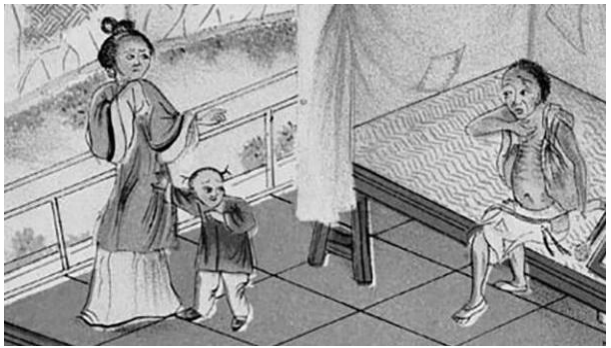
The Chinese Opium Smoker (London: S. W. Partridge & Co., ca 1880). Widener Library, Harvard University.
As afirmativas a seguir mencionam corretamente episódios do associados ao tráfico de ópio no século XIX envolvendo China e Grã-Bretanha, à exceção de uma. Assinale-a.
The Chinese Opium Smoker (London: S. W. Partridge & Co., ca 1880). Widener Library, Harvard University.
As afirmativas a seguir mencionam corretamente episódios do associados ao tráfico de ópio no século XIX envolvendo China e Grã-Bretanha, à exceção de uma. Assinale-a.
Ano: 2023
Banca:
FGV
Órgão:
SEE-MG
Prova:
FGV - 2023 - SEE-MG - Professor de Educação Básica (PEB) - História |
Q2291547
Conhecimentos Gerais
Leia os trechos a seguir:
I. Emenda Constitucional número 4:
Art. 22. Poder-se-á complementar a organização do sistema parlamentar de governo ora instituído, mediante leis votadas, nas duas casas do Congresso Nacional, pela maioria absoluta dos seus membros.
Art. 25. A lei votada nos termos do art. 22 poderá dispor sobre a realização de plebiscito que decida da manutenção do sistema parlamentar ou volta ao sistema presidencial, devendo, em tal hipótese, fazer-se a consulta plebiscitaria nove meses antes do termo do atual período presidencial.
Fonte: Legislação Brasileira – Câmara dos Deputados
II. Emenda Constitucional número 6:
Art. 1º Fica revogada a Emenda Constitucional nº 4 e restabelecido o sistema presidencial de governo instituído pela Constituição Federal de 1946, salvo o disposto no seu art. 61.
Fonte: Legislação Brasileira – Câmara dos Deputados
Os fragmentos reproduzidos são emendas da
I. Emenda Constitucional número 4:
Art. 22. Poder-se-á complementar a organização do sistema parlamentar de governo ora instituído, mediante leis votadas, nas duas casas do Congresso Nacional, pela maioria absoluta dos seus membros.
Art. 25. A lei votada nos termos do art. 22 poderá dispor sobre a realização de plebiscito que decida da manutenção do sistema parlamentar ou volta ao sistema presidencial, devendo, em tal hipótese, fazer-se a consulta plebiscitaria nove meses antes do termo do atual período presidencial.
Fonte: Legislação Brasileira – Câmara dos Deputados
II. Emenda Constitucional número 6:
Art. 1º Fica revogada a Emenda Constitucional nº 4 e restabelecido o sistema presidencial de governo instituído pela Constituição Federal de 1946, salvo o disposto no seu art. 61.
Fonte: Legislação Brasileira – Câmara dos Deputados
Os fragmentos reproduzidos são emendas da
Ano: 2023
Banca:
FGV
Órgão:
SEE-MG
Prova:
FGV - 2023 - SEE-MG - Professor de Educação Básica (PEB) - História |
Q2291546
História
A respeito da Primavera Árabe, avalie se as afirmativas a seguir
são verdadeiras (V) ou falsas (F)
( ) O movimento, que influenciou países do Oriente Médio e o Norte da África, teve seu início na Síria com a Revolução de Jasmim, após a morte de Mohamed Bouazizi.
( ) Uma das primeiras consequências do movimento foi a deposição do presidente da Tunísia Zine El Adibin Ben Ali após décadas de governo ditatorial.
( ) A não adesão do Egito ao movimento foi justificada pelo controle dos meios de comunicação por parte do ditador Hosni Mubarak, o que inviabilizou organizações de protestos.
As afirmativas são, respectivamente,
( ) O movimento, que influenciou países do Oriente Médio e o Norte da África, teve seu início na Síria com a Revolução de Jasmim, após a morte de Mohamed Bouazizi.
( ) Uma das primeiras consequências do movimento foi a deposição do presidente da Tunísia Zine El Adibin Ben Ali após décadas de governo ditatorial.
( ) A não adesão do Egito ao movimento foi justificada pelo controle dos meios de comunicação por parte do ditador Hosni Mubarak, o que inviabilizou organizações de protestos.
As afirmativas são, respectivamente,
Ano: 2023
Banca:
FGV
Órgão:
SEE-MG
Prova:
FGV - 2023 - SEE-MG - Professor de Educação Básica (PEB) - História |
Q2291545
História
Para iniciar as discussões sobre a participação dos Estados Unidos
na Guerra do Vietnã, o docente de História utiliza os dois
documentos a seguir:
I Foto de jovem mulher encarando a Guarda Nacional Americana em frente ao Pentágono (Washington), em 1967
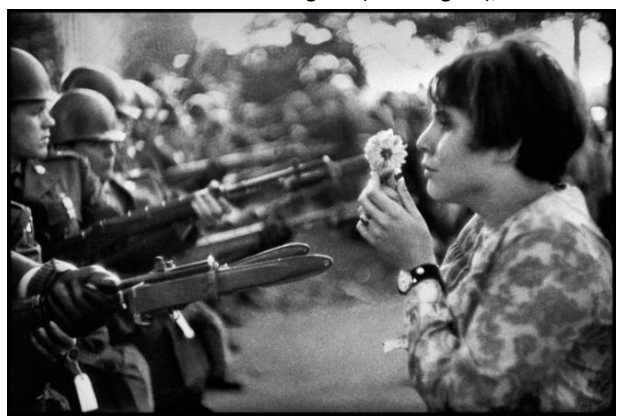
Washington, DC, EUA, 1967 | Marc Riboud / Magnum Photos
II. Trechos da música “Mestre de Guerra” de Bob Dylan (1963).
Para onde foram todas as flores? Todas foram colhidas pelas meninas Para onde foram todas as meninas? Todas foram por seus maridos Para onde foram todos os maridos? Todos foram ser soldados Para onde foram todos os soldados? Todos foram para cemitérios Para onde foram todos os cemitérios? Todos foram para as flores
Assinale a afirmativa que identifica corretamente um objetivo didático relacionado ao uso dos documentos propostos.
I Foto de jovem mulher encarando a Guarda Nacional Americana em frente ao Pentágono (Washington), em 1967
Washington, DC, EUA, 1967 | Marc Riboud / Magnum Photos
II. Trechos da música “Mestre de Guerra” de Bob Dylan (1963).
Para onde foram todas as flores? Todas foram colhidas pelas meninas Para onde foram todas as meninas? Todas foram por seus maridos Para onde foram todos os maridos? Todos foram ser soldados Para onde foram todos os soldados? Todos foram para cemitérios Para onde foram todos os cemitérios? Todos foram para as flores
Assinale a afirmativa que identifica corretamente um objetivo didático relacionado ao uso dos documentos propostos.
Ano: 2023
Banca:
FGV
Órgão:
SEE-MG
Prova:
FGV - 2023 - SEE-MG - Professor de Educação Básica (PEB) - História |
Q2291544
História
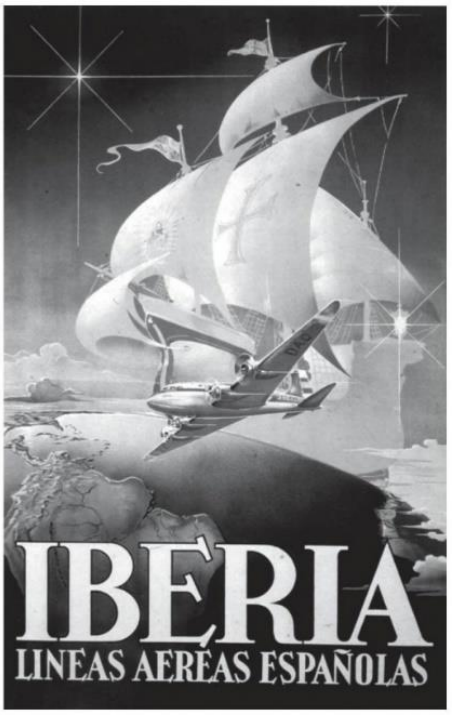
Leia os documentos a seguir.
I. Propaganda da “Iberia – Linhas aéreas espanholas”, nacionalizada em 1944, elaborada por ocasião do lançamento da linha para América do Sul.
II. Como penhor desta nova etapa de aproximação cultural entre Espanha e os povos americanos, o Estado inaugura hoje simbolicamente o início da construção do Museu da América que muito em breve será emblema comemorativo e ao mesmo tempo indício perpetuo da nossa comunidade espiritual. Toda a vida histórica e presente das nações irmãs se refletirá nas salas deste Museu para que nossa juventude tenha sempre em mente a gigantesca contribuição para a história da civilização mundial. Contribuição gigantesca, na verdade, que só o estudo poderá libertar das brumas sinistras de uma lenda produzida pelos inimigos da Espanha.
Discurso pronunciado por S. E. Generalíssimo Franco, Chefe do Estado espanhol com motivo da inauguração do presente curso escolar e da Cidade Universitária de Madri no dia 12 de outubro de 1943.
Assinale a opção que interpreta corretamente os documentos I e II em relação ao seu contexto de produção e circulação: a Ditadura de Francisco Franco na Espanha.
I. Propaganda da “Iberia – Linhas aéreas espanholas”, nacionalizada em 1944, elaborada por ocasião do lançamento da linha para América do Sul.
II. Como penhor desta nova etapa de aproximação cultural entre Espanha e os povos americanos, o Estado inaugura hoje simbolicamente o início da construção do Museu da América que muito em breve será emblema comemorativo e ao mesmo tempo indício perpetuo da nossa comunidade espiritual. Toda a vida histórica e presente das nações irmãs se refletirá nas salas deste Museu para que nossa juventude tenha sempre em mente a gigantesca contribuição para a história da civilização mundial. Contribuição gigantesca, na verdade, que só o estudo poderá libertar das brumas sinistras de uma lenda produzida pelos inimigos da Espanha.
Discurso pronunciado por S. E. Generalíssimo Franco, Chefe do Estado espanhol com motivo da inauguração do presente curso escolar e da Cidade Universitária de Madri no dia 12 de outubro de 1943.
Assinale a opção que interpreta corretamente os documentos I e II em relação ao seu contexto de produção e circulação: a Ditadura de Francisco Franco na Espanha.
Ano: 2023
Banca:
FGV
Órgão:
SEE-MG
Prova:
FGV - 2023 - SEE-MG - Professor de Educação Básica (PEB) - História |
Q2291543
História
Relacione os pensadores listados a seguir às respectivas ideias
ilustradas sobre formas de governo.
1. François-Marie Arouet Voltaire
2. Jean -Jacques Rousseau
3. Charle-Louis de Secondat Montesquieu
( ) Existem em cada Estado três tipos de poder: o poder legislativo, o poder executivo das coisas que dependem do direito das gentes e o poder executivo daquelas que dependem do direito civil.
( ) Alguns disseram que, se usássemos da indulgência paternal para com nossos irmãos errantes que rezam a Deus em mau francês, estaríamos colocando armas em suas mãos; mas parece-me que não é correto o raciocínio: Esses homens insurgiram-se quando lhes fiz o mal; portanto se insurgirão quando lhes fizer o bem.
( ) O ato de associação encerra um compromisso recíproco do público com os particulares, que cada indivíduo, contratando consigo mesmo, acha-se comprometido numa dupla relação, a saber: como membro do soberano em face do soberano.
Assinale a opção que apresenta a relação correta, na ordem apresentada.
1. François-Marie Arouet Voltaire
2. Jean -Jacques Rousseau
3. Charle-Louis de Secondat Montesquieu
( ) Existem em cada Estado três tipos de poder: o poder legislativo, o poder executivo das coisas que dependem do direito das gentes e o poder executivo daquelas que dependem do direito civil.
( ) Alguns disseram que, se usássemos da indulgência paternal para com nossos irmãos errantes que rezam a Deus em mau francês, estaríamos colocando armas em suas mãos; mas parece-me que não é correto o raciocínio: Esses homens insurgiram-se quando lhes fiz o mal; portanto se insurgirão quando lhes fizer o bem.
( ) O ato de associação encerra um compromisso recíproco do público com os particulares, que cada indivíduo, contratando consigo mesmo, acha-se comprometido numa dupla relação, a saber: como membro do soberano em face do soberano.
Assinale a opção que apresenta a relação correta, na ordem apresentada.
Ano: 2023
Banca:
FGV
Órgão:
SEE-MG
Prova:
FGV - 2023 - SEE-MG - Professor de Educação Básica (PEB) - História |
Q2291542
História
Observe a imagem a seguir:
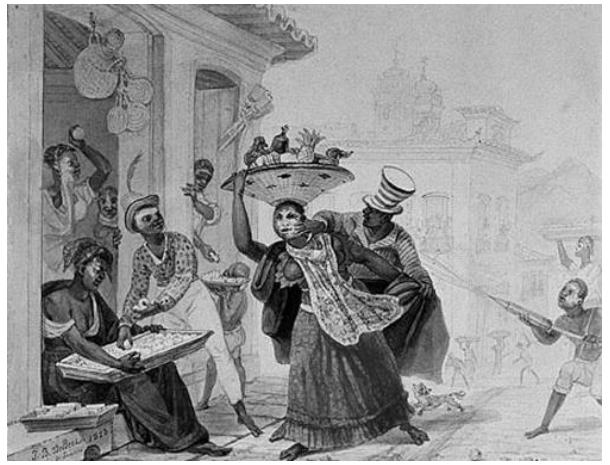
Cena de Carnaval. Gravura de Jean Baptiste Debret (1823).
A análise da gravura foi proposta por um docente como atividade didática sobre a sociedade e a cultura brasileira em perspectiva histórica, tendo o carnaval como objeto de estudo.
A respeito dessa atividade, é correto afirmar que
Cena de Carnaval. Gravura de Jean Baptiste Debret (1823).
A análise da gravura foi proposta por um docente como atividade didática sobre a sociedade e a cultura brasileira em perspectiva histórica, tendo o carnaval como objeto de estudo.
A respeito dessa atividade, é correto afirmar que
Ano: 2023
Banca:
FGV
Órgão:
SEE-MG
Prova:
FGV - 2023 - SEE-MG - Professor de Educação Básica (PEB) - História |
Q2291541
História
Analise os itens a seguir.
I. §1º Os ditos filhos menores ficarão em poder o sob a autoridade dos senhores de suas mães, os quais terão obrigação de criá-los e tratá-los até a idade de oito anos completos. Chegando o filho da escrava a esta idade, o senhor da mãe terá opção, ou de receber do Estado a indemnização de 600$000, ou de utilizar-se dos serviços do menor até a idade de 21 anos completos. No primeiro caso, o Governo receberá o menor, e lhe dará destino, em conformidade da presente lei.
Lei Nº 2.040, de 28 de setembro de 1871
II. § 10. São libertos os escravos de 60 anos de idade, completos antes e depois da data em que entrar em execução esta Lei; ficando, porém, obrigados, a título de indemnização pela sua alforria, a prestar serviços a seus ex-senhores pelo espaço de três anos.
§ 13. Todos os libertos maiores de 60 anos, preenchido o tempo de serviço de que trata o § 10, continuarão em companhia de seus ex-senhores, que serão obrigados a alimentá-los, vesti-los, e tratá-los em suas moléstias, usufruindo os serviços compatíveis com as forças deles, salvo si preferirem obter em outra parte os meios de subsistência, e os Juízes de Órfãos os julgarem capazes de o fazer.
Lei Nº 3.270, de 28 de setembro de 1885
Com base nos trechos citados, assinale a opção que interpreta corretamente a legislação brasileira sobre o tema da escravidão entre 1871 e 1885.
I. §1º Os ditos filhos menores ficarão em poder o sob a autoridade dos senhores de suas mães, os quais terão obrigação de criá-los e tratá-los até a idade de oito anos completos. Chegando o filho da escrava a esta idade, o senhor da mãe terá opção, ou de receber do Estado a indemnização de 600$000, ou de utilizar-se dos serviços do menor até a idade de 21 anos completos. No primeiro caso, o Governo receberá o menor, e lhe dará destino, em conformidade da presente lei.
Lei Nº 2.040, de 28 de setembro de 1871
II. § 10. São libertos os escravos de 60 anos de idade, completos antes e depois da data em que entrar em execução esta Lei; ficando, porém, obrigados, a título de indemnização pela sua alforria, a prestar serviços a seus ex-senhores pelo espaço de três anos.
§ 13. Todos os libertos maiores de 60 anos, preenchido o tempo de serviço de que trata o § 10, continuarão em companhia de seus ex-senhores, que serão obrigados a alimentá-los, vesti-los, e tratá-los em suas moléstias, usufruindo os serviços compatíveis com as forças deles, salvo si preferirem obter em outra parte os meios de subsistência, e os Juízes de Órfãos os julgarem capazes de o fazer.
Lei Nº 3.270, de 28 de setembro de 1885
Com base nos trechos citados, assinale a opção que interpreta corretamente a legislação brasileira sobre o tema da escravidão entre 1871 e 1885.
Ano: 2023
Banca:
FGV
Órgão:
SEE-MG
Prova:
FGV - 2023 - SEE-MG - Professor de Educação Básica (PEB) - História |
Q2291540
História
Leia os trechos a seguir sobre o processo de independência do
Brasil.
I. Entre 1822 e 1831 ou, melhor, de 1808 até 1831 - a rigor até 1836 - é que se assinala uma fecunda transação - não se queira muito mais - entre o nosso passado colonial e as nossas instituições nacionais. Só depois, e mesmo durante o gabinete conciliador de Paraná, é que teremos a verdadeira reação monárquica.
Fonte: HOLANDA, Sérgio Buarque de. História geral da civilização brasileira t. II v.1: o processo de emancipação. Rio de Janeiro: Bertrand Brasil, 2003, p. 46.
II. A transferência da Corte portuguesa para o Brasil em 1808 veio dar à nossa emancipação política um caráter que singulariza no conjunto do processo histórico da independência das colônias americanas. Enquanto nas demais a separação é violenta e se resolve nos campos de batalha, no Brasil é o próprio governo metropolitano quem vai lançar as bases da autonomia brasileira.
Fonte: PRADO JR., Caio. A evolução política do Brasil. São Paulo: Companhia das Letras, 2012, P. 45
III. De modo seguro, a Independência do Brasil se apresenta contextualizada nos quadros da história ocidental entre as últimas décadas do século XVIII e as primeiras do XIX, emparelhada com acontecimentos que, na historiografia brasileira, poucos desconsiderariam como revolucionários (no sentido moderno do termo).
Fonte: PIMENTA, João Paulo. A independência do Brasil como uma revolução: história e atualidade de um tema clássico. História da historiografia, n. 03, 2009, p.68.
A respeito das diferentes interpretações sobre o evento histórico refletidas nos trechos citados, avalie se as afirmativas a seguir são verdadeiras (V) ou falsas (F).
( ) I e III compreendem a independência do Brasil enfatizando o seu caráter revolucionário.
( ) I e II incorporam uma visão processual do evento da independência, que rechaça o ano de 1821 como seu início e fim.
( ) II e III associam a ruptura entre Portugal e Brasil ao contexto internacional.
As afirmativas são, respectivamente,
I. Entre 1822 e 1831 ou, melhor, de 1808 até 1831 - a rigor até 1836 - é que se assinala uma fecunda transação - não se queira muito mais - entre o nosso passado colonial e as nossas instituições nacionais. Só depois, e mesmo durante o gabinete conciliador de Paraná, é que teremos a verdadeira reação monárquica.
Fonte: HOLANDA, Sérgio Buarque de. História geral da civilização brasileira t. II v.1: o processo de emancipação. Rio de Janeiro: Bertrand Brasil, 2003, p. 46.
II. A transferência da Corte portuguesa para o Brasil em 1808 veio dar à nossa emancipação política um caráter que singulariza no conjunto do processo histórico da independência das colônias americanas. Enquanto nas demais a separação é violenta e se resolve nos campos de batalha, no Brasil é o próprio governo metropolitano quem vai lançar as bases da autonomia brasileira.
Fonte: PRADO JR., Caio. A evolução política do Brasil. São Paulo: Companhia das Letras, 2012, P. 45
III. De modo seguro, a Independência do Brasil se apresenta contextualizada nos quadros da história ocidental entre as últimas décadas do século XVIII e as primeiras do XIX, emparelhada com acontecimentos que, na historiografia brasileira, poucos desconsiderariam como revolucionários (no sentido moderno do termo).
Fonte: PIMENTA, João Paulo. A independência do Brasil como uma revolução: história e atualidade de um tema clássico. História da historiografia, n. 03, 2009, p.68.
A respeito das diferentes interpretações sobre o evento histórico refletidas nos trechos citados, avalie se as afirmativas a seguir são verdadeiras (V) ou falsas (F).
( ) I e III compreendem a independência do Brasil enfatizando o seu caráter revolucionário.
( ) I e II incorporam uma visão processual do evento da independência, que rechaça o ano de 1821 como seu início e fim.
( ) II e III associam a ruptura entre Portugal e Brasil ao contexto internacional.
As afirmativas são, respectivamente,
Ano: 2023
Banca:
FGV
Órgão:
SEE-MG
Prova:
FGV - 2023 - SEE-MG - Professor de Educação Básica (PEB) - História |
Q2291539
História
Assinale a afirmativa que caracteriza corretamente as condições
socioeconômicas do ciclo de ouro na economia colonial da
América portuguesa no século XVIII.
Ano: 2023
Banca:
FGV
Órgão:
SEE-MG
Prova:
FGV - 2023 - SEE-MG - Professor de Educação Básica (PEB) - História |
Q2291538
História
Observe a pintura “A recuperação da Bahia de Todos os Santos”
de Juan Bautista Maíno de 1635. O quadro retrata a vitória
espanhola contra os holandeses que resultou no evento da
restauração da cidade de Salvador (1625).
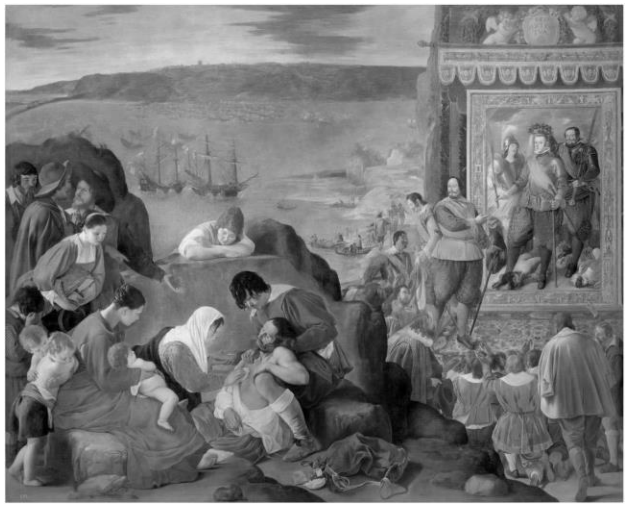
Fonte: Ruíz Gómez, L. Juan Bautista Maíno, 1581-1649. Madrid: Museo Nacional del Prado, 2009, p.180-192.
As afirmativas a seguir descrevem corretamente aspectos do episódio histórico retratado na obra, à exceção de uma. Assinale-a.
Fonte: Ruíz Gómez, L. Juan Bautista Maíno, 1581-1649. Madrid: Museo Nacional del Prado, 2009, p.180-192.
As afirmativas a seguir descrevem corretamente aspectos do episódio histórico retratado na obra, à exceção de uma. Assinale-a.
Ano: 2023
Banca:
FGV
Órgão:
SEE-MG
Prova:
FGV - 2023 - SEE-MG - Professor de Educação Básica (PEB) - História |
Q2291537
História
A chegada acidental dos europeus no continente americano
iniciou uma nova fase da história mundial. A “novidade
americana” implicou na reorganização e na criação de entidades
administrativas peninsulares. Já nos anos iniciais da consolidação
do intercâmbio colombiano, especificamente em 1503, a coroa
castelhana criou uma instituição em Sevilha que deveria ser capaz
de regular as atividades comerciais e os impostos relacionados
aos circuitos comerciais entre o porto andaluz e os americanos.
O breve texto acima descreve a função de uma das principais instituições criada pela coroa castelhana para administrar as relações comerciais com o território americano, conhecida como
O breve texto acima descreve a função de uma das principais instituições criada pela coroa castelhana para administrar as relações comerciais com o território americano, conhecida como
Ano: 2023
Banca:
FGV
Órgão:
SEE-MG
Prova:
FGV - 2023 - SEE-MG - Professor de Educação Básica (PEB) - História |
Q2291536
História
São grandes coisas as que proponho aos olhares e à observação
de todos os estudiosos da natureza. Grandes em razão de sua
excelência intrínseca, como também de sua absoluta novidade, e
devido ao instrumento com ajuda do qual elas se tornam
acessíveis aos nossos sentidos.
Adaptado de KOYRÉ, Alexandre. Do mundo fechado ao universo aberto. Rio de Janeiro: Forense Universitária, 2006, p.80.
Com Galileu Galilei, a filosofia natural conheceu sua fase instrumental, que marcou o início da Revolução Científica.
As afirmativas a seguir identificam corretamente contribuições galileanas à Revolução Científica de Galileu, à exceção de uma. Assinale-a.
Adaptado de KOYRÉ, Alexandre. Do mundo fechado ao universo aberto. Rio de Janeiro: Forense Universitária, 2006, p.80.
Com Galileu Galilei, a filosofia natural conheceu sua fase instrumental, que marcou o início da Revolução Científica.
As afirmativas a seguir identificam corretamente contribuições galileanas à Revolução Científica de Galileu, à exceção de uma. Assinale-a.

 Conheça nossos planos