Questões de Concurso
Para if-ma
Foram encontradas 1.041 questões
Resolva questões gratuitamente!
Junte-se a mais de 4 milhões de concurseiros!


Ano: 2023
Banca:
INSTITUTO AOCP
Órgão:
IF-MA
Prova:
INSTITUTO AOCP - 2023 - IF-MA - Professor EBTT - Letras - Português - Libras |
Q2238790
Libras
Como a fonologia da Língua Brasileira de Sinais
se diferencia dos padrões da língua falada?
Ano: 2023
Banca:
INSTITUTO AOCP
Órgão:
IF-MA
Prova:
INSTITUTO AOCP - 2023 - IF-MA - Professor EBTT - Letras - Português - Libras |
Q2238789
Libras
De que forma a morfologia da Libras pode ser
considerada complexa?
Ano: 2023
Banca:
INSTITUTO AOCP
Órgão:
IF-MA
Prova:
INSTITUTO AOCP - 2023 - IF-MA - Professor EBTT - Letras - Português - Libras |
Q2238788
Libras
Qual é a importância das expressões faciais e
corporais utilizadas na Libras para transmitir o
significado do que se está sinalizando?
Ano: 2023
Banca:
INSTITUTO AOCP
Órgão:
IF-MA
Prova:
INSTITUTO AOCP - 2023 - IF-MA - Professor EBTT - Letras - Português - Libras |
Q2238787
Libras
Em relação à iconicidade e à arbitrariedade e sua
representação na gramática da Libras, assinale a
alternativa correta.
Ano: 2023
Banca:
INSTITUTO AOCP
Órgão:
IF-MA
Prova:
INSTITUTO AOCP - 2023 - IF-MA - Professor EBTT - Letras - Português - Libras |
Q2238786
Libras
Qual é a importância da educação de surdos para
a formação da identidade social e cultural do
surdo?
Ano: 2023
Banca:
INSTITUTO AOCP
Órgão:
IF-MA
Prova:
INSTITUTO AOCP - 2023 - IF-MA - Professor EBTT - Letras - Português - Libras |
Q2238785
Libras
A educação dos surdos foi, por muito tempo,
concebida meramente como “aquisição da
oralidade”; vista como condição para inserção
social e não direcionada à escolarização ou
aquisição do conhecimento. A respeito da
importância da educação bilíngue para os surdos,
assinale a alternativa correta.
Ano: 2023
Banca:
INSTITUTO AOCP
Órgão:
IF-MA
Prova:
INSTITUTO AOCP - 2023 - IF-MA - Professor EBTT - Letras - Português - Libras |
Q2238783
Pedagogia
Em relação à gramática tradicional e ao ensino de
Língua Portuguesa, é correto afirmar que
Ano: 2023
Banca:
INSTITUTO AOCP
Órgão:
IF-MA
Prova:
INSTITUTO AOCP - 2023 - IF-MA - Professor EBTT - Letras - Português - Libras |
Q2238782
Linguística
No que tange aos estudos da Sociolinguística e
ao ensino de Língua Portuguesa, assinale a
alternativa INCORRETA.
Ano: 2023
Banca:
INSTITUTO AOCP
Órgão:
IF-MA
Prova:
INSTITUTO AOCP - 2023 - IF-MA - Professor EBTT - Letras - Português - Libras |
Q2238781
Português
Texto associado


TEXTO I
Benefícios da leitura: por que ler faz bem para a
saúde?
Ao abrir um livro, abrem-se, ademais, as portas da
imaginação. Engana-se, porém, quem pensa que os
benefícios da leitura param por aí. Saiba qual é a
importância desse hábito!
Por Equipe de Atenção à Saúde Unimed-BH
Aventurar-se nas páginas de um livro é um
hábito extremamente prazeroso que estimula a
imaginação e a criatividade, melhora o vocabulário, a
escrita e o senso crítico. A lista de benefícios da
leitura é extensa, e o cérebro é o órgão mais
exercitado durante a prática. Por tudo isso, esse é um
costume que faz bem para a saúde e vale a pena
incorporar na rotina, ainda que por alguns minutos por
dia.
[...]
A população brasileira se divide quase que
igualmente entre leitores e não leitores. É o que
apontam os dados sobre leitura no Brasil, traçados na
5ª edição da pesquisa “Retratos da Leitura no Brasil”,
realizada pelo Instituto Pró-Livro. De acordo com a
análise, o percentual de leitores no país era de 52%
em 2019 – 4% a menos do que em 2015. Diante da
importância da leitura, por que esse número não é
mais expressivo? Existem inúmeras respostas a essa
pergunta: a falta de tempo, falta de paciência e
acesso a livros, a dificuldade na leitura e a
preferência em usufruir de tecnologias durante o
tempo livre e outras.
[...]
O índice de adeptos brasileiros revela outra
informação importante: muitas pessoas não
aproveitam os vários benefícios da leitura por não
incorporarem esse hábito no dia a dia. Além do
impacto na imaginação e na comunicação, ler com
frequência exercita partes importantes do cérebro, e o
resultado disso é a manutenção de diversas funções
cruciais para uma vida saudável. Confira os principais
motivos que reforçam a importância da leitura: ajuda
a exercitar a imaginação e criatividade; amplia o
vocabulário e melhora a escrita; contribui para a
redução da ansiedade e do estresse; exercita a
memória e ativa regiões do cérebro responsáveis por
funções cognitivas, ajudando a prevenir doenças
neurodegenerativas; promove o relaxamento e
melhora a qualidade do sono.
[...]
A leitura é importante para a criatividade, a
memória, a escrita e a imaginação. Mas você sabia
que existem inúmeros benefícios da leitura diária para
cada idade? Dentre os benefícios da leitura, também
está o fato de que ela pode ser crucial no
desenvolvimento infantil. O estímulo à leitura deve
começar ainda na infância. Ao introduzir a leitura
nessa fase, o cérebro da criança, em pleno
desenvolvimento, faz conexões importantíssimas
relacionadas à linguagem, à concentração, à memória
e à atenção. Essa bagagem adquirida na infância a
acompanhará durante toda a vida.
Mas a importância da leitura na infância não
se limita a isso: a criatividade e a imaginação, que já
salientamos, começam a despertar nesse momento.
Ter acesso a livros para incentivá-las é uma forma de
proporcionar ao pequeno uma infância mais feliz e
saudável. Vale a pena oferecer livros infantis mesmo
antes da alfabetização, para que a criança comece a
ter contato com novas histórias. Isso auxilia a criar um
indivíduo com mais empatia e menos preconceitos.
[...]
Adaptado de: https://viverbem.unimedbh.com.br/qualidade-devida/beneficios-da-leitura/. Acesso em: 9 maio 2023.
TEXTO II
Armandinho
Foto: Reprodução Blog Alexandre Beck/Armandinho. Extraído de:
https://crb6.org.br/materias/charge-armandinho-4/. Acesso em: 9
maio 2023.
Sobre os princípios de Linguística Textual,
especificamente a coesão e a intencionalidade
percebidas em determinados excertos dos Textos
I e II, assinale a alternativa correta.
Ano: 2023
Banca:
INSTITUTO AOCP
Órgão:
IF-MA
Prova:
INSTITUTO AOCP - 2023 - IF-MA - Professor EBTT - Letras - Português - Libras |
Q2238780
Linguística
Texto associado
TEXTO I
Benefícios da leitura: por que ler faz bem para a
saúde?
Ao abrir um livro, abrem-se, ademais, as portas da
imaginação. Engana-se, porém, quem pensa que os
benefícios da leitura param por aí. Saiba qual é a
importância desse hábito!
Por Equipe de Atenção à Saúde Unimed-BH
Aventurar-se nas páginas de um livro é um
hábito extremamente prazeroso que estimula a
imaginação e a criatividade, melhora o vocabulário, a
escrita e o senso crítico. A lista de benefícios da
leitura é extensa, e o cérebro é o órgão mais
exercitado durante a prática. Por tudo isso, esse é um
costume que faz bem para a saúde e vale a pena
incorporar na rotina, ainda que por alguns minutos por
dia.
[...]
A população brasileira se divide quase que
igualmente entre leitores e não leitores. É o que
apontam os dados sobre leitura no Brasil, traçados na
5ª edição da pesquisa “Retratos da Leitura no Brasil”,
realizada pelo Instituto Pró-Livro. De acordo com a
análise, o percentual de leitores no país era de 52%
em 2019 – 4% a menos do que em 2015. Diante da
importância da leitura, por que esse número não é
mais expressivo? Existem inúmeras respostas a essa
pergunta: a falta de tempo, falta de paciência e
acesso a livros, a dificuldade na leitura e a
preferência em usufruir de tecnologias durante o
tempo livre e outras.
[...]
O índice de adeptos brasileiros revela outra
informação importante: muitas pessoas não
aproveitam os vários benefícios da leitura por não
incorporarem esse hábito no dia a dia. Além do
impacto na imaginação e na comunicação, ler com
frequência exercita partes importantes do cérebro, e o
resultado disso é a manutenção de diversas funções
cruciais para uma vida saudável. Confira os principais
motivos que reforçam a importância da leitura: ajuda
a exercitar a imaginação e criatividade; amplia o
vocabulário e melhora a escrita; contribui para a
redução da ansiedade e do estresse; exercita a
memória e ativa regiões do cérebro responsáveis por
funções cognitivas, ajudando a prevenir doenças
neurodegenerativas; promove o relaxamento e
melhora a qualidade do sono.
[...]
A leitura é importante para a criatividade, a
memória, a escrita e a imaginação. Mas você sabia
que existem inúmeros benefícios da leitura diária para
cada idade? Dentre os benefícios da leitura, também
está o fato de que ela pode ser crucial no
desenvolvimento infantil. O estímulo à leitura deve
começar ainda na infância. Ao introduzir a leitura
nessa fase, o cérebro da criança, em pleno
desenvolvimento, faz conexões importantíssimas
relacionadas à linguagem, à concentração, à memória
e à atenção. Essa bagagem adquirida na infância a
acompanhará durante toda a vida.
Mas a importância da leitura na infância não
se limita a isso: a criatividade e a imaginação, que já
salientamos, começam a despertar nesse momento.
Ter acesso a livros para incentivá-las é uma forma de
proporcionar ao pequeno uma infância mais feliz e
saudável. Vale a pena oferecer livros infantis mesmo
antes da alfabetização, para que a criança comece a
ter contato com novas histórias. Isso auxilia a criar um
indivíduo com mais empatia e menos preconceitos.
[...]
Adaptado de: https://viverbem.unimedbh.com.br/qualidade-devida/beneficios-da-leitura/. Acesso em: 9 maio 2023.
TEXTO II
Armandinho
Foto: Reprodução Blog Alexandre Beck/Armandinho. Extraído de:
https://crb6.org.br/materias/charge-armandinho-4/. Acesso em: 9
maio 2023.
Analise os exemplos de atividade citados em cada
alternativa a seguir e assinale a adequada
considerando a prática de análise linguística e
alguns excertos do Texto I.
Ano: 2023
Banca:
INSTITUTO AOCP
Órgão:
IF-MA
Prova:
INSTITUTO AOCP - 2023 - IF-MA - Professor EBTT - Letras - Português - Libras |
Q2238779
Português
Texto associado
TEXTO I
Benefícios da leitura: por que ler faz bem para a
saúde?
Ao abrir um livro, abrem-se, ademais, as portas da
imaginação. Engana-se, porém, quem pensa que os
benefícios da leitura param por aí. Saiba qual é a
importância desse hábito!
Por Equipe de Atenção à Saúde Unimed-BH
Aventurar-se nas páginas de um livro é um
hábito extremamente prazeroso que estimula a
imaginação e a criatividade, melhora o vocabulário, a
escrita e o senso crítico. A lista de benefícios da
leitura é extensa, e o cérebro é o órgão mais
exercitado durante a prática. Por tudo isso, esse é um
costume que faz bem para a saúde e vale a pena
incorporar na rotina, ainda que por alguns minutos por
dia.
[...]
A população brasileira se divide quase que
igualmente entre leitores e não leitores. É o que
apontam os dados sobre leitura no Brasil, traçados na
5ª edição da pesquisa “Retratos da Leitura no Brasil”,
realizada pelo Instituto Pró-Livro. De acordo com a
análise, o percentual de leitores no país era de 52%
em 2019 – 4% a menos do que em 2015. Diante da
importância da leitura, por que esse número não é
mais expressivo? Existem inúmeras respostas a essa
pergunta: a falta de tempo, falta de paciência e
acesso a livros, a dificuldade na leitura e a
preferência em usufruir de tecnologias durante o
tempo livre e outras.
[...]
O índice de adeptos brasileiros revela outra
informação importante: muitas pessoas não
aproveitam os vários benefícios da leitura por não
incorporarem esse hábito no dia a dia. Além do
impacto na imaginação e na comunicação, ler com
frequência exercita partes importantes do cérebro, e o
resultado disso é a manutenção de diversas funções
cruciais para uma vida saudável. Confira os principais
motivos que reforçam a importância da leitura: ajuda
a exercitar a imaginação e criatividade; amplia o
vocabulário e melhora a escrita; contribui para a
redução da ansiedade e do estresse; exercita a
memória e ativa regiões do cérebro responsáveis por
funções cognitivas, ajudando a prevenir doenças
neurodegenerativas; promove o relaxamento e
melhora a qualidade do sono.
[...]
A leitura é importante para a criatividade, a
memória, a escrita e a imaginação. Mas você sabia
que existem inúmeros benefícios da leitura diária para
cada idade? Dentre os benefícios da leitura, também
está o fato de que ela pode ser crucial no
desenvolvimento infantil. O estímulo à leitura deve
começar ainda na infância. Ao introduzir a leitura
nessa fase, o cérebro da criança, em pleno
desenvolvimento, faz conexões importantíssimas
relacionadas à linguagem, à concentração, à memória
e à atenção. Essa bagagem adquirida na infância a
acompanhará durante toda a vida.
Mas a importância da leitura na infância não
se limita a isso: a criatividade e a imaginação, que já
salientamos, começam a despertar nesse momento.
Ter acesso a livros para incentivá-las é uma forma de
proporcionar ao pequeno uma infância mais feliz e
saudável. Vale a pena oferecer livros infantis mesmo
antes da alfabetização, para que a criança comece a
ter contato com novas histórias. Isso auxilia a criar um
indivíduo com mais empatia e menos preconceitos.
[...]
Adaptado de: https://viverbem.unimedbh.com.br/qualidade-devida/beneficios-da-leitura/. Acesso em: 9 maio 2023.
TEXTO II
Armandinho
Foto: Reprodução Blog Alexandre Beck/Armandinho. Extraído de:
https://crb6.org.br/materias/charge-armandinho-4/. Acesso em: 9
maio 2023.
A respeito deste excerto do Texto II: “Não invente
desculpas pra não ler... E leia!”, analise as
assertivas e assinale a alternativa que aponta as
corretas.
I. O advérbio de negação anterior a “invente” reforça, ainda mais, um tom imperativo atribuído ao verbo.
II. Os verbos “invente” e “leia” estão conjugados na 3ª pessoa; já se fossem “inventai” e “lede”, seriam igualmente imperativos na 2ª pessoa do singular.
III. A negação deveria aparecer por colocação adverbial posposta ao verbo.
IV. Os verbos “invente” e “leia” evidenciam uma imperatividade negativa e afirmativa, respectivamente.
I. O advérbio de negação anterior a “invente” reforça, ainda mais, um tom imperativo atribuído ao verbo.
II. Os verbos “invente” e “leia” estão conjugados na 3ª pessoa; já se fossem “inventai” e “lede”, seriam igualmente imperativos na 2ª pessoa do singular.
III. A negação deveria aparecer por colocação adverbial posposta ao verbo.
IV. Os verbos “invente” e “leia” evidenciam uma imperatividade negativa e afirmativa, respectivamente.
Ano: 2023
Banca:
INSTITUTO AOCP
Órgão:
IF-MA
Prova:
INSTITUTO AOCP - 2023 - IF-MA - Professor EBTT - Letras - Português - Libras |
Q2238778
Português
Texto associado
TEXTO I
Benefícios da leitura: por que ler faz bem para a
saúde?
Ao abrir um livro, abrem-se, ademais, as portas da
imaginação. Engana-se, porém, quem pensa que os
benefícios da leitura param por aí. Saiba qual é a
importância desse hábito!
Por Equipe de Atenção à Saúde Unimed-BH
Aventurar-se nas páginas de um livro é um
hábito extremamente prazeroso que estimula a
imaginação e a criatividade, melhora o vocabulário, a
escrita e o senso crítico. A lista de benefícios da
leitura é extensa, e o cérebro é o órgão mais
exercitado durante a prática. Por tudo isso, esse é um
costume que faz bem para a saúde e vale a pena
incorporar na rotina, ainda que por alguns minutos por
dia.
[...]
A população brasileira se divide quase que
igualmente entre leitores e não leitores. É o que
apontam os dados sobre leitura no Brasil, traçados na
5ª edição da pesquisa “Retratos da Leitura no Brasil”,
realizada pelo Instituto Pró-Livro. De acordo com a
análise, o percentual de leitores no país era de 52%
em 2019 – 4% a menos do que em 2015. Diante da
importância da leitura, por que esse número não é
mais expressivo? Existem inúmeras respostas a essa
pergunta: a falta de tempo, falta de paciência e
acesso a livros, a dificuldade na leitura e a
preferência em usufruir de tecnologias durante o
tempo livre e outras.
[...]
O índice de adeptos brasileiros revela outra
informação importante: muitas pessoas não
aproveitam os vários benefícios da leitura por não
incorporarem esse hábito no dia a dia. Além do
impacto na imaginação e na comunicação, ler com
frequência exercita partes importantes do cérebro, e o
resultado disso é a manutenção de diversas funções
cruciais para uma vida saudável. Confira os principais
motivos que reforçam a importância da leitura: ajuda
a exercitar a imaginação e criatividade; amplia o
vocabulário e melhora a escrita; contribui para a
redução da ansiedade e do estresse; exercita a
memória e ativa regiões do cérebro responsáveis por
funções cognitivas, ajudando a prevenir doenças
neurodegenerativas; promove o relaxamento e
melhora a qualidade do sono.
[...]
A leitura é importante para a criatividade, a
memória, a escrita e a imaginação. Mas você sabia
que existem inúmeros benefícios da leitura diária para
cada idade? Dentre os benefícios da leitura, também
está o fato de que ela pode ser crucial no
desenvolvimento infantil. O estímulo à leitura deve
começar ainda na infância. Ao introduzir a leitura
nessa fase, o cérebro da criança, em pleno
desenvolvimento, faz conexões importantíssimas
relacionadas à linguagem, à concentração, à memória
e à atenção. Essa bagagem adquirida na infância a
acompanhará durante toda a vida.
Mas a importância da leitura na infância não
se limita a isso: a criatividade e a imaginação, que já
salientamos, começam a despertar nesse momento.
Ter acesso a livros para incentivá-las é uma forma de
proporcionar ao pequeno uma infância mais feliz e
saudável. Vale a pena oferecer livros infantis mesmo
antes da alfabetização, para que a criança comece a
ter contato com novas histórias. Isso auxilia a criar um
indivíduo com mais empatia e menos preconceitos.
[...]
Adaptado de: https://viverbem.unimedbh.com.br/qualidade-devida/beneficios-da-leitura/. Acesso em: 9 maio 2023.
TEXTO II
Armandinho
Foto: Reprodução Blog Alexandre Beck/Armandinho. Extraído de:
https://crb6.org.br/materias/charge-armandinho-4/. Acesso em: 9
maio 2023.
Considerando a função e o emprego, prescritos
pela norma-padrão, dos termos em destaque a
seguir (Textos I e II), assinale a alternativa correta.
Ano: 2023
Banca:
INSTITUTO AOCP
Órgão:
IF-MA
Prova:
INSTITUTO AOCP - 2023 - IF-MA - Professor EBTT - Letras - Português - Libras |
Q2238777
Português
Texto associado
TEXTO I
Benefícios da leitura: por que ler faz bem para a
saúde?
Ao abrir um livro, abrem-se, ademais, as portas da
imaginação. Engana-se, porém, quem pensa que os
benefícios da leitura param por aí. Saiba qual é a
importância desse hábito!
Por Equipe de Atenção à Saúde Unimed-BH
Aventurar-se nas páginas de um livro é um
hábito extremamente prazeroso que estimula a
imaginação e a criatividade, melhora o vocabulário, a
escrita e o senso crítico. A lista de benefícios da
leitura é extensa, e o cérebro é o órgão mais
exercitado durante a prática. Por tudo isso, esse é um
costume que faz bem para a saúde e vale a pena
incorporar na rotina, ainda que por alguns minutos por
dia.
[...]
A população brasileira se divide quase que
igualmente entre leitores e não leitores. É o que
apontam os dados sobre leitura no Brasil, traçados na
5ª edição da pesquisa “Retratos da Leitura no Brasil”,
realizada pelo Instituto Pró-Livro. De acordo com a
análise, o percentual de leitores no país era de 52%
em 2019 – 4% a menos do que em 2015. Diante da
importância da leitura, por que esse número não é
mais expressivo? Existem inúmeras respostas a essa
pergunta: a falta de tempo, falta de paciência e
acesso a livros, a dificuldade na leitura e a
preferência em usufruir de tecnologias durante o
tempo livre e outras.
[...]
O índice de adeptos brasileiros revela outra
informação importante: muitas pessoas não
aproveitam os vários benefícios da leitura por não
incorporarem esse hábito no dia a dia. Além do
impacto na imaginação e na comunicação, ler com
frequência exercita partes importantes do cérebro, e o
resultado disso é a manutenção de diversas funções
cruciais para uma vida saudável. Confira os principais
motivos que reforçam a importância da leitura: ajuda
a exercitar a imaginação e criatividade; amplia o
vocabulário e melhora a escrita; contribui para a
redução da ansiedade e do estresse; exercita a
memória e ativa regiões do cérebro responsáveis por
funções cognitivas, ajudando a prevenir doenças
neurodegenerativas; promove o relaxamento e
melhora a qualidade do sono.
[...]
A leitura é importante para a criatividade, a
memória, a escrita e a imaginação. Mas você sabia
que existem inúmeros benefícios da leitura diária para
cada idade? Dentre os benefícios da leitura, também
está o fato de que ela pode ser crucial no
desenvolvimento infantil. O estímulo à leitura deve
começar ainda na infância. Ao introduzir a leitura
nessa fase, o cérebro da criança, em pleno
desenvolvimento, faz conexões importantíssimas
relacionadas à linguagem, à concentração, à memória
e à atenção. Essa bagagem adquirida na infância a
acompanhará durante toda a vida.
Mas a importância da leitura na infância não
se limita a isso: a criatividade e a imaginação, que já
salientamos, começam a despertar nesse momento.
Ter acesso a livros para incentivá-las é uma forma de
proporcionar ao pequeno uma infância mais feliz e
saudável. Vale a pena oferecer livros infantis mesmo
antes da alfabetização, para que a criança comece a
ter contato com novas histórias. Isso auxilia a criar um
indivíduo com mais empatia e menos preconceitos.
[...]
Adaptado de: https://viverbem.unimedbh.com.br/qualidade-devida/beneficios-da-leitura/. Acesso em: 9 maio 2023.
TEXTO II
Armandinho
Foto: Reprodução Blog Alexandre Beck/Armandinho. Extraído de:
https://crb6.org.br/materias/charge-armandinho-4/. Acesso em: 9
maio 2023.
Tendo como base o Texto II e os estudos da
Linguística Aplicada voltados a concepções de
leitura, assinale a alternativa que apresenta uma
pergunta de leitura corretamente relacionada à
sua respectiva concepção.
Ano: 2023
Banca:
INSTITUTO AOCP
Órgão:
IF-MA
Prova:
INSTITUTO AOCP - 2023 - IF-MA - Professor EBTT - Letras - Português - Libras |
Q2238776
Português
Texto associado
TEXTO I
Benefícios da leitura: por que ler faz bem para a
saúde?
Ao abrir um livro, abrem-se, ademais, as portas da
imaginação. Engana-se, porém, quem pensa que os
benefícios da leitura param por aí. Saiba qual é a
importância desse hábito!
Por Equipe de Atenção à Saúde Unimed-BH
Aventurar-se nas páginas de um livro é um
hábito extremamente prazeroso que estimula a
imaginação e a criatividade, melhora o vocabulário, a
escrita e o senso crítico. A lista de benefícios da
leitura é extensa, e o cérebro é o órgão mais
exercitado durante a prática. Por tudo isso, esse é um
costume que faz bem para a saúde e vale a pena
incorporar na rotina, ainda que por alguns minutos por
dia.
[...]
A população brasileira se divide quase que
igualmente entre leitores e não leitores. É o que
apontam os dados sobre leitura no Brasil, traçados na
5ª edição da pesquisa “Retratos da Leitura no Brasil”,
realizada pelo Instituto Pró-Livro. De acordo com a
análise, o percentual de leitores no país era de 52%
em 2019 – 4% a menos do que em 2015. Diante da
importância da leitura, por que esse número não é
mais expressivo? Existem inúmeras respostas a essa
pergunta: a falta de tempo, falta de paciência e
acesso a livros, a dificuldade na leitura e a
preferência em usufruir de tecnologias durante o
tempo livre e outras.
[...]
O índice de adeptos brasileiros revela outra
informação importante: muitas pessoas não
aproveitam os vários benefícios da leitura por não
incorporarem esse hábito no dia a dia. Além do
impacto na imaginação e na comunicação, ler com
frequência exercita partes importantes do cérebro, e o
resultado disso é a manutenção de diversas funções
cruciais para uma vida saudável. Confira os principais
motivos que reforçam a importância da leitura: ajuda
a exercitar a imaginação e criatividade; amplia o
vocabulário e melhora a escrita; contribui para a
redução da ansiedade e do estresse; exercita a
memória e ativa regiões do cérebro responsáveis por
funções cognitivas, ajudando a prevenir doenças
neurodegenerativas; promove o relaxamento e
melhora a qualidade do sono.
[...]
A leitura é importante para a criatividade, a
memória, a escrita e a imaginação. Mas você sabia
que existem inúmeros benefícios da leitura diária para
cada idade? Dentre os benefícios da leitura, também
está o fato de que ela pode ser crucial no
desenvolvimento infantil. O estímulo à leitura deve
começar ainda na infância. Ao introduzir a leitura
nessa fase, o cérebro da criança, em pleno
desenvolvimento, faz conexões importantíssimas
relacionadas à linguagem, à concentração, à memória
e à atenção. Essa bagagem adquirida na infância a
acompanhará durante toda a vida.
Mas a importância da leitura na infância não
se limita a isso: a criatividade e a imaginação, que já
salientamos, começam a despertar nesse momento.
Ter acesso a livros para incentivá-las é uma forma de
proporcionar ao pequeno uma infância mais feliz e
saudável. Vale a pena oferecer livros infantis mesmo
antes da alfabetização, para que a criança comece a
ter contato com novas histórias. Isso auxilia a criar um
indivíduo com mais empatia e menos preconceitos.
[...]
Adaptado de: https://viverbem.unimedbh.com.br/qualidade-devida/beneficios-da-leitura/. Acesso em: 9 maio 2023.
TEXTO II
Armandinho
Foto: Reprodução Blog Alexandre Beck/Armandinho. Extraído de:
https://crb6.org.br/materias/charge-armandinho-4/. Acesso em: 9
maio 2023.
Referente à conjunção em destaque deste excerto
do Texto I: “Ao abrir um livro, abrem-se, ademais,
as portas da imaginação.”, informe se é
verdadeiro (V) ou falso (F) o que se afirma a
seguir e assinale a alternativa correta.
( ) A conjunção em destaque aponta para um sentido linguístico de adição e pode ser substituída por “além disso”.
( ) A conjunção em destaque pode ser substituída por “outrossim”, de modo a conferir uma relação de exemplificação referente à oração “Ao abrir um livro”.
( ) A conjunção em destaque aponta para um sentido linguístico de conclusão e pode ser substituída por “destarte”.
( ) A conjunção em destaque aponta para um sentido linguístico de adição e pode ser substituída por “além disso”.
( ) A conjunção em destaque pode ser substituída por “outrossim”, de modo a conferir uma relação de exemplificação referente à oração “Ao abrir um livro”.
( ) A conjunção em destaque aponta para um sentido linguístico de conclusão e pode ser substituída por “destarte”.
Ano: 2023
Banca:
INSTITUTO AOCP
Órgão:
IF-MA
Prova:
INSTITUTO AOCP - 2023 - IF-MA - Professor EBTT - Letras - Português - Libras |
Q2238775
Português
Texto associado
TEXTO I
Benefícios da leitura: por que ler faz bem para a
saúde?
Ao abrir um livro, abrem-se, ademais, as portas da
imaginação. Engana-se, porém, quem pensa que os
benefícios da leitura param por aí. Saiba qual é a
importância desse hábito!
Por Equipe de Atenção à Saúde Unimed-BH
Aventurar-se nas páginas de um livro é um
hábito extremamente prazeroso que estimula a
imaginação e a criatividade, melhora o vocabulário, a
escrita e o senso crítico. A lista de benefícios da
leitura é extensa, e o cérebro é o órgão mais
exercitado durante a prática. Por tudo isso, esse é um
costume que faz bem para a saúde e vale a pena
incorporar na rotina, ainda que por alguns minutos por
dia.
[...]
A população brasileira se divide quase que
igualmente entre leitores e não leitores. É o que
apontam os dados sobre leitura no Brasil, traçados na
5ª edição da pesquisa “Retratos da Leitura no Brasil”,
realizada pelo Instituto Pró-Livro. De acordo com a
análise, o percentual de leitores no país era de 52%
em 2019 – 4% a menos do que em 2015. Diante da
importância da leitura, por que esse número não é
mais expressivo? Existem inúmeras respostas a essa
pergunta: a falta de tempo, falta de paciência e
acesso a livros, a dificuldade na leitura e a
preferência em usufruir de tecnologias durante o
tempo livre e outras.
[...]
O índice de adeptos brasileiros revela outra
informação importante: muitas pessoas não
aproveitam os vários benefícios da leitura por não
incorporarem esse hábito no dia a dia. Além do
impacto na imaginação e na comunicação, ler com
frequência exercita partes importantes do cérebro, e o
resultado disso é a manutenção de diversas funções
cruciais para uma vida saudável. Confira os principais
motivos que reforçam a importância da leitura: ajuda
a exercitar a imaginação e criatividade; amplia o
vocabulário e melhora a escrita; contribui para a
redução da ansiedade e do estresse; exercita a
memória e ativa regiões do cérebro responsáveis por
funções cognitivas, ajudando a prevenir doenças
neurodegenerativas; promove o relaxamento e
melhora a qualidade do sono.
[...]
A leitura é importante para a criatividade, a
memória, a escrita e a imaginação. Mas você sabia
que existem inúmeros benefícios da leitura diária para
cada idade? Dentre os benefícios da leitura, também
está o fato de que ela pode ser crucial no
desenvolvimento infantil. O estímulo à leitura deve
começar ainda na infância. Ao introduzir a leitura
nessa fase, o cérebro da criança, em pleno
desenvolvimento, faz conexões importantíssimas
relacionadas à linguagem, à concentração, à memória
e à atenção. Essa bagagem adquirida na infância a
acompanhará durante toda a vida.
Mas a importância da leitura na infância não
se limita a isso: a criatividade e a imaginação, que já
salientamos, começam a despertar nesse momento.
Ter acesso a livros para incentivá-las é uma forma de
proporcionar ao pequeno uma infância mais feliz e
saudável. Vale a pena oferecer livros infantis mesmo
antes da alfabetização, para que a criança comece a
ter contato com novas histórias. Isso auxilia a criar um
indivíduo com mais empatia e menos preconceitos.
[...]
Adaptado de: https://viverbem.unimedbh.com.br/qualidade-devida/beneficios-da-leitura/. Acesso em: 9 maio 2023.
TEXTO II
Armandinho
Foto: Reprodução Blog Alexandre Beck/Armandinho. Extraído de:
https://crb6.org.br/materias/charge-armandinho-4/. Acesso em: 9
maio 2023.
Os Textos I e II, como perceptível, tematizam
sobre a leitura. Historicamente, o ensino de leitura
na escola brasileira demonstra que várias
concepções perpassam pelas salas de aulas,
principalmente a partir dos estudos da Linguística
Aplicada. Assim, tendo em vista as características
das concepções de leitura com foco no autor, no
texto e na interação autor-texto-leitor, assinale a
alternativa correta.
Ano: 2023
Banca:
INSTITUTO AOCP
Órgão:
IF-MA
Prova:
INSTITUTO AOCP - 2023 - IF-MA - Professor EBTT - Letras - Português - Inglês |
Q2238774
Inglês
The process of gamification refers to the use of
elements of game design in situations outside the
gaming environment. In light of this, and the
theme of ludic in English language teaching, it is
correct to state that
Ano: 2023
Banca:
INSTITUTO AOCP
Órgão:
IF-MA
Prova:
INSTITUTO AOCP - 2023 - IF-MA - Professor EBTT - Letras - Português - Inglês |
Q2238773
Inglês
Observe the morphological process of the formation of the following words:
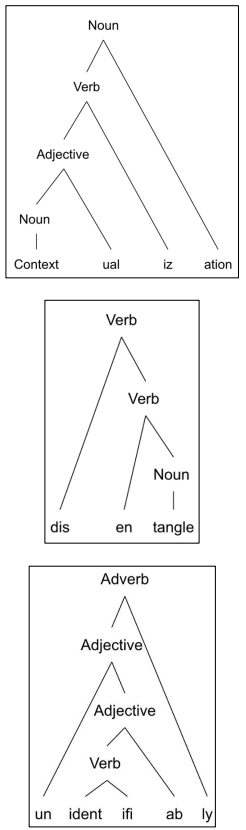
Now analyze the following statements.
I. -context- and -tangle- are free roots, while -ident- is a bound root.
II. These three words are formed both by prefixation and suffixation.
III. In the noun, -ual- and -iz- are derivational suffixes, while in the adverb, -ifi- and -ab- are inflectional suffixes.
IV. dis- and en- both have negative meanings.
V. The head of the noun is -ation, the head of the verb is en- and the head of the adverb is -ly.
The correct statements are
Ano: 2023
Banca:
INSTITUTO AOCP
Órgão:
IF-MA
Prova:
INSTITUTO AOCP - 2023 - IF-MA - Professor EBTT - Letras - Português - Inglês |
Q2238772
Inglês
Choose the only alternative which contains a
compound word in the sentence.
Ano: 2023
Banca:
INSTITUTO AOCP
Órgão:
IF-MA
Prova:
INSTITUTO AOCP - 2023 - IF-MA - Professor EBTT - Letras - Português - Inglês |
Q2238771
Inglês
You are teaching your learners at IFMA how to
write a research project. You asked students to
write the introduction of the research project.
Learners handed in the written assignment, and
now you are writing comments for their feedback.
In this context, analyze the statements below, with
your comment and the area being focused on:
I. Comment: the introduction should briefly describe the theme of your research, its aims and explain the importance of your research. Area: communicative aim of the genre.
II. Comment: I can understand your point here, but connect the sentences in this paragraph using linkers. Also, avoid repetition of words by using pronouns and synonyms. Area: organization and coherence.
III. Comment: avoid talking to your reader, that is not typical of introduction in research projects. Area: language accuracy.
IV. Comment: your target reader is the professor and/or another researcher, so use formal language, avoiding contractions and colloquial expressions. Area: appropriate register of the genre.
V. Comment: use present perfect here, since there is no time reference for the action and this can happen again. Area: appropriate tone of the genre.
VI. Comment: you discuss a number of different points in a single block. Divide it into different paragraphs. Area: layout and organization.
The statements in which the feedback comment is completely in line with the area are
I. Comment: the introduction should briefly describe the theme of your research, its aims and explain the importance of your research. Area: communicative aim of the genre.
II. Comment: I can understand your point here, but connect the sentences in this paragraph using linkers. Also, avoid repetition of words by using pronouns and synonyms. Area: organization and coherence.
III. Comment: avoid talking to your reader, that is not typical of introduction in research projects. Area: language accuracy.
IV. Comment: your target reader is the professor and/or another researcher, so use formal language, avoiding contractions and colloquial expressions. Area: appropriate register of the genre.
V. Comment: use present perfect here, since there is no time reference for the action and this can happen again. Area: appropriate tone of the genre.
VI. Comment: you discuss a number of different points in a single block. Divide it into different paragraphs. Area: layout and organization.
The statements in which the feedback comment is completely in line with the area are
Ano: 2023
Banca:
INSTITUTO AOCP
Órgão:
IF-MA
Prova:
INSTITUTO AOCP - 2023 - IF-MA - Professor EBTT - Letras - Português - Inglês |
Q2238770
Inglês
You are an English language professor at IFMA
and you are teaching your learners the genre
“discursive essay”. Which of the rhetorical moves
below are NOT usually typical of this genre?

 Conheça nossos planos