Questões de Concurso
Para seduc-pa
Foram encontradas 791 questões
Resolva questões gratuitamente!
Junte-se a mais de 4 milhões de concurseiros!


Ano: 2018
Banca:
CONSULPLAN
Órgão:
SEDUC-PA
Prova:
CONSULPLAN - 2018 - SEDUC-PA - Professor Classe I - Física |
Q2182406
Física
Relacione adequadamente a segunda coluna de acordo com a primeira.
1. Quando um fluxo magnético varia através de uma superfície sólida, e não apenas delimitada por um condutor como em indução eletromagnética, há criação de uma corrente induzida sobre ele como se toda superfície fosse composta por uma combinação de espiras muito finas justapostas.
2. A partir de resultados experimentais, a corrente induzida tem sentido oposto ao sentido da variação do campo magnético que a gera.
3. Conseguiu estabelecer a relação entre magnetismo e eletricidade.
4. A relação de atração e repulsão das cargas elétricas é semelhante à lei da gravitação universal proposta por Isaac Newton. ( ) Maxwell.
( ) Foucault. ( ) Coulumb. ( ) Henz.
A sequência está correta em
1. Quando um fluxo magnético varia através de uma superfície sólida, e não apenas delimitada por um condutor como em indução eletromagnética, há criação de uma corrente induzida sobre ele como se toda superfície fosse composta por uma combinação de espiras muito finas justapostas.
2. A partir de resultados experimentais, a corrente induzida tem sentido oposto ao sentido da variação do campo magnético que a gera.
3. Conseguiu estabelecer a relação entre magnetismo e eletricidade.
4. A relação de atração e repulsão das cargas elétricas é semelhante à lei da gravitação universal proposta por Isaac Newton. ( ) Maxwell.
( ) Foucault. ( ) Coulumb. ( ) Henz.
A sequência está correta em
Ano: 2018
Banca:
CONSULPLAN
Órgão:
SEDUC-PA
Prova:
CONSULPLAN - 2018 - SEDUC-PA - Professor Classe I - Física |
Q2182405
Física
A quantidade de calor que tem como efeito apenas a alteração da temperatura de um corpo denomina-se:
Ano: 2018
Banca:
CONSULPLAN
Órgão:
SEDUC-PA
Prova:
CONSULPLAN - 2018 - SEDUC-PA - Professor Classe I - Física |
Q2182404
Física
Quando uma corrente elétrica passa por um resistor, este converte energia elétrica em energia térmica. O resistor
dissipa a energia em forma de calor e assim ocorre uma diminuição da potência total do sistema. Esse aquecimento
do resistor por passagem de uma corrente é chamado de:
Ano: 2018
Banca:
CONSULPLAN
Órgão:
SEDUC-PA
Prova:
CONSULPLAN - 2018 - SEDUC-PA - Professor Classe I - Física |
Q2182403
Física
Ao redor da Terra atua uma região conhecida como campo gravitacional. Ele tem como principal objetivo atrair todos
os corpos para o centro do Planeta. Essa atração acontece por meio da influência de uma força – a força gravitacional.
Qualquer corpo pode sofrer a influência dessa força. Segundo Newton, isso acontece porque o peso do corpo sempre
está dirigido para o centro da Terra. Quando os corpos chegam ao campo gravitacional sofrem variação em sua
velocidade, porque adquirem aceleração, chamada de aceleração da gravidade.
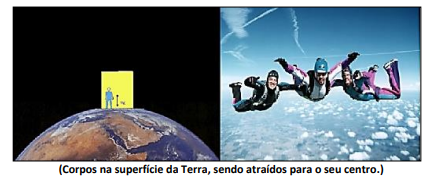
As imagens mostram que todo corpo colocado na superfície terrestre sofre a influência da força peso, que atrai esses corpos para o centro da Terra. Considerando a Teoria de Newton sobre a “aceleração da gravidade na superfície da Terra”, a força de atração gravitacional que existe entre a Terra e o corpo é dada pela equação:
As imagens mostram que todo corpo colocado na superfície terrestre sofre a influência da força peso, que atrai esses corpos para o centro da Terra. Considerando a Teoria de Newton sobre a “aceleração da gravidade na superfície da Terra”, a força de atração gravitacional que existe entre a Terra e o corpo é dada pela equação:
Ano: 2018
Banca:
CONSULPLAN
Órgão:
SEDUC-PA
Prova:
CONSULPLAN - 2018 - SEDUC-PA - Professor Classe I - Física |
Q2182402
Física
“Quanto maior a precisão com que medimos a posição, menor a precisão com que mediremos o momento e vice-versa.”
A esse princípio chamamos de:
Ano: 2018
Banca:
CONSULPLAN
Órgão:
SEDUC-PA
Prova:
CONSULPLAN - 2018 - SEDUC-PA - Professor Classe I - Física |
Q2182401
Física
Analise as afirmativas a seguir.
I. “O ar mais quente que está embaixo do congelador transfere energia para o Freon quando esse evapora, resfriando-se e formando correntes de __________________ no interior da geladeira.”
II. “Podemos nos aquecer nas proximidades de uma lareira, sem ter contato direto com o fogo, graças ao processo de condução do calor por _________________.”
III. “A energia propaga-se em virtude da agitação molecular. Esse processo denominado _________________ de calor é mais eficiente em materiais como os metais, que são bons condutores de calor. Isso também explica o motivo das panelas serem feitas de metal.”
De acordo com os princípios físicos dos processos de transmissão de calor, assinale a alternativa que completa correta e sequencialmente as afirmativas anteriores.
I. “O ar mais quente que está embaixo do congelador transfere energia para o Freon quando esse evapora, resfriando-se e formando correntes de __________________ no interior da geladeira.”
II. “Podemos nos aquecer nas proximidades de uma lareira, sem ter contato direto com o fogo, graças ao processo de condução do calor por _________________.”
III. “A energia propaga-se em virtude da agitação molecular. Esse processo denominado _________________ de calor é mais eficiente em materiais como os metais, que são bons condutores de calor. Isso também explica o motivo das panelas serem feitas de metal.”
De acordo com os princípios físicos dos processos de transmissão de calor, assinale a alternativa que completa correta e sequencialmente as afirmativas anteriores.
Ano: 2018
Banca:
CONSULPLAN
Órgão:
SEDUC-PA
Prova:
CONSULPLAN - 2018 - SEDUC-PA - Professor Classe I - Física |
Q2182400
Física
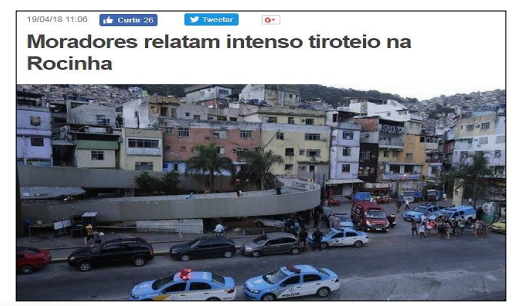
Moradores da Rocinha, em São Conrado, na Zona Sul do Rio, relataram tiros e explosões na localidade da Rua 1, na manhã desta quinta-feira. Segundo a Polícia Militar, Equipes da Unidade de Polícia Pacificadora (UPP) Rocinha e do Batalhão de Polícia de Choque (BPChq) foram recebidas a tiros, mas não houve revide. Não há informações de feridos. A Polícia Militar informou que a ação desta quinta-feira faz parte da ação continuada na comunidade. Policiais patrulham a comunidade. Nas redes sociais, moradores fazem relatos: “Situação de guerra continua cada vez pior”, escreveu um internauta. “Minha mãe acabou de pôr o pé pra fora e começaram os tiros. Que medo”, publicou uma moradora.
(Disponível em:https://extra.globo.com/casos-de-policia/moradores-relatam-intenso-tiroteio-na-rocinha-22608985.html.)
Considere que uma metralhadora de posse de um cidadão dispara uma arma com velocidade inicial igual a 200 m/s a 60° com a horizontal. Desprezando o atrito e considerando g = 10 m/s², determine o alcance máximo horizontal da bala.
Ano: 2018
Banca:
CONSULPLAN
Órgão:
SEDUC-PA
Prova:
CONSULPLAN - 2018 - SEDUC-PA - Professor Classe I - Física |
Q2182399
Física
“Um exemplo comum no cotidiano é um monitor de computador carregado ou uma televisão. Ao aproximar os pelos
do braço ou o cabelo, estes ficam esticados, conforme as forças de atração ________________ devido à carga líquida
do monitor.” Assinale a alternativa que completa corretamente a afirmativa anterior.
Ano: 2018
Banca:
CONSULPLAN
Órgão:
SEDUC-PA
Prova:
CONSULPLAN - 2018 - SEDUC-PA - Professor Classe I - Física |
Q2182398
Física
“Muitas civilizações antigas, além de observar e classificar os astros, também chegaram a construir observatórios fixos
para comparar a posição das estrelas com o correr do tempo. Muitos foram os modelos para explicar a posição relativa
dos planetas, do Sol e da Terra. Entre as entidades observadas estavam os planetas – ‘errantes’. Estes, ao contrário das
estrelas, que mantinham fixas suas posições relativas, ‘erravam’, mudando de posição em relação às estrelas. Mas foi
somente no século XVI que Nicolau Copérnico propôs o modelo heliocêntrico (hélio = sol e cêntrico = centro) em que o
Sol é o centro do sistema planetário e os planetas, entre eles a Terra, orbitam ao seu redor.”
(Disponível em: https://guiadoestudante.abril.com.br/estudo/resumo-de-fisica-gravitacao-universal/.)
Ainda, no século XVI, precisamente no ano de 1665, ao estudar o movimento da Lua, Newton concluiu que a força que faz com que ela esteja constantemente em órbita é do mesmo tipo que a força que a Terra exerce sobre um corpo em suas proximidades. A partir daí criou a Lei da Gravitação Universal. Sobre a Lei de Gravitação Universal, analise as afirmativas a seguir.
I. Dois pontos materiais atraem-se com forças cujas intensidades são diretamente proporcionais às suas massas e inversamente proporcionais ao quadrado da distância que os separa.
II. O termo G é uma constante de proporcionalidade denominada constante gravitacional universal.
III. Em unidades do SI, G = 6,67 × 10⁻¹¹ N ∙ m²/kg².
Está(ão) correta(s) a(s) afirmativa(s)
(Disponível em: https://guiadoestudante.abril.com.br/estudo/resumo-de-fisica-gravitacao-universal/.)
Ainda, no século XVI, precisamente no ano de 1665, ao estudar o movimento da Lua, Newton concluiu que a força que faz com que ela esteja constantemente em órbita é do mesmo tipo que a força que a Terra exerce sobre um corpo em suas proximidades. A partir daí criou a Lei da Gravitação Universal. Sobre a Lei de Gravitação Universal, analise as afirmativas a seguir.
I. Dois pontos materiais atraem-se com forças cujas intensidades são diretamente proporcionais às suas massas e inversamente proporcionais ao quadrado da distância que os separa.
II. O termo G é uma constante de proporcionalidade denominada constante gravitacional universal.
III. Em unidades do SI, G = 6,67 × 10⁻¹¹ N ∙ m²/kg².
Está(ão) correta(s) a(s) afirmativa(s)
Ano: 2018
Banca:
CONSULPLAN
Órgão:
SEDUC-PA
Prova:
CONSULPLAN - 2018 - SEDUC-PA - Professor Classe I - Física |
Q2182397
Física
A respeito das Leis de Newton, analise as afirmativas a seguir.
I. A 1ª Lei de Newton ou Princípio da Inércia estabelece que: “um ponto material isolado está em repouso ou em movimento retilíneo uniforme”. Isso significa que um ponto material isolado não está em equilíbrio estático (repouso) e nem em equilíbrio dinâmico (movimento retilíneo uniforme).
II. A 2ª Lei de Newton diz que: “a resultante das forças aplicadas a um ponto material é igual ao produto de sua massa pela aceleração adquirida”, ou seja:
III. As forças atuam sempre em pares; para toda força de ação, existe uma força de reação.
Está(ão) INCORRETA(S) apenas a(s) afirmativa(s)
I. A 1ª Lei de Newton ou Princípio da Inércia estabelece que: “um ponto material isolado está em repouso ou em movimento retilíneo uniforme”. Isso significa que um ponto material isolado não está em equilíbrio estático (repouso) e nem em equilíbrio dinâmico (movimento retilíneo uniforme).
II. A 2ª Lei de Newton diz que: “a resultante das forças aplicadas a um ponto material é igual ao produto de sua massa pela aceleração adquirida”, ou seja:
III. As forças atuam sempre em pares; para toda força de ação, existe uma força de reação.
Está(ão) INCORRETA(S) apenas a(s) afirmativa(s)
Q1237979
Português
Texto para responder a seguinte questão.
Bye Bye, Brasil
Oi, coração Não dá pra falar muito não, Espera passar o avião. Assim que o inverno passar, Eu acho que vou te buscar, Aqui tá fazendo calor, Deu pane no ventilador, Já tem fliperama em Macau, Tomei a costeira em Belém do Pará, Puseram uma usina no mar, Talvez fique ruim pra pescar, Meu amor. No Tocantins, O chefe dos parintintins Vidrou na minha calça Lee, Eu vi uns patins pra você Eu vi um Brasil na TV, Capaz de cair um toró, Estou me sentindo tão só, Oh, tenha dó de mim. Pintou uma chance legal, Um lance lá na capital, Nem tem que ter ginasial, Meu amor. No Tabariz, O som é que nem os Bee Gees, Dancei com uma dona infeliz, Que tem um tufão nos quadris, Tem um japonês trás de mim, Eu vou dar um pulo em Manaus, Aqui tá quarenta e dois graus, O sol nunca mais vai se pôr, Eu tenho saudades da nossa canção, Saudades de roça e sertão, Bom mesmo é ter um caminhão, Meu amor.
(BUARQUE, Chico & MENESCAL, Roberto. Fragmento.)
Em “Dancei com uma dona infeliz, / Que tem um tufão nos quadris, / Tem um japonês trás de mim,” pode-se afirmar que a informação apresentada na oração adjetiva explicativa
Bye Bye, Brasil
Oi, coração Não dá pra falar muito não, Espera passar o avião. Assim que o inverno passar, Eu acho que vou te buscar, Aqui tá fazendo calor, Deu pane no ventilador, Já tem fliperama em Macau, Tomei a costeira em Belém do Pará, Puseram uma usina no mar, Talvez fique ruim pra pescar, Meu amor. No Tocantins, O chefe dos parintintins Vidrou na minha calça Lee, Eu vi uns patins pra você Eu vi um Brasil na TV, Capaz de cair um toró, Estou me sentindo tão só, Oh, tenha dó de mim. Pintou uma chance legal, Um lance lá na capital, Nem tem que ter ginasial, Meu amor. No Tabariz, O som é que nem os Bee Gees, Dancei com uma dona infeliz, Que tem um tufão nos quadris, Tem um japonês trás de mim, Eu vou dar um pulo em Manaus, Aqui tá quarenta e dois graus, O sol nunca mais vai se pôr, Eu tenho saudades da nossa canção, Saudades de roça e sertão, Bom mesmo é ter um caminhão, Meu amor.
(BUARQUE, Chico & MENESCAL, Roberto. Fragmento.)
Em “Dancei com uma dona infeliz, / Que tem um tufão nos quadris, / Tem um japonês trás de mim,” pode-se afirmar que a informação apresentada na oração adjetiva explicativa
Q1237879
Português
Texto para responder a seguinte questão.
Bye Bye, Brasil
Oi, coração Não dá pra falar muito não, Espera passar o avião. Assim que o inverno passar, Eu acho que vou te buscar, Aqui tá fazendo calor, Deu pane no ventilador, Já tem fliperama em Macau, Tomei a costeira em Belém do Pará, Puseram uma usina no mar, Talvez fique ruim pra pescar, Meu amor. No Tocantins, O chefe dos parintintins Vidrou na minha calça Lee, Eu vi uns patins pra você Eu vi um Brasil na TV, Capaz de cair um toró, Estou me sentindo tão só, Oh, tenha dó de mim. Pintou uma chance legal, Um lance lá na capital, Nem tem que ter ginasial, Meu amor. No Tabariz, O som é que nem os Bee Gees, Dancei com uma dona infeliz, Que tem um tufão nos quadris, Tem um japonês trás de mim, Eu vou dar um pulo em Manaus, Aqui tá quarenta e dois graus, O sol nunca mais vai se pôr, Eu tenho saudades da nossa canção, Saudades de roça e sertão, Bom mesmo é ter um caminhão, Meu amor.
(BUARQUE, Chico & MENESCAL, Roberto. Fragmento.)
De acordo com as regras de acentuação vigentes, obedecem à mesma regra de acentuação os vocábulos grifados a seguir, com EXCEÇÃO de:
Bye Bye, Brasil
Oi, coração Não dá pra falar muito não, Espera passar o avião. Assim que o inverno passar, Eu acho que vou te buscar, Aqui tá fazendo calor, Deu pane no ventilador, Já tem fliperama em Macau, Tomei a costeira em Belém do Pará, Puseram uma usina no mar, Talvez fique ruim pra pescar, Meu amor. No Tocantins, O chefe dos parintintins Vidrou na minha calça Lee, Eu vi uns patins pra você Eu vi um Brasil na TV, Capaz de cair um toró, Estou me sentindo tão só, Oh, tenha dó de mim. Pintou uma chance legal, Um lance lá na capital, Nem tem que ter ginasial, Meu amor. No Tabariz, O som é que nem os Bee Gees, Dancei com uma dona infeliz, Que tem um tufão nos quadris, Tem um japonês trás de mim, Eu vou dar um pulo em Manaus, Aqui tá quarenta e dois graus, O sol nunca mais vai se pôr, Eu tenho saudades da nossa canção, Saudades de roça e sertão, Bom mesmo é ter um caminhão, Meu amor.
(BUARQUE, Chico & MENESCAL, Roberto. Fragmento.)
De acordo com as regras de acentuação vigentes, obedecem à mesma regra de acentuação os vocábulos grifados a seguir, com EXCEÇÃO de:
Q1225135
Português
“Paradoxalmente” — escreverá um historiador em 2218 — “foi a disseminação da escrita como principal forma de comunicação o que criou as condições para a sua própria morte”. O alfabeto latino, este fantástico conjunto de 26 letras que, combinadas infinitamente, podem nomear realidades tão distintas quanto “sol”, “cunilingus”, “schadenfreud” e “Argamassa Cimentcola Quartzolite”, começou sua lenta caminhada em direção ao brejo em setembro de 1982.
Foi ali, não muito depois da derrota do Brasil para a Itália de Paolo Rossi, que o cientista da computação Scott Fahlman sugeriu a colegas de Carnegie Mellon University, com os quais se comunicava online, usarem :-) para distinguirem as piadas dos assuntos sérios. Mal sabia o tal Scott que aquela inocente boca de parêntese era o protótipo da goela que viria a engolir quase 3.000 anos de alfabeto como se fosse uma sopa de letrinhas.
Os emoticons se espalharam pelo mundo com o ICQ, os chats e, principalmente, os celulares, mas nem todos os seres humanos aderiram imediatamente à moda. [...]
Emoticons foram o início do fim, mas só o início. O coaxar dos sapos no brejo começou a incomodar mesmo com a chegada dos emojis. Confesso que, de novo, demorei pra entrar na onda. Desta vez não por burrice, mas por senso do ridículo. Quando que um adulto como eu iria mandar pra outro adulto um “smile” bicudo soltando um coração pelo canto da boca, como se fosse uma bola de chiclete? Nunca! “Nunca”, no caso, revelou-se estar a apenas uns cinco anos de distância da minha indignação.
Hoje eu mando coração pulsante pra contadora que me lembrou dos documentos do IR, mando John Travolta de roxo pro amigo que me pergunta se está confirmado o jantar na quinta e, se eu pagasse imposto sobre cada joia que envio daquele mãozão amarelo, não ia ter coração pulsante capaz de fazer minha contadora resolver a situação.
“Em meados do século 21” — escreverá o historiador de 2218 — “a humanidade abandonou o alfabeto e passou a se comunicar só por emojis”. A frase, claro, será toda escrita com emojis. Haverá tantos, tão variados, que será possível citar Shakespeare usando apenas desenhinhos. (Shakespeare, aliás, dá pra escrever. Imagem de milk-shake + duas chaves (keys) + pera (pear). Shake + keys + pear).
Teremos voltado ao tempo dos hieróglifos e não me assombra se as condições de vida regredirem às do antigo Egito, mas ninguém se importará, cada um de nós hipnotizado pela tela que tantos apregoaram ser uma nova pedra de Roseta, capaz de traduzir o mundo em nossas mãos, mas que no fim se revelou só um infernal e escravizante pergaminho. :-(
(Antônio Prata. Folha de S. Paulo, 15 de abril de 2018. Adaptado.)
Em “O alfabeto latino, este fantástico conjunto de 26 letras que, combinadas infinitamente, podem nomear realidades tão distintas quanto ‘sol’, ‘cunilingus’, ‘schadenfreud’ e ‘Argamassa Cimentcola Quartzolite’, começou sua lenta caminhada em direção ao brejo em setembro de 1982.” (1º§), pode-se afirmar que o trecho sublinhado
(Antônio Prata. Folha de S. Paulo, 15 de abril de 2018. Adaptado.)
Em “O alfabeto latino, este fantástico conjunto de 26 letras que, combinadas infinitamente, podem nomear realidades tão distintas quanto ‘sol’, ‘cunilingus’, ‘schadenfreud’ e ‘Argamassa Cimentcola Quartzolite’, começou sua lenta caminhada em direção ao brejo em setembro de 1982.” (1º§), pode-se afirmar que o trecho sublinhado
Q1225106
Português
“Paradoxalmente” — escreverá um historiador em 2218 — “foi a disseminação da escrita como principal forma de comunicação o que criou as condições para a sua própria morte”. O alfabeto latino, este fantástico conjunto de 26 letras que, combinadas infinitamente, podem nomear realidades tão distintas quanto “sol”, “cunilingus”, “schadenfreud” e “Argamassa Cimentcola Quartzolite”, começou sua lenta caminhada em direção ao brejo em setembro de 1982.
Foi ali, não muito depois da derrota do Brasil para a Itália de Paolo Rossi, que o cientista da computação Scott Fahlman sugeriu a colegas de Carnegie Mellon University, com os quais se comunicava online, usarem :-) para distinguirem as piadas dos assuntos sérios. Mal sabia o tal Scott que aquela inocente boca de parêntese era o protótipo da goela que viria a engolir quase 3.000 anos de alfabeto como se fosse uma sopa de letrinhas.
Os emoticons se espalharam pelo mundo com o ICQ, os chats e, principalmente, os celulares, mas nem todos os seres humanos aderiram imediatamente à moda. [...]
Emoticons foram o início do fim, mas só o início. O coaxar dos sapos no brejo começou a incomodar mesmo com a chegada dos emojis. Confesso que, de novo, demorei pra entrar na onda. Desta vez não por burrice, mas por senso do ridículo. Quando que um adulto como eu iria mandar pra outro adulto um “smile” bicudo soltando um coração pelo canto da boca, como se fosse uma bola de chiclete? Nunca! “Nunca”, no caso, revelou-se estar a apenas uns cinco anos de distância da minha indignação.
Hoje eu mando coração pulsante pra contadora que me lembrou dos documentos do IR, mando John Travolta de roxo pro amigo que me pergunta se está confirmado o jantar na quinta e, se eu pagasse imposto sobre cada joia que envio daquele mãozão amarelo, não ia ter coração pulsante capaz de fazer minha contadora resolver a situação.
“Em meados do século 21” — escreverá o historiador de 2218 — “a humanidade abandonou o alfabeto e passou a se comunicar só por emojis”. A frase, claro, será toda escrita com emojis. Haverá tantos, tão variados, que será possível citar Shakespeare usando apenas desenhinhos. (Shakespeare, aliás, dá pra escrever. Imagem de milk-shake + duas chaves (keys) + pera (pear). Shake + keys + pear).
Teremos voltado ao tempo dos hieróglifos e não me assombra se as condições de vida regredirem às do antigo Egito, mas ninguém se importará, cada um de nós hipnotizado pela tela que tantos apregoaram ser uma nova pedra de Roseta, capaz de traduzir o mundo em nossas mãos, mas que no fim se revelou só um infernal e escravizante pergaminho. :-(
(Antônio Prata. Folha de S. Paulo, 15 de abril de 2018. Adaptado.)
Acerca dos termos grifados no 2º§ do texto, está correto o que se afirma em:
(Antônio Prata. Folha de S. Paulo, 15 de abril de 2018. Adaptado.)
Acerca dos termos grifados no 2º§ do texto, está correto o que se afirma em:
Q1225072
Português
“Paradoxalmente” — escreverá um historiador em 2218 — “foi a disseminação da escrita como principal forma de comunicação o que criou as condições para a sua própria morte”. O alfabeto latino, este fantástico conjunto de 26 letras que, combinadas infinitamente, podem nomear realidades tão distintas quanto “sol”, “cunilingus”, “schadenfreud” e “Argamassa Cimentcola Quartzolite”, começou sua lenta caminhada em direção ao brejo em setembro de 1982.
Foi ali, não muito depois da derrota do Brasil para a Itália de Paolo Rossi, que o cientista da computação Scott Fahlman sugeriu a colegas de Carnegie Mellon University, com os quais se comunicava online, usarem :-) para distinguirem as piadas dos assuntos sérios. Mal sabia o tal Scott que aquela inocente boca de parêntese era o protótipo da goela que viria a engolir quase 3.000 anos de alfabeto como se fosse uma sopa de letrinhas.
Os emoticons se espalharam pelo mundo com o ICQ, os chats e, principalmente, os celulares, mas nem todos os seres humanos aderiram imediatamente à moda. [...]
Emoticons foram o início do fim, mas só o início. O coaxar dos sapos no brejo começou a incomodar mesmo com a chegada dos emojis. Confesso que, de novo, demorei pra entrar na onda. Desta vez não por burrice, mas por senso do ridículo. Quando que um adulto como eu iria mandar pra outro adulto um “smile” bicudo soltando um coração pelo canto da boca, como se fosse uma bola de chiclete? Nunca! “Nunca”, no caso, revelou-se estar a apenas uns cinco anos de distância da minha indignação.
Hoje eu mando coração pulsante pra contadora que me lembrou dos documentos do IR, mando John Travolta de roxo pro amigo que me pergunta se está confirmado o jantar na quinta e, se eu pagasse imposto sobre cada joia que envio daquele mãozão amarelo, não ia ter coração pulsante capaz de fazer minha contadora resolver a situação.
“Em meados do século 21” — escreverá o historiador de 2218 — “a humanidade abandonou o alfabeto e passou a se comunicar só por emojis”. A frase, claro, será toda escrita com emojis. Haverá tantos, tão variados, que será possível citar Shakespeare usando apenas desenhinhos. (Shakespeare, aliás, dá pra escrever. Imagem de milk-shake + duas chaves (keys) + pera (pear). Shake + keys + pear).
Teremos voltado ao tempo dos hieróglifos e não me assombra se as condições de vida regredirem às do antigo Egito, mas ninguém se importará, cada um de nós hipnotizado pela tela que tantos apregoaram ser uma nova pedra de Roseta, capaz de traduzir o mundo em nossas mãos, mas que no fim se revelou só um infernal e escravizante pergaminho. :-(
(Antônio Prata. Folha de S. Paulo, 15 de abril de 2018. Adaptado.)
De acordo com o texto:
(Antônio Prata. Folha de S. Paulo, 15 de abril de 2018. Adaptado.)
De acordo com o texto:
Q1221707
Inglês
Read the text to answer the following question.
Cultural diversity and cultural identity in globalization
In the process of globalization winners are the countries with highly developed mass media as complex systems which are able to broadcast and receive diverse information which are used as basic development resource. On the other side are the developing countries which suffer their impact. Their characteristic is the small capacity to adapt to innovations that came from outside and that is why their cultural identity is called into question. Mass media are not only instruments for spreading popular culture and industries, but at the same time, their use enables cultural hegemony. Mass media, society, local culture, and media content are closely related. By exhibiting TV shows, movies, dramas etc. media will reflect values specific to local culture. So, we can talk about displaying commerciality as feature of American culture, Japanese aesthetic values, French tendency to philosophize... One of the main functions of mass media is to transfer cultural inheritance, information about the past, values of a given society, and to furnish cultural directive for life, action, and behavior. Despite the globalization of the economy, and the emergence of international political institutions, global dissemination of culture (mass media, education, modernization, urbanization, the spread of literacy) from the late 20th century has strengthened national identities. Modern nationalism is less focused on defending the country and more inclined to defend the established cultural identity. The identities represent the defense against unpredictability, disorder, and changes of globalization. In the last three decades there is strong trend to resisting globalization and cosmopolitanism as a form of defense of cultural identity. “God, nations, families and communities will ensure eternal figures that cannot be broken down and around which society will develop a counter-culture of real virtuality”. Castells considers that individuals carry with them the eternal truth, the values that cannot be virtualized or destroyed. As the globalization process strengthens the coming of cultural integrity and identity problems are more prevalent. Dominant monoculture stands against local, national and traditional cultures with the progressive disintegration of traditional culture value patterns.
(Available: www.wseas.us/e-library/conferences/2013. Adapted.)
“Which” (line 16) refers back to
Cultural diversity and cultural identity in globalization
In the process of globalization winners are the countries with highly developed mass media as complex systems which are able to broadcast and receive diverse information which are used as basic development resource. On the other side are the developing countries which suffer their impact. Their characteristic is the small capacity to adapt to innovations that came from outside and that is why their cultural identity is called into question. Mass media are not only instruments for spreading popular culture and industries, but at the same time, their use enables cultural hegemony. Mass media, society, local culture, and media content are closely related. By exhibiting TV shows, movies, dramas etc. media will reflect values specific to local culture. So, we can talk about displaying commerciality as feature of American culture, Japanese aesthetic values, French tendency to philosophize... One of the main functions of mass media is to transfer cultural inheritance, information about the past, values of a given society, and to furnish cultural directive for life, action, and behavior. Despite the globalization of the economy, and the emergence of international political institutions, global dissemination of culture (mass media, education, modernization, urbanization, the spread of literacy) from the late 20th century has strengthened national identities. Modern nationalism is less focused on defending the country and more inclined to defend the established cultural identity. The identities represent the defense against unpredictability, disorder, and changes of globalization. In the last three decades there is strong trend to resisting globalization and cosmopolitanism as a form of defense of cultural identity. “God, nations, families and communities will ensure eternal figures that cannot be broken down and around which society will develop a counter-culture of real virtuality”. Castells considers that individuals carry with them the eternal truth, the values that cannot be virtualized or destroyed. As the globalization process strengthens the coming of cultural integrity and identity problems are more prevalent. Dominant monoculture stands against local, national and traditional cultures with the progressive disintegration of traditional culture value patterns.
(Available: www.wseas.us/e-library/conferences/2013. Adapted.)
“Which” (line 16) refers back to
Q1221673
Inglês
Read the text to answer the following question.
Cultural diversity and cultural identity in globalization
In the process of globalization winners are the countries with highly developed mass media as complex systems which are able to broadcast and receive diverse information which are used as basic development resource. On the other side are the developing countries which suffer their impact. Their characteristic is the small capacity to adapt to innovations that came from outside and that is why their cultural identity is called into question. Mass media are not only instruments for spreading popular culture and industries, but at the same time, their use enables cultural hegemony. Mass media, society, local culture, and media content are closely related. By exhibiting TV shows, movies, dramas etc. media will reflect values specific to local culture. So, we can talk about displaying commerciality as feature of American culture, Japanese aesthetic values, French tendency to philosophize... One of the main functions of mass media is to transfer cultural inheritance, information about the past, values of a given society, and to furnish cultural directive for life, action, and behavior. Despite the globalization of the economy, and the emergence of international political institutions, global dissemination of culture (mass media, education, modernization, urbanization, the spread of literacy) from the late 20th century has strengthened national identities. Modern nationalism is less focused on defending the country and more inclined to defend the established cultural identity. The identities represent the defense against unpredictability, disorder, and changes of globalization. In the last three decades there is strong trend to resisting globalization and cosmopolitanism as a form of defense of cultural identity. “God, nations, families and communities will ensure eternal figures that cannot be broken down and around which society will develop a counter-culture of real virtuality”. Castells considers that individuals carry with them the eternal truth, the values that cannot be virtualized or destroyed. As the globalization process strengthens the coming of cultural integrity and identity problems are more prevalent. Dominant monoculture stands against local, national and traditional cultures with the progressive disintegration of traditional culture value patterns.
(Available: www.wseas.us/e-library/conferences/2013. Adapted.)
“Enables” (line 5) means
Cultural diversity and cultural identity in globalization
In the process of globalization winners are the countries with highly developed mass media as complex systems which are able to broadcast and receive diverse information which are used as basic development resource. On the other side are the developing countries which suffer their impact. Their characteristic is the small capacity to adapt to innovations that came from outside and that is why their cultural identity is called into question. Mass media are not only instruments for spreading popular culture and industries, but at the same time, their use enables cultural hegemony. Mass media, society, local culture, and media content are closely related. By exhibiting TV shows, movies, dramas etc. media will reflect values specific to local culture. So, we can talk about displaying commerciality as feature of American culture, Japanese aesthetic values, French tendency to philosophize... One of the main functions of mass media is to transfer cultural inheritance, information about the past, values of a given society, and to furnish cultural directive for life, action, and behavior. Despite the globalization of the economy, and the emergence of international political institutions, global dissemination of culture (mass media, education, modernization, urbanization, the spread of literacy) from the late 20th century has strengthened national identities. Modern nationalism is less focused on defending the country and more inclined to defend the established cultural identity. The identities represent the defense against unpredictability, disorder, and changes of globalization. In the last three decades there is strong trend to resisting globalization and cosmopolitanism as a form of defense of cultural identity. “God, nations, families and communities will ensure eternal figures that cannot be broken down and around which society will develop a counter-culture of real virtuality”. Castells considers that individuals carry with them the eternal truth, the values that cannot be virtualized or destroyed. As the globalization process strengthens the coming of cultural integrity and identity problems are more prevalent. Dominant monoculture stands against local, national and traditional cultures with the progressive disintegration of traditional culture value patterns.
(Available: www.wseas.us/e-library/conferences/2013. Adapted.)
“Enables” (line 5) means
Q1220786
Inglês
Read the text to answer the following question.
Cultural diversity and cultural identity in globalization
In the process of globalization winners are the countries with highly developed mass media as complex systems which are able to broadcast and receive diverse information which are used as basic development resource. On the other side are the developing countries which suffer their impact. Their characteristic is the small capacity to adapt to innovations that came from outside and that is why their cultural identity is called into question. Mass media are not only instruments for spreading popular culture and industries, but at the same time, their use enables cultural hegemony. Mass media, society, local culture, and media content are closely related. By exhibiting TV shows, movies, dramas etc. media will reflect values specific to local culture. So, we can talk about displaying commerciality as feature of American culture, Japanese aesthetic values, French tendency to philosophize... One of the main functions of mass media is to transfer cultural inheritance, information about the past, values of a given society, and to furnish cultural directive for life, action, and behavior. Despite the globalization of the economy, and the emergence of international political institutions, global dissemination of culture (mass media, education, modernization, urbanization, the spread of literacy) from the late 20th century has strengthened national identities. Modern nationalism is less focused on defending the country and more inclined to defend the established cultural identity. The identities represent the defense against unpredictability, disorder, and changes of globalization. In the last three decades there is strong trend to resisting globalization and cosmopolitanism as a form of defense of cultural identity. “God, nations, families and communities will ensure eternal figures that cannot be broken down and around which society will develop a counter-culture of real virtuality”. Castells considers that individuals carry with them the eternal truth, the values that cannot be virtualized or destroyed. As the globalization process strengthens the coming of cultural integrity and identity problems are more prevalent. Dominant monoculture stands against local, national and traditional cultures with the progressive disintegration of traditional culture value patterns.
(Available: www.wseas.us/e-library/conferences/2013. Adapted.)
Gerund use does NOT follow the same pattern of “spreading” (L04) in
Cultural diversity and cultural identity in globalization
In the process of globalization winners are the countries with highly developed mass media as complex systems which are able to broadcast and receive diverse information which are used as basic development resource. On the other side are the developing countries which suffer their impact. Their characteristic is the small capacity to adapt to innovations that came from outside and that is why their cultural identity is called into question. Mass media are not only instruments for spreading popular culture and industries, but at the same time, their use enables cultural hegemony. Mass media, society, local culture, and media content are closely related. By exhibiting TV shows, movies, dramas etc. media will reflect values specific to local culture. So, we can talk about displaying commerciality as feature of American culture, Japanese aesthetic values, French tendency to philosophize... One of the main functions of mass media is to transfer cultural inheritance, information about the past, values of a given society, and to furnish cultural directive for life, action, and behavior. Despite the globalization of the economy, and the emergence of international political institutions, global dissemination of culture (mass media, education, modernization, urbanization, the spread of literacy) from the late 20th century has strengthened national identities. Modern nationalism is less focused on defending the country and more inclined to defend the established cultural identity. The identities represent the defense against unpredictability, disorder, and changes of globalization. In the last three decades there is strong trend to resisting globalization and cosmopolitanism as a form of defense of cultural identity. “God, nations, families and communities will ensure eternal figures that cannot be broken down and around which society will develop a counter-culture of real virtuality”. Castells considers that individuals carry with them the eternal truth, the values that cannot be virtualized or destroyed. As the globalization process strengthens the coming of cultural integrity and identity problems are more prevalent. Dominant monoculture stands against local, national and traditional cultures with the progressive disintegration of traditional culture value patterns.
(Available: www.wseas.us/e-library/conferences/2013. Adapted.)
Gerund use does NOT follow the same pattern of “spreading” (L04) in
Q1213205
Inglês
Review the dialogs to answer the next question.
Fay: I guess that’s it, Tony. I’m leaving for good. Tony: Let me get it straight, how come you’ve made that decision?
What will Fay do?
Fay: I guess that’s it, Tony. I’m leaving for good. Tony: Let me get it straight, how come you’ve made that decision?
What will Fay do?
Q1183554
Inglês
Review the sentence that contains underlined parts to answer the following question.
Mark the item corresponding to the inconsistent underlined part correction.
I wonder if dad will ever let me to drive his new car, I don’t think he will. A B C D
Mark the item corresponding to the inconsistent underlined part correction.
I wonder if dad will ever let me to drive his new car, I don’t think he will. A B C D

 Conheça nossos planos