Selecionar segmento
Estude com questões de diferentes segmentos
Atenção: Isso limpará todos os campos já preenchidos no filtro!
Foram encontradas 8.907 questões
Resolva questões gratuitamente!
Junte-se a mais de 4 milhões de concurseiros!


Ano: 2023
Banca:
COSEAC
Órgão:
UFF
Prova:
COSEAC - 2023 - UFF - Transferência Facultativa - Tópicos de Ensino Superior - Inglês |
Q3378330
Inglês
Texto associado
TEXT 1
World Cup 2022: why is Qatar a controversial location for the tournament?
Nov 29, 2022 (Reuters)
The decision to award Qatar hosting rights for the 2022 World Cup has been marred by
controversy around issues such as local climate conditions, human rights violations, and, in
particular, the welfare of migrant workers, since it was first announced 12 years ago.
Local climate conditions and FIFA’s calendar
FIFA awarded the 2022 tournament to the Middle Eastern country in 2010, with the understanding
it would be held during the summer, where temperatures exceed 40 degrees.
In 2015, FIFA recommended that Qatar host a shorter World Cup over the cooler months of
November and December in a move that was sure to put soccer's world governing body on a
collision course with the major European leagues. The big European leagues would prefer an AprilMay option to minimise disruption to their lucrative domestic seasons. But this latter alternative did
not prevail and the schedule change to the northern hemisphere winter marked the first time that
the World Cup moved from its regular slot of June and July when Europe's domestic leagues have
concluded their seasons.
Welfare of migrant workers
Britain’s 7newspaper reported that at least 6,500 migrant workers – many of them working
on World Cup projects – had died in Qatar since it won the right in 2010 to stage the World Cup.
The International Labour Organization has questioned that number, which it said included all
deaths in the overall migrant population, which consists of 2, 9 million people. Qatari World Cup
organisers have said that there have been three work-related fatalities and 34 non-work-related
deaths among workers at World Cup 2022 sites.
Amnesty International and other rights groups have led calls for FIFA to compensate migrant
workers in Qatar for human rights abuses by setting aside $440 million, matching the World Cup
prize money. They believe that their fight for compensation may make up for the abuse suffered by
migrant workers.
Apart from the schedule change and the welfare of migrant workers, violation in women's and
LGBT’s rights, as well as the strict control on alcohol were other issues which nurtured the
controversy around the 2022 Word Cup in Qatar.
Available at : https://www.reuters.com/lifestyle/sports/world-cup-2022-why-is-qatar-controversial-location-fifa-tournament.
Access: 03 Dec. 2022. Adapted.
The pronoun “they”, in “they believe their fight for compensation…” refers to:
Ano: 2023
Banca:
COSEAC
Órgão:
UFF
Prova:
COSEAC - 2023 - UFF - Transferência Facultativa - Tópicos de Ensino Superior - Inglês |
Q3378329
Inglês
Texto associado
TEXT 1
World Cup 2022: why is Qatar a controversial location for the tournament?
Nov 29, 2022 (Reuters)
The decision to award Qatar hosting rights for the 2022 World Cup has been marred by
controversy around issues such as local climate conditions, human rights violations, and, in
particular, the welfare of migrant workers, since it was first announced 12 years ago.
Local climate conditions and FIFA’s calendar
FIFA awarded the 2022 tournament to the Middle Eastern country in 2010, with the understanding
it would be held during the summer, where temperatures exceed 40 degrees.
In 2015, FIFA recommended that Qatar host a shorter World Cup over the cooler months of
November and December in a move that was sure to put soccer's world governing body on a
collision course with the major European leagues. The big European leagues would prefer an AprilMay option to minimise disruption to their lucrative domestic seasons. But this latter alternative did
not prevail and the schedule change to the northern hemisphere winter marked the first time that
the World Cup moved from its regular slot of June and July when Europe's domestic leagues have
concluded their seasons.
Welfare of migrant workers
Britain’s 7newspaper reported that at least 6,500 migrant workers – many of them working
on World Cup projects – had died in Qatar since it won the right in 2010 to stage the World Cup.
The International Labour Organization has questioned that number, which it said included all
deaths in the overall migrant population, which consists of 2, 9 million people. Qatari World Cup
organisers have said that there have been three work-related fatalities and 34 non-work-related
deaths among workers at World Cup 2022 sites.
Amnesty International and other rights groups have led calls for FIFA to compensate migrant
workers in Qatar for human rights abuses by setting aside $440 million, matching the World Cup
prize money. They believe that their fight for compensation may make up for the abuse suffered by
migrant workers.
Apart from the schedule change and the welfare of migrant workers, violation in women's and
LGBT’s rights, as well as the strict control on alcohol were other issues which nurtured the
controversy around the 2022 Word Cup in Qatar.
Available at : https://www.reuters.com/lifestyle/sports/world-cup-2022-why-is-qatar-controversial-location-fifa-tournament.
Access: 03 Dec. 2022. Adapted.
The suffix “er” in the word “cooler”, used in the text, has the same grammatical meaning as
used in the word:
Ano: 2023
Banca:
COSEAC
Órgão:
UFF
Prova:
COSEAC - 2023 - UFF - Transferência Facultativa - Tópicos de Ensino Superior - Inglês |
Q3378328
Inglês
Texto associado
TEXT 1
World Cup 2022: why is Qatar a controversial location for the tournament?
Nov 29, 2022 (Reuters)
The decision to award Qatar hosting rights for the 2022 World Cup has been marred by
controversy around issues such as local climate conditions, human rights violations, and, in
particular, the welfare of migrant workers, since it was first announced 12 years ago.
Local climate conditions and FIFA’s calendar
FIFA awarded the 2022 tournament to the Middle Eastern country in 2010, with the understanding
it would be held during the summer, where temperatures exceed 40 degrees.
In 2015, FIFA recommended that Qatar host a shorter World Cup over the cooler months of
November and December in a move that was sure to put soccer's world governing body on a
collision course with the major European leagues. The big European leagues would prefer an AprilMay option to minimise disruption to their lucrative domestic seasons. But this latter alternative did
not prevail and the schedule change to the northern hemisphere winter marked the first time that
the World Cup moved from its regular slot of June and July when Europe's domestic leagues have
concluded their seasons.
Welfare of migrant workers
Britain’s 7newspaper reported that at least 6,500 migrant workers – many of them working
on World Cup projects – had died in Qatar since it won the right in 2010 to stage the World Cup.
The International Labour Organization has questioned that number, which it said included all
deaths in the overall migrant population, which consists of 2, 9 million people. Qatari World Cup
organisers have said that there have been three work-related fatalities and 34 non-work-related
deaths among workers at World Cup 2022 sites.
Amnesty International and other rights groups have led calls for FIFA to compensate migrant
workers in Qatar for human rights abuses by setting aside $440 million, matching the World Cup
prize money. They believe that their fight for compensation may make up for the abuse suffered by
migrant workers.
Apart from the schedule change and the welfare of migrant workers, violation in women's and
LGBT’s rights, as well as the strict control on alcohol were other issues which nurtured the
controversy around the 2022 Word Cup in Qatar.
Available at : https://www.reuters.com/lifestyle/sports/world-cup-2022-why-is-qatar-controversial-location-fifa-tournament.
Access: 03 Dec. 2022. Adapted.
In the fragment “the first time that the World Cup moved from its regular slot of June and July
when Europe's domestic leagues have concluded their seasons”, the underlined verbal phrase
implies that Europe's domestic leagues:
Ano: 2023
Banca:
COSEAC
Órgão:
UFF
Prova:
COSEAC - 2023 - UFF - Transferência Facultativa - Tópicos de Ensino Superior - Inglês |
Q3378327
Inglês
Texto associado
TEXT 1
World Cup 2022: why is Qatar a controversial location for the tournament?
Nov 29, 2022 (Reuters)
The decision to award Qatar hosting rights for the 2022 World Cup has been marred by
controversy around issues such as local climate conditions, human rights violations, and, in
particular, the welfare of migrant workers, since it was first announced 12 years ago.
Local climate conditions and FIFA’s calendar
FIFA awarded the 2022 tournament to the Middle Eastern country in 2010, with the understanding
it would be held during the summer, where temperatures exceed 40 degrees.
In 2015, FIFA recommended that Qatar host a shorter World Cup over the cooler months of
November and December in a move that was sure to put soccer's world governing body on a
collision course with the major European leagues. The big European leagues would prefer an AprilMay option to minimise disruption to their lucrative domestic seasons. But this latter alternative did
not prevail and the schedule change to the northern hemisphere winter marked the first time that
the World Cup moved from its regular slot of June and July when Europe's domestic leagues have
concluded their seasons.
Welfare of migrant workers
Britain’s 7newspaper reported that at least 6,500 migrant workers – many of them working
on World Cup projects – had died in Qatar since it won the right in 2010 to stage the World Cup.
The International Labour Organization has questioned that number, which it said included all
deaths in the overall migrant population, which consists of 2, 9 million people. Qatari World Cup
organisers have said that there have been three work-related fatalities and 34 non-work-related
deaths among workers at World Cup 2022 sites.
Amnesty International and other rights groups have led calls for FIFA to compensate migrant
workers in Qatar for human rights abuses by setting aside $440 million, matching the World Cup
prize money. They believe that their fight for compensation may make up for the abuse suffered by
migrant workers.
Apart from the schedule change and the welfare of migrant workers, violation in women's and
LGBT’s rights, as well as the strict control on alcohol were other issues which nurtured the
controversy around the 2022 Word Cup in Qatar.
Available at : https://www.reuters.com/lifestyle/sports/world-cup-2022-why-is-qatar-controversial-location-fifa-tournament.
Access: 03 Dec. 2022. Adapted.
$440 million is the amount:
Ano: 2023
Banca:
COSEAC
Órgão:
UFF
Prova:
COSEAC - 2023 - UFF - Transferência Facultativa - Tópicos de Ensino Superior - Inglês |
Q3378326
Inglês
Texto associado
TEXT 1
World Cup 2022: why is Qatar a controversial location for the tournament?
Nov 29, 2022 (Reuters)
The decision to award Qatar hosting rights for the 2022 World Cup has been marred by
controversy around issues such as local climate conditions, human rights violations, and, in
particular, the welfare of migrant workers, since it was first announced 12 years ago.
Local climate conditions and FIFA’s calendar
FIFA awarded the 2022 tournament to the Middle Eastern country in 2010, with the understanding
it would be held during the summer, where temperatures exceed 40 degrees.
In 2015, FIFA recommended that Qatar host a shorter World Cup over the cooler months of
November and December in a move that was sure to put soccer's world governing body on a
collision course with the major European leagues. The big European leagues would prefer an AprilMay option to minimise disruption to their lucrative domestic seasons. But this latter alternative did
not prevail and the schedule change to the northern hemisphere winter marked the first time that
the World Cup moved from its regular slot of June and July when Europe's domestic leagues have
concluded their seasons.
Welfare of migrant workers
Britain’s 7newspaper reported that at least 6,500 migrant workers – many of them working
on World Cup projects – had died in Qatar since it won the right in 2010 to stage the World Cup.
The International Labour Organization has questioned that number, which it said included all
deaths in the overall migrant population, which consists of 2, 9 million people. Qatari World Cup
organisers have said that there have been three work-related fatalities and 34 non-work-related
deaths among workers at World Cup 2022 sites.
Amnesty International and other rights groups have led calls for FIFA to compensate migrant
workers in Qatar for human rights abuses by setting aside $440 million, matching the World Cup
prize money. They believe that their fight for compensation may make up for the abuse suffered by
migrant workers.
Apart from the schedule change and the welfare of migrant workers, violation in women's and
LGBT’s rights, as well as the strict control on alcohol were other issues which nurtured the
controversy around the 2022 Word Cup in Qatar.
Available at : https://www.reuters.com/lifestyle/sports/world-cup-2022-why-is-qatar-controversial-location-fifa-tournament.
Access: 03 Dec. 2022. Adapted.
The only alternative which contains a true statement is:
Ano: 2023
Banca:
COSEAC
Órgão:
UFF
Prova:
COSEAC - 2023 - UFF - Transferência Facultativa - Tópicos de Ensino Superior - Inglês |
Q3378325
Inglês
Texto associado
TEXT 1
World Cup 2022: why is Qatar a controversial location for the tournament?
Nov 29, 2022 (Reuters)
The decision to award Qatar hosting rights for the 2022 World Cup has been marred by
controversy around issues such as local climate conditions, human rights violations, and, in
particular, the welfare of migrant workers, since it was first announced 12 years ago.
Local climate conditions and FIFA’s calendar
FIFA awarded the 2022 tournament to the Middle Eastern country in 2010, with the understanding
it would be held during the summer, where temperatures exceed 40 degrees.
In 2015, FIFA recommended that Qatar host a shorter World Cup over the cooler months of
November and December in a move that was sure to put soccer's world governing body on a
collision course with the major European leagues. The big European leagues would prefer an AprilMay option to minimise disruption to their lucrative domestic seasons. But this latter alternative did
not prevail and the schedule change to the northern hemisphere winter marked the first time that
the World Cup moved from its regular slot of June and July when Europe's domestic leagues have
concluded their seasons.
Welfare of migrant workers
Britain’s 7newspaper reported that at least 6,500 migrant workers – many of them working
on World Cup projects – had died in Qatar since it won the right in 2010 to stage the World Cup.
The International Labour Organization has questioned that number, which it said included all
deaths in the overall migrant population, which consists of 2, 9 million people. Qatari World Cup
organisers have said that there have been three work-related fatalities and 34 non-work-related
deaths among workers at World Cup 2022 sites.
Amnesty International and other rights groups have led calls for FIFA to compensate migrant
workers in Qatar for human rights abuses by setting aside $440 million, matching the World Cup
prize money. They believe that their fight for compensation may make up for the abuse suffered by
migrant workers.
Apart from the schedule change and the welfare of migrant workers, violation in women's and
LGBT’s rights, as well as the strict control on alcohol were other issues which nurtured the
controversy around the 2022 Word Cup in Qatar.
Available at : https://www.reuters.com/lifestyle/sports/world-cup-2022-why-is-qatar-controversial-location-fifa-tournament.
Access: 03 Dec. 2022. Adapted.
2.9 million is the number of:
Ano: 2023
Banca:
COSEAC
Órgão:
UFF
Prova:
COSEAC - 2023 - UFF - Transferência Facultativa - Tópicos de Ensino Superior - Inglês |
Q3378324
Inglês
Texto associado
TEXT 1
World Cup 2022: why is Qatar a controversial location for the tournament?
Nov 29, 2022 (Reuters)
The decision to award Qatar hosting rights for the 2022 World Cup has been marred by
controversy around issues such as local climate conditions, human rights violations, and, in
particular, the welfare of migrant workers, since it was first announced 12 years ago.
Local climate conditions and FIFA’s calendar
FIFA awarded the 2022 tournament to the Middle Eastern country in 2010, with the understanding
it would be held during the summer, where temperatures exceed 40 degrees.
In 2015, FIFA recommended that Qatar host a shorter World Cup over the cooler months of
November and December in a move that was sure to put soccer's world governing body on a
collision course with the major European leagues. The big European leagues would prefer an AprilMay option to minimise disruption to their lucrative domestic seasons. But this latter alternative did
not prevail and the schedule change to the northern hemisphere winter marked the first time that
the World Cup moved from its regular slot of June and July when Europe's domestic leagues have
concluded their seasons.
Welfare of migrant workers
Britain’s 7newspaper reported that at least 6,500 migrant workers – many of them working
on World Cup projects – had died in Qatar since it won the right in 2010 to stage the World Cup.
The International Labour Organization has questioned that number, which it said included all
deaths in the overall migrant population, which consists of 2, 9 million people. Qatari World Cup
organisers have said that there have been three work-related fatalities and 34 non-work-related
deaths among workers at World Cup 2022 sites.
Amnesty International and other rights groups have led calls for FIFA to compensate migrant
workers in Qatar for human rights abuses by setting aside $440 million, matching the World Cup
prize money. They believe that their fight for compensation may make up for the abuse suffered by
migrant workers.
Apart from the schedule change and the welfare of migrant workers, violation in women's and
LGBT’s rights, as well as the strict control on alcohol were other issues which nurtured the
controversy around the 2022 Word Cup in Qatar.
Available at : https://www.reuters.com/lifestyle/sports/world-cup-2022-why-is-qatar-controversial-location-fifa-tournament.
Access: 03 Dec. 2022. Adapted.
The change of the World Cup schedule from June/July to November/December:
Ano: 2023
Banca:
COSEAC
Órgão:
UFF
Prova:
COSEAC - 2023 - UFF - Transferência Facultativa - Tópicos de Ensino Superior - Inglês |
Q3378323
Inglês
Texto associado
TEXT 1
World Cup 2022: why is Qatar a controversial location for the tournament?
Nov 29, 2022 (Reuters)
The decision to award Qatar hosting rights for the 2022 World Cup has been marred by
controversy around issues such as local climate conditions, human rights violations, and, in
particular, the welfare of migrant workers, since it was first announced 12 years ago.
Local climate conditions and FIFA’s calendar
FIFA awarded the 2022 tournament to the Middle Eastern country in 2010, with the understanding
it would be held during the summer, where temperatures exceed 40 degrees.
In 2015, FIFA recommended that Qatar host a shorter World Cup over the cooler months of
November and December in a move that was sure to put soccer's world governing body on a
collision course with the major European leagues. The big European leagues would prefer an AprilMay option to minimise disruption to their lucrative domestic seasons. But this latter alternative did
not prevail and the schedule change to the northern hemisphere winter marked the first time that
the World Cup moved from its regular slot of June and July when Europe's domestic leagues have
concluded their seasons.
Welfare of migrant workers
Britain’s 7newspaper reported that at least 6,500 migrant workers – many of them working
on World Cup projects – had died in Qatar since it won the right in 2010 to stage the World Cup.
The International Labour Organization has questioned that number, which it said included all
deaths in the overall migrant population, which consists of 2, 9 million people. Qatari World Cup
organisers have said that there have been three work-related fatalities and 34 non-work-related
deaths among workers at World Cup 2022 sites.
Amnesty International and other rights groups have led calls for FIFA to compensate migrant
workers in Qatar for human rights abuses by setting aside $440 million, matching the World Cup
prize money. They believe that their fight for compensation may make up for the abuse suffered by
migrant workers.
Apart from the schedule change and the welfare of migrant workers, violation in women's and
LGBT’s rights, as well as the strict control on alcohol were other issues which nurtured the
controversy around the 2022 Word Cup in Qatar.
Available at : https://www.reuters.com/lifestyle/sports/world-cup-2022-why-is-qatar-controversial-location-fifa-tournament.
Access: 03 Dec. 2022. Adapted.
FIFA’s 2015 recommendation that Qatar host a shorter Word Cup in November and in
December:
Ano: 2023
Banca:
COSEAC
Órgão:
UFF
Prova:
COSEAC - 2023 - UFF - Transferência Facultativa - Tópicos de Ensino Superior - Inglês |
Q3378322
Inglês
Texto associado
TEXT 1
World Cup 2022: why is Qatar a controversial location for the tournament?
Nov 29, 2022 (Reuters)
The decision to award Qatar hosting rights for the 2022 World Cup has been marred by
controversy around issues such as local climate conditions, human rights violations, and, in
particular, the welfare of migrant workers, since it was first announced 12 years ago.
Local climate conditions and FIFA’s calendar
FIFA awarded the 2022 tournament to the Middle Eastern country in 2010, with the understanding
it would be held during the summer, where temperatures exceed 40 degrees.
In 2015, FIFA recommended that Qatar host a shorter World Cup over the cooler months of
November and December in a move that was sure to put soccer's world governing body on a
collision course with the major European leagues. The big European leagues would prefer an AprilMay option to minimise disruption to their lucrative domestic seasons. But this latter alternative did
not prevail and the schedule change to the northern hemisphere winter marked the first time that
the World Cup moved from its regular slot of June and July when Europe's domestic leagues have
concluded their seasons.
Welfare of migrant workers
Britain’s 7newspaper reported that at least 6,500 migrant workers – many of them working
on World Cup projects – had died in Qatar since it won the right in 2010 to stage the World Cup.
The International Labour Organization has questioned that number, which it said included all
deaths in the overall migrant population, which consists of 2, 9 million people. Qatari World Cup
organisers have said that there have been three work-related fatalities and 34 non-work-related
deaths among workers at World Cup 2022 sites.
Amnesty International and other rights groups have led calls for FIFA to compensate migrant
workers in Qatar for human rights abuses by setting aside $440 million, matching the World Cup
prize money. They believe that their fight for compensation may make up for the abuse suffered by
migrant workers.
Apart from the schedule change and the welfare of migrant workers, violation in women's and
LGBT’s rights, as well as the strict control on alcohol were other issues which nurtured the
controversy around the 2022 Word Cup in Qatar.
Available at : https://www.reuters.com/lifestyle/sports/world-cup-2022-why-is-qatar-controversial-location-fifa-tournament.
Access: 03 Dec. 2022. Adapted.
In 2010, FIFA:
Ano: 2023
Banca:
COSEAC
Órgão:
UFF
Prova:
COSEAC - 2023 - UFF - Transferência Facultativa - Tópicos de Ensino Superior - Inglês |
Q3378321
Inglês
Texto associado
TEXT 1
World Cup 2022: why is Qatar a controversial location for the tournament?
Nov 29, 2022 (Reuters)
The decision to award Qatar hosting rights for the 2022 World Cup has been marred by
controversy around issues such as local climate conditions, human rights violations, and, in
particular, the welfare of migrant workers, since it was first announced 12 years ago.
Local climate conditions and FIFA’s calendar
FIFA awarded the 2022 tournament to the Middle Eastern country in 2010, with the understanding
it would be held during the summer, where temperatures exceed 40 degrees.
In 2015, FIFA recommended that Qatar host a shorter World Cup over the cooler months of
November and December in a move that was sure to put soccer's world governing body on a
collision course with the major European leagues. The big European leagues would prefer an AprilMay option to minimise disruption to their lucrative domestic seasons. But this latter alternative did
not prevail and the schedule change to the northern hemisphere winter marked the first time that
the World Cup moved from its regular slot of June and July when Europe's domestic leagues have
concluded their seasons.
Welfare of migrant workers
Britain’s 7newspaper reported that at least 6,500 migrant workers – many of them working
on World Cup projects – had died in Qatar since it won the right in 2010 to stage the World Cup.
The International Labour Organization has questioned that number, which it said included all
deaths in the overall migrant population, which consists of 2, 9 million people. Qatari World Cup
organisers have said that there have been three work-related fatalities and 34 non-work-related
deaths among workers at World Cup 2022 sites.
Amnesty International and other rights groups have led calls for FIFA to compensate migrant
workers in Qatar for human rights abuses by setting aside $440 million, matching the World Cup
prize money. They believe that their fight for compensation may make up for the abuse suffered by
migrant workers.
Apart from the schedule change and the welfare of migrant workers, violation in women's and
LGBT’s rights, as well as the strict control on alcohol were other issues which nurtured the
controversy around the 2022 Word Cup in Qatar.
Available at : https://www.reuters.com/lifestyle/sports/world-cup-2022-why-is-qatar-controversial-location-fifa-tournament.
Access: 03 Dec. 2022. Adapted.
Allegations of human rights violations were some of the factors which:
Ano: 2023
Banca:
COSEAC
Órgão:
UFF
Prova:
COSEAC - 2023 - UFF - Transferência Facultativa - Tópicos de Ensino Superior - Física |
Q3378030
Física
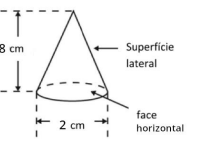
A superfície cônica ao lado está apoiada sobre
uma mesa com a sua face horizontal voltada para
baixo, como mostra a figura. Um campo elétrico
uniforme de magnitude 40000 N/C e apontando
verticalmente para baixo é então criado em todo o
espaço. O módulo do fluxo elétrico através da área
da superfície lateral do cone é mais próximo de:
Ano: 2023
Banca:
COSEAC
Órgão:
UFF
Prova:
COSEAC - 2023 - UFF - Transferência Facultativa - Tópicos de Ensino Superior - Física |
Q3378029
Física
Uma esteira transporta para a direita com velocidade v constante um bloco que está sobre
ela conforme indicado na figura abaixo.

Dentre as opções abaixo, a que representa corretamente a força de atrito realizada pela esteira sobre o bloco e pelo bloco sobre a esteira, respectivamente, é: (ponto representa o vetor nulo.)
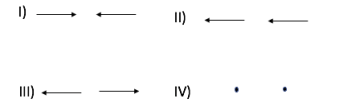
Dentre as opções abaixo, a que representa corretamente a força de atrito realizada pela esteira sobre o bloco e pelo bloco sobre a esteira, respectivamente, é: (ponto representa o vetor nulo.)
Ano: 2023
Banca:
COSEAC
Órgão:
UFF
Prova:
COSEAC - 2023 - UFF - Transferência Facultativa - Tópicos de Ensino Superior - Física |
Q3378028
Física
Uma pessoa parte do repouso do ponto A, descrevendo a trajetória indicada na figura e
voltando ao repouso na posição B.
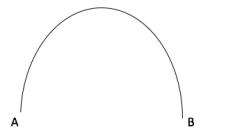
Dentre os segmentos orientados abaixo, quais melhor representam, respectivamente, o vetor velocidade média e o vetor aceleração média para o deslocamento da pessoa entre os pontos A e B? (ponto representa o vetor nulo.)
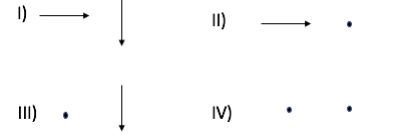
Dentre os segmentos orientados abaixo, quais melhor representam, respectivamente, o vetor velocidade média e o vetor aceleração média para o deslocamento da pessoa entre os pontos A e B? (ponto representa o vetor nulo.)
Ano: 2023
Banca:
COSEAC
Órgão:
UFF
Prova:
COSEAC - 2023 - UFF - Transferência Facultativa - Tópicos de Ensino Superior - Física |
Q3378027
Física
Uma partícula em um movimento unidimensional está sujeita a uma força resultante
conservativa. A energia potencial associada como função da distância está representada abaixo.
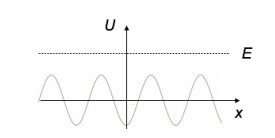
É correto afirmar que:
É correto afirmar que:
Ano: 2023
Banca:
COSEAC
Órgão:
UFF
Prova:
COSEAC - 2023 - UFF - Transferência Facultativa - Tópicos de Ensino Superior - Física |
Q3378026
Física
Observa-se que o campo elétrico em uma superfície esférica de raio de 2 m tem módulo
constante de 9 V/m e tem direção perpendicular à superfície da esfera apontando para dentro.
Qual a carga total dentro dessa superfície? [Dado: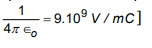
Qual a carga total dentro dessa superfície? [Dado:
Ano: 2023
Banca:
COSEAC
Órgão:
UFF
Prova:
COSEAC - 2023 - UFF - Transferência Facultativa - Tópicos de Ensino Superior - Física |
Q3378025
Física
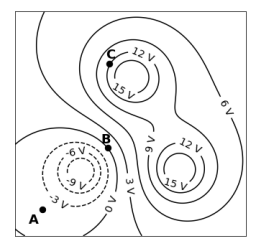
A figura mostra o corte em um plano das superfícies equipotenciais geradas por uma certa
configuração de cargas no espaço. Para facilitar a leitura, as linhas tracejadas apenas indicam
regiões em que o potencial é negativo. Sobre a situação, é correto afirmar que:
Ano: 2023
Banca:
COSEAC
Órgão:
UFF
Prova:
COSEAC - 2023 - UFF - Transferência Facultativa - Tópicos de Ensino Superior - Física |
Q3378024
Física
Os capacitores 1 e 2 da figura estão carregados respectivamente com cargas q1 = 80 nC e
q2 = 10 nC. As capacitâncias são C1 = 2 μF e C2 = 4 μF.
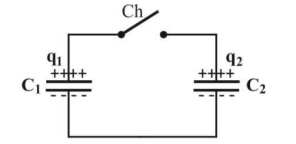
Em um dado instante, a chave Ch é fechada. Sobre essa situação, podemos afirmar que:
Em um dado instante, a chave Ch é fechada. Sobre essa situação, podemos afirmar que:
Ano: 2023
Banca:
COSEAC
Órgão:
UFF
Prova:
COSEAC - 2023 - UFF - Transferência Facultativa - Tópicos de Ensino Superior - Física |
Q3378023
Física
Um condutor esférico isolado possui uma cavidade
também esférica em cujo centro há uma carga q1. Além dela, há
uma carga q2 colocada fora da esfera, conforme indicado na
figura ao lado. Ao aproximarmos a carga q2 da superfície da
esfera, o módulo da força resultante atuando sobre a carga q1
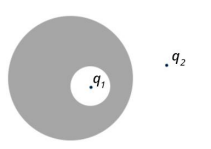
Ano: 2023
Banca:
COSEAC
Órgão:
UFF
Prova:
COSEAC - 2023 - UFF - Transferência Facultativa - Tópicos de Ensino Superior - Física |
Q3378022
Física
Abaixo está representada a função horária de um bloco, descrevendo um movimento
harmônico simples como função do tempo.
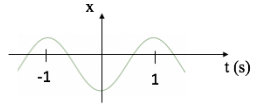
Dentre as opções abaixo, qual melhor representa a energia cinética do bloco como função do tempo?
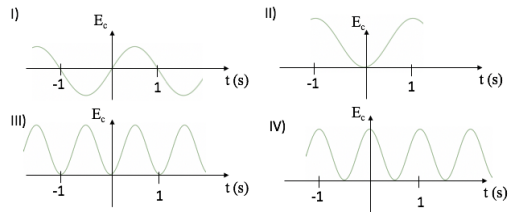
Dentre as opções abaixo, qual melhor representa a energia cinética do bloco como função do tempo?
Ano: 2023
Banca:
COSEAC
Órgão:
UFF
Prova:
COSEAC - 2023 - UFF - Transferência Facultativa - Tópicos de Ensino Superior - Física |
Q3378021
Física
Dois blocos de mesma massa m, denotados por A e B, estão em equilíbrio ligados por um fio de massa desprezível e presos por uma mola de constante k ao teto. Considere o eixo X orientado verticalmente para cima e a origem na posição inicial do bloco A, conforme ilustra a figura abaixo.
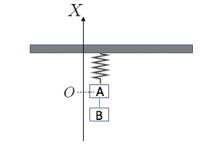
Denote por g a aceleração da gravidade. Em t = 0, corta-se o fio que liga os blocos. A partir daí, qual a função horária que descreve o movimento do bloco A?

 Conheça nossos planos