Questões de Concurso
Para prefeitura de ubatuba - sp
Foram encontradas 2.745 questões
Resolva questões gratuitamente!
Junte-se a mais de 4 milhões de concurseiros!


Ano: 2026
Banca:
Avança SP
Órgão:
Prefeitura de Ubatuba - SP
Prova:
Avança SP - 2026 - Prefeitura de Ubatuba - SP - Professor da Educação Básica II - Inglês |
Q4247251
Inglês
Choose the option that completes the sentence
with the correct article.
"During the selection process, the applicant proved to be _______ honest and competent professional."
"During the selection process, the applicant proved to be _______ honest and competent professional."
Ano: 2026
Banca:
Avança SP
Órgão:
Prefeitura de Ubatuba - SP
Prova:
Avança SP - 2026 - Prefeitura de Ubatuba - SP - Professor da Educação Básica II - Inglês |
Q4247250
Inglês
Choose the option that completes the sentence
with the correct preposition of time.
"The annual shareholders' meeting is always held _______ the morning, so that international participants can join before their working day ends."
"The annual shareholders' meeting is always held _______ the morning, so that international participants can join before their working day ends."
Ano: 2026
Banca:
Avança SP
Órgão:
Prefeitura de Ubatuba - SP
Prova:
Avança SP - 2026 - Prefeitura de Ubatuba - SP - Professor da Educação Básica II - Inglês |
Q4247249
Inglês
Choose the option that completes the sentence
with the correct particle to form the appropriate
phrasal verb.
"Despite the initial tension between the two departments, the new employees managed to get ______ well with everyone during their first week."
"Despite the initial tension between the two departments, the new employees managed to get ______ well with everyone during their first week."
Ano: 2026
Banca:
Avança SP
Órgão:
Prefeitura de Ubatuba - SP
Prova:
Avança SP - 2026 - Prefeitura de Ubatuba - SP - Professor da Educação Básica II - Inglês |
Q4247248
Linguística
Certain English words have the same spelling
but may function as different parts of speech
according to their stress pattern. Based on the
stressed syllable shown in bold, choose the
alternative in which both words are correctly
classified.
Ano: 2026
Banca:
Avança SP
Órgão:
Prefeitura de Ubatuba - SP
Prova:
Avança SP - 2026 - Prefeitura de Ubatuba - SP - Professor da Educação Básica II - Inglês |
Q4247247
Inglês
Texto associado
Read the text to answer question.
Using Machine Learning to Develop
Personalized Vaccines for Cancer
Yale researchers have developed a machine
learning model, called Immunostruct, that can
help scientists create more personalized
vaccines, including vaccines for cancer. They
described the tool in Nature Machine
Intelligence along with findings from applying
it to cancer and immunology data.
When a potential threat, such as a virus
or tumor, arises in our body, our immune cells
recognize peptides---essentially short
proteins---on the surface of the invader and
mount a defensive response. This small region
that the immune system interacts with is known
as an epitope.
Epitope-based vaccines are an emerging
technology that contain specific peptides in
order to trigger immune responses that
precisely target particular diseases. Ongoing
studies show that these vaccines are a
promising potential immunotherapy for a range
of cancers including melanomas, breast
cancers, and glioblastomas. Researchers are
also investigating whether these vaccines could
more effectively combat new variants of
infectious diseases.
To develop these vaccines, scientists
can use models that help them predict which
peptides are most likely to trigger a strong immune response to a particular antigen. A
limitation of many of these models, the
researchers say, is that they treat peptides as a
one-dimensional sequence of amino acids, not
the three-dimensional, active structures that
they are.
Now, Yale researchers have created a
model that also incorporates structural and
biochemical properties of peptides. In the new
study, they show that the multimodal model is
more effective at identifying peptide candidates
than its predecessors.
"Cancer is extremely heterogeneous---which often makes it very hard to treat
effectively," says Kevin B. Givechian, PhD, an
MD-PhD student at Yale and co-first author on
the study. “We have built a deep-learning model
that integrates more information than had
previously been combined to help us improve
the identification of vaccine targets that
stimulate people's immune system against their
own tumor. Doing so would enable a more
effective and less toxic method of treatment."
ВАCKMAN, Isabella. Using Machine Learning to
Develop Personalized Vaccines for Cancer. Yale School
of Medicine, 24 fev. 2026. Acesso em: 28 june. 2026.
Read the excerpt: "these vaccines could more
effectively combat new variants of infectious
diseases."
The modal verb "could" in this context primarily expresses:
The modal verb "could" in this context primarily expresses:
Ano: 2026
Banca:
Avança SP
Órgão:
Prefeitura de Ubatuba - SP
Prova:
Avança SP - 2026 - Prefeitura de Ubatuba - SP - Professor da Educação Básica II - Inglês |
Q4247246
Inglês
Texto associado
Read the text to answer question.
Using Machine Learning to Develop
Personalized Vaccines for Cancer
Yale researchers have developed a machine
learning model, called Immunostruct, that can
help scientists create more personalized
vaccines, including vaccines for cancer. They
described the tool in Nature Machine
Intelligence along with findings from applying
it to cancer and immunology data.
When a potential threat, such as a virus
or tumor, arises in our body, our immune cells
recognize peptides---essentially short
proteins---on the surface of the invader and
mount a defensive response. This small region
that the immune system interacts with is known
as an epitope.
Epitope-based vaccines are an emerging
technology that contain specific peptides in
order to trigger immune responses that
precisely target particular diseases. Ongoing
studies show that these vaccines are a
promising potential immunotherapy for a range
of cancers including melanomas, breast
cancers, and glioblastomas. Researchers are
also investigating whether these vaccines could
more effectively combat new variants of
infectious diseases.
To develop these vaccines, scientists
can use models that help them predict which
peptides are most likely to trigger a strong immune response to a particular antigen. A
limitation of many of these models, the
researchers say, is that they treat peptides as a
one-dimensional sequence of amino acids, not
the three-dimensional, active structures that
they are.
Now, Yale researchers have created a
model that also incorporates structural and
biochemical properties of peptides. In the new
study, they show that the multimodal model is
more effective at identifying peptide candidates
than its predecessors.
"Cancer is extremely heterogeneous---which often makes it very hard to treat
effectively," says Kevin B. Givechian, PhD, an
MD-PhD student at Yale and co-first author on
the study. “We have built a deep-learning model
that integrates more information than had
previously been combined to help us improve
the identification of vaccine targets that
stimulate people's immune system against their
own tumor. Doing so would enable a more
effective and less toxic method of treatment."
ВАCKMAN, Isabella. Using Machine Learning to
Develop Personalized Vaccines for Cancer. Yale School
of Medicine, 24 fev. 2026. Acesso em: 28 june. 2026.
The verb tense in "Yale researchers have
developed a machine learning model" is used
to indicate that:
Ano: 2026
Banca:
Avança SP
Órgão:
Prefeitura de Ubatuba - SP
Prova:
Avança SP - 2026 - Prefeitura de Ubatuba - SP - Professor da Educação Básica II - Inglês |
Q4247245
Inglês
Texto associado
Read the text to answer question.
Using Machine Learning to Develop
Personalized Vaccines for Cancer
Yale researchers have developed a machine
learning model, called Immunostruct, that can
help scientists create more personalized
vaccines, including vaccines for cancer. They
described the tool in Nature Machine
Intelligence along with findings from applying
it to cancer and immunology data.
When a potential threat, such as a virus
or tumor, arises in our body, our immune cells
recognize peptides---essentially short
proteins---on the surface of the invader and
mount a defensive response. This small region
that the immune system interacts with is known
as an epitope.
Epitope-based vaccines are an emerging
technology that contain specific peptides in
order to trigger immune responses that
precisely target particular diseases. Ongoing
studies show that these vaccines are a
promising potential immunotherapy for a range
of cancers including melanomas, breast
cancers, and glioblastomas. Researchers are
also investigating whether these vaccines could
more effectively combat new variants of
infectious diseases.
To develop these vaccines, scientists
can use models that help them predict which
peptides are most likely to trigger a strong immune response to a particular antigen. A
limitation of many of these models, the
researchers say, is that they treat peptides as a
one-dimensional sequence of amino acids, not
the three-dimensional, active structures that
they are.
Now, Yale researchers have created a
model that also incorporates structural and
biochemical properties of peptides. In the new
study, they show that the multimodal model is
more effective at identifying peptide candidates
than its predecessors.
"Cancer is extremely heterogeneous---which often makes it very hard to treat
effectively," says Kevin B. Givechian, PhD, an
MD-PhD student at Yale and co-first author on
the study. “We have built a deep-learning model
that integrates more information than had
previously been combined to help us improve
the identification of vaccine targets that
stimulate people's immune system against their
own tumor. Doing so would enable a more
effective and less toxic method of treatment."
ВАCKMAN, Isabella. Using Machine Learning to
Develop Personalized Vaccines for Cancer. Yale School
of Medicine, 24 fev. 2026. Acesso em: 28 june. 2026.
In the sentence "Cancer is extremely
heterogeneous," the adjective heterogeneous
suggests that cancer is:
Ano: 2026
Banca:
Avança SP
Órgão:
Prefeitura de Ubatuba - SP
Prova:
Avança SP - 2026 - Prefeitura de Ubatuba - SP - Professor da Educação Básica II - Inglês |
Q4247244
Inglês
Texto associado
Read the text to answer question.
Using Machine Learning to Develop
Personalized Vaccines for Cancer
Yale researchers have developed a machine
learning model, called Immunostruct, that can
help scientists create more personalized
vaccines, including vaccines for cancer. They
described the tool in Nature Machine
Intelligence along with findings from applying
it to cancer and immunology data.
When a potential threat, such as a virus
or tumor, arises in our body, our immune cells
recognize peptides---essentially short
proteins---on the surface of the invader and
mount a defensive response. This small region
that the immune system interacts with is known
as an epitope.
Epitope-based vaccines are an emerging
technology that contain specific peptides in
order to trigger immune responses that
precisely target particular diseases. Ongoing
studies show that these vaccines are a
promising potential immunotherapy for a range
of cancers including melanomas, breast
cancers, and glioblastomas. Researchers are
also investigating whether these vaccines could
more effectively combat new variants of
infectious diseases.
To develop these vaccines, scientists
can use models that help them predict which
peptides are most likely to trigger a strong immune response to a particular antigen. A
limitation of many of these models, the
researchers say, is that they treat peptides as a
one-dimensional sequence of amino acids, not
the three-dimensional, active structures that
they are.
Now, Yale researchers have created a
model that also incorporates structural and
biochemical properties of peptides. In the new
study, they show that the multimodal model is
more effective at identifying peptide candidates
than its predecessors.
"Cancer is extremely heterogeneous---which often makes it very hard to treat
effectively," says Kevin B. Givechian, PhD, an
MD-PhD student at Yale and co-first author on
the study. “We have built a deep-learning model
that integrates more information than had
previously been combined to help us improve
the identification of vaccine targets that
stimulate people's immune system against their
own tumor. Doing so would enable a more
effective and less toxic method of treatment."
ВАCKMAN, Isabella. Using Machine Learning to
Develop Personalized Vaccines for Cancer. Yale School
of Medicine, 24 fev. 2026. Acesso em: 28 june. 2026.
In the excerpt "our immune cells recognize
peptides... and mount a defensive response," the
word "mount" could be replaced, without
changing its meaning, by:
Ano: 2026
Banca:
Avança SP
Órgão:
Prefeitura de Ubatuba - SP
Prova:
Avança SP - 2026 - Prefeitura de Ubatuba - SP - Professor da Educação Básica II - Inglês |
Q4247243
Inglês
Texto associado
Read the text to answer question.
Using Machine Learning to Develop
Personalized Vaccines for Cancer
Yale researchers have developed a machine
learning model, called Immunostruct, that can
help scientists create more personalized
vaccines, including vaccines for cancer. They
described the tool in Nature Machine
Intelligence along with findings from applying
it to cancer and immunology data.
When a potential threat, such as a virus
or tumor, arises in our body, our immune cells
recognize peptides---essentially short
proteins---on the surface of the invader and
mount a defensive response. This small region
that the immune system interacts with is known
as an epitope.
Epitope-based vaccines are an emerging
technology that contain specific peptides in
order to trigger immune responses that
precisely target particular diseases. Ongoing
studies show that these vaccines are a
promising potential immunotherapy for a range
of cancers including melanomas, breast
cancers, and glioblastomas. Researchers are
also investigating whether these vaccines could
more effectively combat new variants of
infectious diseases.
To develop these vaccines, scientists
can use models that help them predict which
peptides are most likely to trigger a strong immune response to a particular antigen. A
limitation of many of these models, the
researchers say, is that they treat peptides as a
one-dimensional sequence of amino acids, not
the three-dimensional, active structures that
they are.
Now, Yale researchers have created a
model that also incorporates structural and
biochemical properties of peptides. In the new
study, they show that the multimodal model is
more effective at identifying peptide candidates
than its predecessors.
"Cancer is extremely heterogeneous---which often makes it very hard to treat
effectively," says Kevin B. Givechian, PhD, an
MD-PhD student at Yale and co-first author on
the study. “We have built a deep-learning model
that integrates more information than had
previously been combined to help us improve
the identification of vaccine targets that
stimulate people's immune system against their
own tumor. Doing so would enable a more
effective and less toxic method of treatment."
ВАCKMAN, Isabella. Using Machine Learning to
Develop Personalized Vaccines for Cancer. Yale School
of Medicine, 24 fev. 2026. Acesso em: 28 june. 2026.
According to the text, the main purpose of
Immunostruct is to help scientists:
Ano: 2026
Banca:
Avança SP
Órgão:
Prefeitura de Ubatuba - SP
Prova:
Avança SP - 2026 - Prefeitura de Ubatuba - SP - Professor da Educação Básica II - Português |
Q4247202
Português
Assinale a alternativa em que o termo destacado
é responsável por indeterminar o sujeito da ação
verbal.
Ano: 2026
Banca:
Avança SP
Órgão:
Prefeitura de Ubatuba - SP
Prova:
Avança SP - 2026 - Prefeitura de Ubatuba - SP - Professor da Educação Básica II - Português |
Q4247201
Português
Assinale a alternativa cuja forma verbal
destacada indica uma ação passada anterior a
outra ação também passada.
Ano: 2026
Banca:
Avança SP
Órgão:
Prefeitura de Ubatuba - SP
Prova:
Avança SP - 2026 - Prefeitura de Ubatuba - SP - Professor da Educação Básica II - Português |
Q4247200
Português
Assinale a alternativa em que cada uma das três
formas verbais apresentadas
preenche corretamente a lacuna a seguir:
"Tudo seria mais fácil se você ."
"Tudo seria mais fácil se você ."
Ano: 2026
Banca:
Avança SP
Órgão:
Prefeitura de Ubatuba - SP
Prova:
Avança SP - 2026 - Prefeitura de Ubatuba - SP - Professor da Educação Básica II - Português |
Q4247199
Português
Assinale a alternativa cujos elementos
preenchem corretamente as lacunas a seguir, na
mesma ordem:
- Estou aqui várias horas aguardando chance de ir até praia.
- Daqui dois anos, espero fazer a viagem dos meus sonhos de tanto tempo.
- Você de convir comigo que nessa questão muita coisa delicada.
- Estou aqui várias horas aguardando chance de ir até praia.
- Daqui dois anos, espero fazer a viagem dos meus sonhos de tanto tempo.
- Você de convir comigo que nessa questão muita coisa delicada.
Ano: 2026
Banca:
Avança SP
Órgão:
Prefeitura de Ubatuba - SP
Prova:
Avança SP - 2026 - Prefeitura de Ubatuba - SP - Professor da Educação Básica II - Português |
Q4247198
Português
Assinale a alternativa cujos elementos
preenchem corretamente as lacunas a seguir, na
mesma ordem:
- Entre e ela, era tudo de bom.
- Para , fazer aquilo não era sacrifício.
- Em termos de dedicação, ele é melhor do que .
- Para passar no exame, tenho que estudar.
- Entre e ela, era tudo de bom.
- Para , fazer aquilo não era sacrifício.
- Em termos de dedicação, ele é melhor do que .
- Para passar no exame, tenho que estudar.
Ano: 2026
Banca:
Avança SP
Órgão:
Prefeitura de Ubatuba - SP
Prova:
Avança SP - 2026 - Prefeitura de Ubatuba - SP - Professor da Educação Básica II - Português |
Q4247197
Português
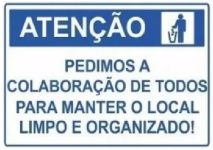
PINTEREST. Placa pedimos a colaboração manter o local limpo. Disponível em <https://br.pinterest.com/pin/886998089097312008/>.
A preposição "para", empregada na placa acima, tem o sentido de:
Ano: 2026
Banca:
Avança SP
Órgão:
Prefeitura de Ubatuba - SP
Prova:
Avança SP - 2026 - Prefeitura de Ubatuba - SP - Professor da Educação Básica II - Português |
Q4247196
Português
Assinale a alternativa cujo termo destacado no
período exerce a função de agente da ação
verbal.
Ano: 2026
Banca:
Avança SP
Órgão:
Prefeitura de Ubatuba - SP
Prova:
Avança SP - 2026 - Prefeitura de Ubatuba - SP - Professor da Educação Básica II - Português |
Q4247195
Português
"Naquele restaurante ótimos pratos."
Assinale a alternativa em que qualquer uma das duas formas verbais apresentadas preenche corretamente a lacuna acima.
Assinale a alternativa em que qualquer uma das duas formas verbais apresentadas preenche corretamente a lacuna acima.
Ano: 2026
Banca:
Avança SP
Órgão:
Prefeitura de Ubatuba - SP
Prova:
Avança SP - 2026 - Prefeitura de Ubatuba - SP - Professor da Educação Básica II - Português |
Q4247194
Português
Assinale a alternativa que apresenta a junção correta dos dois enunciados a seguir:
- Aquele é um artista famoso.
- Eu lhe falei dos talentos do artista.
Ano: 2026
Banca:
Avança SP
Órgão:
Prefeitura de Ubatuba - SP
Prova:
Avança SP - 2026 - Prefeitura de Ubatuba - SP - Professor da Educação Básica II - Português |
Q4247193
Português
Assinale a alternativa cujos elementos
preenchem corretamente as lacunas abaixo, na
mesma ordem:
- uma mão naquilo que você puder.
- Peço que no que for necessário.
- Eu jamais do que você fez por nós.
- uma mão naquilo que você puder.
- Peço que no que for necessário.
- Eu jamais do que você fez por nós.
Ano: 2026
Banca:
Avança SP
Órgão:
Prefeitura de Ubatuba - SP
Prova:
Avança SP - 2026 - Prefeitura de Ubatuba - SP - Professor da Educação Básica II - Português |
Q4247192
Português
"O orador, na ânsia de fazer interação,
perguntou aos presentes:
- Vocês gostariam de um exemplo do que estou falando?"
Assinale a alternativa que apresenta uma forma reescrita do trecho acima totalmente correta.
- Vocês gostariam de um exemplo do que estou falando?"
Assinale a alternativa que apresenta uma forma reescrita do trecho acima totalmente correta.

 Conheça nossos planos