Questões de Concurso
Para prefeitura de são josé dos campos - sp
Foram encontradas 5.054 questões
Resolva questões gratuitamente!
Junte-se a mais de 4 milhões de concurseiros!


Ano: 2026
Banca:
FGV
Órgão:
Prefeitura de São José dos Campos - SP
Prova:
FGV - 2026 - Prefeitura de São José dos Campos - SP - Professor II - Inglês |
Q3998574
Inglês
Texto associado
Read Text I and answer the question that follows.
Text I
Multiliteracy: the new basic skill for the 21st century classroom
We increasingly engage with texts that draw meaning beyond
written words from other sources. Images, sound, video clips and
gestures (alone and in combination) all play central roles in how
we communicate and interpret content.
This multimedia approach is especially evident in online
platforms and social media, where a single piece of content may
blend written language with videos, graphics, photos and other
visual elements. This change requires us to rethink what we mean
by literacy.
Nearly 30 years ago, a group of scholars, the New London
Group, recognised the need for a broader understanding of
literacy after observing a growing gap between the literacy needs
students faced outside of school and the print-based practices still
dominant in classrooms.
They introduced a concept of multiliteracies which
acknowledges that we now engage with texts that use multiple
modes of communication. We engage with these texts in different
media environments, each with their own practices and strategies.
The concept incorporates the literacy skills needed to acquire,
interpret, produce and evaluate the multimodal and multimedia
texts we encounter today.
For literacy education, this shift means updating classroom
aims, content and activities. The group developed a pedagogical
framework to help schools respond to the growing inequalities and
rapid changes in technology and the textual landscape.
The process starts with examining pupils’ everyday literacy
practices and experiences together. Then these practices are
approached analytically by introducing a metalanguage for
discussing the resources they use to create meaning. Students can
use this metalanguage to critically evaluate their literacy practices
which helps them understand how different modes of
communication work and how to use them effectively.
The pedagogy of multiliteracies also emphasises the design
and production of multimodal texts and collaborative learning in
linguistically and culturally diverse groups, rather than individual
reading activities. […]
Multiliteracies are already included in many European
curricula, and the European framework for key competencies for
lifelong learning defines literacy in a way that aligns with the
concept of multiliteracies. These policy documents and guidelines
provide a foundation for integrating multiliteracies into literacy
education.
Yet, research shows that there is still work to be done to
incorporate teaching multimodal literacy practices into
mainstream literacy education. While many teachers do include
multimodal texts in their classroom activities, tensions between
multimodal and traditional practices still exist.
Studies point out the huge challenges teachers face when they
adapt their teaching to the redefined literacies, and there are
concerns about teachers’ preparedness to teach multiliteracies.
They need support with training and appropriate materials. Teacher educators and policy makers must ensure that teachers
have substantial and concrete support.
Adapted from https://school-education.ec.europa.eu/en/discover/expertviews/multiliteracy-new-basic-skill-21st-century-classroom
The phrasal verb in “Studies point out the huge challenges” (last
paragraph) is similar in meaning to:
Ano: 2026
Banca:
FGV
Órgão:
Prefeitura de São José dos Campos - SP
Prova:
FGV - 2026 - Prefeitura de São José dos Campos - SP - Professor II - Inglês |
Q3998573
Inglês
Texto associado
Read Text I and answer the question that follows.
Text I
Multiliteracy: the new basic skill for the 21st century classroom
We increasingly engage with texts that draw meaning beyond
written words from other sources. Images, sound, video clips and
gestures (alone and in combination) all play central roles in how
we communicate and interpret content.
This multimedia approach is especially evident in online
platforms and social media, where a single piece of content may
blend written language with videos, graphics, photos and other
visual elements. This change requires us to rethink what we mean
by literacy.
Nearly 30 years ago, a group of scholars, the New London
Group, recognised the need for a broader understanding of
literacy after observing a growing gap between the literacy needs
students faced outside of school and the print-based practices still
dominant in classrooms.
They introduced a concept of multiliteracies which
acknowledges that we now engage with texts that use multiple
modes of communication. We engage with these texts in different
media environments, each with their own practices and strategies.
The concept incorporates the literacy skills needed to acquire,
interpret, produce and evaluate the multimodal and multimedia
texts we encounter today.
For literacy education, this shift means updating classroom
aims, content and activities. The group developed a pedagogical
framework to help schools respond to the growing inequalities and
rapid changes in technology and the textual landscape.
The process starts with examining pupils’ everyday literacy
practices and experiences together. Then these practices are
approached analytically by introducing a metalanguage for
discussing the resources they use to create meaning. Students can
use this metalanguage to critically evaluate their literacy practices
which helps them understand how different modes of
communication work and how to use them effectively.
The pedagogy of multiliteracies also emphasises the design
and production of multimodal texts and collaborative learning in
linguistically and culturally diverse groups, rather than individual
reading activities. […]
Multiliteracies are already included in many European
curricula, and the European framework for key competencies for
lifelong learning defines literacy in a way that aligns with the
concept of multiliteracies. These policy documents and guidelines
provide a foundation for integrating multiliteracies into literacy
education.
Yet, research shows that there is still work to be done to
incorporate teaching multimodal literacy practices into
mainstream literacy education. While many teachers do include
multimodal texts in their classroom activities, tensions between
multimodal and traditional practices still exist.
Studies point out the huge challenges teachers face when they
adapt their teaching to the redefined literacies, and there are
concerns about teachers’ preparedness to teach multiliteracies.
They need support with training and appropriate materials. Teacher educators and policy makers must ensure that teachers
have substantial and concrete support.
Adapted from https://school-education.ec.europa.eu/en/discover/expertviews/multiliteracy-new-basic-skill-21st-century-classroom
The first word in “Yet, research shows that there is still work to be
done” (10th paragraph) can be replaced, without significant change
of meaning, by:
Ano: 2026
Banca:
FGV
Órgão:
Prefeitura de São José dos Campos - SP
Prova:
FGV - 2026 - Prefeitura de São José dos Campos - SP - Professor II - Inglês |
Q3998572
Inglês
Texto associado
Read Text I and answer the question that follows.
Text I
Multiliteracy: the new basic skill for the 21st century classroom
We increasingly engage with texts that draw meaning beyond
written words from other sources. Images, sound, video clips and
gestures (alone and in combination) all play central roles in how
we communicate and interpret content.
This multimedia approach is especially evident in online
platforms and social media, where a single piece of content may
blend written language with videos, graphics, photos and other
visual elements. This change requires us to rethink what we mean
by literacy.
Nearly 30 years ago, a group of scholars, the New London
Group, recognised the need for a broader understanding of
literacy after observing a growing gap between the literacy needs
students faced outside of school and the print-based practices still
dominant in classrooms.
They introduced a concept of multiliteracies which
acknowledges that we now engage with texts that use multiple
modes of communication. We engage with these texts in different
media environments, each with their own practices and strategies.
The concept incorporates the literacy skills needed to acquire,
interpret, produce and evaluate the multimodal and multimedia
texts we encounter today.
For literacy education, this shift means updating classroom
aims, content and activities. The group developed a pedagogical
framework to help schools respond to the growing inequalities and
rapid changes in technology and the textual landscape.
The process starts with examining pupils’ everyday literacy
practices and experiences together. Then these practices are
approached analytically by introducing a metalanguage for
discussing the resources they use to create meaning. Students can
use this metalanguage to critically evaluate their literacy practices
which helps them understand how different modes of
communication work and how to use them effectively.
The pedagogy of multiliteracies also emphasises the design
and production of multimodal texts and collaborative learning in
linguistically and culturally diverse groups, rather than individual
reading activities. […]
Multiliteracies are already included in many European
curricula, and the European framework for key competencies for
lifelong learning defines literacy in a way that aligns with the
concept of multiliteracies. These policy documents and guidelines
provide a foundation for integrating multiliteracies into literacy
education.
Yet, research shows that there is still work to be done to
incorporate teaching multimodal literacy practices into
mainstream literacy education. While many teachers do include
multimodal texts in their classroom activities, tensions between
multimodal and traditional practices still exist.
Studies point out the huge challenges teachers face when they
adapt their teaching to the redefined literacies, and there are
concerns about teachers’ preparedness to teach multiliteracies.
They need support with training and appropriate materials. Teacher educators and policy makers must ensure that teachers
have substantial and concrete support.
Adapted from https://school-education.ec.europa.eu/en/discover/expertviews/multiliteracy-new-basic-skill-21st-century-classroom
The word “lifelong” (9th paragraph) is formed by:
Ano: 2026
Banca:
FGV
Órgão:
Prefeitura de São José dos Campos - SP
Prova:
FGV - 2026 - Prefeitura de São José dos Campos - SP - Professor II - Inglês |
Q3998571
Inglês
Texto associado
Read Text I and answer the question that follows.
Text I
Multiliteracy: the new basic skill for the 21st century classroom
We increasingly engage with texts that draw meaning beyond
written words from other sources. Images, sound, video clips and
gestures (alone and in combination) all play central roles in how
we communicate and interpret content.
This multimedia approach is especially evident in online
platforms and social media, where a single piece of content may
blend written language with videos, graphics, photos and other
visual elements. This change requires us to rethink what we mean
by literacy.
Nearly 30 years ago, a group of scholars, the New London
Group, recognised the need for a broader understanding of
literacy after observing a growing gap between the literacy needs
students faced outside of school and the print-based practices still
dominant in classrooms.
They introduced a concept of multiliteracies which
acknowledges that we now engage with texts that use multiple
modes of communication. We engage with these texts in different
media environments, each with their own practices and strategies.
The concept incorporates the literacy skills needed to acquire,
interpret, produce and evaluate the multimodal and multimedia
texts we encounter today.
For literacy education, this shift means updating classroom
aims, content and activities. The group developed a pedagogical
framework to help schools respond to the growing inequalities and
rapid changes in technology and the textual landscape.
The process starts with examining pupils’ everyday literacy
practices and experiences together. Then these practices are
approached analytically by introducing a metalanguage for
discussing the resources they use to create meaning. Students can
use this metalanguage to critically evaluate their literacy practices
which helps them understand how different modes of
communication work and how to use them effectively.
The pedagogy of multiliteracies also emphasises the design
and production of multimodal texts and collaborative learning in
linguistically and culturally diverse groups, rather than individual
reading activities. […]
Multiliteracies are already included in many European
curricula, and the European framework for key competencies for
lifelong learning defines literacy in a way that aligns with the
concept of multiliteracies. These policy documents and guidelines
provide a foundation for integrating multiliteracies into literacy
education.
Yet, research shows that there is still work to be done to
incorporate teaching multimodal literacy practices into
mainstream literacy education. While many teachers do include
multimodal texts in their classroom activities, tensions between
multimodal and traditional practices still exist.
Studies point out the huge challenges teachers face when they
adapt their teaching to the redefined literacies, and there are
concerns about teachers’ preparedness to teach multiliteracies.
They need support with training and appropriate materials. Teacher educators and policy makers must ensure that teachers
have substantial and concrete support.
Adapted from https://school-education.ec.europa.eu/en/discover/expertviews/multiliteracy-new-basic-skill-21st-century-classroom
The last word in “the print-based practices” (3rd paragraph)
functions, in this context, as a(n):
Ano: 2026
Banca:
FGV
Órgão:
Prefeitura de São José dos Campos - SP
Prova:
FGV - 2026 - Prefeitura de São José dos Campos - SP - Professor II - Inglês |
Q3998570
Inglês
Texto associado
Read Text I and answer the question that follows.
Text I
Multiliteracy: the new basic skill for the 21st century classroom
We increasingly engage with texts that draw meaning beyond
written words from other sources. Images, sound, video clips and
gestures (alone and in combination) all play central roles in how
we communicate and interpret content.
This multimedia approach is especially evident in online
platforms and social media, where a single piece of content may
blend written language with videos, graphics, photos and other
visual elements. This change requires us to rethink what we mean
by literacy.
Nearly 30 years ago, a group of scholars, the New London
Group, recognised the need for a broader understanding of
literacy after observing a growing gap between the literacy needs
students faced outside of school and the print-based practices still
dominant in classrooms.
They introduced a concept of multiliteracies which
acknowledges that we now engage with texts that use multiple
modes of communication. We engage with these texts in different
media environments, each with their own practices and strategies.
The concept incorporates the literacy skills needed to acquire,
interpret, produce and evaluate the multimodal and multimedia
texts we encounter today.
For literacy education, this shift means updating classroom
aims, content and activities. The group developed a pedagogical
framework to help schools respond to the growing inequalities and
rapid changes in technology and the textual landscape.
The process starts with examining pupils’ everyday literacy
practices and experiences together. Then these practices are
approached analytically by introducing a metalanguage for
discussing the resources they use to create meaning. Students can
use this metalanguage to critically evaluate their literacy practices
which helps them understand how different modes of
communication work and how to use them effectively.
The pedagogy of multiliteracies also emphasises the design
and production of multimodal texts and collaborative learning in
linguistically and culturally diverse groups, rather than individual
reading activities. […]
Multiliteracies are already included in many European
curricula, and the European framework for key competencies for
lifelong learning defines literacy in a way that aligns with the
concept of multiliteracies. These policy documents and guidelines
provide a foundation for integrating multiliteracies into literacy
education.
Yet, research shows that there is still work to be done to
incorporate teaching multimodal literacy practices into
mainstream literacy education. While many teachers do include
multimodal texts in their classroom activities, tensions between
multimodal and traditional practices still exist.
Studies point out the huge challenges teachers face when they
adapt their teaching to the redefined literacies, and there are
concerns about teachers’ preparedness to teach multiliteracies.
They need support with training and appropriate materials. Teacher educators and policy makers must ensure that teachers
have substantial and concrete support.
Adapted from https://school-education.ec.europa.eu/en/discover/expertviews/multiliteracy-new-basic-skill-21st-century-classroom
The opposite of the adjective in “broader understanding”
(3rd paragraph) is:
Ano: 2026
Banca:
FGV
Órgão:
Prefeitura de São José dos Campos - SP
Prova:
FGV - 2026 - Prefeitura de São José dos Campos - SP - Professor II - Inglês |
Q3998569
Inglês
Texto associado
Read Text I and answer the question that follows.
Text I
Multiliteracy: the new basic skill for the 21st century classroom
We increasingly engage with texts that draw meaning beyond
written words from other sources. Images, sound, video clips and
gestures (alone and in combination) all play central roles in how
we communicate and interpret content.
This multimedia approach is especially evident in online
platforms and social media, where a single piece of content may
blend written language with videos, graphics, photos and other
visual elements. This change requires us to rethink what we mean
by literacy.
Nearly 30 years ago, a group of scholars, the New London
Group, recognised the need for a broader understanding of
literacy after observing a growing gap between the literacy needs
students faced outside of school and the print-based practices still
dominant in classrooms.
They introduced a concept of multiliteracies which
acknowledges that we now engage with texts that use multiple
modes of communication. We engage with these texts in different
media environments, each with their own practices and strategies.
The concept incorporates the literacy skills needed to acquire,
interpret, produce and evaluate the multimodal and multimedia
texts we encounter today.
For literacy education, this shift means updating classroom
aims, content and activities. The group developed a pedagogical
framework to help schools respond to the growing inequalities and
rapid changes in technology and the textual landscape.
The process starts with examining pupils’ everyday literacy
practices and experiences together. Then these practices are
approached analytically by introducing a metalanguage for
discussing the resources they use to create meaning. Students can
use this metalanguage to critically evaluate their literacy practices
which helps them understand how different modes of
communication work and how to use them effectively.
The pedagogy of multiliteracies also emphasises the design
and production of multimodal texts and collaborative learning in
linguistically and culturally diverse groups, rather than individual
reading activities. […]
Multiliteracies are already included in many European
curricula, and the European framework for key competencies for
lifelong learning defines literacy in a way that aligns with the
concept of multiliteracies. These policy documents and guidelines
provide a foundation for integrating multiliteracies into literacy
education.
Yet, research shows that there is still work to be done to
incorporate teaching multimodal literacy practices into
mainstream literacy education. While many teachers do include
multimodal texts in their classroom activities, tensions between
multimodal and traditional practices still exist.
Studies point out the huge challenges teachers face when they
adapt their teaching to the redefined literacies, and there are
concerns about teachers’ preparedness to teach multiliteracies.
They need support with training and appropriate materials. Teacher educators and policy makers must ensure that teachers
have substantial and concrete support.
Adapted from https://school-education.ec.europa.eu/en/discover/expertviews/multiliteracy-new-basic-skill-21st-century-classroom
In the phrase “Nearly 30 years ago” (3rd paragraph), the adverb
expresses:
Ano: 2026
Banca:
FGV
Órgão:
Prefeitura de São José dos Campos - SP
Prova:
FGV - 2026 - Prefeitura de São José dos Campos - SP - Professor II - Inglês |
Q3998568
Inglês
Texto associado
Read Text I and answer the question that follows.
Text I
Multiliteracy: the new basic skill for the 21st century classroom
We increasingly engage with texts that draw meaning beyond
written words from other sources. Images, sound, video clips and
gestures (alone and in combination) all play central roles in how
we communicate and interpret content.
This multimedia approach is especially evident in online
platforms and social media, where a single piece of content may
blend written language with videos, graphics, photos and other
visual elements. This change requires us to rethink what we mean
by literacy.
Nearly 30 years ago, a group of scholars, the New London
Group, recognised the need for a broader understanding of
literacy after observing a growing gap between the literacy needs
students faced outside of school and the print-based practices still
dominant in classrooms.
They introduced a concept of multiliteracies which
acknowledges that we now engage with texts that use multiple
modes of communication. We engage with these texts in different
media environments, each with their own practices and strategies.
The concept incorporates the literacy skills needed to acquire,
interpret, produce and evaluate the multimodal and multimedia
texts we encounter today.
For literacy education, this shift means updating classroom
aims, content and activities. The group developed a pedagogical
framework to help schools respond to the growing inequalities and
rapid changes in technology and the textual landscape.
The process starts with examining pupils’ everyday literacy
practices and experiences together. Then these practices are
approached analytically by introducing a metalanguage for
discussing the resources they use to create meaning. Students can
use this metalanguage to critically evaluate their literacy practices
which helps them understand how different modes of
communication work and how to use them effectively.
The pedagogy of multiliteracies also emphasises the design
and production of multimodal texts and collaborative learning in
linguistically and culturally diverse groups, rather than individual
reading activities. […]
Multiliteracies are already included in many European
curricula, and the European framework for key competencies for
lifelong learning defines literacy in a way that aligns with the
concept of multiliteracies. These policy documents and guidelines
provide a foundation for integrating multiliteracies into literacy
education.
Yet, research shows that there is still work to be done to
incorporate teaching multimodal literacy practices into
mainstream literacy education. While many teachers do include
multimodal texts in their classroom activities, tensions between
multimodal and traditional practices still exist.
Studies point out the huge challenges teachers face when they
adapt their teaching to the redefined literacies, and there are
concerns about teachers’ preparedness to teach multiliteracies.
They need support with training and appropriate materials. Teacher educators and policy makers must ensure that teachers
have substantial and concrete support.
Adapted from https://school-education.ec.europa.eu/en/discover/expertviews/multiliteracy-new-basic-skill-21st-century-classroom
The modal verb in “where a single piece of content may blend” (2nd
paragraph) expresses a(n):
Ano: 2026
Banca:
FGV
Órgão:
Prefeitura de São José dos Campos - SP
Prova:
FGV - 2026 - Prefeitura de São José dos Campos - SP - Professor II - Inglês |
Q3998567
Inglês
Texto associado
Read Text I and answer the question that follows.
Text I
Multiliteracy: the new basic skill for the 21st century classroom
We increasingly engage with texts that draw meaning beyond
written words from other sources. Images, sound, video clips and
gestures (alone and in combination) all play central roles in how
we communicate and interpret content.
This multimedia approach is especially evident in online
platforms and social media, where a single piece of content may
blend written language with videos, graphics, photos and other
visual elements. This change requires us to rethink what we mean
by literacy.
Nearly 30 years ago, a group of scholars, the New London
Group, recognised the need for a broader understanding of
literacy after observing a growing gap between the literacy needs
students faced outside of school and the print-based practices still
dominant in classrooms.
They introduced a concept of multiliteracies which
acknowledges that we now engage with texts that use multiple
modes of communication. We engage with these texts in different
media environments, each with their own practices and strategies.
The concept incorporates the literacy skills needed to acquire,
interpret, produce and evaluate the multimodal and multimedia
texts we encounter today.
For literacy education, this shift means updating classroom
aims, content and activities. The group developed a pedagogical
framework to help schools respond to the growing inequalities and
rapid changes in technology and the textual landscape.
The process starts with examining pupils’ everyday literacy
practices and experiences together. Then these practices are
approached analytically by introducing a metalanguage for
discussing the resources they use to create meaning. Students can
use this metalanguage to critically evaluate their literacy practices
which helps them understand how different modes of
communication work and how to use them effectively.
The pedagogy of multiliteracies also emphasises the design
and production of multimodal texts and collaborative learning in
linguistically and culturally diverse groups, rather than individual
reading activities. […]
Multiliteracies are already included in many European
curricula, and the European framework for key competencies for
lifelong learning defines literacy in a way that aligns with the
concept of multiliteracies. These policy documents and guidelines
provide a foundation for integrating multiliteracies into literacy
education.
Yet, research shows that there is still work to be done to
incorporate teaching multimodal literacy practices into
mainstream literacy education. While many teachers do include
multimodal texts in their classroom activities, tensions between
multimodal and traditional practices still exist.
Studies point out the huge challenges teachers face when they
adapt their teaching to the redefined literacies, and there are
concerns about teachers’ preparedness to teach multiliteracies.
They need support with training and appropriate materials. Teacher educators and policy makers must ensure that teachers
have substantial and concrete support.
Adapted from https://school-education.ec.europa.eu/en/discover/expertviews/multiliteracy-new-basic-skill-21st-century-classroom
The simple past and the past participle forms of the verb in “draw
meaning” (1st paragraph) are, respectively:
Ano: 2026
Banca:
FGV
Órgão:
Prefeitura de São José dos Campos - SP
Prova:
FGV - 2026 - Prefeitura de São José dos Campos - SP - Professor II - Inglês |
Q3998566
Inglês
Texto associado
Read Text I and answer the question that follows.
Text I
Multiliteracy: the new basic skill for the 21st century classroom
We increasingly engage with texts that draw meaning beyond
written words from other sources. Images, sound, video clips and
gestures (alone and in combination) all play central roles in how
we communicate and interpret content.
This multimedia approach is especially evident in online
platforms and social media, where a single piece of content may
blend written language with videos, graphics, photos and other
visual elements. This change requires us to rethink what we mean
by literacy.
Nearly 30 years ago, a group of scholars, the New London
Group, recognised the need for a broader understanding of
literacy after observing a growing gap between the literacy needs
students faced outside of school and the print-based practices still
dominant in classrooms.
They introduced a concept of multiliteracies which
acknowledges that we now engage with texts that use multiple
modes of communication. We engage with these texts in different
media environments, each with their own practices and strategies.
The concept incorporates the literacy skills needed to acquire,
interpret, produce and evaluate the multimodal and multimedia
texts we encounter today.
For literacy education, this shift means updating classroom
aims, content and activities. The group developed a pedagogical
framework to help schools respond to the growing inequalities and
rapid changes in technology and the textual landscape.
The process starts with examining pupils’ everyday literacy
practices and experiences together. Then these practices are
approached analytically by introducing a metalanguage for
discussing the resources they use to create meaning. Students can
use this metalanguage to critically evaluate their literacy practices
which helps them understand how different modes of
communication work and how to use them effectively.
The pedagogy of multiliteracies also emphasises the design
and production of multimodal texts and collaborative learning in
linguistically and culturally diverse groups, rather than individual
reading activities. […]
Multiliteracies are already included in many European
curricula, and the European framework for key competencies for
lifelong learning defines literacy in a way that aligns with the
concept of multiliteracies. These policy documents and guidelines
provide a foundation for integrating multiliteracies into literacy
education.
Yet, research shows that there is still work to be done to
incorporate teaching multimodal literacy practices into
mainstream literacy education. While many teachers do include
multimodal texts in their classroom activities, tensions between
multimodal and traditional practices still exist.
Studies point out the huge challenges teachers face when they
adapt their teaching to the redefined literacies, and there are
concerns about teachers’ preparedness to teach multiliteracies.
They need support with training and appropriate materials. Teacher educators and policy makers must ensure that teachers
have substantial and concrete support.
Adapted from https://school-education.ec.europa.eu/en/discover/expertviews/multiliteracy-new-basic-skill-21st-century-classroom
Analyse the assertions below based on Text I:
I. The pedagogy of multiliteracies privileges individual reading tasks.
II. European curricula are unaware of the new multimedia approach discussed in the text.
III. Teacher assistance must be considered when a pedagogy of multiliteracies is implemented.
Choose the correct answer:
I. The pedagogy of multiliteracies privileges individual reading tasks.
II. European curricula are unaware of the new multimedia approach discussed in the text.
III. Teacher assistance must be considered when a pedagogy of multiliteracies is implemented.
Choose the correct answer:
Ano: 2026
Banca:
FGV
Órgão:
Prefeitura de São José dos Campos - SP
Prova:
FGV - 2026 - Prefeitura de São José dos Campos - SP - Professor II - Inglês |
Q3998565
Inglês
Texto associado
Read Text I and answer the question that follows.
Text I
Multiliteracy: the new basic skill for the 21st century classroom
We increasingly engage with texts that draw meaning beyond
written words from other sources. Images, sound, video clips and
gestures (alone and in combination) all play central roles in how
we communicate and interpret content.
This multimedia approach is especially evident in online
platforms and social media, where a single piece of content may
blend written language with videos, graphics, photos and other
visual elements. This change requires us to rethink what we mean
by literacy.
Nearly 30 years ago, a group of scholars, the New London
Group, recognised the need for a broader understanding of
literacy after observing a growing gap between the literacy needs
students faced outside of school and the print-based practices still
dominant in classrooms.
They introduced a concept of multiliteracies which
acknowledges that we now engage with texts that use multiple
modes of communication. We engage with these texts in different
media environments, each with their own practices and strategies.
The concept incorporates the literacy skills needed to acquire,
interpret, produce and evaluate the multimodal and multimedia
texts we encounter today.
For literacy education, this shift means updating classroom
aims, content and activities. The group developed a pedagogical
framework to help schools respond to the growing inequalities and
rapid changes in technology and the textual landscape.
The process starts with examining pupils’ everyday literacy
practices and experiences together. Then these practices are
approached analytically by introducing a metalanguage for
discussing the resources they use to create meaning. Students can
use this metalanguage to critically evaluate their literacy practices
which helps them understand how different modes of
communication work and how to use them effectively.
The pedagogy of multiliteracies also emphasises the design
and production of multimodal texts and collaborative learning in
linguistically and culturally diverse groups, rather than individual
reading activities. […]
Multiliteracies are already included in many European
curricula, and the European framework for key competencies for
lifelong learning defines literacy in a way that aligns with the
concept of multiliteracies. These policy documents and guidelines
provide a foundation for integrating multiliteracies into literacy
education.
Yet, research shows that there is still work to be done to
incorporate teaching multimodal literacy practices into
mainstream literacy education. While many teachers do include
multimodal texts in their classroom activities, tensions between
multimodal and traditional practices still exist.
Studies point out the huge challenges teachers face when they
adapt their teaching to the redefined literacies, and there are
concerns about teachers’ preparedness to teach multiliteracies.
They need support with training and appropriate materials. Teacher educators and policy makers must ensure that teachers
have substantial and concrete support.
Adapted from https://school-education.ec.europa.eu/en/discover/expertviews/multiliteracy-new-basic-skill-21st-century-classroom
Based on the text, mark the statements below as TRUE (T) or FALSE
(F).
( ) Understanding a text depends solely on the words the writer provides.
( ) The New London Group realized schools had to address realworld literacy demands.
( ) Problems in reconciling multimodal and traditional practices still remain.
The statements are, respectively:
( ) Understanding a text depends solely on the words the writer provides.
( ) The New London Group realized schools had to address realworld literacy demands.
( ) Problems in reconciling multimodal and traditional practices still remain.
The statements are, respectively:
Ano: 2026
Banca:
FGV
Órgão:
Prefeitura de São José dos Campos - SP
Prova:
FGV - 2026 - Prefeitura de São José dos Campos - SP - Professor I - Educação Infantil e Ensino Fundamental |
Q3997814
Matemática
Durante uma aula sobre os símbolos da cidade, a professora
apresentou a bandeira de São José dos Campos. Ela destacou que
a bandeira possui formato retangular, listras horizontais e, no
centro, a representação de uma roda dentada que lembra uma
forma circular.
Com base nas informações apresentadas, é correto afirmar que
Com base nas informações apresentadas, é correto afirmar que
Ano: 2026
Banca:
FGV
Órgão:
Prefeitura de São José dos Campos - SP
Prova:
FGV - 2026 - Prefeitura de São José dos Campos - SP - Professor I - Educação Infantil e Ensino Fundamental |
Q3997813
Pedagogia
Durante visita ao Instituto Nacional de Pesquisas Espaciais (INPE),
em São José dos Campos, estudantes da Educação Infantil
puderam observar um satélite que estava sendo medido. Para isso,
um dos profissionais da instituição utilizava uma trena para
verificar o comprimento de peças do satélite. Motivados pela ação
do profissional, algumas crianças decidiram também realizar uma
medição, porém usando palmos.
Sobre esse episódio, a seguinte intervenção pedagógica é a mais adequada para ser tomada por um professor da Educação Infantil:
Sobre esse episódio, a seguinte intervenção pedagógica é a mais adequada para ser tomada por um professor da Educação Infantil:
Ano: 2026
Banca:
FGV
Órgão:
Prefeitura de São José dos Campos - SP
Prova:
FGV - 2026 - Prefeitura de São José dos Campos - SP - Professor I - Educação Infantil e Ensino Fundamental |
Q3997812
Matemática
Durante uma atividade no Parque Santos Dumont, que fica em
nossa cidade, estudantes do 5º ano do Ensino Fundamental
participaram de um jogo cooperativo. Nele, cada equipe deveria
percorrer o parque, sempre supervisionados por educadores,
recolhendo materiais recicláveis encontrados pelo caminho.
As regras do jogo consistiam em: a cada 5 materiais recolhidos, a equipe marcava 1 ponto; ao final do percurso, cada equipe recebia 2 pontos extras se tivesse separado corretamente os materiais de acordo com a matéria-prima.
O seguinte resultado foi apurado:
— A equipe Vermelha recolheu 38 resíduos e os separou corretamente.
— A equipe Azul recolheu 42 resíduos, mas errou a separação.
Com base nas regras do jogo, a soma das pontuações obtidas pelas duas equipes é igual a
As regras do jogo consistiam em: a cada 5 materiais recolhidos, a equipe marcava 1 ponto; ao final do percurso, cada equipe recebia 2 pontos extras se tivesse separado corretamente os materiais de acordo com a matéria-prima.
O seguinte resultado foi apurado:
— A equipe Vermelha recolheu 38 resíduos e os separou corretamente.
— A equipe Azul recolheu 42 resíduos, mas errou a separação.
Com base nas regras do jogo, a soma das pontuações obtidas pelas duas equipes é igual a
Ano: 2026
Banca:
FGV
Órgão:
Prefeitura de São José dos Campos - SP
Prova:
FGV - 2026 - Prefeitura de São José dos Campos - SP - Professor I - Educação Infantil e Ensino Fundamental |
Q3997811
Matemática
Em um estudo ambiental sobre o Rio Paraíba do Sul, realizado no
trecho em que corta o município de São José dos Campos,
pesquisadores registraram a quantidade acumulada de resíduos
recolhidos ao longo do rio. No primeiro quilômetro monitorado,
foram recolhidos 100 kg de resíduos. A cada novo quilômetro
percorrido rio abaixo, a quantidade acumulada de resíduos
aumentou sempre em 20 kg em relação ao total registrado no
quilômetro anterior.
Considere n como o número de quilômetros monitorados ao longo do rio e R(n) a quantidade de resíduos recolhidos, em quilogramas, no enésimo quilômetro.
A expressão algébrica que representa a quantidade de resíduos recolhidos no enésimo quilômetro, R(n), em função do número de quilômetros monitorados, n, é
Considere n como o número de quilômetros monitorados ao longo do rio e R(n) a quantidade de resíduos recolhidos, em quilogramas, no enésimo quilômetro.
A expressão algébrica que representa a quantidade de resíduos recolhidos no enésimo quilômetro, R(n), em função do número de quilômetros monitorados, n, é
Ano: 2026
Banca:
FGV
Órgão:
Prefeitura de São José dos Campos - SP
Prova:
FGV - 2026 - Prefeitura de São José dos Campos - SP - Professor I - Educação Infantil e Ensino Fundamental |
Q3997810
Matemática
A imagem a seguir apresenta o mapa de assentos de uma aeronave
Embraer 145, utilizada comercialmente para transporte de
passageiros. Nela, cada fileira de assentos está indicada com um
número natural de 1 a 18 e cada coluna de assentos deve ser
reconhecida por uma das seguintes letras: A, B e C. Conforme
registrado na imagem, a coluna A é a que está à esquerda,
posicionada na janela, enquanto as colunas B e C estão colocadas
à direita, sendo que apenas a coluna C está posicionada na janela.
Além disso, as fileiras numeradas de 11 a 15 estão colocadas sobre
as asas da aeronave.
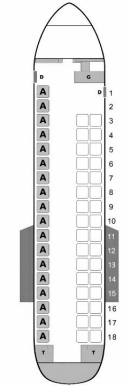
Fonte: https://www.seatmaestro.com/airplanes-seat-maps/continental-airlinesembraer-rj-145/ (Disponível em 10 fev. 2026. Adaptado)
Uma pessoa viajará nessa aeronave e terá seu assento escolhido aleatoriamente pela empresa aérea.
Sendo assim, a probabilidade de que ela seja alocada em um assento que está na janela e que não está sobre as asas é igual a
Fonte: https://www.seatmaestro.com/airplanes-seat-maps/continental-airlinesembraer-rj-145/ (Disponível em 10 fev. 2026. Adaptado)
Uma pessoa viajará nessa aeronave e terá seu assento escolhido aleatoriamente pela empresa aérea.
Sendo assim, a probabilidade de que ela seja alocada em um assento que está na janela e que não está sobre as asas é igual a
Ano: 2026
Banca:
FGV
Órgão:
Prefeitura de São José dos Campos - SP
Prova:
FGV - 2026 - Prefeitura de São José dos Campos - SP - Professor I - Educação Infantil e Ensino Fundamental |
Q3997809
Matemática
Em janeiro de 2024, o governo federal anunciou a construção de
um novo campus do Instituto Tecnológico de Aeronáutica (ITA) no
Ceará. Com mais de 75 anos de história, o ITA tem apenas uma
unidade, em São José dos Campos, São Paulo. O investimento total
previsto para as três etapas das obras da nova unidade
soma R$ 330,4 milhões.
Fonte: https://agenciabrasil.ebc.com.br/educacao/noticia/2025-12/lula-autorizanova-fase-de-obras-do-campus-do-ita-no-ceara. (Disponível em: 9 fev. 2026. Adaptado)
O número natural que representa o valor total previsto para o investimento nas obras da nova unidade é
Fonte: https://agenciabrasil.ebc.com.br/educacao/noticia/2025-12/lula-autorizanova-fase-de-obras-do-campus-do-ita-no-ceara. (Disponível em: 9 fev. 2026. Adaptado)
O número natural que representa o valor total previsto para o investimento nas obras da nova unidade é
Ano: 2026
Banca:
FGV
Órgão:
Prefeitura de São José dos Campos - SP
Prova:
FGV - 2026 - Prefeitura de São José dos Campos - SP - Professor I - Educação Infantil e Ensino Fundamental |
Q3997808
Português
Leia o texto a seguir, publicado em outubro de 2024:
Comissão de Educação aprova projeto que proíbe uso de celular em escolas
Uso fica proibido inclusive no recreio e crianças de até dez anos não poderão sequer portar consigo o aparelho
30/10/2024 - 15:02 Fonte: Agência Câmara de Notícias
A Comissão de Educação da Câmara dos Deputados aprovou projeto de lei que proíbe o uso de telefone celular e de outros aparelhos eletrônicos portáteis por alunos da educação básica em escolas públicas e particulares, inclusive no recreio e nos intervalos entre as aulas.
Além de proibir o uso, o texto proíbe também o porte de celular por alunos da educação infantil e dos anos iniciais do ensino fundamental, para que se protejam crianças de até 10 anos de idade de possíveis abusos.
A proposta autoriza, por outro lado, o uso de celular em sala de aula para fins estritamente pedagógicos, em todos os anos da educação básica. Permite, ainda, o uso para fins de acessibilidade, inclusão e condições médicas.
(https://www.camara.leg.br/noticias/1106874-comissao-de-educacao-aprovaprojeto-que-proibe-uso-de-celular-em-escolas - acesso em 31.10.24)
Assinale a opção que apresenta uma razão pela qual se pode afirmar que se trata de um texto pertencente ao gênero “notícia”.
Comissão de Educação aprova projeto que proíbe uso de celular em escolas
Uso fica proibido inclusive no recreio e crianças de até dez anos não poderão sequer portar consigo o aparelho
30/10/2024 - 15:02 Fonte: Agência Câmara de Notícias
A Comissão de Educação da Câmara dos Deputados aprovou projeto de lei que proíbe o uso de telefone celular e de outros aparelhos eletrônicos portáteis por alunos da educação básica em escolas públicas e particulares, inclusive no recreio e nos intervalos entre as aulas.
Além de proibir o uso, o texto proíbe também o porte de celular por alunos da educação infantil e dos anos iniciais do ensino fundamental, para que se protejam crianças de até 10 anos de idade de possíveis abusos.
A proposta autoriza, por outro lado, o uso de celular em sala de aula para fins estritamente pedagógicos, em todos os anos da educação básica. Permite, ainda, o uso para fins de acessibilidade, inclusão e condições médicas.
(https://www.camara.leg.br/noticias/1106874-comissao-de-educacao-aprovaprojeto-que-proibe-uso-de-celular-em-escolas - acesso em 31.10.24)
Assinale a opção que apresenta uma razão pela qual se pode afirmar que se trata de um texto pertencente ao gênero “notícia”.
Ano: 2026
Banca:
FGV
Órgão:
Prefeitura de São José dos Campos - SP
Prova:
FGV - 2026 - Prefeitura de São José dos Campos - SP - Professor I - Educação Infantil e Ensino Fundamental |
Q3997807
Português
Observe o texto a seguir.
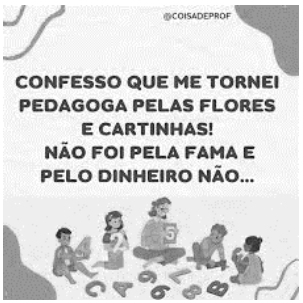
(https://www.threads.com/@coisadeprof/post/C-0-rQovL5k acesso em 21.1.26)
A pragmática é a área linguística responsável pela análise dos significados que extrapolam a matéria textual concreta, mobilizando conhecimentos contextuais e sociais capazes de nos fazer alcançar e/ou interpretar os textos que nos cercam.
A interpretação correta da postagem de Instagram em análise nessa questão depende de conhecimentos pragmáticos que estão corretamente descritos em uma das opções a seguir. Assinale-a.
Ano: 2026
Banca:
FGV
Órgão:
Prefeitura de São José dos Campos - SP
Prova:
FGV - 2026 - Prefeitura de São José dos Campos - SP - Professor I - Educação Infantil e Ensino Fundamental |
Q3997806
Pedagogia
De acordo com a Base Nacional Comum Curricular, o tratamento
das práticas de produção de textos na escola compreende
dimensões inter-relacionadas às práticas de uso e reflexão, tais
como: desenvolver estratégias de planejamento, revisão, edição,
reescrita/redesign e avaliação de textos, considerando-se sua
adequação aos contextos em que foram produzidos, ao modo
(escrito ou oral; imagem estática ou em movimento etc.), à
variedade linguística e/ou semioses apropriadas a esse contexto,
os enunciadores envolvidos, o gênero, o suporte, a esfera/ campo
de circulação, adequação à norma-padrão etc.
(https://www.gov.br/mec/pt-br/escola-em-tempointegral/BNCC_EI_EF_110518_versaofinal.pdf p. 78. acesso em 21.1.26)
Dessa forma, a reescritura de textos na escola tem particular relevância na formação dos estudantes por ampliar sua capacidade de
(https://www.gov.br/mec/pt-br/escola-em-tempointegral/BNCC_EI_EF_110518_versaofinal.pdf p. 78. acesso em 21.1.26)
Dessa forma, a reescritura de textos na escola tem particular relevância na formação dos estudantes por ampliar sua capacidade de
Ano: 2026
Banca:
FGV
Órgão:
Prefeitura de São José dos Campos - SP
Prova:
FGV - 2026 - Prefeitura de São José dos Campos - SP - Professor I - Educação Infantil e Ensino Fundamental |
Q3997805
Português
A seguir, apresenta-se um trecho do livro “Casa de Alvenaria”, obra
literária escrita em primeira pessoa por Carolina Maria de Jesus,
catadora de lixo e moradora da Favela do Canindé (SP). Leia-o
atentamente:
4 de setembro de 1960
Levantei as 6 horas, preparei a refeição matinal. Eu não vou sair (...) Estou apreciando Osasco por causa da tranquilidade, e o ar puro, da a impressão que eu sai do inferno, e estou no céu. Os visinhos olha-me e sorri, as crianças são em numeros menors porque não vivem nas ruas. Na favela as crianças pareçem numerosas por causa dos barracões ser unidos.
(JESUS, Carolina Maria de. Casa de Alvenaria, volume 1: Osasco. São Paulo: Cia das Letras, 2021. p. 37)
Assinale a opção em que se avalia de modo correto a importância de se trabalhar, na escola, textos como o diário escrito por Carolina Maria de Jesus.
4 de setembro de 1960
Levantei as 6 horas, preparei a refeição matinal. Eu não vou sair (...) Estou apreciando Osasco por causa da tranquilidade, e o ar puro, da a impressão que eu sai do inferno, e estou no céu. Os visinhos olha-me e sorri, as crianças são em numeros menors porque não vivem nas ruas. Na favela as crianças pareçem numerosas por causa dos barracões ser unidos.
(JESUS, Carolina Maria de. Casa de Alvenaria, volume 1: Osasco. São Paulo: Cia das Letras, 2021. p. 37)
Assinale a opção em que se avalia de modo correto a importância de se trabalhar, na escola, textos como o diário escrito por Carolina Maria de Jesus.

 Conheça nossos planos