Foram encontradas 2.310 questões

Resolva questões gratuitamente!

Junte-se a mais de 4 milhões de concurseiros!

Q3464005 Inglês
Read the cartoon. 

Q41.png (680×145)
(https://larrycuban.wordpress.com)

The cartoon may be used in an English class for teenage learners in Brazil to discuss the
Alternativas
Q3464004 Inglês
Leia a entrevista a seguir para responder à questão.


Can childhood survive the smartphone? 

Q32_40.png (244×136)


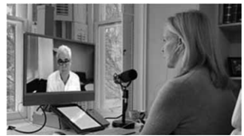
    Below is an excerpt from a conversation between the reporter Katty Kay and Jonathan Haidt who, with his book The Anxious Generation, sparked a global reckoning about mobile phone usage among children when it came out last year.

    Katty Kay: It’s been a year since your book came out and caused a huge conversation. I wanted to start by getting a kind of report card of where we are on the various aspects of what you put forward: phones in school, age gating, social media, getting kids to have more free playtime. Who’s doing well and who isn’t in America on all of those issues?

    Jonathan Haidt: I knew that the book was going to be popular. What I wasn’t prepared for is that this issue would spread like wildfire around the world, not just in the US. Because around the world, family life has turned into a fight over screen time. Everyone hates it. Everyone sees it.

    Where it took off most quickly was phone-free schools, because that is something that is more easily done. It’s so hard to teach to a classroom when half of them are watching short videos and playing video games. So, the teachers have hated the phones from the beginning but they were afraid, especially in America – maybe it’s the same in other countries – but in America, there are a lot of parents who want to be able to communicate all the time with their child, and they think they have a right to check in on their child. And, ‘What if something goes wrong? I need to be there.’ So, the overparenting — ...

    KK: That’s a paradox, then, because you’ve got the parents who are super worried about the phones; they see what phones are doing to their kids. But they also don’t want their kids to relinquish their phones when they go into school. 

    JH: Hey, look, people are complicated! They contain multitudes. And I shouldn’t say that everyone saw the problem, because there were a lot of parents who saw the phone as a lifeline. They see the world as very threatening and dangerous. But we have to focus on what it will take to allow kids to have healthy brain development through puberty. We’ve got to give kids a lot less screen time. A lot less fragmenting time. No TikTok. No short videos. Let’s give them a lot more experience interacting with people.


(Katty Kay. www.bbc.com, 10.04.2025. Adaptado)
Read the graph. 

Q40.png (610×381)
(https://www.sellcell.com)
The content of the text “Can childhood survive the smartphone?” is confirmed in the following finding in the survey on reasons why kids get a phone:
Alternativas
Q3464003 Inglês
Leia a entrevista a seguir para responder à questão.


Can childhood survive the smartphone? 

Q32_40.png (244×136)


    Below is an excerpt from a conversation between the reporter Katty Kay and Jonathan Haidt who, with his book The Anxious Generation, sparked a global reckoning about mobile phone usage among children when it came out last year.

    Katty Kay: It’s been a year since your book came out and caused a huge conversation. I wanted to start by getting a kind of report card of where we are on the various aspects of what you put forward: phones in school, age gating, social media, getting kids to have more free playtime. Who’s doing well and who isn’t in America on all of those issues?

    Jonathan Haidt: I knew that the book was going to be popular. What I wasn’t prepared for is that this issue would spread like wildfire around the world, not just in the US. Because around the world, family life has turned into a fight over screen time. Everyone hates it. Everyone sees it.

    Where it took off most quickly was phone-free schools, because that is something that is more easily done. It’s so hard to teach to a classroom when half of them are watching short videos and playing video games. So, the teachers have hated the phones from the beginning but they were afraid, especially in America – maybe it’s the same in other countries – but in America, there are a lot of parents who want to be able to communicate all the time with their child, and they think they have a right to check in on their child. And, ‘What if something goes wrong? I need to be there.’ So, the overparenting — ...

    KK: That’s a paradox, then, because you’ve got the parents who are super worried about the phones; they see what phones are doing to their kids. But they also don’t want their kids to relinquish their phones when they go into school. 

    JH: Hey, look, people are complicated! They contain multitudes. And I shouldn’t say that everyone saw the problem, because there were a lot of parents who saw the phone as a lifeline. They see the world as very threatening and dangerous. But we have to focus on what it will take to allow kids to have healthy brain development through puberty. We’ve got to give kids a lot less screen time. A lot less fragmenting time. No TikTok. No short videos. Let’s give them a lot more experience interacting with people.


(Katty Kay. www.bbc.com, 10.04.2025. Adaptado)
Pela relevância do tema abordado, determinado professor decide usar a entrevista, ou trechos dela, em uma aula de Língua Inglesa para alunos mais avançados. Ciente da importância de se considerar o contexto de produção para a compreensão mais plena de um texto, em sua aula o professor decide
Alternativas
Q3464002 Inglês
Leia a entrevista a seguir para responder à questão.


Can childhood survive the smartphone? 

Q32_40.png (244×136)


    Below is an excerpt from a conversation between the reporter Katty Kay and Jonathan Haidt who, with his book The Anxious Generation, sparked a global reckoning about mobile phone usage among children when it came out last year.

    Katty Kay: It’s been a year since your book came out and caused a huge conversation. I wanted to start by getting a kind of report card of where we are on the various aspects of what you put forward: phones in school, age gating, social media, getting kids to have more free playtime. Who’s doing well and who isn’t in America on all of those issues?

    Jonathan Haidt: I knew that the book was going to be popular. What I wasn’t prepared for is that this issue would spread like wildfire around the world, not just in the US. Because around the world, family life has turned into a fight over screen time. Everyone hates it. Everyone sees it.

    Where it took off most quickly was phone-free schools, because that is something that is more easily done. It’s so hard to teach to a classroom when half of them are watching short videos and playing video games. So, the teachers have hated the phones from the beginning but they were afraid, especially in America – maybe it’s the same in other countries – but in America, there are a lot of parents who want to be able to communicate all the time with their child, and they think they have a right to check in on their child. And, ‘What if something goes wrong? I need to be there.’ So, the overparenting — ...

    KK: That’s a paradox, then, because you’ve got the parents who are super worried about the phones; they see what phones are doing to their kids. But they also don’t want their kids to relinquish their phones when they go into school. 

    JH: Hey, look, people are complicated! They contain multitudes. And I shouldn’t say that everyone saw the problem, because there were a lot of parents who saw the phone as a lifeline. They see the world as very threatening and dangerous. But we have to focus on what it will take to allow kids to have healthy brain development through puberty. We’ve got to give kids a lot less screen time. A lot less fragmenting time. No TikTok. No short videos. Let’s give them a lot more experience interacting with people.


(Katty Kay. www.bbc.com, 10.04.2025. Adaptado)
Suppose this text is read by teachers taking an in-service training course in teaching English as a Foreign Language. One of the course’s objectives is to develop the teachers’ awareness about the importance of critical reading and interculturality. To help achieve these purposes, the following activity is proposed:
Alternativas
Q3464001 Inglês
Leia a entrevista a seguir para responder à questão.


Can childhood survive the smartphone? 

Q32_40.png (244×136)


    Below is an excerpt from a conversation between the reporter Katty Kay and Jonathan Haidt who, with his book The Anxious Generation, sparked a global reckoning about mobile phone usage among children when it came out last year.

    Katty Kay: It’s been a year since your book came out and caused a huge conversation. I wanted to start by getting a kind of report card of where we are on the various aspects of what you put forward: phones in school, age gating, social media, getting kids to have more free playtime. Who’s doing well and who isn’t in America on all of those issues?

    Jonathan Haidt: I knew that the book was going to be popular. What I wasn’t prepared for is that this issue would spread like wildfire around the world, not just in the US. Because around the world, family life has turned into a fight over screen time. Everyone hates it. Everyone sees it.

    Where it took off most quickly was phone-free schools, because that is something that is more easily done. It’s so hard to teach to a classroom when half of them are watching short videos and playing video games. So, the teachers have hated the phones from the beginning but they were afraid, especially in America – maybe it’s the same in other countries – but in America, there are a lot of parents who want to be able to communicate all the time with their child, and they think they have a right to check in on their child. And, ‘What if something goes wrong? I need to be there.’ So, the overparenting — ...

    KK: That’s a paradox, then, because you’ve got the parents who are super worried about the phones; they see what phones are doing to their kids. But they also don’t want their kids to relinquish their phones when they go into school. 

    JH: Hey, look, people are complicated! They contain multitudes. And I shouldn’t say that everyone saw the problem, because there were a lot of parents who saw the phone as a lifeline. They see the world as very threatening and dangerous. But we have to focus on what it will take to allow kids to have healthy brain development through puberty. We’ve got to give kids a lot less screen time. A lot less fragmenting time. No TikTok. No short videos. Let’s give them a lot more experience interacting with people.


(Katty Kay. www.bbc.com, 10.04.2025. Adaptado)
In case you did not yet know the meaning of the word “relinquish” before reading this text, and used contextual clues to arrive at its meaning, you employed the compensatory reading strategy known as
Alternativas
Q3464000 Inglês
Leia a entrevista a seguir para responder à questão.


Can childhood survive the smartphone? 

Q32_40.png (244×136)


    Below is an excerpt from a conversation between the reporter Katty Kay and Jonathan Haidt who, with his book The Anxious Generation, sparked a global reckoning about mobile phone usage among children when it came out last year.

    Katty Kay: It’s been a year since your book came out and caused a huge conversation. I wanted to start by getting a kind of report card of where we are on the various aspects of what you put forward: phones in school, age gating, social media, getting kids to have more free playtime. Who’s doing well and who isn’t in America on all of those issues?

    Jonathan Haidt: I knew that the book was going to be popular. What I wasn’t prepared for is that this issue would spread like wildfire around the world, not just in the US. Because around the world, family life has turned into a fight over screen time. Everyone hates it. Everyone sees it.

    Where it took off most quickly was phone-free schools, because that is something that is more easily done. It’s so hard to teach to a classroom when half of them are watching short videos and playing video games. So, the teachers have hated the phones from the beginning but they were afraid, especially in America – maybe it’s the same in other countries – but in America, there are a lot of parents who want to be able to communicate all the time with their child, and they think they have a right to check in on their child. And, ‘What if something goes wrong? I need to be there.’ So, the overparenting — ...

    KK: That’s a paradox, then, because you’ve got the parents who are super worried about the phones; they see what phones are doing to their kids. But they also don’t want their kids to relinquish their phones when they go into school. 

    JH: Hey, look, people are complicated! They contain multitudes. And I shouldn’t say that everyone saw the problem, because there were a lot of parents who saw the phone as a lifeline. They see the world as very threatening and dangerous. But we have to focus on what it will take to allow kids to have healthy brain development through puberty. We’ve got to give kids a lot less screen time. A lot less fragmenting time. No TikTok. No short videos. Let’s give them a lot more experience interacting with people.


(Katty Kay. www.bbc.com, 10.04.2025. Adaptado)
“Relinquish” is a word we don’t see frequently and perhaps are not familiar with. In the context of the fifth paragraph “But they also don’t want their kids to relinquish their phones when they go into school.”, the word means
Alternativas
Q3463999 Inglês
Leia a entrevista a seguir para responder à questão.


Can childhood survive the smartphone? 

Q32_40.png (244×136)


    Below is an excerpt from a conversation between the reporter Katty Kay and Jonathan Haidt who, with his book The Anxious Generation, sparked a global reckoning about mobile phone usage among children when it came out last year.

    Katty Kay: It’s been a year since your book came out and caused a huge conversation. I wanted to start by getting a kind of report card of where we are on the various aspects of what you put forward: phones in school, age gating, social media, getting kids to have more free playtime. Who’s doing well and who isn’t in America on all of those issues?

    Jonathan Haidt: I knew that the book was going to be popular. What I wasn’t prepared for is that this issue would spread like wildfire around the world, not just in the US. Because around the world, family life has turned into a fight over screen time. Everyone hates it. Everyone sees it.

    Where it took off most quickly was phone-free schools, because that is something that is more easily done. It’s so hard to teach to a classroom when half of them are watching short videos and playing video games. So, the teachers have hated the phones from the beginning but they were afraid, especially in America – maybe it’s the same in other countries – but in America, there are a lot of parents who want to be able to communicate all the time with their child, and they think they have a right to check in on their child. And, ‘What if something goes wrong? I need to be there.’ So, the overparenting — ...

    KK: That’s a paradox, then, because you’ve got the parents who are super worried about the phones; they see what phones are doing to their kids. But they also don’t want their kids to relinquish their phones when they go into school. 

    JH: Hey, look, people are complicated! They contain multitudes. And I shouldn’t say that everyone saw the problem, because there were a lot of parents who saw the phone as a lifeline. They see the world as very threatening and dangerous. But we have to focus on what it will take to allow kids to have healthy brain development through puberty. We’ve got to give kids a lot less screen time. A lot less fragmenting time. No TikTok. No short videos. Let’s give them a lot more experience interacting with people.


(Katty Kay. www.bbc.com, 10.04.2025. Adaptado)
The prefix over- has a variety of possible meanings. Mark the alternative in which the prefix means the same as in “overparenting” (paragraph 4). 
Alternativas
Q3463998 Inglês
Leia a entrevista a seguir para responder à questão.


Can childhood survive the smartphone? 

Q32_40.png (244×136)


    Below is an excerpt from a conversation between the reporter Katty Kay and Jonathan Haidt who, with his book The Anxious Generation, sparked a global reckoning about mobile phone usage among children when it came out last year.

    Katty Kay: It’s been a year since your book came out and caused a huge conversation. I wanted to start by getting a kind of report card of where we are on the various aspects of what you put forward: phones in school, age gating, social media, getting kids to have more free playtime. Who’s doing well and who isn’t in America on all of those issues?

    Jonathan Haidt: I knew that the book was going to be popular. What I wasn’t prepared for is that this issue would spread like wildfire around the world, not just in the US. Because around the world, family life has turned into a fight over screen time. Everyone hates it. Everyone sees it.

    Where it took off most quickly was phone-free schools, because that is something that is more easily done. It’s so hard to teach to a classroom when half of them are watching short videos and playing video games. So, the teachers have hated the phones from the beginning but they were afraid, especially in America – maybe it’s the same in other countries – but in America, there are a lot of parents who want to be able to communicate all the time with their child, and they think they have a right to check in on their child. And, ‘What if something goes wrong? I need to be there.’ So, the overparenting — ...

    KK: That’s a paradox, then, because you’ve got the parents who are super worried about the phones; they see what phones are doing to their kids. But they also don’t want their kids to relinquish their phones when they go into school. 

    JH: Hey, look, people are complicated! They contain multitudes. And I shouldn’t say that everyone saw the problem, because there were a lot of parents who saw the phone as a lifeline. They see the world as very threatening and dangerous. But we have to focus on what it will take to allow kids to have healthy brain development through puberty. We’ve got to give kids a lot less screen time. A lot less fragmenting time. No TikTok. No short videos. Let’s give them a lot more experience interacting with people.


(Katty Kay. www.bbc.com, 10.04.2025. Adaptado)
In the context of the fourth paragraph, the fragment “– maybe it’s the same in other countries –” functions as
Alternativas
Q3463997 Inglês
Leia a entrevista a seguir para responder à questão.


Can childhood survive the smartphone? 

Q32_40.png (244×136)


    Below is an excerpt from a conversation between the reporter Katty Kay and Jonathan Haidt who, with his book The Anxious Generation, sparked a global reckoning about mobile phone usage among children when it came out last year.

    Katty Kay: It’s been a year since your book came out and caused a huge conversation. I wanted to start by getting a kind of report card of where we are on the various aspects of what you put forward: phones in school, age gating, social media, getting kids to have more free playtime. Who’s doing well and who isn’t in America on all of those issues?

    Jonathan Haidt: I knew that the book was going to be popular. What I wasn’t prepared for is that this issue would spread like wildfire around the world, not just in the US. Because around the world, family life has turned into a fight over screen time. Everyone hates it. Everyone sees it.

    Where it took off most quickly was phone-free schools, because that is something that is more easily done. It’s so hard to teach to a classroom when half of them are watching short videos and playing video games. So, the teachers have hated the phones from the beginning but they were afraid, especially in America – maybe it’s the same in other countries – but in America, there are a lot of parents who want to be able to communicate all the time with their child, and they think they have a right to check in on their child. And, ‘What if something goes wrong? I need to be there.’ So, the overparenting — ...

    KK: That’s a paradox, then, because you’ve got the parents who are super worried about the phones; they see what phones are doing to their kids. But they also don’t want their kids to relinquish their phones when they go into school. 

    JH: Hey, look, people are complicated! They contain multitudes. And I shouldn’t say that everyone saw the problem, because there were a lot of parents who saw the phone as a lifeline. They see the world as very threatening and dangerous. But we have to focus on what it will take to allow kids to have healthy brain development through puberty. We’ve got to give kids a lot less screen time. A lot less fragmenting time. No TikTok. No short videos. Let’s give them a lot more experience interacting with people.


(Katty Kay. www.bbc.com, 10.04.2025. Adaptado)
The sentence which starts the dialogue between interviewer and interviewee “It’s been a year since your book came out and caused a huge conversation” has a verb in the present perfect tense. Another correct use of the present perfect is found in alternative:
Alternativas
Q3463996 Inglês
Leia a entrevista a seguir para responder à questão.


Can childhood survive the smartphone? 

Q32_40.png (244×136)


    Below is an excerpt from a conversation between the reporter Katty Kay and Jonathan Haidt who, with his book The Anxious Generation, sparked a global reckoning about mobile phone usage among children when it came out last year.

    Katty Kay: It’s been a year since your book came out and caused a huge conversation. I wanted to start by getting a kind of report card of where we are on the various aspects of what you put forward: phones in school, age gating, social media, getting kids to have more free playtime. Who’s doing well and who isn’t in America on all of those issues?

    Jonathan Haidt: I knew that the book was going to be popular. What I wasn’t prepared for is that this issue would spread like wildfire around the world, not just in the US. Because around the world, family life has turned into a fight over screen time. Everyone hates it. Everyone sees it.

    Where it took off most quickly was phone-free schools, because that is something that is more easily done. It’s so hard to teach to a classroom when half of them are watching short videos and playing video games. So, the teachers have hated the phones from the beginning but they were afraid, especially in America – maybe it’s the same in other countries – but in America, there are a lot of parents who want to be able to communicate all the time with their child, and they think they have a right to check in on their child. And, ‘What if something goes wrong? I need to be there.’ So, the overparenting — ...

    KK: That’s a paradox, then, because you’ve got the parents who are super worried about the phones; they see what phones are doing to their kids. But they also don’t want their kids to relinquish their phones when they go into school. 

    JH: Hey, look, people are complicated! They contain multitudes. And I shouldn’t say that everyone saw the problem, because there were a lot of parents who saw the phone as a lifeline. They see the world as very threatening and dangerous. But we have to focus on what it will take to allow kids to have healthy brain development through puberty. We’ve got to give kids a lot less screen time. A lot less fragmenting time. No TikTok. No short videos. Let’s give them a lot more experience interacting with people.


(Katty Kay. www.bbc.com, 10.04.2025. Adaptado)
According to the author of The Anxious Generation, one main difficulty in banning child smartphone use from American schools is
Alternativas
Q3463995 Inglês
Read the text and the dialogue which follows it.

“No mundo real, raramente as perguntas se referem a um único tipo de conteúdo. Para preparar os alunos para isso, tente avançar a partir de uma resposta certa, pedindo que integrem a ela conhecimentos aprendidos anteriormente.”

(Doug Lemov. Aula Nota 10 3.0, 2022. Adaptado)

Teacher: Who would like to use the verb “cook” in a sentence?”
Student: I like to cook. Teacher: Good! Who would add an indirect object to the sentence?
Student: I like to cook to my family.
Teacher: Could you use a compound indirect object?
Student: I like to cook to my family and friends.
Teacher: When do you cook to them? Add a time adverb to your sentence.
Student: I like to cook to my family and friends on weekends.

The interventions by the teacher recover the students’ knowledge about
Alternativas
Q3459328 Enfermagem
A prestação de cuidados paliativos (CP) na Atenção Primária de Saúde (APS) tem como um de seus princípios norteadores
Alternativas
Q3459327 Saúde Pública

Um artigo científico recentemente publicado trouxe a seguinte informação: “A taxa média de mortalidade neonatal em Pernambuco foi de 11,5 por 1.000 nascidos vivos no período estudado. Foi observada tendência decrescente da taxa de óbito neonatal, especialmente no componente precoce.” Tal informação significa que a taxa média de mortalidade em um determinado período, de crianças de 0 (zero) a dias de vida foi de 11,5 por 1.000 nascidos vivos, observando-se decréscimo da incidência de óbitos entre o nascimento e o dia de vida.


Assinale a alternativa que completa, correta e respectivamente, as lacunas do texto.

Alternativas
Q3459326 Enfermagem
A descoberta de um caso novo de tuberculose pulmonar desencadeia as ações de vigilância epidemiológica entre os contatos do caso índice, tendo prioridade para a avaliação
Alternativas
Q3459325 Saúde Pública
O principal dispositivo para a efetiva operacionalização da Política Nacional de Humanização nos serviços de urgência e emergência, entendidos como as formas de organizar o trabalho, pautados nas diretrizes, é
Alternativas
Q3459324 Enfermagem

A Resolução COFEN no 736, de 17 de janeiro de 2024, que dispõe sobre a implementação do Processo de Enfermagem em todo contexto socioambiental onde ocorre o cuidado de enfermagem, estabelece que há três tipos de padrões de cuidados.


Assinale a alternativa que apresenta, corretamente, uma ação relacionada aos Padrões de Cuidados Interprofissionais.

Alternativas
Q3459323 Saúde Pública

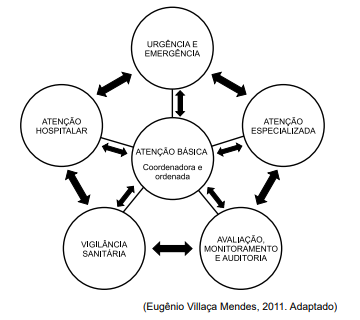
Observe a figura:


Captura_de tela 2025-07-05 201225.png (360×320)


A figura representa a organização atual da Rede de Atenção à Saúde (RAS), que é uma rede 

Alternativas
Q3459322 Enfermagem
O trabalho gerencial do enfermeiro na Atenção Básica tem como finalidade principal
Alternativas
Q3459321 Enfermagem
O exame físico do paciente pode requerer posições específicas para a avaliação de determinados segmentos. Para o exame da coluna vertebral, a posição indicada é a 
Alternativas
Q3459320 Enfermagem
Recentemente, no Portal da Prefeitura de Itatiba, o Centro de Controle de Zoonoses comunicou a captura e o recolhimento de morcegos infectados pela raiva. Embora esses animais não tenham sido identificados como hematófagos, eles podem transmitir a raiva. Frente a essa situação, é importante esclarecer a população sobre as medidas de prevenção da raiva, tais como: 
Alternativas
Respostas
221: E
222: D
223: E
224: D
225: B
226: C
227: A
228: B
229: E
230: D
231: A
232: C
233: E
234: B
235: D
236: A
237: B
238: A
239: D
240: C