Foram encontradas 1.381 questões

Resolva questões gratuitamente!

Junte-se a mais de 4 milhões de concurseiros!

Q2574133 Inglês
Answer question according to TEXT 1 below.

TEXT 1
TRUE STORIES – The School teacher

1 IT'S HAPPENED TO me half a dozen times, lately. I'm walking home through the Edinburgh Gardens and I see them heading towards me. Heavy kids, eight of them, maybe ten. I keep walking, but I keep my eyes on them, and my feet wait for the sign to take off.
2 They are Greeks and Italians, all adolescents, all wearing green or maroon cardigans with a double black stripe round the chest, Levis or Wranglers that fit just right, showing a bit of sock and reddish shoes with big heels. I move across to the outside of the footpath to let them pass. They spread out a little. They're close enough now in the almost-dark for me to see their faces.
3 And it's all right, because the front one is Chris, from Fitzroy High, and he says, 'Hello, miss!' and the others are kids who have grinned and nodded at me a hundred times in the yard at school.
4 I had taught migrants before, but Fitzroy High is one of those legendary inner-suburban schools which can no longer be properly described as Australian. In none of the classes I took were there more than four kids with Australian names. A blond head was a surprise. The administration battled to assimilate these kids into recognizable moulds. In a hundred subtle ways they were defeated.
5 Most of the girls had pierced ears and had worn gold earrings since they were babies. The line was that plain gold sleepers were the only ear decorations allowed. At the time when it was fashionable, in Australia, to wear a zillion colored plastic bangles up your arm, teachers strove hopelessly to prevent this display of gaiety at school. The girls went on wearing them and pulled their sleeves down when they saw a senior mistress coming. 
6 There were weekly segregated assemblies. I don't know what they told the boys, but at one girls' assembly I actually heard the senior mistress say, 'As girls we must be modest, quiet, hardworking and well-groomed at all times'.
7 What astonished me was the stubbornness of the kids' resistance to the rules. They didn't organize or protest. They defied. If the pressure got too much for them, they stayed away. And yet they hated to be suspended. One boy was suspended for a week, and every day I'd see him leaning against my front fence, staring wistfully at the school where his mates were tight-roping their way dangerously through the day.
8 In the three other schools I'd taught at, I'd been an authoritarian, a good disciplinarian. It wasn't only political or educational thinking that changed my attitude at Fitzroy High. It was the kids themselves. I suppose I fell in love with the whole nine hundred of them. In other schools, I'd known kids who were 'trouble-makers' or 'over-achievers', or ‘irresponsible' or 'antisocial. But somehow the kids at Fitzroy cut right through those categories.
9 To begin with, they made me laugh. I can't remember ever knowing such exuberant, merry kids. Every class had more than its share of natural clowns. The plays they invented were full of hilarious delight. In a second-form class I had for a year, two Italian boys called Claudio and Joseph used to present weekly plays so excruciatingly funny that we lay across the desks aching and wiping our eyes.
10 A kid called Ilya wrote wonderful, magical stories; he could write fairy tales his grandparents had told him in Yugoslavia. Lemonia could break your heart with a story about a lost fountain pen, and Dora with an account of her dreams. Their English may have been rocky, but there was a pure, delicate humour lying bone-deep in them that nothing could corrupt.

GARNER, Helen. True Stories. Melbourne, Australia: The Publishing Company, 2013, pp. 26-28. Adapted.
The conjunction “but” in “Their English may have been rocky, but there was a pure, delicate humour lying bone-deep in them that nothing could corrupt” establishes a contrast between:
Alternativas
Q2574132 Inglês
Answer question according to TEXT 1 below.

TEXT 1
TRUE STORIES – The School teacher

1 IT'S HAPPENED TO me half a dozen times, lately. I'm walking home through the Edinburgh Gardens and I see them heading towards me. Heavy kids, eight of them, maybe ten. I keep walking, but I keep my eyes on them, and my feet wait for the sign to take off.
2 They are Greeks and Italians, all adolescents, all wearing green or maroon cardigans with a double black stripe round the chest, Levis or Wranglers that fit just right, showing a bit of sock and reddish shoes with big heels. I move across to the outside of the footpath to let them pass. They spread out a little. They're close enough now in the almost-dark for me to see their faces.
3 And it's all right, because the front one is Chris, from Fitzroy High, and he says, 'Hello, miss!' and the others are kids who have grinned and nodded at me a hundred times in the yard at school.
4 I had taught migrants before, but Fitzroy High is one of those legendary inner-suburban schools which can no longer be properly described as Australian. In none of the classes I took were there more than four kids with Australian names. A blond head was a surprise. The administration battled to assimilate these kids into recognizable moulds. In a hundred subtle ways they were defeated.
5 Most of the girls had pierced ears and had worn gold earrings since they were babies. The line was that plain gold sleepers were the only ear decorations allowed. At the time when it was fashionable, in Australia, to wear a zillion colored plastic bangles up your arm, teachers strove hopelessly to prevent this display of gaiety at school. The girls went on wearing them and pulled their sleeves down when they saw a senior mistress coming. 
6 There were weekly segregated assemblies. I don't know what they told the boys, but at one girls' assembly I actually heard the senior mistress say, 'As girls we must be modest, quiet, hardworking and well-groomed at all times'.
7 What astonished me was the stubbornness of the kids' resistance to the rules. They didn't organize or protest. They defied. If the pressure got too much for them, they stayed away. And yet they hated to be suspended. One boy was suspended for a week, and every day I'd see him leaning against my front fence, staring wistfully at the school where his mates were tight-roping their way dangerously through the day.
8 In the three other schools I'd taught at, I'd been an authoritarian, a good disciplinarian. It wasn't only political or educational thinking that changed my attitude at Fitzroy High. It was the kids themselves. I suppose I fell in love with the whole nine hundred of them. In other schools, I'd known kids who were 'trouble-makers' or 'over-achievers', or ‘irresponsible' or 'antisocial. But somehow the kids at Fitzroy cut right through those categories.
9 To begin with, they made me laugh. I can't remember ever knowing such exuberant, merry kids. Every class had more than its share of natural clowns. The plays they invented were full of hilarious delight. In a second-form class I had for a year, two Italian boys called Claudio and Joseph used to present weekly plays so excruciatingly funny that we lay across the desks aching and wiping our eyes.
10 A kid called Ilya wrote wonderful, magical stories; he could write fairy tales his grandparents had told him in Yugoslavia. Lemonia could break your heart with a story about a lost fountain pen, and Dora with an account of her dreams. Their English may have been rocky, but there was a pure, delicate humour lying bone-deep in them that nothing could corrupt.

GARNER, Helen. True Stories. Melbourne, Australia: The Publishing Company, 2013, pp. 26-28. Adapted.
Exuberant, merry, hilarious and wonderful are some of the adjectives the author uses to describe students at Fitzroy School. These express a highly positive evaluation of Fitzroy’s students, and represent:
Alternativas
Q2574131 Inglês
Answer question according to TEXT 1 below.

TEXT 1
TRUE STORIES – The School teacher

1 IT'S HAPPENED TO me half a dozen times, lately. I'm walking home through the Edinburgh Gardens and I see them heading towards me. Heavy kids, eight of them, maybe ten. I keep walking, but I keep my eyes on them, and my feet wait for the sign to take off.
2 They are Greeks and Italians, all adolescents, all wearing green or maroon cardigans with a double black stripe round the chest, Levis or Wranglers that fit just right, showing a bit of sock and reddish shoes with big heels. I move across to the outside of the footpath to let them pass. They spread out a little. They're close enough now in the almost-dark for me to see their faces.
3 And it's all right, because the front one is Chris, from Fitzroy High, and he says, 'Hello, miss!' and the others are kids who have grinned and nodded at me a hundred times in the yard at school.
4 I had taught migrants before, but Fitzroy High is one of those legendary inner-suburban schools which can no longer be properly described as Australian. In none of the classes I took were there more than four kids with Australian names. A blond head was a surprise. The administration battled to assimilate these kids into recognizable moulds. In a hundred subtle ways they were defeated.
5 Most of the girls had pierced ears and had worn gold earrings since they were babies. The line was that plain gold sleepers were the only ear decorations allowed. At the time when it was fashionable, in Australia, to wear a zillion colored plastic bangles up your arm, teachers strove hopelessly to prevent this display of gaiety at school. The girls went on wearing them and pulled their sleeves down when they saw a senior mistress coming. 
6 There were weekly segregated assemblies. I don't know what they told the boys, but at one girls' assembly I actually heard the senior mistress say, 'As girls we must be modest, quiet, hardworking and well-groomed at all times'.
7 What astonished me was the stubbornness of the kids' resistance to the rules. They didn't organize or protest. They defied. If the pressure got too much for them, they stayed away. And yet they hated to be suspended. One boy was suspended for a week, and every day I'd see him leaning against my front fence, staring wistfully at the school where his mates were tight-roping their way dangerously through the day.
8 In the three other schools I'd taught at, I'd been an authoritarian, a good disciplinarian. It wasn't only political or educational thinking that changed my attitude at Fitzroy High. It was the kids themselves. I suppose I fell in love with the whole nine hundred of them. In other schools, I'd known kids who were 'trouble-makers' or 'over-achievers', or ‘irresponsible' or 'antisocial. But somehow the kids at Fitzroy cut right through those categories.
9 To begin with, they made me laugh. I can't remember ever knowing such exuberant, merry kids. Every class had more than its share of natural clowns. The plays they invented were full of hilarious delight. In a second-form class I had for a year, two Italian boys called Claudio and Joseph used to present weekly plays so excruciatingly funny that we lay across the desks aching and wiping our eyes.
10 A kid called Ilya wrote wonderful, magical stories; he could write fairy tales his grandparents had told him in Yugoslavia. Lemonia could break your heart with a story about a lost fountain pen, and Dora with an account of her dreams. Their English may have been rocky, but there was a pure, delicate humour lying bone-deep in them that nothing could corrupt.

GARNER, Helen. True Stories. Melbourne, Australia: The Publishing Company, 2013, pp. 26-28. Adapted.
Question refer to the paragraph below (paragraph 8)

In the three other schools I’d taught at, I’d been an authoritarian, a good disciplinarian’. It wasn’t only political or educational thinking that changed my attitude at Fitzroy High. It was the kids themselves. I suppose I fell in love with the whole nine hundred of them. In other schools, I’d known kids who were ‘trouble-makers’ or ‘over-achievers’, or ‘irresponsible’ or ‘antisocial’. But somehow the kids at Fitzroy cut right through those categories.

The only correct statement referring to the author’s attitude as a teacher is:
Alternativas
Q2574130 Inglês
Answer question according to TEXT 1 below.

TEXT 1
TRUE STORIES – The School teacher

1 IT'S HAPPENED TO me half a dozen times, lately. I'm walking home through the Edinburgh Gardens and I see them heading towards me. Heavy kids, eight of them, maybe ten. I keep walking, but I keep my eyes on them, and my feet wait for the sign to take off.
2 They are Greeks and Italians, all adolescents, all wearing green or maroon cardigans with a double black stripe round the chest, Levis or Wranglers that fit just right, showing a bit of sock and reddish shoes with big heels. I move across to the outside of the footpath to let them pass. They spread out a little. They're close enough now in the almost-dark for me to see their faces.
3 And it's all right, because the front one is Chris, from Fitzroy High, and he says, 'Hello, miss!' and the others are kids who have grinned and nodded at me a hundred times in the yard at school.
4 I had taught migrants before, but Fitzroy High is one of those legendary inner-suburban schools which can no longer be properly described as Australian. In none of the classes I took were there more than four kids with Australian names. A blond head was a surprise. The administration battled to assimilate these kids into recognizable moulds. In a hundred subtle ways they were defeated.
5 Most of the girls had pierced ears and had worn gold earrings since they were babies. The line was that plain gold sleepers were the only ear decorations allowed. At the time when it was fashionable, in Australia, to wear a zillion colored plastic bangles up your arm, teachers strove hopelessly to prevent this display of gaiety at school. The girls went on wearing them and pulled their sleeves down when they saw a senior mistress coming. 
6 There were weekly segregated assemblies. I don't know what they told the boys, but at one girls' assembly I actually heard the senior mistress say, 'As girls we must be modest, quiet, hardworking and well-groomed at all times'.
7 What astonished me was the stubbornness of the kids' resistance to the rules. They didn't organize or protest. They defied. If the pressure got too much for them, they stayed away. And yet they hated to be suspended. One boy was suspended for a week, and every day I'd see him leaning against my front fence, staring wistfully at the school where his mates were tight-roping their way dangerously through the day.
8 In the three other schools I'd taught at, I'd been an authoritarian, a good disciplinarian. It wasn't only political or educational thinking that changed my attitude at Fitzroy High. It was the kids themselves. I suppose I fell in love with the whole nine hundred of them. In other schools, I'd known kids who were 'trouble-makers' or 'over-achievers', or ‘irresponsible' or 'antisocial. But somehow the kids at Fitzroy cut right through those categories.
9 To begin with, they made me laugh. I can't remember ever knowing such exuberant, merry kids. Every class had more than its share of natural clowns. The plays they invented were full of hilarious delight. In a second-form class I had for a year, two Italian boys called Claudio and Joseph used to present weekly plays so excruciatingly funny that we lay across the desks aching and wiping our eyes.
10 A kid called Ilya wrote wonderful, magical stories; he could write fairy tales his grandparents had told him in Yugoslavia. Lemonia could break your heart with a story about a lost fountain pen, and Dora with an account of her dreams. Their English may have been rocky, but there was a pure, delicate humour lying bone-deep in them that nothing could corrupt.

GARNER, Helen. True Stories. Melbourne, Australia: The Publishing Company, 2013, pp. 26-28. Adapted.
Question refer to the paragraph below (paragraph 8)

In the three other schools I’d taught at, I’d been an authoritarian, a good disciplinarian’. It wasn’t only political or educational thinking that changed my attitude at Fitzroy High. It was the kids themselves. I suppose I fell in love with the whole nine hundred of them. In other schools, I’d known kids who were ‘trouble-makers’ or ‘over-achievers’, or ‘irresponsible’ or ‘antisocial’. But somehow the kids at Fitzroy cut right through those categories.

It is correct to say that the verb tense used in the underlined verbal phrases “I’d been an authoritarian, schools I’d taught, and I’d known kids” is:
Alternativas
Q2574129 Inglês
Answer question according to TEXT 1 below.

TEXT 1
TRUE STORIES – The School teacher

1 IT'S HAPPENED TO me half a dozen times, lately. I'm walking home through the Edinburgh Gardens and I see them heading towards me. Heavy kids, eight of them, maybe ten. I keep walking, but I keep my eyes on them, and my feet wait for the sign to take off.
2 They are Greeks and Italians, all adolescents, all wearing green or maroon cardigans with a double black stripe round the chest, Levis or Wranglers that fit just right, showing a bit of sock and reddish shoes with big heels. I move across to the outside of the footpath to let them pass. They spread out a little. They're close enough now in the almost-dark for me to see their faces.
3 And it's all right, because the front one is Chris, from Fitzroy High, and he says, 'Hello, miss!' and the others are kids who have grinned and nodded at me a hundred times in the yard at school.
4 I had taught migrants before, but Fitzroy High is one of those legendary inner-suburban schools which can no longer be properly described as Australian. In none of the classes I took were there more than four kids with Australian names. A blond head was a surprise. The administration battled to assimilate these kids into recognizable moulds. In a hundred subtle ways they were defeated.
5 Most of the girls had pierced ears and had worn gold earrings since they were babies. The line was that plain gold sleepers were the only ear decorations allowed. At the time when it was fashionable, in Australia, to wear a zillion colored plastic bangles up your arm, teachers strove hopelessly to prevent this display of gaiety at school. The girls went on wearing them and pulled their sleeves down when they saw a senior mistress coming. 
6 There were weekly segregated assemblies. I don't know what they told the boys, but at one girls' assembly I actually heard the senior mistress say, 'As girls we must be modest, quiet, hardworking and well-groomed at all times'.
7 What astonished me was the stubbornness of the kids' resistance to the rules. They didn't organize or protest. They defied. If the pressure got too much for them, they stayed away. And yet they hated to be suspended. One boy was suspended for a week, and every day I'd see him leaning against my front fence, staring wistfully at the school where his mates were tight-roping their way dangerously through the day.
8 In the three other schools I'd taught at, I'd been an authoritarian, a good disciplinarian. It wasn't only political or educational thinking that changed my attitude at Fitzroy High. It was the kids themselves. I suppose I fell in love with the whole nine hundred of them. In other schools, I'd known kids who were 'trouble-makers' or 'over-achievers', or ‘irresponsible' or 'antisocial. But somehow the kids at Fitzroy cut right through those categories.
9 To begin with, they made me laugh. I can't remember ever knowing such exuberant, merry kids. Every class had more than its share of natural clowns. The plays they invented were full of hilarious delight. In a second-form class I had for a year, two Italian boys called Claudio and Joseph used to present weekly plays so excruciatingly funny that we lay across the desks aching and wiping our eyes.
10 A kid called Ilya wrote wonderful, magical stories; he could write fairy tales his grandparents had told him in Yugoslavia. Lemonia could break your heart with a story about a lost fountain pen, and Dora with an account of her dreams. Their English may have been rocky, but there was a pure, delicate humour lying bone-deep in them that nothing could corrupt.

GARNER, Helen. True Stories. Melbourne, Australia: The Publishing Company, 2013, pp. 26-28. Adapted.
What is referred, by the narrator, as the “stubbornness of the kids’ resistance to the rules” (paragraph 7) is exemplified, in the text, by:
Alternativas
Q2574128 Inglês
Answer question according to TEXT 1 below.

TEXT 1
TRUE STORIES – The School teacher

1 IT'S HAPPENED TO me half a dozen times, lately. I'm walking home through the Edinburgh Gardens and I see them heading towards me. Heavy kids, eight of them, maybe ten. I keep walking, but I keep my eyes on them, and my feet wait for the sign to take off.
2 They are Greeks and Italians, all adolescents, all wearing green or maroon cardigans with a double black stripe round the chest, Levis or Wranglers that fit just right, showing a bit of sock and reddish shoes with big heels. I move across to the outside of the footpath to let them pass. They spread out a little. They're close enough now in the almost-dark for me to see their faces.
3 And it's all right, because the front one is Chris, from Fitzroy High, and he says, 'Hello, miss!' and the others are kids who have grinned and nodded at me a hundred times in the yard at school.
4 I had taught migrants before, but Fitzroy High is one of those legendary inner-suburban schools which can no longer be properly described as Australian. In none of the classes I took were there more than four kids with Australian names. A blond head was a surprise. The administration battled to assimilate these kids into recognizable moulds. In a hundred subtle ways they were defeated.
5 Most of the girls had pierced ears and had worn gold earrings since they were babies. The line was that plain gold sleepers were the only ear decorations allowed. At the time when it was fashionable, in Australia, to wear a zillion colored plastic bangles up your arm, teachers strove hopelessly to prevent this display of gaiety at school. The girls went on wearing them and pulled their sleeves down when they saw a senior mistress coming. 
6 There were weekly segregated assemblies. I don't know what they told the boys, but at one girls' assembly I actually heard the senior mistress say, 'As girls we must be modest, quiet, hardworking and well-groomed at all times'.
7 What astonished me was the stubbornness of the kids' resistance to the rules. They didn't organize or protest. They defied. If the pressure got too much for them, they stayed away. And yet they hated to be suspended. One boy was suspended for a week, and every day I'd see him leaning against my front fence, staring wistfully at the school where his mates were tight-roping their way dangerously through the day.
8 In the three other schools I'd taught at, I'd been an authoritarian, a good disciplinarian. It wasn't only political or educational thinking that changed my attitude at Fitzroy High. It was the kids themselves. I suppose I fell in love with the whole nine hundred of them. In other schools, I'd known kids who were 'trouble-makers' or 'over-achievers', or ‘irresponsible' or 'antisocial. But somehow the kids at Fitzroy cut right through those categories.
9 To begin with, they made me laugh. I can't remember ever knowing such exuberant, merry kids. Every class had more than its share of natural clowns. The plays they invented were full of hilarious delight. In a second-form class I had for a year, two Italian boys called Claudio and Joseph used to present weekly plays so excruciatingly funny that we lay across the desks aching and wiping our eyes.
10 A kid called Ilya wrote wonderful, magical stories; he could write fairy tales his grandparents had told him in Yugoslavia. Lemonia could break your heart with a story about a lost fountain pen, and Dora with an account of her dreams. Their English may have been rocky, but there was a pure, delicate humour lying bone-deep in them that nothing could corrupt.

GARNER, Helen. True Stories. Melbourne, Australia: The Publishing Company, 2013, pp. 26-28. Adapted.
Question refer to the following passage, in paragraph 4:

A blond head was a surprise. The administration battled to assimilate these kids into recognizable moulds. In a hundred subtle ways they were defeated.

The pronoun they (third sentence) refers to: 
Alternativas
Q2574127 Inglês
Answer question according to TEXT 1 below.

TEXT 1
TRUE STORIES – The School teacher

1 IT'S HAPPENED TO me half a dozen times, lately. I'm walking home through the Edinburgh Gardens and I see them heading towards me. Heavy kids, eight of them, maybe ten. I keep walking, but I keep my eyes on them, and my feet wait for the sign to take off.
2 They are Greeks and Italians, all adolescents, all wearing green or maroon cardigans with a double black stripe round the chest, Levis or Wranglers that fit just right, showing a bit of sock and reddish shoes with big heels. I move across to the outside of the footpath to let them pass. They spread out a little. They're close enough now in the almost-dark for me to see their faces.
3 And it's all right, because the front one is Chris, from Fitzroy High, and he says, 'Hello, miss!' and the others are kids who have grinned and nodded at me a hundred times in the yard at school.
4 I had taught migrants before, but Fitzroy High is one of those legendary inner-suburban schools which can no longer be properly described as Australian. In none of the classes I took were there more than four kids with Australian names. A blond head was a surprise. The administration battled to assimilate these kids into recognizable moulds. In a hundred subtle ways they were defeated.
5 Most of the girls had pierced ears and had worn gold earrings since they were babies. The line was that plain gold sleepers were the only ear decorations allowed. At the time when it was fashionable, in Australia, to wear a zillion colored plastic bangles up your arm, teachers strove hopelessly to prevent this display of gaiety at school. The girls went on wearing them and pulled their sleeves down when they saw a senior mistress coming. 
6 There were weekly segregated assemblies. I don't know what they told the boys, but at one girls' assembly I actually heard the senior mistress say, 'As girls we must be modest, quiet, hardworking and well-groomed at all times'.
7 What astonished me was the stubbornness of the kids' resistance to the rules. They didn't organize or protest. They defied. If the pressure got too much for them, they stayed away. And yet they hated to be suspended. One boy was suspended for a week, and every day I'd see him leaning against my front fence, staring wistfully at the school where his mates were tight-roping their way dangerously through the day.
8 In the three other schools I'd taught at, I'd been an authoritarian, a good disciplinarian. It wasn't only political or educational thinking that changed my attitude at Fitzroy High. It was the kids themselves. I suppose I fell in love with the whole nine hundred of them. In other schools, I'd known kids who were 'trouble-makers' or 'over-achievers', or ‘irresponsible' or 'antisocial. But somehow the kids at Fitzroy cut right through those categories.
9 To begin with, they made me laugh. I can't remember ever knowing such exuberant, merry kids. Every class had more than its share of natural clowns. The plays they invented were full of hilarious delight. In a second-form class I had for a year, two Italian boys called Claudio and Joseph used to present weekly plays so excruciatingly funny that we lay across the desks aching and wiping our eyes.
10 A kid called Ilya wrote wonderful, magical stories; he could write fairy tales his grandparents had told him in Yugoslavia. Lemonia could break your heart with a story about a lost fountain pen, and Dora with an account of her dreams. Their English may have been rocky, but there was a pure, delicate humour lying bone-deep in them that nothing could corrupt.

GARNER, Helen. True Stories. Melbourne, Australia: The Publishing Company, 2013, pp. 26-28. Adapted.
Question refer to the following passage, in paragraph 4:

A blond head was a surprise. The administration battled to assimilate these kids into recognizable moulds. In a hundred subtle ways they were defeated.

A metonymy, and two metaphorical expressions related to the concept of war are, respectively,
Alternativas
Q2574126 Inglês
Answer question according to TEXT 1 below.

TEXT 1
TRUE STORIES – The School teacher

1 IT'S HAPPENED TO me half a dozen times, lately. I'm walking home through the Edinburgh Gardens and I see them heading towards me. Heavy kids, eight of them, maybe ten. I keep walking, but I keep my eyes on them, and my feet wait for the sign to take off.
2 They are Greeks and Italians, all adolescents, all wearing green or maroon cardigans with a double black stripe round the chest, Levis or Wranglers that fit just right, showing a bit of sock and reddish shoes with big heels. I move across to the outside of the footpath to let them pass. They spread out a little. They're close enough now in the almost-dark for me to see their faces.
3 And it's all right, because the front one is Chris, from Fitzroy High, and he says, 'Hello, miss!' and the others are kids who have grinned and nodded at me a hundred times in the yard at school.
4 I had taught migrants before, but Fitzroy High is one of those legendary inner-suburban schools which can no longer be properly described as Australian. In none of the classes I took were there more than four kids with Australian names. A blond head was a surprise. The administration battled to assimilate these kids into recognizable moulds. In a hundred subtle ways they were defeated.
5 Most of the girls had pierced ears and had worn gold earrings since they were babies. The line was that plain gold sleepers were the only ear decorations allowed. At the time when it was fashionable, in Australia, to wear a zillion colored plastic bangles up your arm, teachers strove hopelessly to prevent this display of gaiety at school. The girls went on wearing them and pulled their sleeves down when they saw a senior mistress coming. 
6 There were weekly segregated assemblies. I don't know what they told the boys, but at one girls' assembly I actually heard the senior mistress say, 'As girls we must be modest, quiet, hardworking and well-groomed at all times'.
7 What astonished me was the stubbornness of the kids' resistance to the rules. They didn't organize or protest. They defied. If the pressure got too much for them, they stayed away. And yet they hated to be suspended. One boy was suspended for a week, and every day I'd see him leaning against my front fence, staring wistfully at the school where his mates were tight-roping their way dangerously through the day.
8 In the three other schools I'd taught at, I'd been an authoritarian, a good disciplinarian. It wasn't only political or educational thinking that changed my attitude at Fitzroy High. It was the kids themselves. I suppose I fell in love with the whole nine hundred of them. In other schools, I'd known kids who were 'trouble-makers' or 'over-achievers', or ‘irresponsible' or 'antisocial. But somehow the kids at Fitzroy cut right through those categories.
9 To begin with, they made me laugh. I can't remember ever knowing such exuberant, merry kids. Every class had more than its share of natural clowns. The plays they invented were full of hilarious delight. In a second-form class I had for a year, two Italian boys called Claudio and Joseph used to present weekly plays so excruciatingly funny that we lay across the desks aching and wiping our eyes.
10 A kid called Ilya wrote wonderful, magical stories; he could write fairy tales his grandparents had told him in Yugoslavia. Lemonia could break your heart with a story about a lost fountain pen, and Dora with an account of her dreams. Their English may have been rocky, but there was a pure, delicate humour lying bone-deep in them that nothing could corrupt.

GARNER, Helen. True Stories. Melbourne, Australia: The Publishing Company, 2013, pp. 26-28. Adapted.
The utterance, extracted from the text, which contributes to the rupture of the somewhat tense atmosphere created in the 1st and 2nd paragraphs is:
Alternativas
Q2574125 Inglês
Answer question according to TEXT 1 below.

TEXT 1
TRUE STORIES – The School teacher

1 IT'S HAPPENED TO me half a dozen times, lately. I'm walking home through the Edinburgh Gardens and I see them heading towards me. Heavy kids, eight of them, maybe ten. I keep walking, but I keep my eyes on them, and my feet wait for the sign to take off.
2 They are Greeks and Italians, all adolescents, all wearing green or maroon cardigans with a double black stripe round the chest, Levis or Wranglers that fit just right, showing a bit of sock and reddish shoes with big heels. I move across to the outside of the footpath to let them pass. They spread out a little. They're close enough now in the almost-dark for me to see their faces.
3 And it's all right, because the front one is Chris, from Fitzroy High, and he says, 'Hello, miss!' and the others are kids who have grinned and nodded at me a hundred times in the yard at school.
4 I had taught migrants before, but Fitzroy High is one of those legendary inner-suburban schools which can no longer be properly described as Australian. In none of the classes I took were there more than four kids with Australian names. A blond head was a surprise. The administration battled to assimilate these kids into recognizable moulds. In a hundred subtle ways they were defeated.
5 Most of the girls had pierced ears and had worn gold earrings since they were babies. The line was that plain gold sleepers were the only ear decorations allowed. At the time when it was fashionable, in Australia, to wear a zillion colored plastic bangles up your arm, teachers strove hopelessly to prevent this display of gaiety at school. The girls went on wearing them and pulled their sleeves down when they saw a senior mistress coming. 
6 There were weekly segregated assemblies. I don't know what they told the boys, but at one girls' assembly I actually heard the senior mistress say, 'As girls we must be modest, quiet, hardworking and well-groomed at all times'.
7 What astonished me was the stubbornness of the kids' resistance to the rules. They didn't organize or protest. They defied. If the pressure got too much for them, they stayed away. And yet they hated to be suspended. One boy was suspended for a week, and every day I'd see him leaning against my front fence, staring wistfully at the school where his mates were tight-roping their way dangerously through the day.
8 In the three other schools I'd taught at, I'd been an authoritarian, a good disciplinarian. It wasn't only political or educational thinking that changed my attitude at Fitzroy High. It was the kids themselves. I suppose I fell in love with the whole nine hundred of them. In other schools, I'd known kids who were 'trouble-makers' or 'over-achievers', or ‘irresponsible' or 'antisocial. But somehow the kids at Fitzroy cut right through those categories.
9 To begin with, they made me laugh. I can't remember ever knowing such exuberant, merry kids. Every class had more than its share of natural clowns. The plays they invented were full of hilarious delight. In a second-form class I had for a year, two Italian boys called Claudio and Joseph used to present weekly plays so excruciatingly funny that we lay across the desks aching and wiping our eyes.
10 A kid called Ilya wrote wonderful, magical stories; he could write fairy tales his grandparents had told him in Yugoslavia. Lemonia could break your heart with a story about a lost fountain pen, and Dora with an account of her dreams. Their English may have been rocky, but there was a pure, delicate humour lying bone-deep in them that nothing could corrupt.

GARNER, Helen. True Stories. Melbourne, Australia: The Publishing Company, 2013, pp. 26-28. Adapted.
In the first and second paragraphs, the narrator describes a scene which may provoke, in the reader, a feeling of suspenseful expectation. This may be explained by readers’ ‘shared preconceived notions’ involving:
Alternativas
Q2574124 Inglês
Answer question according to TEXT 1 below.

TEXT 1
TRUE STORIES – The School teacher

1 IT'S HAPPENED TO me half a dozen times, lately. I'm walking home through the Edinburgh Gardens and I see them heading towards me. Heavy kids, eight of them, maybe ten. I keep walking, but I keep my eyes on them, and my feet wait for the sign to take off.
2 They are Greeks and Italians, all adolescents, all wearing green or maroon cardigans with a double black stripe round the chest, Levis or Wranglers that fit just right, showing a bit of sock and reddish shoes with big heels. I move across to the outside of the footpath to let them pass. They spread out a little. They're close enough now in the almost-dark for me to see their faces.
3 And it's all right, because the front one is Chris, from Fitzroy High, and he says, 'Hello, miss!' and the others are kids who have grinned and nodded at me a hundred times in the yard at school.
4 I had taught migrants before, but Fitzroy High is one of those legendary inner-suburban schools which can no longer be properly described as Australian. In none of the classes I took were there more than four kids with Australian names. A blond head was a surprise. The administration battled to assimilate these kids into recognizable moulds. In a hundred subtle ways they were defeated.
5 Most of the girls had pierced ears and had worn gold earrings since they were babies. The line was that plain gold sleepers were the only ear decorations allowed. At the time when it was fashionable, in Australia, to wear a zillion colored plastic bangles up your arm, teachers strove hopelessly to prevent this display of gaiety at school. The girls went on wearing them and pulled their sleeves down when they saw a senior mistress coming. 
6 There were weekly segregated assemblies. I don't know what they told the boys, but at one girls' assembly I actually heard the senior mistress say, 'As girls we must be modest, quiet, hardworking and well-groomed at all times'.
7 What astonished me was the stubbornness of the kids' resistance to the rules. They didn't organize or protest. They defied. If the pressure got too much for them, they stayed away. And yet they hated to be suspended. One boy was suspended for a week, and every day I'd see him leaning against my front fence, staring wistfully at the school where his mates were tight-roping their way dangerously through the day.
8 In the three other schools I'd taught at, I'd been an authoritarian, a good disciplinarian. It wasn't only political or educational thinking that changed my attitude at Fitzroy High. It was the kids themselves. I suppose I fell in love with the whole nine hundred of them. In other schools, I'd known kids who were 'trouble-makers' or 'over-achievers', or ‘irresponsible' or 'antisocial. But somehow the kids at Fitzroy cut right through those categories.
9 To begin with, they made me laugh. I can't remember ever knowing such exuberant, merry kids. Every class had more than its share of natural clowns. The plays they invented were full of hilarious delight. In a second-form class I had for a year, two Italian boys called Claudio and Joseph used to present weekly plays so excruciatingly funny that we lay across the desks aching and wiping our eyes.
10 A kid called Ilya wrote wonderful, magical stories; he could write fairy tales his grandparents had told him in Yugoslavia. Lemonia could break your heart with a story about a lost fountain pen, and Dora with an account of her dreams. Their English may have been rocky, but there was a pure, delicate humour lying bone-deep in them that nothing could corrupt.

GARNER, Helen. True Stories. Melbourne, Australia: The Publishing Company, 2013, pp. 26-28. Adapted.
The two overall themes which emerge from the narrative in text 1 are:
Alternativas
Q2573693 História
Imagem associada para resolução da questão

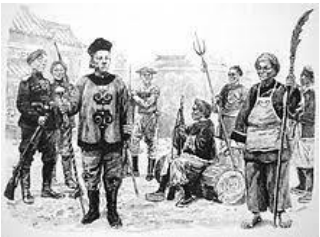
Legenda: Forças Qing de soldados chineses em 1899-1901. Disponível em: https://pt.wikipedia.org/wiki/ Ficheiro:Chinese_soldiers_1899_1901.jpg. Acesso: 09 abr. 2024. 

O mundo ocidental, em 1900, ficou chocado com as dimensões e as consequências da rebelião dos Boxers. Seu caráter anti-imperialista, anticristão e anticolonial resultava diretamente das relações entre os europeus e o governo imperial chinês. Os boxers reagiam contra

I os privilégios comerciais concedidos aos comerciantes estrangeiros.
II a destruição de cemitérios chineses para dar lugar às ferrovias e linhas telegráficas alemãs.
III o direito de residência e de pregação em qualquer lugar da China, desfrutado pelos missionários europeus.
IV aos acordos explícitos de nações estrangeiras dividindo, entre si, o território chinês.
V a corrupção da dinastia Qing e sua aceitação de uma nova forma de governo com feições ocidentais.

Assinale a opção que contém apenas as assertivas corretas
Alternativas
Q2573692 História
Desde a ocupação do território colonial, ainda no século XVI até o final do século XIX, as atividades econômicas principais do Brasil estiveram ligadas à exploração agrária. Açúcar, fumo, pecuária ou café mobilizavam homens, recursos e interesses políticos, bem como anexavam novas áreas à lógica do comércio atlântico. O que não significa que não tenham havido diferenças substantivas entre as práticas, interesses e impactos gerados por cada uma dessas atividades. Sobre essa diversidade, as afirmativas abaixo são verdadeiras, com EXCEÇÃO de:
Alternativas
Q2573691 História

Imagem associada para resolução da questão


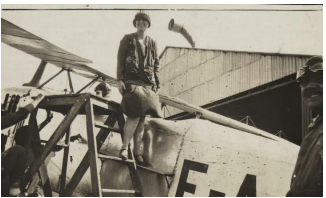
Legenda: Berta Lutz ao lado do avião que distribuirá panfleto sobre o voto feminino, 1927. Fonte: Domínio público / Acervo Arquivo Nacional.


A luta pelo voto feminino no Brasil foi intensa e aguerrida. Muitas foram as mulheres que nela se envolveram diretamente, muitas foram as estratégias usadas, gradual foi a conquista.

Assinale a única assertiva que NÃO está correta.
Alternativas
Q2573690 História
O século XX é considerado por muitos historiadores o mais violento da História. Em meio aos muitos conflitos de dimensão regional ou continental, sobrelevam-se a I e a II Guerras Mundiais, cujas vítimas se contam aos milhões e os custos aos bilhões. Sobre as duas guerras mundiais do século XX e os eventos relacionados a elas, é INCORRETO afirmar:
Alternativas
Q2573689 História

Imagem associada para resolução da questão


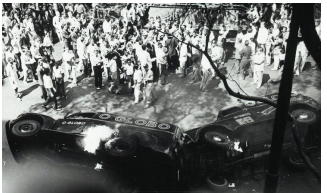
Disponível em: https://memorialdademocracia.com.br/card/ mataram-getulio-o-povo-sai-as-ruas. Acesso: 09 abr. 2024.


Em agosto de 1954, Getúlio Vargas, coagido a se afastar da presidência da República pelo Alto Comando Militar, optou pelo suicídio. A notícia de sua morte produziu uma explosão popular enorme, que se espalhou por todo o país. Uma massa humana de 100 mil pessoas, a maioria chorando muito, foi ao Palácio do Catete, se despedir do presidente. A massa indignada saiu pelas ruas, investiu contra os jornais de oposição a Getúlio, encurralou Carlos Lacerda na Embaixada dos EUA e enfrentou os militares golpistas que se encontravam no Galeão. Confirmavam o propósito de Vargas em fazer do seu suicídio um ato político.

Assinale a assertiva correta.
Alternativas
Q2573688 História
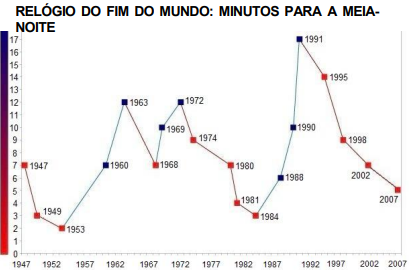
Em 1947, cientistas que haviam desenvolvido a bomba atômica, incluindo o próprio Robert Oppenheimer criaram o Relógio do Juízo Final com a intenção de pressionar os líderes mundiais para que impedissem novos usos, inclusive testes, das armas nucleares. O relógio é ajustado todo ano e meia noite é o horário marcado para a hecatombe final. Observe, no gráfico a seguir, a movimentação do relógio.

Imagem associada para resolução da questão
Adaptado de Doomsdayclock: minuts to midnight, 1947-2021. Disponível em: https://www.statista.com/statistics/1072256/doomsday-clockdevelopment/. Acesso: 09 abr. 2024.

Podemos explicar os movimentos do gráfico afirmando que:

Alternativas
Q2573687 História

Imagem associada para resolução da questão


Disponível em: https://www.ihu.unisinos.br/632351-intervencionismodos-estados-unidos-na-america-latina-e-preciso-desclassificar-osdocumentos. Acesso: 09 abr. 2024.


A partir da Revolução Cubana e da ascensão do governo comunista de Fidel Castro, os Estados Unidos intensificaram os seus mecanismos de vigilância à América Latina. À atuação dos seus funcionários oficiais e dos programas de voluntariado e fomento somaram-se a espionagem e apoios secretos variados, inclusive em dinheiro. Se a política nacional na América Latina era percebida como ameaça pelos EUA, a intervenção direta ou indireta agia para revertê-la.

São exemplos que ilustram a política externa estadunidense nesse período:

Alternativas
Q2573686 História
A professora de História do 9º ano da escola Paulo Freire, localizada no distrito de Itaipuaçu, em Maricá, para desenvolver o tema da ditadura civil-militar de 1964-1985, passeou com a turma pelas ruas do entorno do colégio, e eles selecionaram vários nomes de personagens relevantes da História da segunda metade do século XX. Ela os desafiou a responderem à questão: Qual foi o tratamento comum que essas personagens receberam dos governos militares e por quê? Os nomes selecionados foram Paulo Freire, Darcy Ribeiro, João Goulart, Miguel Arraes. Assinale a opção que melhor caracteriza o objetivo da professora ao realizar essa atividade.
Alternativas
Q2573685 História
Nasci no ano da Revolução! Assim a pintora mexicana Frida Kahlo, mulher inspiradora e ícone pop contemporâneo sublinhava o papel da Revolução Mexicana em sua formação. Em suas escolhas políticas e artísticas, a afirmação do vínculo com a tradição cultural de seu território e a defesa intransigente de justiça social foram marcantes. Assinale a opção que melhor caracteriza o significado da Revolução de 1910-1917 para o México e a América.
Alternativas
Q2573684 História e Geografia de Estados e Municípios
No começo de 2012, o geógrafo Ariovaldo Umbelino liderou uma equipe que investigava a condição legal dos títulos de terra em São Felix do Xingu, na Amazônia. A pesquisa concluiu que praticamente 100% dos documentos legais teriam que ser anulados, por incorreções as mais diversas. O resultado evidencia um problema histórico: o conturbado cenário da propriedade de terras no Brasil. Identifique as assertivas corretas (C) e as incorretas (I).

I Na Colônia, o sistema de apossamento das terras se sobrepôs ao de distribuição de sesmarias e o subarrendamento era comum. Por toda a parte, a posse tornou-se um costume.
II Os sesmeiros tornados posseiros e os que sempre foram posseiros destruíam florestas, expulsavam antigos moradores e apenas depois plantavam. O Estado e as leis, com frequência se colocavam ao lado dos interesses privados.
III Apenas no Governo João Goulart, com o Estatuto da Terra e a cessão de agrimensores estadunidenses no programa da Aliança para o Progresso foi possível estabelecer efetivamente a propriedade das terras.
IV A Constituição brasileira de 1988 demarcou das terras indígenas e outorgou a titulação definitiva das terras quilombolas. Desde então, esses territórios, nas mãos de seus proprietários, vêm sendo vendidos e repartidos.

De cima para baixo, a sequência correta é:

Alternativas
Respostas
21: D
22: A
23: B
24: E
25: A
26: C
27: D
28: B
29: E
30: B
31: E
32: D
33: A
34: D
35: B
36: C
37: E
38: A
39: B
40: A