Selecionar segmento
Estude com questões de diferentes segmentos
Atenção: Isso limpará todos os campos já preenchidos no filtro!
Foram encontradas 860 questões
Resolva questões gratuitamente!
Junte-se a mais de 4 milhões de concurseiros!


Ano: 2025
Banca:
EDUCA
Órgão:
Prefeitura de Brejo do Cruz - PB
Prova:
EDUCA - 2025 - Prefeitura de Brejo do Cruz - PB - Professor Classe B – Inglês |
Q3747548
Inglês
Texto associado
TEXT 2
English Should Not Be Taught Like It’s Physics:
Rethinking How We Teach Beginner Level Learners
Introduction
When teaching English to beginner-level learners, one of
the biggest mistakes we make is treating the language like
a set of scientific formulas to be memorized. In the
quintessential classroom of traditional, test-focused
educational systems, English is often taught as though it
were physics; it’s rigid, theoretical, and abstract. Language,
however, is a far cry from the aforementioned descriptions.
Language is dynamic, flexible, and has a certain “feel” to
it.
The problem with the “Physics” Approach
Picture this: you walk into a physics class and sit down.
Immediately, all sorts of theories, equations, and
vocabulary you’ve never heard before are being thrown at
you without any context. Doesn’t feel good, does it? That’s
how many beginner-level English learners feel. This
method relies heavily on grammar drills, vocabulary lists,
and some pretty unnatural textbook dialogues. Learners
may know the structure of the present perfect tense, but
they choke when asked, “How was your weekend?” Why? Because they’ve been trained to decode language
like a formula; not use it as a tool for expression.
What language really is
Language is instinctive. We don’t learn our first language
by studying grammar rules, but rather through interaction,
repetition, and real-life use. Babies don’t sit down with
textbooks in their lap. They listen, observe, repeat, and
gradually experiment; with zero fear of making mistakes.
This is how language sticks. For beginner-level learners,
especially adults, we need to replicate that natural process
as much as possible. The focus should shift from
knowledge about the language to using the language. There
should also be some emphasis on making sure the process
is enjoyable.
Rethinking success
We need to redefine what success looks like in beginner
English classes. It’s not about perfect grammar. It’s about
confidence, connection, and the ability to navigate simple
conversations. It’s about the listener’s ability to understand
what is being said by the speaker and vice-versa. I
remember when I’d tease my grandma for mispronouncing
words (for example, she’d say “brade” instead of “blade”),
and her retort would be, “You understood me though, didn’t
you?!”
It’s a win if a student can say, “I like sushi. You?” If they
can ask, “Where is the toilet?” when they’re pressed,
they’ve got more success than someone who has 50 verbs
memorized but can’t use them.
Conclusion
English is NOT physics. It’s not about solving problems on
paper; it’s about expressing thoughts and being understood,
building relationships and making life easier in an everchanging global world. If we want our students to thrive, as
well as keep being interested in improving and using
English long after moving on from our lessons together, we
need to stop treating the language like a set of scientific
formulas and start treating it like what it truly is: a human
skill.
Let’s make the classroom a space of interaction and
communication, not calculation.
Content extracted and adapted from:
https://www.hltmag.co.uk/oct25/english-should-not-be-taught-like-it-sphysics
According to Text 2, the author believes that success,
for beginner learners of English language, should be
measured by:
Ano: 2025
Banca:
EDUCA
Órgão:
Prefeitura de Brejo do Cruz - PB
Prova:
EDUCA - 2025 - Prefeitura de Brejo do Cruz - PB - Professor Classe B – Inglês |
Q3747547
Inglês
Texto associado
TEXT 2
English Should Not Be Taught Like It’s Physics:
Rethinking How We Teach Beginner Level Learners
Introduction
When teaching English to beginner-level learners, one of
the biggest mistakes we make is treating the language like
a set of scientific formulas to be memorized. In the
quintessential classroom of traditional, test-focused
educational systems, English is often taught as though it
were physics; it’s rigid, theoretical, and abstract. Language,
however, is a far cry from the aforementioned descriptions.
Language is dynamic, flexible, and has a certain “feel” to
it.
The problem with the “Physics” Approach
Picture this: you walk into a physics class and sit down.
Immediately, all sorts of theories, equations, and
vocabulary you’ve never heard before are being thrown at
you without any context. Doesn’t feel good, does it? That’s
how many beginner-level English learners feel. This
method relies heavily on grammar drills, vocabulary lists,
and some pretty unnatural textbook dialogues. Learners
may know the structure of the present perfect tense, but
they choke when asked, “How was your weekend?” Why? Because they’ve been trained to decode language
like a formula; not use it as a tool for expression.
What language really is
Language is instinctive. We don’t learn our first language
by studying grammar rules, but rather through interaction,
repetition, and real-life use. Babies don’t sit down with
textbooks in their lap. They listen, observe, repeat, and
gradually experiment; with zero fear of making mistakes.
This is how language sticks. For beginner-level learners,
especially adults, we need to replicate that natural process
as much as possible. The focus should shift from
knowledge about the language to using the language. There
should also be some emphasis on making sure the process
is enjoyable.
Rethinking success
We need to redefine what success looks like in beginner
English classes. It’s not about perfect grammar. It’s about
confidence, connection, and the ability to navigate simple
conversations. It’s about the listener’s ability to understand
what is being said by the speaker and vice-versa. I
remember when I’d tease my grandma for mispronouncing
words (for example, she’d say “brade” instead of “blade”),
and her retort would be, “You understood me though, didn’t
you?!”
It’s a win if a student can say, “I like sushi. You?” If they
can ask, “Where is the toilet?” when they’re pressed,
they’ve got more success than someone who has 50 verbs
memorized but can’t use them.
Conclusion
English is NOT physics. It’s not about solving problems on
paper; it’s about expressing thoughts and being understood,
building relationships and making life easier in an everchanging global world. If we want our students to thrive, as
well as keep being interested in improving and using
English long after moving on from our lessons together, we
need to stop treating the language like a set of scientific
formulas and start treating it like what it truly is: a human
skill.
Let’s make the classroom a space of interaction and
communication, not calculation.
Content extracted and adapted from:
https://www.hltmag.co.uk/oct25/english-should-not-be-taught-like-it-sphysics
Based on Text 2, related to its general idea, the English
language classroom should focus primarily on:
Ano: 2025
Banca:
EDUCA
Órgão:
Prefeitura de Brejo do Cruz - PB
Prova:
EDUCA - 2025 - Prefeitura de Brejo do Cruz - PB - Professor Classe B – Inglês |
Q3747546
Inglês
Texto associado
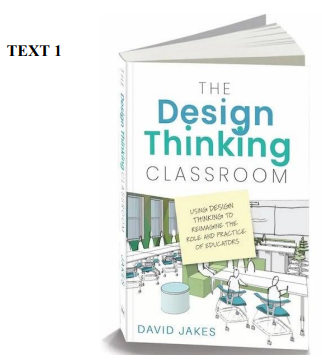
The Design Thinking Classroom: Using Design
Thinking to Reimagine the Role and Practice of
Educators (English Edition)
By David Jakes (Author) | ☆☆☆☆☆
A Design-Oriented Approach That Can Best Serve
Today's Students and Educators Alike
How can we make schools more relevant, engaging, and
capable of supporting the development of skills and
dispositions that will help students themselves design a life
worth living?
Drawing from his ample experience in the classroom, as a
school administrator, and as a designer, author David Jakes
makes the case that design thinking offers an approach to
education that is responsive, collaborative, and well-suited
to the opportunities of the twenty-first century. Full of
exercises and suggestions for how design thinking can
change educators’ approach to classroom layout, virtual
learning, assessment, and more, this book shows how we
can make today's classrooms better places to teach and
learn.
The Design Thinking Classroom helps create the
conditions for K–12 teachers and school leaders to innovate
and improve a new kind of educational experience. It’s a
book for readers who are invested in rising to the challenges
faced by modern institutions and a powerful argument for
the ways design thinking can transform education.
Excerpt extracted and adapted from:
https://www.amazon.com.br/Design-Thinking-Classroom-ReimagineEducators-ebook/dp/B0BR8MPY76?ref_=ast_author_mpb
Which of the following sentences is the only one
correctly expressed in passive voice?
Ano: 2025
Banca:
EDUCA
Órgão:
Prefeitura de Brejo do Cruz - PB
Prova:
EDUCA - 2025 - Prefeitura de Brejo do Cruz - PB - Professor Classe B – Inglês |
Q3747545
Inglês
Texto associado
The Design Thinking Classroom: Using Design
Thinking to Reimagine the Role and Practice of
Educators (English Edition)
By David Jakes (Author) | ☆☆☆☆☆
A Design-Oriented Approach That Can Best Serve
Today's Students and Educators Alike
How can we make schools more relevant, engaging, and
capable of supporting the development of skills and
dispositions that will help students themselves design a life
worth living?
Drawing from his ample experience in the classroom, as a
school administrator, and as a designer, author David Jakes
makes the case that design thinking offers an approach to
education that is responsive, collaborative, and well-suited
to the opportunities of the twenty-first century. Full of
exercises and suggestions for how design thinking can
change educators’ approach to classroom layout, virtual
learning, assessment, and more, this book shows how we
can make today's classrooms better places to teach and
learn.
The Design Thinking Classroom helps create the
conditions for K–12 teachers and school leaders to innovate
and improve a new kind of educational experience. It’s a
book for readers who are invested in rising to the challenges
faced by modern institutions and a powerful argument for
the ways design thinking can transform education.
Excerpt extracted and adapted from:
https://www.amazon.com.br/Design-Thinking-Classroom-ReimagineEducators-ebook/dp/B0BR8MPY76?ref_=ast_author_mpb
In Text 1, it is said that “This book shows how we can
make today's classrooms better places to teach and
learn”. Based on this excerpt, choose the alternative that correctly rewrite this sentence from Present Simple to
Present Perfect tense:
Ano: 2025
Banca:
EDUCA
Órgão:
Prefeitura de Brejo do Cruz - PB
Prova:
EDUCA - 2025 - Prefeitura de Brejo do Cruz - PB - Professor Classe B – Inglês |
Q3747544
Inglês
Texto associado
The Design Thinking Classroom: Using Design
Thinking to Reimagine the Role and Practice of
Educators (English Edition)
By David Jakes (Author) | ☆☆☆☆☆
A Design-Oriented Approach That Can Best Serve
Today's Students and Educators Alike
How can we make schools more relevant, engaging, and
capable of supporting the development of skills and
dispositions that will help students themselves design a life
worth living?
Drawing from his ample experience in the classroom, as a
school administrator, and as a designer, author David Jakes
makes the case that design thinking offers an approach to
education that is responsive, collaborative, and well-suited
to the opportunities of the twenty-first century. Full of
exercises and suggestions for how design thinking can
change educators’ approach to classroom layout, virtual
learning, assessment, and more, this book shows how we
can make today's classrooms better places to teach and
learn.
The Design Thinking Classroom helps create the
conditions for K–12 teachers and school leaders to innovate
and improve a new kind of educational experience. It’s a
book for readers who are invested in rising to the challenges
faced by modern institutions and a powerful argument for
the ways design thinking can transform education.
Excerpt extracted and adapted from:
https://www.amazon.com.br/Design-Thinking-Classroom-ReimagineEducators-ebook/dp/B0BR8MPY76?ref_=ast_author_mpb
The expression “a life worth living” (extracted from
Text 1) suggests:
Ano: 2025
Banca:
EDUCA
Órgão:
Prefeitura de Brejo do Cruz - PB
Prova:
EDUCA - 2025 - Prefeitura de Brejo do Cruz - PB - Professor Classe B – Inglês |
Q3747543
Inglês
Texto associado
The Design Thinking Classroom: Using Design
Thinking to Reimagine the Role and Practice of
Educators (English Edition)
By David Jakes (Author) | ☆☆☆☆☆
A Design-Oriented Approach That Can Best Serve
Today's Students and Educators Alike
How can we make schools more relevant, engaging, and
capable of supporting the development of skills and
dispositions that will help students themselves design a life
worth living?
Drawing from his ample experience in the classroom, as a
school administrator, and as a designer, author David Jakes
makes the case that design thinking offers an approach to
education that is responsive, collaborative, and well-suited
to the opportunities of the twenty-first century. Full of
exercises and suggestions for how design thinking can
change educators’ approach to classroom layout, virtual
learning, assessment, and more, this book shows how we
can make today's classrooms better places to teach and
learn.
The Design Thinking Classroom helps create the
conditions for K–12 teachers and school leaders to innovate
and improve a new kind of educational experience. It’s a
book for readers who are invested in rising to the challenges
faced by modern institutions and a powerful argument for
the ways design thinking can transform education.
Excerpt extracted and adapted from:
https://www.amazon.com.br/Design-Thinking-Classroom-ReimagineEducators-ebook/dp/B0BR8MPY76?ref_=ast_author_mpb
Considering the following excerpt extracted from Text
1, where it says “A Design-Oriented Approach That
Can Best Serve Today's Students and Educators Alike”,
the underlined word (“Alike”) can be correctly replaced
(preserving its original meaning and use in its original
context) by:
Ano: 2025
Banca:
EDUCA
Órgão:
Prefeitura de Brejo do Cruz - PB
Prova:
EDUCA - 2025 - Prefeitura de Brejo do Cruz - PB - Professor Classe B – Inglês |
Q3747542
Inglês
Texto associado
The Design Thinking Classroom: Using Design
Thinking to Reimagine the Role and Practice of
Educators (English Edition)
By David Jakes (Author) | ☆☆☆☆☆
A Design-Oriented Approach That Can Best Serve
Today's Students and Educators Alike
How can we make schools more relevant, engaging, and
capable of supporting the development of skills and
dispositions that will help students themselves design a life
worth living?
Drawing from his ample experience in the classroom, as a
school administrator, and as a designer, author David Jakes
makes the case that design thinking offers an approach to
education that is responsive, collaborative, and well-suited
to the opportunities of the twenty-first century. Full of
exercises and suggestions for how design thinking can
change educators’ approach to classroom layout, virtual
learning, assessment, and more, this book shows how we
can make today's classrooms better places to teach and
learn.
The Design Thinking Classroom helps create the
conditions for K–12 teachers and school leaders to innovate
and improve a new kind of educational experience. It’s a
book for readers who are invested in rising to the challenges
faced by modern institutions and a powerful argument for
the ways design thinking can transform education.
Excerpt extracted and adapted from:
https://www.amazon.com.br/Design-Thinking-Classroom-ReimagineEducators-ebook/dp/B0BR8MPY76?ref_=ast_author_mpb
Based on Text 1, choose the only one option that
correctly presents Daniel Jakes’ opinion about Design
Thinking:
Ano: 2025
Banca:
EDUCA
Órgão:
Prefeitura de Brejo do Cruz - PB
Prova:
EDUCA - 2025 - Prefeitura de Brejo do Cruz - PB - Professor Classe B – Inglês |
Q3747541
Inglês
Texto associado
The Design Thinking Classroom: Using Design
Thinking to Reimagine the Role and Practice of
Educators (English Edition)
By David Jakes (Author) | ☆☆☆☆☆
A Design-Oriented Approach That Can Best Serve
Today's Students and Educators Alike
How can we make schools more relevant, engaging, and
capable of supporting the development of skills and
dispositions that will help students themselves design a life
worth living?
Drawing from his ample experience in the classroom, as a
school administrator, and as a designer, author David Jakes
makes the case that design thinking offers an approach to
education that is responsive, collaborative, and well-suited
to the opportunities of the twenty-first century. Full of
exercises and suggestions for how design thinking can
change educators’ approach to classroom layout, virtual
learning, assessment, and more, this book shows how we
can make today's classrooms better places to teach and
learn.
The Design Thinking Classroom helps create the
conditions for K–12 teachers and school leaders to innovate
and improve a new kind of educational experience. It’s a
book for readers who are invested in rising to the challenges
faced by modern institutions and a powerful argument for
the ways design thinking can transform education.
Excerpt extracted and adapted from:
https://www.amazon.com.br/Design-Thinking-Classroom-ReimagineEducators-ebook/dp/B0BR8MPY76?ref_=ast_author_mpb
Choose the only one alternative that correctly presents
one of the central questions raised in the Text 1:
Ano: 2025
Banca:
EDUCA
Órgão:
Prefeitura de Brejo do Cruz - PB
Prova:
EDUCA - 2025 - Prefeitura de Brejo do Cruz - PB - Professor Classe B – Inglês |
Q3747540
Inglês
Texto associado
The Design Thinking Classroom: Using Design
Thinking to Reimagine the Role and Practice of
Educators (English Edition)
By David Jakes (Author) | ☆☆☆☆☆
A Design-Oriented Approach That Can Best Serve
Today's Students and Educators Alike
How can we make schools more relevant, engaging, and
capable of supporting the development of skills and
dispositions that will help students themselves design a life
worth living?
Drawing from his ample experience in the classroom, as a
school administrator, and as a designer, author David Jakes
makes the case that design thinking offers an approach to
education that is responsive, collaborative, and well-suited
to the opportunities of the twenty-first century. Full of
exercises and suggestions for how design thinking can
change educators’ approach to classroom layout, virtual
learning, assessment, and more, this book shows how we
can make today's classrooms better places to teach and
learn.
The Design Thinking Classroom helps create the
conditions for K–12 teachers and school leaders to innovate
and improve a new kind of educational experience. It’s a
book for readers who are invested in rising to the challenges
faced by modern institutions and a powerful argument for
the ways design thinking can transform education.
Excerpt extracted and adapted from:
https://www.amazon.com.br/Design-Thinking-Classroom-ReimagineEducators-ebook/dp/B0BR8MPY76?ref_=ast_author_mpb
Analyzing Text 1, considering the characteristics of its
textual genre as well as its sociocommunicative
function, choose the only one alternative that correctly
describes its main objective:
Ano: 2025
Banca:
EDUCA
Órgão:
Prefeitura de Brejo do Cruz - PB
Prova:
EDUCA - 2025 - Prefeitura de Brejo do Cruz - PB - Professor Classe B – Inglês |
Q3747539
Inglês
Texto associado
The Design Thinking Classroom: Using Design
Thinking to Reimagine the Role and Practice of
Educators (English Edition)
By David Jakes (Author) | ☆☆☆☆☆
A Design-Oriented Approach That Can Best Serve
Today's Students and Educators Alike
How can we make schools more relevant, engaging, and
capable of supporting the development of skills and
dispositions that will help students themselves design a life
worth living?
Drawing from his ample experience in the classroom, as a
school administrator, and as a designer, author David Jakes
makes the case that design thinking offers an approach to
education that is responsive, collaborative, and well-suited
to the opportunities of the twenty-first century. Full of
exercises and suggestions for how design thinking can
change educators’ approach to classroom layout, virtual
learning, assessment, and more, this book shows how we
can make today's classrooms better places to teach and
learn.
The Design Thinking Classroom helps create the
conditions for K–12 teachers and school leaders to innovate
and improve a new kind of educational experience. It’s a
book for readers who are invested in rising to the challenges
faced by modern institutions and a powerful argument for
the ways design thinking can transform education.
Excerpt extracted and adapted from:
https://www.amazon.com.br/Design-Thinking-Classroom-ReimagineEducators-ebook/dp/B0BR8MPY76?ref_=ast_author_mpb
Textual genres are classifications of texts based on their
characteristics and sociocommunicative function, or,
broadly speaking, how they are used in society. Based
on the features of Text 1 (above), regarding its textual
genre, we can correctly classify it as:
Ano: 2025
Banca:
EDUCA
Órgão:
Prefeitura de Brejo do Cruz - PB
Prova:
EDUCA - 2025 - Prefeitura de Brejo do Cruz - PB - Professor Classe B – Educação Física |
Q3747513
Educação Física
A aplicação dos princípios do treinamento esportivo é
fundamental para que o profissional de Educação Física
organize estímulos adequados, evite sobrecargas
desnecessárias e promova adaptações fisiológicas
consistentes. O correto entendimento desses princípios
permite estruturar programas eficazes para diferentes
objetivos — melhora de desempenho, saúde ou
condicionamento físico.
Relacione a Coluna I, contendo os princípios do treinamento, com os conceitos da Coluna II.
COLUNA I — Princípios
1. Individualidade Biológica 2. Sobrecarga 3. Especificidade 4. Continuidade 5. Interdependência Volume–Intensidade
COLUNA II — Conceitos
(a) Determina que o tipo de treinamento deve estar alinhado às características da tarefa, da modalidade ou do sistema energético predominante.
(b) Afirma que nenhum indivíduo responde ao exercício da mesma forma, exigindo ajustes no treinamento segundo fatores como genética, histórico motor, condicionamento prévio e estado de saúde.
(c) Reconhece que volume e intensidade são variáveis que se influenciam mutuamente, devendo ser manipuladas de maneira equilibrada para evitar estagnação ou danos ao processo de adaptação.
(d) Refere-se à necessidade de que a prática seja mantida de forma contínua, pois interrupções prolongadas reduzem ou eliminam as adaptações obtidas.
(e)Define que as cargas devem ser elevadas progressivamente, superando o nível habitual de esforço do indivíduo, para estimular respostas fisiológicas e promover evolução.
Assinale a correlação CORRETA:
Relacione a Coluna I, contendo os princípios do treinamento, com os conceitos da Coluna II.
COLUNA I — Princípios
1. Individualidade Biológica 2. Sobrecarga 3. Especificidade 4. Continuidade 5. Interdependência Volume–Intensidade
COLUNA II — Conceitos
(a) Determina que o tipo de treinamento deve estar alinhado às características da tarefa, da modalidade ou do sistema energético predominante.
(b) Afirma que nenhum indivíduo responde ao exercício da mesma forma, exigindo ajustes no treinamento segundo fatores como genética, histórico motor, condicionamento prévio e estado de saúde.
(c) Reconhece que volume e intensidade são variáveis que se influenciam mutuamente, devendo ser manipuladas de maneira equilibrada para evitar estagnação ou danos ao processo de adaptação.
(d) Refere-se à necessidade de que a prática seja mantida de forma contínua, pois interrupções prolongadas reduzem ou eliminam as adaptações obtidas.
(e)Define que as cargas devem ser elevadas progressivamente, superando o nível habitual de esforço do indivíduo, para estimular respostas fisiológicas e promover evolução.
Assinale a correlação CORRETA:
Ano: 2025
Banca:
EDUCA
Órgão:
Prefeitura de Brejo do Cruz - PB
Prova:
EDUCA - 2025 - Prefeitura de Brejo do Cruz - PB - Professor Classe B – Educação Física |
Q3747512
Educação Física
O estudo da fisiologia do exercício permite
compreender os efeitos imediatos e de longo prazo
gerados pela prática de atividades físicas, ajudando o
profissional de Educação Física a planejar intervenções
adequadas para diferentes populações, como crianças,
adultos, idosos e indivíduos com condições crônicas. A
prescrição segura requer integração entre variáveis
fisiológicas, comportamentais e ambientais, buscando
otimizar desempenho, saúde e adaptabilidade ao
treinamento.
Considerando esses aspectos, analise as alternativas e assinale a INCORRETA:
Considerando esses aspectos, analise as alternativas e assinale a INCORRETA:
Ano: 2025
Banca:
EDUCA
Órgão:
Prefeitura de Brejo do Cruz - PB
Prova:
EDUCA - 2025 - Prefeitura de Brejo do Cruz - PB - Professor Classe B – Educação Física |
Q3747511
Pedagogia
A neurociência aplicada à educação fornece subsídios
para compreender como o cérebro aprende, como
processa informações motoras e como ambientes de
ensino podem otimizar o desenvolvimento cognitivo,
emocional e motor. No contexto da Educação Física,
esses princípios ajudam a estruturar práticas que
promovem aprendizagem motora significativa, fortalecimento das funções executivas, motivação e
engajamento.
Considerando fundamentos atuais da neurociência educacional, analise as assertivas a seguir:
I. A aprendizagem motora é fortalecida quando o aluno vivencia experiências em que o movimento é associado a contextos significativos e emocionalmente relevantes, uma vez que emoções positivas ampliam a liberação de neurotransmissores relacionados à memória, como dopamina e noradrenalina.
II. A neurociência indica que a prática física estruturada estimula a plasticidade sináptica e favorece a maturação do córtex pré-frontal, região diretamente relacionada ao planejamento motor, autorregulação e tomada de decisão — especialmente em crianças e adolescentes.
III. Em concordância com princípios neurobiológicos atuais, o processo de aprendizagem é majoritariamente um fenômeno inato e automático, sendo pouco influenciado por variáveis ambientais, rotinas de prática ou instrução pedagógica planejada.
IV. Pesquisas em neurociência demonstram que a variação de estímulos motores, aliada ao feedback adequado durante a execução das tarefas, contribui para a consolidação das memórias procedimentais, melhorando precisão, coordenação e retenção do movimento aprendido.
Estão CORRETAS:
Considerando fundamentos atuais da neurociência educacional, analise as assertivas a seguir:
I. A aprendizagem motora é fortalecida quando o aluno vivencia experiências em que o movimento é associado a contextos significativos e emocionalmente relevantes, uma vez que emoções positivas ampliam a liberação de neurotransmissores relacionados à memória, como dopamina e noradrenalina.
II. A neurociência indica que a prática física estruturada estimula a plasticidade sináptica e favorece a maturação do córtex pré-frontal, região diretamente relacionada ao planejamento motor, autorregulação e tomada de decisão — especialmente em crianças e adolescentes.
III. Em concordância com princípios neurobiológicos atuais, o processo de aprendizagem é majoritariamente um fenômeno inato e automático, sendo pouco influenciado por variáveis ambientais, rotinas de prática ou instrução pedagógica planejada.
IV. Pesquisas em neurociência demonstram que a variação de estímulos motores, aliada ao feedback adequado durante a execução das tarefas, contribui para a consolidação das memórias procedimentais, melhorando precisão, coordenação e retenção do movimento aprendido.
Estão CORRETAS:
Ano: 2025
Banca:
EDUCA
Órgão:
Prefeitura de Brejo do Cruz - PB
Prova:
EDUCA - 2025 - Prefeitura de Brejo do Cruz - PB - Professor Classe B – Educação Física |
Q3747510
Educação Física
A análise da marcha humana é fundamental nas
ciências aplicadas à Educação Física e à Motricidade
Humana, pois fornece parâmetros relacionados à
autonomia funcional, equilíbrio, comprimento dos passos, cadência, velocidade, instabilidade postural e
risco de quedas — especialmente em crianças, adultos
sedentários ou idosos. Testes consolidados como o
Protocolo de Cerny, a Escala de Tinetti e o Timed Up
and Go (TUG) constituem ferramentas amplamente
utilizadas em pesquisas e avaliações clínicas, cada qual
com objetivos e metodologias distintas.
Considerando as informações presentes no artigo, analise as assertivas a seguir:
I. O Protocolo de Cerny avalia a marcha habitual do indivíduo em uma passarela padronizada, permitindo mensurar velocidade, comprimento dos passos e adaptação da movimentação, sendo amplamente utilizado para investigar disfunções resultantes de alterações de base, equilíbrio ou cadência.
II. A Escala de Tinetti é composta por duas partes independentes — equilíbrio e marcha — e apresenta pontuação total de 28 pontos, sendo que valores abaixo de 19 indicam risco aumentado de quedas; esse instrumento não depende de equipamentos sofisticados e é sensível para identificar alterações sutis durante a marcha.
III. O teste Timed Up and Go (TUG), criado em 1991, é aplicado exclusivamente para idosos frágeis, não sendo considerado válido para crianças, adolescentes ou adultos, devido à impossibilidade de padronização do tempo de execução nesses grupos.
IV. A análise da marcha é uma ferramenta multidimensional, permitindo detectar não apenas alterações locomotoras, mas também relações entre força muscular, estabilidade de tronco, amplitude de movimento e capacidade funcional — o que explica sua relevância para diferentes populações.
V. Segundo o artigo, os testes de avaliação da marcha demonstram limitada aplicabilidade para fins científicos, razão pela qual sua adoção em estudos acadêmicos é restrita e pouco recomendada devido ao baixo grau de padronização metodológica.
Estão CORRETAS:
Considerando as informações presentes no artigo, analise as assertivas a seguir:
I. O Protocolo de Cerny avalia a marcha habitual do indivíduo em uma passarela padronizada, permitindo mensurar velocidade, comprimento dos passos e adaptação da movimentação, sendo amplamente utilizado para investigar disfunções resultantes de alterações de base, equilíbrio ou cadência.
II. A Escala de Tinetti é composta por duas partes independentes — equilíbrio e marcha — e apresenta pontuação total de 28 pontos, sendo que valores abaixo de 19 indicam risco aumentado de quedas; esse instrumento não depende de equipamentos sofisticados e é sensível para identificar alterações sutis durante a marcha.
III. O teste Timed Up and Go (TUG), criado em 1991, é aplicado exclusivamente para idosos frágeis, não sendo considerado válido para crianças, adolescentes ou adultos, devido à impossibilidade de padronização do tempo de execução nesses grupos.
IV. A análise da marcha é uma ferramenta multidimensional, permitindo detectar não apenas alterações locomotoras, mas também relações entre força muscular, estabilidade de tronco, amplitude de movimento e capacidade funcional — o que explica sua relevância para diferentes populações.
V. Segundo o artigo, os testes de avaliação da marcha demonstram limitada aplicabilidade para fins científicos, razão pela qual sua adoção em estudos acadêmicos é restrita e pouco recomendada devido ao baixo grau de padronização metodológica.
Estão CORRETAS:
Ano: 2025
Banca:
EDUCA
Órgão:
Prefeitura de Brejo do Cruz - PB
Prova:
EDUCA - 2025 - Prefeitura de Brejo do Cruz - PB - Professor Classe B – Educação Física |
Q3747509
Educação Física
O Código de Ética Profissional do Sistema
CONFEF/CREFs estabelece normas de conduta que
orientam o exercício da profissão de Educação Física,
reforçando princípios como responsabilidade,
competência técnica, respeito à dignidade humana,
sigilo profissional e cumprimento da legislação vigente.
Além disso, o documento disciplina a relação do
profissional com alunos, instituições, colegas de
trabalho e a sociedade, exigindo práticas éticas que
garantam segurança, qualidade e integridade das ações.
Com base nesses princípios, julgue cada afirmação como VERDADEIRA (V) ou FALSA (F):
( ) O Código de Ética determina que o Profissional de Educação Física deve pautar sua atuação nos preceitos da Lei nº 9.696/1998 e nas resoluções do CONFEF/CREFs, mantendo conduta profissional compatível com os princípios éticos.
( ) O Código permite que o Profissional de Educação Física exerça a profissão mesmo sem registro no CREF, desde que o serviço prestado seja voluntário e sem finalidade lucrativa.
( ) O Código estabelece que o Profissional de Educação Física tem o dever de prestar serviços tecnicamente competentes e seguros, configurando infração ética oferecer atendimento sem qualificação adequada.
( ) O Código admite discriminação ou exclusão de beneficiários com base em idade, condição física ou nível socioeconômico, desde que tais critérios sejam justificáveis dentro do contexto da atividade ofertada.
Assinale a sequência CORRETA:
Com base nesses princípios, julgue cada afirmação como VERDADEIRA (V) ou FALSA (F):
( ) O Código de Ética determina que o Profissional de Educação Física deve pautar sua atuação nos preceitos da Lei nº 9.696/1998 e nas resoluções do CONFEF/CREFs, mantendo conduta profissional compatível com os princípios éticos.
( ) O Código permite que o Profissional de Educação Física exerça a profissão mesmo sem registro no CREF, desde que o serviço prestado seja voluntário e sem finalidade lucrativa.
( ) O Código estabelece que o Profissional de Educação Física tem o dever de prestar serviços tecnicamente competentes e seguros, configurando infração ética oferecer atendimento sem qualificação adequada.
( ) O Código admite discriminação ou exclusão de beneficiários com base em idade, condição física ou nível socioeconômico, desde que tais critérios sejam justificáveis dentro do contexto da atividade ofertada.
Assinale a sequência CORRETA:
Ano: 2025
Banca:
EDUCA
Órgão:
Prefeitura de Brejo do Cruz - PB
Prova:
EDUCA - 2025 - Prefeitura de Brejo do Cruz - PB - Professor Classe B – Educação Física |
Q3747508
Educação Física
A Lei nº 9.696/1998 é o marco jurídico que
regulamenta a profissão de Educação Física no Brasil,
estabelecendo os critérios legais para o exercício
profissional, definindo responsabilidades, delimitando
competências e criando os órgãos fiscalizadores —
CONFEF e CREFs — como autoridades normativas e
disciplinares da área. Tal legislação busca assegurar que
a prática de atividades físicas, esportivas, recreativas e
de promoção da saúde seja conduzida por profissionais
qualificados, protegendo a sociedade de práticas
inadequadas e garantindo padrões mínimos de
segurança e qualidade.
A respeito do disposto na Lei nº 9.696/1998, assinale aa alternativas e assinale a CORRETA:
A respeito do disposto na Lei nº 9.696/1998, assinale aa alternativas e assinale a CORRETA:
Ano: 2025
Banca:
EDUCA
Órgão:
Prefeitura de Brejo do Cruz - PB
Prova:
EDUCA - 2025 - Prefeitura de Brejo do Cruz - PB - Professor Classe B – Educação Física |
Q3747507
Biologia
Os testículos, principais estruturas do sistema
reprodutor masculino, atuam simultaneamente na
produção de gametas e hormônios sexuais.
Considerando o funcionamento anatômico-fisiológico do sistema reprodutor masculino e suas estruturas associadas, analise as afirmativas a seguir:
I. Os testículos têm como funções primárias a espermatogênese, que ocorre nos túbulos seminíferos, e a secreção de testosterona, hormônio produzido pelas células de Leydig.
II. O músculo cremaster atua na regulação térmica dos testículos, aproximando-os ou afastando-os do corpo, e essa regulação é essencial para a viabilidade da produção de espermatozoides.
III. A ereção peniana depende exclusivamente da ação hormonal da testosterona, sendo um processo independente de alterações hemodinâmicas.
IV. O corpo esponjoso circunda completamente a uretra e, junto aos corpos cavernosos, compõe as estruturas responsáveis pela ereção do pênis.
Estão CORRETAS:
Considerando o funcionamento anatômico-fisiológico do sistema reprodutor masculino e suas estruturas associadas, analise as afirmativas a seguir:
I. Os testículos têm como funções primárias a espermatogênese, que ocorre nos túbulos seminíferos, e a secreção de testosterona, hormônio produzido pelas células de Leydig.
II. O músculo cremaster atua na regulação térmica dos testículos, aproximando-os ou afastando-os do corpo, e essa regulação é essencial para a viabilidade da produção de espermatozoides.
III. A ereção peniana depende exclusivamente da ação hormonal da testosterona, sendo um processo independente de alterações hemodinâmicas.
IV. O corpo esponjoso circunda completamente a uretra e, junto aos corpos cavernosos, compõe as estruturas responsáveis pela ereção do pênis.
Estão CORRETAS:
Ano: 2025
Banca:
EDUCA
Órgão:
Prefeitura de Brejo do Cruz - PB
Prova:
EDUCA - 2025 - Prefeitura de Brejo do Cruz - PB - Professor Classe B – Educação Física |
Q3747506
Biologia
O sistema reprodutor feminino envolve processos como
puberdade, ciclo menstrual e gravidez, todos regulados
por hormônios.
A respeito do sistema reprodutor feminino, analise as
afirmativas a seguir:
I. A concepção (fecundação) sempre ocorre no útero, sendo as trompas de Falópio apenas trajetos de passagem sem participação na fecundação.
II. As meninas nascem com todos os óvulos que terão na vida; esses óvulos somente poderão originar uma gestação após as transformações da puberdade desencadeadas por hormônios liberados pelo cérebro, que estimulam o desenvolvimento dos ovários e a produção de estrogênio.
III. No ciclo menstrual, ocorre a ovulação (liberação de um óvulo), o revestimento uterino torna-se mais vascularizado para receber um óvulo fecundado; se não há fecundação, esse revestimento é eliminado como sangue menstrual, e o ciclo se repete mensalmente até a meia-idade.
IV. A hipófise libera hormônios cujas concentrações variam ao longo do mês e desencadeiam o ciclo menstrual; se ocorrer gravidez, outros hormônios são produzidos pelos órgãos reprodutores para suspender o ciclo e promover alterações no útero e, após o parto, hormônios específicos sinalizam às mamas a produção de leite.
Estão CORRETAS:
I. A concepção (fecundação) sempre ocorre no útero, sendo as trompas de Falópio apenas trajetos de passagem sem participação na fecundação.
II. As meninas nascem com todos os óvulos que terão na vida; esses óvulos somente poderão originar uma gestação após as transformações da puberdade desencadeadas por hormônios liberados pelo cérebro, que estimulam o desenvolvimento dos ovários e a produção de estrogênio.
III. No ciclo menstrual, ocorre a ovulação (liberação de um óvulo), o revestimento uterino torna-se mais vascularizado para receber um óvulo fecundado; se não há fecundação, esse revestimento é eliminado como sangue menstrual, e o ciclo se repete mensalmente até a meia-idade.
IV. A hipófise libera hormônios cujas concentrações variam ao longo do mês e desencadeiam o ciclo menstrual; se ocorrer gravidez, outros hormônios são produzidos pelos órgãos reprodutores para suspender o ciclo e promover alterações no útero e, após o parto, hormônios específicos sinalizam às mamas a produção de leite.
Estão CORRETAS:
Ano: 2025
Banca:
EDUCA
Órgão:
Prefeitura de Brejo do Cruz - PB
Prova:
EDUCA - 2025 - Prefeitura de Brejo do Cruz - PB - Professor Classe B – Educação Física |
Q3747505
Educação Física
O sistema endócrino é composto por glândulas que
produzem e liberam hormônios diretamente na
corrente sanguínea, exercendo influência sobre
processos fisiológicos fundamentais.
Sobre glândulas endócrinas, analise os itens a seguir:
I. A glândula pineal é pequena, situa-se abaixo da parte posterior do corpo caloso e produz o hormônio melatonina.
II. A glândula pituitária tem dimensões semelhantes a uma ervilha e secreta oito hormônios, alguns dos quais estimulam outras glândulas endócrinas.
III. As glândulas paratireoides liberam o hormônio da paratireoide (PTH), cuja principal função é regular a concentração de fósforo no sangue.
IV. As glândulas suprarrenais localizam-se acima dos rins e produzem hormônios relacionados ao metabolismo, à pressão arterial e à resposta ao estresse.
Estão CORRETAS:
Sobre glândulas endócrinas, analise os itens a seguir:
I. A glândula pineal é pequena, situa-se abaixo da parte posterior do corpo caloso e produz o hormônio melatonina.
II. A glândula pituitária tem dimensões semelhantes a uma ervilha e secreta oito hormônios, alguns dos quais estimulam outras glândulas endócrinas.
III. As glândulas paratireoides liberam o hormônio da paratireoide (PTH), cuja principal função é regular a concentração de fósforo no sangue.
IV. As glândulas suprarrenais localizam-se acima dos rins e produzem hormônios relacionados ao metabolismo, à pressão arterial e à resposta ao estresse.
Estão CORRETAS:
Ano: 2025
Banca:
EDUCA
Órgão:
Prefeitura de Brejo do Cruz - PB
Prova:
EDUCA - 2025 - Prefeitura de Brejo do Cruz - PB - Professor Classe B – Educação Física |
Q3747504
Educação Física
Considerando as funções e características do sistema
endócrino, analise as alternativas e assinale a
INCORRETA:
 Conheça nossos planos