Foram encontradas 1.967 questões

Resolva questões gratuitamente!

Junte-se a mais de 4 milhões de concurseiros!

Q1108052 Inglês
INSTRUCTIONS: Read the text carefully and then mark the alternatives that answer the questions or complete the sentences presented after it.

TEXT I

Using authentic reading materials in FLT

Let us discuss what reading in a foreign language is, how it differs from reading in one’s mother-tongue. If the foreign language learners are poor readers in their mother-tongue, we can’t expect them to read efficiently in the foreign language. But if they are good readers in their mother-tongue, we expect them to transfer their reading strategies to the foreign language automatically. Unfortunately, this doesn’t always happen. Automatic transfer of reading strategies from L1 to L2 is difficult or never occurs. Good readers use top-down and bottom-up strategies to make predictions about the meaning of the text and check them. They vary their reading speed and strategies according to the purpose for their reading and the type of the text. When the same students read a text in the foreign language, they tend to use bottom-up strategies, i.e. their linguistic knowledge, but they rarely dare to use top-down strategies, i.e. their knowledge abouttheworld.Appropriate reading strategies are rarely used and even some faulty reading habits, e.g. subvocalizing, regressive eye movements, etc., can be observed. So, foreign language students usually need more reading practice in order to become efficient readers in the foreign language. The use of authentic materials is an important principle of Communicative Language Teaching. In real life we read because we are interested in the communicative purpose of the text, in the ideas that the writer has expressed or the effect that the text is supposed to produce on the reader. The language in an authentic text is varied, whereas in a non-authentic one there is often one single structure that is repeated. The use of truly authentic texts is an important means of teaching students to communicate effectively.
Unfortunately, most textbooks make use of non-authentic texts. They are supposed to be easier than authentic ones and to be better suited to the students’ language proficiency level. However, this is not true because:
• non-authentic texts are usually over-explicit: they say too much because they lack the natural redundancy of authentic ones, they abound with details, so, the students are not given the chance to make any inferences;
• textbook reading materials usually deal with over-familiar topics. This can hardly be avoided at beginner level but at the higher levels the reading texts can be more informative, enjoyable and interesting;
• there is often a noticeable emphasis on the product of the activity, i.e. on the answers to the comprehension questions, over the process, i.e. the appropriate use of reading skills and strategies in order to understand the text.
We can overcome these shortcomings quite successfully if we provide supplementary authentic texts. Thus the language learners will become better readers, confident in their ability to cope with reading in real life situations.
So, why do we read? In our daily lives we read for two basic reasons: for pleasure and for information (Grellet, 1981:4). We read for information because we want to find out something, to learn something from the text, or for instruction, in order to do something with the information we get, to find out how to act. These reasons for reading are authentic. […]
Having mentioned the major drawbacks of textbook reading materials, let’s now consider the guidelines for selecting a text to supplement them or even replace them. These are the readability, the suitability of content and the exploitability of the authentic text (Nuttal, 1982:25).
Readability means that the text should be at the right level. When we try to find a readable text, we have to assess the level of its structural and lexical difficulty. Still, we should not forget that the students can deal with more difficult texts, provided the task is not too difficult.
Suitability of content means that the text should be interesting and informative. The students’ preferences should not be neglected and a survey of their tastes might help the teacher quite a lot.
Exploitability means that the text should facilitate the development of reading skills in order to help the students become competent and independent readers.
However, we shouldn’t forget the fact that language classes are not entirely homogeneous: the level of the students is not the same, their tastes may vary and it is virtually impossible to create an ideal reader who could tackle all existing texts successfully. So, our goals and criteria should be realistic.
[…]
What should be pointed out in conclusion is the vital importance of using authentic texts as supplements to textbook reading materials in order to prepare students for real life reading.Authentic texts foster the development of their reading skills thus helping them gain confidence in their reading ability in the foreign language. They become autonomous readers, who can take responsibility for their own reading.

Available at: <https://www.beta-iatefl.org/1106/blog-
publications>. Accessed on: July 9th, 2019. (Adapted).
According to the text, the authentic reasons we read can be summarized as:
Alternativas
Q1108051 Inglês
INSTRUCTIONS: Read the text carefully and then mark the alternatives that answer the questions or complete the sentences presented after it.

TEXT I

Using authentic reading materials in FLT

Let us discuss what reading in a foreign language is, how it differs from reading in one’s mother-tongue. If the foreign language learners are poor readers in their mother-tongue, we can’t expect them to read efficiently in the foreign language. But if they are good readers in their mother-tongue, we expect them to transfer their reading strategies to the foreign language automatically. Unfortunately, this doesn’t always happen. Automatic transfer of reading strategies from L1 to L2 is difficult or never occurs. Good readers use top-down and bottom-up strategies to make predictions about the meaning of the text and check them. They vary their reading speed and strategies according to the purpose for their reading and the type of the text. When the same students read a text in the foreign language, they tend to use bottom-up strategies, i.e. their linguistic knowledge, but they rarely dare to use top-down strategies, i.e. their knowledge abouttheworld.Appropriate reading strategies are rarely used and even some faulty reading habits, e.g. subvocalizing, regressive eye movements, etc., can be observed. So, foreign language students usually need more reading practice in order to become efficient readers in the foreign language. The use of authentic materials is an important principle of Communicative Language Teaching. In real life we read because we are interested in the communicative purpose of the text, in the ideas that the writer has expressed or the effect that the text is supposed to produce on the reader. The language in an authentic text is varied, whereas in a non-authentic one there is often one single structure that is repeated. The use of truly authentic texts is an important means of teaching students to communicate effectively.
Unfortunately, most textbooks make use of non-authentic texts. They are supposed to be easier than authentic ones and to be better suited to the students’ language proficiency level. However, this is not true because:
• non-authentic texts are usually over-explicit: they say too much because they lack the natural redundancy of authentic ones, they abound with details, so, the students are not given the chance to make any inferences;
• textbook reading materials usually deal with over-familiar topics. This can hardly be avoided at beginner level but at the higher levels the reading texts can be more informative, enjoyable and interesting;
• there is often a noticeable emphasis on the product of the activity, i.e. on the answers to the comprehension questions, over the process, i.e. the appropriate use of reading skills and strategies in order to understand the text.
We can overcome these shortcomings quite successfully if we provide supplementary authentic texts. Thus the language learners will become better readers, confident in their ability to cope with reading in real life situations.
So, why do we read? In our daily lives we read for two basic reasons: for pleasure and for information (Grellet, 1981:4). We read for information because we want to find out something, to learn something from the text, or for instruction, in order to do something with the information we get, to find out how to act. These reasons for reading are authentic. […]
Having mentioned the major drawbacks of textbook reading materials, let’s now consider the guidelines for selecting a text to supplement them or even replace them. These are the readability, the suitability of content and the exploitability of the authentic text (Nuttal, 1982:25).
Readability means that the text should be at the right level. When we try to find a readable text, we have to assess the level of its structural and lexical difficulty. Still, we should not forget that the students can deal with more difficult texts, provided the task is not too difficult.
Suitability of content means that the text should be interesting and informative. The students’ preferences should not be neglected and a survey of their tastes might help the teacher quite a lot.
Exploitability means that the text should facilitate the development of reading skills in order to help the students become competent and independent readers.
However, we shouldn’t forget the fact that language classes are not entirely homogeneous: the level of the students is not the same, their tastes may vary and it is virtually impossible to create an ideal reader who could tackle all existing texts successfully. So, our goals and criteria should be realistic.
[…]
What should be pointed out in conclusion is the vital importance of using authentic texts as supplements to textbook reading materials in order to prepare students for real life reading.Authentic texts foster the development of their reading skills thus helping them gain confidence in their reading ability in the foreign language. They become autonomous readers, who can take responsibility for their own reading.

Available at: <https://www.beta-iatefl.org/1106/blog-
publications>. Accessed on: July 9th, 2019. (Adapted).
The author of the article does not consider that non-authentic texts
Alternativas
Q1108050 Inglês
INSTRUCTIONS: Read the text carefully and then mark the alternatives that answer the questions or complete the sentences presented after it.

TEXT I

Using authentic reading materials in FLT

Let us discuss what reading in a foreign language is, how it differs from reading in one’s mother-tongue. If the foreign language learners are poor readers in their mother-tongue, we can’t expect them to read efficiently in the foreign language. But if they are good readers in their mother-tongue, we expect them to transfer their reading strategies to the foreign language automatically. Unfortunately, this doesn’t always happen. Automatic transfer of reading strategies from L1 to L2 is difficult or never occurs. Good readers use top-down and bottom-up strategies to make predictions about the meaning of the text and check them. They vary their reading speed and strategies according to the purpose for their reading and the type of the text. When the same students read a text in the foreign language, they tend to use bottom-up strategies, i.e. their linguistic knowledge, but they rarely dare to use top-down strategies, i.e. their knowledge abouttheworld.Appropriate reading strategies are rarely used and even some faulty reading habits, e.g. subvocalizing, regressive eye movements, etc., can be observed. So, foreign language students usually need more reading practice in order to become efficient readers in the foreign language. The use of authentic materials is an important principle of Communicative Language Teaching. In real life we read because we are interested in the communicative purpose of the text, in the ideas that the writer has expressed or the effect that the text is supposed to produce on the reader. The language in an authentic text is varied, whereas in a non-authentic one there is often one single structure that is repeated. The use of truly authentic texts is an important means of teaching students to communicate effectively.
Unfortunately, most textbooks make use of non-authentic texts. They are supposed to be easier than authentic ones and to be better suited to the students’ language proficiency level. However, this is not true because:
• non-authentic texts are usually over-explicit: they say too much because they lack the natural redundancy of authentic ones, they abound with details, so, the students are not given the chance to make any inferences;
• textbook reading materials usually deal with over-familiar topics. This can hardly be avoided at beginner level but at the higher levels the reading texts can be more informative, enjoyable and interesting;
• there is often a noticeable emphasis on the product of the activity, i.e. on the answers to the comprehension questions, over the process, i.e. the appropriate use of reading skills and strategies in order to understand the text.
We can overcome these shortcomings quite successfully if we provide supplementary authentic texts. Thus the language learners will become better readers, confident in their ability to cope with reading in real life situations.
So, why do we read? In our daily lives we read for two basic reasons: for pleasure and for information (Grellet, 1981:4). We read for information because we want to find out something, to learn something from the text, or for instruction, in order to do something with the information we get, to find out how to act. These reasons for reading are authentic. […]
Having mentioned the major drawbacks of textbook reading materials, let’s now consider the guidelines for selecting a text to supplement them or even replace them. These are the readability, the suitability of content and the exploitability of the authentic text (Nuttal, 1982:25).
Readability means that the text should be at the right level. When we try to find a readable text, we have to assess the level of its structural and lexical difficulty. Still, we should not forget that the students can deal with more difficult texts, provided the task is not too difficult.
Suitability of content means that the text should be interesting and informative. The students’ preferences should not be neglected and a survey of their tastes might help the teacher quite a lot.
Exploitability means that the text should facilitate the development of reading skills in order to help the students become competent and independent readers.
However, we shouldn’t forget the fact that language classes are not entirely homogeneous: the level of the students is not the same, their tastes may vary and it is virtually impossible to create an ideal reader who could tackle all existing texts successfully. So, our goals and criteria should be realistic.
[…]
What should be pointed out in conclusion is the vital importance of using authentic texts as supplements to textbook reading materials in order to prepare students for real life reading.Authentic texts foster the development of their reading skills thus helping them gain confidence in their reading ability in the foreign language. They become autonomous readers, who can take responsibility for their own reading.

Available at: <https://www.beta-iatefl.org/1106/blog-
publications>. Accessed on: July 9th, 2019. (Adapted).
Some textbooks still make use of non-authentic texts because
Alternativas
Q1108049 Inglês
INSTRUCTIONS: Read the text carefully and then mark the alternatives that answer the questions or complete the sentences presented after it.

TEXT I

Using authentic reading materials in FLT

Let us discuss what reading in a foreign language is, how it differs from reading in one’s mother-tongue. If the foreign language learners are poor readers in their mother-tongue, we can’t expect them to read efficiently in the foreign language. But if they are good readers in their mother-tongue, we expect them to transfer their reading strategies to the foreign language automatically. Unfortunately, this doesn’t always happen. Automatic transfer of reading strategies from L1 to L2 is difficult or never occurs. Good readers use top-down and bottom-up strategies to make predictions about the meaning of the text and check them. They vary their reading speed and strategies according to the purpose for their reading and the type of the text. When the same students read a text in the foreign language, they tend to use bottom-up strategies, i.e. their linguistic knowledge, but they rarely dare to use top-down strategies, i.e. their knowledge abouttheworld.Appropriate reading strategies are rarely used and even some faulty reading habits, e.g. subvocalizing, regressive eye movements, etc., can be observed. So, foreign language students usually need more reading practice in order to become efficient readers in the foreign language. The use of authentic materials is an important principle of Communicative Language Teaching. In real life we read because we are interested in the communicative purpose of the text, in the ideas that the writer has expressed or the effect that the text is supposed to produce on the reader. The language in an authentic text is varied, whereas in a non-authentic one there is often one single structure that is repeated. The use of truly authentic texts is an important means of teaching students to communicate effectively.
Unfortunately, most textbooks make use of non-authentic texts. They are supposed to be easier than authentic ones and to be better suited to the students’ language proficiency level. However, this is not true because:
• non-authentic texts are usually over-explicit: they say too much because they lack the natural redundancy of authentic ones, they abound with details, so, the students are not given the chance to make any inferences;
• textbook reading materials usually deal with over-familiar topics. This can hardly be avoided at beginner level but at the higher levels the reading texts can be more informative, enjoyable and interesting;
• there is often a noticeable emphasis on the product of the activity, i.e. on the answers to the comprehension questions, over the process, i.e. the appropriate use of reading skills and strategies in order to understand the text.
We can overcome these shortcomings quite successfully if we provide supplementary authentic texts. Thus the language learners will become better readers, confident in their ability to cope with reading in real life situations.
So, why do we read? In our daily lives we read for two basic reasons: for pleasure and for information (Grellet, 1981:4). We read for information because we want to find out something, to learn something from the text, or for instruction, in order to do something with the information we get, to find out how to act. These reasons for reading are authentic. […]
Having mentioned the major drawbacks of textbook reading materials, let’s now consider the guidelines for selecting a text to supplement them or even replace them. These are the readability, the suitability of content and the exploitability of the authentic text (Nuttal, 1982:25).
Readability means that the text should be at the right level. When we try to find a readable text, we have to assess the level of its structural and lexical difficulty. Still, we should not forget that the students can deal with more difficult texts, provided the task is not too difficult.
Suitability of content means that the text should be interesting and informative. The students’ preferences should not be neglected and a survey of their tastes might help the teacher quite a lot.
Exploitability means that the text should facilitate the development of reading skills in order to help the students become competent and independent readers.
However, we shouldn’t forget the fact that language classes are not entirely homogeneous: the level of the students is not the same, their tastes may vary and it is virtually impossible to create an ideal reader who could tackle all existing texts successfully. So, our goals and criteria should be realistic.
[…]
What should be pointed out in conclusion is the vital importance of using authentic texts as supplements to textbook reading materials in order to prepare students for real life reading.Authentic texts foster the development of their reading skills thus helping them gain confidence in their reading ability in the foreign language. They become autonomous readers, who can take responsibility for their own reading.

Available at: <https://www.beta-iatefl.org/1106/blog-
publications>. Accessed on: July 9th, 2019. (Adapted).
The article says that in communicative language teaching authentic texts should be presented
Alternativas
Q1108048 Inglês
INSTRUCTIONS: Read the text carefully and then mark the alternatives that answer the questions or complete the sentences presented after it.

TEXT I

Using authentic reading materials in FLT

Let us discuss what reading in a foreign language is, how it differs from reading in one’s mother-tongue. If the foreign language learners are poor readers in their mother-tongue, we can’t expect them to read efficiently in the foreign language. But if they are good readers in their mother-tongue, we expect them to transfer their reading strategies to the foreign language automatically. Unfortunately, this doesn’t always happen. Automatic transfer of reading strategies from L1 to L2 is difficult or never occurs. Good readers use top-down and bottom-up strategies to make predictions about the meaning of the text and check them. They vary their reading speed and strategies according to the purpose for their reading and the type of the text. When the same students read a text in the foreign language, they tend to use bottom-up strategies, i.e. their linguistic knowledge, but they rarely dare to use top-down strategies, i.e. their knowledge abouttheworld.Appropriate reading strategies are rarely used and even some faulty reading habits, e.g. subvocalizing, regressive eye movements, etc., can be observed. So, foreign language students usually need more reading practice in order to become efficient readers in the foreign language. The use of authentic materials is an important principle of Communicative Language Teaching. In real life we read because we are interested in the communicative purpose of the text, in the ideas that the writer has expressed or the effect that the text is supposed to produce on the reader. The language in an authentic text is varied, whereas in a non-authentic one there is often one single structure that is repeated. The use of truly authentic texts is an important means of teaching students to communicate effectively.
Unfortunately, most textbooks make use of non-authentic texts. They are supposed to be easier than authentic ones and to be better suited to the students’ language proficiency level. However, this is not true because:
• non-authentic texts are usually over-explicit: they say too much because they lack the natural redundancy of authentic ones, they abound with details, so, the students are not given the chance to make any inferences;
• textbook reading materials usually deal with over-familiar topics. This can hardly be avoided at beginner level but at the higher levels the reading texts can be more informative, enjoyable and interesting;
• there is often a noticeable emphasis on the product of the activity, i.e. on the answers to the comprehension questions, over the process, i.e. the appropriate use of reading skills and strategies in order to understand the text.
We can overcome these shortcomings quite successfully if we provide supplementary authentic texts. Thus the language learners will become better readers, confident in their ability to cope with reading in real life situations.
So, why do we read? In our daily lives we read for two basic reasons: for pleasure and for information (Grellet, 1981:4). We read for information because we want to find out something, to learn something from the text, or for instruction, in order to do something with the information we get, to find out how to act. These reasons for reading are authentic. […]
Having mentioned the major drawbacks of textbook reading materials, let’s now consider the guidelines for selecting a text to supplement them or even replace them. These are the readability, the suitability of content and the exploitability of the authentic text (Nuttal, 1982:25).
Readability means that the text should be at the right level. When we try to find a readable text, we have to assess the level of its structural and lexical difficulty. Still, we should not forget that the students can deal with more difficult texts, provided the task is not too difficult.
Suitability of content means that the text should be interesting and informative. The students’ preferences should not be neglected and a survey of their tastes might help the teacher quite a lot.
Exploitability means that the text should facilitate the development of reading skills in order to help the students become competent and independent readers.
However, we shouldn’t forget the fact that language classes are not entirely homogeneous: the level of the students is not the same, their tastes may vary and it is virtually impossible to create an ideal reader who could tackle all existing texts successfully. So, our goals and criteria should be realistic.
[…]
What should be pointed out in conclusion is the vital importance of using authentic texts as supplements to textbook reading materials in order to prepare students for real life reading.Authentic texts foster the development of their reading skills thus helping them gain confidence in their reading ability in the foreign language. They become autonomous readers, who can take responsibility for their own reading.

Available at: <https://www.beta-iatefl.org/1106/blog-
publications>. Accessed on: July 9th, 2019. (Adapted).
According to the text, the strategies used by readers vary
Alternativas
Q1108047 Inglês
INSTRUCTIONS: Read the text carefully and then mark the alternatives that answer the questions or complete the sentences presented after it.

TEXT I

Using authentic reading materials in FLT

Let us discuss what reading in a foreign language is, how it differs from reading in one’s mother-tongue. If the foreign language learners are poor readers in their mother-tongue, we can’t expect them to read efficiently in the foreign language. But if they are good readers in their mother-tongue, we expect them to transfer their reading strategies to the foreign language automatically. Unfortunately, this doesn’t always happen. Automatic transfer of reading strategies from L1 to L2 is difficult or never occurs. Good readers use top-down and bottom-up strategies to make predictions about the meaning of the text and check them. They vary their reading speed and strategies according to the purpose for their reading and the type of the text. When the same students read a text in the foreign language, they tend to use bottom-up strategies, i.e. their linguistic knowledge, but they rarely dare to use top-down strategies, i.e. their knowledge abouttheworld.Appropriate reading strategies are rarely used and even some faulty reading habits, e.g. subvocalizing, regressive eye movements, etc., can be observed. So, foreign language students usually need more reading practice in order to become efficient readers in the foreign language. The use of authentic materials is an important principle of Communicative Language Teaching. In real life we read because we are interested in the communicative purpose of the text, in the ideas that the writer has expressed or the effect that the text is supposed to produce on the reader. The language in an authentic text is varied, whereas in a non-authentic one there is often one single structure that is repeated. The use of truly authentic texts is an important means of teaching students to communicate effectively.
Unfortunately, most textbooks make use of non-authentic texts. They are supposed to be easier than authentic ones and to be better suited to the students’ language proficiency level. However, this is not true because:
• non-authentic texts are usually over-explicit: they say too much because they lack the natural redundancy of authentic ones, they abound with details, so, the students are not given the chance to make any inferences;
• textbook reading materials usually deal with over-familiar topics. This can hardly be avoided at beginner level but at the higher levels the reading texts can be more informative, enjoyable and interesting;
• there is often a noticeable emphasis on the product of the activity, i.e. on the answers to the comprehension questions, over the process, i.e. the appropriate use of reading skills and strategies in order to understand the text.
We can overcome these shortcomings quite successfully if we provide supplementary authentic texts. Thus the language learners will become better readers, confident in their ability to cope with reading in real life situations.
So, why do we read? In our daily lives we read for two basic reasons: for pleasure and for information (Grellet, 1981:4). We read for information because we want to find out something, to learn something from the text, or for instruction, in order to do something with the information we get, to find out how to act. These reasons for reading are authentic. […]
Having mentioned the major drawbacks of textbook reading materials, let’s now consider the guidelines for selecting a text to supplement them or even replace them. These are the readability, the suitability of content and the exploitability of the authentic text (Nuttal, 1982:25).
Readability means that the text should be at the right level. When we try to find a readable text, we have to assess the level of its structural and lexical difficulty. Still, we should not forget that the students can deal with more difficult texts, provided the task is not too difficult.
Suitability of content means that the text should be interesting and informative. The students’ preferences should not be neglected and a survey of their tastes might help the teacher quite a lot.
Exploitability means that the text should facilitate the development of reading skills in order to help the students become competent and independent readers.
However, we shouldn’t forget the fact that language classes are not entirely homogeneous: the level of the students is not the same, their tastes may vary and it is virtually impossible to create an ideal reader who could tackle all existing texts successfully. So, our goals and criteria should be realistic.
[…]
What should be pointed out in conclusion is the vital importance of using authentic texts as supplements to textbook reading materials in order to prepare students for real life reading.Authentic texts foster the development of their reading skills thus helping them gain confidence in their reading ability in the foreign language. They become autonomous readers, who can take responsibility for their own reading.

Available at: <https://www.beta-iatefl.org/1106/blog-
publications>. Accessed on: July 9th, 2019. (Adapted).
According to the text, a good reader in the mother tongue usually
Alternativas
Q1108036 Pedagogia

Na sua obra Pedagogia da Autonomia, Paulo Freire (1996) discute o papel do professor, dos estudantes e da prática educativa vigente.

Na concepção de Paulo Freire, o termo “autonomia”, o qual ocupa espaço central nessa obra, está relacionado a que aspecto?

Alternativas
Q1108035 Pedagogia

“A_________________ consiste na arte de transformar problemas da realidade em problemas matemáticos e resolvê-los interpretando suas soluções na linguagem do mundo real” (BASSANEZI, 2002, p.16).

Assinale a alternativa que completa a lacuna dessa afirmativa, composta por uma difundida definição feita pelo matemático Rodney Bassanezi.

Alternativas
Q1108034 Pedagogia

Uma curiosidade histórica sobre a fórmula de Bhaskara, como ficou conhecida a fórmula para resolução da equação de segundo grau, é que se acredita que quase 3 mil anos antes da vida do matemático indiano, o método já possuía seu precursor, utilizado na antiguidade.

A afirmação encontra respaldo em ideias matemáticas que seriam atribuídas a

Alternativas
Q1108033 Pedagogia
O que Borba e Penteado (2002) descrevem como zona de risco, quando se referem ao uso da informática na sala de aula, está associado essencialmente
Alternativas
Q1108032 Pedagogia
Sobre a etnomatemática, a alternativa mais coerente com as ideias de Ubiratan D’Ambrósio (2002) é que ela
Alternativas
Q1108031 Pedagogia

Maria da Conceição Fonseca et al. (2011) analisam, sob a ótica de três questões, elementos voltados para a formação de professores que ensinam geometria nos ciclos iniciais.

Baseando-se nessa autora, essas questões giram em torno da(o)

Alternativas
Q1108030 Pedagogia
Assinale a alternativa que indica uma vantagem para utilização de jogo no contexto da sala de aula de Matemática.
Alternativas
Q1108029 Matemática
Quantos são os pontos do sistema de coordenadas cartesianas que pertencem simultaneamente às funções f(x) = 2x2 + 3x – 2 e g(x) = 7x – 4 ?
Alternativas
Q1108028 Matemática

No ciclo trigonométrico, em qual quadrante está localizado o arco de Imagem associada para resolução da questão radianos?

Alternativas
Q1108027 Matemática
O número de anagramas da palavra UBERLANDIA é
Alternativas
Q1108026 Matemática

Uma turma de Matemática possui 30 alunos. A média aritmética das notas dos 25 alunos aprovados nessa disciplina foi 7,8 pontos, enquanto a média aritmética das notas dos alunos reprovados foi 5,4 pontos.

Qual foi a média aritmética das notas de todos os alunos da turma?

Alternativas
Q1108025 Matemática

Uma pirâmide reta, de base quadrada, possui aresta lateral medindo Imagem associada para resolução da questão decímetros e diagonal da base medindoImagem associada para resolução da questãodecímetros. O volume dessa pirâmide, em decímetros cúbicos, é

Alternativas
Q1108024 Matemática

A menor distância entre a curva determinada por Imagem associada para resolução da questão e a reta de equação y = – 2 é

Alternativas
Q1108023 Matemática

Considere a divisão representada a seguir, em que a e c são números inteiros positivos. Nela, a representa a unidade do número “2a”, e c é o centésimo do número decimal “0,0c5”. 
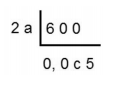
Imagem associada para resolução da questão

O maior valor possível para c é

Alternativas
Respostas
1141: B
1142: C
1143: D
1144: B
1145: A
1146: B
1147: C
1148: B
1149: D
1150: A
1151: D
1152: B
1153: D
1154: B
1155: D
1156: B
1157: D
1158: A
1159: C
1160: B