Questões de Concurso
Foram encontradas 2.115 questões
Resolva questões gratuitamente!
Junte-se a mais de 4 milhões de concurseiros!


Considerando a tabela acima, que apresenta a movimentação
anual de cargas no porto de Santos de 2003 a 2007, em milhões
de toneladas/ano e associa as quantidades de carga movimentadas
para exportação e importação às variáveis X e Y,
respectivamente, julgue o item subsequente.
 . Define-se densidade de frequência de um intervalo de classe como sendo o quociente da divisão da respectiva frequência relativa pela correspondente amplitude do intervalo.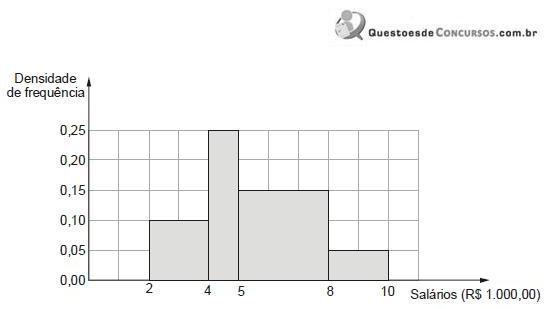
Considerando todos os intervalos de classe fechados à esquerda e abertos à direita, tem-se que a quantidade de funcionários que possuem salários maiores ou iguais a R$ 4.000,00 e inferiores a R$ 8.000,00 é
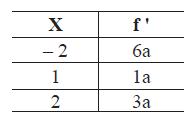
Sabendo que "a" é um número real, então a média e a variância de X são, respectivamente:
29, 27, 25, 39, 29, 27, 41, 31, 25, 33, 27, 25, 25, 23, 27, 27, 32, 26, 24, 36, 32, 26, 28, 24, 28, 27, 24, 26, 30, 26, 35, 26, 28, 34, 29, 23, 28.
Xi 5 6 7 8 9
fi 2 6 6 4 3
Civil (ANAC), o mercado doméstico de aviação no Brasil é
controlado por 5 companhias principais, conforme a tabela
abaixo.

A partir das informações apresentadas, julgue o item a seguir.
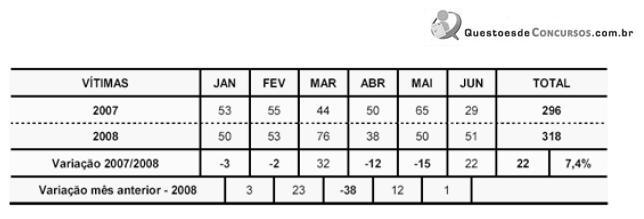
Comparativo mensal do número de vítimas das ocorrências, janeiro a junho de 2007/2008. Fonte: DEPO/PCDF.
I Em 2007, a variação no número de vítimas de fevereiro em relação ao mês anterior foi maior que a do mesmo período do ano de 2008.
II A variabilidade relativa do número de vítimas de 2007 foi igual à do ano de 2008.
III A variação percentual de vítimas em 2008, com relação ao ano anterior, foi superior a 7%.
Considere que:
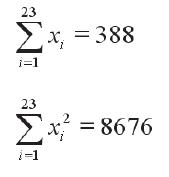
17, 12, 9, 23, 14, 6, 3, 18, 42, 25, 18, 12, 34, 5, 17, 20, 7, 8, 21, 13, 31, 24, 9.
As questões de nos 41 a 46 são referentes aos resultados do ENADE 2006, disponíveis em www.inep.gov.br.
Responda às questões de nos 41 a 43 com base nos percentuais das respostas de alunos de uma área específica de determinada Instituição de Ensino Superior (IES), participantes do ENADE 2006, a algumas questões do questionário socioeconômico relativas aos hábitos de leitura.
A questão de número 23 do questionário socioeconômico envolve uma variável do tipo
How to dig out from the information avalanche
Majority of workers feel overwhelmed by deluge of data, survey finds
By Eve Tahmincioglu
updated 8:18 p.m. ET March 16, 2008
Don’t expect Shaun Osher, the CEO of Core Group
Marketing in New York, to answer your e-mail right away.
He has stopped responding to e-mails every minute and
only checks his e-mail account twice a day. He also started
5 turning off his BlackBerry during meetings.
This tactic has made him so much more productive
that earlier this year he held a meeting with his staff of 50
and “strongly suggested” that they stop relying so heavily
on e-mail and actually start calling clients on the phone.
10 And, he requested his employees put cell phones and
PDAs on silent mode during meetings, as well as curtail
the common practice of cc-ing everybody when sending
out an e-mail. “There was so much redundancy, so much
unnecessary work,” he explains. “One person could handle
15 an issue that should take two minutes, but when an email
goes out and five people get cc-ed, then everybody
responds to it and there’s a snowball effect.”
It’s not that Osher has anything against technology. In
fact, he loves it. The problem is, last year he realized he
20 was inundated with so many e-mails and so much
information in general that he began to experience data
overload. “In the beginning, e-mail and all this data was a
great phenomenon, revolutionizing what we do. But the
pendulum has swung way too much to the other side,” he
25 maintains. “We’re less productive.”
Osher isn’t the only one out there under a data
avalanche. Thanks to technological innovations, you can
be talking to a customer on your cell phone, answering a
LinkedIn invitation on your laptop, and responding to email
30 on your PDA all at the same time. Besides, during
tough economic times, who will want to miss any
information when your job could be on the line if you indulge
in the luxury of being offline? Turns out, seven out of 10
office workers in the United States feel overwhelmed by
35 information in the workplace, and more than two in five
say they are headed for a data “breaking point,” according
to a recently released Workplace Productivity Survey.
Mike Walsh, CEO of LexisNexis U.S. Legal Markets,
says there are a host of reasons we’re all on the information
40 brink: “exponential growth of the size of the information
‘haystack,’ the immensity and immediacy of digital
communications, and the fact that professionals are not
being provided with sufficient tools and training to help
them keep pace with the growing information burden.”
45 ___ Ellen Kossek, a professor from Michigan State, believes
we are less productive in this age of 24-7 technology, and
our multitasking mentality has spawned a “not-mentallypresent”
society. “We’re becoming an attention-deficit
disorder society switching back and forth like crazy,”
50 Kossek says. “We’re connected all the time. We’re
working on planes, in coffee shops, working on the
weekends. Work is very seductive, but yet we’re actually
less effective.”
The key to getting your head above the data flood,
55 according to workplace experts, is managing and reducing
the information you’re bombarded with.
© 2008 MSNBC Interactive - (slightly adapted)
http://www.msnbc.msn.com/id/23636252/
Check the only alternative that presents a statement that is INCONSISTENT with the arguments and reasoning introduced in the text you have read.
Mark the sentence in which the idea introduced by the word in bold type is correctly described.
How to dig out from the information avalanche
Majority of workers feel overwhelmed by deluge of data, survey finds
By Eve Tahmincioglu
updated 8:18 p.m. ET March 16, 2008
Don’t expect Shaun Osher, the CEO of Core Group
Marketing in New York, to answer your e-mail right away.
He has stopped responding to e-mails every minute and
only checks his e-mail account twice a day. He also started
5 turning off his BlackBerry during meetings.
This tactic has made him so much more productive
that earlier this year he held a meeting with his staff of 50
and “strongly suggested” that they stop relying so heavily
on e-mail and actually start calling clients on the phone.
10 And, he requested his employees put cell phones and
PDAs on silent mode during meetings, as well as curtail
the common practice of cc-ing everybody when sending
out an e-mail. “There was so much redundancy, so much
unnecessary work,” he explains. “One person could handle
15 an issue that should take two minutes, but when an email
goes out and five people get cc-ed, then everybody
responds to it and there’s a snowball effect.”
It’s not that Osher has anything against technology. In
fact, he loves it. The problem is, last year he realized he
20 was inundated with so many e-mails and so much
information in general that he began to experience data
overload. “In the beginning, e-mail and all this data was a
great phenomenon, revolutionizing what we do. But the
pendulum has swung way too much to the other side,” he
25 maintains. “We’re less productive.”
Osher isn’t the only one out there under a data
avalanche. Thanks to technological innovations, you can
be talking to a customer on your cell phone, answering a
LinkedIn invitation on your laptop, and responding to email
30 on your PDA all at the same time. Besides, during
tough economic times, who will want to miss any
information when your job could be on the line if you indulge
in the luxury of being offline? Turns out, seven out of 10
office workers in the United States feel overwhelmed by
35 information in the workplace, and more than two in five
say they are headed for a data “breaking point,” according
to a recently released Workplace Productivity Survey.
Mike Walsh, CEO of LexisNexis U.S. Legal Markets,
says there are a host of reasons we’re all on the information
40 brink: “exponential growth of the size of the information
‘haystack,’ the immensity and immediacy of digital
communications, and the fact that professionals are not
being provided with sufficient tools and training to help
them keep pace with the growing information burden.”
45 ___ Ellen Kossek, a professor from Michigan State, believes
we are less productive in this age of 24-7 technology, and
our multitasking mentality has spawned a “not-mentallypresent”
society. “We’re becoming an attention-deficit
disorder society switching back and forth like crazy,”
50 Kossek says. “We’re connected all the time. We’re
working on planes, in coffee shops, working on the
weekends. Work is very seductive, but yet we’re actually
less effective.”
The key to getting your head above the data flood,
55 according to workplace experts, is managing and reducing
the information you’re bombarded with.
© 2008 MSNBC Interactive - (slightly adapted)
http://www.msnbc.msn.com/id/23636252/
Which option describes accurately the meaning relationship between the pairs of words?
In "...your job could be on the line if you indulge in the luxury of being offline?" (lines 32-33) the expressions 'on the line' and 'offline', respectively, mean
How to dig out from the information avalanche
Majority of workers feel overwhelmed by deluge of data, survey finds
By Eve Tahmincioglu
updated 8:18 p.m. ET March 16, 2008
Don’t expect Shaun Osher, the CEO of Core Group
Marketing in New York, to answer your e-mail right away.
He has stopped responding to e-mails every minute and
only checks his e-mail account twice a day. He also started
5 turning off his BlackBerry during meetings.
This tactic has made him so much more productive
that earlier this year he held a meeting with his staff of 50
and “strongly suggested” that they stop relying so heavily
on e-mail and actually start calling clients on the phone.
10 And, he requested his employees put cell phones and
PDAs on silent mode during meetings, as well as curtail
the common practice of cc-ing everybody when sending
out an e-mail. “There was so much redundancy, so much
unnecessary work,” he explains. “One person could handle
15 an issue that should take two minutes, but when an email
goes out and five people get cc-ed, then everybody
responds to it and there’s a snowball effect.”
It’s not that Osher has anything against technology. In
fact, he loves it. The problem is, last year he realized he
20 was inundated with so many e-mails and so much
information in general that he began to experience data
overload. “In the beginning, e-mail and all this data was a
great phenomenon, revolutionizing what we do. But the
pendulum has swung way too much to the other side,” he
25 maintains. “We’re less productive.”
Osher isn’t the only one out there under a data
avalanche. Thanks to technological innovations, you can
be talking to a customer on your cell phone, answering a
LinkedIn invitation on your laptop, and responding to email
30 on your PDA all at the same time. Besides, during
tough economic times, who will want to miss any
information when your job could be on the line if you indulge
in the luxury of being offline? Turns out, seven out of 10
office workers in the United States feel overwhelmed by
35 information in the workplace, and more than two in five
say they are headed for a data “breaking point,” according
to a recently released Workplace Productivity Survey.
Mike Walsh, CEO of LexisNexis U.S. Legal Markets,
says there are a host of reasons we’re all on the information
40 brink: “exponential growth of the size of the information
‘haystack,’ the immensity and immediacy of digital
communications, and the fact that professionals are not
being provided with sufficient tools and training to help
them keep pace with the growing information burden.”
45 ___ Ellen Kossek, a professor from Michigan State, believes
we are less productive in this age of 24-7 technology, and
our multitasking mentality has spawned a “not-mentallypresent”
society. “We’re becoming an attention-deficit
disorder society switching back and forth like crazy,”
50 Kossek says. “We’re connected all the time. We’re
working on planes, in coffee shops, working on the
weekends. Work is very seductive, but yet we’re actually
less effective.”
The key to getting your head above the data flood,
55 according to workplace experts, is managing and reducing
the information you’re bombarded with.
© 2008 MSNBC Interactive - (slightly adapted)
http://www.msnbc.msn.com/id/23636252/
When Shaun Osher affirms that "… the pendulum has swung way too much to the other side," (lines 23-24), he means that
 Conheça nossos planos