Questões de Concurso
Comentadas para arquiteto urbanista
Foram encontradas 5.606 questões
Resolva questões gratuitamente!
Junte-se a mais de 4 milhões de concurseiros!


Julgue o item que se segue com relação às ideias e estruturas linguísticas do texto III.
O texto é essencialmente argumentativo, haja vista a
quantidade de adjetivações que foram utilizadas para
convencer o leitor de que os projetos da UnB são positivos.
Julgue o item que se segue com relação às ideias e estruturas linguísticas do texto III.
Infere-se do trecho “Outra inovação” (l.10) que a adoção do
sistema de cotas foi uma inovação.
Julgue o item que se segue com relação às ideias e estruturas linguísticas do texto III.
Sem prejuízo para a correção gramatical e os sentidos originais
do texto, o período “A UnB (...) e a reflexão” (l. 1 e 2) poderia
ser assim reescrito: A UnB, comprometida com a crítica social
e a reflexão, investe em ideias e projetos

A respeito das ideias e estruturas linguísticas do texto II, julgue o próximo item.
Sem prejuízo para a correção gramatical e os sentidos do texto,
a vírgula empregada logo após “Norte” (l.14) poderia ser
omitida.
A respeito das ideias e estruturas linguísticas do texto II, julgue o próximo item.
A correção gramatical do texto seria prejudicada caso se
inserisse acento indicativo de crase no “a”, em “a homenagear
o especialista” (l. 16 e 17).
A respeito das ideias e estruturas linguísticas do texto II, julgue o próximo item.
Sem prejuízo para o sentido original do texto, a forma verbal
“repercute” (l.10) poderia ser substituída por reflete.
A respeito das ideias e estruturas linguísticas do texto II, julgue o próximo item.
O emprego da forma verbal “são” (l.2) na terceira pessoa do
plural justifica-se pela concordância com os núcleos do sujeito
da oração: “originalidade” e “capacidade”, ambos na linha 1.

Com base nas ideias e estruturas linguísticas do texto I, julgue o item subsecutivo.
No primeiro período do quarto parágrafo, feitos os devidos
ajustes de pontuação, o deslocamento da expressão “em 1950”
para o final do período preservaria a correção do texto, mas
acarretar-lhe-ia ambiguidade.
Em “à criança" (L.14), caso o vocábulo “criança" fosse empregado no plural, o acento indicativo de crase deveria ser mantido.
Com base nas ideias e estruturas linguísticas do texto I, julgue o item subsecutivo.
O emprego do acento indicativo de crase em “Candidatou-se
à Academia Brasileira de Letras” (l.25) é obrigatório, devido
à fusão da preposição que segue a forma verbal com o artigo
definido feminino singular que precede o termo “Academia”.
Com base nas ideias e estruturas linguísticas do texto I, julgue o item subsecutivo.
A forma nominal “filho” (l.4) e a forma pronominal
“se” (l. 6 e 25) referem-se a Anísio Spínola Teixeira.
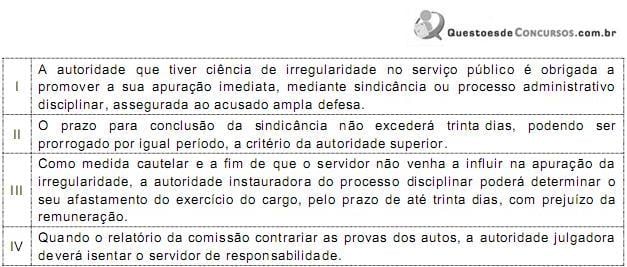
Das afirmativas, estão corretas


Acentuam-se graficamente pela mesma regra das palavras em destaque:

O conector presente, nesse período, estabelece uma relação de

Outra pontuação possível, para esse trecho, considerando-se as orientações normativas do português padrão escrito, é apresentada em:

Os elementos linguísticos com função de pronome relativo poderiam, conforme as orientações normativas da escrita padrão da língua portuguesa, ser substituídos, respectivamente, por

Sobre as palavras em destaque, é correto afirmar que pertencem a classes gramaticais distintas, e

Nesse período, a palavra em destaque denota

Há, entre os dois períodos, uma relação semântica de
The Naval Nuclear Propulsion Program (NNPP) started in 1948. Since that time, the NNPP has provided safe and effective propulsion systems to power submarines, surface combatants, and aircraft carriers. Today, nuclear propulsion enables virtually undetectable US Navy submarines, including the sea-based leg of the strategic triad, and provides essentially inexhaustible propulsion power independent of forward logistical support to both our submarines and aircraft carriers. Over forty percent of the Navy's major combatant ships are nuclear-powered, and because of their demonstrated safety and reliability, these ships have access to seaports throughout the world. The NNPP has consistently sought the best way to affordably meet Navy requirements by evaluating, developing, and delivering a variety of reactor types, fuel systems, and structural materials. The Program has investigated many different fuel systems and reactor design features, and has designed, built, and operated over thirty different reactor designs in over twenty plant types to employ the most promising of these developments in practical applications. Improvements in naval reactor design have allowed increased power and energy to keep pace with the operational requirements of the modern nuclear fleet, while maintaining a conservative design approach that ensures reliability and safety to the crew, the public, and the environment. As just one example of the progress that has been made, the earliest reactor core designs in the NAUTILUS required refueling after about two years while modern reactor cores can last the life of a submarine, or over thirty years without refueling. These improvements have been the result of prudent, conservative engineering, backed by analysis, testing, and prototyping. The NNPP was also a pioneer in developing basic technologies and transferring technology to the civilian nuclear electric power industry. For example, the Program demonstrated the feasibility of commercial nuclear power generation in this country by designing, constructing and operating the Shipping port Atomic Power Station in Pennsylvania and showing the feasibility of a thorium-based breeder reactor.
In: Report on Low Enriched Uranium for Naval Reactor Cores. Page 1. Report to Congress, January 2014. Office of Naval Reactors. US Dept. of Energy. DC 2058 http://fissilematerials.org/library/doe14.pdf
“The Naval Nuclear Propulsion Program (NNPP) started in 1948. Since that time, the NNPP has provided safe and effective propulsion systems to power submarines, surface combatants, and aircraft carriers. Today, nuclear propulsion enables virtually undetectable US Navy submarines, including the sea-based leg of the strategic triad, and provides essentially inexhaustible propulsion power independent of forward logistical support to both our submarines and aircraft carriers.”
Choose the alternative in which the words can properly substitute the ones in bold and underlined, respectively.

 Conheça nossos planos