Foram encontradas 23.028 questões
Resolva questões gratuitamente!
Junte-se a mais de 4 milhões de concurseiros!


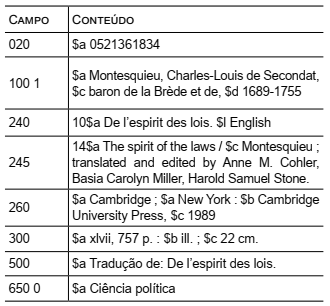
Na representação descritiva no formato MARC21, indicada no quadro a seguir, os campos que indicam exclusivamente a entidade “manifestação” do grupo 1 do FRBR são:
Knowledge and the library
It was not until the development of monastic libraries in Europe around 1200 that humanity amassed in a single place what approached the collective wisdom and knowledge of the age. Libraries may be exchanges of information and market places for ideas but they are also the buildings which contain the bulk of human knowledge. Or, at least they were until the electronic digitally stored information revolution of the 1980s.
Now knowledge is virtually everywhere; it has broken free of the constraint of buildings. Today if you were today to destroy all the world’s libraries, it is unlikely that more than 20% of human knowledge would be lost. Certainly, a large amount of archival material would disappear forever, but a substantial volume of knowledge would survive. If a library is a repository of knowledge, this is now just one of its functions. The library’s prime function is now making that knowledge available and encouraging exchange and reflection upon it.
Electronic knowledge is nowadays available to everybody – in the home, workplace, airport terminal, school, and so on. The Internet has liberated the library; nevertheless, it has not removed the justification for library facilities.
(www.sciencedirect.com/science/article/pii/B978185617619410017X. Adaptado)
O anúncio foi feito nesta terça-feira (10.04.2018): na premiação, a Biblioteca Nacional da Letônia acabou recebendo o prêmio. Mas a Biblioteca de São Paulo (BSP) colocou o Brasil entre os quatro finalistas na categoria de melhor biblioteca do mundo no Prêmio Excelência Internacional 2018, organizado pela Feira do Livro de Londres. A biblioteca concorreu com outras três bibliotecas, todas europeias.
(Acesso em 20.11.18 – disponível em: https://glo.bo/2OvDmNl. Adaptado)
A BSP é uma biblioteca modelo, aberta em 2010, na área que abrangia
Portaria publicada no Diário Oficial da União (DOU) nesta quinta-feira (01.11) informa que o acesso não será mais gratuito no período da manhã. O governo federal vai cobrar o acesso da edição completa na internet, mas vai liberar a leitura integral gratuita entre 12h e 23h59.
Após 155 anos, o documento passa a estar disponível somente na versão on-line. A decisão de encerrar a impressão está entre ações que, segundo o governo, visam a desburocratizar a Administração Pública e reduzir custos.
(Acesso em 02.11.18 – disponível em: https://glo.bo/2yQICGj. Adaptado)
A notícia e a Portaria referem-se
Um usuário entra no site da VUNESP por meio do Windows Internet Explorer em sua configuração padrão. Em seguida, ele seleciona o trecho de texto destacado na imagem a seguir e pressiona simultaneamente as teclas “CTRL” e “C”.

O usuário cria um novo documento no MS-Word 2010,
em sua configuração padrão. Nesse documento, ele clica
na primeira linha da primeira página e pressiona as teclas
“CTRL” e “V”, simultaneamente. Assinale a alternativa
que apresenta o resultado esperado após a realização
dessas ações.
Considere a seguinte tela do Windows 7 em sua configuração padrão:

Assinale a alternativa que apesenta o resultado esperado ao executar uma vez o atalho de teclado “tecla
Windows + M”.

 Conheça nossos planos