Foram encontradas 126 questões
Resolva questões gratuitamente!
Junte-se a mais de 4 milhões de concurseiros!


Na França, em um contexto de guerras interestatais e civis religiosas, o jurista Jean Bodin desenvolveu uma das primeiras teorias sobre o poder soberano como principal agente da racionalização política:
Aquele que é soberano não deve estar sujeito ao comando de outrem em modo algum, e deve poder dar a lei aos seus súditos e apagar ou anular as palavras inúteis nela substituindo-as por outras, o que não pode ser feito por quem está sujeito às leis ou a pessoas que exercitem o poder sobre ele. Por isso, a lei afirma que o príncipe não está sujeito à autoridade das leis, e em latim a palavra lei significa o comando de quem tem o poder soberano. Assim como o papa, segundo os canonistas, nunca pode atar as próprias mãos, também não as pode atar o príncipe soberano, mesmo que o quisesse. Por isso, no fim dos editos e das ordenanças vemos as palavras “pois tal é o nosso prazer”, para que esteja claro que as leis do príncipe soberano, mesmo que fundadas em motivos válidos e concretos, dependem apenas de sua pura e livre vontade. Quanto, porém, às leis naturais e divinas, todos os príncipes da terra estão sujeitos a elas, nem possuem poder para transgredi-las, se não quiserem serem culpados de lesa majestade divina, pondo-se em guerra contra aquele Deus a cuja majestade todos os príncipes da terra devem se submeter, com absoluto temor e reverência.
Adaptado de J. Bodin, I sei libri dello Stato. Torino: Utet, 1964, livro I, cap. VIII, p. 358-362.
Com base no trecho e em seus conhecimentos, assinale a afirmativa que caracteriza corretamente o conceito moderno de estado e de soberania em Bodin.
1. Governabilidade
2. Governança
( ) Refere-se às condições substantivas e materiais de exercício do poder e de legitimidade do Estado e do seu governo, decorrentes de sua postura diante da sociedade civil e do mercado.
( ) Entende-se como a formulação e implementação das políticas de um governo para a consecução das metas coletivas que compõem o seu programa, legitimado pelas urnas.
( ) Concebe-se como a autoridade política do Estado em si, sua capacidade para agregar os múltiplos interesses dispersos pela sociedade e apresentar-lhes um objetivo comum para os curto, médio e longo prazos.
( ) Apoia-se nos agentes públicos ou servidores do Estado que possibilitam a formulação e implementação das políticas públicas e representam o Estado diante da sociedade civil e do mercado.
Assinale a opção que estabelece a relação correta, na ordem apresentada.
Ao se informar sobre o procedimento a ser seguido na apreciação de suas contas, foi-lhe corretamente informado que o Tribunal de Contas
I. enquanto a emenda constitucional pode ser promulgada a qualquer momento, a revisão constitucional somente pode ser realizada a cada cinco anos;
II. o processo legislativo da revisão constitucional é mais qualificado que o da emenda constitucional, exigindo um quórum de aprovação maior;
III. os limites a serem observados para a aprovação da emenda constitucional não se identificam com os da revisão constitucional.
Em relação às conclusões de João e Maria
Considerando os termos dessa narrativa e à luz da sistemática constitucional vigente, é correto afirmar que
Read Text II and answer the question that follow it.
Text II
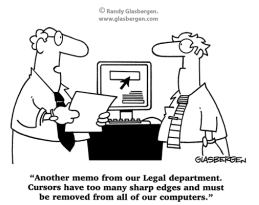
From: https://www.glasbergen.com/ngg_tag/legal-department/
Read text I and answer the question that follow it.
Text I
The New Rules of Data Privacy
The data harvested from our personal devices, along with our trail of electronic transactions and data from other sources, now provides the foundation for some of the world’s largest companies. […] For the past two decades, the commercial use of personal data has grown in wild-west fashion. But now, because of consumer mistrust, government actions, and competition for customers, those days are quickly coming to an end.
For most of its existence, the data economy was structured around a “digital curtain” designed to obscure the industry’s practices from lawmakers and the public. Data was considered company property and a proprietary secret, even though the data originated from customers’ private behavior. That curtain has since been lifted and a convergence of consumer, government, and market forces are now giving users more control over the data they generate. Instead of serving as a resource that can be freely harvested, countries in every region of the world have begun to treat personal data as an asset owned by individuals and held in trust by firms.
This will be a far better organizing principle for the data economy. Giving individuals more control has the potential to curtail the sector’s worst excesses while generating a new wave of customer-driven innovation, as customers begin to express what sort of personalization and opportunity they want their data to enable. And while Adtech firms in particular will be hardest hit, any firm with substantial troves of customer data will have to make sweeping changes to its practices, particularly large firms such as financial institutions, healthcare firms, utilities, and major manufacturers and retailers.
Leading firms are already adapting to the new reality as it unfolds. The key to this transition — based upon our research on data and trust, and our experience working on this issue with a wide variety of firms— is for companies to reorganize their data operations around the new fundamental rules of consent, insight, and flow.
[…]
Federal lawmakers are moving to curtail the power of big tech. Meanwhile, in 2021 state legislatures proposed or passed at least 27 online privacy bills regulating data markets and protecting personal digital rights. Lawmakers from California to China are implementing legislation that mirrors Europe’s GDPR, while the EU itself has turned its attention to regulating the use of AI. Where once companies were always ahead of regulators, now they struggle to keep up with compliance requirements across multiple jurisdictions.
Adapted from: https://hbr.org/2022/02/the-new-rules-of-data-privacy
February 25, 2022 – Retrieved September 6, 2022
Read text I and answer the question that follow it.
Text I
The New Rules of Data Privacy
The data harvested from our personal devices, along with our trail of electronic transactions and data from other sources, now provides the foundation for some of the world’s largest companies. […] For the past two decades, the commercial use of personal data has grown in wild-west fashion. But now, because of consumer mistrust, government actions, and competition for customers, those days are quickly coming to an end.
For most of its existence, the data economy was structured around a “digital curtain” designed to obscure the industry’s practices from lawmakers and the public. Data was considered company property and a proprietary secret, even though the data originated from customers’ private behavior. That curtain has since been lifted and a convergence of consumer, government, and market forces are now giving users more control over the data they generate. Instead of serving as a resource that can be freely harvested, countries in every region of the world have begun to treat personal data as an asset owned by individuals and held in trust by firms.
This will be a far better organizing principle for the data economy. Giving individuals more control has the potential to curtail the sector’s worst excesses while generating a new wave of customer-driven innovation, as customers begin to express what sort of personalization and opportunity they want their data to enable. And while Adtech firms in particular will be hardest hit, any firm with substantial troves of customer data will have to make sweeping changes to its practices, particularly large firms such as financial institutions, healthcare firms, utilities, and major manufacturers and retailers.
Leading firms are already adapting to the new reality as it unfolds. The key to this transition — based upon our research on data and trust, and our experience working on this issue with a wide variety of firms— is for companies to reorganize their data operations around the new fundamental rules of consent, insight, and flow.
[…]
Federal lawmakers are moving to curtail the power of big tech. Meanwhile, in 2021 state legislatures proposed or passed at least 27 online privacy bills regulating data markets and protecting personal digital rights. Lawmakers from California to China are implementing legislation that mirrors Europe’s GDPR, while the EU itself has turned its attention to regulating the use of AI. Where once companies were always ahead of regulators, now they struggle to keep up with compliance requirements across multiple jurisdictions.
Adapted from: https://hbr.org/2022/02/the-new-rules-of-data-privacy
February 25, 2022 – Retrieved September 6, 2022
Read text I and answer the question that follow it.
Text I
The New Rules of Data Privacy
The data harvested from our personal devices, along with our trail of electronic transactions and data from other sources, now provides the foundation for some of the world’s largest companies. […] For the past two decades, the commercial use of personal data has grown in wild-west fashion. But now, because of consumer mistrust, government actions, and competition for customers, those days are quickly coming to an end.
For most of its existence, the data economy was structured around a “digital curtain” designed to obscure the industry’s practices from lawmakers and the public. Data was considered company property and a proprietary secret, even though the data originated from customers’ private behavior. That curtain has since been lifted and a convergence of consumer, government, and market forces are now giving users more control over the data they generate. Instead of serving as a resource that can be freely harvested, countries in every region of the world have begun to treat personal data as an asset owned by individuals and held in trust by firms.
This will be a far better organizing principle for the data economy. Giving individuals more control has the potential to curtail the sector’s worst excesses while generating a new wave of customer-driven innovation, as customers begin to express what sort of personalization and opportunity they want their data to enable. And while Adtech firms in particular will be hardest hit, any firm with substantial troves of customer data will have to make sweeping changes to its practices, particularly large firms such as financial institutions, healthcare firms, utilities, and major manufacturers and retailers.
Leading firms are already adapting to the new reality as it unfolds. The key to this transition — based upon our research on data and trust, and our experience working on this issue with a wide variety of firms— is for companies to reorganize their data operations around the new fundamental rules of consent, insight, and flow.
[…]
Federal lawmakers are moving to curtail the power of big tech. Meanwhile, in 2021 state legislatures proposed or passed at least 27 online privacy bills regulating data markets and protecting personal digital rights. Lawmakers from California to China are implementing legislation that mirrors Europe’s GDPR, while the EU itself has turned its attention to regulating the use of AI. Where once companies were always ahead of regulators, now they struggle to keep up with compliance requirements across multiple jurisdictions.
Adapted from: https://hbr.org/2022/02/the-new-rules-of-data-privacy
February 25, 2022 – Retrieved September 6, 2022
Read text I and answer the question that follow it.
Text I
The New Rules of Data Privacy
The data harvested from our personal devices, along with our trail of electronic transactions and data from other sources, now provides the foundation for some of the world’s largest companies. […] For the past two decades, the commercial use of personal data has grown in wild-west fashion. But now, because of consumer mistrust, government actions, and competition for customers, those days are quickly coming to an end.
For most of its existence, the data economy was structured around a “digital curtain” designed to obscure the industry’s practices from lawmakers and the public. Data was considered company property and a proprietary secret, even though the data originated from customers’ private behavior. That curtain has since been lifted and a convergence of consumer, government, and market forces are now giving users more control over the data they generate. Instead of serving as a resource that can be freely harvested, countries in every region of the world have begun to treat personal data as an asset owned by individuals and held in trust by firms.
This will be a far better organizing principle for the data economy. Giving individuals more control has the potential to curtail the sector’s worst excesses while generating a new wave of customer-driven innovation, as customers begin to express what sort of personalization and opportunity they want their data to enable. And while Adtech firms in particular will be hardest hit, any firm with substantial troves of customer data will have to make sweeping changes to its practices, particularly large firms such as financial institutions, healthcare firms, utilities, and major manufacturers and retailers.
Leading firms are already adapting to the new reality as it unfolds. The key to this transition — based upon our research on data and trust, and our experience working on this issue with a wide variety of firms— is for companies to reorganize their data operations around the new fundamental rules of consent, insight, and flow.
[…]
Federal lawmakers are moving to curtail the power of big tech. Meanwhile, in 2021 state legislatures proposed or passed at least 27 online privacy bills regulating data markets and protecting personal digital rights. Lawmakers from California to China are implementing legislation that mirrors Europe’s GDPR, while the EU itself has turned its attention to regulating the use of AI. Where once companies were always ahead of regulators, now they struggle to keep up with compliance requirements across multiple jurisdictions.
Adapted from: https://hbr.org/2022/02/the-new-rules-of-data-privacy
February 25, 2022 – Retrieved September 6, 2022
( ) Empresas de publicidade serão fortemente afetadas por mudanças nas regras de privacidade de dados.
( ) Anteriormente, o controle de dados pessoais para fins comerciais seguia diretrizes rígidas.
( ) Atualmente, os legisladores têm sido negligentes com o consentimento dos usuários para seus dados.
As declarações são, respectivamente,
A negativa da frase
“Se fizer sol amanhã, eu vou à praia.”
é
Luciana deseja ir do vértice A ao vértice B da malha abaixo.

Ela pode caminhar em linha reta, indo de baixo para cima ou da esquerda para a direita, ao longo das linhas da malha.
O número de modos diferentes de Luciana realizar o seu trajeto é
igual a
O número total de peças que ela deve usar para montar o trecho da ferrovia é igual a
“Senhores pais aqui presentes, meus caros ex-alunos: neste meu discurso vou seguir os conselhos de Millôr Fernandes, que recomendava que discursos de formatura e governos de ditadura, quanto mais curtos, melhor!”
Assinale a opção que apresenta a recomendação do especialista Jorge David Cortés Moreno sobre a maneira de introduzir-se um discurso, que foi seguida pelo patrono da turma.
“Estamos na fase preliminar de uma das maiores batalhas da história (...) Que estamos em ação em muitos pontos — na Noruega e na Holanda — (...) que temos que estar preparados no Mediterrâneo. Que a batalha aérea é contínua, e que muitos preparativos têm que ser feitos aqui em casa.
Eu diria à Câmara como disse àqueles que aderiram a este governo: "Não tenho nada a oferecer além de sangue, labuta, lágrimas e suor". Temos diante de nós uma provação do tipo mais grave. Temos diante de nós muitos, muitos longos meses de luta e de sofrimento.
Você pergunta, qual é a nossa política? Direi: É travar uma guerra, pelo mar, terra e ar, com toda a nossa força e com toda a força que Deus pode nos dar; para travar uma guerra contra uma tirania monstruosa, nunca superada no catálogo sombrio e lamentável do crime humano. Essa é a nossa política. Você pergunta, qual é o nosso objetivo? Eu posso responder em uma palavra: Vitória. Vitória a todo custo — vitória apesar de todo o terror — Vitória, por mais longa e difícil que seja o caminho, pois sem vitória não há sobrevivência.”
CHURCHILL, Winston, pronunciamento na Câmara dos Comuns do Parlamento Britânico, em 13 de maio de 1940.
A seguir aparecem algumas observações sobre o discurso político; entre essas observações, assinale a que se relaciona mais diretamente a esse fragmento do discurso de Churchill, considerando exclusivamente esse segmento e sua situação de produção.
Os números naturais 1, 2, 3, 4, 5, 6, 7, 8 e 9 são distribuídos em uma tabela 3x3, de modo que a soma dos elementos da segunda linha é 6 unidades maior que a soma dos elementos da primeira linha e a soma dos elementos da terceira linha é 6 unidades maior que a soma dos elementos da segunda linha. Sabendo disso, o valor do produto entre x e y é igual à:

Roberto, Mario e Amanda moram em apenas uma das seguintes cidades: Teresina, Parnaíba e Amarante. Além disso, cada um mora em uma cidade diferente da cidade dos outros dois. Nas sentenças abaixo, temos duas sentenças verdadeiras e uma falsa.
I. Roberto não mora em Teresina e Amanda mora em Parnaíba.
II. Mario mora em Teresina ou Roberto mora em Amarante.
III. Amanda mora em Parnaíba e Mario não mora em Teresina.
A opção que contém as informações CORRETAS sobre as sentenças I, II e III é:

 Conheça nossos planos