Foram encontradas 163 questões
Resolva questões gratuitamente!
Junte-se a mais de 4 milhões de concurseiros!


NASA’s Nuclear Frontier: The Plum Brook Reactor Facility
There are three main types of nuclear reactors: power, research, and test. Research and test reactors as scientific tools are more common than most people realize. While power reactors frequently appear in newspaper headlines and are conspicuous because of their size and power, research reactors can be quietly tucked away, even in the midst of a college campus. Power reactors generate heat, which can easily be converted to other useable forms of energy, such as electricity. Research reactors operate at very low thermal power levels – so low, in fact, that they do not even require any type of forced cooling. They are used to measure nuclear parameters and other characteristics, which can then be used to build other reactors or to design experiments for test reactors. Test reactors are more powerful than research reactors and are able to produce much more intense radiation fields. Though they are still much less powerful than the power reactors, they generate enough heat to require a closed-loop forced-circulation coolant system. This system will remove the heat from the reactor by transferring it to a secondary cooling system, which releases it into the atmosphere through cooling towers.
NASA’s Nuclear Frontier: The Plum Brook Reactor Facility. Pages 36 to 40.
Consider the sentence below taken from the text.
“Power reactors generate heat, which can easily be converted to other useable forms of energy, such as electricity.”
It is correct to affirm that the word in bold and underlined above refers to
A soma dos ângulos internos de um triângulo qualquer é igual a 180°. Observe os ângulos internos do triângulo dados na figura abaixo.
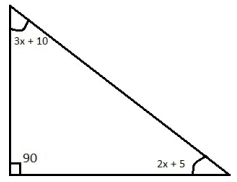
Diante do exposto, assinale a alternativa que apresenta o
valor de x.
França suspende entrega de navio de guerra para a Rússia
Governo hesitava em tomar medida que pune Moscou
por envolvimento na crise na Ucrânia
O gabinete do presidente da França, François Hollande, anunciou a suspensão temporária da entrega de um navio porta-helicópteros para a Rússia em retaliação ao apoio russo aos separatistas no leste da Ucrânia. O anúncio foi feito na véspera do início de uma reunião de cúpula da OTAN (Organização do Tratado do Atlântico Norte) em Newport, no País de Gales. O gabinete de Hollande disse que “as condições que permitiriam à França autorizar a entrega do primeiro navio não foram cumpridas”.
O contrato, assinado em 2011, prevê a construção dos dois navios, ao custo estimado de 1,2 bilhão de euros. A entrega do primeiro navio, batizado Vladivostok – que já está praticamente finalizado – estava marcada para outubro deste ano e a do segundo, o Sebastopol, para 2015. Cada navio tem capacidade de transportar dezesseis helicópteros, tropas e veículos blindados.
Há meses o governo Hollande vinha hesitando em tomar tal medida, mesmo com a escalada das agressões da Rússia na Ucrânia. Deputados americanos chegaram a fazer apelos públicos para que a França suspendesse o contrato. Representantes da União Europeia fizeram pedidos semelhantes, mas a França afirmava que os navios já haviam sido pagos e que as sanções econômicas impostas pelos EUA e pela União Europeia a Moscou não eram retroativas.
A imprensa francesa informou que a suspensão deve ser aplicada inicialmente até novembro e que a construção das embarcações não será interrompida – o processo envolve pelo menos 1.000 trabalhadores que, obviamente, não receberam bem o anúncio da suspensão. Em março, o vice-ministro da Defesa da Rússia, Yuri Borisov, chegou a afirmar que uma pesada indenização seria exigida, além da devolução dos gastos pelos navios caso a compra fosse cancelada.
Além da construção, o contrato prevê o treinamento das tripulações russas que vão operar as embarcações e a transferência de tecnologia. Alguns marinheiros russos já estão na França para começar a aprender sobre o funcionamento do primeiro navio.
http://veja.abril.com.br/noticia/mundo/franca-suspende-entrega-de-navio-de-guerra-para-a-russia. 03/09/2014.
De acordo com a norma-padrão da Língua Portuguesa e quanto à acentuação, assinale a alternativa em que as palavras devam ser acentuadas, respectivamente, de acordo com as mesmas regras de acentuação das palavras apresentadas abaixo.
Início/ cúpula/ já
França suspende entrega de navio de guerra para a Rússia
Governo hesitava em tomar medida que pune Moscou
por envolvimento na crise na Ucrânia
O gabinete do presidente da França, François Hollande, anunciou a suspensão temporária da entrega de um navio porta-helicópteros para a Rússia em retaliação ao apoio russo aos separatistas no leste da Ucrânia. O anúncio foi feito na véspera do início de uma reunião de cúpula da OTAN (Organização do Tratado do Atlântico Norte) em Newport, no País de Gales. O gabinete de Hollande disse que “as condições que permitiriam à França autorizar a entrega do primeiro navio não foram cumpridas”.
O contrato, assinado em 2011, prevê a construção dos dois navios, ao custo estimado de 1,2 bilhão de euros. A entrega do primeiro navio, batizado Vladivostok – que já está praticamente finalizado – estava marcada para outubro deste ano e a do segundo, o Sebastopol, para 2015. Cada navio tem capacidade de transportar dezesseis helicópteros, tropas e veículos blindados.
Há meses o governo Hollande vinha hesitando em tomar tal medida, mesmo com a escalada das agressões da Rússia na Ucrânia. Deputados americanos chegaram a fazer apelos públicos para que a França suspendesse o contrato. Representantes da União Europeia fizeram pedidos semelhantes, mas a França afirmava que os navios já haviam sido pagos e que as sanções econômicas impostas pelos EUA e pela União Europeia a Moscou não eram retroativas.
A imprensa francesa informou que a suspensão deve ser aplicada inicialmente até novembro e que a construção das embarcações não será interrompida – o processo envolve pelo menos 1.000 trabalhadores que, obviamente, não receberam bem o anúncio da suspensão. Em março, o vice-ministro da Defesa da Rússia, Yuri Borisov, chegou a afirmar que uma pesada indenização seria exigida, além da devolução dos gastos pelos navios caso a compra fosse cancelada.
Além da construção, o contrato prevê o treinamento das tripulações russas que vão operar as embarcações e a transferência de tecnologia. Alguns marinheiros russos já estão na França para começar a aprender sobre o funcionamento do primeiro navio.
http://veja.abril.com.br/noticia/mundo/franca-suspende-entrega-de-navio-de-guerra-para-a-russia. 03/09/2014.
De acordo com o texto, analise as assertivas abaixo.
I. Devido ao apoio russo aos separatistas no leste ucraniano, o presidente francês, François Hollande, suspendeu, de forma categórica, a entrega dos navios para a Rússia, previstos em contrato assinado em 2011.
II. A França hesitou em tomar a decisão de suspensão, mesmo depois que deputados americanos e representantes da União Europeia fizeram apelos para que o contrato fosse suspenso.
III. O contrato previa apenas as construções dos navios e estas não foram canceladas devido à pesada indenização exigida pelo vice-ministro da Defesa da Rússia.
É correto o que se afirma em
O marciano encontrou-me na rua e teve medo de minha impossibilidade humana. Como pode existir, pensou consigo, um ser que no existir põe tamanha anulação de existência?
Afastou-se o marciano, e persegui-o. Precisava dele como de um testemunho. Mas, recusando o colóquio, desintegrou-se no ar constelado de problemas.
E fiquei só em mim, de mim ausente.
ANDRADE, Carlos Drummond de. Science fiction. Poesia e prosa. Rio de Janeiro: Nova Aguilar, 1988, p. 330-331.
A frase abaixo deverá sofrer algumas alterações nas palavras em destaque para adequar-se à norma-padrão.
A muito tempo não vejo a parte da minha família a qual foi deixada de herança a fazenda a que todos devotavam grande afeto.
De acordo com a norma-padrão, a correção implicaria, respectivamente, esta sequência de palavras:
Some of you may be familiar with OSHA - the Occupational Safety & Health Administration. The sole purpose of this agency is to keep American workers safe. Complying with OSHA regulations isn't always easy, but if we work together, we can do it. Yet, complying with regulations is not the real reason for working safely. Our real motive is simple. We care about each and every one of you and will do what is necessary to prevent you from being injured.
However, keeping our workplace safe takes input from everyone. Management, supervisor, and all of you have to come together on this issue, or we're in trouble. For example, upper management has to approve the purchase of safe equipment. Supervisors, including myself, have to ensure that each of you knows how to use that equipment safely. Then it's up to you to follow through the task and use the equipment as you were trained. If any one part of this chain fails, accidents are going to happen and people are going to get hurt.
Responsibility Number One - Recognize Hazards
At the core of your safety responsibilities lies the task of recognizing safety and health hazards. In order to do that, you must first understand what constitutes a hazard. Extreme hazards are often obvious. Our hopes are that you won't find too many of those around here.
There are, however, more subtle hazards that won't jump up and bite you. As a result of your safety training and meetings like these, some things may come to mind. For example, a machine may not be easy to lock out. Common practice may be to use a tag. This is a potential hazard and should be discussed. Maybe something can be changed to make it easier to use a lock. Other subtle hazards include such things as frayed electrical cords, a loose machine guard, a cluttered aisle, or maybe something that just doesn't look right.
Responsibility Number Two - Report Hazards
A big part of recognizing hazards is using your instincts. Nobody knows your job as well as you do, so we're counting on you to let us know about possible problems. Beyond recognizing hazards, you have to correct them or report them to someone who can. This too, is a judgement call. For example, if something spills in your work area you can probably clean it up yourself. However, if there is an unlabeled chemical container and you have no idea what it is, you should report it to your supervisor.
Additional Employee Responsibilities
Good housekeeping is a major part of keeping your work area safe. For example, you should take a few minutes each day to ensure that aisles, hallways, and stairways in your work area are not obstructed. If boxes, equipment, or anything else is left to pile up, you have a tripping hazard on your hands. Those obstructions could keep you from exiting the building quickly and safely should you face an emergency situation.
Also watch out for spills. These can lead to slips and falls. Flammable materials are another thing to be aware of. Make sure they are disposed of properly.
Keep Thinking. Even if you're doing your job safely and you are avoiding hazards, there are often even better ways to work safely. If you have ideas for improving the safety of your job or that of co-workers, share them.
Concluding Remarks
While nothing we do can completely eliminate the threat of an incident, we can work together to improve our odds. As I said, this must be a real team effort and I'm counting on input from all of you. Let's keep communicating and continue to improve safety.
Available at: <http://www.ncsu.edu/ehs/www99/right/training/meeting/emplores.html>.Retrieved on: April 1st, 2012. Adapted.
Some of you may be familiar with OSHA - the Occupational Safety & Health Administration. The sole purpose of this agency is to keep American workers safe. Complying with OSHA regulations isn't always easy, but if we work together, we can do it. Yet, complying with regulations is not the real reason for working safely. Our real motive is simple. We care about each and every one of you and will do what is necessary to prevent you from being injured.
However, keeping our workplace safe takes input from everyone. Management, supervisor, and all of you have to come together on this issue, or we're in trouble. For example, upper management has to approve the purchase of safe equipment. Supervisors, including myself, have to ensure that each of you knows how to use that equipment safely. Then it's up to you to follow through the task and use the equipment as you were trained. If any one part of this chain fails, accidents are going to happen and people are going to get hurt.
Responsibility Number One - Recognize Hazards
At the core of your safety responsibilities lies the task of recognizing safety and health hazards. In order to do that, you must first understand what constitutes a hazard. Extreme hazards are often obvious. Our hopes are that you won't find too many of those around here.
There are, however, more subtle hazards that won't jump up and bite you. As a result of your safety training and meetings like these, some things may come to mind. For example, a machine may not be easy to lock out. Common practice may be to use a tag. This is a potential hazard and should be discussed. Maybe something can be changed to make it easier to use a lock. Other subtle hazards include such things as frayed electrical cords, a loose machine guard, a cluttered aisle, or maybe something that just doesn't look right.
Responsibility Number Two - Report Hazards
A big part of recognizing hazards is using your instincts. Nobody knows your job as well as you do, so we're counting on you to let us know about possible problems. Beyond recognizing hazards, you have to correct them or report them to someone who can. This too, is a judgement call. For example, if something spills in your work area you can probably clean it up yourself. However, if there is an unlabeled chemical container and you have no idea what it is, you should report it to your supervisor.
Additional Employee Responsibilities
Good housekeeping is a major part of keeping your work area safe. For example, you should take a few minutes each day to ensure that aisles, hallways, and stairways in your work area are not obstructed. If boxes, equipment, or anything else is left to pile up, you have a tripping hazard on your hands. Those obstructions could keep you from exiting the building quickly and safely should you face an emergency situation.
Also watch out for spills. These can lead to slips and falls. Flammable materials are another thing to be aware of. Make sure they are disposed of properly.
Keep Thinking. Even if you're doing your job safely and you are avoiding hazards, there are often even better ways to work safely. If you have ideas for improving the safety of your job or that of co-workers, share them.
Concluding Remarks
While nothing we do can completely eliminate the threat of an incident, we can work together to improve our odds. As I said, this must be a real team effort and I'm counting on input from all of you. Let's keep communicating and continue to improve safety.
Available at: <http://www.ncsu.edu/ehs/www99/right/training/meeting/emplores.html>.Retrieved on: April 1st, 2012. Adapted.
Some of you may be familiar with OSHA - the Occupational Safety & Health Administration. The sole purpose of this agency is to keep American workers safe. Complying with OSHA regulations isn't always easy, but if we work together, we can do it. Yet, complying with regulations is not the real reason for working safely. Our real motive is simple. We care about each and every one of you and will do what is necessary to prevent you from being injured.
However, keeping our workplace safe takes input from everyone. Management, supervisor, and all of you have to come together on this issue, or we're in trouble. For example, upper management has to approve the purchase of safe equipment. Supervisors, including myself, have to ensure that each of you knows how to use that equipment safely. Then it's up to you to follow through the task and use the equipment as you were trained. If any one part of this chain fails, accidents are going to happen and people are going to get hurt.
Responsibility Number One - Recognize Hazards
At the core of your safety responsibilities lies the task of recognizing safety and health hazards. In order to do that, you must first understand what constitutes a hazard. Extreme hazards are often obvious. Our hopes are that you won't find too many of those around here.
There are, however, more subtle hazards that won't jump up and bite you. As a result of your safety training and meetings like these, some things may come to mind. For example, a machine may not be easy to lock out. Common practice may be to use a tag. This is a potential hazard and should be discussed. Maybe something can be changed to make it easier to use a lock. Other subtle hazards include such things as frayed electrical cords, a loose machine guard, a cluttered aisle, or maybe something that just doesn't look right.
Responsibility Number Two - Report Hazards
A big part of recognizing hazards is using your instincts. Nobody knows your job as well as you do, so we're counting on you to let us know about possible problems. Beyond recognizing hazards, you have to correct them or report them to someone who can. This too, is a judgement call. For example, if something spills in your work area you can probably clean it up yourself. However, if there is an unlabeled chemical container and you have no idea what it is, you should report it to your supervisor.
Additional Employee Responsibilities
Good housekeeping is a major part of keeping your work area safe. For example, you should take a few minutes each day to ensure that aisles, hallways, and stairways in your work area are not obstructed. If boxes, equipment, or anything else is left to pile up, you have a tripping hazard on your hands. Those obstructions could keep you from exiting the building quickly and safely should you face an emergency situation.
Also watch out for spills. These can lead to slips and falls. Flammable materials are another thing to be aware of. Make sure they are disposed of properly.
Keep Thinking. Even if you're doing your job safely and you are avoiding hazards, there are often even better ways to work safely. If you have ideas for improving the safety of your job or that of co-workers, share them.
Concluding Remarks
While nothing we do can completely eliminate the threat of an incident, we can work together to improve our odds. As I said, this must be a real team effort and I'm counting on input from all of you. Let's keep communicating and continue to improve safety.
Available at: <http://www.ncsu.edu/ehs/www99/right/training/meeting/emplores.html>.Retrieved on: April 1st, 2012. Adapted.
Some of you may be familiar with OSHA - the Occupational Safety & Health Administration. The sole purpose of this agency is to keep American workers safe. Complying with OSHA regulations isn't always easy, but if we work together, we can do it. Yet, complying with regulations is not the real reason for working safely. Our real motive is simple. We care about each and every one of you and will do what is necessary to prevent you from being injured.
However, keeping our workplace safe takes input from everyone. Management, supervisor, and all of you have to come together on this issue, or we're in trouble. For example, upper management has to approve the purchase of safe equipment. Supervisors, including myself, have to ensure that each of you knows how to use that equipment safely. Then it's up to you to follow through the task and use the equipment as you were trained. If any one part of this chain fails, accidents are going to happen and people are going to get hurt.
Responsibility Number One - Recognize Hazards
At the core of your safety responsibilities lies the task of recognizing safety and health hazards. In order to do that, you must first understand what constitutes a hazard. Extreme hazards are often obvious. Our hopes are that you won't find too many of those around here.
There are, however, more subtle hazards that won't jump up and bite you. As a result of your safety training and meetings like these, some things may come to mind. For example, a machine may not be easy to lock out. Common practice may be to use a tag. This is a potential hazard and should be discussed. Maybe something can be changed to make it easier to use a lock. Other subtle hazards include such things as frayed electrical cords, a loose machine guard, a cluttered aisle, or maybe something that just doesn't look right.
Responsibility Number Two - Report Hazards
A big part of recognizing hazards is using your instincts. Nobody knows your job as well as you do, so we're counting on you to let us know about possible problems. Beyond recognizing hazards, you have to correct them or report them to someone who can. This too, is a judgement call. For example, if something spills in your work area you can probably clean it up yourself. However, if there is an unlabeled chemical container and you have no idea what it is, you should report it to your supervisor.
Additional Employee Responsibilities
Good housekeeping is a major part of keeping your work area safe. For example, you should take a few minutes each day to ensure that aisles, hallways, and stairways in your work area are not obstructed. If boxes, equipment, or anything else is left to pile up, you have a tripping hazard on your hands. Those obstructions could keep you from exiting the building quickly and safely should you face an emergency situation.
Also watch out for spills. These can lead to slips and falls. Flammable materials are another thing to be aware of. Make sure they are disposed of properly.
Keep Thinking. Even if you're doing your job safely and you are avoiding hazards, there are often even better ways to work safely. If you have ideas for improving the safety of your job or that of co-workers, share them.
Concluding Remarks
While nothing we do can completely eliminate the threat of an incident, we can work together to improve our odds. As I said, this must be a real team effort and I'm counting on input from all of you. Let's keep communicating and continue to improve safety.
Available at: <http://www.ncsu.edu/ehs/www99/right/training/meeting/emplores.html>.Retrieved on: April 1st, 2012. Adapted.
Some of you may be familiar with OSHA - the Occupational Safety & Health Administration. The sole purpose of this agency is to keep American workers safe. Complying with OSHA regulations isn't always easy, but if we work together, we can do it. Yet, complying with regulations is not the real reason for working safely. Our real motive is simple. We care about each and every one of you and will do what is necessary to prevent you from being injured.
However, keeping our workplace safe takes input from everyone. Management, supervisor, and all of you have to come together on this issue, or we're in trouble. For example, upper management has to approve the purchase of safe equipment. Supervisors, including myself, have to ensure that each of you knows how to use that equipment safely. Then it's up to you to follow through the task and use the equipment as you were trained. If any one part of this chain fails, accidents are going to happen and people are going to get hurt.
Responsibility Number One - Recognize Hazards
At the core of your safety responsibilities lies the task of recognizing safety and health hazards. In order to do that, you must first understand what constitutes a hazard. Extreme hazards are often obvious. Our hopes are that you won't find too many of those around here.
There are, however, more subtle hazards that won't jump up and bite you. As a result of your safety training and meetings like these, some things may come to mind. For example, a machine may not be easy to lock out. Common practice may be to use a tag. This is a potential hazard and should be discussed. Maybe something can be changed to make it easier to use a lock. Other subtle hazards include such things as frayed electrical cords, a loose machine guard, a cluttered aisle, or maybe something that just doesn't look right.
Responsibility Number Two - Report Hazards
A big part of recognizing hazards is using your instincts. Nobody knows your job as well as you do, so we're counting on you to let us know about possible problems. Beyond recognizing hazards, you have to correct them or report them to someone who can. This too, is a judgement call. For example, if something spills in your work area you can probably clean it up yourself. However, if there is an unlabeled chemical container and you have no idea what it is, you should report it to your supervisor.
Additional Employee Responsibilities
Good housekeeping is a major part of keeping your work area safe. For example, you should take a few minutes each day to ensure that aisles, hallways, and stairways in your work area are not obstructed. If boxes, equipment, or anything else is left to pile up, you have a tripping hazard on your hands. Those obstructions could keep you from exiting the building quickly and safely should you face an emergency situation.
Also watch out for spills. These can lead to slips and falls. Flammable materials are another thing to be aware of. Make sure they are disposed of properly.
Keep Thinking. Even if you're doing your job safely and you are avoiding hazards, there are often even better ways to work safely. If you have ideas for improving the safety of your job or that of co-workers, share them.
Concluding Remarks
While nothing we do can completely eliminate the threat of an incident, we can work together to improve our odds. As I said, this must be a real team effort and I'm counting on input from all of you. Let's keep communicating and continue to improve safety.
Available at: <http://www.ncsu.edu/ehs/www99/right/training/meeting/emplores.html>.Retrieved on: April 1st, 2012. Adapted.
Some of you may be familiar with OSHA - the Occupational Safety & Health Administration. The sole purpose of this agency is to keep American workers safe. Complying with OSHA regulations isn't always easy, but if we work together, we can do it. Yet, complying with regulations is not the real reason for working safely. Our real motive is simple. We care about each and every one of you and will do what is necessary to prevent you from being injured.
However, keeping our workplace safe takes input from everyone. Management, supervisor, and all of you have to come together on this issue, or we're in trouble. For example, upper management has to approve the purchase of safe equipment. Supervisors, including myself, have to ensure that each of you knows how to use that equipment safely. Then it's up to you to follow through the task and use the equipment as you were trained. If any one part of this chain fails, accidents are going to happen and people are going to get hurt.
Responsibility Number One - Recognize Hazards
At the core of your safety responsibilities lies the task of recognizing safety and health hazards. In order to do that, you must first understand what constitutes a hazard. Extreme hazards are often obvious. Our hopes are that you won't find too many of those around here.
There are, however, more subtle hazards that won't jump up and bite you. As a result of your safety training and meetings like these, some things may come to mind. For example, a machine may not be easy to lock out. Common practice may be to use a tag. This is a potential hazard and should be discussed. Maybe something can be changed to make it easier to use a lock. Other subtle hazards include such things as frayed electrical cords, a loose machine guard, a cluttered aisle, or maybe something that just doesn't look right.
Responsibility Number Two - Report Hazards
A big part of recognizing hazards is using your instincts. Nobody knows your job as well as you do, so we're counting on you to let us know about possible problems. Beyond recognizing hazards, you have to correct them or report them to someone who can. This too, is a judgement call. For example, if something spills in your work area you can probably clean it up yourself. However, if there is an unlabeled chemical container and you have no idea what it is, you should report it to your supervisor.
Additional Employee Responsibilities
Good housekeeping is a major part of keeping your work area safe. For example, you should take a few minutes each day to ensure that aisles, hallways, and stairways in your work area are not obstructed. If boxes, equipment, or anything else is left to pile up, you have a tripping hazard on your hands. Those obstructions could keep you from exiting the building quickly and safely should you face an emergency situation.
Also watch out for spills. These can lead to slips and falls. Flammable materials are another thing to be aware of. Make sure they are disposed of properly.
Keep Thinking. Even if you're doing your job safely and you are avoiding hazards, there are often even better ways to work safely. If you have ideas for improving the safety of your job or that of co-workers, share them.
Concluding Remarks
While nothing we do can completely eliminate the threat of an incident, we can work together to improve our odds. As I said, this must be a real team effort and I'm counting on input from all of you. Let's keep communicating and continue to improve safety.
Available at: <http://www.ncsu.edu/ehs/www99/right/training/meeting/emplores.html>.Retrieved on: April 1st, 2012. Adapted.
Some of you may be familiar with OSHA - the Occupational Safety & Health Administration. The sole purpose of this agency is to keep American workers safe. Complying with OSHA regulations isn't always easy, but if we work together, we can do it. Yet, complying with regulations is not the real reason for working safely. Our real motive is simple. We care about each and every one of you and will do what is necessary to prevent you from being injured.
However, keeping our workplace safe takes input from everyone. Management, supervisor, and all of you have to come together on this issue, or we're in trouble. For example, upper management has to approve the purchase of safe equipment. Supervisors, including myself, have to ensure that each of you knows how to use that equipment safely. Then it's up to you to follow through the task and use the equipment as you were trained. If any one part of this chain fails, accidents are going to happen and people are going to get hurt.
Responsibility Number One - Recognize Hazards
At the core of your safety responsibilities lies the task of recognizing safety and health hazards. In order to do that, you must first understand what constitutes a hazard. Extreme hazards are often obvious. Our hopes are that you won't find too many of those around here.
There are, however, more subtle hazards that won't jump up and bite you. As a result of your safety training and meetings like these, some things may come to mind. For example, a machine may not be easy to lock out. Common practice may be to use a tag. This is a potential hazard and should be discussed. Maybe something can be changed to make it easier to use a lock. Other subtle hazards include such things as frayed electrical cords, a loose machine guard, a cluttered aisle, or maybe something that just doesn't look right.
Responsibility Number Two - Report Hazards
A big part of recognizing hazards is using your instincts. Nobody knows your job as well as you do, so we're counting on you to let us know about possible problems. Beyond recognizing hazards, you have to correct them or report them to someone who can. This too, is a judgement call. For example, if something spills in your work area you can probably clean it up yourself. However, if there is an unlabeled chemical container and you have no idea what it is, you should report it to your supervisor.
Additional Employee Responsibilities
Good housekeeping is a major part of keeping your work area safe. For example, you should take a few minutes each day to ensure that aisles, hallways, and stairways in your work area are not obstructed. If boxes, equipment, or anything else is left to pile up, you have a tripping hazard on your hands. Those obstructions could keep you from exiting the building quickly and safely should you face an emergency situation.
Also watch out for spills. These can lead to slips and falls. Flammable materials are another thing to be aware of. Make sure they are disposed of properly.
Keep Thinking. Even if you're doing your job safely and you are avoiding hazards, there are often even better ways to work safely. If you have ideas for improving the safety of your job or that of co-workers, share them.
Concluding Remarks
While nothing we do can completely eliminate the threat of an incident, we can work together to improve our odds. As I said, this must be a real team effort and I'm counting on input from all of you. Let's keep communicating and continue to improve safety.
Available at: <http://www.ncsu.edu/ehs/www99/right/training/meeting/emplores.html>.Retrieved on: April 1st, 2012. Adapted.
Some of you may be familiar with OSHA - the Occupational Safety & Health Administration. The sole purpose of this agency is to keep American workers safe. Complying with OSHA regulations isn't always easy, but if we work together, we can do it. Yet, complying with regulations is not the real reason for working safely. Our real motive is simple. We care about each and every one of you and will do what is necessary to prevent you from being injured.
However, keeping our workplace safe takes input from everyone. Management, supervisor, and all of you have to come together on this issue, or we're in trouble. For example, upper management has to approve the purchase of safe equipment. Supervisors, including myself, have to ensure that each of you knows how to use that equipment safely. Then it's up to you to follow through the task and use the equipment as you were trained. If any one part of this chain fails, accidents are going to happen and people are going to get hurt.
Responsibility Number One - Recognize Hazards
At the core of your safety responsibilities lies the task of recognizing safety and health hazards. In order to do that, you must first understand what constitutes a hazard. Extreme hazards are often obvious. Our hopes are that you won't find too many of those around here.
There are, however, more subtle hazards that won't jump up and bite you. As a result of your safety training and meetings like these, some things may come to mind. For example, a machine may not be easy to lock out. Common practice may be to use a tag. This is a potential hazard and should be discussed. Maybe something can be changed to make it easier to use a lock. Other subtle hazards include such things as frayed electrical cords, a loose machine guard, a cluttered aisle, or maybe something that just doesn't look right.
Responsibility Number Two - Report Hazards
A big part of recognizing hazards is using your instincts. Nobody knows your job as well as you do, so we're counting on you to let us know about possible problems. Beyond recognizing hazards, you have to correct them or report them to someone who can. This too, is a judgement call. For example, if something spills in your work area you can probably clean it up yourself. However, if there is an unlabeled chemical container and you have no idea what it is, you should report it to your supervisor.
Additional Employee Responsibilities
Good housekeeping is a major part of keeping your work area safe. For example, you should take a few minutes each day to ensure that aisles, hallways, and stairways in your work area are not obstructed. If boxes, equipment, or anything else is left to pile up, you have a tripping hazard on your hands. Those obstructions could keep you from exiting the building quickly and safely should you face an emergency situation.
Also watch out for spills. These can lead to slips and falls. Flammable materials are another thing to be aware of. Make sure they are disposed of properly.
Keep Thinking. Even if you're doing your job safely and you are avoiding hazards, there are often even better ways to work safely. If you have ideas for improving the safety of your job or that of co-workers, share them.
Concluding Remarks
While nothing we do can completely eliminate the threat of an incident, we can work together to improve our odds. As I said, this must be a real team effort and I'm counting on input from all of you. Let's keep communicating and continue to improve safety.
Available at: <http://www.ncsu.edu/ehs/www99/right/training/meeting/emplores.html>.Retrieved on: April 1st, 2012. Adapted.
Some of you may be familiar with OSHA - the Occupational Safety & Health Administration. The sole purpose of this agency is to keep American workers safe. Complying with OSHA regulations isn't always easy, but if we work together, we can do it. Yet, complying with regulations is not the real reason for working safely. Our real motive is simple. We care about each and every one of you and will do what is necessary to prevent you from being injured.
However, keeping our workplace safe takes input from everyone. Management, supervisor, and all of you have to come together on this issue, or we're in trouble. For example, upper management has to approve the purchase of safe equipment. Supervisors, including myself, have to ensure that each of you knows how to use that equipment safely. Then it's up to you to follow through the task and use the equipment as you were trained. If any one part of this chain fails, accidents are going to happen and people are going to get hurt.
Responsibility Number One - Recognize Hazards
At the core of your safety responsibilities lies the task of recognizing safety and health hazards. In order to do that, you must first understand what constitutes a hazard. Extreme hazards are often obvious. Our hopes are that you won't find too many of those around here.
There are, however, more subtle hazards that won't jump up and bite you. As a result of your safety training and meetings like these, some things may come to mind. For example, a machine may not be easy to lock out. Common practice may be to use a tag. This is a potential hazard and should be discussed. Maybe something can be changed to make it easier to use a lock. Other subtle hazards include such things as frayed electrical cords, a loose machine guard, a cluttered aisle, or maybe something that just doesn't look right.
Responsibility Number Two - Report Hazards
A big part of recognizing hazards is using your instincts. Nobody knows your job as well as you do, so we're counting on you to let us know about possible problems. Beyond recognizing hazards, you have to correct them or report them to someone who can. This too, is a judgement call. For example, if something spills in your work area you can probably clean it up yourself. However, if there is an unlabeled chemical container and you have no idea what it is, you should report it to your supervisor.
Additional Employee Responsibilities
Good housekeeping is a major part of keeping your work area safe. For example, you should take a few minutes each day to ensure that aisles, hallways, and stairways in your work area are not obstructed. If boxes, equipment, or anything else is left to pile up, you have a tripping hazard on your hands. Those obstructions could keep you from exiting the building quickly and safely should you face an emergency situation.
Also watch out for spills. These can lead to slips and falls. Flammable materials are another thing to be aware of. Make sure they are disposed of properly.
Keep Thinking. Even if you're doing your job safely and you are avoiding hazards, there are often even better ways to work safely. If you have ideas for improving the safety of your job or that of co-workers, share them.
Concluding Remarks
While nothing we do can completely eliminate the threat of an incident, we can work together to improve our odds. As I said, this must be a real team effort and I'm counting on input from all of you. Let's keep communicating and continue to improve safety.
Available at: <http://www.ncsu.edu/ehs/www99/right/training/meeting/emplores.html>.Retrieved on: April 1st, 2012. Adapted.
O marciano encontrou-me na rua e teve medo de minha impossibilidade humana. Como pode existir, pensou consigo, um ser que no existir põe tamanha anulação de existência?
Afastou-se o marciano, e persegui-o. Precisava dele como de um testemunho. Mas, recusando o colóquio, desintegrou-se no ar constelado de problemas.
E fiquei só em mim, de mim ausente.
ANDRADE, Carlos Drummond de. Science fiction. Poesia e prosa. Rio de Janeiro: Nova Aguilar, 1988, p. 330-331.
Ele só NÃO se enganou em:
O marciano encontrou-me na rua e teve medo de minha impossibilidade humana. Como pode existir, pensou consigo, um ser que no existir põe tamanha anulação de existência?
Afastou-se o marciano, e persegui-o. Precisava dele como de um testemunho. Mas, recusando o colóquio, desintegrou-se no ar constelado de problemas.
E fiquei só em mim, de mim ausente.
ANDRADE, Carlos Drummond de. Science fiction. Poesia e prosa. Rio de Janeiro: Nova Aguilar, 1988, p. 330-331.
O marciano encontrou-me na rua e teve medo de minha impossibilidade humana. Como pode existir, pensou consigo, um ser que no existir põe tamanha anulação de existência?
Afastou-se o marciano, e persegui-o. Precisava dele como de um testemunho. Mas, recusando o colóquio, desintegrou-se no ar constelado de problemas.
E fiquei só em mim, de mim ausente.
ANDRADE, Carlos Drummond de. Science fiction. Poesia e prosa. Rio de Janeiro: Nova Aguilar, 1988, p. 330-331.
O marciano encontrou-me na rua e teve medo de minha impossibilidade humana. Como pode existir, pensou consigo, um ser que no existir põe tamanha anulação de existência?
Afastou-se o marciano, e persegui-o. Precisava dele como de um testemunho. Mas, recusando o colóquio, desintegrou-se no ar constelado de problemas.
E fiquei só em mim, de mim ausente.
ANDRADE, Carlos Drummond de. Science fiction. Poesia e prosa. Rio de Janeiro: Nova Aguilar, 1988, p. 330-331.
Há opinião contrária à do diretor. Acertaram a tarefa aqueles que escreveram:
O marciano encontrou-me na rua e teve medo de minha impossibilidade humana. Como pode existir, pensou consigo, um ser que no existir põe tamanha anulação de existência?
Afastou-se o marciano, e persegui-o. Precisava dele como de um testemunho. Mas, recusando o colóquio, desintegrou-se no ar constelado de problemas.
E fiquei só em mim, de mim ausente.
ANDRADE, Carlos Drummond de. Science fiction. Poesia e prosa. Rio de Janeiro: Nova Aguilar, 1988, p. 330-331.

 Conheça nossos planos