Selecionar segmento
Estude com questões de diferentes segmentos
Atenção: Isso limpará todos os campos já preenchidos no filtro!
Foram encontradas 24.428 questões
Resolva questões gratuitamente!
Junte-se a mais de 4 milhões de concurseiros!


Ano: 2025
Banca:
FUNDATEC
Órgão:
Prefeitura de Montenegro - RS
Provas:
FUNDATEC - 2025 - Prefeitura de Montenegro - RS - Professor Área II - Língua Portuguesa
|
FUNDATEC - 2025 - Prefeitura de Montenegro - RS - Professor Área II - Estrangeira/Inglês |
FUNDATEC - 2025 - Prefeitura de Montenegro - RS - Professor Área II - Matemática |
FUNDATEC - 2025 - Prefeitura de Montenegro - RS - Professor Área II - Geografia |
FUNDATEC - 2025 - Prefeitura de Montenegro - RS - Professor Área II - História |
FUNDATEC - 2025 - Prefeitura de Montenegro - RS - Professor Área II - Ciências |
FUNDATEC - 2025 - Prefeitura de Montenegro - RS - Professor Área II - Ensino Religioso |
FUNDATEC - 2025 - Prefeitura de Montenegro - RS - Professor Área II - Educação Física |
FUNDATEC - 2025 - Prefeitura de Montenegro - RS - Professor Área II - Artes Visuais |
FUNDATEC - 2025 - Prefeitura de Montenegro - RS - Professor Área II - Dança |
FUNDATEC - 2025 - Prefeitura de Montenegro - RS - Professor Área II - Música |
FUNDATEC - 2025 - Prefeitura de Montenegro - RS - Professor Área II - Teatro |
FUNDATEC - 2025 - Prefeitura de Montenegro - RS - Professor Área II - Libras |
FUNDATEC - 2025 - Prefeitura de Montenegro - RS - Apoio Pedagógico - Supervisão |
FUNDATEC - 2025 - Prefeitura de Montenegro - RS - Apoio Pedagógico - Orientação |
Q3707252
Pedagogia
Uma escola da rede pública está implementando um novo projeto pedagógico que
visa integrar o espaço físico e curricular de maneira mais flexível, atendendo às necessidades e aos
interesses dos alunos. A escola decidiu expandir o ambiente de aprendizado, utilizando não apenas as
salas de aula, mas também espaços como bibliotecas, quadras esportivas, e até mesmo praças e
centros culturais da cidade. O objetivo é promover um percurso formativo mais aberto e
contextualizado. Considerando as Diretrizes Curriculares Nacionais para Educação Básica descritas, qual das alternativas abaixo melhor representa a abordagem da escola?
Ano: 2025
Banca:
FUNDATEC
Órgão:
Prefeitura de Montenegro - RS
Provas:
FUNDATEC - 2025 - Prefeitura de Montenegro - RS - Professor Área II - Língua Portuguesa
|
FUNDATEC - 2025 - Prefeitura de Montenegro - RS - Professor Área II - Estrangeira/Inglês |
FUNDATEC - 2025 - Prefeitura de Montenegro - RS - Professor Área II - Matemática |
FUNDATEC - 2025 - Prefeitura de Montenegro - RS - Professor Área II - Geografia |
FUNDATEC - 2025 - Prefeitura de Montenegro - RS - Professor Área II - História |
FUNDATEC - 2025 - Prefeitura de Montenegro - RS - Professor Área II - Ciências |
FUNDATEC - 2025 - Prefeitura de Montenegro - RS - Professor Área II - Ensino Religioso |
FUNDATEC - 2025 - Prefeitura de Montenegro - RS - Professor Área II - Educação Física |
FUNDATEC - 2025 - Prefeitura de Montenegro - RS - Professor Área II - Artes Visuais |
FUNDATEC - 2025 - Prefeitura de Montenegro - RS - Professor Área II - Dança |
FUNDATEC - 2025 - Prefeitura de Montenegro - RS - Professor Área II - Música |
FUNDATEC - 2025 - Prefeitura de Montenegro - RS - Professor Área II - Teatro |
FUNDATEC - 2025 - Prefeitura de Montenegro - RS - Professor Área II - Libras |
FUNDATEC - 2025 - Prefeitura de Montenegro - RS - Apoio Pedagógico - Supervisão |
FUNDATEC - 2025 - Prefeitura de Montenegro - RS - Apoio Pedagógico - Orientação |
Q3707251
Pedagogia
De acordo com as estratégias prioritárias do eixo Educação Digital Escolar, assinale
a alternativa correta.
Ano: 2025
Banca:
FUNDATEC
Órgão:
Prefeitura de Montenegro - RS
Provas:
FUNDATEC - 2025 - Prefeitura de Montenegro - RS - Professor Área II - Língua Portuguesa
|
FUNDATEC - 2025 - Prefeitura de Montenegro - RS - Professor Área II - Estrangeira/Inglês |
FUNDATEC - 2025 - Prefeitura de Montenegro - RS - Professor Área II - Matemática |
FUNDATEC - 2025 - Prefeitura de Montenegro - RS - Professor Área II - Geografia |
FUNDATEC - 2025 - Prefeitura de Montenegro - RS - Professor Área II - História |
FUNDATEC - 2025 - Prefeitura de Montenegro - RS - Professor Área II - Ciências |
FUNDATEC - 2025 - Prefeitura de Montenegro - RS - Professor Área II - Ensino Religioso |
FUNDATEC - 2025 - Prefeitura de Montenegro - RS - Professor Área II - Educação Física |
FUNDATEC - 2025 - Prefeitura de Montenegro - RS - Professor Área II - Artes Visuais |
FUNDATEC - 2025 - Prefeitura de Montenegro - RS - Professor Área II - Dança |
FUNDATEC - 2025 - Prefeitura de Montenegro - RS - Professor Área II - Música |
FUNDATEC - 2025 - Prefeitura de Montenegro - RS - Professor Área II - Teatro |
FUNDATEC - 2025 - Prefeitura de Montenegro - RS - Professor Área II - Libras |
FUNDATEC - 2025 - Prefeitura de Montenegro - RS - Apoio Pedagógico - Supervisão |
FUNDATEC - 2025 - Prefeitura de Montenegro - RS - Apoio Pedagógico - Orientação |
Q3707250
Legislação Federal
O Estatuto da Igualdade Racial, instituído pela Lei nº 12.288/2010, afirma a ___________________que
é tida como toda a toda situação injustificada de diferenciação de acesso e fruição de bens, serviços e oportunidades, nas esferas pública e privada, em virtude de raça, cor,
descendência ou origem nacional ou étnica. Ainda, define como ___________________ assimetria existente no âmbito da sociedade que acentua a distância social entre mulheres negras e
a
os demais segmentos sociais. E caracteriza como __________________ toda distinção, exclusão,
restrição ou preferência baseada em raça, cor, descendência ou origem nacional ou étnica que tenha
por objeto anular ou restringir o reconhecimento, gozo ou exercício, em igualdade de condições, de
direitos humanos e liberdades fundamentais nos campos político, econômico, social, cultural ou em
qualquer outro campo da vida pública ou privada.
Assinale a alternativa que preenche, correta e respectivamente, as lacunas do trecho acima.
Assinale a alternativa que preenche, correta e respectivamente, as lacunas do trecho acima.
Ano: 2025
Banca:
FUNDATEC
Órgão:
Prefeitura de Montenegro - RS
Provas:
FUNDATEC - 2025 - Prefeitura de Montenegro - RS - Professor Área II - Língua Portuguesa
|
FUNDATEC - 2025 - Prefeitura de Montenegro - RS - Professor Área II - Estrangeira/Inglês |
FUNDATEC - 2025 - Prefeitura de Montenegro - RS - Professor Área II - Matemática |
FUNDATEC - 2025 - Prefeitura de Montenegro - RS - Professor Área II - Geografia |
FUNDATEC - 2025 - Prefeitura de Montenegro - RS - Professor Área II - História |
FUNDATEC - 2025 - Prefeitura de Montenegro - RS - Professor Área II - Ciências |
FUNDATEC - 2025 - Prefeitura de Montenegro - RS - Professor Área II - Ensino Religioso |
FUNDATEC - 2025 - Prefeitura de Montenegro - RS - Professor Área II - Educação Física |
FUNDATEC - 2025 - Prefeitura de Montenegro - RS - Professor Área II - Artes Visuais |
FUNDATEC - 2025 - Prefeitura de Montenegro - RS - Professor Área II - Dança |
FUNDATEC - 2025 - Prefeitura de Montenegro - RS - Professor Área II - Música |
FUNDATEC - 2025 - Prefeitura de Montenegro - RS - Professor Área II - Teatro |
FUNDATEC - 2025 - Prefeitura de Montenegro - RS - Professor Área II - Libras |
FUNDATEC - 2025 - Prefeitura de Montenegro - RS - Apoio Pedagógico - Supervisão |
FUNDATEC - 2025 - Prefeitura de Montenegro - RS - Apoio Pedagógico - Orientação |
Q3707249
Direito Administrativo
Relacione a Coluna 1 à Coluna 2, associando tipos de atos de improbidade
administrativa previstos na Lei nº 8.429/1992 às suas descrições.
Coluna 1
1. Atos de Improbidade Administrativa que importam enriquecimento ilícito.
2. Atos de Improbidade Administrativa que causam prejuízo ao erário.
3. Atos de Improbidade Administrativa que atentam contra os princípios da Administração Pública.
Coluna 2
( ) Receber vantagem econômica de qualquer natureza, direta ou indiretamente, para omitir ato de ofício, providência ou declaração a que esteja obrigado.
( ) Revelar fato ou circunstância de que tem ciência em razão das atribuições e que deva permanecer em segredo, propiciando beneficiamento por informação privilegiada ou colocando em risco a segurança da sociedade e do estado.
( ) Ordenar ou permitir a realização de despesas não autorizadas em lei ou regulamento.
A ordem correta de preenchimento dos parênteses, de cima para baixo, é:
Coluna 1
1. Atos de Improbidade Administrativa que importam enriquecimento ilícito.
2. Atos de Improbidade Administrativa que causam prejuízo ao erário.
3. Atos de Improbidade Administrativa que atentam contra os princípios da Administração Pública.
Coluna 2
( ) Receber vantagem econômica de qualquer natureza, direta ou indiretamente, para omitir ato de ofício, providência ou declaração a que esteja obrigado.
( ) Revelar fato ou circunstância de que tem ciência em razão das atribuições e que deva permanecer em segredo, propiciando beneficiamento por informação privilegiada ou colocando em risco a segurança da sociedade e do estado.
( ) Ordenar ou permitir a realização de despesas não autorizadas em lei ou regulamento.
A ordem correta de preenchimento dos parênteses, de cima para baixo, é:
Ano: 2025
Banca:
FUNDATEC
Órgão:
Prefeitura de Montenegro - RS
Provas:
FUNDATEC - 2025 - Prefeitura de Montenegro - RS - Professor Área II - Língua Portuguesa
|
FUNDATEC - 2025 - Prefeitura de Montenegro - RS - Professor Área II - Estrangeira/Inglês |
FUNDATEC - 2025 - Prefeitura de Montenegro - RS - Professor Área II - Matemática |
FUNDATEC - 2025 - Prefeitura de Montenegro - RS - Professor Área II - Geografia |
FUNDATEC - 2025 - Prefeitura de Montenegro - RS - Professor Área II - História |
FUNDATEC - 2025 - Prefeitura de Montenegro - RS - Professor Área II - Ciências |
FUNDATEC - 2025 - Prefeitura de Montenegro - RS - Professor Área II - Ensino Religioso |
FUNDATEC - 2025 - Prefeitura de Montenegro - RS - Professor Área II - Educação Física |
FUNDATEC - 2025 - Prefeitura de Montenegro - RS - Professor Área II - Artes Visuais |
FUNDATEC - 2025 - Prefeitura de Montenegro - RS - Professor Área II - Dança |
FUNDATEC - 2025 - Prefeitura de Montenegro - RS - Professor Área II - Música |
FUNDATEC - 2025 - Prefeitura de Montenegro - RS - Professor Área II - Teatro |
FUNDATEC - 2025 - Prefeitura de Montenegro - RS - Professor Área II - Libras |
FUNDATEC - 2025 - Prefeitura de Montenegro - RS - Apoio Pedagógico - Supervisão |
FUNDATEC - 2025 - Prefeitura de Montenegro - RS - Apoio Pedagógico - Orientação |
Q3707248
Legislação dos Municípios do Estado do Rio Grande do Sul
Sobre o Regime Jurídico Único dos Servidores Públicos do Município de Montenegro,
previsto na Lei Complementar nº 2.635/1990, analise as assertivas abaixo e assinale V, se
verdadeiras, ou F, se falsas.
( ) O valor da função gratificada não será percebido pelo servidor que, sendo seu ocupante, estiver ausente em virtude de férias, luto, casamento, licença para tratamento de saúde, licença à gestante ou paternidade, serviços obrigatórios por lei ou atribuições decorrentes de seu cargo ou função.
( ) O servidor estável somente perderá o cargo em virtude de sentença judicial transitada em julgado, processo administrativo disciplinar em que lhe seja assegurada ampla defesa e em decorrência de procedimento de avaliação periódica de desempenho, na forma de lei complementar, assegurada ampla defesa.
( ) Readaptação é a investidura do servidor em cargo de atribuições e responsabilidades compatíveis com a limitação que tenha sofrido em sua capacidade física ou mental, verificada em inspeção médica.
A ordem correta de preenchimento dos parênteses, de cima para baixo, é:
( ) O valor da função gratificada não será percebido pelo servidor que, sendo seu ocupante, estiver ausente em virtude de férias, luto, casamento, licença para tratamento de saúde, licença à gestante ou paternidade, serviços obrigatórios por lei ou atribuições decorrentes de seu cargo ou função.
( ) O servidor estável somente perderá o cargo em virtude de sentença judicial transitada em julgado, processo administrativo disciplinar em que lhe seja assegurada ampla defesa e em decorrência de procedimento de avaliação periódica de desempenho, na forma de lei complementar, assegurada ampla defesa.
( ) Readaptação é a investidura do servidor em cargo de atribuições e responsabilidades compatíveis com a limitação que tenha sofrido em sua capacidade física ou mental, verificada em inspeção médica.
A ordem correta de preenchimento dos parênteses, de cima para baixo, é:
Ano: 2025
Banca:
FUNDATEC
Órgão:
Prefeitura de Montenegro - RS
Provas:
FUNDATEC - 2025 - Prefeitura de Montenegro - RS - Professor Área II - Língua Portuguesa
|
FUNDATEC - 2025 - Prefeitura de Montenegro - RS - Professor Área II - Estrangeira/Inglês |
FUNDATEC - 2025 - Prefeitura de Montenegro - RS - Professor Área II - Matemática |
FUNDATEC - 2025 - Prefeitura de Montenegro - RS - Professor Área II - Geografia |
FUNDATEC - 2025 - Prefeitura de Montenegro - RS - Professor Área II - História |
FUNDATEC - 2025 - Prefeitura de Montenegro - RS - Professor Área II - Ciências |
FUNDATEC - 2025 - Prefeitura de Montenegro - RS - Professor Área II - Ensino Religioso |
FUNDATEC - 2025 - Prefeitura de Montenegro - RS - Professor Área II - Educação Física |
FUNDATEC - 2025 - Prefeitura de Montenegro - RS - Professor Área II - Artes Visuais |
FUNDATEC - 2025 - Prefeitura de Montenegro - RS - Professor Área II - Dança |
FUNDATEC - 2025 - Prefeitura de Montenegro - RS - Professor Área II - Música |
FUNDATEC - 2025 - Prefeitura de Montenegro - RS - Professor Área II - Teatro |
FUNDATEC - 2025 - Prefeitura de Montenegro - RS - Professor Área II - Libras |
FUNDATEC - 2025 - Prefeitura de Montenegro - RS - Apoio Pedagógico - Supervisão |
FUNDATEC - 2025 - Prefeitura de Montenegro - RS - Apoio Pedagógico - Orientação |
Q3707247
Direito Processual Penal
Com base na Lei Maria da Penha, instituída pela Lei nº 11.340/2006, analise as assertivas abaixo e assinale a alternativa correta.
I. Configura violência doméstica e familiar contra a mulher qualquer ação ou omissão baseada no gênero que lhe cause morte, lesão, sofrimento físico, sexual ou psicológico e dano moral ou patrimonial, em qualquer relação íntima de afeto, na qual o agressor conviva ou tenha convivido com a ofendida, independentemente de coabitação.
II. Uma das formas de violência doméstica e familiar contra a mulher é a violência moral, entendida como qualquer conduta que configure calúnia, difamação ou injúria.
III. No atendimento à mulher em situação de violência doméstica e familiar, a autoridade policial deverá, entre outras providências, garantir proteção policial, quando necessário, comunicando de imediato ao Ministério Público e ao Poder Judiciário.
I. Configura violência doméstica e familiar contra a mulher qualquer ação ou omissão baseada no gênero que lhe cause morte, lesão, sofrimento físico, sexual ou psicológico e dano moral ou patrimonial, em qualquer relação íntima de afeto, na qual o agressor conviva ou tenha convivido com a ofendida, independentemente de coabitação.
II. Uma das formas de violência doméstica e familiar contra a mulher é a violência moral, entendida como qualquer conduta que configure calúnia, difamação ou injúria.
III. No atendimento à mulher em situação de violência doméstica e familiar, a autoridade policial deverá, entre outras providências, garantir proteção policial, quando necessário, comunicando de imediato ao Ministério Público e ao Poder Judiciário.
Ano: 2025
Banca:
FUNDATEC
Órgão:
Prefeitura de Montenegro - RS
Provas:
FUNDATEC - 2025 - Prefeitura de Montenegro - RS - Professor Área II - Língua Portuguesa
|
FUNDATEC - 2025 - Prefeitura de Montenegro - RS - Professor Área II - Estrangeira/Inglês |
FUNDATEC - 2025 - Prefeitura de Montenegro - RS - Professor Área II - Matemática |
FUNDATEC - 2025 - Prefeitura de Montenegro - RS - Professor Área II - Geografia |
FUNDATEC - 2025 - Prefeitura de Montenegro - RS - Professor Área II - História |
FUNDATEC - 2025 - Prefeitura de Montenegro - RS - Professor Área II - Ciências |
FUNDATEC - 2025 - Prefeitura de Montenegro - RS - Professor Área II - Ensino Religioso |
FUNDATEC - 2025 - Prefeitura de Montenegro - RS - Professor Área II - Educação Física |
FUNDATEC - 2025 - Prefeitura de Montenegro - RS - Professor Área II - Artes Visuais |
FUNDATEC - 2025 - Prefeitura de Montenegro - RS - Professor Área II - Dança |
FUNDATEC - 2025 - Prefeitura de Montenegro - RS - Professor Área II - Música |
FUNDATEC - 2025 - Prefeitura de Montenegro - RS - Professor Área II - Teatro |
FUNDATEC - 2025 - Prefeitura de Montenegro - RS - Professor Área II - Libras |
FUNDATEC - 2025 - Prefeitura de Montenegro - RS - Apoio Pedagógico - Supervisão |
FUNDATEC - 2025 - Prefeitura de Montenegro - RS - Apoio Pedagógico - Orientação |
Q3707246
Direito Constitucional
Em relação ao direito à Educação conforme prevê a Constituição Federal de 1988,
assinale a alternativa INCORRETA.
Ano: 2025
Banca:
FUNDATEC
Órgão:
Prefeitura de Montenegro - RS
Provas:
FUNDATEC - 2025 - Prefeitura de Montenegro - RS - Professor Área II - Língua Portuguesa
|
FUNDATEC - 2025 - Prefeitura de Montenegro - RS - Professor Área II - Estrangeira/Inglês |
FUNDATEC - 2025 - Prefeitura de Montenegro - RS - Professor Área II - Matemática |
FUNDATEC - 2025 - Prefeitura de Montenegro - RS - Professor Área II - Geografia |
FUNDATEC - 2025 - Prefeitura de Montenegro - RS - Professor Área II - História |
FUNDATEC - 2025 - Prefeitura de Montenegro - RS - Professor Área II - Ciências |
FUNDATEC - 2025 - Prefeitura de Montenegro - RS - Professor Área II - Ensino Religioso |
FUNDATEC - 2025 - Prefeitura de Montenegro - RS - Professor Área II - Educação Física |
FUNDATEC - 2025 - Prefeitura de Montenegro - RS - Professor Área II - Artes Visuais |
FUNDATEC - 2025 - Prefeitura de Montenegro - RS - Professor Área II - Dança |
FUNDATEC - 2025 - Prefeitura de Montenegro - RS - Professor Área II - Música |
FUNDATEC - 2025 - Prefeitura de Montenegro - RS - Professor Área II - Teatro |
FUNDATEC - 2025 - Prefeitura de Montenegro - RS - Professor Área II - Libras |
FUNDATEC - 2025 - Prefeitura de Montenegro - RS - Apoio Pedagógico - Supervisão |
FUNDATEC - 2025 - Prefeitura de Montenegro - RS - Apoio Pedagógico - Orientação |
Q3707245
Português
Assinale a alternativa que apresenta uma palavra em que o número de letras NÃO
equivale ao número de fonemas.
Ano: 2025
Banca:
FUNDATEC
Órgão:
Prefeitura de Montenegro - RS
Provas:
FUNDATEC - 2025 - Prefeitura de Montenegro - RS - Professor Área II - Língua Portuguesa
|
FUNDATEC - 2025 - Prefeitura de Montenegro - RS - Professor Área II - Estrangeira/Inglês |
FUNDATEC - 2025 - Prefeitura de Montenegro - RS - Professor Área II - Matemática |
FUNDATEC - 2025 - Prefeitura de Montenegro - RS - Professor Área II - Geografia |
FUNDATEC - 2025 - Prefeitura de Montenegro - RS - Professor Área II - História |
FUNDATEC - 2025 - Prefeitura de Montenegro - RS - Professor Área II - Ciências |
FUNDATEC - 2025 - Prefeitura de Montenegro - RS - Professor Área II - Ensino Religioso |
FUNDATEC - 2025 - Prefeitura de Montenegro - RS - Professor Área II - Educação Física |
FUNDATEC - 2025 - Prefeitura de Montenegro - RS - Professor Área II - Artes Visuais |
FUNDATEC - 2025 - Prefeitura de Montenegro - RS - Professor Área II - Dança |
FUNDATEC - 2025 - Prefeitura de Montenegro - RS - Professor Área II - Música |
FUNDATEC - 2025 - Prefeitura de Montenegro - RS - Professor Área II - Teatro |
FUNDATEC - 2025 - Prefeitura de Montenegro - RS - Professor Área II - Libras |
FUNDATEC - 2025 - Prefeitura de Montenegro - RS - Apoio Pedagógico - Supervisão |
FUNDATEC - 2025 - Prefeitura de Montenegro - RS - Apoio Pedagógico - Orientação |
Q3707244
Português
Analise a oração a seguir: "O aluno estudou bastante, _____________ não tenha alcançado a nota mínima para a aprovação".
não tenha
Considerando as regras de coordenação e subordinação, assinale a alternativa que preenche corretamente a lacuna do trecho acima.
Considerando as regras de coordenação e subordinação, assinale a alternativa que preenche corretamente a lacuna do trecho acima.
Ano: 2025
Banca:
FUNDATEC
Órgão:
Prefeitura de Montenegro - RS
Provas:
FUNDATEC - 2025 - Prefeitura de Montenegro - RS - Professor Área II - Língua Portuguesa
|
FUNDATEC - 2025 - Prefeitura de Montenegro - RS - Professor Área II - Estrangeira/Inglês |
FUNDATEC - 2025 - Prefeitura de Montenegro - RS - Professor Área II - Matemática |
FUNDATEC - 2025 - Prefeitura de Montenegro - RS - Professor Área II - Geografia |
FUNDATEC - 2025 - Prefeitura de Montenegro - RS - Professor Área II - História |
FUNDATEC - 2025 - Prefeitura de Montenegro - RS - Professor Área II - Ciências |
FUNDATEC - 2025 - Prefeitura de Montenegro - RS - Professor Área II - Ensino Religioso |
FUNDATEC - 2025 - Prefeitura de Montenegro - RS - Professor Área II - Educação Física |
FUNDATEC - 2025 - Prefeitura de Montenegro - RS - Professor Área II - Artes Visuais |
FUNDATEC - 2025 - Prefeitura de Montenegro - RS - Professor Área II - Dança |
FUNDATEC - 2025 - Prefeitura de Montenegro - RS - Professor Área II - Música |
FUNDATEC - 2025 - Prefeitura de Montenegro - RS - Professor Área II - Teatro |
FUNDATEC - 2025 - Prefeitura de Montenegro - RS - Professor Área II - Libras |
FUNDATEC - 2025 - Prefeitura de Montenegro - RS - Apoio Pedagógico - Supervisão |
FUNDATEC - 2025 - Prefeitura de Montenegro - RS - Apoio Pedagógico - Orientação |
Q3707239
Português
Texto associado
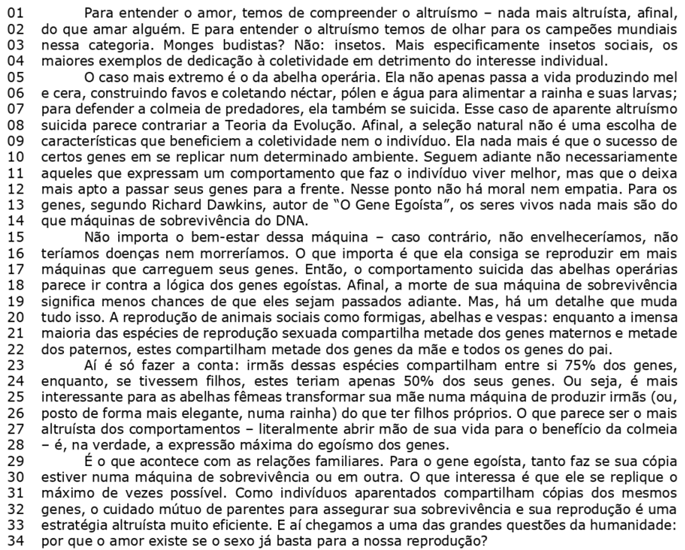
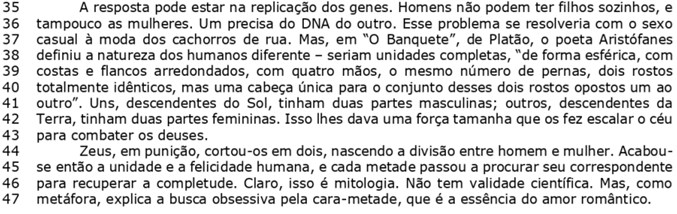
A genética está na raiz do amor
Por Maurício Horta
(Disponível em: https://super.abril.com.br/especiais/a-genetica-do-amor/- texto adaptado especialmente para
esta prova).
Considerando a norma-padrão da Língua Portuguesa, analise as assertivas a seguir:
I. No trecho "[...] mas que o deixa mais apto a passar seus genes para a frente" (l. 11-12), о emprego da próclise (pronome antes do verbo) é uma exigência gramatical imposta pelo pronome relativo "que", que atua como fator de atração.
II. A regência nominal em "os maiores exemplos de dedicação à coletividade" (l. 03-04) exige o acento grave indicativo de crase.
III. No trecho "irmãs dessas espécies compartilham entre si 75% dos genes" (I. 23), se a frase fosse reescrita como "A maioria das irmãs [...]", o verbo "compartilhar" poderia ser flexionado no singular, para concordar com o núcleo do sujeito partitivo.
Quais estão corretas?
I. No trecho "[...] mas que o deixa mais apto a passar seus genes para a frente" (l. 11-12), о emprego da próclise (pronome antes do verbo) é uma exigência gramatical imposta pelo pronome relativo "que", que atua como fator de atração.
II. A regência nominal em "os maiores exemplos de dedicação à coletividade" (l. 03-04) exige o acento grave indicativo de crase.
III. No trecho "irmãs dessas espécies compartilham entre si 75% dos genes" (I. 23), se a frase fosse reescrita como "A maioria das irmãs [...]", o verbo "compartilhar" poderia ser flexionado no singular, para concordar com o núcleo do sujeito partitivo.
Quais estão corretas?
Ano: 2025
Banca:
IBADE
Órgão:
Prefeitura de Castelo - ES
Provas:
IBADE - 2025 - Prefeitura de Castelo - ES - Professor M - Magistério
|
IBADE - 2025 - Prefeitura de Castelo - ES - Professor E - Arte |
IBADE - 2025 - Prefeitura de Castelo - ES - Professor E - Ciências |
IBADE - 2025 - Prefeitura de Castelo - ES - Professor E - Educação Especial |
IBADE - 2025 - Prefeitura de Castelo - ES - Professor E - Educação Física |
IBADE - 2025 - Prefeitura de Castelo - ES - Professor E - Geografia |
IBADE - 2025 - Prefeitura de Castelo - ES - Professor E - História |
IBADE - 2025 - Prefeitura de Castelo - ES - Professor E - Língua Inglesa |
IBADE - 2025 - Prefeitura de Castelo - ES - Professor E - Língua Portuguesa |
IBADE - 2025 - Prefeitura de Castelo - ES - Professor E - Matemática |
IBADE - 2025 - Prefeitura de Castelo - ES - Professor E - Ensino Religioso |
Q3706955
Noções de Informática
Um professor utiliza o Excel 2019 para consolidar os
resultados de atividades realizadas por seus alunos ao
longo de um mês. Em uma das células da planilha, ele
inseriu a fórmula =SOMA(B2:B31), aplicada a uma coluna
de valores.
Considerando esse cenário, qual será o resultado produzido por essa fórmula?
Considerando esse cenário, qual será o resultado produzido por essa fórmula?
Ano: 2025
Banca:
IBADE
Órgão:
Prefeitura de Castelo - ES
Provas:
IBADE - 2025 - Prefeitura de Castelo - ES - Professor M - Magistério
|
IBADE - 2025 - Prefeitura de Castelo - ES - Professor E - Arte |
IBADE - 2025 - Prefeitura de Castelo - ES - Professor E - Ciências |
IBADE - 2025 - Prefeitura de Castelo - ES - Professor E - Educação Especial |
IBADE - 2025 - Prefeitura de Castelo - ES - Professor E - Educação Física |
IBADE - 2025 - Prefeitura de Castelo - ES - Professor E - Geografia |
IBADE - 2025 - Prefeitura de Castelo - ES - Professor E - História |
IBADE - 2025 - Prefeitura de Castelo - ES - Professor E - Língua Inglesa |
IBADE - 2025 - Prefeitura de Castelo - ES - Professor E - Língua Portuguesa |
IBADE - 2025 - Prefeitura de Castelo - ES - Professor E - Matemática |
IBADE - 2025 - Prefeitura de Castelo - ES - Professor E - Ensino Religioso |
Q3706954
Segurança da Informação
Analise as afirmações, relacionadas à segurança da
informação em órgãos públicos e julgue as sentenças
abaixo como VERDADEIRAS (V) ou FALSAS (F).
( ) O princípio da confidencialidade busca assegurar que informações só sejam acessadas por usuários autorizados.
( ) Ataques de phishing caracterizam-se por tentativas de induzir usuários a revelar informações sensíveis.
( ) Um backup diferencial copia apenas os arquivos modificados desde o último backup incremental.
( ) A integridade refere-se à preservação da exatidão e completude da informação.
A sequência correta é:
( ) O princípio da confidencialidade busca assegurar que informações só sejam acessadas por usuários autorizados.
( ) Ataques de phishing caracterizam-se por tentativas de induzir usuários a revelar informações sensíveis.
( ) Um backup diferencial copia apenas os arquivos modificados desde o último backup incremental.
( ) A integridade refere-se à preservação da exatidão e completude da informação.
A sequência correta é:
Ano: 2025
Banca:
IBADE
Órgão:
Prefeitura de Castelo - ES
Provas:
IBADE - 2025 - Prefeitura de Castelo - ES - Professor M - Magistério
|
IBADE - 2025 - Prefeitura de Castelo - ES - Professor E - Arte |
IBADE - 2025 - Prefeitura de Castelo - ES - Professor E - Ciências |
IBADE - 2025 - Prefeitura de Castelo - ES - Professor E - Educação Especial |
IBADE - 2025 - Prefeitura de Castelo - ES - Professor E - Educação Física |
IBADE - 2025 - Prefeitura de Castelo - ES - Professor E - Geografia |
IBADE - 2025 - Prefeitura de Castelo - ES - Professor E - História |
IBADE - 2025 - Prefeitura de Castelo - ES - Professor E - Língua Inglesa |
IBADE - 2025 - Prefeitura de Castelo - ES - Professor E - Língua Portuguesa |
IBADE - 2025 - Prefeitura de Castelo - ES - Professor E - Matemática |
IBADE - 2025 - Prefeitura de Castelo - ES - Professor E - Ensino Religioso |
Q3706953
Noções de Informática
Em uma auditoria, foi necessário explicar a diferença entre
os componentes físicos de um computador e os programas
que nele são executados. A compreensão dessa distinção é
essencial para avaliar custos de manutenção e
licenciamento.
Nesse contexto, assinale a alternativa correta.
Nesse contexto, assinale a alternativa correta.
Ano: 2025
Banca:
IBADE
Órgão:
Prefeitura de Castelo - ES
Provas:
IBADE - 2025 - Prefeitura de Castelo - ES - Professor M - Magistério
|
IBADE - 2025 - Prefeitura de Castelo - ES - Professor E - Arte |
IBADE - 2025 - Prefeitura de Castelo - ES - Professor E - Ciências |
IBADE - 2025 - Prefeitura de Castelo - ES - Professor E - Educação Especial |
IBADE - 2025 - Prefeitura de Castelo - ES - Professor E - Educação Física |
IBADE - 2025 - Prefeitura de Castelo - ES - Professor E - Geografia |
IBADE - 2025 - Prefeitura de Castelo - ES - Professor E - História |
IBADE - 2025 - Prefeitura de Castelo - ES - Professor E - Língua Inglesa |
IBADE - 2025 - Prefeitura de Castelo - ES - Professor E - Língua Portuguesa |
IBADE - 2025 - Prefeitura de Castelo - ES - Professor E - Matemática |
IBADE - 2025 - Prefeitura de Castelo - ES - Professor E - Ensino Religioso |
Q3706952
Redes de Computadores
Em um projeto de modernização da infraestrutura de rede
de um órgão público, o servidor precisa identificar
corretamente os equipamentos que desempenham
funções distintas em camadas do modelo OSI. O
conhecimento adequado desses dispositivos é
fundamental para evitar gargalos de comunicação,
vulnerabilidades de segurança e falhas de integração entre
redes cabeadas e sem fio.
Considerando esse cenário, assinale a alternativa INCORRETA sobre os equipamentos de interconexão.
Considerando esse cenário, assinale a alternativa INCORRETA sobre os equipamentos de interconexão.
Ano: 2025
Banca:
IBADE
Órgão:
Prefeitura de Castelo - ES
Provas:
IBADE - 2025 - Prefeitura de Castelo - ES - Professor M - Magistério
|
IBADE - 2025 - Prefeitura de Castelo - ES - Professor E - Arte |
IBADE - 2025 - Prefeitura de Castelo - ES - Professor E - Ciências |
IBADE - 2025 - Prefeitura de Castelo - ES - Professor E - Educação Especial |
IBADE - 2025 - Prefeitura de Castelo - ES - Professor E - Educação Física |
IBADE - 2025 - Prefeitura de Castelo - ES - Professor E - Geografia |
IBADE - 2025 - Prefeitura de Castelo - ES - Professor E - História |
IBADE - 2025 - Prefeitura de Castelo - ES - Professor E - Língua Inglesa |
IBADE - 2025 - Prefeitura de Castelo - ES - Professor E - Língua Portuguesa |
IBADE - 2025 - Prefeitura de Castelo - ES - Professor E - Matemática |
IBADE - 2025 - Prefeitura de Castelo - ES - Professor E - Ensino Religioso |
Q3706951
Noções de Informática
Um usuário relatou lentidão ao abrir várias guias no Firefox
atualizado. Para mitigar o problema, sugeriu-se utilizar o
recurso “Suspensão de guias inativas”.
Qual é a função principal desse recurso?
Qual é a função principal desse recurso?
Ano: 2025
Banca:
IBADE
Órgão:
Prefeitura de Castelo - ES
Provas:
IBADE - 2025 - Prefeitura de Castelo - ES - Professor M - Magistério
|
IBADE - 2025 - Prefeitura de Castelo - ES - Professor E - Arte |
IBADE - 2025 - Prefeitura de Castelo - ES - Professor E - Ciências |
IBADE - 2025 - Prefeitura de Castelo - ES - Professor E - Educação Especial |
IBADE - 2025 - Prefeitura de Castelo - ES - Professor E - Educação Física |
IBADE - 2025 - Prefeitura de Castelo - ES - Professor E - Geografia |
IBADE - 2025 - Prefeitura de Castelo - ES - Professor E - História |
IBADE - 2025 - Prefeitura de Castelo - ES - Professor E - Língua Inglesa |
IBADE - 2025 - Prefeitura de Castelo - ES - Professor E - Língua Portuguesa |
IBADE - 2025 - Prefeitura de Castelo - ES - Professor E - Matemática |
IBADE - 2025 - Prefeitura de Castelo - ES - Professor E - Ensino Religioso |
Q3706950
Noções de Informática
Leia o excerto abaixo:
Em uma planilha do Excel 2016, o professor deseja que a fórmula mantenha fixa a coluna, mas permita que a linha varie. Para isso, deve utilizar a referência _________.
Preencha a lacuna acima e assinale a alternativa correta.
Em uma planilha do Excel 2016, o professor deseja que a fórmula mantenha fixa a coluna, mas permita que a linha varie. Para isso, deve utilizar a referência _________.
Preencha a lacuna acima e assinale a alternativa correta.
Ano: 2025
Banca:
IBADE
Órgão:
Prefeitura de Castelo - ES
Provas:
IBADE - 2025 - Prefeitura de Castelo - ES - Professor M - Magistério
|
IBADE - 2025 - Prefeitura de Castelo - ES - Professor E - Arte |
IBADE - 2025 - Prefeitura de Castelo - ES - Professor E - Ciências |
IBADE - 2025 - Prefeitura de Castelo - ES - Professor E - Educação Especial |
IBADE - 2025 - Prefeitura de Castelo - ES - Professor E - Educação Física |
IBADE - 2025 - Prefeitura de Castelo - ES - Professor E - Geografia |
IBADE - 2025 - Prefeitura de Castelo - ES - Professor E - História |
IBADE - 2025 - Prefeitura de Castelo - ES - Professor E - Língua Inglesa |
IBADE - 2025 - Prefeitura de Castelo - ES - Professor E - Língua Portuguesa |
IBADE - 2025 - Prefeitura de Castelo - ES - Professor E - Matemática |
IBADE - 2025 - Prefeitura de Castelo - ES - Professor E - Ensino Religioso |
Q3706949
Noções de Informática
Durante a elaboração de um relatório no Word 2019 em
português, a professora optou por utilizar o recurso
“Estilos”.
Qual é a vantagem prática dessa escolha?
Qual é a vantagem prática dessa escolha?
Ano: 2025
Banca:
IBADE
Órgão:
Prefeitura de Castelo - ES
Provas:
IBADE - 2025 - Prefeitura de Castelo - ES - Professor M - Magistério
|
IBADE - 2025 - Prefeitura de Castelo - ES - Professor E - Arte |
IBADE - 2025 - Prefeitura de Castelo - ES - Professor E - Ciências |
IBADE - 2025 - Prefeitura de Castelo - ES - Professor E - Educação Especial |
IBADE - 2025 - Prefeitura de Castelo - ES - Professor E - Educação Física |
IBADE - 2025 - Prefeitura de Castelo - ES - Professor E - Geografia |
IBADE - 2025 - Prefeitura de Castelo - ES - Professor E - História |
IBADE - 2025 - Prefeitura de Castelo - ES - Professor E - Língua Inglesa |
IBADE - 2025 - Prefeitura de Castelo - ES - Professor E - Língua Portuguesa |
IBADE - 2025 - Prefeitura de Castelo - ES - Professor E - Matemática |
IBADE - 2025 - Prefeitura de Castelo - ES - Professor E - Ensino Religioso |
Q3706948
Noções de Informática
Um professor precisa decidir entre utilizar o LibreOffice
24.5.3 e o Microsoft Office 365 para redigir relatórios e
compartilhar documentos com colegas por meio da
nuvem.
Qual fator diferencia as duas suítes?
Qual fator diferencia as duas suítes?
Ano: 2025
Banca:
IBADE
Órgão:
Prefeitura de Castelo - ES
Provas:
IBADE - 2025 - Prefeitura de Castelo - ES - Professor M - Magistério
|
IBADE - 2025 - Prefeitura de Castelo - ES - Professor E - Arte |
IBADE - 2025 - Prefeitura de Castelo - ES - Professor E - Ciências |
IBADE - 2025 - Prefeitura de Castelo - ES - Professor E - Educação Especial |
IBADE - 2025 - Prefeitura de Castelo - ES - Professor E - Educação Física |
IBADE - 2025 - Prefeitura de Castelo - ES - Professor E - Geografia |
IBADE - 2025 - Prefeitura de Castelo - ES - Professor E - História |
IBADE - 2025 - Prefeitura de Castelo - ES - Professor E - Língua Inglesa |
IBADE - 2025 - Prefeitura de Castelo - ES - Professor E - Língua Portuguesa |
IBADE - 2025 - Prefeitura de Castelo - ES - Professor E - Matemática |
IBADE - 2025 - Prefeitura de Castelo - ES - Professor E - Ensino Religioso |
Q3706947
Noções de Informática
Analise as afirmações sobre serviços de colaboração
online. Julgue as sentenças abaixo como VERDADEIRAS (V)
ou FALSAS (F).
( ) O webmail permite acesso ao correio eletrônico por navegador, sem necessidade de cliente dedicado.
( ) Fóruns e grupos de discussão são ferramentas síncronas de colaboração em tempo real.
( ) Wikis permitem edição colaborativa e registro de histórico de alterações.
( ) Redes sociais corporativas podem integrar-se a intranets.
A sequência correta é:
( ) O webmail permite acesso ao correio eletrônico por navegador, sem necessidade de cliente dedicado.
( ) Fóruns e grupos de discussão são ferramentas síncronas de colaboração em tempo real.
( ) Wikis permitem edição colaborativa e registro de histórico de alterações.
( ) Redes sociais corporativas podem integrar-se a intranets.
A sequência correta é:
Ano: 2025
Banca:
IBADE
Órgão:
Prefeitura de Castelo - ES
Provas:
IBADE - 2025 - Prefeitura de Castelo - ES - Professor M - Magistério
|
IBADE - 2025 - Prefeitura de Castelo - ES - Professor E - Arte |
IBADE - 2025 - Prefeitura de Castelo - ES - Professor E - Ciências |
IBADE - 2025 - Prefeitura de Castelo - ES - Professor E - Educação Especial |
IBADE - 2025 - Prefeitura de Castelo - ES - Professor E - Educação Física |
IBADE - 2025 - Prefeitura de Castelo - ES - Professor E - Geografia |
IBADE - 2025 - Prefeitura de Castelo - ES - Professor E - História |
IBADE - 2025 - Prefeitura de Castelo - ES - Professor E - Língua Inglesa |
IBADE - 2025 - Prefeitura de Castelo - ES - Professor E - Língua Portuguesa |
IBADE - 2025 - Prefeitura de Castelo - ES - Professor E - Matemática |
IBADE - 2025 - Prefeitura de Castelo - ES - Professor E - Ensino Religioso |
Q3706946
Noções de Informática
Uma professora precisa classificar diferentes softwares
utilizados em sua escola. Associe a Coluna A (softwares) à
Coluna B (categorias).
Coluna A
1. LibreOffice Writer
2. Ubuntu Linux
3. CCleaner
4. Microsoft Edge
Coluna B
( ) Software aplicativo
( ) Sistema operacional
( ) Software utilitário
( ) Navegador de internet
A sequência correta da Coluna B é:
Coluna A
1. LibreOffice Writer
2. Ubuntu Linux
3. CCleaner
4. Microsoft Edge
Coluna B
( ) Software aplicativo
( ) Sistema operacional
( ) Software utilitário
( ) Navegador de internet
A sequência correta da Coluna B é:

 Conheça nossos planos