Selecionar segmento
Estude com questões de diferentes segmentos
Atenção: Isso limpará todos os campos já preenchidos no filtro!
Foram encontradas 121.124 questões
Resolva questões gratuitamente!
Junte-se a mais de 4 milhões de concurseiros!


Ano: 2026
Banca:
FGV
Órgão:
Prefeitura de São José dos Campos - SP
Prova:
FGV - 2026 - Prefeitura de São José dos Campos - SP - Professor II - Português |
Q3998906
Português
Texto associado
ATENÇÃO: use o trecho abaixo, do famoso romance Dom
Casmurro, de Machado de Assis, que narra o dia do casamento
de Bentinho e Capitu, para responder à próxima questão.
“Pois sejamos felizes de uma vez, antes que o leitor pegue em
si, morto de esperar, e vá espairecer a outra parte; casemo-nos.
Foi em 1865, uma tarde de março, por sinal chovia. Quando
chegamos ao alto da Tijuca, onde era o nosso ninho de noivos, o
céu recolheu a chuva e acendeu as estrelas, não só as já
conhecidas, mas ainda as que só serão descobertas daqui a muitos
séculos. Foi grande fineza e não foi única. São Pedro, que tem as
chaves do céu, abriu-nos as portas dele, fez-nos entrar, e depois
de tocar-nos com o báculo, recitou alguns versículos da sua
primeira epístola: “As mulheres sejam sujeitas a seus maridos...
Não seja o adorno delas o enfeite dos cabelos riçados ou as rendas
de ouro, mas o homem que está escondido no coração... Do
mesmo modo, vós, maridos, coabitai com elas, tratando-as com
honra, como a vasos mais fracos, e herdeiras convosco da graça da
vida...” Em seguida, fez sinal aos anjos, e eles entoaram um trecho
do Cântico, tão concertadamente, que desmentiram a hipótese do
tenor italiano, se a execução fosse na terra; mas era no céu. A
música ia com o texto, como se houvessem nascido juntos, à
maneira de uma ópera de Wagner. Depois, visitamos uma parte
daquele lugar infinito. Descansa que não farei descrição alguma, nem a língua humana possui formas idôneas para tanto.”
O segmento “Pois sejamos felizes de uma vez, antes que o leitor
pegue em si, morto de esperar, e vá espairecer a outra parte;
casemo-nos.” indica algo sobre a estrutura narrativa do texto.
Podemos afirmar que o narrador do romance é
Ano: 2026
Banca:
FGV
Órgão:
Prefeitura de São José dos Campos - SP
Prova:
FGV - 2026 - Prefeitura de São José dos Campos - SP - Professor II - Português |
Q3998905
Português
Texto associado
ATENÇÃO: use o trecho abaixo, do famoso romance Dom
Casmurro, de Machado de Assis, que narra o dia do casamento
de Bentinho e Capitu, para responder à próxima questão.
“Pois sejamos felizes de uma vez, antes que o leitor pegue em
si, morto de esperar, e vá espairecer a outra parte; casemo-nos.
Foi em 1865, uma tarde de março, por sinal chovia. Quando
chegamos ao alto da Tijuca, onde era o nosso ninho de noivos, o
céu recolheu a chuva e acendeu as estrelas, não só as já
conhecidas, mas ainda as que só serão descobertas daqui a muitos
séculos. Foi grande fineza e não foi única. São Pedro, que tem as
chaves do céu, abriu-nos as portas dele, fez-nos entrar, e depois
de tocar-nos com o báculo, recitou alguns versículos da sua
primeira epístola: “As mulheres sejam sujeitas a seus maridos...
Não seja o adorno delas o enfeite dos cabelos riçados ou as rendas
de ouro, mas o homem que está escondido no coração... Do
mesmo modo, vós, maridos, coabitai com elas, tratando-as com
honra, como a vasos mais fracos, e herdeiras convosco da graça da
vida...” Em seguida, fez sinal aos anjos, e eles entoaram um trecho
do Cântico, tão concertadamente, que desmentiram a hipótese do
tenor italiano, se a execução fosse na terra; mas era no céu. A
música ia com o texto, como se houvessem nascido juntos, à
maneira de uma ópera de Wagner. Depois, visitamos uma parte
daquele lugar infinito. Descansa que não farei descrição alguma, nem a língua humana possui formas idôneas para tanto.”
No trecho “Pois sejamos felizes de uma vez, antes que o leitor
pegue em si, morto de esperar, e vá espairecer a outra parte;
casemo-nos.”, há uma alusão indireta a um tipo de leitor, que é o
leitor
Ano: 2026
Banca:
FGV
Órgão:
Prefeitura de São José dos Campos - SP
Prova:
FGV - 2026 - Prefeitura de São José dos Campos - SP - Professor II - Matemática |
Q3998759
Matemática Financeira
Você compra um produto cujo valor à vista é de R$ 360,00 e paga
em duas prestações iguais de R$ 216,00 cada uma, sendo a
primeira no ato da compra e a segunda um mês após.
A taxa de juros compostos mensais que você pagou é de
A taxa de juros compostos mensais que você pagou é de
Ano: 2026
Banca:
FGV
Órgão:
Prefeitura de São José dos Campos - SP
Prova:
FGV - 2026 - Prefeitura de São José dos Campos - SP - Professor II - Matemática |
Q3998758
Matemática
Sabe-se que a amostra de medidas inteiras (3, 6, 4, 6, X, 3, 10) tem
moda única e a média é maior do que a mediana.
A soma da média com a mediana é
A soma da média com a mediana é
Ano: 2026
Banca:
FGV
Órgão:
Prefeitura de São José dos Campos - SP
Prova:
FGV - 2026 - Prefeitura de São José dos Campos - SP - Professor II - Matemática |
Q3998757
Matemática
Seja f a função real de variável real tal que
f(x) = −2x2 + 2x + 12.
A área da região do primeiro quadrante que fica abaixo do gráfico de f e acima do eixo-x é
f(x) = −2x2 + 2x + 12.
A área da região do primeiro quadrante que fica abaixo do gráfico de f e acima do eixo-x é
Ano: 2026
Banca:
FGV
Órgão:
Prefeitura de São José dos Campos - SP
Prova:
FGV - 2026 - Prefeitura de São José dos Campos - SP - Professor II - Matemática |
Q3998754
Matemática
Considere os anagramas da palavra ARIRANHA.
O número desses anagramas que não possuem vogais juntas é
Ano: 2026
Banca:
FGV
Órgão:
Prefeitura de São José dos Campos - SP
Prova:
FGV - 2026 - Prefeitura de São José dos Campos - SP - Professor II - Matemática |
Q3998744
Matemática
Os números reais x e y são tais que x2 + y2 = 6x + 2y.
O maior valor possível de x é
Ano: 2026
Banca:
FGV
Órgão:
Prefeitura de São José dos Campos - SP
Prova:
FGV - 2026 - Prefeitura de São José dos Campos - SP - Professor II - Matemática |
Q3998743
Matemática
O conjunto C = {11, 13, 17, 19, 23, 25, ..., 95, 97} é formado pelos
números naturais de dois algarismos que não são múltiplos nem
de 2 e nem de 3.
A soma dos elementos de C é
A soma dos elementos de C é
Ano: 2026
Banca:
FGV
Órgão:
Prefeitura de São José dos Campos - SP
Prova:
FGV - 2026 - Prefeitura de São José dos Campos - SP - Professor II - Matemática |
Q3998739
Matemática
Uma escola possui 2 professores de matemática, 3 professores de
português e 4 professores de ciências. Dois desses professores são
escolhidos por sorteio.
A probabilidade de que os dois professores sorteados sejam da mesma matéria é
A probabilidade de que os dois professores sorteados sejam da mesma matéria é
Ano: 2026
Banca:
FGV
Órgão:
Prefeitura de São José dos Campos - SP
Prova:
FGV - 2026 - Prefeitura de São José dos Campos - SP - Professor II - Matemática |
Q3998736
Matemática
O desenho abaixo representa uma operação de adição entre
quatro números naturais: A, AB, ABC e ABCD. Cada letra
representa um algarismo, letras diferentes representam
algarismos diferentes e A ≠ 0.
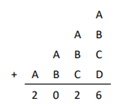
O valor de B ‒ C + D ‒ A é:
O valor de B ‒ C + D ‒ A é:
Ano: 2026
Banca:
FGV
Órgão:
Prefeitura de São José dos Campos - SP
Prova:
FGV - 2026 - Prefeitura de São José dos Campos - SP - Professor II - Matemática |
Q3998732
Matemática
A figura a seguir mostra um quadrado e um pentágono regular com o lado AB em comum.
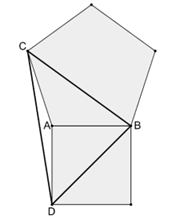
O ângulo DCB mede
Ano: 2026
Banca:
FGV
Órgão:
Prefeitura de São José dos Campos - SP
Prova:
FGV - 2026 - Prefeitura de São José dos Campos - SP - Professor II - Inglês |
Q3998594
Inglês
Texto associado
Read Text V and answer the question that follows.
Text V
Structural and pedagogical problems
hinder the use of technology
Three out of four teachers in Brazil show support for the use
of artificial intelligence (AI) as a teaching tool. They also say that
the technology has impacted education both positively, with faster
access to information, and negatively, as students lose their focus.
The data can be found in an unprecedented survey by Semesp
Institute, an organization that represents higher education
providers. The study was carried out between March 18 and 31
with 444 public and private school teachers from kindergarten to
high school located in all regions of Brazil.
In the study, 74.8 percent of respondents partially or totally
agree with the use of artificial intelligence in teaching. Despite this,
just over a third (39.2%) of them said they always use it as a
teaching tool.
Even though educators believe it is important to use AI, they
also report structural and pedagogical problems that prevent or
hinder its employment. Further issues were reported in
connection with its excessive use, especially by pupils. Among
these problems are the lack of internet at school, the lack of
training for teachers and also greater difficulty in holding students’
attention.
“I sense students have become more dependent on research
tools and immediate answers and have a hard time having
resilience and patience and acting as problem solvers,” an
anonymous teacher who took part in the survey said.
Another one said: “Technology has advanced, but sometimes
access to it at school is not satisfactory. Poor internet connection.
The computer lab is a restricted space. No Microsoft Office in the
mobile lab. The use of cell phones is impractical as students have
no internet. Now, even the internet is restricted to teachers.”
Just under half of the teachers (45.7%) declared that both
teachers and students have access to computers and the internet
where they teach. Another seven percent answered there is still
no access to technology in their schools.
Teachers also report that technology has made students lose
their focus. “The school can’t keep up with the use of new technologies at the speed that the students can, which leads to a
mismatch between the lesson taught and the lesson that the
students want. The unbridled use of social media and the high level
of exposure of young people to these networks have undermined
teachers’ contact with students,” one of the teachers stated.
From: https://agenciabrasil.ebc.com.br/en/educacao/noticia/2024-05/three-outfour-teachers-brazil-advocate-ai-teaching-tool
The key goal of integrating technology into the Brazilian National
Curriculum is to:
Ano: 2026
Banca:
FGV
Órgão:
Prefeitura de São José dos Campos - SP
Prova:
FGV - 2026 - Prefeitura de São José dos Campos - SP - Professor II - Inglês |
Q3998593
Pedagogia
Texto associado
Read Text V and answer the question that follows.
Text V
Structural and pedagogical problems
hinder the use of technology
Three out of four teachers in Brazil show support for the use
of artificial intelligence (AI) as a teaching tool. They also say that
the technology has impacted education both positively, with faster
access to information, and negatively, as students lose their focus.
The data can be found in an unprecedented survey by Semesp
Institute, an organization that represents higher education
providers. The study was carried out between March 18 and 31
with 444 public and private school teachers from kindergarten to
high school located in all regions of Brazil.
In the study, 74.8 percent of respondents partially or totally
agree with the use of artificial intelligence in teaching. Despite this,
just over a third (39.2%) of them said they always use it as a
teaching tool.
Even though educators believe it is important to use AI, they
also report structural and pedagogical problems that prevent or
hinder its employment. Further issues were reported in
connection with its excessive use, especially by pupils. Among
these problems are the lack of internet at school, the lack of
training for teachers and also greater difficulty in holding students’
attention.
“I sense students have become more dependent on research
tools and immediate answers and have a hard time having
resilience and patience and acting as problem solvers,” an
anonymous teacher who took part in the survey said.
Another one said: “Technology has advanced, but sometimes
access to it at school is not satisfactory. Poor internet connection.
The computer lab is a restricted space. No Microsoft Office in the
mobile lab. The use of cell phones is impractical as students have
no internet. Now, even the internet is restricted to teachers.”
Just under half of the teachers (45.7%) declared that both
teachers and students have access to computers and the internet
where they teach. Another seven percent answered there is still
no access to technology in their schools.
Teachers also report that technology has made students lose
their focus. “The school can’t keep up with the use of new technologies at the speed that the students can, which leads to a
mismatch between the lesson taught and the lesson that the
students want. The unbridled use of social media and the high level
of exposure of young people to these networks have undermined
teachers’ contact with students,” one of the teachers stated.
From: https://agenciabrasil.ebc.com.br/en/educacao/noticia/2024-05/three-outfour-teachers-brazil-advocate-ai-teaching-tool
The Brazilian National Curriculum (BNCC) proposes that
technology and digital skills should be:
Ano: 2026
Banca:
FGV
Órgão:
Prefeitura de São José dos Campos - SP
Prova:
FGV - 2026 - Prefeitura de São José dos Campos - SP - Professor II - Inglês |
Q3998592
Inglês
Texto associado
Read Text V and answer the question that follows.
Text V
Structural and pedagogical problems
hinder the use of technology
Three out of four teachers in Brazil show support for the use
of artificial intelligence (AI) as a teaching tool. They also say that
the technology has impacted education both positively, with faster
access to information, and negatively, as students lose their focus.
The data can be found in an unprecedented survey by Semesp
Institute, an organization that represents higher education
providers. The study was carried out between March 18 and 31
with 444 public and private school teachers from kindergarten to
high school located in all regions of Brazil.
In the study, 74.8 percent of respondents partially or totally
agree with the use of artificial intelligence in teaching. Despite this,
just over a third (39.2%) of them said they always use it as a
teaching tool.
Even though educators believe it is important to use AI, they
also report structural and pedagogical problems that prevent or
hinder its employment. Further issues were reported in
connection with its excessive use, especially by pupils. Among
these problems are the lack of internet at school, the lack of
training for teachers and also greater difficulty in holding students’
attention.
“I sense students have become more dependent on research
tools and immediate answers and have a hard time having
resilience and patience and acting as problem solvers,” an
anonymous teacher who took part in the survey said.
Another one said: “Technology has advanced, but sometimes
access to it at school is not satisfactory. Poor internet connection.
The computer lab is a restricted space. No Microsoft Office in the
mobile lab. The use of cell phones is impractical as students have
no internet. Now, even the internet is restricted to teachers.”
Just under half of the teachers (45.7%) declared that both
teachers and students have access to computers and the internet
where they teach. Another seven percent answered there is still
no access to technology in their schools.
Teachers also report that technology has made students lose
their focus. “The school can’t keep up with the use of new technologies at the speed that the students can, which leads to a
mismatch between the lesson taught and the lesson that the
students want. The unbridled use of social media and the high level
of exposure of young people to these networks have undermined
teachers’ contact with students,” one of the teachers stated.
From: https://agenciabrasil.ebc.com.br/en/educacao/noticia/2024-05/three-outfour-teachers-brazil-advocate-ai-teaching-tool
The text concludes that uncontrolled exposure to social media has
shown to be:
Ano: 2026
Banca:
FGV
Órgão:
Prefeitura de São José dos Campos - SP
Prova:
FGV - 2026 - Prefeitura de São José dos Campos - SP - Professor II - Inglês |
Q3998591
Inglês
Texto associado
Read Text V and answer the question that follows.
Text V
Structural and pedagogical problems
hinder the use of technology
Three out of four teachers in Brazil show support for the use
of artificial intelligence (AI) as a teaching tool. They also say that
the technology has impacted education both positively, with faster
access to information, and negatively, as students lose their focus.
The data can be found in an unprecedented survey by Semesp
Institute, an organization that represents higher education
providers. The study was carried out between March 18 and 31
with 444 public and private school teachers from kindergarten to
high school located in all regions of Brazil.
In the study, 74.8 percent of respondents partially or totally
agree with the use of artificial intelligence in teaching. Despite this,
just over a third (39.2%) of them said they always use it as a
teaching tool.
Even though educators believe it is important to use AI, they
also report structural and pedagogical problems that prevent or
hinder its employment. Further issues were reported in
connection with its excessive use, especially by pupils. Among
these problems are the lack of internet at school, the lack of
training for teachers and also greater difficulty in holding students’
attention.
“I sense students have become more dependent on research
tools and immediate answers and have a hard time having
resilience and patience and acting as problem solvers,” an
anonymous teacher who took part in the survey said.
Another one said: “Technology has advanced, but sometimes
access to it at school is not satisfactory. Poor internet connection.
The computer lab is a restricted space. No Microsoft Office in the
mobile lab. The use of cell phones is impractical as students have
no internet. Now, even the internet is restricted to teachers.”
Just under half of the teachers (45.7%) declared that both
teachers and students have access to computers and the internet
where they teach. Another seven percent answered there is still
no access to technology in their schools.
Teachers also report that technology has made students lose
their focus. “The school can’t keep up with the use of new technologies at the speed that the students can, which leads to a
mismatch between the lesson taught and the lesson that the
students want. The unbridled use of social media and the high level
of exposure of young people to these networks have undermined
teachers’ contact with students,” one of the teachers stated.
From: https://agenciabrasil.ebc.com.br/en/educacao/noticia/2024-05/three-outfour-teachers-brazil-advocate-ai-teaching-tool
“Despite this” (2nd paragraph) is close in meaning to:
Ano: 2026
Banca:
FGV
Órgão:
Prefeitura de São José dos Campos - SP
Prova:
FGV - 2026 - Prefeitura de São José dos Campos - SP - Professor II - Inglês |
Q3998590
Inglês
Texto associado
Read Text V and answer the question that follows.
Text V
Structural and pedagogical problems
hinder the use of technology
Three out of four teachers in Brazil show support for the use
of artificial intelligence (AI) as a teaching tool. They also say that
the technology has impacted education both positively, with faster
access to information, and negatively, as students lose their focus.
The data can be found in an unprecedented survey by Semesp
Institute, an organization that represents higher education
providers. The study was carried out between March 18 and 31
with 444 public and private school teachers from kindergarten to
high school located in all regions of Brazil.
In the study, 74.8 percent of respondents partially or totally
agree with the use of artificial intelligence in teaching. Despite this,
just over a third (39.2%) of them said they always use it as a
teaching tool.
Even though educators believe it is important to use AI, they
also report structural and pedagogical problems that prevent or
hinder its employment. Further issues were reported in
connection with its excessive use, especially by pupils. Among
these problems are the lack of internet at school, the lack of
training for teachers and also greater difficulty in holding students’
attention.
“I sense students have become more dependent on research
tools and immediate answers and have a hard time having
resilience and patience and acting as problem solvers,” an
anonymous teacher who took part in the survey said.
Another one said: “Technology has advanced, but sometimes
access to it at school is not satisfactory. Poor internet connection.
The computer lab is a restricted space. No Microsoft Office in the
mobile lab. The use of cell phones is impractical as students have
no internet. Now, even the internet is restricted to teachers.”
Just under half of the teachers (45.7%) declared that both
teachers and students have access to computers and the internet
where they teach. Another seven percent answered there is still
no access to technology in their schools.
Teachers also report that technology has made students lose
their focus. “The school can’t keep up with the use of new technologies at the speed that the students can, which leads to a
mismatch between the lesson taught and the lesson that the
students want. The unbridled use of social media and the high level
of exposure of young people to these networks have undermined
teachers’ contact with students,” one of the teachers stated.
From: https://agenciabrasil.ebc.com.br/en/educacao/noticia/2024-05/three-outfour-teachers-brazil-advocate-ai-teaching-tool
The opposite of “faster access” (1st paragraph) is:
Ano: 2026
Banca:
FGV
Órgão:
Prefeitura de São José dos Campos - SP
Prova:
FGV - 2026 - Prefeitura de São José dos Campos - SP - Professor II - Inglês |
Q3998589
Inglês
Texto associado
Read Text V and answer the question that follows.
Text V
Structural and pedagogical problems
hinder the use of technology
Three out of four teachers in Brazil show support for the use
of artificial intelligence (AI) as a teaching tool. They also say that
the technology has impacted education both positively, with faster
access to information, and negatively, as students lose their focus.
The data can be found in an unprecedented survey by Semesp
Institute, an organization that represents higher education
providers. The study was carried out between March 18 and 31
with 444 public and private school teachers from kindergarten to
high school located in all regions of Brazil.
In the study, 74.8 percent of respondents partially or totally
agree with the use of artificial intelligence in teaching. Despite this,
just over a third (39.2%) of them said they always use it as a
teaching tool.
Even though educators believe it is important to use AI, they
also report structural and pedagogical problems that prevent or
hinder its employment. Further issues were reported in
connection with its excessive use, especially by pupils. Among
these problems are the lack of internet at school, the lack of
training for teachers and also greater difficulty in holding students’
attention.
“I sense students have become more dependent on research
tools and immediate answers and have a hard time having
resilience and patience and acting as problem solvers,” an
anonymous teacher who took part in the survey said.
Another one said: “Technology has advanced, but sometimes
access to it at school is not satisfactory. Poor internet connection.
The computer lab is a restricted space. No Microsoft Office in the
mobile lab. The use of cell phones is impractical as students have
no internet. Now, even the internet is restricted to teachers.”
Just under half of the teachers (45.7%) declared that both
teachers and students have access to computers and the internet
where they teach. Another seven percent answered there is still
no access to technology in their schools.
Teachers also report that technology has made students lose
their focus. “The school can’t keep up with the use of new technologies at the speed that the students can, which leads to a
mismatch between the lesson taught and the lesson that the
students want. The unbridled use of social media and the high level
of exposure of young people to these networks have undermined
teachers’ contact with students,” one of the teachers stated.
From: https://agenciabrasil.ebc.com.br/en/educacao/noticia/2024-05/three-outfour-teachers-brazil-advocate-ai-teaching-tool
Regarding the use of technology in education, the title refers to
issues that:
Ano: 2026
Banca:
FGV
Órgão:
Prefeitura de São José dos Campos - SP
Prova:
FGV - 2026 - Prefeitura de São José dos Campos - SP - Professor II - Inglês |
Q3998581
Inglês
Texto associado
Read Text II and answer the following question.
Text II
They were nearly born on a bus, Estha and Rahel. The car in
which Babà, their father, was taking Ammu, their mother, to
hospital in Shillong to have them, broke down on the winding teaestate road in Assam. They abandoned the car and flagged down a
crowded State Transport bus. With the queer compassion of the
very poor for the comparatively well off, or perhaps only because
they saw how hugely pregnant Ammu was, seated passengers
made room for the couple, and for the rest of the journey Estha
and Rahel’s father had to hold their mother’s stomach (with them
in it) to prevent it from wobbling. That was before they were
divorced and Ammu came back to live in Kerala.
According to Estha, if they’d been born on the bus, they’d have
got free bus rides for the rest of their lives. It wasn’t clear where
he’d got this information from, or how he knew these things, but
for years the twins harbored a faint resentment against their
parents for having diddled them out of a lifetime of free bus rides.
From: https://www.penguinrandomhouse.ca/books/158400/the-god-of-smallthings-by-arundhati-roy/9780735273283/excerpt
The verb phrase in “where he’d got this information from” (2nd
paragraph) is in the:
Ano: 2026
Banca:
FGV
Órgão:
Prefeitura de São José dos Campos - SP
Prova:
FGV - 2026 - Prefeitura de São José dos Campos - SP - Professor II - Inglês |
Q3998580
Inglês
Texto associado
Read Text II and answer the following question.
Text II
They were nearly born on a bus, Estha and Rahel. The car in
which Babà, their father, was taking Ammu, their mother, to
hospital in Shillong to have them, broke down on the winding teaestate road in Assam. They abandoned the car and flagged down a
crowded State Transport bus. With the queer compassion of the
very poor for the comparatively well off, or perhaps only because
they saw how hugely pregnant Ammu was, seated passengers
made room for the couple, and for the rest of the journey Estha
and Rahel’s father had to hold their mother’s stomach (with them
in it) to prevent it from wobbling. That was before they were
divorced and Ammu came back to live in Kerala.
According to Estha, if they’d been born on the bus, they’d have
got free bus rides for the rest of their lives. It wasn’t clear where
he’d got this information from, or how he knew these things, but
for years the twins harbored a faint resentment against their
parents for having diddled them out of a lifetime of free bus rides.
From: https://www.penguinrandomhouse.ca/books/158400/the-god-of-smallthings-by-arundhati-roy/9780735273283/excerpt
The phrase “the comparatively well off” (1st paragraph) refers to
those who are:
Ano: 2026
Banca:
FGV
Órgão:
Prefeitura de São José dos Campos - SP
Prova:
FGV - 2026 - Prefeitura de São José dos Campos - SP - Professor II - Inglês |
Q3998579
Inglês
Texto associado
Read Text II and answer the following question.
Text II
They were nearly born on a bus, Estha and Rahel. The car in
which Babà, their father, was taking Ammu, their mother, to
hospital in Shillong to have them, broke down on the winding teaestate road in Assam. They abandoned the car and flagged down a
crowded State Transport bus. With the queer compassion of the
very poor for the comparatively well off, or perhaps only because
they saw how hugely pregnant Ammu was, seated passengers
made room for the couple, and for the rest of the journey Estha
and Rahel’s father had to hold their mother’s stomach (with them
in it) to prevent it from wobbling. That was before they were
divorced and Ammu came back to live in Kerala.
According to Estha, if they’d been born on the bus, they’d have
got free bus rides for the rest of their lives. It wasn’t clear where
he’d got this information from, or how he knew these things, but
for years the twins harbored a faint resentment against their
parents for having diddled them out of a lifetime of free bus rides.
From: https://www.penguinrandomhouse.ca/books/158400/the-god-of-smallthings-by-arundhati-roy/9780735273283/excerpt
The pronoun in “They abandoned the car and flagged down a
crowded State Transport bus” (1st paragraph) refers to:
 Conheça nossos planos