Questões de Concurso
Para cesgranrio nível médio
Foram encontradas 18.494 questões
Resolva questões gratuitamente!
Junte-se a mais de 4 milhões de concurseiros!


Ano: 2015
Banca:
CESGRANRIO
Órgão:
Petrobras
Prova:
CESGRANRIO - 2015 - Petrobras - Técnico de Química Júnior |
Q486778
Química
Texto associado
Utilize as informações a seguir para responder a questão.
Os sistemas de refrigeração industrial atualmente utilizados nas indústrias de pescado, laticínios, bebidas, frigoríficos e em
outros setores econômicos baseiam-se na capacidade de algumas substâncias químicas, denominadas agentes refrige-
rantes, absorverem significativa quantidade de calor quando passam do estado líquido para o gasoso.
A amônia é um importante agente refrigerante por apresentar diversas vantagens adicionais, como, por exemplo, a de ser
natural e não agredir a camada de ozônio.
Considere 100 mL de uma solução 0,3 mol.L-1
de amônia que foram diluídos por adição de 50 mL de água destilada. Con-
sidere, também, que a constante de ionização da amônia (Kb) a 25°C é 2 x 10⁻⁵.

Os sistemas de refrigeração industrial atualmente utilizados nas indústrias de pescado, laticínios, bebidas, frigoríficos e em
outros setores econômicos baseiam-se na capacidade de algumas substâncias químicas, denominadas agentes refrige-
rantes, absorverem significativa quantidade de calor quando passam do estado líquido para o gasoso.
A amônia é um importante agente refrigerante por apresentar diversas vantagens adicionais, como, por exemplo, a de ser
natural e não agredir a camada de ozônio.
Considere 100 mL de uma solução 0,3 mol.L-1
de amônia que foram diluídos por adição de 50 mL de água destilada. Con-
sidere, também, que a constante de ionização da amônia (Kb) a 25°C é 2 x 10⁻⁵.
O grau de ionização da amônia nessa temperatura e a concentração hidrogeniônica da solução mais diluída são, respectivamente,
Ano: 2015
Banca:
CESGRANRIO
Órgão:
Petrobras
Prova:
CESGRANRIO - 2015 - Petrobras - Técnico de Química Júnior |
Q486777
Química
Texto associado
Utilize as informações a seguir para responder a questão.
Os sistemas de refrigeração industrial atualmente utilizados nas indústrias de pescado, laticínios, bebidas, frigoríficos e em
outros setores econômicos baseiam-se na capacidade de algumas substâncias químicas, denominadas agentes refrige-
rantes, absorverem significativa quantidade de calor quando passam do estado líquido para o gasoso.
A amônia é um importante agente refrigerante por apresentar diversas vantagens adicionais, como, por exemplo, a de ser
natural e não agredir a camada de ozônio.
Considere 100 mL de uma solução 0,3 mol.L-1
de amônia que foram diluídos por adição de 50 mL de água destilada. Con-
sidere, também, que a constante de ionização da amônia (Kb) a 25°C é 2 x 10⁻⁵.
Os sistemas de refrigeração industrial atualmente utilizados nas indústrias de pescado, laticínios, bebidas, frigoríficos e em
outros setores econômicos baseiam-se na capacidade de algumas substâncias químicas, denominadas agentes refrige-
rantes, absorverem significativa quantidade de calor quando passam do estado líquido para o gasoso.
A amônia é um importante agente refrigerante por apresentar diversas vantagens adicionais, como, por exemplo, a de ser
natural e não agredir a camada de ozônio.
Considere 100 mL de uma solução 0,3 mol.L-1
de amônia que foram diluídos por adição de 50 mL de água destilada. Con-
sidere, também, que a constante de ionização da amônia (Kb) a 25°C é 2 x 10⁻⁵.
O pH da solução preparada é
Ano: 2015
Banca:
CESGRANRIO
Órgão:
Petrobras
Prova:
CESGRANRIO - 2015 - Petrobras - Técnico de Química Júnior |
Q486776
Química
A ranitidina é um medicamento indicado para tratar úlcera no estômago ou no duodeno, refluxo ou azia provocados pelo excesso de ácido no suco gástrico.
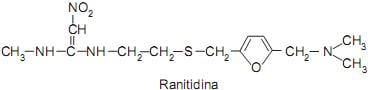
Algumas das funções presentes na molécula da ranitidina são:
Algumas das funções presentes na molécula da ranitidina são:
Ano: 2015
Banca:
CESGRANRIO
Órgão:
Petrobras
Prova:
CESGRANRIO - 2015 - Petrobras - Técnico de Química Júnior |
Q486775
Química
A reação balanceada da combustão completa do etanol nos motores automotivos é
Ano: 2015
Banca:
CESGRANRIO
Órgão:
Petrobras
Prova:
CESGRANRIO - 2015 - Petrobras - Técnico de Química Júnior |
Q486774
Química
Texto associado
Utilize as informações a seguir para responder a questão.
Por serem relativamente instáveis e reativos (por causa
da ligação dupla que tende à saturação), os alcenos
são dificilmente encontrados na natureza. Por isso, são
sintetizados pela quebra (cracking) de alcanos de ca-
deias longas, e sua maior aplicação é na fabricação de
plástico polietileno e borracha sintética.
http://www.infoescola.com/quimica-organica/alcenos/
Acessado em: 09 nov. 2014
A Figura abaixo apresenta três reações nas quais há a
participação de um alceno.

Por serem relativamente instáveis e reativos (por causa
da ligação dupla que tende à saturação), os alcenos
são dificilmente encontrados na natureza. Por isso, são
sintetizados pela quebra (cracking) de alcanos de ca-
deias longas, e sua maior aplicação é na fabricação de
plástico polietileno e borracha sintética.
http://www.infoescola.com/quimica-organica/alcenos/
Acessado em: 09 nov. 2014
A Figura abaixo apresenta três reações nas quais há a
participação de um alceno.
A fórmula estrutural plana do composto F é
Ano: 2015
Banca:
CESGRANRIO
Órgão:
Petrobras
Prova:
CESGRANRIO - 2015 - Petrobras - Técnico de Química Júnior |
Q486773
Química
Texto associado
Utilize as informações a seguir para responder a questão.
Por serem relativamente instáveis e reativos (por causa
da ligação dupla que tende à saturação), os alcenos
são dificilmente encontrados na natureza. Por isso, são
sintetizados pela quebra (cracking) de alcanos de ca-
deias longas, e sua maior aplicação é na fabricação de
plástico polietileno e borracha sintética.
http://www.infoescola.com/quimica-organica/alcenos/
Acessado em: 09 nov. 2014
A Figura abaixo apresenta três reações nas quais há a
participação de um alceno.
Por serem relativamente instáveis e reativos (por causa
da ligação dupla que tende à saturação), os alcenos
são dificilmente encontrados na natureza. Por isso, são
sintetizados pela quebra (cracking) de alcanos de ca-
deias longas, e sua maior aplicação é na fabricação de
plástico polietileno e borracha sintética.
http://www.infoescola.com/quimica-organica/alcenos/
Acessado em: 09 nov. 2014
A Figura abaixo apresenta três reações nas quais há a
participação de um alceno.
Apenas a substância A na primeira reação é um composto orgânico.
A nomenclatura dessa substância é
A nomenclatura dessa substância é
Ano: 2015
Banca:
CESGRANRIO
Órgão:
Petrobras
Prova:
CESGRANRIO - 2015 - Petrobras - Técnico de Química Júnior |
Q486772
Química
Após os processos através dos quais se obtém o petróleo cru, o petróleo é submetido a mais um procedimento para separar as suas diferentes frações.
Esse procedimento consiste na destilação
Esse procedimento consiste na destilação
Ano: 2015
Banca:
CESGRANRIO
Órgão:
Petrobras
Prova:
CESGRANRIO - 2015 - Petrobras - Técnico de Química Júnior |
Q486771
Química
A fórmula estrutural do antidetonante adicionado à gasolina para melhorar o desempenho do automóvel é
Ano: 2015
Banca:
CESGRANRIO
Órgão:
Petrobras
Prova:
CESGRANRIO - 2015 - Petrobras - Técnico de Química Júnior |
Q486770
Química
Quanto mais resistente à compressão do motor for uma gasolina, menor será a sua octanagem, ou índice de octanas, o que poderá prejudicar o funcionamento do motor. Existem meios de se aumentar a octanagem da gasolina; um deles é adicionar antidetonantes, tais como o etanol e o metil-t-butil-éter ou MTBE.
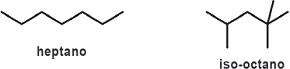
O iso-octano apresenta nomenclatura oficial
O iso-octano apresenta nomenclatura oficial
Ano: 2015
Banca:
CESGRANRIO
Órgão:
Petrobras
Prova:
CESGRANRIO - 2015 - Petrobras - Técnico de Química Júnior |
Q486769
Química
Uma amostra de calcita  que pesa 2,0 g foi precipitada na forma de oxalato de cálcio na dissolução com ácido oxálico, obtendo-se 2,048 g de precipitado.
O teor de carbonato de cálcio na amostra de minério analisada é
que pesa 2,0 g foi precipitada na forma de oxalato de cálcio na dissolução com ácido oxálico, obtendo-se 2,048 g de precipitado. O teor de carbonato de cálcio na amostra de minério analisada é
Ano: 2015
Banca:
CESGRANRIO
Órgão:
Petrobras
Prova:
CESGRANRIO - 2015 - Petrobras - Técnico de Química Júnior |
Q486768
Química
Uma das etapas básicas na fabricação do vidro consiste na reação do carbonato de sódio com o dióxido de silício:

A cor do vidro muitas vezes depende das impurezas de ferro que estão presentes na areia quando o vidro é formado.
Empregando-se 1 tonelada de areia contendo 4% de impurezas em ferro na fabricação do vidro, a quantidade de litros de gás recolhido a 27ºC, considerando que esse processo seja realizado na cidade do Rio de Janeiro, é

A cor do vidro muitas vezes depende das impurezas de ferro que estão presentes na areia quando o vidro é formado.
Empregando-se 1 tonelada de areia
contendo 4% de impurezas em ferro na fabricação do vidro, a quantidade de litros de gás recolhido a 27ºC, considerando que esse processo seja realizado na cidade do Rio de Janeiro, é
Ano: 2015
Banca:
CESGRANRIO
Órgão:
Petrobras
Prova:
CESGRANRIO - 2015 - Petrobras - Técnico de Química Júnior |
Q486767
Química
O vidro é uma das descobertas mais surpreendentes do homem e sua história é cheia de mistérios. Embora os historiadores não disponham de dados precisos sobre sua origem, foram descobertos objetos de vidro nas necrópoles egípcias, por isso, imagina-se que o vidro já era conhecido há pelo menos 4.000 anos antes da Era Cristã, e que fora descoberto de forma casual.
http://www.cebrace.com.br/v2/vidro Acessado em: 08 nov. 2014
Os principais componentes do vidro são
Em ordem crescente de acidez têm-se os óxidos:
http://www.cebrace.com.br/v2/vidro Acessado em: 08 nov. 2014
Os principais componentes do vidro são
Em ordem crescente de acidez têm-se os óxidos:
Ano: 2015
Banca:
CESGRANRIO
Órgão:
Petrobras
Prova:
CESGRANRIO - 2015 - Petrobras - Técnico de Química Júnior |
Q486766
Química
Certo equipamento de laboratório é usado em estudos de química analítica com a finalidade de identificar e determinar a concentração de substâncias, que absorvem energia radiante, através da mensuração e comparação da quantidade de energia radiante absorvida.
O equipamento com essa funcionalidade é o
O equipamento com essa funcionalidade é o
Ano: 2015
Banca:
CESGRANRIO
Órgão:
Banco do Brasil
Prova:
CESGRANRIO - 2015 - Banco do Brasil - Escriturário - 001 |
Q485566
Inglês
Texto associado
Why Millennials Don’t Like Credit Cards
by Holly Johnson
Cheap, easy credit might have been tempting to young people in the past, but not to today’s millennials. According to a recent survey by Bankrate of over 1,161 consumers, 63% of adults ages 18 to 29 live without a credit card of any kind, and another 23% only carry one card.
The Impact of the Great Recession
Research shows that the environment millennials grew up in might have an impact on their finances.
Unlike other generations, millennials lived through economic hardships during a time when their adult lives were beginning. According to the Bureau of Labor Statistics, the Great Recession caused millennials to stray from historic patterns when it comes to purchasing a home and having children, and a fear of credit cards could be another symptom of the economic environment of the times.
And there’s much data when it comes to proving that millennials grew up on shaky economic ground.
The Pew Research Center reports that 36% of millennials lived at home with their parents in 2012. Meanwhile, the unemployment rate for people ages 16 to 24 was 14.2% (more than twice the national rate) in early 2014, according to the BLS. With those figures, it’s no wonder that millennials are skittish when it comes to credit cards. It makes sense that young people would be afraid to take on any new forms of debt.
A Generation Plagued with Student Loan Debt
But the Great Recession isn’t the only reason millennials could be fearful of credit. Many experts believe that the nation’s student loan debt level might be related to it. According to the Institute for College Access & Success, 71% of millennials (or 1.3 million students) who graduated from college in 2012 left school with at least some student loan debt, with the average amount owed around $29,400.
With so much debt already under their belts, millennials are worried about adding any credit card
debt to the pile. After all, many adults with student loan debt need to make payments for years, and even decades.
How Millennials Can Build Credit Without a Credit Card
The fact that millennials are smart enough to avoid credit card debt is a good thing, but that doesn’t mean the decision has its drawbacks. According to Experian, most adults need a positive credit history in order to qualify for an auto loan or mortgage. Even worse, having no credit history is almost as bad as having a negative credit history in some cases.
Still, there are plenty of ways millennials can build a credit history without a credit card. A few tips:
• Make payments on installment loans on time. Whether it’s a car loan, student loan or personal loan, make sure to mail in those payments on time and pay at least the minimum amount required.
• Put at least one household or utility bill in your name. Paying your utility or household bills on time can help you build a positive credit history.
• Get a secured credit card. Unlike traditional credit cards, the funds secured credit cards offer are backed by money the user deposits.
Signing up for a secured card is one way to build a positive credit history without any risk.
The fact that millennials are leery of credit cards is probably a good thing in the long run. After all, not having a credit card is the perfect way to stay out of credit card debt. Even though it might be harder to build a credit history without credit cards, the vast majority of millennials have decided that the plastic just isn’t worth it.
Available at: <http://money.usnews.com/money/blogs/ my-money/2014/11/04/why-millennials-dont-like-credit-cards>
The sentence of the text “With so much debt already under their belts, millennials are worried about adding any credit card debt to the pile” conveys the idea that millenials have
In the sentence of the text “Still, there are plenty of ways millennials can build a credit history without a credit card” (lines 52 – 53), the quantifier plenty of can be replaced, with no change in meaning, by
Ano: 2015
Banca:
CESGRANRIO
Órgão:
Banco do Brasil
Prova:
CESGRANRIO - 2015 - Banco do Brasil - Escriturário - 001 |
Q485565
Inglês
Texto associado
Why Millennials Don’t Like Credit Cards
by Holly Johnson
Cheap, easy credit might have been tempting to young people in the past, but not to today’s millennials. According to a recent survey by Bankrate of over 1,161 consumers, 63% of adults ages 18 to 29 live without a credit card of any kind, and another 23% only carry one card.
The Impact of the Great Recession
Research shows that the environment millennials grew up in might have an impact on their finances.
Unlike other generations, millennials lived through economic hardships during a time when their adult lives were beginning. According to the Bureau of Labor Statistics, the Great Recession caused millennials to stray from historic patterns when it comes to purchasing a home and having children, and a fear of credit cards could be another symptom of the economic environment of the times.
And there’s much data when it comes to proving that millennials grew up on shaky economic ground.
The Pew Research Center reports that 36% of millennials lived at home with their parents in 2012. Meanwhile, the unemployment rate for people ages 16 to 24 was 14.2% (more than twice the national rate) in early 2014, according to the BLS. With those figures, it’s no wonder that millennials are skittish when it comes to credit cards. It makes sense that young people would be afraid to take on any new forms of debt.
A Generation Plagued with Student Loan Debt
But the Great Recession isn’t the only reason millennials could be fearful of credit. Many experts believe that the nation’s student loan debt level might be related to it. According to the Institute for College Access & Success, 71% of millennials (or 1.3 million students) who graduated from college in 2012 left school with at least some student loan debt, with the average amount owed around $29,400.
With so much debt already under their belts, millennials are worried about adding any credit card
debt to the pile. After all, many adults with student loan debt need to make payments for years, and even decades.
How Millennials Can Build Credit Without a Credit Card
The fact that millennials are smart enough to avoid credit card debt is a good thing, but that doesn’t mean the decision has its drawbacks. According to Experian, most adults need a positive credit history in order to qualify for an auto loan or mortgage. Even worse, having no credit history is almost as bad as having a negative credit history in some cases.
Still, there are plenty of ways millennials can build a credit history without a credit card. A few tips:
• Make payments on installment loans on time. Whether it’s a car loan, student loan or personal loan, make sure to mail in those payments on time and pay at least the minimum amount required.
• Put at least one household or utility bill in your name. Paying your utility or household bills on time can help you build a positive credit history.
• Get a secured credit card. Unlike traditional credit cards, the funds secured credit cards offer are backed by money the user deposits.
Signing up for a secured card is one way to build a positive credit history without any risk.
The fact that millennials are leery of credit cards is probably a good thing in the long run. After all, not having a credit card is the perfect way to stay out of credit card debt. Even though it might be harder to build a credit history without credit cards, the vast majority of millennials have decided that the plastic just isn’t worth it.
Available at: <http://money.usnews.com/money/blogs/ my-money/2014/11/04/why-millennials-dont-like-credit-cards>
The sentence of the text “With so much debt already under their belts, millennials are worried about adding any credit card debt to the pile” conveys the idea that millenials have
The sentence of the text “With so much debt already under their belts, millennials are worried about adding any credit card debt to the pile” (lines 38 – 40) conveys the idea that millenials have
Ano: 2015
Banca:
CESGRANRIO
Órgão:
Banco do Brasil
Prova:
CESGRANRIO - 2015 - Banco do Brasil - Escriturário - 001 |
Q485564
Inglês
Texto associado
Why Millennials Don’t Like Credit Cards
by Holly Johnson
Cheap, easy credit might have been tempting to young people in the past, but not to today’s millennials. According to a recent survey by Bankrate of over 1,161 consumers, 63% of adults ages 18 to 29 live without a credit card of any kind, and another 23% only carry one card.
The Impact of the Great Recession
Research shows that the environment millennials grew up in might have an impact on their finances.
Unlike other generations, millennials lived through economic hardships during a time when their adult lives were beginning. According to the Bureau of Labor Statistics, the Great Recession caused millennials to stray from historic patterns when it comes to purchasing a home and having children, and a fear of credit cards could be another symptom of the economic environment of the times.
And there’s much data when it comes to proving that millennials grew up on shaky economic ground.
The Pew Research Center reports that 36% of millennials lived at home with their parents in 2012. Meanwhile, the unemployment rate for people ages 16 to 24 was 14.2% (more than twice the national rate) in early 2014, according to the BLS. With those figures, it’s no wonder that millennials are skittish when it comes to credit cards. It makes sense that young people would be afraid to take on any new forms of debt.
A Generation Plagued with Student Loan Debt
But the Great Recession isn’t the only reason millennials could be fearful of credit. Many experts believe that the nation’s student loan debt level might be related to it. According to the Institute for College Access & Success, 71% of millennials (or 1.3 million students) who graduated from college in 2012 left school with at least some student loan debt, with the average amount owed around $29,400.
With so much debt already under their belts, millennials are worried about adding any credit card
debt to the pile. After all, many adults with student loan debt need to make payments for years, and even decades.
How Millennials Can Build Credit Without a Credit Card
The fact that millennials are smart enough to avoid credit card debt is a good thing, but that doesn’t mean the decision has its drawbacks. According to Experian, most adults need a positive credit history in order to qualify for an auto loan or mortgage. Even worse, having no credit history is almost as bad as having a negative credit history in some cases.
Still, there are plenty of ways millennials can build a credit history without a credit card. A few tips:
• Make payments on installment loans on time. Whether it’s a car loan, student loan or personal loan, make sure to mail in those payments on time and pay at least the minimum amount required.
• Put at least one household or utility bill in your name. Paying your utility or household bills on time can help you build a positive credit history.
• Get a secured credit card. Unlike traditional credit cards, the funds secured credit cards offer are backed by money the user deposits.
Signing up for a secured card is one way to build a positive credit history without any risk.
The fact that millennials are leery of credit cards is probably a good thing in the long run. After all, not having a credit card is the perfect way to stay out of credit card debt. Even though it might be harder to build a credit history without credit cards, the vast majority of millennials have decided that the plastic just isn’t worth it.
Available at: <http://money.usnews.com/money/blogs/ my-money/2014/11/04/why-millennials-dont-like-credit-cards>
The sentence of the text “With so much debt already under their belts, millennials are worried about adding any credit card debt to the pile” conveys the idea that millenials have
The word skittish, in the sentence of the text “With those figures, it’s no wonder that millennials are skittish when it comes to credit cards” (lines 24 – 26), can be replaced, with no change in meaning, by
Ano: 2015
Banca:
CESGRANRIO
Órgão:
Banco do Brasil
Prova:
CESGRANRIO - 2015 - Banco do Brasil - Escriturário - 001 |
Q485563
Inglês
Texto associado
Why Millennials Don’t Like Credit Cards
by Holly Johnson
Cheap, easy credit might have been tempting to young people in the past, but not to today’s millennials. According to a recent survey by Bankrate of over 1,161 consumers, 63% of adults ages 18 to 29 live without a credit card of any kind, and another 23% only carry one card.
The Impact of the Great Recession
Research shows that the environment millennials grew up in might have an impact on their finances.
Unlike other generations, millennials lived through economic hardships during a time when their adult lives were beginning. According to the Bureau of Labor Statistics, the Great Recession caused millennials to stray from historic patterns when it comes to purchasing a home and having children, and a fear of credit cards could be another symptom of the economic environment of the times.
And there’s much data when it comes to proving that millennials grew up on shaky economic ground.
The Pew Research Center reports that 36% of millennials lived at home with their parents in 2012. Meanwhile, the unemployment rate for people ages 16 to 24 was 14.2% (more than twice the national rate) in early 2014, according to the BLS. With those figures, it’s no wonder that millennials are skittish when it comes to credit cards. It makes sense that young people would be afraid to take on any new forms of debt.
A Generation Plagued with Student Loan Debt
But the Great Recession isn’t the only reason millennials could be fearful of credit. Many experts believe that the nation’s student loan debt level might be related to it. According to the Institute for College Access & Success, 71% of millennials (or 1.3 million students) who graduated from college in 2012 left school with at least some student loan debt, with the average amount owed around $29,400.
With so much debt already under their belts, millennials are worried about adding any credit card
debt to the pile. After all, many adults with student loan debt need to make payments for years, and even decades.
How Millennials Can Build Credit Without a Credit Card
The fact that millennials are smart enough to avoid credit card debt is a good thing, but that doesn’t mean the decision has its drawbacks. According to Experian, most adults need a positive credit history in order to qualify for an auto loan or mortgage. Even worse, having no credit history is almost as bad as having a negative credit history in some cases.
Still, there are plenty of ways millennials can build a credit history without a credit card. A few tips:
• Make payments on installment loans on time. Whether it’s a car loan, student loan or personal loan, make sure to mail in those payments on time and pay at least the minimum amount required.
• Put at least one household or utility bill in your name. Paying your utility or household bills on time can help you build a positive credit history.
• Get a secured credit card. Unlike traditional credit cards, the funds secured credit cards offer are backed by money the user deposits.
Signing up for a secured card is one way to build a positive credit history without any risk.
The fact that millennials are leery of credit cards is probably a good thing in the long run. After all, not having a credit card is the perfect way to stay out of credit card debt. Even though it might be harder to build a credit history without credit cards, the vast majority of millennials have decided that the plastic just isn’t worth it.
Available at: <http://money.usnews.com/money/blogs/ my-money/2014/11/04/why-millennials-dont-like-credit-cards>
The sentence of the text “With so much debt already under their belts, millennials are worried about adding any credit card debt to the pile” conveys the idea that millenials have
In the sentence of the text “the Great Recession caused millennials to stray from historic patterns when it comes to purchasing a home and having children” (lines 13 – 15), the word stray can be replaced, with no change in meaning, by
Ano: 2015
Banca:
CESGRANRIO
Órgão:
Banco do Brasil
Prova:
CESGRANRIO - 2015 - Banco do Brasil - Escriturário - 001 |
Q485562
Inglês
Texto associado
Why Millennials Don’t Like Credit Cards
by Holly Johnson
Cheap, easy credit might have been tempting to young people in the past, but not to today’s millennials. According to a recent survey by Bankrate of over 1,161 consumers, 63% of adults ages 18 to 29 live without a credit card of any kind, and another 23% only carry one card.
The Impact of the Great Recession
Research shows that the environment millennials grew up in might have an impact on their finances.
Unlike other generations, millennials lived through economic hardships during a time when their adult lives were beginning. According to the Bureau of Labor Statistics, the Great Recession caused millennials to stray from historic patterns when it comes to purchasing a home and having children, and a fear of credit cards could be another symptom of the economic environment of the times.
And there’s much data when it comes to proving that millennials grew up on shaky economic ground.
The Pew Research Center reports that 36% of millennials lived at home with their parents in 2012. Meanwhile, the unemployment rate for people ages 16 to 24 was 14.2% (more than twice the national rate) in early 2014, according to the BLS. With those figures, it’s no wonder that millennials are skittish when it comes to credit cards. It makes sense that young people would be afraid to take on any new forms of debt.
A Generation Plagued with Student Loan Debt
But the Great Recession isn’t the only reason millennials could be fearful of credit. Many experts believe that the nation’s student loan debt level might be related to it. According to the Institute for College Access & Success, 71% of millennials (or 1.3 million students) who graduated from college in 2012 left school with at least some student loan debt, with the average amount owed around $29,400.
With so much debt already under their belts, millennials are worried about adding any credit card
debt to the pile. After all, many adults with student loan debt need to make payments for years, and even decades.
How Millennials Can Build Credit Without a Credit Card
The fact that millennials are smart enough to avoid credit card debt is a good thing, but that doesn’t mean the decision has its drawbacks. According to Experian, most adults need a positive credit history in order to qualify for an auto loan or mortgage. Even worse, having no credit history is almost as bad as having a negative credit history in some cases.
Still, there are plenty of ways millennials can build a credit history without a credit card. A few tips:
• Make payments on installment loans on time. Whether it’s a car loan, student loan or personal loan, make sure to mail in those payments on time and pay at least the minimum amount required.
• Put at least one household or utility bill in your name. Paying your utility or household bills on time can help you build a positive credit history.
• Get a secured credit card. Unlike traditional credit cards, the funds secured credit cards offer are backed by money the user deposits.
Signing up for a secured card is one way to build a positive credit history without any risk.
The fact that millennials are leery of credit cards is probably a good thing in the long run. After all, not having a credit card is the perfect way to stay out of credit card debt. Even though it might be harder to build a credit history without credit cards, the vast majority of millennials have decided that the plastic just isn’t worth it.
Available at: <http://money.usnews.com/money/blogs/ my-money/2014/11/04/why-millennials-dont-like-credit-cards>
The sentence of the text “With so much debt already under their belts, millennials are worried about adding any credit card debt to the pile” conveys the idea that millenials have
The main purpose of the text is to
Ano: 2015
Banca:
CESGRANRIO
Órgão:
Banco do Brasil
Prova:
CESGRANRIO - 2015 - Banco do Brasil - Escriturário - 001 |
Q485561
Conhecimentos Bancários
O combate à lavagem de dinheiro tem se disseminado no mundo, tendo o rápido desenvolvimento de sofisticadas organizações criminosas que utilizam o sistema financeiro para legitimar as suas atuações originariamente ilícitas.
De acordo com a Lei Federal n° 9.613/1998, o crime de lavagem, atualmente, caracteriza-se, entre outras ações, por ocultar valores decorrentes de atos consubstanciados como
De acordo com a Lei Federal n° 9.613/1998, o crime de lavagem, atualmente, caracteriza-se, entre outras ações, por ocultar valores decorrentes de atos consubstanciados como
Ano: 2015
Banca:
CESGRANRIO
Órgão:
Banco do Brasil
Prova:
CESGRANRIO - 2015 - Banco do Brasil - Escriturário - 001 |
Q485560
Conhecimentos Bancários
Sr. G resolve abrir conta corrente no Banco Y e, para isso, outorga procuração para Sra. H, sua amiga, que se dirige à agência mais próxima para formalizar o ato. Após longos anos de relacionamento exclusivamente com o procurador, o gerente do Banco recebe recomendação dos seus superiores hierárquicos de contatar todos os correntistas representados por terceiros. Diante disso, solicita à Sra. H contato pessoal com Sr. G, o que vem a ser negado, tendo em vista que o titular da conta não mantém relações com estranhos, nessa categoria incluído o gerente de sua conta-corrente.
Diante dessa negativa, é indicado ao gerente o enquadramento da atuação de Sr. G e Sra. H, nos termos da Carta-Circular BACEN n° 3.542/2012, no concernente a situações relacionadas com
Diante dessa negativa, é indicado ao gerente o enquadramento da atuação de Sr. G e Sra. H, nos termos da Carta-Circular BACEN n° 3.542/2012, no concernente a situações relacionadas com
 Conheça nossos planos