Questões de Concurso
Para funcern
Foram encontradas 11.988 questões
Resolva questões gratuitamente!
Junte-se a mais de 4 milhões de concurseiros!


Read text 1 and answer question.
The Times They Are A-Changin' - By Bob Dylan
Come gather 'round, people
Wherever you roam
And admit that the waters around you have
grown
And accept it that soon you'll be drenched to the
bone
If your time to you is worth saving
Then you better start swimmin' or you'll sink like
a stone
For the times, they are a-changin'
Come writers and critics who prophesize with
your pen
And keep your eyes wide, the chance won't
come again
And don't speak too soon, for the wheel's still in
spin
And there's no tellin' who that it's namin'
For the loser now will be later to win
For the times, they are a-changin'
Come senators, congressmen, please heed the
call
Don't stand in the doorway
Don't block up the hall
For he that gets hurt will be he who has stalled
The battle outside ragin'
Will soon shake your windows and rattle your
walls
For the times, they are a-changin'
Come mothers and fathers
Throughout the land
And don't criticize what you can't understand
Your sons and your daughters
Are beyond your command
Your old road is rapidly aging
Please get out of the new one if you can't lend
your hand
The line, it is drawn
The curse, it is cast
The slow one now will later be fast
As the present now will later be past
The order is rapidly fading
And the first one now will later be last
For the times, they are a-changin'
For the times, they are a-changin'
Read text 1 and answer question.
The Times They Are A-Changin' - By Bob Dylan
Come gather 'round, people
Wherever you roam
And admit that the waters around you have
grown
And accept it that soon you'll be drenched to the
bone
If your time to you is worth saving
Then you better start swimmin' or you'll sink like
a stone
For the times, they are a-changin'
Come writers and critics who prophesize with
your pen
And keep your eyes wide, the chance won't
come again
And don't speak too soon, for the wheel's still in
spin
And there's no tellin' who that it's namin'
For the loser now will be later to win
For the times, they are a-changin'
Come senators, congressmen, please heed the
call
Don't stand in the doorway
Don't block up the hall
For he that gets hurt will be he who has stalled
The battle outside ragin'
Will soon shake your windows and rattle your
walls
For the times, they are a-changin'
Come mothers and fathers
Throughout the land
And don't criticize what you can't understand
Your sons and your daughters
Are beyond your command
Your old road is rapidly aging
Please get out of the new one if you can't lend
your hand
The line, it is drawn
The curse, it is cast
The slow one now will later be fast
As the present now will later be past
The order is rapidly fading
And the first one now will later be last
For the times, they are a-changin'
For the times, they are a-changin'
Read text 1 and answer question.
The Times They Are A-Changin' - By Bob Dylan
Come gather 'round, people
Wherever you roam
And admit that the waters around you have
grown
And accept it that soon you'll be drenched to the
bone
If your time to you is worth saving
Then you better start swimmin' or you'll sink like
a stone
For the times, they are a-changin'
Come writers and critics who prophesize with
your pen
And keep your eyes wide, the chance won't
come again
And don't speak too soon, for the wheel's still in
spin
And there's no tellin' who that it's namin'
For the loser now will be later to win
For the times, they are a-changin'
Come senators, congressmen, please heed the
call
Don't stand in the doorway
Don't block up the hall
For he that gets hurt will be he who has stalled
The battle outside ragin'
Will soon shake your windows and rattle your
walls
For the times, they are a-changin'
Come mothers and fathers
Throughout the land
And don't criticize what you can't understand
Your sons and your daughters
Are beyond your command
Your old road is rapidly aging
Please get out of the new one if you can't lend
your hand
The line, it is drawn
The curse, it is cast
The slow one now will later be fast
As the present now will later be past
The order is rapidly fading
And the first one now will later be last
For the times, they are a-changin'
For the times, they are a-changin'
Considere o texto a seguir.
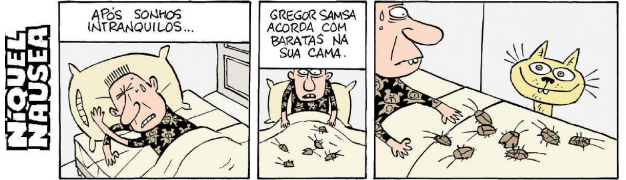
Disponível em <https://cartum.folha.uol.com.br/quadrinhos>. Acesso em: 27 jan. 2024.

Considerando um processo de leitura proficiente de textos, o professor, em seu comentário, deixou de fazer menção a um fator de coerência prioritário para recuperar o propósito comunicativo da tirinha:

Disponível em: < https://g1.globo.com/df/distrito-federal/noticia>. Acesso em: 07 nov. 2023
Seguem dois comentários de internautas sobre o texto:
Comentário 1

Disponível em:<https://www.instagram.com/liliaschwarcz/> . Acesso em: 07 nov. 2023. [Adaptado]
Comentário 2

Disponível em: <https://www.instagram.com/liliaschwarcz>. Acesso em: 07 nov. 2023. [Adaptado]
Os comentários dos internautas ratificam a concepção de linguagem como
A questão refere-se ao texto 3
Texto 3
Do salão frontal, saía um passadouro que permitia acesso a quatro alcovas: a de Florência era a primeira, seguida por uma que servia de depósito das ferramentas domésticas e por outra, fechada por serradura, na qual se guardavam utensílios e valores do negócio. A última era a de Luiz Delgado. Aos fundos, servia-se a casa de uma cozinha aberta para um pátio coberto de palha, onde, às noites, Ermínia pendurava sua rede.
Na edificação adjacente, um pouco mais larga, cumpria-se o negócio dos tabacos. A fachada era branca da mesma cal, e os portais, azuis do mesmo tom como na casa principal. Separava a loja do domicílio a existência, neste, de câmara larga para a entrada dos carros de bois com o fumo que vinha do Recôncavo e que, depois de melado, se vendia à clientela.
As paredes daquela loja, a exemplo das de quase todas as moradas de taipa na rua dos negócios, acabavam em alpendre coberto de palha da mesma espécie do barracão que se via aos fundos do terreno e no qual habitara Luiz Delgado desde que chegara de Portugal.
Para o lado poente, encontrava-se um pomar, a oficina e a olaria doméstica. Era onde dormiam Silvestre, Cícero e Cosme. No quintal, criavam-se aves e porcos. Tudo isso circundado por muros baixos de pedra assentada.
No limite posterior das tais duas propriedades, ao fundo de tudo o que continham, corria o ribeirão do peixe, que se provava sempre muito útil para as tarefas do asseio do domicílio e do negócio.
O interior da casa principal vinha ornado com um nicho e um oratório de madeira, como era de regra naquela cidade. De mobiliário, havia o que, para uma casa era necessário, sem extravagâncias: três cadeiras de araribá, uma mesa baixa com seu banco, além de um bufete com quatro gavetas competentes.
O chão era de terra batida, e havia sempre um tapete de bananeira trançada, mormente na temporada de chuvas. Cabides de chifres de boi serviam, nas alcovas, para pendurar algo de roupa e, no resto da casa, para enganchar chapéus, arreios e cordas.
[...]
(PORTO, Alexandre Vidal. Sodomita. São Paulo: Companhia das Letras, 2023)
Considere o período:

Nesse período, a palavra “mormente” tem função
A questão refere-se ao texto 3
Texto 3
Do salão frontal, saía um passadouro que permitia acesso a quatro alcovas: a de Florência era a primeira, seguida por uma que servia de depósito das ferramentas domésticas e por outra, fechada por serradura, na qual se guardavam utensílios e valores do negócio. A última era a de Luiz Delgado. Aos fundos, servia-se a casa de uma cozinha aberta para um pátio coberto de palha, onde, às noites, Ermínia pendurava sua rede.
Na edificação adjacente, um pouco mais larga, cumpria-se o negócio dos tabacos. A fachada era branca da mesma cal, e os portais, azuis do mesmo tom como na casa principal. Separava a loja do domicílio a existência, neste, de câmara larga para a entrada dos carros de bois com o fumo que vinha do Recôncavo e que, depois de melado, se vendia à clientela.
As paredes daquela loja, a exemplo das de quase todas as moradas de taipa na rua dos negócios, acabavam em alpendre coberto de palha da mesma espécie do barracão que se via aos fundos do terreno e no qual habitara Luiz Delgado desde que chegara de Portugal.
Para o lado poente, encontrava-se um pomar, a oficina e a olaria doméstica. Era onde dormiam Silvestre, Cícero e Cosme. No quintal, criavam-se aves e porcos. Tudo isso circundado por muros baixos de pedra assentada.
No limite posterior das tais duas propriedades, ao fundo de tudo o que continham, corria o ribeirão do peixe, que se provava sempre muito útil para as tarefas do asseio do domicílio e do negócio.
O interior da casa principal vinha ornado com um nicho e um oratório de madeira, como era de regra naquela cidade. De mobiliário, havia o que, para uma casa era necessário, sem extravagâncias: três cadeiras de araribá, uma mesa baixa com seu banco, além de um bufete com quatro gavetas competentes.
O chão era de terra batida, e havia sempre um tapete de bananeira trançada, mormente na temporada de chuvas. Cabides de chifres de boi serviam, nas alcovas, para pendurar algo de roupa e, no resto da casa, para enganchar chapéus, arreios e cordas.
[...]
(PORTO, Alexandre Vidal. Sodomita. São Paulo: Companhia das Letras, 2023)
Considere o período:

Sobre as palavras “mesmo” e “mesma”, empregadas nesse período, é correto afirmar:
A questão refere-se ao texto 3
Texto 3
Do salão frontal, saía um passadouro que permitia acesso a quatro alcovas: a de Florência era a primeira, seguida por uma que servia de depósito das ferramentas domésticas e por outra, fechada por serradura, na qual se guardavam utensílios e valores do negócio. A última era a de Luiz Delgado. Aos fundos, servia-se a casa de uma cozinha aberta para um pátio coberto de palha, onde, às noites, Ermínia pendurava sua rede.
Na edificação adjacente, um pouco mais larga, cumpria-se o negócio dos tabacos. A fachada era branca da mesma cal, e os portais, azuis do mesmo tom como na casa principal. Separava a loja do domicílio a existência, neste, de câmara larga para a entrada dos carros de bois com o fumo que vinha do Recôncavo e que, depois de melado, se vendia à clientela.
As paredes daquela loja, a exemplo das de quase todas as moradas de taipa na rua dos negócios, acabavam em alpendre coberto de palha da mesma espécie do barracão que se via aos fundos do terreno e no qual habitara Luiz Delgado desde que chegara de Portugal.
Para o lado poente, encontrava-se um pomar, a oficina e a olaria doméstica. Era onde dormiam Silvestre, Cícero e Cosme. No quintal, criavam-se aves e porcos. Tudo isso circundado por muros baixos de pedra assentada.
No limite posterior das tais duas propriedades, ao fundo de tudo o que continham, corria o ribeirão do peixe, que se provava sempre muito útil para as tarefas do asseio do domicílio e do negócio.
O interior da casa principal vinha ornado com um nicho e um oratório de madeira, como era de regra naquela cidade. De mobiliário, havia o que, para uma casa era necessário, sem extravagâncias: três cadeiras de araribá, uma mesa baixa com seu banco, além de um bufete com quatro gavetas competentes.
O chão era de terra batida, e havia sempre um tapete de bananeira trançada, mormente na temporada de chuvas. Cabides de chifres de boi serviam, nas alcovas, para pendurar algo de roupa e, no resto da casa, para enganchar chapéus, arreios e cordas.
[...]
(PORTO, Alexandre Vidal. Sodomita. São Paulo: Companhia das Letras, 2023)
Considere os trechos:

A ausência da vírgula antes da palavra “que”, no trecho 1, e a presença da vírgula antes da palavra “que”,
no trecho 2, ilustram o fato de que
A questão refere-se ao texto 3
Texto 3
Do salão frontal, saía um passadouro que permitia acesso a quatro alcovas: a de Florência era a primeira, seguida por uma que servia de depósito das ferramentas domésticas e por outra, fechada por serradura, na qual se guardavam utensílios e valores do negócio. A última era a de Luiz Delgado. Aos fundos, servia-se a casa de uma cozinha aberta para um pátio coberto de palha, onde, às noites, Ermínia pendurava sua rede.
Na edificação adjacente, um pouco mais larga, cumpria-se o negócio dos tabacos. A fachada era branca da mesma cal, e os portais, azuis do mesmo tom como na casa principal. Separava a loja do domicílio a existência, neste, de câmara larga para a entrada dos carros de bois com o fumo que vinha do Recôncavo e que, depois de melado, se vendia à clientela.
As paredes daquela loja, a exemplo das de quase todas as moradas de taipa na rua dos negócios, acabavam em alpendre coberto de palha da mesma espécie do barracão que se via aos fundos do terreno e no qual habitara Luiz Delgado desde que chegara de Portugal.
Para o lado poente, encontrava-se um pomar, a oficina e a olaria doméstica. Era onde dormiam Silvestre, Cícero e Cosme. No quintal, criavam-se aves e porcos. Tudo isso circundado por muros baixos de pedra assentada.
No limite posterior das tais duas propriedades, ao fundo de tudo o que continham, corria o ribeirão do peixe, que se provava sempre muito útil para as tarefas do asseio do domicílio e do negócio.
O interior da casa principal vinha ornado com um nicho e um oratório de madeira, como era de regra naquela cidade. De mobiliário, havia o que, para uma casa era necessário, sem extravagâncias: três cadeiras de araribá, uma mesa baixa com seu banco, além de um bufete com quatro gavetas competentes.
O chão era de terra batida, e havia sempre um tapete de bananeira trançada, mormente na temporada de chuvas. Cabides de chifres de boi serviam, nas alcovas, para pendurar algo de roupa e, no resto da casa, para enganchar chapéus, arreios e cordas.
[...]
(PORTO, Alexandre Vidal. Sodomita. São Paulo: Companhia das Letras, 2023)
A questão refere-se ao texto 3
Texto 3
Do salão frontal, saía um passadouro que permitia acesso a quatro alcovas: a de Florência era a primeira, seguida por uma que servia de depósito das ferramentas domésticas e por outra, fechada por serradura, na qual se guardavam utensílios e valores do negócio. A última era a de Luiz Delgado. Aos fundos, servia-se a casa de uma cozinha aberta para um pátio coberto de palha, onde, às noites, Ermínia pendurava sua rede.
Na edificação adjacente, um pouco mais larga, cumpria-se o negócio dos tabacos. A fachada era branca da mesma cal, e os portais, azuis do mesmo tom como na casa principal. Separava a loja do domicílio a existência, neste, de câmara larga para a entrada dos carros de bois com o fumo que vinha do Recôncavo e que, depois de melado, se vendia à clientela.
As paredes daquela loja, a exemplo das de quase todas as moradas de taipa na rua dos negócios, acabavam em alpendre coberto de palha da mesma espécie do barracão que se via aos fundos do terreno e no qual habitara Luiz Delgado desde que chegara de Portugal.
Para o lado poente, encontrava-se um pomar, a oficina e a olaria doméstica. Era onde dormiam Silvestre, Cícero e Cosme. No quintal, criavam-se aves e porcos. Tudo isso circundado por muros baixos de pedra assentada.
No limite posterior das tais duas propriedades, ao fundo de tudo o que continham, corria o ribeirão do peixe, que se provava sempre muito útil para as tarefas do asseio do domicílio e do negócio.
O interior da casa principal vinha ornado com um nicho e um oratório de madeira, como era de regra naquela cidade. De mobiliário, havia o que, para uma casa era necessário, sem extravagâncias: três cadeiras de araribá, uma mesa baixa com seu banco, além de um bufete com quatro gavetas competentes.
O chão era de terra batida, e havia sempre um tapete de bananeira trançada, mormente na temporada de chuvas. Cabides de chifres de boi serviam, nas alcovas, para pendurar algo de roupa e, no resto da casa, para enganchar chapéus, arreios e cordas.
[...]
(PORTO, Alexandre Vidal. Sodomita. São Paulo: Companhia das Letras, 2023)
A questão refere-se ao texto a seguir.
Literatura na escola: menos homens brancos, mais mulheres pretas
José Ruy Lozano
Como tudo que é resultado da percepção humana ao longo do tempo, o cânone literário – conjunto de livros considerados referências de uma época ou cultura – tem mudanças e permanências. Mas não há dúvida quanto ao papel fundamental que o ensino de literatura nas universidades e escolas desempenha em sua constituição. Afinal, à chancela acadêmica dos estudiosos une-se a difusão da leitura de obras consideradas clássicas realizada na educação básica. Notoriedade e prestígio juntam-se ao conhecimento mais amplo do público leitor por meio das instituições de ensino.
Tais instituições não são refratárias ao momento político e social em que estão inseridas. Em tempos de Black Lives Matter, identitarismo e questionamentos mais frequentes e profundos a respeito do racismo estrutural no Brasil e no mundo, percebe-se um movimento de deslocamento do cânone literário rumo a vozes até aqui marginalizadas em nossa literatura. Para muitos surpreendente, a inclusão das letras de sobrevivendo no inferno, disco do grupo de rap paulista Racionais Mc’s, como leitura obrigatória no vestibular da Unicamp demonstra que os tempos estão mudando.
Ainda não cancelaram José de Alencar – escritor que defendeu publicamente a escravidão e organizou um retrato idílico das populações indígenas conveniente ao Estado imperial de sua época –, mas os homens brancos do passado já têm de abrir espaço não só a outros homens, mas também a mulheres pretas, do passado e do presente. A indicação de obras com essa marca de autoria por exames vestibulares de universidades públicas e particulares está obrigando as escolas a se abrir a vozes distintas, e os alunos passam a ler narrativas que se aproximam de seu mundo, marcado pela desigualdade, pobreza e discriminação.
Passo determinante nessa trajetória é o resgate de Carolina Maria de Jesus. Seus diários, que retratam o cotidiano de mulher negra e favelada, apresenta aos estudantes um universo literário bem distinto dos clássicos de costume. Quarto de despejo passou a ser indicação obrigatória de leitura em vestibulares a partir de 2016, e muitos professores de literatura de Ensino Médio tiveram de “descobrir” uma escritora brasileira cuja obra já foi traduzida para catorze idiomas desde os anos 1960. Em 2020, Carolina consta na lista de leituras dos exames das universidades estaduais de Maringá, Londrina, Ponta Grossa e da universidade federal do Tocantins.
Conceição Evaristo, premiada romancista, poeta e contista mineira, nasceu em uma comunidade pobre de Belo Horizonte, trabalhou como empregada doméstica, até concluir sua formação como professora. A discriminação racial e de gênero são temas recorrentes de sua ficção. Militante do movimento negro, apresentou em 2018 uma simbólica candidatura à vaga número 7 da Academia Brasileira de Letras, cujo patrono é o poeta abolicionista Castro Alves. Se essa tentativa de diálogo com a instituição canônica por excelência da literatura brasileira não teve êxito, sua presença nos estudos literários veio para ficar: a universidade de Passo Fundo indica a seus candidatos a leitura dos contos de Olhos d’água, e a universidade federal do Rio Grande do Sul incluiu em sua lista de leituras obrigatórias o romance Ponciá Vicêncio.
Ainda no vestibular da federal gaúcha, consta o romance Úrsula, de Maria Firmina dos Reis. A maranhense Firmina foi precursora na vida e na obra. Mulher negra, prestou concurso público para professora e sustentava-se sozinha. É dela o primeiro romance de autoria feminina do Brasil, justamente Úrsula, publicado em 1859, que também é considerado a primeira narrativa abolicionista da literatura brasileira, humanizando e dando voz aos escravizados. Embora tenha tido destaque na sociedade maranhense em sua época, foi silenciada e esquecida, mas hoje recebe merecido destaque, tendo sua obra principal reeditada pela PUC de Minas Gerais e ganhado atenção de pesquisadores que constroem sua fortuna crítica.
A Universidade Estadual do Rio de Janeiro selecionou, para seu exame de acesso, a obra de uma mulher negra, nascida em 1977, na periferia de Nova Iguaçu, conhecedora do cenário de pobreza e violência de onde provêm boa parte de seus estudantes. Na UERJ, 50% das vagas são reservadas para alunos de escolas públicas do estado, tendo sido essa universidade a pioneira do regime de cotas raciais e sociais no Brasil. Assim na terra como embaixo da terra, de Ana Paula Maia, elabora um cenário distópico em que um presídio de segurança máxima, construído sobre terreno que outrora abrigara local de tortura e morte de escravos, torna-se um campo de extermínio. Ali se entrevê uma alegoria das mazelas da atuação policial e do sistema prisional brasileiros, vinculados a um passado histórico de opressão.
Não só gênero e raça se mostram mais diversos, mas também a nacionalidade. A Universidade Federal de Uberlândia fará questões em seu vestibular sobre o romance A cor púrpura, da norte-americana Alice Walker. Militante feminista e do movimento negro, Walker retrata no livro as agruras de uma menina negra, no sul agrário e racista dos Estados Unidos, abusada sexualmente pelo pai – de quem engravida e dá à luz dois filhos – e, posteriormente, obrigada a se casar com um senhor branco que a trata como empregada. A narrativa de estupro em família, num contexto de preconceito e pobreza, guarda estreita relação com situações semelhantes infelizmente frequentes no Brasil.
A universidade de Taubaté, interior de São Paulo, inseriu em sua lista obrigatória de leituras o livro Hibisco roxo, primeiro romance da feminista nigeriana Chimamanda Nzozie Adichie, que narra conflitos familiares na Nigéria pós-colonial, tematizando a misoginia associada ao fanatismo religioso. Escritora premiada, ensaísta e palestrante de sucesso, Adichie já teve trechos de suas falas inseridos na letra da música Flawless, da popstar Beyoncé.
A vida das periferias, pobreza, racismo, violência urbana, machismo... A entrada de vozes femininas e negras no ensino de literatura amplia as temáticas abordadas em sala de aula e aproxima as leituras escolares da realidade vivida por milhões de estudantes no Brasil. Diversidade fundamental por si só, esse fenômeno representa uma oportunidade valiosa para os educadores: despertar nos estudantes o sentido e o propósito do fazer literário, ressaltando a importância das narrativas como construção da memória coletiva.
Disponível em: < https://diplomatique.org.br/>. Acesso em: 08 dez. 2023. [Texto adaptado]

Sobre o gênero textual no qual se enquadram os textos 1 e 2, é correto afirmar:
A questão refere-se ao texto 2
Texto 2
Isolamento
Gabriela Borges
Helô D’Angelo é uma das maiores quadrinistas brasileiras da nova geração. Jornalista de formação, ganhou destaque com suas HQs políticas, principalmente durante as eleições de 2018. Atenta aos detalhes e inspirada pelo tédio, ano passado começou um registro sensível sobre a pandemia no Brasil com base no que via, escutava e imaginava sobre seus vizinhos. Daí nasceu Isolamento, seu segundo livro, que narra a vida de doze moradores de um predinho, que vivem o que muitos de nós vivemos durante a pandemia: o drama do pai e sua filha, afastados por suas escolhas políticas; o médico que precisa sair para trabalhar; a mulher presa no home office; o casal apaixonado; o cachorro que se torna a única companhia da dona.
O mais interessante na narrativa criada pela autora é a estrutura, que une na mesma página a história de todos os apartamentos. É como se estivéssemos observando de longe o que se passa na janela alheia. Quem nunca? Rafael Coutinho, grande quadrinista brasileiro, escreveu o prefácio e reconhece o talento de Helô ao criar um suprapersonagem, o prédio, “que nos faz dançar no grid que ela propõe, na unidade de página que agita nossos olhos atrás de detalhes o tempo todo, voltando aos núcleos iniciais, procurando o gato, a mudança do casal, o velho reacionário que foi tomar cerveja escondido com seu comparsa do 4º”. Helô brinca que é uma verdadeira fofoca em quadrinhos. A gente gargalha em algumas páginas e chora de emoção em outras.
Outro ponto importante são as informações extras à história, que contextualizam o que acontecia no Brasil durante a construção do livro. Uma escolha esperta da autora, que torna a obra um registro importante feito durante a própria pandemia por uma jovem artista paulistana, desses que vamos reler com as gerações futuras, para tentar explicar – e até mesmo entender – tudo o que estamos vivendo.
Isolamento foi publicada inicialmente no formato webcomic, no perfil no Instagram da autora, para então virar um livro de 208 páginas coloridas, publicado de maneira independente por meio de uma campanha no Catarse. Já experiente em financiamento coletivo, Helô é autora também da graphic novel Dora e a Gata, de 2019.
Disponível em: <https://diplomatique.org.br/>. Acesso em: 16 fev. 2024. [Texto adaptado]
A questão refere-se ao texto 2
Texto 2
Isolamento
Gabriela Borges
Helô D’Angelo é uma das maiores quadrinistas brasileiras da nova geração. Jornalista de formação, ganhou destaque com suas HQs políticas, principalmente durante as eleições de 2018. Atenta aos detalhes e inspirada pelo tédio, ano passado começou um registro sensível sobre a pandemia no Brasil com base no que via, escutava e imaginava sobre seus vizinhos. Daí nasceu Isolamento, seu segundo livro, que narra a vida de doze moradores de um predinho, que vivem o que muitos de nós vivemos durante a pandemia: o drama do pai e sua filha, afastados por suas escolhas políticas; o médico que precisa sair para trabalhar; a mulher presa no home office; o casal apaixonado; o cachorro que se torna a única companhia da dona.
O mais interessante na narrativa criada pela autora é a estrutura, que une na mesma página a história de todos os apartamentos. É como se estivéssemos observando de longe o que se passa na janela alheia. Quem nunca? Rafael Coutinho, grande quadrinista brasileiro, escreveu o prefácio e reconhece o talento de Helô ao criar um suprapersonagem, o prédio, “que nos faz dançar no grid que ela propõe, na unidade de página que agita nossos olhos atrás de detalhes o tempo todo, voltando aos núcleos iniciais, procurando o gato, a mudança do casal, o velho reacionário que foi tomar cerveja escondido com seu comparsa do 4º”. Helô brinca que é uma verdadeira fofoca em quadrinhos. A gente gargalha em algumas páginas e chora de emoção em outras.
Outro ponto importante são as informações extras à história, que contextualizam o que acontecia no Brasil durante a construção do livro. Uma escolha esperta da autora, que torna a obra um registro importante feito durante a própria pandemia por uma jovem artista paulistana, desses que vamos reler com as gerações futuras, para tentar explicar – e até mesmo entender – tudo o que estamos vivendo.
Isolamento foi publicada inicialmente no formato webcomic, no perfil no Instagram da autora, para então virar um livro de 208 páginas coloridas, publicado de maneira independente por meio de uma campanha no Catarse. Já experiente em financiamento coletivo, Helô é autora também da graphic novel Dora e a Gata, de 2019.
Disponível em: <https://diplomatique.org.br/>. Acesso em: 16 fev. 2024. [Texto adaptado]
A questão refere-se ao texto 2
Texto 2
Isolamento
Gabriela Borges
Helô D’Angelo é uma das maiores quadrinistas brasileiras da nova geração. Jornalista de formação, ganhou destaque com suas HQs políticas, principalmente durante as eleições de 2018. Atenta aos detalhes e inspirada pelo tédio, ano passado começou um registro sensível sobre a pandemia no Brasil com base no que via, escutava e imaginava sobre seus vizinhos. Daí nasceu Isolamento, seu segundo livro, que narra a vida de doze moradores de um predinho, que vivem o que muitos de nós vivemos durante a pandemia: o drama do pai e sua filha, afastados por suas escolhas políticas; o médico que precisa sair para trabalhar; a mulher presa no home office; o casal apaixonado; o cachorro que se torna a única companhia da dona.
O mais interessante na narrativa criada pela autora é a estrutura, que une na mesma página a história de todos os apartamentos. É como se estivéssemos observando de longe o que se passa na janela alheia. Quem nunca? Rafael Coutinho, grande quadrinista brasileiro, escreveu o prefácio e reconhece o talento de Helô ao criar um suprapersonagem, o prédio, “que nos faz dançar no grid que ela propõe, na unidade de página que agita nossos olhos atrás de detalhes o tempo todo, voltando aos núcleos iniciais, procurando o gato, a mudança do casal, o velho reacionário que foi tomar cerveja escondido com seu comparsa do 4º”. Helô brinca que é uma verdadeira fofoca em quadrinhos. A gente gargalha em algumas páginas e chora de emoção em outras.
Outro ponto importante são as informações extras à história, que contextualizam o que acontecia no Brasil durante a construção do livro. Uma escolha esperta da autora, que torna a obra um registro importante feito durante a própria pandemia por uma jovem artista paulistana, desses que vamos reler com as gerações futuras, para tentar explicar – e até mesmo entender – tudo o que estamos vivendo.
Isolamento foi publicada inicialmente no formato webcomic, no perfil no Instagram da autora, para então virar um livro de 208 páginas coloridas, publicado de maneira independente por meio de uma campanha no Catarse. Já experiente em financiamento coletivo, Helô é autora também da graphic novel Dora e a Gata, de 2019.
Disponível em: <https://diplomatique.org.br/>. Acesso em: 16 fev. 2024. [Texto adaptado]
A questão refere-se ao texto 2
Texto 2
Isolamento
Gabriela Borges
Helô D’Angelo é uma das maiores quadrinistas brasileiras da nova geração. Jornalista de formação, ganhou destaque com suas HQs políticas, principalmente durante as eleições de 2018. Atenta aos detalhes e inspirada pelo tédio, ano passado começou um registro sensível sobre a pandemia no Brasil com base no que via, escutava e imaginava sobre seus vizinhos. Daí nasceu Isolamento, seu segundo livro, que narra a vida de doze moradores de um predinho, que vivem o que muitos de nós vivemos durante a pandemia: o drama do pai e sua filha, afastados por suas escolhas políticas; o médico que precisa sair para trabalhar; a mulher presa no home office; o casal apaixonado; o cachorro que se torna a única companhia da dona.
O mais interessante na narrativa criada pela autora é a estrutura, que une na mesma página a história de todos os apartamentos. É como se estivéssemos observando de longe o que se passa na janela alheia. Quem nunca? Rafael Coutinho, grande quadrinista brasileiro, escreveu o prefácio e reconhece o talento de Helô ao criar um suprapersonagem, o prédio, “que nos faz dançar no grid que ela propõe, na unidade de página que agita nossos olhos atrás de detalhes o tempo todo, voltando aos núcleos iniciais, procurando o gato, a mudança do casal, o velho reacionário que foi tomar cerveja escondido com seu comparsa do 4º”. Helô brinca que é uma verdadeira fofoca em quadrinhos. A gente gargalha em algumas páginas e chora de emoção em outras.
Outro ponto importante são as informações extras à história, que contextualizam o que acontecia no Brasil durante a construção do livro. Uma escolha esperta da autora, que torna a obra um registro importante feito durante a própria pandemia por uma jovem artista paulistana, desses que vamos reler com as gerações futuras, para tentar explicar – e até mesmo entender – tudo o que estamos vivendo.
Isolamento foi publicada inicialmente no formato webcomic, no perfil no Instagram da autora, para então virar um livro de 208 páginas coloridas, publicado de maneira independente por meio de uma campanha no Catarse. Já experiente em financiamento coletivo, Helô é autora também da graphic novel Dora e a Gata, de 2019.
Disponível em: <https://diplomatique.org.br/>. Acesso em: 16 fev. 2024. [Texto adaptado]
A questão refere-se ao texto 2
Texto 2
Isolamento
Gabriela Borges
Helô D’Angelo é uma das maiores quadrinistas brasileiras da nova geração. Jornalista de formação, ganhou destaque com suas HQs políticas, principalmente durante as eleições de 2018. Atenta aos detalhes e inspirada pelo tédio, ano passado começou um registro sensível sobre a pandemia no Brasil com base no que via, escutava e imaginava sobre seus vizinhos. Daí nasceu Isolamento, seu segundo livro, que narra a vida de doze moradores de um predinho, que vivem o que muitos de nós vivemos durante a pandemia: o drama do pai e sua filha, afastados por suas escolhas políticas; o médico que precisa sair para trabalhar; a mulher presa no home office; o casal apaixonado; o cachorro que se torna a única companhia da dona.
O mais interessante na narrativa criada pela autora é a estrutura, que une na mesma página a história de todos os apartamentos. É como se estivéssemos observando de longe o que se passa na janela alheia. Quem nunca? Rafael Coutinho, grande quadrinista brasileiro, escreveu o prefácio e reconhece o talento de Helô ao criar um suprapersonagem, o prédio, “que nos faz dançar no grid que ela propõe, na unidade de página que agita nossos olhos atrás de detalhes o tempo todo, voltando aos núcleos iniciais, procurando o gato, a mudança do casal, o velho reacionário que foi tomar cerveja escondido com seu comparsa do 4º”. Helô brinca que é uma verdadeira fofoca em quadrinhos. A gente gargalha em algumas páginas e chora de emoção em outras.
Outro ponto importante são as informações extras à história, que contextualizam o que acontecia no Brasil durante a construção do livro. Uma escolha esperta da autora, que torna a obra um registro importante feito durante a própria pandemia por uma jovem artista paulistana, desses que vamos reler com as gerações futuras, para tentar explicar – e até mesmo entender – tudo o que estamos vivendo.
Isolamento foi publicada inicialmente no formato webcomic, no perfil no Instagram da autora, para então virar um livro de 208 páginas coloridas, publicado de maneira independente por meio de uma campanha no Catarse. Já experiente em financiamento coletivo, Helô é autora também da graphic novel Dora e a Gata, de 2019.
Disponível em: <https://diplomatique.org.br/>. Acesso em: 16 fev. 2024. [Texto adaptado]

 Conheça nossos planos