Questões de Concurso
Sobre orações condicionais | conditional clauses em inglês
Foram encontradas 290 questões
Resolva questões gratuitamente!
Junte-se a mais de 4 milhões de concurseiros!


Para responder à questão, leia o texto abaixo.
How Will You Get from How Things Are to How Things "Should" Be?
A lot of people get fixated on things that they think "should" happen, but fail to address substantial obstacles in the way. I may even agree with them about what I think "should" happen. But that doesn't mean that it's going to happen. If you're thinking that there is also a danger in being overly cautious or waiting to work out the perfect plan, you're right. That can become a form of procrastination. Acting on an imperfect plan is usually better than waiting until you've worked out every last detail. But at least have some kind of plan that doesn't require a miracle to happen.
The plan that works will also probably not be the plan you started with. You will have to update the plan as you proceed and the situation evolves.
A good model for this process is John Boyd's OODA decision making loop. OODA stands for Observe, Orient, Decide, Act. Actions produce responses that provide new information. New information requires reorientation and new decisions will have to be made that lead to new actions, and the loop repeats.
No big changes happened because a bunch of people sat around complaining about how things "should be."
That's like saying "l should be a millionaire." You could be, but you're going to need some kind of plan to get there that realistically acknowledges the obstacles in your way.
Many of the problems we face today took years to create.
We have inherited a big mess. A lot of things happened that "should not" have happened. Mistakes were made.
But that's life. It's going to throw all kinds of things at you that are sub-optimal. Things you didn't "deserve" or ask for. Cleaning up messes you didn't create is as normal as dealing with bad weather.
Some messes only require a dustpan.
But if you want to clean up a really big mess, you're going to need a plan.
Fonte: https://mrjackdonovan.substack.com/p/the-flow-chart
Analyze the sentence below:
If you _______ to become a millionaire, you _________ to develop a plan that accounts for realíty, rather than just comp/aining.
Choose the alternative that CORRECTLY completes the logic of the millionaire analogy.
"For to go as a passenger you must needs have a purse, and a purse is but a rag unless you have something in it. Besides, passengers get sea-sick—grow quarrelsome—don't sleep of nights—do not enjoy themselves much, as a general thing..."
Considering the meanings conveyed by the vocabulary and grammatical structures employed in the passage, analyze the statements below and choose the alternative that best interprets the highlighted expressions within their context.
I.The modal verb must expresses necessity related to travelling as a passenger.
II.The word unless introduces a condition that affects the meaning of the previous statement.
III.The adjective quarrelsome describes a tendency to engage in arguments or disputes.
IV.The expression as a general thing indicates an exception to a commonly observed situation.
Which alternative presents the correct analysis?
Read the statements below carefully:
I.The expression would depend upon indicates a conditional future situation viewed from a past perspective.
II.The modal verb should is used to express a hypothetical possibility.
III.The adjective objectionable refers to someone considered unsuitable or unacceptable.
IV.The expression put up with means to search for alternative accommodation.
V.The adjective decent conveys a positive evaluation of a person's character or behavior.
Which statements are correctly interpreted according to the excerpt?
"Had the school received the funds earlier, it would have completed the accessibility project before the beginning of the term."
Which analysis is CORRECT?
If the local community continues to show such high levels of engagement, the library ______ one of the most important culturalcenters in the region.
Which option BEST completes the sentence to express a likely outcome based on that condition?
Column I
1 - If you don't water plants, they die.
2 - If I win the lottery, I will buy a house.
3 - If I had a car, I would drive to work.
4 - If we had booked earlier, we would have paid less.
Column II
( ) First conditional
( ) Third conditional
( ) Zero conditional
( ) Second conditional
Considerando-se as regras de uso da Second Conditional, assinale a alternativa que apresente a construção gramaticalmente correta.
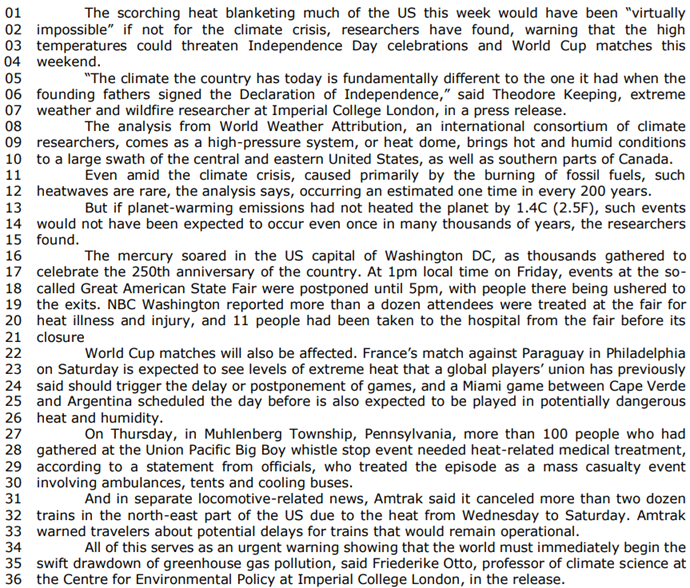

I. In ‘Those who saw reproductions saw only an eight percent drop’, ‘who’ is a relative pronoun.
II. In ‘your quiet moment with an original painting could be supporting your long-term health in ways you cannot feel immediately’, there are two examples of modal verbs.
III. In ‘Those who saw reproductions saw only an eight percent drop’, ‘an’ is an example of preposition.
IV. In ‘The results were striking’, ‘the’ is an example of indefinite article.
Which statements are completely accurate?
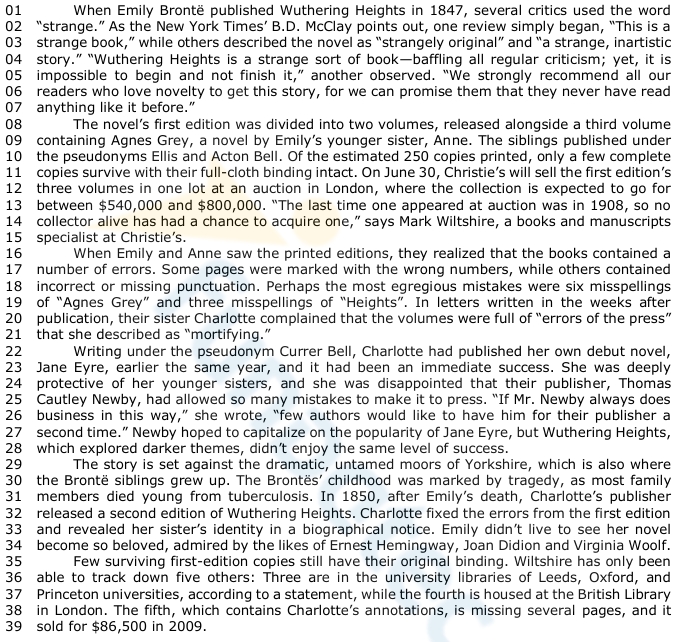
Analyse the statements below about the following excerpt:
“If Mr. Newby always does business in this way, few authors would like to have him for their publisher a second time.” (l. 25–27)
I. It is a conditional sentence.
II. The first clause expresses a condition, while the second expresses a hypothetical consequence.
III. The conditional clause refers to a completed action in the past.
Which ones are correct?
Recognize the correct conditional form:
If I were you, I _____ that job.
Complete the correct form:
If I _____ time, I will help you.
"If I ________ more money, I ________ a new car."

 Conheça nossos planos