Questões de Concurso Sobre orações condicionais | conditional clauses em inglês

Questões Discursivas

Foram encontradas 279 questões

Resolva questões gratuitamente!

Junte-se a mais de 4 milhões de concurseiros!

Q2582324 Inglês

A forma correta para completar a conditional sentence “If I had gone to the party...”, é:

Alternativas
Q2541662 Inglês

Mark is giving advice to a colleague about professional development. Choose the correct conditional form to complete the sentence.


"If you ___ (dedicate yourself) to continuous learning, you ___ (excel) in your teaching career."

Alternativas
Q2540481 Inglês

Read Text II to answer the question:


TEXT II


Available at: https://culturalanalytics.org/article/87560 (adapted)

Considering the phrase “If you don't help me, you can't imagine what I'll tell them.”, we have a clear example of what kind of conditional structure?
Alternativas
Q2521824 Inglês
Leia o texto para responder à questão.

An introduction to Strategic Management

    Strategic Management is all about identification and description of the strategies that managers can carry to achieve better performance and a competitive advantage for their organization. An organization is said to have competitive advantage in case its profitability is higher than the average profitability for all companies in its industry.
    Strategic management can also be defined as a bundle of decisions and acts which a manager undertakes and which decides the result of the firm’s performance. The manager must have a thorough knowledge and analysis of the general and competitive organizational environment to take right decisions.
    The managers should conduct a SWOT Analysis (Strengths, Weaknesses, Opportunities, and Threats) in order to make the best possible utilization of strengths, minimize the organizational weaknesses, make use of arising opportunities from the business environment. They should not ignore the threats either.
    Strategic management is nothing but planning for both predictable as well as unfeasible contingencies. It is applicable to both small and large organizations as even the smallest organization faces competition and, by formulating and implementing appropriate strategies, they can attain sustainable competitive advantage. It is a way in which a strategist sets the objectives and proceeds about attaining them. It deals with making and implementing decisions about future direction of an organization. It helps us to identify the direction in which an organization is moving.

(www.managementstudyguide.com/strategic-management.htm. Adaptado)
No trecho do primeiro parágrafo – ...in case its profitability is higher than the average profitability for all companies in its industry. – a expressão destacada em negrito indica uma
Alternativas
Q2520369 Inglês

Julgue o item a seguir.


Requests for action or permission cannot be reported in Reported Speech using a subordinate clause with "if" or an infinitive. Therefore a sentence such as "He asked if it would be ok to miss next class" is an incorrect use of reported speech.

Alternativas
Q2520348 Inglês

Julgue o item a seguir.


When reporting direct yes-no questions in Reported Speech, it is common to introduce a subordinate clause with "if" or "whether". So it is correct to say that the reported sentence "She asked if you were going home" is properly adapted to reported speech.

Alternativas
Q2511301 Inglês
In the sentence "If she had studied harder, she would have passed the exam," what grammatical structure is being used? 
Alternativas
Q2502386 Inglês
The second conditional is used to imagine present or future situations that are impossible or unlikely in reality. Which item below displays that?
Alternativas
Q2482258 Inglês

Julgue o item subsequente.


The future real conditional must make the use of a conditional clause, formed using the simple present tense or present progressive tense to indicate a future possibility. The sentence: "If I had time, I would play with my nephews". Uses correctly the future real conditional form.

Alternativas
Q2471838 Inglês

What is Validity?
by Evelina Galaczi
July 17th, 2020


The fundamental concept to keep in mind when creating any assessment is validity. Validity refers to whether a test measures what it aims to measure. For example, a valid driving test should include a practical driving component and not just a theoretical test of the rules of driving. A valid language test for university entry, for example, should include tasks that are representative of at least some aspects of what actually happens in university settings, such as listening to lectures, giving presentations, engaging in tutorials, writing essays, and reading texts.

Validity has different elements, which we are now going to look at in turn.

Test Purpose – Why am I testing?

We can never really say that a test is valid or not valid. Instead, we can say that a test is valid for a particular purpose. There are several reasons why you might want to test your students. You could be trying to check their learning at the end of a unit, or trying to understand what they know and don't know. Or, you might want to use a test to place learners into groups based on their ability, or to provide test takers with a certificate of language proficiency. Each of these different reasons for testing represents a different test purpose.

The purpose of the test determines the type of test you're going to produce, which in turn affects the kinds of tasks you're going to choose, the number of test items, the length of the test, and so on. For example, a test certifying that doctors can practise in an English-speaking country would be different from a placement test which aims to place those doctors into language courses.

Test Takers – Who am I testing?

It’s also vital to keep in mind who is taking your test. Is it primary school children or teenagers or adults? Or is it airline pilots or doctors or engineers? This is an important question because the test has to be appropriate for the test takers it is aimed for. If your test takers are primary school children, for instance, you might want to give them more interactive tasks or games to test their language ability. If you are testing listening skills, for example, you might want to use role plays for doctors, but lectures or monologues with university students.

Test Construct – What am I testing?

Another key point is to consider what you want to test. Before designing a test, you need to identify the ability or skill that the test is designed to measure – in technical terms, the ‘test construct’. Some examples of constructs are: intelligence, personality, anxiety, English language ability, pronunciation. To take language assessment as an example, the test construct could be communicative language ability, or speaking ability, or perhaps even a construct as specific as pronunciation. The challenge is to define the construct and find ways to elicit it and measure it; for example, if we are testing the construct of fluency, we might consider features such as rate of speech, number of pauses/ hesitations and the extent to which any pauses/hesitations cause strain for a listener.


Test Tasks – How am I testing?

Once you’ve defined what you want to test, you need to decide how you’re going to test it. The focus here is on selecting the right test tasks for the ability (i.e. construct) you're interested in testing. All task types have advantages and limitations and so it’s important to use a range of tasks in order to minimize their individual limitations and optimize the measurement of the ability you’re interested in. The tasks in a test are like a menu of options that are available to choose from, and you must be sure to choose the right task or the right range of tasks for the ability you're trying to measure. 

Test Reliability - How am I scoring?

Next it’s important to consider how to score your test. A test needs to be reliable and to produce accurate scores. So, you’ll need to make sure that the scores from a test reflect a learner's actual ability. In deciding how to score a test, you’ll need to consider whether the answers are going to be scored as correct or incorrect (this might be the case for multiple–choice tasks, for example) or whether you might use a range of marks and give partial credit, as for example, in reading or listening comprehension questions. In speaking and writing, you’ll also have to decide what criteria to use (for example, grammar, vocabulary, pronunciation, essay, organisation in writing, and so on). You’ll also need to make sure that the teachers involved in speaking or writing assessment have received some training, so that they are marking to (more or less) the same standard.

Test Impact - How will my test help learners?

The final – and in many ways most important – question to ask yourself is how the test is benefitting learners. Good tests engage learners in situations similar to ones that they might face outside the classroom (i.e. authentic tasks), or which provide useful feedback or help their language development by focusing on all four skills (reading, listening, writing, speaking). For example, if a test has a speaking component, this will encourage speaking practice in the classroom. And if that speaking test includes both language production (e.g. describe a picture) and interaction (e.g. discuss a topic with another student), then preparing for the test encourages the use of a wide range of speaking activities in the classroom and enhances learning.

Adapted from: https://www.cambridgeenglish.org/blog/what-is-validity. Acesso em: 15 dez. 2023.

A oração condicional “If you are testing listening skills, for example, you might want to use role plays for doctors, but lectures or monologues with university students.” classifica-se como:
Alternativas
Q2402991 Inglês
Text


ESL Teaching and Post-Pandemic: What Changed?


Altiné Moumouni


        The pandemic that started in 2019 has shaken the world, and it has transformed the way we interact, the way we work, and even made us appreciate the simplest things we took for granted.
                1. Pandemic creates shortage of qualified ESL teachers
             Currently, there are still fewer ESL teachers willing to travel abroad and teach ESL. At the same, countries like the USA experience a massive reduction in ESL teachers. About 44% of public schools in the USA declare they need at least one teacher, and 61%, particularly of these vacancies, are due to the COVID-19 pandemic, including 51% resignations and 21% retirements (Source: Usnews.com).
                2. Pandemic increases uncertainty among ESL teachers
             The pandemic increased the level of uncertainty as nobody actually knows what will happen next. The best way to prepare is to invest in yourself and become a better teacher.
              3. Parents may experience income reduction
            Most countries, including the USA, will experience postpandemic recession, reducing households’ discretionary spending for education. This may lead to fewer private tutoring jobs available for ESL teachers. In addition, some ESL students may need to drop out of school to support their families.
              4. ESL teachers less sure about teaching as a career
         A study from the Brookings Institution found that, during the pandemic, teachers have become less confident about their career choices. The researchers found that many teachers considered leaving or retiring during the 2020-2021 academic year.   
             5. Pandemic increases role of technology in ESL learning
            One of the biggest issues is the increased role of technology in ESL learning. In most western countries, including the UK, Canada, and the United States, many ESL students have at least some access to electronic devices and internet. 


(Adapted from https://www.tefl.net/elt/articles/home-abroad/esl-teaching-post-pandemic/)

Read the sentence and check the correct alternative:

“The pandemic that started in 2019 has shaken the world, and it has transformed the way we interact, the way we work, and even made us appreciate the simplest things we took for granted”.

The clause in bold in the sentence is not
Alternativas
Q2384532 Inglês
Considering the structure and the context presented in the statements below, which of the following hypothetical sentences is more likely to become true?
Alternativas
Q2357441 Inglês
Examine the following statements:
I. In: "If I were a rich girl, I _____ work at all", the gap can be filled with "would not".
II. In: "If I have time, I _____ something nice for her.", the gap can be filled with "would make".
Choose the CORRECT answer:
Alternativas
Q2357428 Inglês
Text 2

“The teachers are afraid of their pupils”, by Morrisey


There's too many people

Planning your downfall

When your spirit's on trial

These nights can be frightening

Sleep transports sadness

To some other mid-brain

And somebody here

Will not be here next year

So you stand by the board

Full of fear and intention

And, if you think that they're listening

Well, you've got to be joking

Oh, you understand change

And you think it's essential

But when your profession

Is humiliation

Say the wrong word to our children

We'll have you, oh yes, we'll have you


Source: The teachers are afraid of their pupils, as sung by Morrisey, 1995. Available on: https://genius.com/Morrissey-the-teachers-are-afraid-of-the-pupils-lyrics
Examine the following statements about ‘Text 2’:
I. Considering that the scenario described by Morissey in the song focuses on a negative teaching point of view, students do not suffer any psychological setbacks from this educational environment.
II. Considering the scenario in the song, it is possible to deduce that students might be reproducing their social circle's view on education, and this behavior could be changed through interactions in the school environment.
Choose the CORRECT answer:
Alternativas
Q2350988 Inglês
Imagine you have planned a picnic for tomorrow and there's a chance of rain in the forecast. In case of bad weather conditions, what _____ you do to adjust your plans?
Alternativas
Q4197698 Inglês
Leia o texto para responder à questão.

Information Security (InfoSec) defined

Information security, often abbreviated InfoSec, is a set of security procedures and tools that broadly protect sensitive enterprise information from misuse, unauthorized access, disruption, or destruction. InfoSec encompasses physical and environmental security, access control, and cybersecurity. It often includes technologies like cloud access security brokers (CASB), deception tools, endpoint detection and response (EDR), and security testing for DevOps (DevSecOps), among others.

Key elements of information security


InfoSec comprises a range of security tools, solutions, and processes that keep enterprise information secure across devices and locations, helping to protect against cyberattacks or other disruptive events.

•  Application security - Policies, procedures, tools, and best practices enacted to protect applications and their data.w
•  Cloud security - Policies, procedures, tools, and best practices enacted to protect all aspects of the cloud, including systems, data, applications, and infrastructure.
•  Cryptography - An algorithm-based method of securing communication meant to ensure only intended recipients of a specific message can view and decipher it.
•  Disaster recovery - A method to reestablish functional technological systems in the wake of an event like a natural disaster, cyberattack, or another disruptive event.
•  Incident response - An organization’s plan for responding to, remediating, and managing the aftermath of a cyberattack, data breach, or another disruptive event.
•  Infrastructure security - Security that encompasses an organization’s entire technological infrastructure, including both hardware and software systems.
•  Vulnerability management - The process an organization takes to identify, assess, and remediate vulnerabilities in its endpoints, software, and systems.


Three pillars of information security: the CIA triad

Confidentiality, integrity, and availability make up the cornerstones of strong information protection, creating the basis for an enterprise’s security infrastructure. The CIA triad offers these three concepts as guiding principles for implementing an InfoSec plan.


Confidentiality

Privacy is a major component of InfoSec, and organizations should enact measures that allow only authorized users access to information. Data encryption, multi-factor authentication, and data loss prevention are some of the tools enterprises can employ to help ensure data confidentiality.

Integrity

Enterprises must maintain data’s integrity across its entire lifecycle. Enterprises with strong InfoSec will recognize the importance of accurate, reliable data, and permit no unauthorized user to access, alter, or otherwise interfere with it. Tools like file permissions, identity management, and user access controls help ensure data integrity.

Availability

InfoSec involves consistently maintaining physical hardware and regularly completing system upgrades to guarantee that authorized users have dependable, consistent access to data as they need it.


(www.microsoft.com/en-ww/security/business/security-101/ what-is-information-security-infosec#:~:text=Information%20 security%2C%20often%20abbreviated%20(InfoSec,access%2C%20 disruption%2C%20or%20destruction. Adaptado.)

In the excerpt from the first part of the text “It often includes technologies”, the word in bold refers to
Alternativas
Q4177569 Inglês

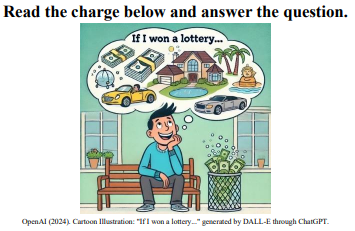
Imagem associada para resolução da questão


Considerando a imagem, qual a frase que completa corretamente a lacuna do balão?

Alternativas
Q4162854 Inglês
The blank numbered as “11” could be CORRECTLY filled with:
Alternativas
Q4117503 Inglês
Conditional sentences have different structures that vary according to the probability of the situations mentioned actually occur. With that in mind, mark the sentence below that is MOST UNLIKELY to happen. 
Alternativas
Q3671224 Inglês

Consider the sentence below:


If I X harder for the exam, Y it with flying colors.


Check the alternative that correctly fills X and Y in the blank.

Alternativas
Respostas
141: B
142: C
143: E
144: B
145: E
146: C
147: E
148: B
149: C
150: B
151: D
152: D
153: B
154: C
155: C
156: C
157: E
158: E
159: C
160: C