Foram encontradas 25.430 questões
Resolva questões gratuitamente!
Junte-se a mais de 4 milhões de concurseiros!


Russia is making heaps of money from oil, but there is a way to stop that
The United States and its allies are leaning heavily on economic sanctions to punish Russia for its invasion of Ukraine. But a key element in that strategy, restrictions on Russian oil exports, mostly appears to be causing pain for ordinary people in other countries. European nations, in particular, are causing considerable damage to their own economies without reducing Russia’s oil revenue.
Nations seeking to help Ukraine have focused on reducing Russia’s energy exports instead of reducing Russia’s earnings from energy exports. Russia is exporting less oil but, in a perverse twist, it is earning more money. The sanctions have raised prices, more than offsetting the decline in exports. In May 2022, Russia earned 883 million euros per day from oil exports, up from 633 million euros per day in May 2021.
New sanctions that the European Union and Britain have agreed to impose on Russia by year’s end are likely to drive oil prices even higher. Some analysts warn that the price for a barrel of oil could exceed $ 200, well above the spike in the early weeks of the war, when oil prices topped out around $ 124.
Internet:<www.nytimes.com>
Based on the text above, judge the following items.
Even though oil prices have soared as a result of the
sanctions imposed on Russia, they were not high enought to
compensate for Russia’s loss in oil exports.
Russia is making heaps of money from oil, but there is a way to stop that
The United States and its allies are leaning heavily on economic sanctions to punish Russia for its invasion of Ukraine. But a key element in that strategy, restrictions on Russian oil exports, mostly appears to be causing pain for ordinary people in other countries. European nations, in particular, are causing considerable damage to their own economies without reducing Russia’s oil revenue.
Nations seeking to help Ukraine have focused on reducing Russia’s energy exports instead of reducing Russia’s earnings from energy exports. Russia is exporting less oil but, in a perverse twist, it is earning more money. The sanctions have raised prices, more than offsetting the decline in exports. In May 2022, Russia earned 883 million euros per day from oil exports, up from 633 million euros per day in May 2021.
New sanctions that the European Union and Britain have agreed to impose on Russia by year’s end are likely to drive oil prices even higher. Some analysts warn that the price for a barrel of oil could exceed $ 200, well above the spike in the early weeks of the war, when oil prices topped out around $ 124.
Internet:<www.nytimes.com>
Based on the text above, judge the following items.
It is correct to infer from the text that the US and its allies
have shot themselves in the foot with their economic
sanctions against Russia.
Russia is making heaps of money from oil, but there is a way to stop that
The United States and its allies are leaning heavily on economic sanctions to punish Russia for its invasion of Ukraine. But a key element in that strategy, restrictions on Russian oil exports, mostly appears to be causing pain for ordinary people in other countries. European nations, in particular, are causing considerable damage to their own economies without reducing Russia’s oil revenue.
Nations seeking to help Ukraine have focused on reducing Russia’s energy exports instead of reducing Russia’s earnings from energy exports. Russia is exporting less oil but, in a perverse twist, it is earning more money. The sanctions have raised prices, more than offsetting the decline in exports. In May 2022, Russia earned 883 million euros per day from oil exports, up from 633 million euros per day in May 2021.
New sanctions that the European Union and Britain have agreed to impose on Russia by year’s end are likely to drive oil prices even higher. Some analysts warn that the price for a barrel of oil could exceed $ 200, well above the spike in the early weeks of the war, when oil prices topped out around $ 124.
Internet:<www.nytimes.com>
Based on the text above, judge the following items.
The text suggests that the pain caused for ordinary people by
rising oil prices may worsen in the near future.
Russia is making heaps of money from oil, but there is a way to stop that
The United States and its allies are leaning heavily on economic sanctions to punish Russia for its invasion of Ukraine. But a key element in that strategy, restrictions on Russian oil exports, mostly appears to be causing pain for ordinary people in other countries. European nations, in particular, are causing considerable damage to their own economies without reducing Russia’s oil revenue.
Nations seeking to help Ukraine have focused on reducing Russia’s energy exports instead of reducing Russia’s earnings from energy exports. Russia is exporting less oil but, in a perverse twist, it is earning more money. The sanctions have raised prices, more than offsetting the decline in exports. In May 2022, Russia earned 883 million euros per day from oil exports, up from 633 million euros per day in May 2021.
New sanctions that the European Union and Britain have agreed to impose on Russia by year’s end are likely to drive oil prices even higher. Some analysts warn that the price for a barrel of oil could exceed $ 200, well above the spike in the early weeks of the war, when oil prices topped out around $ 124.
Internet:<www.nytimes.com>
Based on the text above, judge the following items.
At the beginning of the war between Russia and Ukraine,
there was a decrease in oil prices, which went from $ 200 a
barrel to approximately $ 124 a barrel.
Based on the text, judge the following items.
The second period of the third paragraph could be correctly
rewritten, without change in meaning, as: Disposal of
produced water inappropriately onto soil or into surface
water bodes can cause salinity levels to become so high that
plant growth is no longer sustainable.
Read Text II and answer the question that follow it.
Text II
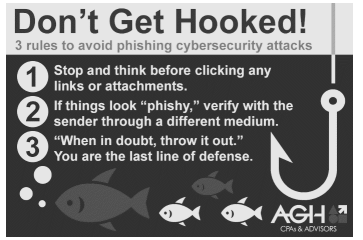
From: https://aghlc.com/resources/articles/2016/how-to-prevent-phishing-attacks160812.aspx?hss_channel=tw-2432542152
Read Text II and answer the question that follow it.
Text II
From: https://aghlc.com/resources/articles/2016/how-to-prevent-phishing-attacks160812.aspx?hss_channel=tw-2432542152
Read Text II and answer the question that follow it.
Text II
From: https://aghlc.com/resources/articles/2016/how-to-prevent-phishing-attacks160812.aspx?hss_channel=tw-2432542152
( ) The “spray-and-pray” business model belongs to a late period in the history of ransomware.
( ) The analysis indicates that cybercrime is far from mushrooming.
( ) The text argues that solutions to cybercrime can be reached in a jiffy.
The statements are, respectively
Read Text II and answer the question that follow it.
Text II
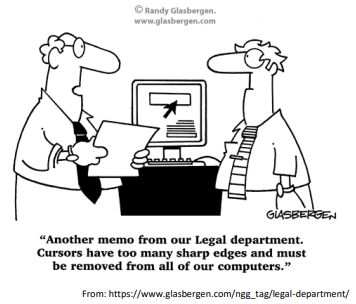
Read Text II and answer the question that follow it.
Text II
From: https://www.glasbergen.com/ngg_tag/legal-department/
Read text I and answer the question that follow it.
Text I
The New Rules of Data Privacy
The data harvested from our personal devices, along with our trail of electronic transactions and data from other sources, now provides the foundation for some of the world’s largest companies. […] For the past two decades, the commercial use of personal data has grown in wild-west fashion. But now, because of consumer mistrust, government actions, and competition for customers, those days are quickly coming to an end.
For most of its existence, the data economy was structured around a “digital curtain” designed to obscure the industry’s practices from lawmakers and the public. Data was considered company property and a proprietary secret, even though the data originated from customers’ private behavior. That curtain has since been lifted and a convergence of consumer, government, and market forces are now giving users more control over the data they generate. Instead of serving as a resource that can be freely harvested, countries in every region of the world have begun to treat personal data as an asset owned by individuals and held in trust by firms.
This will be a far better organizing principle for the data economy. Giving individuals more control has the potential to curtail the sector’s worst excesses while generating a new wave of customer-driven innovation, as customers begin to express what sort of personalization and opportunity they want their data to enable. And while Adtech firms in particular will be hardest hit, any firm with substantial troves of customer data will have to make sweeping changes to its practices, particularly large firms such as financial institutions, healthcare firms, utilities, and major manufacturers and retailers.
Leading firms are already adapting to the new reality as it unfolds. The key to this transition — based upon our research on data and trust, and our experience working on this issue with a wide variety of firms— is for companies to reorganize their data operations around the new fundamental rules of consent, insight, and flow.
[…]
Federal lawmakers are moving to curtail the power of big tech. Meanwhile, in 2021 state legislatures proposed or passed at least 27 online privacy bills regulating data markets and protecting personal digital rights. Lawmakers from California to China are implementing legislation that mirrors Europe’s GDPR, while the EU itself has turned its attention to regulating the use of AI. Where once companies were always ahead of regulators, now they struggle to keep up with compliance requirements across multiple jurisdictions.
Adapted from: https://hbr.org/2022/02/the-new-rules-of-data-privacy
February 25, 2022 – Retrieved September 6, 2022
Read text I and answer the question that follow it.
Text I
The New Rules of Data Privacy
The data harvested from our personal devices, along with our trail of electronic transactions and data from other sources, now provides the foundation for some of the world’s largest companies. […] For the past two decades, the commercial use of personal data has grown in wild-west fashion. But now, because of consumer mistrust, government actions, and competition for customers, those days are quickly coming to an end.
For most of its existence, the data economy was structured around a “digital curtain” designed to obscure the industry’s practices from lawmakers and the public. Data was considered company property and a proprietary secret, even though the data originated from customers’ private behavior. That curtain has since been lifted and a convergence of consumer, government, and market forces are now giving users more control over the data they generate. Instead of serving as a resource that can be freely harvested, countries in every region of the world have begun to treat personal data as an asset owned by individuals and held in trust by firms.
This will be a far better organizing principle for the data economy. Giving individuals more control has the potential to curtail the sector’s worst excesses while generating a new wave of customer-driven innovation, as customers begin to express what sort of personalization and opportunity they want their data to enable. And while Adtech firms in particular will be hardest hit, any firm with substantial troves of customer data will have to make sweeping changes to its practices, particularly large firms such as financial institutions, healthcare firms, utilities, and major manufacturers and retailers.
Leading firms are already adapting to the new reality as it unfolds. The key to this transition — based upon our research on data and trust, and our experience working on this issue with a wide variety of firms— is for companies to reorganize their data operations around the new fundamental rules of consent, insight, and flow.
[…]
Federal lawmakers are moving to curtail the power of big tech. Meanwhile, in 2021 state legislatures proposed or passed at least 27 online privacy bills regulating data markets and protecting personal digital rights. Lawmakers from California to China are implementing legislation that mirrors Europe’s GDPR, while the EU itself has turned its attention to regulating the use of AI. Where once companies were always ahead of regulators, now they struggle to keep up with compliance requirements across multiple jurisdictions.
Adapted from: https://hbr.org/2022/02/the-new-rules-of-data-privacy
February 25, 2022 – Retrieved September 6, 2022
Read text I and answer the question that follow it.
Text I
The New Rules of Data Privacy
The data harvested from our personal devices, along with our trail of electronic transactions and data from other sources, now provides the foundation for some of the world’s largest companies. […] For the past two decades, the commercial use of personal data has grown in wild-west fashion. But now, because of consumer mistrust, government actions, and competition for customers, those days are quickly coming to an end.
For most of its existence, the data economy was structured around a “digital curtain” designed to obscure the industry’s practices from lawmakers and the public. Data was considered company property and a proprietary secret, even though the data originated from customers’ private behavior. That curtain has since been lifted and a convergence of consumer, government, and market forces are now giving users more control over the data they generate. Instead of serving as a resource that can be freely harvested, countries in every region of the world have begun to treat personal data as an asset owned by individuals and held in trust by firms.
This will be a far better organizing principle for the data economy. Giving individuals more control has the potential to curtail the sector’s worst excesses while generating a new wave of customer-driven innovation, as customers begin to express what sort of personalization and opportunity they want their data to enable. And while Adtech firms in particular will be hardest hit, any firm with substantial troves of customer data will have to make sweeping changes to its practices, particularly large firms such as financial institutions, healthcare firms, utilities, and major manufacturers and retailers.
Leading firms are already adapting to the new reality as it unfolds. The key to this transition — based upon our research on data and trust, and our experience working on this issue with a wide variety of firms— is for companies to reorganize their data operations around the new fundamental rules of consent, insight, and flow.
[…]
Federal lawmakers are moving to curtail the power of big tech. Meanwhile, in 2021 state legislatures proposed or passed at least 27 online privacy bills regulating data markets and protecting personal digital rights. Lawmakers from California to China are implementing legislation that mirrors Europe’s GDPR, while the EU itself has turned its attention to regulating the use of AI. Where once companies were always ahead of regulators, now they struggle to keep up with compliance requirements across multiple jurisdictions.
Adapted from: https://hbr.org/2022/02/the-new-rules-of-data-privacy
February 25, 2022 – Retrieved September 6, 2022

 Conheça nossos planos