Foram encontradas 25.430 questões

Resolva questões gratuitamente!

Junte-se a mais de 4 milhões de concurseiros!

Q2005955 Inglês

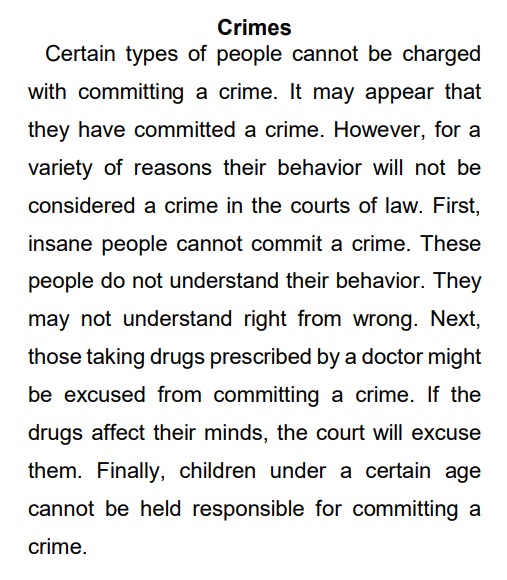
inf_texto.png (387×636)

Internet: <www.nortechplus.com>.

Choose the alternative that presents a correct association between a term from the text and its word class. 
Alternativas
Q2005954 Inglês

inf_texto.png (387×636)

Internet: <www.nortechplus.com>.

According to the text, choose the correct alternative. 
Alternativas
Q2005953 Inglês

inf_texto.png (387×636)

Internet: <www.nortechplus.com>.

Choose the alternative that presents extracts from the text in the simple past and in the present perfect tenses, respectively. 
Alternativas
Q1994944 Inglês

As palavras denominadas de cognatas vêm do latim cognatus que significa referente a parente. Especificamente, refere-se a uma palavra que deriva da mesma família de línguas ou tronco linguístico (Dicio.com., 2020). As palavras cognatas ou os cognatos são muito importantes, pois, a proximidade morfológica com a língua portuguesa auxilia na compreensão do texto em língua inglesa e na aprendizagem de palavras, ainda, desconhecidas.


A partir do acima explicado, assinale a sequência de palavras cognatas retiradas do texto Crimes.
Alternativas
Q1994943 Inglês
Uma das áreas de formação da língua inglesa, a morfologia, justifica que a palavra é formada por afixos (prefixos + sufixos) e radical/raiz. A forma dos afixos é mais rígida quanto à posição de formação da palavra. Os sufixos podem modificar a classe gramatical e os prefixos o sentido (positivo ou negativo) da palavra, sendo que o radical, raiz, é que traz o significado da palavra. Diante do exposto, assinale a alternativa que apresenta a palavra pós-fixada.
Alternativas
Q1994942 Inglês

A partir das técnicas de leitura instrumental, atenha-se à compreensão e à interpretação do texto “Crimes”, analise as afirmativas a seguir e dê valores de Verdadeiro (V) e Falso (F).


( ) O autor afirma que certos tipos de indivíduos não podem ser acusados de cometer um crime.

( ) O autor expõe que todos os indivíduos com comportamentos criminosos poderão ser julgados nos tribunais.

( ) Ainda segundo o autor, os indivíduos mentalmente insanos não podem ser acusados de cometer um crime.

( ) O autor reitera que embora insanos, os indivíduos conseguem entender e avaliar o seu próprio comportamento.


Assinale a alternativa que apresenta a sequência correta de cima para baixo.

Alternativas
Q1994941 Inglês
Utilizando-se das técnicas de leitura instrumental, especificamente da técnica scanning, a qual consiste em uma leitura atenta e precisa. Analise o excerto a seguir: “They may not understand right from wrong”. Assinale, dentre as alternativas abaixo, a que está mais próxima em significado.
Alternativas
Q1994940 Inglês
Utilizando-se das técnicas de leitura instrumental, mais especificamente da técnica skimming, ou seja, uma leitura rápida e superficial, leia o texto “Crimes” e assinale a alternativa que realmente identifica o assunto geral tratado pelo autor do texto.
Alternativas
Q1991575 Inglês

Considere a ilustração abaixo. 


Imagem associada para resolução da questão


No primeiro quadrinho, “(Sigh)” indica que a personagem Anne está 

Alternativas
Q1991574 Inglês
       BYOD (Bring Your Own Device) refers to the policy of allowing employees to supply their own computing devices for use at work. Employers save money by eliminating hardware purchasing and maintenance overhead, and employees enjoy the freedom of choice to use whichever mobile phone, tablet or laptop that best meets their preferences.
       For example, a user may have a Windows PC for work and a MacBook for a personal laptop. The keyboard shortcuts for each platform are slightly different, making it easy to mangle copy-paste functions in word processors and spreadsheets. Using the same BYOD MacBook for work and personal computing eliminates these switchover errors.              Even for non-SaaS organizations, user error typically represents a third of all data loss, second only to hardware failure. The reduction in user error gained from BYOD policies is present regardless of whether an employee is creating a document in Google Apps or Microsoft Word.
       There has yet been no rigorous study of the change in rates of user error before and after adopting BYOD policies. Nonetheless, it's safe to assume that some level of user error is reduced by familiarity and comfort with BYOD devices.
       BYOD can't make your data invulnerable, but combined with good security policies, regular user training and effective data backup, it can make a noticeable difference in the availability and integrity of your company data.

(Disponível em: https://www.wired.com
Inthe fragment from the fourth paragraph "Nonetheless, it's safe to assume that some level of user error is reduced by familiarity and comfort with BYOD devices" the underlined expression can be replaced, without any change in the meaning of the sentence, by:  
Alternativas
Q1991573 Inglês
       BYOD (Bring Your Own Device) refers to the policy of allowing employees to supply their own computing devices for use at work. Employers save money by eliminating hardware purchasing and maintenance overhead, and employees enjoy the freedom of choice to use whichever mobile phone, tablet or laptop that best meets their preferences.
       For example, a user may have a Windows PC for work and a MacBook for a personal laptop. The keyboard shortcuts for each platform are slightly different, making it easy to mangle copy-paste functions in word processors and spreadsheets. Using the same BYOD MacBook for work and personal computing eliminates these switchover errors.              Even for non-SaaS organizations, user error typically represents a third of all data loss, second only to hardware failure. The reduction in user error gained from BYOD policies is present regardless of whether an employee is creating a document in Google Apps or Microsoft Word.
       There has yet been no rigorous study of the change in rates of user error before and after adopting BYOD policies. Nonetheless, it's safe to assume that some level of user error is reduced by familiarity and comfort with BYOD devices.
       BYOD can't make your data invulnerable, but combined with good security policies, regular user training and effective data backup, it can make a noticeable difference in the availability and integrity of your company data.

(Disponível em: https://www.wired.com
According to the text, Bring Your Own Device (BYOD) policies:  
Alternativas
Q1990341 Inglês
In the fragment from the second paragraph “Rather than creating and managing their own IT infrastructure”, the underlined expression can be replaced without any change in the meaning of the sentence by  
Alternativas
Q1990340 Inglês

        Before cloud computing came into existence, companies were required to download applications or programs on their physical PCs or on-premises servers to be able to use them. For any organization, building and managing its own IT infrastructure or data centers is a huge challenge. Even for those who own their own data centers, allocating a large number of IT administrators and resources is a struggle.

        The introduction of cloud computing was a paradigm shift in the history of the technology industry. Rather than creating and managing their own IT infrastructure and paying for servers, power and real estate, etc., cloud computing allows businesses to rent computing resources from cloud service providers. This helps businesses avoid paying heavy upfront costs and the complexity of managing their own data centers. By renting cloud services, companies pay only for what they use such as computing resources and disk space. This allows companies to anticipate costs with greater accuracy.

        Since cloud service providers do the heavy lifting of managing and maintaining the IT infrastructure, it saves a lot of time, effort and money for businesses. The cloud also gives organizations the ability to seamlessly upscale or downscale their computing infrastructure as and when needed. Compared to the traditional on-premises data center model, the cloud offers easy access to data from anywhere and on any device with internet connectivity, thereby enabling effective collaboration and enhanced productivity.

(Adaptado de: MCDERMOTT, Matt. Cloud Computing: Benefits, Disadvantages & Types of Cloud Computing Services. Disponível em: https:/Ayww .business2community.com) 

No trecho For any organization, building and managing its own IT infrastructure or data centers is a huge challenge (1º pará- grafo), o segmento sublinhado tem sentido equivalente, em português, a 
Alternativas
Q1990339 Inglês

        Before cloud computing came into existence, companies were required to download applications or programs on their physical PCs or on-premises servers to be able to use them. For any organization, building and managing its own IT infrastructure or data centers is a huge challenge. Even for those who own their own data centers, allocating a large number of IT administrators and resources is a struggle.

        The introduction of cloud computing was a paradigm shift in the history of the technology industry. Rather than creating and managing their own IT infrastructure and paying for servers, power and real estate, etc., cloud computing allows businesses to rent computing resources from cloud service providers. This helps businesses avoid paying heavy upfront costs and the complexity of managing their own data centers. By renting cloud services, companies pay only for what they use such as computing resources and disk space. This allows companies to anticipate costs with greater accuracy.

        Since cloud service providers do the heavy lifting of managing and maintaining the IT infrastructure, it saves a lot of time, effort and money for businesses. The cloud also gives organizations the ability to seamlessly upscale or downscale their computing infrastructure as and when needed. Compared to the traditional on-premises data center model, the cloud offers easy access to data from anywhere and on any device with internet connectivity, thereby enabling effective collaboration and enhanced productivity.

(Adaptado de: MCDERMOTT, Matt. Cloud Computing: Benefits, Disadvantages & Types of Cloud Computing Services. Disponível em: https:/Ayww .business2community.com) 

Depreende-se do texto que a computação em nuvem 
Alternativas
Q1990188 Inglês
Text 20A12-I


  As technology advances, the car industry has developed new ways to improve user experience. One of these ways includes using artificial intelligence to make cars self-driving. A self-driving car (also known as an autonomous car or driverless car) is a vehicle that uses a different number of sensors, radars, cameras, and artificial intelligence to travel to destinations without needing a human driver. Many companies have already started to manufacture self-driving cars, which are put through many tests to ensure they are eligible to be on the road without making any errors. To qualify as fully autonomous, a car must navigate routes to predetermined destinations without any human intervention.

  Artificial intelligence powers self-driving vehicle frameworks. Self-driving vehicle engineers utilize a great deal of information from image recognition systems, AI and neural networks to assemble frameworks that can drive self-sufficiently. The neural networks distinguish patterns in the data, which is fed to the AI calculations. That data include images from cameras for self-driving vehicles. The neural networks figure out how to recognize traffic lights, trees, pedestrians, road signs, and different parts of any random driving environment.

   As an example, Google has started to develop self-driving cars, which use a mix of sensors, light detectors, and other technology, like GPS and cameras. All the input data are combined and the artificial system predicts what those objects might do next. This whole process happens in a matter of milliseconds. Similar to any human driver, the more experience these systems gain, the better they become at driving. The more data it deals with in its deep learning algorithms, the more choices it will make and the faster those choices will be. 


Internet: <www.eescorporation.com> (adapted).
From the excerpt “The more data it deals with in its deep learning algorithms, the more choices it will make and the faster those choices will be” (last paragraph of text 20A12-I), it can be concluded that 
Alternativas
Q1990187 Inglês
Text 20A12-I


  As technology advances, the car industry has developed new ways to improve user experience. One of these ways includes using artificial intelligence to make cars self-driving. A self-driving car (also known as an autonomous car or driverless car) is a vehicle that uses a different number of sensors, radars, cameras, and artificial intelligence to travel to destinations without needing a human driver. Many companies have already started to manufacture self-driving cars, which are put through many tests to ensure they are eligible to be on the road without making any errors. To qualify as fully autonomous, a car must navigate routes to predetermined destinations without any human intervention.

  Artificial intelligence powers self-driving vehicle frameworks. Self-driving vehicle engineers utilize a great deal of information from image recognition systems, AI and neural networks to assemble frameworks that can drive self-sufficiently. The neural networks distinguish patterns in the data, which is fed to the AI calculations. That data include images from cameras for self-driving vehicles. The neural networks figure out how to recognize traffic lights, trees, pedestrians, road signs, and different parts of any random driving environment.

   As an example, Google has started to develop self-driving cars, which use a mix of sensors, light detectors, and other technology, like GPS and cameras. All the input data are combined and the artificial system predicts what those objects might do next. This whole process happens in a matter of milliseconds. Similar to any human driver, the more experience these systems gain, the better they become at driving. The more data it deals with in its deep learning algorithms, the more choices it will make and the faster those choices will be. 


Internet: <www.eescorporation.com> (adapted).
The main purpose of the second paragraph of text 20A12-I is to explain
Alternativas
Q1990186 Inglês
Text 20A12-I


  As technology advances, the car industry has developed new ways to improve user experience. One of these ways includes using artificial intelligence to make cars self-driving. A self-driving car (also known as an autonomous car or driverless car) is a vehicle that uses a different number of sensors, radars, cameras, and artificial intelligence to travel to destinations without needing a human driver. Many companies have already started to manufacture self-driving cars, which are put through many tests to ensure they are eligible to be on the road without making any errors. To qualify as fully autonomous, a car must navigate routes to predetermined destinations without any human intervention.

  Artificial intelligence powers self-driving vehicle frameworks. Self-driving vehicle engineers utilize a great deal of information from image recognition systems, AI and neural networks to assemble frameworks that can drive self-sufficiently. The neural networks distinguish patterns in the data, which is fed to the AI calculations. That data include images from cameras for self-driving vehicles. The neural networks figure out how to recognize traffic lights, trees, pedestrians, road signs, and different parts of any random driving environment.

   As an example, Google has started to develop self-driving cars, which use a mix of sensors, light detectors, and other technology, like GPS and cameras. All the input data are combined and the artificial system predicts what those objects might do next. This whole process happens in a matter of milliseconds. Similar to any human driver, the more experience these systems gain, the better they become at driving. The more data it deals with in its deep learning algorithms, the more choices it will make and the faster those choices will be. 


Internet: <www.eescorporation.com> (adapted).
According to text 20A12-I, 
Alternativas
Q1989002 Inglês

Environmental and economic impacts of crude oil and

natural gas production in developing countries


        Environmental impacts that occur during the production of crude oil would mostly occur from long-term habitat change within the oil and gas field, production activities (including facility component maintenance or replacement), waste management (e.g. produced water), noise (e.g. from well operations, compressor or pump stations, flare stack, vehicle and equipment), the presence of workers and potential spills.

        The adverse environmental impacts which could happen during production of crude oil and natural gas include: disturbance of wildlife due to noise and human activity; exposure of biota to contaminants; and mortality of biota resulting from collisions against aboveground facilities or with vehicles.

        The presence of production wells, ancillary facilities and access road reduces habitat quality, disturbs the biota and thus affects ecological resources. Discharge of produced water inappropriately onto soil or into surface water bodies can result in salinity levels becoming too high to sustain plant growth.

        Wildlife is always prone to have contact with petroleum-based products and other contaminants in reserve pits and water management facilities. Animals could become entrapped in the oil and drown, or they could ingest toxic quantities of oil, or succumb to cold stress if the oil damages the insulation provided by their feathers or fur.

Internet: <www.core.ac.uk>(adapted). 

Based on the text, judge the following items. 


The last period of the text could be correctly rewritten, without this changing its meaning, as Animals would, then, become entrapped in the oil and drown, or ingest toxic quantities of oil, or succumb to cold stress if the oil damages the insulation provided by their feathers or fur

Alternativas
Q1989001 Inglês

Environmental and economic impacts of crude oil and

natural gas production in developing countries


        Environmental impacts that occur during the production of crude oil would mostly occur from long-term habitat change within the oil and gas field, production activities (including facility component maintenance or replacement), waste management (e.g. produced water), noise (e.g. from well operations, compressor or pump stations, flare stack, vehicle and equipment), the presence of workers and potential spills.

        The adverse environmental impacts which could happen during production of crude oil and natural gas include: disturbance of wildlife due to noise and human activity; exposure of biota to contaminants; and mortality of biota resulting from collisions against aboveground facilities or with vehicles.

        The presence of production wells, ancillary facilities and access road reduces habitat quality, disturbs the biota and thus affects ecological resources. Discharge of produced water inappropriately onto soil or into surface water bodies can result in salinity levels becoming too high to sustain plant growth.

        Wildlife is always prone to have contact with petroleum-based products and other contaminants in reserve pits and water management facilities. Animals could become entrapped in the oil and drown, or they could ingest toxic quantities of oil, or succumb to cold stress if the oil damages the insulation provided by their feathers or fur.

Internet: <www.core.ac.uk>(adapted). 

Based on the text, judge the following items. 


In the first period of the third paragraph, the expression “ancillary facilities” implies the idea of a place, a building or a piece of equipment that houses or is used for activities that support the production of oil. 

Alternativas
Q1988999 Inglês

Environmental and economic impacts of crude oil and

natural gas production in developing countries


        Environmental impacts that occur during the production of crude oil would mostly occur from long-term habitat change within the oil and gas field, production activities (including facility component maintenance or replacement), waste management (e.g. produced water), noise (e.g. from well operations, compressor or pump stations, flare stack, vehicle and equipment), the presence of workers and potential spills.

        The adverse environmental impacts which could happen during production of crude oil and natural gas include: disturbance of wildlife due to noise and human activity; exposure of biota to contaminants; and mortality of biota resulting from collisions against aboveground facilities or with vehicles.

        The presence of production wells, ancillary facilities and access road reduces habitat quality, disturbs the biota and thus affects ecological resources. Discharge of produced water inappropriately onto soil or into surface water bodies can result in salinity levels becoming too high to sustain plant growth.

        Wildlife is always prone to have contact with petroleum-based products and other contaminants in reserve pits and water management facilities. Animals could become entrapped in the oil and drown, or they could ingest toxic quantities of oil, or succumb to cold stress if the oil damages the insulation provided by their feathers or fur.

Internet: <www.core.ac.uk>(adapted). 

Based on the text, judge the following items. 


The environmental damages potentially caused by the oil and gas industry are many and varied, as there are different possible sources of problems.

Alternativas
Respostas
13021: B
13022: D
13023: C
13024: C
13025: E
13026: B
13027: C
13028: D
13029: C
13030: D
13031: B
13032: C
13033: D
13034: A
13035: E
13036: B
13037: E
13038: E
13039: C
13040: C