Questões de Concurso Sobre inglês

Foram encontradas 25.430 questões

Resolva questões gratuitamente!

Junte-se a mais de 4 milhões de concurseiros!

Q2016702 Inglês

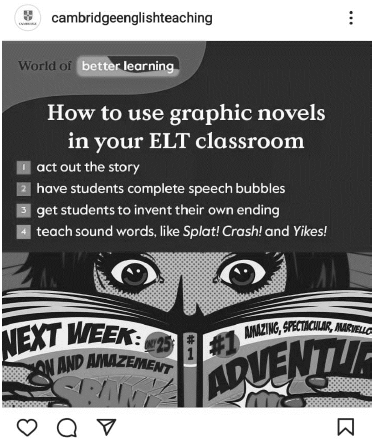
Fonte: Instagram #cambridgeenglishteaching


In viewing this Instagram photo, the teacher will realize that items 2 and 3 involve mostly

Alternativas
Q2016701 Inglês

The text below refers to question that follow it.
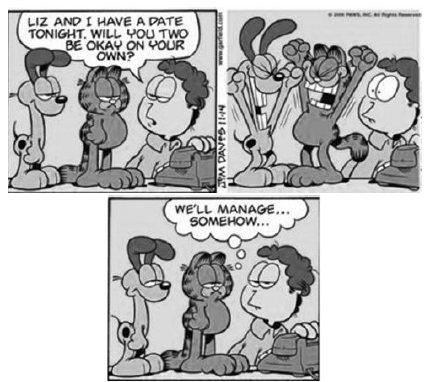


https://br.pinterest.com/pin/211669251227515501/

In this comic strip, the adverb “somehow” is used to
Alternativas
Q2016700 Inglês

The text below refers to question that follow it.


https://br.pinterest.com/pin/211669251227515501/

In the first panel, the question implies is whether or not both pets
Alternativas
Q2016699 Inglês
Critical Literacy

    Critical literacies are not new among scholars and researchers in literacy education. However, due to different theoretical bases, there is no unique definition of “critical literacy”. In their broadest sense, critical literacies refer to the ability to read texts going beyond their superficial meaning. That is, it implies approaching texts in a reflective way to understand working ideologies such as power, inequality, and injustice. In the realm of critical literacy, text is understood as a “vehicle through which individuals communicate with one another using the codes and conventions of society” (Robinson & Robinson, 2003, p. 3). Texts, in this sense, can be either songs, novels, poems, conversations, pictures, movies, and so on. […]

    Hence, the critical literacies approach is generally contrasted with functional literacy. The former views literacy as a social practice, while the latter views literacy as the mastery of linguistic skills. In addition, Manning (1999) developed a framework to distinguish critical literacies from functional literacy by establishing the difference between their respective ideology purpose, literacy curriculum, and instruction. On the one hand, the main objective of functional literacy is to produce skilled workers for the marketplace. Consequently, the curriculum is restrictive and the instruction is individualistic and competitive. On the other hand, for critical literacies, texts are not neutral but marked by power messages, dominating interests, and hidden agendas. In order to deconstruct these texts and unveil their ideological messages and power relationships, the curriculum is to employ materials from the everyday world as text and analytic tools.

    Critical scholars have overtly supported the idea that there is not a single procedure for incorporating critical literacies into the classroom, given that the particularities of the context where the foreign language is taught differ from one another. Thus, an approach to critical literacies “needs to be continually redefined in practice” (Comber, 2001, p. 274).


Adapted from: Jiménez, M.C. G. and Gutiérrez, C.P. “Engaging English as a Foreign Language Students in Critical Literacy Practices: The Case of a Teacher at a Private University” available at http://www.scielo.org.co/scielo.php?script= sci_arttext&pid=S1657-07902019000100091&lng=en&nrm=iso
The phrase “On the one hand” (2nd paragraph) indicates that the text will offer a(n)
Alternativas
Q2016698 Inglês
Critical Literacy

    Critical literacies are not new among scholars and researchers in literacy education. However, due to different theoretical bases, there is no unique definition of “critical literacy”. In their broadest sense, critical literacies refer to the ability to read texts going beyond their superficial meaning. That is, it implies approaching texts in a reflective way to understand working ideologies such as power, inequality, and injustice. In the realm of critical literacy, text is understood as a “vehicle through which individuals communicate with one another using the codes and conventions of society” (Robinson & Robinson, 2003, p. 3). Texts, in this sense, can be either songs, novels, poems, conversations, pictures, movies, and so on. […]

    Hence, the critical literacies approach is generally contrasted with functional literacy. The former views literacy as a social practice, while the latter views literacy as the mastery of linguistic skills. In addition, Manning (1999) developed a framework to distinguish critical literacies from functional literacy by establishing the difference between their respective ideology purpose, literacy curriculum, and instruction. On the one hand, the main objective of functional literacy is to produce skilled workers for the marketplace. Consequently, the curriculum is restrictive and the instruction is individualistic and competitive. On the other hand, for critical literacies, texts are not neutral but marked by power messages, dominating interests, and hidden agendas. In order to deconstruct these texts and unveil their ideological messages and power relationships, the curriculum is to employ materials from the everyday world as text and analytic tools.

    Critical scholars have overtly supported the idea that there is not a single procedure for incorporating critical literacies into the classroom, given that the particularities of the context where the foreign language is taught differ from one another. Thus, an approach to critical literacies “needs to be continually redefined in practice” (Comber, 2001, p. 274).


Adapted from: Jiménez, M.C. G. and Gutiérrez, C.P. “Engaging English as a Foreign Language Students in Critical Literacy Practices: The Case of a Teacher at a Private University” available at http://www.scielo.org.co/scielo.php?script= sci_arttext&pid=S1657-07902019000100091&lng=en&nrm=iso
The verb phrase in “where the foreign language is taught” (3rd paragraph) is in the
Alternativas
Q2016697 Inglês
Critical Literacy

    Critical literacies are not new among scholars and researchers in literacy education. However, due to different theoretical bases, there is no unique definition of “critical literacy”. In their broadest sense, critical literacies refer to the ability to read texts going beyond their superficial meaning. That is, it implies approaching texts in a reflective way to understand working ideologies such as power, inequality, and injustice. In the realm of critical literacy, text is understood as a “vehicle through which individuals communicate with one another using the codes and conventions of society” (Robinson & Robinson, 2003, p. 3). Texts, in this sense, can be either songs, novels, poems, conversations, pictures, movies, and so on. […]

    Hence, the critical literacies approach is generally contrasted with functional literacy. The former views literacy as a social practice, while the latter views literacy as the mastery of linguistic skills. In addition, Manning (1999) developed a framework to distinguish critical literacies from functional literacy by establishing the difference between their respective ideology purpose, literacy curriculum, and instruction. On the one hand, the main objective of functional literacy is to produce skilled workers for the marketplace. Consequently, the curriculum is restrictive and the instruction is individualistic and competitive. On the other hand, for critical literacies, texts are not neutral but marked by power messages, dominating interests, and hidden agendas. In order to deconstruct these texts and unveil their ideological messages and power relationships, the curriculum is to employ materials from the everyday world as text and analytic tools.

    Critical scholars have overtly supported the idea that there is not a single procedure for incorporating critical literacies into the classroom, given that the particularities of the context where the foreign language is taught differ from one another. Thus, an approach to critical literacies “needs to be continually redefined in practice” (Comber, 2001, p. 274).


Adapted from: Jiménez, M.C. G. and Gutiérrez, C.P. “Engaging English as a Foreign Language Students in Critical Literacy Practices: The Case of a Teacher at a Private University” available at http://www.scielo.org.co/scielo.php?script= sci_arttext&pid=S1657-07902019000100091&lng=en&nrm=iso
“Hence” (2nd paragraph) can be replaced without change of meaning by
Alternativas
Q2016696 Inglês
Critical Literacy

    Critical literacies are not new among scholars and researchers in literacy education. However, due to different theoretical bases, there is no unique definition of “critical literacy”. In their broadest sense, critical literacies refer to the ability to read texts going beyond their superficial meaning. That is, it implies approaching texts in a reflective way to understand working ideologies such as power, inequality, and injustice. In the realm of critical literacy, text is understood as a “vehicle through which individuals communicate with one another using the codes and conventions of society” (Robinson & Robinson, 2003, p. 3). Texts, in this sense, can be either songs, novels, poems, conversations, pictures, movies, and so on. […]

    Hence, the critical literacies approach is generally contrasted with functional literacy. The former views literacy as a social practice, while the latter views literacy as the mastery of linguistic skills. In addition, Manning (1999) developed a framework to distinguish critical literacies from functional literacy by establishing the difference between their respective ideology purpose, literacy curriculum, and instruction. On the one hand, the main objective of functional literacy is to produce skilled workers for the marketplace. Consequently, the curriculum is restrictive and the instruction is individualistic and competitive. On the other hand, for critical literacies, texts are not neutral but marked by power messages, dominating interests, and hidden agendas. In order to deconstruct these texts and unveil their ideological messages and power relationships, the curriculum is to employ materials from the everyday world as text and analytic tools.

    Critical scholars have overtly supported the idea that there is not a single procedure for incorporating critical literacies into the classroom, given that the particularities of the context where the foreign language is taught differ from one another. Thus, an approach to critical literacies “needs to be continually redefined in practice” (Comber, 2001, p. 274).


Adapted from: Jiménez, M.C. G. and Gutiérrez, C.P. “Engaging English as a Foreign Language Students in Critical Literacy Practices: The Case of a Teacher at a Private University” available at http://www.scielo.org.co/scielo.php?script= sci_arttext&pid=S1657-07902019000100091&lng=en&nrm=iso
In the second paragraph, when the authors argue that “Critical scholars have overtly supported the idea”, they mean that the idea has been
Alternativas
Q2016695 Inglês
Critical Literacy

    Critical literacies are not new among scholars and researchers in literacy education. However, due to different theoretical bases, there is no unique definition of “critical literacy”. In their broadest sense, critical literacies refer to the ability to read texts going beyond their superficial meaning. That is, it implies approaching texts in a reflective way to understand working ideologies such as power, inequality, and injustice. In the realm of critical literacy, text is understood as a “vehicle through which individuals communicate with one another using the codes and conventions of society” (Robinson & Robinson, 2003, p. 3). Texts, in this sense, can be either songs, novels, poems, conversations, pictures, movies, and so on. […]

    Hence, the critical literacies approach is generally contrasted with functional literacy. The former views literacy as a social practice, while the latter views literacy as the mastery of linguistic skills. In addition, Manning (1999) developed a framework to distinguish critical literacies from functional literacy by establishing the difference between their respective ideology purpose, literacy curriculum, and instruction. On the one hand, the main objective of functional literacy is to produce skilled workers for the marketplace. Consequently, the curriculum is restrictive and the instruction is individualistic and competitive. On the other hand, for critical literacies, texts are not neutral but marked by power messages, dominating interests, and hidden agendas. In order to deconstruct these texts and unveil their ideological messages and power relationships, the curriculum is to employ materials from the everyday world as text and analytic tools.

    Critical scholars have overtly supported the idea that there is not a single procedure for incorporating critical literacies into the classroom, given that the particularities of the context where the foreign language is taught differ from one another. Thus, an approach to critical literacies “needs to be continually redefined in practice” (Comber, 2001, p. 274).


Adapted from: Jiménez, M.C. G. and Gutiérrez, C.P. “Engaging English as a Foreign Language Students in Critical Literacy Practices: The Case of a Teacher at a Private University” available at http://www.scielo.org.co/scielo.php?script= sci_arttext&pid=S1657-07902019000100091&lng=en&nrm=iso
The phrase “the latter” in “the latter views literacy as the mastery of linguistic skills” (2nd paragraph) refers to
Alternativas
Q2016694 Inglês
Critical Literacy

    Critical literacies are not new among scholars and researchers in literacy education. However, due to different theoretical bases, there is no unique definition of “critical literacy”. In their broadest sense, critical literacies refer to the ability to read texts going beyond their superficial meaning. That is, it implies approaching texts in a reflective way to understand working ideologies such as power, inequality, and injustice. In the realm of critical literacy, text is understood as a “vehicle through which individuals communicate with one another using the codes and conventions of society” (Robinson & Robinson, 2003, p. 3). Texts, in this sense, can be either songs, novels, poems, conversations, pictures, movies, and so on. […]

    Hence, the critical literacies approach is generally contrasted with functional literacy. The former views literacy as a social practice, while the latter views literacy as the mastery of linguistic skills. In addition, Manning (1999) developed a framework to distinguish critical literacies from functional literacy by establishing the difference between their respective ideology purpose, literacy curriculum, and instruction. On the one hand, the main objective of functional literacy is to produce skilled workers for the marketplace. Consequently, the curriculum is restrictive and the instruction is individualistic and competitive. On the other hand, for critical literacies, texts are not neutral but marked by power messages, dominating interests, and hidden agendas. In order to deconstruct these texts and unveil their ideological messages and power relationships, the curriculum is to employ materials from the everyday world as text and analytic tools.

    Critical scholars have overtly supported the idea that there is not a single procedure for incorporating critical literacies into the classroom, given that the particularities of the context where the foreign language is taught differ from one another. Thus, an approach to critical literacies “needs to be continually redefined in practice” (Comber, 2001, p. 274).


Adapted from: Jiménez, M.C. G. and Gutiérrez, C.P. “Engaging English as a Foreign Language Students in Critical Literacy Practices: The Case of a Teacher at a Private University” available at http://www.scielo.org.co/scielo.php?script= sci_arttext&pid=S1657-07902019000100091&lng=en&nrm=iso
The phrase “That is” in “That is, it implies approaching texts in a reflective way” (1st paragraph) can be replaced without change of meaning by
Alternativas
Q2016693 Inglês
Critical Literacy

    Critical literacies are not new among scholars and researchers in literacy education. However, due to different theoretical bases, there is no unique definition of “critical literacy”. In their broadest sense, critical literacies refer to the ability to read texts going beyond their superficial meaning. That is, it implies approaching texts in a reflective way to understand working ideologies such as power, inequality, and injustice. In the realm of critical literacy, text is understood as a “vehicle through which individuals communicate with one another using the codes and conventions of society” (Robinson & Robinson, 2003, p. 3). Texts, in this sense, can be either songs, novels, poems, conversations, pictures, movies, and so on. […]

    Hence, the critical literacies approach is generally contrasted with functional literacy. The former views literacy as a social practice, while the latter views literacy as the mastery of linguistic skills. In addition, Manning (1999) developed a framework to distinguish critical literacies from functional literacy by establishing the difference between their respective ideology purpose, literacy curriculum, and instruction. On the one hand, the main objective of functional literacy is to produce skilled workers for the marketplace. Consequently, the curriculum is restrictive and the instruction is individualistic and competitive. On the other hand, for critical literacies, texts are not neutral but marked by power messages, dominating interests, and hidden agendas. In order to deconstruct these texts and unveil their ideological messages and power relationships, the curriculum is to employ materials from the everyday world as text and analytic tools.

    Critical scholars have overtly supported the idea that there is not a single procedure for incorporating critical literacies into the classroom, given that the particularities of the context where the foreign language is taught differ from one another. Thus, an approach to critical literacies “needs to be continually redefined in practice” (Comber, 2001, p. 274).


Adapted from: Jiménez, M.C. G. and Gutiérrez, C.P. “Engaging English as a Foreign Language Students in Critical Literacy Practices: The Case of a Teacher at a Private University” available at http://www.scielo.org.co/scielo.php?script= sci_arttext&pid=S1657-07902019000100091&lng=en&nrm=iso
The text suggests that if teachers opt for critical literacy activities, they should
Alternativas
Q2016692 Inglês
Critical Literacy

    Critical literacies are not new among scholars and researchers in literacy education. However, due to different theoretical bases, there is no unique definition of “critical literacy”. In their broadest sense, critical literacies refer to the ability to read texts going beyond their superficial meaning. That is, it implies approaching texts in a reflective way to understand working ideologies such as power, inequality, and injustice. In the realm of critical literacy, text is understood as a “vehicle through which individuals communicate with one another using the codes and conventions of society” (Robinson & Robinson, 2003, p. 3). Texts, in this sense, can be either songs, novels, poems, conversations, pictures, movies, and so on. […]

    Hence, the critical literacies approach is generally contrasted with functional literacy. The former views literacy as a social practice, while the latter views literacy as the mastery of linguistic skills. In addition, Manning (1999) developed a framework to distinguish critical literacies from functional literacy by establishing the difference between their respective ideology purpose, literacy curriculum, and instruction. On the one hand, the main objective of functional literacy is to produce skilled workers for the marketplace. Consequently, the curriculum is restrictive and the instruction is individualistic and competitive. On the other hand, for critical literacies, texts are not neutral but marked by power messages, dominating interests, and hidden agendas. In order to deconstruct these texts and unveil their ideological messages and power relationships, the curriculum is to employ materials from the everyday world as text and analytic tools.

    Critical scholars have overtly supported the idea that there is not a single procedure for incorporating critical literacies into the classroom, given that the particularities of the context where the foreign language is taught differ from one another. Thus, an approach to critical literacies “needs to be continually redefined in practice” (Comber, 2001, p. 274).


Adapted from: Jiménez, M.C. G. and Gutiérrez, C.P. “Engaging English as a Foreign Language Students in Critical Literacy Practices: The Case of a Teacher at a Private University” available at http://www.scielo.org.co/scielo.php?script= sci_arttext&pid=S1657-07902019000100091&lng=en&nrm=iso
According to the authors, critical literacy encourages students to 
Alternativas
Q2016691 Inglês
Critical Literacy

    Critical literacies are not new among scholars and researchers in literacy education. However, due to different theoretical bases, there is no unique definition of “critical literacy”. In their broadest sense, critical literacies refer to the ability to read texts going beyond their superficial meaning. That is, it implies approaching texts in a reflective way to understand working ideologies such as power, inequality, and injustice. In the realm of critical literacy, text is understood as a “vehicle through which individuals communicate with one another using the codes and conventions of society” (Robinson & Robinson, 2003, p. 3). Texts, in this sense, can be either songs, novels, poems, conversations, pictures, movies, and so on. […]

    Hence, the critical literacies approach is generally contrasted with functional literacy. The former views literacy as a social practice, while the latter views literacy as the mastery of linguistic skills. In addition, Manning (1999) developed a framework to distinguish critical literacies from functional literacy by establishing the difference between their respective ideology purpose, literacy curriculum, and instruction. On the one hand, the main objective of functional literacy is to produce skilled workers for the marketplace. Consequently, the curriculum is restrictive and the instruction is individualistic and competitive. On the other hand, for critical literacies, texts are not neutral but marked by power messages, dominating interests, and hidden agendas. In order to deconstruct these texts and unveil their ideological messages and power relationships, the curriculum is to employ materials from the everyday world as text and analytic tools.

    Critical scholars have overtly supported the idea that there is not a single procedure for incorporating critical literacies into the classroom, given that the particularities of the context where the foreign language is taught differ from one another. Thus, an approach to critical literacies “needs to be continually redefined in practice” (Comber, 2001, p. 274).


Adapted from: Jiménez, M.C. G. and Gutiérrez, C.P. “Engaging English as a Foreign Language Students in Critical Literacy Practices: The Case of a Teacher at a Private University” available at http://www.scielo.org.co/scielo.php?script= sci_arttext&pid=S1657-07902019000100091&lng=en&nrm=iso
Based on the text, mark the statements below as true (T) or false (F):
( ) The concept of critical literacy lacks precise definition.
( ) Functional and critical literacies have similar aims.
( ) Classroom practices based on critical literacy vary.
The statements are, respectively: 
Alternativas
Q2013446 Inglês
A existência de diversos métodos e abordagens para o ensino da língua inglesa permite que o professor escolha a melhor opção para ensinar seus alunos. A abordagem comunicativa no ensino da língua inglesa é uma das opções mais escolhidas e fortemente defendida por professores do idioma.
Analise as afirmativas abaixo em relação ao assunto.
1. O aprendizado de línguas se assemelha a outros tipos de aprendizados em virtude da sua natureza social e comunicativa.
2. A abordagem comunicativa no ensino da língua inglesa apresenta caráter interacionista, ou seja, enfatiza o uso da interação e da troca de informações entre os indivíduos para obter melhores resultados.
3. A abordagem comunicativa se baseia na realidade linguística do aluno e visa um equilíbrio comunicativo entre a língua em estudo e o aprendiz.

Assinale a alternativa que indica todas as afirmativas corretas.
Alternativas
Q2013445 Inglês
Analise o texto abaixo sobre métodos e abordagens para o ensino da língua inglesa.
Os princípios básicos do Método Direto são:
.............................................o uso da língua materna na sala de aula; a cultura e a gramática são aprendidas de forma ..........................................................; as lições começam com ...........................................sobre o assunto, utilizando-se de mímicas e figuras para o entendimento do assunto; o professor ..............................................ser nativo na língua ou proficiente.

Assinale a alternativa que completa corretamente as lacunas do texto.
Alternativas
Q2013444 Inglês
Identify the alternatives below as ( T ) true or ( F ) false.
( ) The underlined word in “… it helps to know more about hot air balloons themselves.“ is a relative pronoun.
( ) The preposition in the following sentence “…keeping the balloon floating above the ground.” means that the balloon is floating over the ground.
( ) The words ‘actually’, ‘push’, and ‘major’ mean in Portuguese: ‘atualmente’, puxar’ and ‘maior’.
( ) The negative form of “A hot air balloon has three major parts: the basket, the burner, and the envelope.” is “A hot balloon doesn’t have three major parts: the basket, the burner, and the envelope.”
( ) The tense used in the question “Have you ever wondered what keeps a hot air balloon flying?”, is an example of Past Perfect.

Choose the alternative which presents the correct sequence, from top to bottom.
Alternativas
Q2013442 Inglês
Balloons

Have you ever wondered what keeps a hot air balloon flying? The same principle that keeps food frozen in the open chest freezers at the grocery store allows hot air balloons to fly. It’s a very basic principle: Hot air rises and cold air falls. So while the super-cooled air in the grocery store freezer settles down around the food, the hot air in a hot air balloon pushes up, keeping the balloon floating above the ground. In order to understand more about how this principle works in hot air balloons, it helps to know more about hot air balloons themselves.

A hot air balloon has three major parts: the basket, the burner, and the envelope. The basket is where passengers ride. The basket is usually made of wicker. This ensures that it will be comfortable and add little extra weight. The burner is positioned above the passenger’s heads and produces a huge flame to heat the air inside the envelope. The envelope is the colorful fabric balloon that holds the hot air. When the air inside the envelope is heated, the balloon rises.

The pilot can control the up-and-down movements of the hot air balloon by regulating the heat in the envelope. To ascend, the pilot heats the air in the envelope. When the pilot is ready to land, the air in the balloon is allowed to cool and the balloon becomes heavier than air. This makes the balloon descend.

Before the balloon is launched, the pilot knows which way the wind is blowing. This means that she has a general idea........................... which way the balloon will go. But, sometimes the pilot can actually control the direction that the balloon flies while.......................................... flight. This is because the air above the ground is sectioned .........................................layers in which the direction of the wind may be different. So even though the pilot can’t steer the balloon, she can fly or higher or lower into a different layer ......................................air. Some days the difference between the direction of the wind between layers is negligible. But other days the difference is so strong that it can actually push the balloon in a completely different direction!


Choose the alternative which presents the correct prepositions that are missing in the last paragraph of the text.
Alternativas
Q2013441 Inglês
Balloons

Have you ever wondered what keeps a hot air balloon flying? The same principle that keeps food frozen in the open chest freezers at the grocery store allows hot air balloons to fly. It’s a very basic principle: Hot air rises and cold air falls. So while the super-cooled air in the grocery store freezer settles down around the food, the hot air in a hot air balloon pushes up, keeping the balloon floating above the ground. In order to understand more about how this principle works in hot air balloons, it helps to know more about hot air balloons themselves.

A hot air balloon has three major parts: the basket, the burner, and the envelope. The basket is where passengers ride. The basket is usually made of wicker. This ensures that it will be comfortable and add little extra weight. The burner is positioned above the passenger’s heads and produces a huge flame to heat the air inside the envelope. The envelope is the colorful fabric balloon that holds the hot air. When the air inside the envelope is heated, the balloon rises.

The pilot can control the up-and-down movements of the hot air balloon by regulating the heat in the envelope. To ascend, the pilot heats the air in the envelope. When the pilot is ready to land, the air in the balloon is allowed to cool and the balloon becomes heavier than air. This makes the balloon descend.

Before the balloon is launched, the pilot knows which way the wind is blowing. This means that she has a general idea........................... which way the balloon will go. But, sometimes the pilot can actually control the direction that the balloon flies while.......................................... flight. This is because the air above the ground is sectioned .........................................layers in which the direction of the wind may be different. So even though the pilot can’t steer the balloon, she can fly or higher or lower into a different layer ......................................air. Some days the difference between the direction of the wind between layers is negligible. But other days the difference is so strong that it can actually push the balloon in a completely different direction!


The word grocery in the first paragraph of the text, “… at the grocery store allows hot air balloons to fly.” is a place where you can buy:
Alternativas
Q2013440 Inglês
Balloons

Have you ever wondered what keeps a hot air balloon flying? The same principle that keeps food frozen in the open chest freezers at the grocery store allows hot air balloons to fly. It’s a very basic principle: Hot air rises and cold air falls. So while the super-cooled air in the grocery store freezer settles down around the food, the hot air in a hot air balloon pushes up, keeping the balloon floating above the ground. In order to understand more about how this principle works in hot air balloons, it helps to know more about hot air balloons themselves.

A hot air balloon has three major parts: the basket, the burner, and the envelope. The basket is where passengers ride. The basket is usually made of wicker. This ensures that it will be comfortable and add little extra weight. The burner is positioned above the passenger’s heads and produces a huge flame to heat the air inside the envelope. The envelope is the colorful fabric balloon that holds the hot air. When the air inside the envelope is heated, the balloon rises.

The pilot can control the up-and-down movements of the hot air balloon by regulating the heat in the envelope. To ascend, the pilot heats the air in the envelope. When the pilot is ready to land, the air in the balloon is allowed to cool and the balloon becomes heavier than air. This makes the balloon descend.

Before the balloon is launched, the pilot knows which way the wind is blowing. This means that she has a general idea........................... which way the balloon will go. But, sometimes the pilot can actually control the direction that the balloon flies while.......................................... flight. This is because the air above the ground is sectioned .........................................layers in which the direction of the wind may be different. So even though the pilot can’t steer the balloon, she can fly or higher or lower into a different layer ......................................air. Some days the difference between the direction of the wind between layers is negligible. But other days the difference is so strong that it can actually push the balloon in a completely different direction!


Choose the correct alternative according to the text.
Alternativas
Q2013439 Inglês
Balloons

Have you ever wondered what keeps a hot air balloon flying? The same principle that keeps food frozen in the open chest freezers at the grocery store allows hot air balloons to fly. It’s a very basic principle: Hot air rises and cold air falls. So while the super-cooled air in the grocery store freezer settles down around the food, the hot air in a hot air balloon pushes up, keeping the balloon floating above the ground. In order to understand more about how this principle works in hot air balloons, it helps to know more about hot air balloons themselves.

A hot air balloon has three major parts: the basket, the burner, and the envelope. The basket is where passengers ride. The basket is usually made of wicker. This ensures that it will be comfortable and add little extra weight. The burner is positioned above the passenger’s heads and produces a huge flame to heat the air inside the envelope. The envelope is the colorful fabric balloon that holds the hot air. When the air inside the envelope is heated, the balloon rises.

The pilot can control the up-and-down movements of the hot air balloon by regulating the heat in the envelope. To ascend, the pilot heats the air in the envelope. When the pilot is ready to land, the air in the balloon is allowed to cool and the balloon becomes heavier than air. This makes the balloon descend.

Before the balloon is launched, the pilot knows which way the wind is blowing. This means that she has a general idea........................... which way the balloon will go. But, sometimes the pilot can actually control the direction that the balloon flies while.......................................... flight. This is because the air above the ground is sectioned .........................................layers in which the direction of the wind may be different. So even though the pilot can’t steer the balloon, she can fly or higher or lower into a different layer ......................................air. Some days the difference between the direction of the wind between layers is negligible. But other days the difference is so strong that it can actually push the balloon in a completely different direction!


Analyze the sentences below about balloons.
1. Hot air keeps balloons up and flying.
2. Cold air keeps food cooked.
3. The burner produces a huge flash.
4. Usually made of wicker, the envelope is comfortable and warm. .

Choose the alternative which presents the correct sentences.

Alternativas
Q2013438 Inglês
Balloons

Have you ever wondered what keeps a hot air balloon flying? The same principle that keeps food frozen in the open chest freezers at the grocery store allows hot air balloons to fly. It’s a very basic principle: Hot air rises and cold air falls. So while the super-cooled air in the grocery store freezer settles down around the food, the hot air in a hot air balloon pushes up, keeping the balloon floating above the ground. In order to understand more about how this principle works in hot air balloons, it helps to know more about hot air balloons themselves.

A hot air balloon has three major parts: the basket, the burner, and the envelope. The basket is where passengers ride. The basket is usually made of wicker. This ensures that it will be comfortable and add little extra weight. The burner is positioned above the passenger’s heads and produces a huge flame to heat the air inside the envelope. The envelope is the colorful fabric balloon that holds the hot air. When the air inside the envelope is heated, the balloon rises.

The pilot can control the up-and-down movements of the hot air balloon by regulating the heat in the envelope. To ascend, the pilot heats the air in the envelope. When the pilot is ready to land, the air in the balloon is allowed to cool and the balloon becomes heavier than air. This makes the balloon descend.

Before the balloon is launched, the pilot knows which way the wind is blowing. This means that she has a general idea........................... which way the balloon will go. But, sometimes the pilot can actually control the direction that the balloon flies while.......................................... flight. This is because the air above the ground is sectioned .........................................layers in which the direction of the wind may be different. So even though the pilot can’t steer the balloon, she can fly or higher or lower into a different layer ......................................air. Some days the difference between the direction of the wind between layers is negligible. But other days the difference is so strong that it can actually push the balloon in a completely different direction!


Based on its use in paragraph 4 of the text, it can be understood that negligible belongs to which of the following word families?
Alternativas
Respostas
12981: C
12982: D
12983: A
12984: A
12985: C
12986: B
12987: E
12988: E
12989: A
12990: B
12991: B
12992: D
12993: E
12994: A
12995: C
12996: C
12997: E
12998: B
12999: A
13000: D