Questões de Concurso
Sobre inglês
Foram encontradas 25.489 questões
Resolva questões gratuitamente!
Junte-se a mais de 4 milhões de concurseiros!


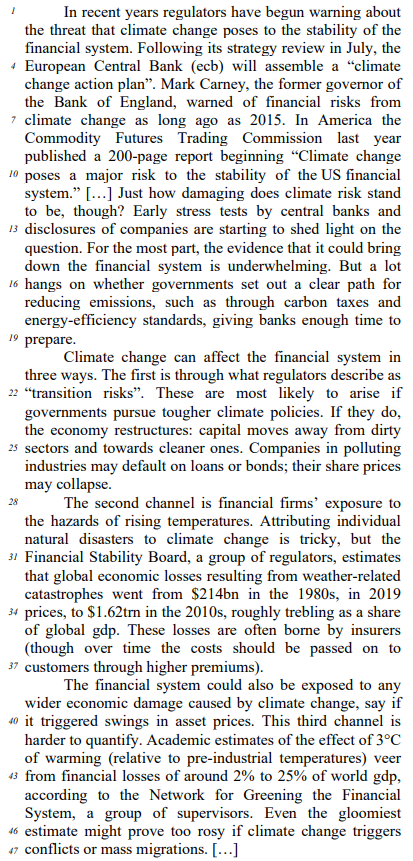
According to the text, mark the statements below as right (C) or wrong (E).
The word “assemble” (line 4) can be correctly replaced
by the word “propose”.
Text to answer the question.
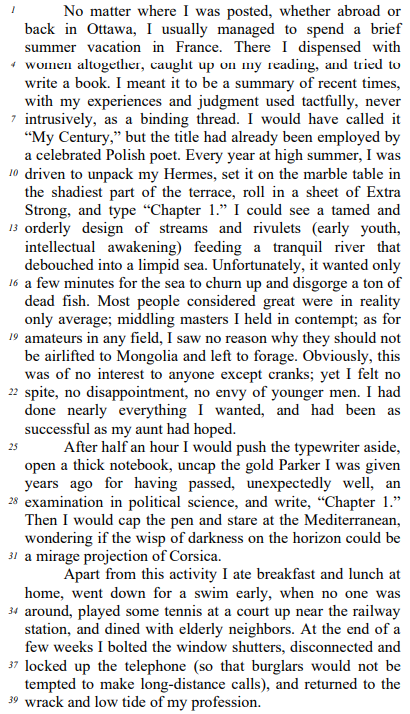
GALLANT, Mavis. Let it Pass. In: Montreal Stories.
Toronto: McClelland & Stewart, 2004. (adapted)
Considering the vocabulary in the text, mark the statements below as right (C) or wrong (E).
In the second paragraph, the word “wisp” (line 30) refers
to something small.
Text to answer the question.
GALLANT, Mavis. Let it Pass. In: Montreal Stories.
Toronto: McClelland & Stewart, 2004. (adapted)
Considering the vocabulary in the text, mark the statements below as right (C) or wrong (E).
In “middling masters I held in contempt.” (line 18) the
underlined word is a verb.
Resumos relacionados
Advérbios e conjunções em inglês para concursos públicos
O estudo de advérbios e conjunções na língua inglesa é fundamental para quem deseja se destacar em provas de concursos públicos. Esses elementos desempenham papéis essenciais na construção de frases, influenciando diretamente o sentido e a coesão textual, habilidades bastante exigidas nas questões de interpretação e compreensão de textos em inglês.
Artigos (Articles) em inglês: uso em concursos públicos
Artigos (Articles) são palavras essenciais na gramática da língua inglesa, usadas para indicar se um substantivo está sendo mencionado de forma específica ou geral. Eles desempenham papel fundamental em provas de concursos, pois ajudam na compreensão e interpretação dos textos, além de serem frequentemente cobrados em questões envolvendo uso correto de estruturas gramaticais.
Text to answer the question.
GALLANT, Mavis. Let it Pass. In: Montreal Stories.
Toronto: McClelland & Stewart, 2004. (adapted)
Considering the vocabulary in the text, mark the statements below as right (C) or wrong (E).
The word churn up (line 16) means “to move something
with great force or violently”.
Text to answer the question.
GALLANT, Mavis. Let it Pass. In: Montreal Stories.
Toronto: McClelland & Stewart, 2004. (adapted)
Considering the vocabulary in the text, mark the statements below as right (C) or wrong (E).
The fragment “tamed and orderly design of streams and
rivulets” (lines 12 and 13) refers to an object that was in
the terrace.
Text to answer the question.
GALLANT, Mavis. Let it Pass. In: Montreal Stories.
Toronto: McClelland & Stewart, 2004. (adapted)
Based on the text, mark the statements below as right (C) or wrong (E).
The fragment “and returned to the wrack and low tide of
my profession” (lines 38 and 39) states that the character
is elated with his career.
Text to answer the question.
GALLANT, Mavis. Let it Pass. In: Montreal Stories.
Toronto: McClelland & Stewart, 2004. (adapted)
Based on the text, mark the statements below as right (C) or wrong (E).
The word “contempt” (line 18) can be correctly replaced
with disdain.
Text to answer the question.
GALLANT, Mavis. Let it Pass. In: Montreal Stories.
Toronto: McClelland & Stewart, 2004. (adapted)
Based on the text, mark the statements below as right (C) or wrong (E).
In the fragment “I would have called it ‘My Century’”
(lines 7 and 8), the pronoun it refers to the book the
character is trying to write.
Text to answer the question.
GALLANT, Mavis. Let it Pass. In: Montreal Stories.
Toronto: McClelland & Stewart, 2004. (adapted)
Based on the text, mark the statements below as right (C) or wrong (E).
The character in the story wanted to write a book but
gave up, since the title he intended to use was already
taken.
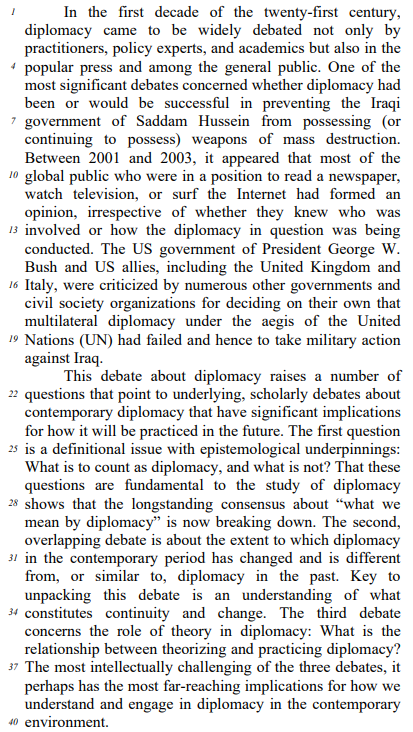
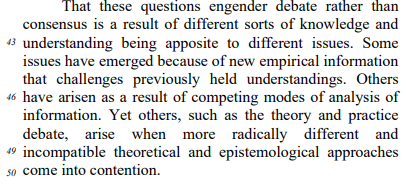
Regarding the vocabulary of the text, mark the statements below as right (C) or wrong (E).
The word “apposite” (line 43) could be replaced by
opposed without changing the meaning of the sentence.
Regarding the vocabulary of the text, mark the statements below as right (C) or wrong (E).
The word “far-reaching” (line 38) means “to have great
influence or many effects”.
Regarding the vocabulary of the text, mark the statements below as right (C) or wrong (E).
In the fragment “and hence to take military action against
Iraq” (lines 19 and 20), the subject is the United Nations.
Regarding the vocabulary of the text, mark the statements below as right (C) or wrong (E).
“Irrespective of” (line 12) could be replaced by
regardless of without changing the meaning of the
sentence.
In the second paragraph, the word “underpinnings” (line 25) means support, basis or basic structure.
“Under the aegis of” (line 18) is the same as to face strife.
The author argues that the debate around diplomacy stems from the need to create an epistemological framework.
According to the author, the general public formed an opinion regarding the Iraqi situation having all the possible facts available.
Text to answer the question.
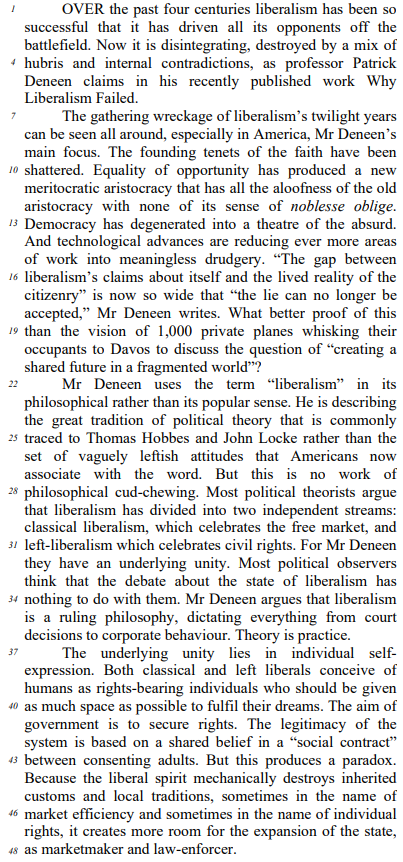
In: Political thought: the problem with liberalism.
The Economist, Edição impressa, p. 74, 27 jan. 2018.
As far as grammar is concerned, mark the statements below as right (C) or wrong (E).
The referent of the word “them” (line 34) is “civil rights”
(line 31).
Text to answer the question.
In: Political thought: the problem with liberalism.
The Economist, Edição impressa, p. 74, 27 jan. 2018.
As far as grammar is concerned, mark the statements below as right (C) or wrong (E).
The word “this” (line 18) refers to “lie” (line 17).
Text to answer the question.
In: Political thought: the problem with liberalism.
The Economist, Edição impressa, p. 74, 27 jan. 2018.
As far as grammar is concerned, mark the statements below as right (C) or wrong (E).
The suffix “-ish” in “leftish” (line 26) adds the notion of
“somewhat or tending to” to the adjective “left”.

 Conheça nossos planos