Questões de Concurso
Sobre inglês
Foram encontradas 25.489 questões
Resolva questões gratuitamente!
Junte-se a mais de 4 milhões de concurseiros!


O texto seguinte servirá de base para responder às questões de 21 a 25.
PUCKER UP I'm a dermatologist - you've been using lip balm all wrong - here's why your pout is still chapped
(1º§)YOU might be reaching for your lip balm more and more through these winter months. But are your lips still sore and chapped, no matter how much of the stuff you slather on? According to dermatology experts, the type of balm you put on your pout might be more important than the amount.
(2º§)Dr. Mona Gohara, an associate clinical professor of dermatology at the Yale School of Medicine, and Dr. Brendan Camp, a dermatologist at MDCS Dermatology in New York, told TODAY why some lip balms could do more harm than good.
(3º§)To start with, they discussed why your lips might be chapped in the first place. The cold weather can wreak havoc on them as the skin is very thin, so they're more likely to dry out, Dr Gohara said. Meanwhile, Dr Camp noted that the delicate skin of your pout can easily be irritated by ingredients in skincare or food, yeast or bacteria, and even enzymes in saliva.
(4º§)You might also not be giving them enough love: lot's of people forget about their lips when they're moisturising their face. But if your lips are dry and chapped not long after you apply your balm, you just might be using the wrong kind.
(5º§)Four things to avoid in a lip balm:
1.Tingly balms
2. Fragrances
3. Flavouring agents
4. Dyes
(6º§)Dr Camp said these might cause allergic contact dermatitis, a type of eczema triggered by contact with a particular substance. And if your lips are dry, cracked, red, scaly and itchy, you might have developed a sensitivity to an ingredient in your lip balm, he added. Moral of the story, check your lip balm ingredients.
(7º§)Since you're doing that, there are a few ingredients that will help hydrate your pout. Dr Camp said you want to look for ingredients that will help trap water in the skin while keeping it moisturized for a long period of time. "Ingredients like beeswax, olive oil, castor oil, coconut oil, and shea butter are often used for this purpose," he said.
(8º§)You should also be wearing a salve with SPF to protect your lips from the sun. Meanwhile, Dr Gohara said that your ideal balm will have a combination of humectants (like hyaluronic acid and glycerin), which draw moisture into the skin, and occlusives (such as shea butter and mineral oil), which lock moisture in.
(9º§)The NHS recommended you use one containing petroleum jelly or beeswax. It said: "Try a few different lip balms if one is not working for you - some people may be sensitive to some fragrances, dyes or cosmetic ingredients."
(10º§)As long as you're using the right type of balm, Dr Gohara said you can apply it multiple times a day. According to Dr Camp, it's best to put on lip balm once in the morning and once before bed. There are other ways of preventing dry lips too.
(11º§)Lisa Borg, skin specialist and nutritionist at the Pulse Light Clinc, said the best thing you can do is drink plenty of fluids throughout the day. Preferably quality water as opposed to dehydrating coffee and fizzy drinks, she noted.
(12º§)Lisa also recommended eating foods that simulate saliva production, such as apples, cucumbers, tomatoes, courgettes, watermelon, lemons, and crunchy fibrous vegetables like carrots and celery. Meanwhile, the NHS said you should wash your hands before applying lip balm and cover your lips with a scarf when you're outside in cold weather. If you're outdoors, use a balm with SPF 15 or more every two hours, it added.
(13º§)Common causes of dry lips: cold weather, dry air or wind; damage from the sun; dehydration; a lip injury; allergies; and lack of vitamins and minerals. If you have sore or dry lips, you should avoid: picking or biting any flaky skin on your lips - this can slow down healing; licking dry or cracked lips - this can make them sore; and sharing lip balms with other people - this can spread germs.
(adapted) -wwrongg-pu--chappeed .uk/health/21661055/dermatologist-using-lip-balm-wrong-pout-chapped/
According to the text, it is important for people to look for lip balm ingredients that:
O texto seguinte servirá de base para responder às questões de 21 a 25.
PUCKER UP I'm a dermatologist - you've been using lip balm all wrong - here's why your pout is still chapped
(1º§)YOU might be reaching for your lip balm more and more through these winter months. But are your lips still sore and chapped, no matter how much of the stuff you slather on? According to dermatology experts, the type of balm you put on your pout might be more important than the amount.
(2º§)Dr. Mona Gohara, an associate clinical professor of dermatology at the Yale School of Medicine, and Dr. Brendan Camp, a dermatologist at MDCS Dermatology in New York, told TODAY why some lip balms could do more harm than good.
(3º§)To start with, they discussed why your lips might be chapped in the first place. The cold weather can wreak havoc on them as the skin is very thin, so they're more likely to dry out, Dr Gohara said. Meanwhile, Dr Camp noted that the delicate skin of your pout can easily be irritated by ingredients in skincare or food, yeast or bacteria, and even enzymes in saliva.
(4º§)You might also not be giving them enough love: lot's of people forget about their lips when they're moisturising their face. But if your lips are dry and chapped not long after you apply your balm, you just might be using the wrong kind.
(5º§)Four things to avoid in a lip balm:
1.Tingly balms
2. Fragrances
3. Flavouring agents
4. Dyes
(6º§)Dr Camp said these might cause allergic contact dermatitis, a type of eczema triggered by contact with a particular substance. And if your lips are dry, cracked, red, scaly and itchy, you might have developed a sensitivity to an ingredient in your lip balm, he added. Moral of the story, check your lip balm ingredients.
(7º§)Since you're doing that, there are a few ingredients that will help hydrate your pout. Dr Camp said you want to look for ingredients that will help trap water in the skin while keeping it moisturized for a long period of time. "Ingredients like beeswax, olive oil, castor oil, coconut oil, and shea butter are often used for this purpose," he said.
(8º§)You should also be wearing a salve with SPF to protect your lips from the sun. Meanwhile, Dr Gohara said that your ideal balm will have a combination of humectants (like hyaluronic acid and glycerin), which draw moisture into the skin, and occlusives (such as shea butter and mineral oil), which lock moisture in.
(9º§)The NHS recommended you use one containing petroleum jelly or beeswax. It said: "Try a few different lip balms if one is not working for you - some people may be sensitive to some fragrances, dyes or cosmetic ingredients."
(10º§)As long as you're using the right type of balm, Dr Gohara said you can apply it multiple times a day. According to Dr Camp, it's best to put on lip balm once in the morning and once before bed. There are other ways of preventing dry lips too.
(11º§)Lisa Borg, skin specialist and nutritionist at the Pulse Light Clinc, said the best thing you can do is drink plenty of fluids throughout the day. Preferably quality water as opposed to dehydrating coffee and fizzy drinks, she noted.
(12º§)Lisa also recommended eating foods that simulate saliva production, such as apples, cucumbers, tomatoes, courgettes, watermelon, lemons, and crunchy fibrous vegetables like carrots and celery. Meanwhile, the NHS said you should wash your hands before applying lip balm and cover your lips with a scarf when you're outside in cold weather. If you're outdoors, use a balm with SPF 15 or more every two hours, it added.
(13º§)Common causes of dry lips: cold weather, dry air or wind; damage from the sun; dehydration; a lip injury; allergies; and lack of vitamins and minerals. If you have sore or dry lips, you should avoid: picking or biting any flaky skin on your lips - this can slow down healing; licking dry or cracked lips - this can make them sore; and sharing lip balms with other people - this can spread germs.
(adapted) -wwrongg-pu--chappeed .uk/health/21661055/dermatologist-using-lip-balm-wrong-pout-chapped/
Which of the following options correctly identifies the grammatical function of "licking dry or cracked lips" (13º paragraph) in the given text?
O texto seguinte servirá de base para responder às questões de 21 a 25.
PUCKER UP I'm a dermatologist - you've been using lip balm all wrong - here's why your pout is still chapped
(1º§)YOU might be reaching for your lip balm more and more through these winter months. But are your lips still sore and chapped, no matter how much of the stuff you slather on? According to dermatology experts, the type of balm you put on your pout might be more important than the amount.
(2º§)Dr. Mona Gohara, an associate clinical professor of dermatology at the Yale School of Medicine, and Dr. Brendan Camp, a dermatologist at MDCS Dermatology in New York, told TODAY why some lip balms could do more harm than good.
(3º§)To start with, they discussed why your lips might be chapped in the first place. The cold weather can wreak havoc on them as the skin is very thin, so they're more likely to dry out, Dr Gohara said. Meanwhile, Dr Camp noted that the delicate skin of your pout can easily be irritated by ingredients in skincare or food, yeast or bacteria, and even enzymes in saliva.
(4º§)You might also not be giving them enough love: lot's of people forget about their lips when they're moisturising their face. But if your lips are dry and chapped not long after you apply your balm, you just might be using the wrong kind.
(5º§)Four things to avoid in a lip balm:
1.Tingly balms
2. Fragrances
3. Flavouring agents
4. Dyes
(6º§)Dr Camp said these might cause allergic contact dermatitis, a type of eczema triggered by contact with a particular substance. And if your lips are dry, cracked, red, scaly and itchy, you might have developed a sensitivity to an ingredient in your lip balm, he added. Moral of the story, check your lip balm ingredients.
(7º§)Since you're doing that, there are a few ingredients that will help hydrate your pout. Dr Camp said you want to look for ingredients that will help trap water in the skin while keeping it moisturized for a long period of time. "Ingredients like beeswax, olive oil, castor oil, coconut oil, and shea butter are often used for this purpose," he said.
(8º§)You should also be wearing a salve with SPF to protect your lips from the sun. Meanwhile, Dr Gohara said that your ideal balm will have a combination of humectants (like hyaluronic acid and glycerin), which draw moisture into the skin, and occlusives (such as shea butter and mineral oil), which lock moisture in.
(9º§)The NHS recommended you use one containing petroleum jelly or beeswax. It said: "Try a few different lip balms if one is not working for you - some people may be sensitive to some fragrances, dyes or cosmetic ingredients."
(10º§)As long as you're using the right type of balm, Dr Gohara said you can apply it multiple times a day. According to Dr Camp, it's best to put on lip balm once in the morning and once before bed. There are other ways of preventing dry lips too.
(11º§)Lisa Borg, skin specialist and nutritionist at the Pulse Light Clinc, said the best thing you can do is drink plenty of fluids throughout the day. Preferably quality water as opposed to dehydrating coffee and fizzy drinks, she noted.
(12º§)Lisa also recommended eating foods that simulate saliva production, such as apples, cucumbers, tomatoes, courgettes, watermelon, lemons, and crunchy fibrous vegetables like carrots and celery. Meanwhile, the NHS said you should wash your hands before applying lip balm and cover your lips with a scarf when you're outside in cold weather. If you're outdoors, use a balm with SPF 15 or more every two hours, it added.
(13º§)Common causes of dry lips: cold weather, dry air or wind; damage from the sun; dehydration; a lip injury; allergies; and lack of vitamins and minerals. If you have sore or dry lips, you should avoid: picking or biting any flaky skin on your lips - this can slow down healing; licking dry or cracked lips - this can make them sore; and sharing lip balms with other people - this can spread germs.
(adapted) -wwrongg-pu--chappeed .uk/health/21661055/dermatologist-using-lip-balm-wrong-pout-chapped/
According to the text, it is correct to say that:
A conjunction is a part of speech that is used to connect words, phrases, clauses, or sentences. Conjunctions are considered to be invariable grammar particles, and they may or may not stand between items they conjoin. Coordinating conjunctions are used to join words, phrases, or clauses that are grammatically equal. There are seven coordinating conjunctions: for, and, nor, but, or, yet, so. They can be remembered using the acronym FANBOYS. On the other hand, subordinating conjunctions introduce a dependent clause and indicates its relation to the rest of the sentence; they may be located either at the beginning or the end of the sentence. Subordinating conjunctions may be grouped based on semantic categories. Having that in mind, match the column on the right by using the information provided in the column on the left, which is related to the semantic categories of subordinating conjunctions and their potential examples. Then, check the correct answer.
(1) REASON
(2) TIME
(3) CONDITION
(4) CONTRAST
(5) CHOICE
(6) PURPOSE OR RESULT
( ) even if, if, unless.
( ) so that, in order that, that.
( ) because, since, as, so that.
( ) than, whether, rather than.
( ) once, as soon as, while, when.
( ) whereas, even though, although.
Written language and spoken language differ in several ways. A key difference between written and spoken languages is that written language tends to be more formal and complex than spoken language. For example, written English refers to the English language one notices in texts while spoken English is what one hears and uses for conversing with others. Although both written and spoken English can be used as mediums of communication, the key difference between written and spoken English is that while written English is textbased, spoken English is not. With that in mind, read the statements that follow and check the correct answer.
I. The writing of a text is usually detached in time and space from its reading. Speaking usually takes place in immediate interaction with known listeners and with the availability of immediate feedback.
II. Writing is less permanent and more easily changed. On the other hand, speaking is fixed and stable, for it is more likely to be organized and carefully formulated.
III. Writing normally uses a generally acceptable standard variety of the language whereas speech may sometimes be informal, therefore being associated with the use of slangs and colloquialisms.
IV.Spoken language involves speaking and listening skills while written language requires writing and reading skills.
V. Spoken English is more structured than written English, for spoken language can be both formal and informal depending on the context, and written language is mostly informal.
Based on the differences presented between written and spoken English, it is possible to say that are correct.
Indirect speech conveys a report of something that was said or written rather than the exact words that were spoken or written. Moreover, indirect speech is also called reported speech. It is when something that has been said is written without directly quoting the speaker. In short, reported speech is the linguistic technique that is used to tell somebody what someone else’s direct speech was. In consideration of the foregoing, read the sentence that follows, which was written in the direct speech form, and check its correspondent correct reported speech form.
DIRECT SPEECH: An English teacher said: “I have taught my students to help them become independent learners and critical citizens”.
Also called modal auxiliary verbs, modal verbs are used along with a main verb to express possibility, ability, permission, necessity, and others. Modal verbs, modal auxiliary verbs, modal auxiliaries or simply modals are only used in combination with “ordinary verbs”. They have no inflection at all as they are always followed by the infinitive form of a verb. After reading the statements below, check the correct alternative based on the correct use of the modal auxiliary verbs in English.
I. CAN as a modal auxiliary verb is used to express present ability, permission and polite request.
II. SHOULD as a modal auxiliary verb is used to express opinion, advice, necessity and recommendation.
III. MAY as a modal auxiliary verb is used to express obligation, firm necessity, logical conclusion and probability.
IV.OUGHT TO as a modal auxiliary verb is used to express intention, permission, supposition with doubt and past habits.
V. MUST as a modal auxiliary verb is used to express supposition, moral duty, strict recommendation, regret and insistent advice.
Based on the information gathered after reading the propositions provided, it is possible to say that is (that are) correct.
Genre has been defined as ‘‘a distinctive category of discourse of any type, spoken or written’’ that serves as ‘‘responses by speakers or writers to the demands of a social context’’. Genre has been produced in many different spheres of human activities. For example, they are present in magazines, newspapers, television, internet, and others. That is to say that a genre represents a pattern or a set of rules that a given text follows in order to communicate its message effectively to its intended audience. Taking that into consideration, check the alternative, whose statement provided may not be associated with the tenets of a potential genre-based theory or approach to the English language teaching (ELT).
Many languages have grammatical means to indicate the time when an action or event occurs, or when a state or process holds. This phenomenon is called “tense”. Verb tenses indicate when an action took place, as well as how long it occurred. In English, the main verb tenses are past, present, and future. When it comes to verb aspect, it is worth mentioning that it deals with the internal constituency of actions, events, states, processes or situations. For instance, it may indicate that an action is completed or still ongoing. English has four aspects, which are: simple, progressive (continuous), perfect and perfect progressive. Having that said, check the alternative, whose information presented is the only one that can be posited as correct when it comes to English tenses and their adequate uses.
Read the text below and answer the question provided.
WHY IS IT IMPORTANT TO LEARN ENGLISH?
Learning English is important, but firstly, why is it a good idea to learn any new language? Learning a new language can be an enjoyable experience at any age. People learn new languages for many different reasons, such as travel or work, and the benefits can be incredibly worthwhile, whatever the reason.
For example, studying a foreign language can increase cultural knowledge and can help you feel more confident when traveling. It’s also a fact that learning a second language improves brain functionality. Studies show that people who speak more than one language have improved memory, problem-solving and critical-thinking skills, enhanced concentration, ability to multitask and also listening skills.
English is one of the most used languages in the world. Even outside of countries like the U.S. and the U.K., many people can speak and understand English. Sixty-seven countries have English as their official language and there are twenty-seven countries that have English as their secondary official language.
Since English is spoken in so many different countries there are lots of schools and universities around the world that offer programs in English. If you have a good level of academic English, there are lots of opportunities for you to find an appropriate school and course to suit your needs. In addition, many of the world’s prestigious universities are situated in English-speaking countries such as the United Kingdom, United States and Australia.
English is also a particularly important language online with the highest percentage of content on the internet written in English. As well as this, some of the world’s largest tech companies are based in English speaking countries. Most of the content on the internet is written in English. Many of the world’s biggest news outlets, including TV, newspapers, magazines and radio, are produced in English. Some of your favorite films, TV shows and pop music are probably English-language.
All in all, the English language bridges the gap between nations and offers everyone the possibility of attaining wide exposure. The adoption of the English language as the principal source of communication has resulted in increasing international relationships in travel and tourism, education, business, entertainment, science, technology, and so on.
(adapted from studiocambridge.co.uk)
Relying on the information gathered after reading the text: “WHY IS IT IMPORTANT TO LEARN ENGLISH?”, check the answer which cannot be considered as one of the reasons to learn English, for it was not presented on the text read as such.
Comparatives and superlatives are used to describe how people or things are different. If on the one hand, comparative adjectives are used to express how two people or things are different, on the other hand, superlative adjectives are used to convey that one person or thing is different to all the others of its kind. Based on the principles of explanation and potential application of comparatives and superlatives in English, check the alternative whose information read cannot be considered as correct.
Pronouns substitute the noun in a paragraph or in a piece of writing to avoid repetition of the noun. Pronouns can be used in singular and plural forms as the verb written in the sentence should be used in accordance with the particular form of the specific pronoun. It is noteworthy that pronouns have different forms for the different ways they are used. A different pronoun is required depending on two elements: the noun being replaced and the function the noun has in the sentence. That being said, check the alternative that provides correct information about the correct use of the pronouns in English.
Teaching methods have been considered as a set of core teaching and learning principles together with a body of classroom practices that are derived from them. There are, and have been, many methods in English teaching. Methods deal with practical details and fundamentals of teaching. In Applied Linguistics, studies associated with English language teaching have suggested the following methods, along with a few others, as the most known, debated and analyzed in English teaching literature (written works). They are: I) Audiolingual Method or Audiolingualism; II) Total Physical Response; III) Silent Way; IV) Grammar-Translation Method; and, V) Direct Method or Natural Method. With that in mind, check the alternative that presents the correct information about one of the before-mentioned methods.
The experience of being hospitalised is usually an anxiety-provoking and even traumatic experience, especially for children. Children are particularly susceptible to the adverse effects of being ill, and their hospitalisation is a stressful event with potential unpleasant consequences for children and their families. In a sense, for children the hospital is like a foreign country to whose customs, language and culture they must learn to adapt, a situation which presents many challenges. Health care professionals, such as physicians, nurses, and psychologists, must be aware of the psychological and emotional needs of their patients, particularly those of children. Pediatric hospitals must go beyond a narrow focus of the medical aspect of treating children’s illnesses, by providing, for example, age-appropriate communication, support, and empathy, on the part of the medical and psychological staff, as means of interventions for those children who display marked signs of distress.
Avaiable in: https://www.oatext.com/Psychological-emotional-and-physical-experiences-of-hospitalized- children.php. Access: 30 Nov. 2022. Adapted.
“Age-appropriate communication, support and empathy” are mentioned in the text as examples of
The experience of being hospitalised is usually an anxiety-provoking and even traumatic experience, especially for children. Children are particularly susceptible to the adverse effects of being ill, and their hospitalisation is a stressful event with potential unpleasant consequences for children and their families. In a sense, for children the hospital is like a foreign country to whose customs, language and culture they must learn to adapt, a situation which presents many challenges. Health care professionals, such as physicians, nurses, and psychologists, must be aware of the psychological and emotional needs of their patients, particularly those of children. Pediatric hospitals must go beyond a narrow focus of the medical aspect of treating children’s illnesses, by providing, for example, age-appropriate communication, support, and empathy, on the part of the medical and psychological staff, as means of interventions for those children who display marked signs of distress.
Avaiable in: https://www.oatext.com/Psychological-emotional-and-physical-experiences-of-hospitalized- children.php. Access: 30 Nov. 2022. Adapted.
The text compares children’s experience in hospitals to being in a foreign country, because in both situations,
Read the sentences below and choose the option which is grammatically INCORRECT:
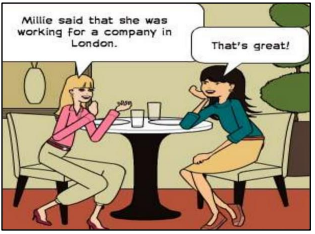
Picture: available at: https://www.slideshare.net/lady2727/reportedspeech-68823280. Accessed on: Oct. 16, 2023.
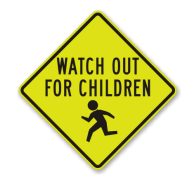
Picture available at: https://www.smartsign.com/school-signs/watch-out-for-childrensign/sku-k-2029. Accessed on: Oct. 16, 2023.
I) “The project aims to save fuel and lessen air pollution, or emissions, from automobiles.” II) “Google first announced the program in 2021, (…)” III) “When it was testing the system in four areas of Israel.” IV) “(…) this is at major crossings with heavy traffic and complex traffic lights.”
Based on the verb tenses, select the alternative that presents the CORRECT sequence of verb tenses.
Analyze the statements below and choose the CORRECT option:
I) The project is focused on fuel conservation and increasing the emission of air pollutants.
II) Google’s Yossi Matias noted that the system is being tested in areas with intense traffic issues.
III) The program was first tested in Bangalore, Budapest, Jakarta, Manchester, Haifa, Hamburg, Rio de Janeiro, and Seattle.
IV) Generally, the project isn’t used at major crossings with heavy traffic and complex traffic lights.
V) The Green Light project is used in areas called
intersections, where vehicles start and stop.

 Conheça nossos planos