Questões de Concurso
Sobre orações condicionais | conditional clauses em inglês
Foram encontradas 290 questões
Resolva questões gratuitamente!
Junte-se a mais de 4 milhões de concurseiros!


Each item presents one type of conditional followed by an example.
Identify which conditionals are grammatically correct and logically coherent.
I.First Conditional: If it rains tomorrow, we will stay at home.
II.Second Conditional: If I will study harder, I would pass the exam.
III.Third Conditional: If she had known about the meeting, she would have come earlier.
It is correct what is stated in:
“Climate change remains one of the most pressing issues facing humanity today. If governments worldwide commit to reducing greenhouse gas emissions, there is a chance that global temperature increases can be limited to safer levels. However, if current trends continue unchecked, the consequences will be catastrophic, affecting ecosystems and societies alike. Scientists emphasize that, if early mitigation measures had been implemented decades ago, the severity of current impacts could have been significantly reduced.”
The sentence which correctly uses a conditional structure and maintains the intended meaning based on the context above is:
Based on the use of conditional sentences, which of the following sentences correctly uses a conditional (if clause)?
A British Airways Pilot Was Sucked Out of An Airplane
Natalie Musumenci
(Available at: https://www.businessinsider.com/british-airways-pilot-sucked-out-plane-mid-flight-survived2024-1 – text specially adapted for this test).
*Windscreen panel: it is the glass window at the front of the plane through which the pilots look.
*Cockpit: the front part of the plane where the pilot sits.
(Available at: www.collinsdictionary.com).
“If the island open to the public year-round, it lose its unique appeal”.
Mark the alternative that fills in, correctly and respectively, the blanks in the sentence above.
1- If you heat water to 100ºC, it boils.
2- If she studies hard, she will pass the exam.
3- If i were you, i would take that job opportunity.
4- If they had arrived earlier, they would have seen the beginning of the movie.
 Watterson, Bill. “Calvin and Hobbes.” GoComics. https://www.gocomics.com/calvinandhobbes/2025/08/14. Accessed August 17,
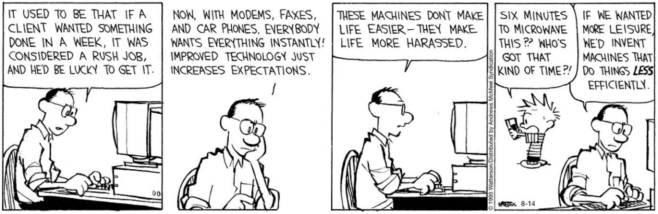
 In “If we wanted more leisure, we’d invent machines that do things less efficiently,” which conditional structure is used?
If I were a boy
Even just for a day
I'd roll out of bed in the morning
And throw on what I wanted then go
Drink beer with the guys
And chase after girls
I'd kick it with who I wanted
And I'd never get confronted for it
'Cause they'd stick up for me
According to English grammar rules, the use of “were” instead of “was” in this sentence is explained by:
“If I were determined to get a rich husband, I dare say I would adopt it.”
Adapted from: AUSTEN, Jane. Pride and Prejudice. Edited by James Kinsley. Oxford: Oxford University Press, 2008. Oxford World’s Classics.
Based on the excerpt and standard English grammar rules, it is correct to affirm that
“If the teacher is indeed wise, he does not bid you into the house of his wisdom but rather leads you to the threshold of your own mind.”
Kahlil Gibran – The Prophet (in HARMER, Jeremy. How to teach English. Pearson Education Limited 2007.
Gibran’s quote is an instance of use of conditionals in a sentence. Complete the blank spaces to make the sentence an improbable past condition.
“If the teacher ____________ indeed wise, he __________you into the house of his wisdom, but rather ____________you to the threshold of your own mind.”
Empregar, de modo inteligível, as formas verbais em orações condicionais dos tipos 1 e 2 (If-clauses) (1ª parte). Empregar, de modo inteligível, os verbos should, must, have to, may e might para indicar recomendação, necessidade ou obrigação e probabilidade (2ª parte).
A sentença está:
Analyze:
“The cake could be better if she followed the recipe.”
Select the option that correctly classifies the sentence above:
Text 7A3-I
As a science fiction writer, Octavia Butler forged a new path and envisioned bold possibilities. The future she wrote about is now our present moment. She wrote 12 novels and won each of science fiction’s highest honors. In 1995, she became the first science fiction writer to be awarded a MacArthur “genius” grant. She is also, increasingly, a writer recognized as one of the most important voices and visionaries of the 20th century, and now the 21st. As a Black woman and a writer, Butler demolished walls that seemed impermeable, writing on themes that seemed uncategorizable. Her ideas and characters continue to resonate with new readers when so many are looking for, if not hope, then a map for a way forward.
Her vision about the climate crisis, political and societal upheaval and the brutality and consequences of power hierarchies seems both sobering and prescient. However, as Butler often noted, being right was never the point. She didn’t want to be right — far from it. She wanted to give us time, and tools, to correct the course.
Lynell George. The Visions of Octavia Butler. Internet: <www.nytimes.com> (adapted).
In text 7A3-I, the clause “when so many are looking for, if not hope, then a map for a way forward” (last sentence of the first paragraph) is an adverbial clause that indicates
Text 1 – How children learn languages
Questions 31 to 39
How long does it take to learn a language?

 Conheça nossos planos