Questões de Concurso
Sobre inglês
Foram encontradas 25.489 questões
Resolva questões gratuitamente!
Junte-se a mais de 4 milhões de concurseiros!


Ano: 2023
Banca:
VUNESP
Órgão:
Prefeitura de Peruíbe - SP
Prova:
VUNESP - 2023 - Prefeitura de Peruíbe - SP - Professor de Educação Básica II (Língua Estrangeira Moderna - Inglês) |
Q4227848
Inglês
Texto associado
Leia o texto para responder à questão.
Through practice and experience in an increasingly
wide range of communicative contexts and events, learners
gradually expand their communicative competence, consisting
of grammatical competence, discourse competence,
sociocultural competence and strategic competence. All these
components are interrelated. An increase in one component
interacts with other components to produce a corresponding
increase in overall communicative competence.
Grammatical competence refers to sentence-level
grammatical form, the ability to recognize the lexical,
morphological, syntactic and phonological feature of a
language and to make use of these features to interpret
and form words and whole sentences. One demonstrates
grammatical competence not by stating a rule but by using a
rule in the interpretation, expression or negotiation of meaning.
Discourse competence is concerned not with isolated
words or phrases but with the interconnectedness of a series
of utterances, written words and/or phrases to build a text,
a meaningful whole. Two familiar concepts to talk about
discourse competence are text coherence and cohesion. Text
coherence is the relation of all sentences or utterances in a text
to a single global proposition. Local connections or structural
links between individual sentences provide cohesion.
Sociocultural competence extends well beyond linguistic
forms and is an interdisciplinary field of inquiry having to do with
the social rules of language use.
Sociocultural competence
requires an understanding of the social context where
language is used: the roles of the participants, the information
they share, and the function of the interation. And although we
are far from an adequate description of sociocultural rules of
appropriateness, we use them to communicate successfully in
many different contexts of situation. Sociocultural competence
also includes a willingness to suspend judgement and take
into consideration the possibility of cultural differences in
convention and use. Thus the importance of the term cultural
flexibility or cultural awareness.
The ‘’ideal native speaker,’’ someone who knows a
language perfectly and uses it appropriately in all social
interactions, exists in theory only. None of us knows all there is
to know of English in its many manifestations, both around the
world and in our own backyards. Communicative competence
is always relative. The coping strategies we use in unfamiliar
contexts, with constraints due to imperfect knowledge of
rules or limiting factors in their application such as fatigue or
distraction, are represented as strategic competence. With
practice and experience, we gain in grammatical, discourse,
and socio-cultural competence. The relative importance of
strategic competence thus decreases. However, the effective
use of coping strategies is important for communicative
competence in all contexts and distinguishes highly competent
communicators from those who are less so.
(Sandra J. Savignon. Communicative language teaching for the
twenty-first century. IN: Marianne Celce-Murcia. Teaching English as a
second or foreign language. Boston, Massachusstes: Heinle&Heinle.
3rd edition. 2002. Adaptado)
“Coping strategies”, as mentioned in the last paragraph,
refer to
Ano: 2023
Banca:
VUNESP
Órgão:
Prefeitura de Peruíbe - SP
Prova:
VUNESP - 2023 - Prefeitura de Peruíbe - SP - Professor de Educação Básica II (Língua Estrangeira Moderna - Inglês) |
Q4227847
Inglês
Texto associado
Leia o texto para responder à questão.
Through practice and experience in an increasingly
wide range of communicative contexts and events, learners
gradually expand their communicative competence, consisting
of grammatical competence, discourse competence,
sociocultural competence and strategic competence. All these
components are interrelated. An increase in one component
interacts with other components to produce a corresponding
increase in overall communicative competence.
Grammatical competence refers to sentence-level
grammatical form, the ability to recognize the lexical,
morphological, syntactic and phonological feature of a
language and to make use of these features to interpret
and form words and whole sentences. One demonstrates
grammatical competence not by stating a rule but by using a
rule in the interpretation, expression or negotiation of meaning.
Discourse competence is concerned not with isolated
words or phrases but with the interconnectedness of a series
of utterances, written words and/or phrases to build a text,
a meaningful whole. Two familiar concepts to talk about
discourse competence are text coherence and cohesion. Text
coherence is the relation of all sentences or utterances in a text
to a single global proposition. Local connections or structural
links between individual sentences provide cohesion.
Sociocultural competence extends well beyond linguistic
forms and is an interdisciplinary field of inquiry having to do with
the social rules of language use.
Sociocultural competence
requires an understanding of the social context where
language is used: the roles of the participants, the information
they share, and the function of the interation. And although we
are far from an adequate description of sociocultural rules of
appropriateness, we use them to communicate successfully in
many different contexts of situation. Sociocultural competence
also includes a willingness to suspend judgement and take
into consideration the possibility of cultural differences in
convention and use. Thus the importance of the term cultural
flexibility or cultural awareness.
The ‘’ideal native speaker,’’ someone who knows a
language perfectly and uses it appropriately in all social
interactions, exists in theory only. None of us knows all there is
to know of English in its many manifestations, both around the
world and in our own backyards. Communicative competence
is always relative. The coping strategies we use in unfamiliar
contexts, with constraints due to imperfect knowledge of
rules or limiting factors in their application such as fatigue or
distraction, are represented as strategic competence. With
practice and experience, we gain in grammatical, discourse,
and socio-cultural competence. The relative importance of
strategic competence thus decreases. However, the effective
use of coping strategies is important for communicative
competence in all contexts and distinguishes highly competent
communicators from those who are less so.
(Sandra J. Savignon. Communicative language teaching for the
twenty-first century. IN: Marianne Celce-Murcia. Teaching English as a
second or foreign language. Boston, Massachusstes: Heinle&Heinle.
3rd edition. 2002. Adaptado)
A competência sociocultural considera, entre outros fatores, o contexto social em que os falantes estão envolvidos,
e a relação entre eles. Nesse sentido, mostra-se socioculturalmente adequada a fala contida na alternativa:
Ano: 2023
Banca:
VUNESP
Órgão:
Prefeitura de Peruíbe - SP
Prova:
VUNESP - 2023 - Prefeitura de Peruíbe - SP - Professor de Educação Básica II (Língua Estrangeira Moderna - Inglês) |
Q4227846
Inglês
Texto associado
Leia o texto para responder à questão.
Through practice and experience in an increasingly
wide range of communicative contexts and events, learners
gradually expand their communicative competence, consisting
of grammatical competence, discourse competence,
sociocultural competence and strategic competence. All these
components are interrelated. An increase in one component
interacts with other components to produce a corresponding
increase in overall communicative competence.
Grammatical competence refers to sentence-level
grammatical form, the ability to recognize the lexical,
morphological, syntactic and phonological feature of a
language and to make use of these features to interpret
and form words and whole sentences. One demonstrates
grammatical competence not by stating a rule but by using a
rule in the interpretation, expression or negotiation of meaning.
Discourse competence is concerned not with isolated
words or phrases but with the interconnectedness of a series
of utterances, written words and/or phrases to build a text,
a meaningful whole. Two familiar concepts to talk about
discourse competence are text coherence and cohesion. Text
coherence is the relation of all sentences or utterances in a text
to a single global proposition. Local connections or structural
links between individual sentences provide cohesion.
Sociocultural competence extends well beyond linguistic
forms and is an interdisciplinary field of inquiry having to do with
the social rules of language use.
Sociocultural competence
requires an understanding of the social context where
language is used: the roles of the participants, the information
they share, and the function of the interation. And although we
are far from an adequate description of sociocultural rules of
appropriateness, we use them to communicate successfully in
many different contexts of situation. Sociocultural competence
also includes a willingness to suspend judgement and take
into consideration the possibility of cultural differences in
convention and use. Thus the importance of the term cultural
flexibility or cultural awareness.
The ‘’ideal native speaker,’’ someone who knows a
language perfectly and uses it appropriately in all social
interactions, exists in theory only. None of us knows all there is
to know of English in its many manifestations, both around the
world and in our own backyards. Communicative competence
is always relative. The coping strategies we use in unfamiliar
contexts, with constraints due to imperfect knowledge of
rules or limiting factors in their application such as fatigue or
distraction, are represented as strategic competence. With
practice and experience, we gain in grammatical, discourse,
and socio-cultural competence. The relative importance of
strategic competence thus decreases. However, the effective
use of coping strategies is important for communicative
competence in all contexts and distinguishes highly competent
communicators from those who are less so.
(Sandra J. Savignon. Communicative language teaching for the
twenty-first century. IN: Marianne Celce-Murcia. Teaching English as a
second or foreign language. Boston, Massachusstes: Heinle&Heinle.
3rd edition. 2002. Adaptado)
In the sentence from the last paragraph, “None of us knows
all there is to know of English in its many manifestations,
both around the world and in our own backyards.”, the
underlined cohesive device refers to
Ano: 2023
Banca:
VUNESP
Órgão:
Prefeitura de Peruíbe - SP
Prova:
VUNESP - 2023 - Prefeitura de Peruíbe - SP - Professor de Educação Básica II (Língua Estrangeira Moderna - Inglês) |
Q4227845
Inglês
Texto associado
Leia o texto para responder à questão.
Through practice and experience in an increasingly
wide range of communicative contexts and events, learners
gradually expand their communicative competence, consisting
of grammatical competence, discourse competence,
sociocultural competence and strategic competence. All these
components are interrelated. An increase in one component
interacts with other components to produce a corresponding
increase in overall communicative competence.
Grammatical competence refers to sentence-level
grammatical form, the ability to recognize the lexical,
morphological, syntactic and phonological feature of a
language and to make use of these features to interpret
and form words and whole sentences. One demonstrates
grammatical competence not by stating a rule but by using a
rule in the interpretation, expression or negotiation of meaning.
Discourse competence is concerned not with isolated
words or phrases but with the interconnectedness of a series
of utterances, written words and/or phrases to build a text,
a meaningful whole. Two familiar concepts to talk about
discourse competence are text coherence and cohesion. Text
coherence is the relation of all sentences or utterances in a text
to a single global proposition. Local connections or structural
links between individual sentences provide cohesion.
Sociocultural competence extends well beyond linguistic
forms and is an interdisciplinary field of inquiry having to do with
the social rules of language use.
Sociocultural competence
requires an understanding of the social context where
language is used: the roles of the participants, the information
they share, and the function of the interation. And although we
are far from an adequate description of sociocultural rules of
appropriateness, we use them to communicate successfully in
many different contexts of situation. Sociocultural competence
also includes a willingness to suspend judgement and take
into consideration the possibility of cultural differences in
convention and use. Thus the importance of the term cultural
flexibility or cultural awareness.
The ‘’ideal native speaker,’’ someone who knows a
language perfectly and uses it appropriately in all social
interactions, exists in theory only. None of us knows all there is
to know of English in its many manifestations, both around the
world and in our own backyards. Communicative competence
is always relative. The coping strategies we use in unfamiliar
contexts, with constraints due to imperfect knowledge of
rules or limiting factors in their application such as fatigue or
distraction, are represented as strategic competence. With
practice and experience, we gain in grammatical, discourse,
and socio-cultural competence. The relative importance of
strategic competence thus decreases. However, the effective
use of coping strategies is important for communicative
competence in all contexts and distinguishes highly competent
communicators from those who are less so.
(Sandra J. Savignon. Communicative language teaching for the
twenty-first century. IN: Marianne Celce-Murcia. Teaching English as a
second or foreign language. Boston, Massachusstes: Heinle&Heinle.
3rd edition. 2002. Adaptado)
In the first sentence in the last paragraph “The ‘’ideal native
speaker”, someone who knows a language perfectly and
uses it appropriately in all social interaction, exists in theory
only.”, the underlined fragment plays the role of
Ano: 2023
Banca:
VUNESP
Órgão:
Prefeitura de Peruíbe - SP
Prova:
VUNESP - 2023 - Prefeitura de Peruíbe - SP - Professor de Educação Básica II (Língua Estrangeira Moderna - Inglês) |
Q4227844
Inglês
Texto associado
Leia o texto para responder à questão.
Through practice and experience in an increasingly
wide range of communicative contexts and events, learners
gradually expand their communicative competence, consisting
of grammatical competence, discourse competence,
sociocultural competence and strategic competence. All these
components are interrelated. An increase in one component
interacts with other components to produce a corresponding
increase in overall communicative competence.
Grammatical competence refers to sentence-level
grammatical form, the ability to recognize the lexical,
morphological, syntactic and phonological feature of a
language and to make use of these features to interpret
and form words and whole sentences. One demonstrates
grammatical competence not by stating a rule but by using a
rule in the interpretation, expression or negotiation of meaning.
Discourse competence is concerned not with isolated
words or phrases but with the interconnectedness of a series
of utterances, written words and/or phrases to build a text,
a meaningful whole. Two familiar concepts to talk about
discourse competence are text coherence and cohesion. Text
coherence is the relation of all sentences or utterances in a text
to a single global proposition. Local connections or structural
links between individual sentences provide cohesion.
Sociocultural competence extends well beyond linguistic
forms and is an interdisciplinary field of inquiry having to do with
the social rules of language use.
Sociocultural competence
requires an understanding of the social context where
language is used: the roles of the participants, the information
they share, and the function of the interation. And although we
are far from an adequate description of sociocultural rules of
appropriateness, we use them to communicate successfully in
many different contexts of situation. Sociocultural competence
also includes a willingness to suspend judgement and take
into consideration the possibility of cultural differences in
convention and use. Thus the importance of the term cultural
flexibility or cultural awareness.
The ‘’ideal native speaker,’’ someone who knows a
language perfectly and uses it appropriately in all social
interactions, exists in theory only. None of us knows all there is
to know of English in its many manifestations, both around the
world and in our own backyards. Communicative competence
is always relative. The coping strategies we use in unfamiliar
contexts, with constraints due to imperfect knowledge of
rules or limiting factors in their application such as fatigue or
distraction, are represented as strategic competence. With
practice and experience, we gain in grammatical, discourse,
and socio-cultural competence. The relative importance of
strategic competence thus decreases. However, the effective
use of coping strategies is important for communicative
competence in all contexts and distinguishes highly competent
communicators from those who are less so.
(Sandra J. Savignon. Communicative language teaching for the
twenty-first century. IN: Marianne Celce-Murcia. Teaching English as a
second or foreign language. Boston, Massachusstes: Heinle&Heinle.
3rd edition. 2002. Adaptado)
In the fourth paragraph, the discourse markers “although”
and “thus” indicate, respectively,
Ano: 2023
Banca:
VUNESP
Órgão:
Prefeitura de Peruíbe - SP
Prova:
VUNESP - 2023 - Prefeitura de Peruíbe - SP - Professor de Educação Básica II (Língua Estrangeira Moderna - Inglês) |
Q4227843
Inglês
Texto associado
Leia o texto para responder à questão.
Through practice and experience in an increasingly
wide range of communicative contexts and events, learners
gradually expand their communicative competence, consisting
of grammatical competence, discourse competence,
sociocultural competence and strategic competence. All these
components are interrelated. An increase in one component
interacts with other components to produce a corresponding
increase in overall communicative competence.
Grammatical competence refers to sentence-level
grammatical form, the ability to recognize the lexical,
morphological, syntactic and phonological feature of a
language and to make use of these features to interpret
and form words and whole sentences. One demonstrates
grammatical competence not by stating a rule but by using a
rule in the interpretation, expression or negotiation of meaning.
Discourse competence is concerned not with isolated
words or phrases but with the interconnectedness of a series
of utterances, written words and/or phrases to build a text,
a meaningful whole. Two familiar concepts to talk about
discourse competence are text coherence and cohesion. Text
coherence is the relation of all sentences or utterances in a text
to a single global proposition. Local connections or structural
links between individual sentences provide cohesion.
Sociocultural competence extends well beyond linguistic
forms and is an interdisciplinary field of inquiry having to do with
the social rules of language use.
Sociocultural competence
requires an understanding of the social context where
language is used: the roles of the participants, the information
they share, and the function of the interation. And although we
are far from an adequate description of sociocultural rules of
appropriateness, we use them to communicate successfully in
many different contexts of situation. Sociocultural competence
also includes a willingness to suspend judgement and take
into consideration the possibility of cultural differences in
convention and use. Thus the importance of the term cultural
flexibility or cultural awareness.
The ‘’ideal native speaker,’’ someone who knows a
language perfectly and uses it appropriately in all social
interactions, exists in theory only. None of us knows all there is
to know of English in its many manifestations, both around the
world and in our own backyards. Communicative competence
is always relative. The coping strategies we use in unfamiliar
contexts, with constraints due to imperfect knowledge of
rules or limiting factors in their application such as fatigue or
distraction, are represented as strategic competence. With
practice and experience, we gain in grammatical, discourse,
and socio-cultural competence. The relative importance of
strategic competence thus decreases. However, the effective
use of coping strategies is important for communicative
competence in all contexts and distinguishes highly competent
communicators from those who are less so.
(Sandra J. Savignon. Communicative language teaching for the
twenty-first century. IN: Marianne Celce-Murcia. Teaching English as a
second or foreign language. Boston, Massachusstes: Heinle&Heinle.
3rd edition. 2002. Adaptado)
In the first sentence from the third paragraph “Discourse
competence is concerned not with isolated words or
phrases but with the interconnectedness of a series of
utterances, written words and/or phrases to build a text,
a meaningful whole.”, the underlined word functions as
a cohesive device, and the expression “to build” can be
replaced, with no change in meaning, by
Ano: 2023
Banca:
VUNESP
Órgão:
Prefeitura de Peruíbe - SP
Prova:
VUNESP - 2023 - Prefeitura de Peruíbe - SP - Professor de Educação Básica II (Língua Estrangeira Moderna - Inglês) |
Q4227842
Inglês
Texto associado
Leia o texto para responder à questão.
Through practice and experience in an increasingly
wide range of communicative contexts and events, learners
gradually expand their communicative competence, consisting
of grammatical competence, discourse competence,
sociocultural competence and strategic competence. All these
components are interrelated. An increase in one component
interacts with other components to produce a corresponding
increase in overall communicative competence.
Grammatical competence refers to sentence-level
grammatical form, the ability to recognize the lexical,
morphological, syntactic and phonological feature of a
language and to make use of these features to interpret
and form words and whole sentences. One demonstrates
grammatical competence not by stating a rule but by using a
rule in the interpretation, expression or negotiation of meaning.
Discourse competence is concerned not with isolated
words or phrases but with the interconnectedness of a series
of utterances, written words and/or phrases to build a text,
a meaningful whole. Two familiar concepts to talk about
discourse competence are text coherence and cohesion. Text
coherence is the relation of all sentences or utterances in a text
to a single global proposition. Local connections or structural
links between individual sentences provide cohesion.
Sociocultural competence extends well beyond linguistic
forms and is an interdisciplinary field of inquiry having to do with
the social rules of language use.
Sociocultural competence
requires an understanding of the social context where
language is used: the roles of the participants, the information
they share, and the function of the interation. And although we
are far from an adequate description of sociocultural rules of
appropriateness, we use them to communicate successfully in
many different contexts of situation. Sociocultural competence
also includes a willingness to suspend judgement and take
into consideration the possibility of cultural differences in
convention and use. Thus the importance of the term cultural
flexibility or cultural awareness.
The ‘’ideal native speaker,’’ someone who knows a
language perfectly and uses it appropriately in all social
interactions, exists in theory only. None of us knows all there is
to know of English in its many manifestations, both around the
world and in our own backyards. Communicative competence
is always relative. The coping strategies we use in unfamiliar
contexts, with constraints due to imperfect knowledge of
rules or limiting factors in their application such as fatigue or
distraction, are represented as strategic competence. With
practice and experience, we gain in grammatical, discourse,
and socio-cultural competence. The relative importance of
strategic competence thus decreases. However, the effective
use of coping strategies is important for communicative
competence in all contexts and distinguishes highly competent
communicators from those who are less so.
(Sandra J. Savignon. Communicative language teaching for the
twenty-first century. IN: Marianne Celce-Murcia. Teaching English as a
second or foreign language. Boston, Massachusstes: Heinle&Heinle.
3rd edition. 2002. Adaptado)
A word with a silent gh, as in “through” (line 1), is also
found in alternative:
Ano: 2023
Banca:
VUNESP
Órgão:
Prefeitura de Peruíbe - SP
Prova:
VUNESP - 2023 - Prefeitura de Peruíbe - SP - Professor de Educação Básica II (Língua Estrangeira Moderna - Inglês) |
Q4227840
Inglês
Texto associado
Leia o texto para responder à questão.
Through practice and experience in an increasingly
wide range of communicative contexts and events, learners
gradually expand their communicative competence, consisting
of grammatical competence, discourse competence,
sociocultural competence and strategic competence. All these
components are interrelated. An increase in one component
interacts with other components to produce a corresponding
increase in overall communicative competence.
Grammatical competence refers to sentence-level
grammatical form, the ability to recognize the lexical,
morphological, syntactic and phonological feature of a
language and to make use of these features to interpret
and form words and whole sentences. One demonstrates
grammatical competence not by stating a rule but by using a
rule in the interpretation, expression or negotiation of meaning.
Discourse competence is concerned not with isolated
words or phrases but with the interconnectedness of a series
of utterances, written words and/or phrases to build a text,
a meaningful whole. Two familiar concepts to talk about
discourse competence are text coherence and cohesion. Text
coherence is the relation of all sentences or utterances in a text
to a single global proposition. Local connections or structural
links between individual sentences provide cohesion.
Sociocultural competence extends well beyond linguistic
forms and is an interdisciplinary field of inquiry having to do with
the social rules of language use.
Sociocultural competence
requires an understanding of the social context where
language is used: the roles of the participants, the information
they share, and the function of the interation. And although we
are far from an adequate description of sociocultural rules of
appropriateness, we use them to communicate successfully in
many different contexts of situation. Sociocultural competence
also includes a willingness to suspend judgement and take
into consideration the possibility of cultural differences in
convention and use. Thus the importance of the term cultural
flexibility or cultural awareness.
The ‘’ideal native speaker,’’ someone who knows a
language perfectly and uses it appropriately in all social
interactions, exists in theory only. None of us knows all there is
to know of English in its many manifestations, both around the
world and in our own backyards. Communicative competence
is always relative. The coping strategies we use in unfamiliar
contexts, with constraints due to imperfect knowledge of
rules or limiting factors in their application such as fatigue or
distraction, are represented as strategic competence. With
practice and experience, we gain in grammatical, discourse,
and socio-cultural competence. The relative importance of
strategic competence thus decreases. However, the effective
use of coping strategies is important for communicative
competence in all contexts and distinguishes highly competent
communicators from those who are less so.
(Sandra J. Savignon. Communicative language teaching for the
twenty-first century. IN: Marianne Celce-Murcia. Teaching English as a
second or foreign language. Boston, Massachusstes: Heinle&Heinle.
3rd edition. 2002. Adaptado)
At the lexical level, competence includes the recognition
and use of longer stretches of language such as the
underlined expression in “an interdisciplinary field of
inquiry having to do with the social rules of language
use”. The same meaning for the expression is found in
alternative:
Ano: 2023
Banca:
VUNESP
Órgão:
Prefeitura de Peruíbe - SP
Prova:
VUNESP - 2023 - Prefeitura de Peruíbe - SP - Professor de Educação Básica II (Língua Estrangeira Moderna - Inglês) |
Q4227839
Inglês
Texto associado
Leia o texto para responder à questão.
Through practice and experience in an increasingly
wide range of communicative contexts and events, learners
gradually expand their communicative competence, consisting
of grammatical competence, discourse competence,
sociocultural competence and strategic competence. All these
components are interrelated. An increase in one component
interacts with other components to produce a corresponding
increase in overall communicative competence.
Grammatical competence refers to sentence-level
grammatical form, the ability to recognize the lexical,
morphological, syntactic and phonological feature of a
language and to make use of these features to interpret
and form words and whole sentences. One demonstrates
grammatical competence not by stating a rule but by using a
rule in the interpretation, expression or negotiation of meaning.
Discourse competence is concerned not with isolated
words or phrases but with the interconnectedness of a series
of utterances, written words and/or phrases to build a text,
a meaningful whole. Two familiar concepts to talk about
discourse competence are text coherence and cohesion. Text
coherence is the relation of all sentences or utterances in a text
to a single global proposition. Local connections or structural
links between individual sentences provide cohesion.
Sociocultural competence extends well beyond linguistic
forms and is an interdisciplinary field of inquiry having to do with
the social rules of language use.
Sociocultural competence
requires an understanding of the social context where
language is used: the roles of the participants, the information
they share, and the function of the interation. And although we
are far from an adequate description of sociocultural rules of
appropriateness, we use them to communicate successfully in
many different contexts of situation. Sociocultural competence
also includes a willingness to suspend judgement and take
into consideration the possibility of cultural differences in
convention and use. Thus the importance of the term cultural
flexibility or cultural awareness.
The ‘’ideal native speaker,’’ someone who knows a
language perfectly and uses it appropriately in all social
interactions, exists in theory only. None of us knows all there is
to know of English in its many manifestations, both around the
world and in our own backyards. Communicative competence
is always relative. The coping strategies we use in unfamiliar
contexts, with constraints due to imperfect knowledge of
rules or limiting factors in their application such as fatigue or
distraction, are represented as strategic competence. With
practice and experience, we gain in grammatical, discourse,
and socio-cultural competence. The relative importance of
strategic competence thus decreases. However, the effective
use of coping strategies is important for communicative
competence in all contexts and distinguishes highly competent
communicators from those who are less so.
(Sandra J. Savignon. Communicative language teaching for the
twenty-first century. IN: Marianne Celce-Murcia. Teaching English as a
second or foreign language. Boston, Massachusstes: Heinle&Heinle.
3rd edition. 2002. Adaptado)
According to the second paragraph, grammatical
competence helps interpretation of words. Thus in the
phrase “whole sentences” (paragraph 2), grammatical
structure helps identify the underlined word as an
adjective; in “a meaningful whole” (paragraph 3), the
underlined word is a noun. Sentence structure allows the
identification of the word “quiet” as a noun in alternative:
Ano: 2023
Banca:
VUNESP
Órgão:
Prefeitura de Peruíbe - SP
Prova:
VUNESP - 2023 - Prefeitura de Peruíbe - SP - Professor de Educação Básica II (Língua Estrangeira Moderna - Inglês) |
Q4227838
Inglês
Texto associado
Leia o texto para responder à questão.
Through practice and experience in an increasingly
wide range of communicative contexts and events, learners
gradually expand their communicative competence, consisting
of grammatical competence, discourse competence,
sociocultural competence and strategic competence. All these
components are interrelated. An increase in one component
interacts with other components to produce a corresponding
increase in overall communicative competence.
Grammatical competence refers to sentence-level
grammatical form, the ability to recognize the lexical,
morphological, syntactic and phonological feature of a
language and to make use of these features to interpret
and form words and whole sentences. One demonstrates
grammatical competence not by stating a rule but by using a
rule in the interpretation, expression or negotiation of meaning.
Discourse competence is concerned not with isolated
words or phrases but with the interconnectedness of a series
of utterances, written words and/or phrases to build a text,
a meaningful whole. Two familiar concepts to talk about
discourse competence are text coherence and cohesion. Text
coherence is the relation of all sentences or utterances in a text
to a single global proposition. Local connections or structural
links between individual sentences provide cohesion.
Sociocultural competence extends well beyond linguistic
forms and is an interdisciplinary field of inquiry having to do with
the social rules of language use.
Sociocultural competence
requires an understanding of the social context where
language is used: the roles of the participants, the information
they share, and the function of the interation. And although we
are far from an adequate description of sociocultural rules of
appropriateness, we use them to communicate successfully in
many different contexts of situation. Sociocultural competence
also includes a willingness to suspend judgement and take
into consideration the possibility of cultural differences in
convention and use. Thus the importance of the term cultural
flexibility or cultural awareness.
The ‘’ideal native speaker,’’ someone who knows a
language perfectly and uses it appropriately in all social
interactions, exists in theory only. None of us knows all there is
to know of English in its many manifestations, both around the
world and in our own backyards. Communicative competence
is always relative. The coping strategies we use in unfamiliar
contexts, with constraints due to imperfect knowledge of
rules or limiting factors in their application such as fatigue or
distraction, are represented as strategic competence. With
practice and experience, we gain in grammatical, discourse,
and socio-cultural competence. The relative importance of
strategic competence thus decreases. However, the effective
use of coping strategies is important for communicative
competence in all contexts and distinguishes highly competent
communicators from those who are less so.
(Sandra J. Savignon. Communicative language teaching for the
twenty-first century. IN: Marianne Celce-Murcia. Teaching English as a
second or foreign language. Boston, Massachusstes: Heinle&Heinle.
3rd edition. 2002. Adaptado)
A course grounded on the idea that simply teaching
students to use a language rule is not enough, and
dedicates a considerable amount of time and effort to
stating the rule, would be following
Ano: 2023
Banca:
Máxima
Órgão:
Prefeitura de Estiva - MG
Prova:
Máxima - 2023 - Prefeitura de Estiva - MG - Professor de Inglês |
Q4212067
Inglês
Choose the CORRECT answer.
“Andrew runs every day with his mate _________ name I can't remember.”
“Andrew runs every day with his mate _________ name I can't remember.”
Ano: 2023
Banca:
Máxima
Órgão:
Prefeitura de Estiva - MG
Prova:
Máxima - 2023 - Prefeitura de Estiva - MG - Professor de Inglês |
Q4212066
Inglês
Choose the CORRECT answer.
“As citizens of a country, we don’t have an option.
We _________ pay taxes to the local and federal government.”
“As citizens of a country, we don’t have an option.
We _________ pay taxes to the local and federal government.”
Ano: 2023
Banca:
Máxima
Órgão:
Prefeitura de Estiva - MG
Prova:
Máxima - 2023 - Prefeitura de Estiva - MG - Professor de Inglês |
Q4212065
Inglês
What type of Conditional is the sentence below? Choose the CORRECT
answer.
“If we earned more money, we would afford expensive holidays.”
“If we earned more money, we would afford expensive holidays.”
Ano: 2023
Banca:
Máxima
Órgão:
Prefeitura de Estiva - MG
Prova:
Máxima - 2023 - Prefeitura de Estiva - MG - Professor de Inglês |
Q4212064
Inglês
Complete the sentence below with the correct verb. Choose the
CORRECT answer.
“My mom: Where is your father? I need to talk to him.
My friend: He __________________ to the supermarket. If it is important, you should call him.”
“My mom: Where is your father? I need to talk to him.
My friend: He __________________ to the supermarket. If it is important, you should call him.”
Ano: 2023
Banca:
Máxima
Órgão:
Prefeitura de Estiva - MG
Prova:
Máxima - 2023 - Prefeitura de Estiva - MG - Professor de Inglês |
Q4212063
Inglês
Complete the sentence below with the correct verb. Choose the
CORRECT answer.
“A baker always _________ early in order to prepare bread and pastries for the day.”
“A baker always _________ early in order to prepare bread and pastries for the day.”
Ano: 2023
Banca:
Máxima
Órgão:
Prefeitura de Estiva - MG
Prova:
Máxima - 2023 - Prefeitura de Estiva - MG - Professor de Inglês |
Q4212062
Inglês
Look at the picture. Based on what you can see, choose the CORRECT
answer.

“She _________ a cake.”
“She _________ a cake.”
Ano: 2023
Banca:
Máxima
Órgão:
Prefeitura de Estiva - MG
Prova:
Máxima - 2023 - Prefeitura de Estiva - MG - Professor de Inglês |
Q4212061
Inglês
Complete the sentence below with the correct connective. Choose the
CORRECT answer.
“The floods were rising and it was _________ it was the end of the world.”
“The floods were rising and it was _________ it was the end of the world.”
Ano: 2023
Banca:
Máxima
Órgão:
Prefeitura de Estiva - MG
Prova:
Máxima - 2023 - Prefeitura de Estiva - MG - Professor de Inglês |
Q4212060
Inglês
Complete the sentence below with the correct verb. Choose the
CORRECT answer.
Talking to my wife: “When will this renovation end? We are spending a lot of money on it.
Last month we ________ around U$15,000.’’
Talking to my wife: “When will this renovation end? We are spending a lot of money on it.
Last month we ________ around U$15,000.’’
Ano: 2023
Banca:
Máxima
Órgão:
Prefeitura de Estiva - MG
Prova:
Máxima - 2023 - Prefeitura de Estiva - MG - Professor de Inglês |
Q4212059
Inglês
Complete the sentence below with the correct verbs. Choose the
CORRECT answer.
“I couldn't get into the house. I ________ my keys.”
“I couldn't get into the house. I ________ my keys.”
Ano: 2023
Banca:
Máxima
Órgão:
Prefeitura de Estiva - MG
Prova:
Máxima - 2023 - Prefeitura de Estiva - MG - Professor de Inglês |
Q4212058
Inglês
Look at the map below and complete the sentence with the correct word.
Choose the CORRECT answer.
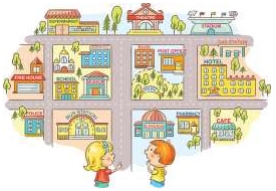
“The church is _________ the school.”
“The church is _________ the school.”

 Conheça nossos planos