Foram encontradas 771 questões
Resolva questões gratuitamente!
Junte-se a mais de 4 milhões de concurseiros!


texto seguinte servirá de base para responder à questão.
CNN Health Exhausted? The reason may be how you're using technology
Analysis by Kara Alaimo
Oct 7, 2025
Kara Alaimo is a professor of communication at Fairleigh Dickinson University. Her book "Over the Influence: Why Social Media Is Toxic for Women and Girls — And How We Can Take It Back" was published in 2024 by Alcove Press.
You may think you're exhausted because, like me, you have too many things on your plate. But there's another reason, according to a new book.
Case in point: While | was writing this piece, | responded to dozens of emails from colleagues and students, got a huge medical bill, replied to a text about a home repair, and learned that my older daughter needs to wear white to school next Monday while the younger one is supposed to wear the colors of fall.
This relentless barrage of interruptions and switching between thoughts and technology platforms is leaving us utterly exhausted, says Paul Leonardi, department chair and Duca Family Professor of Technology Management | at the University of California, Santa Barbara.
He explains how this happens in his new book, "Digital Exhaustion: Simple Rules for Reclaiming Your Life."
| spoke to Leonardi about what's making us all so tired | and what we can do about it.
CNN: You say one reason we're so exhausted is that we keep switching between platforms. How does that make us exhausted?
Paul Leonardi: Every tool we use requires some amount of cognitive focus. We have to learn the tool we're enmeshed in. When we switch, we have to disengage | and reengage in another area of focus, and we also have to switch how we're using that tool. Our brains do not do a good job of switching that quickly. The main issue is that we haven't evolved to make the switches as quickly as we do today. It leaves us feeling exhausted.
CNN: You found that we often don't realize we're getting exhausted from all this digital switching. Why?
Leonardi: It comes back to the way our bodies have evolved over time. We have good sensory feedback to show us when we're physically tired. Otherwise, we could collapse, and that's dangerous. So, our body knows to send signals to our brain to say stop. But we didn't evolve to sit in an office in front of a computer, so our brain doesn't know to tell itself it's tired. We can just keep taxing ourselves, but that residue builds up over time. Then we feel like we've been hit by a semitruck
CNN: What can we do to address that exhaustion?
Leonardi: Think about reducing the kinds of switches we make throughout the day.
In the book | talk about three kinds of switches. Switching between modalities is switching across tools. Think about the different videoconferencing platforms you use. You might use Zoom and then switch to Microsoft Teams. They seem like they're roughly the same. But how many times have you been in a meeting and thought, "I need to share my screen. How do | do that on this platform?" And those little changes are enough to really wear us out when they accumulate over time
The second type is what | call switches between domains, and that's when we're working on one task, get interrupted and then switch to a different task. The unplugging and then re-plugging into the other task take quite a bit of effort. It's a tremendous tax that we pay.
The third type is switching between different areas of life. How many times in your day are you getting a quick text from your kid's school? Or the plumber calls to tell you they're going to be late and wants to talk about the problem in your house. Those switches across really big domains are even more exhausting because they pull us completely out of our thought process in one area, and then we have to get back.
CNN: You say social media is the most exhausting type of platform to use. Why?
Leonardi: | talk about three forces that exhaust us. One is attention. On social media we're constantly switching between things because apps are pushing us different notifications. First somebody liked something, and then there's an ad. The second force of exhaustion is making inferences. We get a snippet of data, and it's not quite enough to tell us the whole picture. So, we have to fill in the blanks, and that takes effort. On social media we're constantly different apps and making inferences. We see somebody is on a trip, and we're like, they must have a lot of money. And they're having the time of their life. We're filling in the blanks.
The last is emotion. When our emotions get piqued, whether for good or for bad, that's also exhausting. On social media we do social comparisons, so we get jealous that somebody else is doing something we wish we were doing. Or we get annoyed that we see a bunch of friends hanging out and we're not part of the group.
Social media is so exhausting because it maximizes all three of these forces.
CNN: You say it's especially hard for people who work from home to avoid this kind of exhaustion. Why is that? Leonardi: One of the big reasons remote workers experience exhaustion even more than people in the office — or it feels more acute — is that it's very difficult to create separation between work and home. They're constantly trying to manage that boundary, and that's so exhausting.
They also are more dependent on tools for everything, so they don't get a break. If you're in the office and you have an in-person meeting, you don't have to switch onto your Zoom platform. You actually get a break for a little bit when you're talking to somebody in the hallway. You don't get that on these tools.
You're also managing your presence when you're working from home. You need to make sure people know you're available because it matters for people's perception of your work performance. So, you're putting on a sort of act that's also exhausting
CNN: You recommend turning off the video of ourselves in meetings. Why?
Leonardi: | think it's a good idea sometimes. We tend to fixate on ourselves, and doing that creates a feeling of self-consciousness. It also creates more effort for us to manage our presentation to others.
Imagine if you were talking to friends, or you're in a meeting, and you have a mirror in front of your face the entire time. You're like, oh my gosh, how do | look right now? There are bags under my eyes, and | can't believe | made that stupid facial expression. We don't do that in regular life.
These extra little activities accumulate to wear us out over time.
Communicating in person instead of texting, when possible, can reduce digital exhaustion and create richer relationships.
CNN: What's your best advice for parents who are exhausted from keeping up with endless group chats about car pools and soccer games?
Leonardi: | never intended to write about that in my book, but it came up so often in the interviews | did.
One strategy | heard that was quite effective was calculating whether a car pool is actually worth the time you're putting into coordinating it. If you add up all the time you're spending texting with other people, sometimes it adds up to the same amount of time it would take to just drive your kid yourself.
Another strategy people used was reducing those communications by trying to coordinate in person. When they see each other at the soccer game, they have a long conversation about the plan for the next week. A lot of folks find they're developing richer relationships because that discussion about the car pool is just the entrée to a deeper conversation. Those are much more fulfiling relationships than the transactions taking place via text
CNN
I."Only I tasted the wine" implies that no one else tasted it.
II."I only tasted the wine" implies that I did nothing else with the wine (e.g., I didn't drink it all).
III."I tasted only the wine" implies that I tasted nothing else but the wine.
Choose the alternative that indicates the correct interpretation(s).
Cold Kimchi Tomato Bibim Noodles
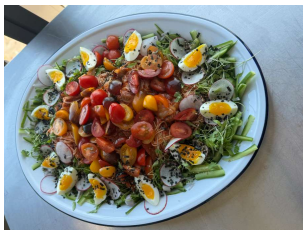
Ingredients
For the sauce
3 tablespoons tomato paste
2 tablespoons gochujang
1 teaspoon kosher salt
1 1/2 tablespoons sesame oil
3 tablespoons apple cider vinegar
3 tablespoons kimchi juice
1 tablespoon honey
1 cup chopped kimchi
For the noodles
150 grams somen noodles
For the toppings
2 Persian cucumbers, sliced into matchsticks
1 shallot, minced
2 cups cherry tomatoes, halved
2 soft-boiled eggs (7 minutes, jammy yolks)
4 radishes, thinly sliced
To finish
Extra sesame oil, for drizzling
2 tablespoons furikake
Handful of cilantro
Directions
•Step 1
"In a medium bowl, whisk together the tomato paste, gochujang, salt, sesame oil, vinegar, kimchi juice, and honey until smooth. Stir in the chopped kimchi until evenly coated."
A translation professor analyzing this instructional text for a Brazilian audience must address the challenge of translating the adverb "evenly" in the phrase "until evenly coated," which modifies the past participle and specifies the manner and distribution quality of the coating action. When considering semantic precision, register appropriateness, and naturalness in Brazilian Portuguese while maintaining the instructional clarity essential for successful recipe execution, the most adequate translation strategy for "until evenly coated" would be______.
Fill in the blank above and select the correct alternative.
Fill in the blank with the appropriate term.
“__________ are we from he nearest beach?”
(__) In the sentence "She speaks English fluently," the word "fluently" is an adverb of manner.
(__) In the sentence "He is a very good student," the word "very" is an adverb of intensity.
(__) In the sentence "They arrived late," the word "late" functions as an adverb of time.
(__) In the sentence "That was a fast car," the word "fast" is an adverb of manner.
Select the alternative that shows the correct sequence from top to bottom.
Assim, analise as afirmativas a seguir:
I.Advérbios de frequência (como *always*, *usually*, *often*) são geralmente posicionados *antes* do verbo principal (e.g., "She *always arrives* late").
II.Quando a frase utiliza o verbo *to be* como verbo principal, o advérbio de frequência é posicionado *depois* dele (e.g., "She *is always* late").
III.Advérbios de modo (como *slowly*, *quietly*), que descrevem *como* a ação é feita, são tipicamente colocados após o verbo principal ou após o objeto direto, se houver (e.g., "He drives *carefully*" ou "He drives the car *carefully*").
Está correto o que se afirma em:
Examine the advertisement poster below in order to subsidize sentence analysis:

(Available on: https://theaddigest.com/mercedes-benz-ad/. Accessed on: October 2025.)
In the sentence “15% discount on spare parts and low service charges”, concerning “ON” and “AND”, the alternative that correctly identifies their roles is:
“The team worked hard; however, they didn’t win the match”.
The teacher asks them to identify the role of the connector “however” in the sentence.
O texto seguinte servirá de base para responder à questão.
Texto 2
Driven by pre-salt, oil becomes Brazil's top export
Revenues
The discovery of the pre-salt was so significant for Brazil's oil production potential that it led the government to change the regime that authorized companies to explore the submerged resources.As a result, the pre-salt areas are governed by the sharing regime. Under this model, surplus oil production—the balance after covering costs—is divided between the company and the Brazilian government. During the auction that authorizes exploration, the company offering the highest share of profits to the federal government is granted the right to explore.
This is distinct from the concession model, which applies to the post-salt period. In this system, the risk of investment and exploration lies with the concessionaire, who becomes the owner of all the oil and gas that may be discovered. In return, the company pays royalties and special participation fees, particularly for large production fields, in addition to a signature bonus upon winning the auction.
New frontiers
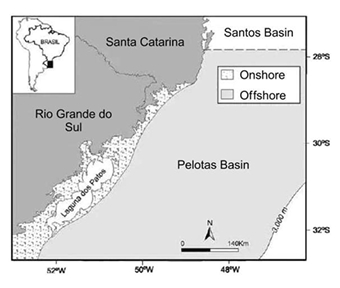
With the pre-salt expected to reach its peak in the 2030s, Brazil's oil industry, led by Petrobras, is shifting its focus to new oil frontiers that are believed to hold significant production potential.
One such frontier is the so-called equatorial margin, located off Brazil's northern coast, where exploration is pending a favorable decision from the Brazilian Institute for the Environment and Renewable Natural Resources (Ibama), an agency under the Ministry of the Environment and Climate Change.
Another promising region is the Pelotas Basin, located off Brazil's southern coast. The growing interest in this area is fueled by the discovery of oil wells in Uruguay and off the coasts of Namibia and South Africa. Experts suggest that the geological conditions in these regions are similar, as the continents were once joined tens of millions of years ago.
According to Petrobras, the company plans to invest $79 billion in exploring new oil and gas frontiers by 2029. Of this amount, 40 percent will be allocated to the South and Southeast regions, 38 percent to the equatorial margin, with the remainder directed towards other countries.
From MOURA, Bruno de Freitas. Driven by pre-salt, oil becomes Brazil's top export. Rio de Janeiro, Agência Brasil, Jan 18th,2025. Accessed on February 21st, 2025
Adverbs and prepositions are fundamental elements in constructing sentences in English, as they can indicate, among other things, time, manner, and place. The use of these words in sentences can provide important information regarding the context in which an event took place. Regarding the correct use of adverbs and prepositions, select the correct alternative from the following:
Laszlo Krasznahorkai Is Awarded Nobel Prize in Literature
Laszlo Krasznahorkai, a Hungarian novelist known for his dystopian themes and relentless prose, with winding sentences that can run on for pages, was awarded the Nobel Prize in Literature on Thursday. The Swedish Academy, which organizes the prize, said at a news conference that Krasznahorkai had received the award “for his compelling and visionary oeuvre that, in the midst of apocalyptic terror, reaffirms the power of art.”
Krasznahorkai (pronounced CRAS-now-hoar-kay), 71, has been a perennial favorite for the Nobel. Hailed as a “master of the apocalypse” by Susan Sontag, Krasznahorkai has long been revered by fellow writers for his idiosyncratic style and bleak narratives that can often be slyly humorous.
He’s also written half a dozen screenplays in collaboration with the Hungarian movie director Bela Tarr, who has adapted several of his novels for the screen. Tarr filmed “The Melancholy of Resistance,” which is among Krasznahorkai’s best-known works, as “Werckmeister Harmonies,” in 2000. The novel, filled with vast sentences, concerns events in a small Hungarian town after a circus arrives with a huge stuffed whale in tow.
Krasznahorkai told The New York Times in 2014 that he had tried to develop an absolutely original style, adding, “I wanted to be free to stray far from my literary ancestors, and not make some new version of Kafka or Dostoyevsky or Faulkner.”
Steve Sem-Sandberg, a member of the committee that awarded the prize, praised Krasznahorkai’s “powerful, musically inspired epic style” at the news conference announcing the Nobel. “It is Krasznahorkai’s artistic gaze, which is entirely free of illusion and which sees through the fragility of the social order, combined with his unwavering belief in the power of art that has motivated the academy to award the prize,” Sem-Sandberg added.
A spokeswoman for Krasznahorkai’s German publisher said in an email on Thursday that the author was not conducting any interviews, although earlier in the day he briefly spoke to Swedish radio: “I’m very happy, thank you,” he said, adding, “I don’t know what’s coming in the future.”
Krasznahorkai was born in Gyula, a small town about 120 miles from Budapest, in 1954. His family’s Jewish roots were kept a secret — his grandfather changed the family name from Korin to Krasznahorkai to assimilate — and Krasznahorkai didn’t know about his Jewish heritage until his father told him when he was 11.
He was a musical prodigy, and worked as a professional musician for several years in his youth, playing piano in a jazz band and singing in a rock group. His father was a lawyer, and his mother worked in the social welfare ministry. Inspired by Kafka, an author he revered, he planned to study law and was fascinated by criminal psychology, but ended up studying Hungarian language and literature.
After school, Krasznahorkai undertook military service but, he has said in interviews, deserted the army after being punished for insubordination. He then took on odd jobs — including working as a miner and as a night watchman for 300 cows, a post that allowed him to read work by Dostoyevsky and Malcolm Lowry’s “Under the Volcano,” a book he called his “bible.”
When he began writing, his aim was to complete one book, then pursue a career in music. At the time he published his first short story, artists and writers were subject to censorship under Hungary’s Communist regime, and he was taken in for questioning by the police, who interrogated him about his anti-Communist views and took away his passport.
Krasznahorkai was undeterred. In 1985, he published his subversive debut novel, “Satantango,” about life in a poor, crumbling hamlet, which was a literary sensation in Hungary. “Nobody, myself included, could understand how it was possible to publish ‘Satantango’ because it’s anything but an unproblematic novel for the Communist system,” he said in a 2018 Paris Review interview.
“He doesn’t deal with grand politics, he’s dealing with the experiences of people who live within societies that are decaying and falling apart,” said the poet George Szirtes, who translated “Satantango” and several other works by Krasznahorkai. Tarr filmed an adaptation, which lasts for over seven hours, in 1994. In an interview on Thursday he recalled reading the book in one night and asking if he could turn it into a movie, only to find the author annoyed to be woken up during Easter holidays. The novel was filled with “these poor people, these miserable people,” Tarr said, but Krasznahorkai gave them a rare “dignity.”
Szirtes said that Krasznahorkai never expected his books — filled with endless clauses and sub-clauses — to catch on with a wide international audience. “The books can look daunting in some ways, simply because there is no break in them,” Szirtes said. In recent decades, Krasznahorkai has received a stream of accolades outside his home country. In 2015, he won the Man Booker International Prize, which at the time was awarded for an author’s entire body of work rather than a specific novel.
In the United States, New Directions has published a dozen of his books in translation, and more are forthcoming, including “Zsömle Is Gone,” a satire about an elderly retired electrician living in the countryside who believes he’s a descendant of Hungarian royalty. Barbara Epler, the publisher of New Directions, said one of the most striking things about Krasznahorkai’s work is his ability to weave unexpected humor into bleak stories. “What’s amazing is its anti-gravitational element — all this darkness and within it, an escalating, incredibly deadpan hilarity,” she said.
The Nobel Prize is literature’s major honor, and typically the capstone to a writer’s career. Past recipients have included the authors Saul Bellow and Toni Morrison, the playwright Harold Pinter and, in 2016, Bob Dylan. Krasznahorkai had featured among bookmakers’ favorites to win the prize for many years. He is the second Hungarian to receive the literature Nobel after Imre Kertész, a novelist and Holocaust survivor, in 2002.
While Krasznahorkai’s work has often been praised for its political overtones, he has rejected the idea that he’s writing political allegories. “I never want to write some political novels,” he told The New York Times in 2014. “My resistance against the Communist regime was not political. It was against a society.”
Krasznahorkai isn’t comfortable being cast as a social or political prognosticator. He has said he’s never felt at ease discussing his work, and doesn’t see himself as “part of literary life.” “Writing, for me, is a totally private act,” he told The Paris Review. “I’m ashamed to speak about my literature — it’s the same as if you were to ask me about my most private secrets.”
Adapted from: https://www.nytimes.com/2025/10/09/
Considering general aspects of the English language, judge the following item.
In the sentence “She works remotely every day”, the adverb remotely describes how she works.
Read the following comic strip to answer question:
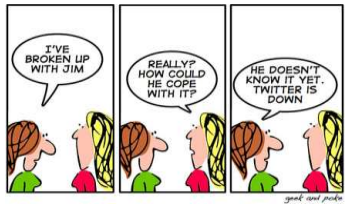
(Available at: 7 tech comics that will put a big smile on your face - Pingdom)

 Conheça nossos planos