Questões de Concurso Sobre advérbios e conjunções | adverbs and conjunctions em inglês

Foram encontradas 769 questões

Resolva questões gratuitamente!

Junte-se a mais de 4 milhões de concurseiros!

Q1975108 Inglês
Text for the item from.


What are trees? Internet: <https://kids.britannica.com> (adapted).
According to the text, judge the item from.  

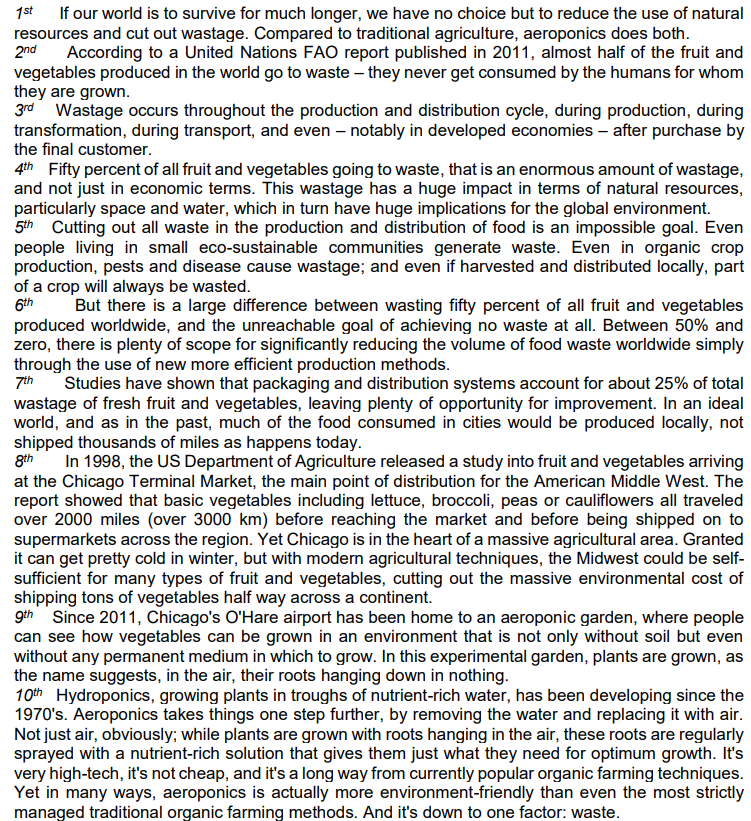
In the sentence “Scientists also group trees based on whether they lose their leaves” (line 8), the conjunction “whether” could be correctly replaced with if
Alternativas
Q1975078 Inglês
Text for the item from.


Internet: <https://www.sciencedirect.com> (adapted).
According to the text, judge the item from.

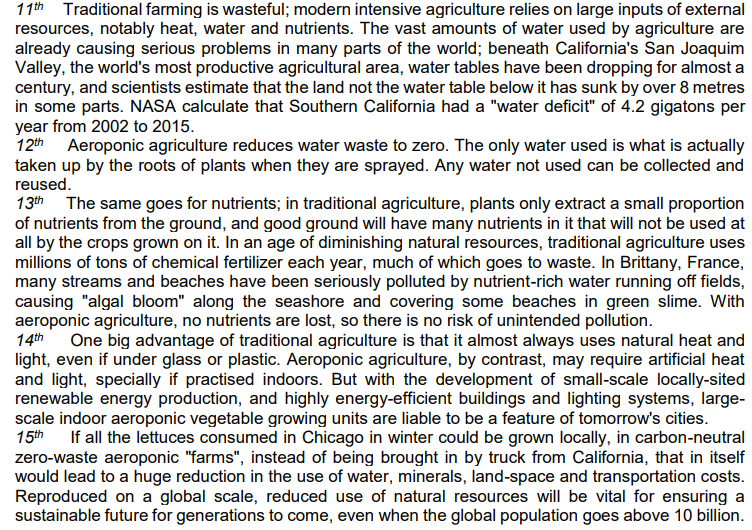
The word “Occasionally” (line 17) is an adverbial adjunction which means that an action frequently happens within a short period of time. 
Alternativas
Q1962997 Inglês
     In 1863, in an effort to reduce street traffic, London opened the world’s first underground line, the Metropolitan Railway. Its birth can be traced back two decades before to the building of the world’s first under-river tunnel below the Thames, which swiftly became both popular with pedestrians and a huge tourist attraction.

      Initially, what would become the London Underground consisted of tracks dug slightly below the surface and then covered over, but as the technology improved, and trains switched from steam-powered to electric, the lines went deeper. Now the ground beneath Londoners’ feet hums with an extensive network of Tube lines ferrying people about the city speedily, efficiently — and out of sight. 

      Along with trains, powerlines, pipes, and cables, there’s another piece of infrastructure some have long wished to bury — roads. To some, these thick asphalt ribbons crisscrossing countries and cleaving apart communities and ecosystems no longer seem fit for purpose. As they sprawl longer and wider in the hopes of speeding up traffic, congestion ticks upwards and cars continue to pollute the air and spew greenhouse gases.

      No one has suggested burying every single one of the world’s roads. But what would happen if we did relocate them all below the surface? In a time of increasing urbanization, soaring inequality and climate crisis, imagining the impact this could have raises important questions about how our global transport system is developing — and prompts us to consider where we really want it to go.


What if all roads went underground? Internet: <www.bbc.com> (adapted)

Based on the previous text, judge the following item.


The adverbs “swiftly” and “speedily” (first and second paragraphs, respectively) both mean quickly.  

Alternativas
Q1943495 Inglês

Instruction: answer the question based on the following text.


What Not to Do in Italy


(Available in: https://www.wanderherway.com/what-not-to-do-in-italy/ – text specially adapted for this test).

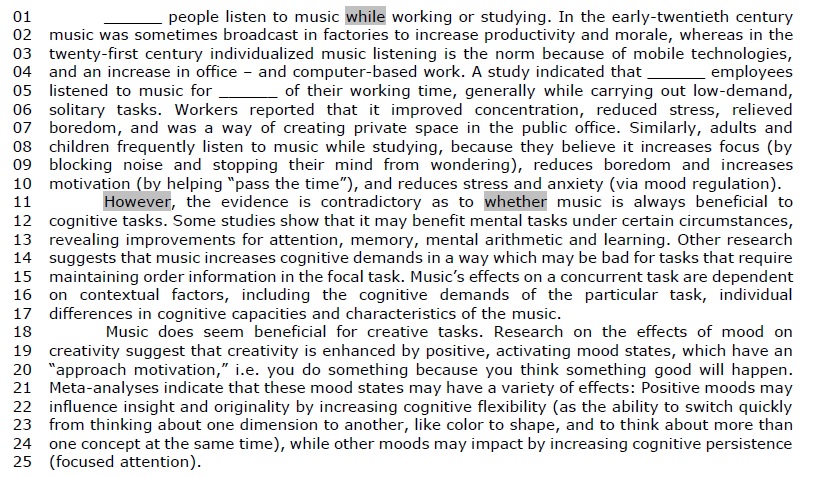
The highlighted words “easily” (l. 02), “clearly” (l. 04), and “incredibly” (l. 17) are ________ and they follow ________ spelling rule(s).”
Choose the alternative that correctly and respectively fills in the blanks in the text above. 
Alternativas
Q1927854 Inglês

Considering the ideas and the vocabulary of the text above, decide whether the statements below are right (C) or wrong (E). 


In the sentence “look about the room”, in line 1, about is used as adverb rather than a preposition. 

Alternativas
Q1924881 Inglês
Here’s why we’ll never be able to build a brain in a computer

It’s easy to equate brains and computers – they’re both thinking machines, after all. But the comparison doesn’t really stand up to closer inspection, as Dr. Lisa Feldman Barrett reveals.

People often describe the brain as a computer, as if neurons are like hardware and the mind is software. But this metaphor is deeply flawed.

A computer is built from static parts, whereas your brain constantly rewires itself as you age and learn. A computer stores information in files that are retrieved exactly, but brains don’t store information in any literal sense. Your memory is a constant construction of electrical pulses and swirling chemicals, and the same remembrance can be reassembled in different ways at different times.

Brains also do something critical that computers today can’t. A computer can be trained with thousands of photographs to recognise a dandelion as a plant with green leaves and yellow petals. You, however, can look at a dandelion and understand that in different situations it belongs to different categories. A dandelion in your vegetable garden is a weed, but in a bouquet from your child it’s a delightful flower. A dandelion in a salad is food, but people also consume dandelions as herbal medicine.

In other words, your brain effortlessly categorises objects by their function, not just their physical form. Some scientists believe that this incredible ability of the brain, called ad hoc category construction, may be fundamental to the way brains work.

Also, unlike a computer, your brain isn’t a bunch of parts in an empty case. Your brain inhabits a body, a complex web of systems that include over 600 muscles in motion, internal organs, a heart that pumps 7,500 litres of blood per day, and dozens of hormones and other chemicals, all of which must be coordinated, continually, to digest food, excrete waste, provide energy and fight illness.[…]

If we want a computer that thinks, feels, sees or acts like us, it must regulate a body – or something like a body – with a complex collection of systems that it must keep in balance to continue operating, and with sensations to keep that regulation in check. Today’s computers don’t work this way, but perhaps some engineers can come up with something that’s enough like a body to provide this necessary ingredient.

For now, ‘brain as computer’ remains just a metaphor. Metaphors can be wonderful for explaining complex topics in simple terms, but they fail when people treat the metaphor as an explanation. Metaphors provide the illusion of knowledge.

(Adapted from https://www.sciencefocus.com/future-technology/canwe-build-brain-computer/ Published: 24th October, 2021, retrieved on February 9th, 2022)
“Whereas” in “A computer is built from static parts, whereas your brain constantly rewires itself as you age and learn” introduces a(n): 
Alternativas
Q1913772 Inglês
Read the following text:
“In Japan, they call themmanga’; in Latin America, ‘histotietas’; in Italy, ‘fumetti’; in Brazil, ‘história em quadrinhos’; and in the U.S., ‘comics’.”; ” All of Mexico’s comic titles together.

The words in bold are respectively:
Alternativas
Q1913768 Inglês

Comics: Trash or Treasure


In Japan, they call them ‘manga’; in Latin America, ‘histotietas’; in Italy, ‘fumetti’; in Brazil, ‘história em quadrinhos’; and in the U.S., ‘comics’. But no matter what you call them, comics are a favorite source of reading pleasure in many parts of the world.

In case you are wondering how popular comics are, the best-selling comic title in the U.S. sells about 5 million copies a year. All of Mexico’s comic titles together sell over 7,5 million copies a week. But Japan is        far the leading publisher of comics       the world.

Manga account_______.  nearly fifty percent of all the books and magazines published in Japan each year. And few magazines of any kind in the world can match this number: Shonen Jump, the leading comic title, has a circulation of 6.5 million copies       week!

Ever since comics first appeared, there have been people who have criticized them. In the 1940s and 50s, many people believed that comics were immoral and that they caused bad behavior among young people. Even today, many question whether young people should read them at all. They argue that reading comics encourages bad reading habits.

But some educators see comics as a way to get teenagers to choose reading instead of television and video games. And because of the art, a number of educators have argued that comics are a great way to get children to think creatively. More recent research has suggested that the combination of visuals and text in comics may be one reason young people handle computers and related software so easily.

In Japan, the Education Ministry calls comics ‘a part of Japan’s national culture, recognized and highly regarded abroad’. Comics are increasingly being used for educational purposes, and many publishers there see them as a useful way of teaching history and other subjects.

No matter how you view them, comics remain a guilty pleasure for millions worldwide.
The underlined word in “Even today, many question whether young people should read them at all”, can be correctly classified as a(n):
Alternativas
Q1877490 Inglês
   In May 2021, a hole was found in a robotic arm aboard the International Space Station (ISS). The suspected culprit was a piece of rogue space junk. While thankfully no astronauts were injured, it has re-focussed attention on the growing problem of orbital debris.  

How did we get here?
   It’s easy to forget that just seven decades ago the Moon was the only thing orbiting the Earth. On 1 January 2021 there were 6,542 satellites in orbit. Tellingly, only just over half of them were active. That’s a lot of useless metal careering around the planet at 28,000 kph — ten times faster than a bullet. 

How bad is the problem?
    Very bad and getting worse. Estimates suggest there are currently half a million pieces of debris the size of a marble or larger and 100 million pieces of debris above one millimeter across. Yet only 27,000 pieces are actively tracked by the US Department of Defense. 

What is Kessler syndrome?
   It’s a catastrophic chain of events in which a satellite is shattered by a piece of space junk (or a collision with another satellite) and the resulting debris destroys more satellites creating more junk and so on in a never-ending cascade. It’s a domino effect – one piece falls and then takes the rest with it – and is named after NASA scientist Donald Kessler, who outlined the dangers back in 1978. 

What can we do about it?
   Better regulation of new launches would help, as right now it’s a bit of a free-for-all. There are existing regulations in place to try and mitigate the dangers, such as a 25-year de-orbit rule for missions in low-Earth orbit. However, ESA’s Space Debris Environment Report says that less than 60 per cent of those flying in low-Earth orbit currently stick to the rules.

Colin Stuart. Space Junk: Is it a disaster waiting to happen?
Internet: <www.sciencefocus.com> (adapted).

Considering the text above, judge the following item.
The adverb “Tellingly” (second paragraph) could be correctly replaced with convincingly, without changing the meaning of the text.
Alternativas
Q1866953 Inglês

Observe as sentenças a seguir:


I - The crime happened right here.

II - The party will be on my house.

III - The TV is still inside the box.


Assinale a alternativa correta:

Alternativas
Q2815885 Inglês

Fill in the blanks with many, much, a lot of, a few, a little.


______ people.

______ patience.

______ time.

______ chairs.


Select the CORRECT answer.

Alternativas
Q2815862 Inglês

Complete the following sentences with the appropriate adjective or adverb to make the correct comparisons or superlatives.


I’m a terrible singer. You can sing _______ than me (good).

Paul is the _______ person in his family (tall).

Fortaleza is the _______ capital in Brasil (danger).


Select the CORRECT answer.

Alternativas
Q2423876 Inglês

STUDENT OPINION

How Does Social Media Affect Your Mental Health?

Facebook has delayed the development of an Instagram app for children amid questions about its harmful effects on young people’s mental health. Does social media have an impact on your well-being?

By Nicole Daniels Oct. 1, 2021

What is your relationship with social media like? Which platforms do you spend the most time on? Which do you stay away from? How often do you log on?

What do you notice about your mental health and wellbeing when spending time on social networks?

In “Facebook Delays Instagram App for Users 13 and Younger,” Adam Satariano and Ryan Mac write about the findings of an internal study conducted by Facebook and what they mean for the Instagram Kids app that the company was developing:

Facebook said on Monday that it had paused development of an Instagram Kids service that would be tailored for children 13 years old or younger, as the social network increasingly faces questions about the app’s effect on young people’s mental health.

The pullback preceded a congressional hearing this week about internal research conducted by Facebook, and reported in The Wall Street Journal, that showed the company knew of the harmful mental health effects that Instagram was having on teenage girls. The revelations have set off a public relations crisis for the Silicon Valley company and led to a fresh round of calls for new regulation.

Facebook said it still wanted to build an Instagram product intended for children that would have a more “age appropriate experience,” but was postponing the plans in the face of criticism.


Fonte: https://www.nytimes.com/2021/10/01/learning/how-does-social-media-affect-your-mental-health.html


The word “increasingly”, as used in the text, is an example of:

Alternativas
Q2423046 Inglês

Read the short paragraph below and choose the alternative that completes the gaps CORRECTLY:

“Should” and “might” are _______. While “should” is used for _______ and ________, “might” is used for _________.

Alternativas
Q2422757 Inglês

Read the text below and answer questions 35 to 40


  1. A new study from archaeologists at University of Sydney and Simon
  2. Fraser University in Vancouver, has provided important new evidence
  3. to answer the question "Who exactly were the Anglo‐Saxons?" New
  4. findings based on studying skeletal remains clearly indicate the Anglo‐
  5. Saxons were a melting pot of people from both migrant and local
  6. cultural groups and not one homogenous group from Western Europe.
  7. Professor Keith Dobney said the team’s results indicate that "the
  8. Anglo‐Saxon kingdoms of early Medieval Britain were strikingly similar
  9. to contemporary Britain ‐‐ full of people of different ancestries sharing
  10. a common language and culture." The collaborative study looked at the
  11. three‐dimensional shape of the base of the skull. "Baased on this, we
  12. collected 3D data from suitably dated skeletal collections from Britain
  13. and Denmark, and then analysed the data to estimate the ancestry of
  14. the Anglo‐Saxon individuals in the sample."
  15. The researchers found that between two‐thirds and three‐quarters of
  16. early Anglo‐Saxon individuals were of continental European ancestry,
  17. while between a quarter and one‐third were of local ancestry. When
  18. they looked at skeletons dated to the Middle Anglo‐Saxon period
  19. (several hundred years after the original migrants arrived), they found
  20. that 50 to 70 percent of the individuals were of local ancestry, while
  21. 30 to 50 percent were of continental European ancestry, which
  22. probably indicates a change in the rate of migration and/or local
  23. adoption of culture over time. "These findings tell us that being Anglo‐
  24. Saxon was more likely a matter of language and culture, not genetics."
  25. Although Anglo‐Saxon origins can clearly be traced to a migration of
  26. Germanic‐speaking people from mainland Europe between the 5th
  27. and 7th centuries AD, the number of individuals who settled in Britain
  28. is still contested, as is the nature of their relationship with the pre-
  29. existing inhabitants of the British Isles, who were Romano‐Celts.
  30. The ongoing and unresolved argument is whether hordes of European
  31. invaders largely replaced the existing Romano‐British inhabitants, or
  32. did smaller numbers of migrants settle and interact with the locals,
  33. who then rapidly adopted the new language and culture of the Anglo‐
  34. Saxons? "The reason for the ongoing confusion is the apparent
  35. contradiction between early historical texts (written sometime after
  36. the events that imply that the newcomers were both numerous and
  37. replaced the Romano‐British population) and some recent
  38. biomolecular markers directly recovered from Anglo‐Saxon skeletons
  39. that appears to suggest numbers of immigrants were few," said
  40. Professor Dobney. "Our new data sits at the interface of this debate
  41. and implies that early Anglo‐Saxon society was a mix of both
  42. newcomers and immigrants and, instead of wholesale population
  43. replacement, a process of acculturation resulted in Anglo‐Saxon
  44. language and culture being adopted wholesale by the local
  45. population." "It could be this new cultural package was attractive,
  46. filling a vacuum left at the end of the Roman occupation of Britain.
  47. Whatever the reason, it lit the fuse for the English nation we have today
  48. ‐‐ still comprised of people of different origins who share the same
  49. language," Professor Dobney said.

Adapted from article available at:

https://www.sciencedaily.com/releases/2021/06/210623144901.htm

Accessed on: July 13, 2021.

The word “not” (l. 6) is an example of:

Alternativas
Q2410558 Inglês

TEXTO 01


O texto seguinte servirá de base para responder às questões de 01 a 08.


HEALTH CHECK

TAKE THIS CANCER QUIZ TO DETERMINE YOUR RISK OF DEVELOPING DISEASE - AS 1 IN 2 FACE DIAGNOSIS


(1º§) Around one in three cases of the most common cancers could be prevented by eating a healthy diet, keeping to a healthy weight and being more active, according to Macmillan Cancer Support.

(2º§) The following factors are asked about in the quiz.

Smoking

(3º§) At the top of the risk factor list, the WCRF says "not smoking is the best way to protect yourself from cancer".

Weight

(4º§) "Being a healthy weight is one of the most important ways ____ protect yourself against 12 types of cancer," the WCRF says. This includes bowel, kidney, womb and oesophagus cancer.

Exercise

(5º§) There is a reason exercise is encouraged - and not to just look fit.

(6º§) The WCRF says: "Being moderately active for at least 150 minutes or vigorously active for at least 75 minutes a week helps protect against three types of cancer. "Doing 45-60 minutes of moderate activity a day increases the benefit even more."

Fruit and veg

(7º§) You should aim to eat five portions of fruit and five of veg every day. "Fruit and vegetables can protect against cancers of the mouth and throat and digestive tract," WCRF says.

Wholegrains

(8º§) Wholegrain versions of carbohydrates not only help you keep a healthy weight, but have also been shown to reduce the risk of bowel cancer, the WCRF says. Generally it's important to eat a balanced diet as a way to prevent cancer.

Sugary drinks

(9º§) How many sugary drinks do you drink a week? This includes fizzy drinks, sugar-sweetened tea and coffee and squash. "Limiting sugar-sweetened drinks helps to prevent weight gain, which reduces your cancer risk," the WCRF says.

High fat and sugar foods

(10º§) Similarly to sugary drinks, consuming too much junk food will lead to weight gain - and weight gain is an independent cancer risk factor.

(11º§) It doesn't mean you can never have your favourite chocolate bar, cake or crisps. But it's about simple daily swaps. The WCRF suggests swapping a whole chocolate bar for a small piece of chocolate and a piece of fruit, for example.

Red and processed meats

(12º§) A diet abundant in red meat, like beef, lamb and pork, should be avoided. Similarly processed meats, such as bacon, sausages and ham, shouldn't be consumed ____ much. Both are linked to bowel cancer risk.

(13º§) "Limiting your intake [of red meat] to no more than three portions a week (350-500g cooked weight) can protect against bowel cancer," the WCRF says.

Alcohol

(14º§) The best way to avoid this risk would be to stop drinking at all.

(15º§) But if you do like a tipple, stick to the guidelines of no more than 14 units a week - equivalent to around four to five pints of beer or large glasses of wine.

Sun exposure

(16º§) Do you go the extra measure to protect yourself ____ the sun?

(17º§) We're talking suncream used regularly, avoiding the sun between 11am and 3pm, wearing a hat and sunglasses and avoiding sunbeds. "By not using sun beds and protecting yourself from sun exposure, you'll reduce your risk of skin cancers," the WCRF says.


https://www.thesun.co.uk/health/15912985/cancer-quiz-determine-risk/

Consider the following assertives:


I."Bowel cancer" (§ 12) could be translated as "cancer de boca".

II.The word "tipple" (9º§) is an adverb.

III."Fizzy drinks" (15º§) could be replaced by "Soft drinks".


Which one(s) is(are) CORRECT?

Alternativas
Q2106430 Inglês
Polar bears and climate changing

When we think about global warming and climate change, we usually think ________________how it is going to affect humans. However, we need to think about animals, too. Many species will be threatened
______________________ extinction by the end of this century if climate change is not halted. One of these is the world’s largest land predator, the polar bear. This magnificent native ___________________ the Arctic previously had no natural enemy apart _______________________man, but is now under threat from nature itself. Because of melting sea ice, it is likely that more polar bears will soon starve, warns a new study that discovered the large carnivores need to eat 60 percent more than anyone had realized.

Polar bears use floating ice as a platform to hunt seals from. They eat a large volume of food during the winter, storing enough fat under their skin to last them through the summer months. When the ice melts in the spring, many travel south to places such as Churchill, Canada, returning north when the seas freeze again, usually around October. Now, however, the winter ice is melting earlier and forming later. The bears’ store of fat runs out, and some starve to death. Other bears are drowning, because many of the ice platforms have melted, and some bears have to swim over a hundred kilometres from one ice platform to another. Due to exhaustion or stormy weather, some never make it to their destinations.
Analyze the words in bold in the sentences below:
However, we need to think about animals, too  ‘…but is now under threat from nature itself.’ ‘Due to exhaustion or stormy weather…’ ‘As a result of all these factors…’
We can infer that the words in bold:
1. They are called discourse markers or linking words, as they help the speaker to manage the conversation and mark when it changes.
2. Discourse markers are words and phrases used in reading to ‘signpost’ discourse.
3. Linking words show us turns, join ideas together, and generally control communication.
4. Discourse markers are referred to more commonly as ‘linking words’ and ‘linking phrases’, or ‘sentence connectors’.
5. They are used more frequently in speech, unless the speech is very formal.

Choose the alternative which contains all the correct affirmatives.
Alternativas
Q2103107 Inglês
Reality Television

Reality television is a genre of television programming which, it is claimed, presents unscripted dramatic or humorous situations, documents actual events, and features ordinary people rather than professional actors. It could be described as a form of artificial or “heightened” documentary. Although the genre has existed in some form or another since the early years of television, the current explosion of popularity dates from around 2000.

Reality television covers a wide range of television programming formats, _____________game or quiz shows which resemble the frantic, often demeaning programmes produced in Japan _____________ the 1980s and 1990s (a modern example is Gaki no tsukai), _____________surveillance-focused productions such __________ Big Brother.

Critics say that the term “reality television” is somewhat of a misnomer and that such shows frequently portray a modified and highly influenced form of reality, with participants put in exotic locations or abnormal situations, sometimes coached to act in certain ways by off-screen handlers, and with events on screen manipulated through editing and other post-production techniques.

Part of reality television’s appeal is due to its ability to place ordinary people in extraordinary situations. For example, on the ABC show, The Bachelor, an eligible male dates a dozen women simultaneously, travelling on extraordinary dates to scenic locales. Reality television also has the potential to turn its participants into national celebrities, outwardly in talent and performance programs such as Pop Idol, though frequently Survivor and Big Brother participants also reach some degree of celebrity.

Some commentators have said that the name “reality television” is an inaccurate description for several styles of program included in the genre. In competition-based programs such as Big Brother and Survivor, and other special-living-environment shows like The Real World, the producers design the format of the show and control the day-to-day activities and the environment, creating a completely fabricated world in which the competition plays out. Producers specifically select the participants, and use carefully designed scenarios, challenges, events, and settings to encourage particular behaviours and conflicts. Mark Burnett, creator of Survivor and other reality shows, has agreed with this assessment, and avoids the word “reality” to describe his shows; he has said, “I tell good stories. It really is not reality TV. It really is unscripted drama.

The words ‘Although’ and ‘though’, in the text mean ‘in spite of something’.


In the text, they are discourse markers that are:

Alternativas
Q2103106 Inglês
Reality Television

Reality television is a genre of television programming which, it is claimed, presents unscripted dramatic or humorous situations, documents actual events, and features ordinary people rather than professional actors. It could be described as a form of artificial or “heightened” documentary. Although the genre has existed in some form or another since the early years of television, the current explosion of popularity dates from around 2000.

Reality television covers a wide range of television programming formats, _____________game or quiz shows which resemble the frantic, often demeaning programmes produced in Japan _____________ the 1980s and 1990s (a modern example is Gaki no tsukai), _____________surveillance-focused productions such __________ Big Brother.

Critics say that the term “reality television” is somewhat of a misnomer and that such shows frequently portray a modified and highly influenced form of reality, with participants put in exotic locations or abnormal situations, sometimes coached to act in certain ways by off-screen handlers, and with events on screen manipulated through editing and other post-production techniques.

Part of reality television’s appeal is due to its ability to place ordinary people in extraordinary situations. For example, on the ABC show, The Bachelor, an eligible male dates a dozen women simultaneously, travelling on extraordinary dates to scenic locales. Reality television also has the potential to turn its participants into national celebrities, outwardly in talent and performance programs such as Pop Idol, though frequently Survivor and Big Brother participants also reach some degree of celebrity.

Some commentators have said that the name “reality television” is an inaccurate description for several styles of program included in the genre. In competition-based programs such as Big Brother and Survivor, and other special-living-environment shows like The Real World, the producers design the format of the show and control the day-to-day activities and the environment, creating a completely fabricated world in which the competition plays out. Producers specifically select the participants, and use carefully designed scenarios, challenges, events, and settings to encourage particular behaviours and conflicts. Mark Burnett, creator of Survivor and other reality shows, has agreed with this assessment, and avoids the word “reality” to describe his shows; he has said, “I tell good stories. It really is not reality TV. It really is unscripted drama.
The following words: ‘frequently’, ‘sometimes ‘ and ‘often’, from the text are being used in the text as:
Alternativas
Q2101337 Inglês
Leia as frases abaixo:
I. She past the test, because she study a lot.
II. After you arrive here, we'll go out with our friends.
III. Although he is handsome, he isn't a good person.

Sobre Adverb Clauses, assinale a alternativa correta: 
Alternativas
Respostas
401: E
402: E
403: C
404: B
405: C
406: B
407: E
408: D
409: E
410: E
411: E
412: D
413: C
414: D
415: E
416: A
417: E
418: E
419: D
420: C