Questões de Concurso Sobre inglês

Foram encontradas 25.503 questões

Resolva questões gratuitamente!

Junte-se a mais de 4 milhões de concurseiros!

Q3781911 Inglês
Leia o texto a seguir para responder as questões:

Shifting paradigms in language teaching

        Foreign language teaching has long relied on written texts as a source of language input. Until relatively recently, however, the sentence has been the privileged unit of meaning and analysis. The grammar-translation method of the nineteenth and twentieth centuries, for example, illustrated grammatical principles via exemplary sentences. The pedagogical goal was to recode sentences written in the foreign language into one’s mother tongue, with heavy emphasis placed on accuracy and completeness. During the audiolingual era, from the 1940s to the 1960s, the emphasis shifted to spoken language and dialogues were used as language models, but the individual sentence remained the focus of repetition and drills. Again, formal accuracy remained paramount. In the 1960s, with the advent of ‘cognitive-code learning’ theory (following Chomsky’s rejection of behavioristic models of language learning in the late 1950s), teachers’ goals gradually shifted from instilling accurate language habits, to fostering learners’ mental construction of a second language system. Rule learning was reintroduced, but still only at the level of the individual sentence. Indeed, even today, many introductory level foreign language courses are organized around a planned sequence of grammatical structures that are exemplified in sample sentences for intensive practice.

(Richard Kern. Literacy and language teaching)
Based on the historical overview, the sustained pattern that can be observed regarding the unit of linguistic focus across the Grammar-Translation, Audiolingual, and early Cognitive-Code learning periods is
Alternativas
Q3781910 Inglês
Leia o texto a seguir para responder a questão:

        The learning principles that good games incorporate are by no means unknown to researchers in the learning sciences. In fact current research on learning supports the sorts of learning principles that good games use, though these principles are often exemplified in games in particularly striking ways (for a survey and citations of the literature, see Gee 2003). However, many of these principles are much better reflected in good games than they are in today’s schools, where we also ask young people to learn complex and challenging things. With the current return in our schools to skill-and-drill and curricula driven by standardized tests, good learning principles have, more and more, been left on the cognitive scientist’s laboratory bench and, I will argue, inside good computer and video games.

        Game design involves modeling human interactions with and within complex virtual worlds, including learning processes as part and parcel of these interactions. This is, in fact, not unlike design research in educational psychology where researchers model new forms of interaction connected to learning in classrooms (complex worlds, indeed), study such interactions to better understand how and why they lead to deep learning, and then ultimately disseminate them across a great many classrooms (see, for example, the chapters in Kelly 2003).

(James Paulo Gee. Situated Language and Learning: a critique of traditional schooling)
Based on the author’s comparison of game design to design research in education, a pedagogical practice an English as a Foreign Language teacher should prioritize to move beyond the criticized approach is
Alternativas
Q3781909 Inglês
Leia o texto a seguir para responder a questão:

        The learning principles that good games incorporate are by no means unknown to researchers in the learning sciences. In fact current research on learning supports the sorts of learning principles that good games use, though these principles are often exemplified in games in particularly striking ways (for a survey and citations of the literature, see Gee 2003). However, many of these principles are much better reflected in good games than they are in today’s schools, where we also ask young people to learn complex and challenging things. With the current return in our schools to skill-and-drill and curricula driven by standardized tests, good learning principles have, more and more, been left on the cognitive scientist’s laboratory bench and, I will argue, inside good computer and video games.

        Game design involves modeling human interactions with and within complex virtual worlds, including learning processes as part and parcel of these interactions. This is, in fact, not unlike design research in educational psychology where researchers model new forms of interaction connected to learning in classrooms (complex worlds, indeed), study such interactions to better understand how and why they lead to deep learning, and then ultimately disseminate them across a great many classrooms (see, for example, the chapters in Kelly 2003).

(James Paulo Gee. Situated Language and Learning: a critique of traditional schooling)
According to the author, “good learning principles” are neglected and relegated because of
Alternativas
Q3781908 Inglês
Leia o texto a seguir para responder a questão:

Language monitor

        A new topic area will quickly generate the need to acquire new language in the form of vocabulary, structures, and pronunciation. It is a good idea to have ready a way of coping with this demand.

        If students can feel that they have the time and opportunity to master the use of language that either you or they have identified as being necessary for a certain stage in a project, this will go a long way to increasing their confidence and language competence.

        One way to do this is to produce a language monitor which focuses on vocabulary and structures that have been identified as being useful.

        This allows other students to read it and absorb the word or phrase, the meaning, pronunciation, associated words or collocations, and how to use it in a sentence. They can also add their own cards. The vocabulary monitor remains on the noticeboard throughout the project, constantly available for reinforcement and consolidation. It can also be used as a source of vocabulary games.

        In addition to this or as an alternative, if you have suitable computer facilities available, electronic lists could be created. Students can add to the lists in the same way as the noticeboard. The updated list can be printed out at regular intervals and put on the noticeboard and handouts given to the students.

(Diana L. Fried-Booth. Project Work. Adaptado)
Considering the concept of the “Language Monitor,” an English as a Foreign Language teacher best integrates this tool to foster learner autonomy and confidence in a project-based learning environment by
Alternativas
Q3781907 Inglês
Leia o texto a seguir para responder a questão:

Language monitor

        A new topic area will quickly generate the need to acquire new language in the form of vocabulary, structures, and pronunciation. It is a good idea to have ready a way of coping with this demand.

        If students can feel that they have the time and opportunity to master the use of language that either you or they have identified as being necessary for a certain stage in a project, this will go a long way to increasing their confidence and language competence.

        One way to do this is to produce a language monitor which focuses on vocabulary and structures that have been identified as being useful.

        This allows other students to read it and absorb the word or phrase, the meaning, pronunciation, associated words or collocations, and how to use it in a sentence. They can also add their own cards. The vocabulary monitor remains on the noticeboard throughout the project, constantly available for reinforcement and consolidation. It can also be used as a source of vocabulary games.

        In addition to this or as an alternative, if you have suitable computer facilities available, electronic lists could be created. Students can add to the lists in the same way as the noticeboard. The updated list can be printed out at regular intervals and put on the noticeboard and handouts given to the students.

(Diana L. Fried-Booth. Project Work. Adaptado)
According to the text, the main purpose of the “Language Monitor” is to
Alternativas
Q3781906 Inglês
Leia o texto a seguir para responder a questão:

        […] The action research cycle results show that task design should follow a certain sequence: First, tasks should focus on gaining an understanding of the e-literacy skills required when working with tools such as forums, wikis, and social bookmarking sites for language learning and teaching purposes. Ideally, this understanding should enable teachers to provide a rationale for using bespoke tools. Next, tasks should raise their awareness of a tool’s specific affordances, i.e. the constraints and possibilities of the modes available for meaning making and communication (Hampel & Hauck, 2006). This will allow the teachers to move to the next level of Hampel and Stickler’s (2005) skills pyramid by fostering their multimodal communicative competence and thus their professional literacy (Willis, 2001). These steps are a prerequisite for the subsequent phase in which teachers themselves design tasks with the goal of fostering, in turn, their learners’ multimodal competence and autonomy since merely equipping learners with creative and democratic representational online resources will not necessarily result in higher student control over the learning process or the development of autonomy (Hampel & Hauck, 2006).

(Carolin Fuchs, Andreas Müller-Hartmann, Mirjam Hauck. Promoting learner autonomy through multiliteracy skills development in cross-institutional exchanges. Adaptado)
Based on the final phase described in the text, where teachers design tasks to foster learner autonomy and multimodal competence, a teacher planning a task using a discussion forum should ensure the task
Alternativas
Q3781905 Inglês
Leia o texto a seguir para responder a questão:

        […] The action research cycle results show that task design should follow a certain sequence: First, tasks should focus on gaining an understanding of the e-literacy skills required when working with tools such as forums, wikis, and social bookmarking sites for language learning and teaching purposes. Ideally, this understanding should enable teachers to provide a rationale for using bespoke tools. Next, tasks should raise their awareness of a tool’s specific affordances, i.e. the constraints and possibilities of the modes available for meaning making and communication (Hampel & Hauck, 2006). This will allow the teachers to move to the next level of Hampel and Stickler’s (2005) skills pyramid by fostering their multimodal communicative competence and thus their professional literacy (Willis, 2001). These steps are a prerequisite for the subsequent phase in which teachers themselves design tasks with the goal of fostering, in turn, their learners’ multimodal competence and autonomy since merely equipping learners with creative and democratic representational online resources will not necessarily result in higher student control over the learning process or the development of autonomy (Hampel & Hauck, 2006).

(Carolin Fuchs, Andreas Müller-Hartmann, Mirjam Hauck. Promoting learner autonomy through multiliteracy skills development in cross-institutional exchanges. Adaptado)
The text mentions that understanding a tool’s specific affordances involves recognizing “the constraints and possibilities of the modes available for meaning making and communication”.
For a language teacher, a significant implication of focusing on a tool’s constraints in task design is
Alternativas
Q3781900 Inglês
Leia o texto a seguir para responder a questão:

        Our analysis of the Time to Share series revealed that it follows the principles of recent theories in the development of the learning activities although there is an excessive use of the Portuguese language. Students are somewhat well encouraged to actively participate but more could be done in this sense. Further responsibility could be put upon the students in terms of interactions and research on the web. They are digital natives and their familiarity with this new world can make a difference in their involvement with learning English online for today and for the future. Their success depends on them, and they must be encouraged to learn by themselves.

(Reinildes Dias & Ana Emília Fajardo Turbin. The two “multis” and the multiliteracies pedagogy: “shaking hands” in the Brazilian English public education for teens.)
Choose the statement that most accurately conveys the authors’ critique and suggestions for improving the Time to Share series as presented in the text.
Alternativas
Q3781899 Inglês
Leia o texto a seguir para responder a questão:

        Our analysis of the Time to Share series revealed that it follows the principles of recent theories in the development of the learning activities although there is an excessive use of the Portuguese language. Students are somewhat well encouraged to actively participate but more could be done in this sense. Further responsibility could be put upon the students in terms of interactions and research on the web. They are digital natives and their familiarity with this new world can make a difference in their involvement with learning English online for today and for the future. Their success depends on them, and they must be encouraged to learn by themselves.

(Reinildes Dias & Ana Emília Fajardo Turbin. The two “multis” and the multiliteracies pedagogy: “shaking hands” in the Brazilian English public education for teens.)
Based on the authors’ analysis, what is the most emphatically suggested pedagogical shift needed to enhance student involvement and leverage their status as “digital natives” in the learning process?
Alternativas
Q3781898 Inglês
Leia o texto a seguir para responder a questão:

        The more traditional methods and approaches to teaching culture, such as movies and video, can be enhanced through the integration of digital media. Feature films have become readily available and have been included in numerous textbooks and designed to actively involve the learner (Aparisi, Blanco, & Rinka, 2007; Blanco & Tocaimaza-Hatch, 2007). Foreign language instructors are beginning to incorporate more movies in the foreign language classroom as “an accessible window” (Bueno, 2009, p. 319) to the target culture through “combined effects of images, sounds, camera, plots and dialogue” (Stephens, 2001, p. 2). According to Bueno (2009), media literacy promotes cross-cultural competence and comprehension focused on meaning rather than on form, as well as repeated exposure to L2 cultural products, practices, and perspectives, and the target language itself.

(Oxana Dema & Aleidine Kramer Moeller. Teaching culture in the 21st century language classroom. Adaptado.)
Considering the author’s point of view on the use of digital media for cultural and intercultural purposes, which of the following activities best exemplifies an enhanced use of films and digital media in the foreign language classroom?
Alternativas
Q3781897 Inglês
Leia o texto a seguir para responder a questão:

        The more traditional methods and approaches to teaching culture, such as movies and video, can be enhanced through the integration of digital media. Feature films have become readily available and have been included in numerous textbooks and designed to actively involve the learner (Aparisi, Blanco, & Rinka, 2007; Blanco & Tocaimaza-Hatch, 2007). Foreign language instructors are beginning to incorporate more movies in the foreign language classroom as “an accessible window” (Bueno, 2009, p. 319) to the target culture through “combined effects of images, sounds, camera, plots and dialogue” (Stephens, 2001, p. 2). According to Bueno (2009), media literacy promotes cross-cultural competence and comprehension focused on meaning rather than on form, as well as repeated exposure to L2 cultural products, practices, and perspectives, and the target language itself.

(Oxana Dema & Aleidine Kramer Moeller. Teaching culture in the 21st century language classroom. Adaptado.)
According to the author, the pedagogical value of incorporating films and digital media into foreign language instruction is
Alternativas
Ano: 2025 Banca: FUNDATEC Órgão: IGP-RS Prova: FUNDATEC - 2025 - IGP-RS - Perito Criminal |
Q3781821 Inglês

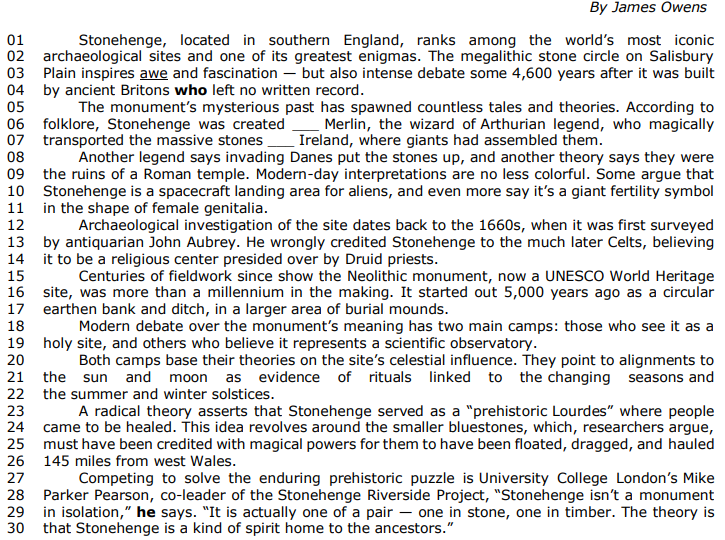
Space power: The dream of beaming solar energy from orbit 


(Available at: www.bbc.com/future/article/20251029-the-beam-dream-should-we-build-solar-farms-in-space– 

text specially adapted for this test). 

Based on the text as a whole, which statement best summarizes the author’s viewpoint?
Alternativas
Ano: 2025 Banca: FUNDATEC Órgão: IGP-RS Prova: FUNDATEC - 2025 - IGP-RS - Perito Criminal |
Q3781820 Inglês

Space power: The dream of beaming solar energy from orbit 


(Available at: www.bbc.com/future/article/20251029-the-beam-dream-should-we-build-solar-farms-in-space– 

text specially adapted for this test). 

Analyse the following statements, according to the grammatical structures and their meanings in the text:

I. The clause “have made it more feasible” (l. 27-28) expresses an action that began in the past and continues to have effects in the present.
II. In the sentence “It would require enormous satellite structures” (l. 21), the verb form “would require” indicates a hypothetical situation rather than a real one.
III. In the sentence “making it work is no small task” (l. 21), the structure “making it work” functions as the subject of the sentence.
IV.The structure “it was dismissed as too costly” (l. 26) refers to a past passive construction in the simple past.

Which ones are correct? 
Alternativas
Ano: 2025 Banca: FUNDATEC Órgão: IGP-RS Prova: FUNDATEC - 2025 - IGP-RS - Perito Criminal |
Q3781819 Inglês

Space power: The dream of beaming solar energy from orbit 


(Available at: www.bbc.com/future/article/20251029-the-beam-dream-should-we-build-solar-farms-in-space– 

text specially adapted for this test). 

Analyse the statements below according to the vocabulary used in the text, and mark T, if true, or F, if false. 

( )The word “feasible” (l. 28) could be replaced by “achievable” without changing the meaning.
( ) The prefix un– in “uncertain” (l. 38) and “unrealistic” (l. 17) indicates reversal of action, similar to the verb “undo”.
( ) The word “viable” (l. 32) refers to something that can function successfully.
(  ) The term “renewable” (l. 14) is formed by the addition of the prefix re- and the suffix -able, which mean, respectively, “not” and “capability/possibility”.

The correct order of filling in the parentheses, from top to bottom, is:
Alternativas
Ano: 2025 Banca: FUNDATEC Órgão: IGP-RS Prova: FUNDATEC - 2025 - IGP-RS - Perito Criminal |
Q3781818 Inglês

Space power: The dream of beaming solar energy from orbit 


(Available at: www.bbc.com/future/article/20251029-the-beam-dream-should-we-build-solar-farms-in-space– 

text specially adapted for this test). 

Mark the alternative that fills in, correctly and respectively, the blanks in the text in lines 13, 16 and 33 according to standard spelling rules.
Alternativas
Ano: 2025 Banca: FUNDATEC Órgão: IGP-RS Prova: FUNDATEC - 2025 - IGP-RS - Perito Criminal |
Q3781817 Inglês

Space power: The dream of beaming solar energy from orbit 


(Available at: www.bbc.com/future/article/20251029-the-beam-dream-should-we-build-solar-farms-in-space– 

text specially adapted for this test). 

Analyse the following statements about some grammatical structures in the text:

I. The verb form “could finally make” (l. 02) expresses a future possibility.
II. The sentence “The light had been collected from the Sun” (l. 07) is in the passive voice.
III. The clause “whether such huge orbital structures would even be legal” (l. 34) expresses a condition.

Which ones are correct? 
Alternativas
Q3780407 Inglês
Read the following text and answer the questions.


Artificial Intelligence: The “lethal trifecta”

    LARGE LANGUAGE MODELS (LLMs), a trendy way of building artificial intelligence, have an inherent security problem: they cannot separate code from data. As a result, they are at risk of a type of attack called a prompt injection, in which they are tricked into following commands they should not. Sometimes the result is merely embarrassing, as when a customer-help agent is persuaded to talk like a pirate. On other occasions, it is far more damaging.

    The worst effects of this flaw are reserved for those who create what is known as the “lethal trifecta”. If a company, eager to offer a powerful AI assistant to its employees, gives an LLM access to untrusted data, the ability to read valuable secrets and the ability to communicate with the outside world at the same time, then trouble is sure to follow. And avoiding this is not just a matter for AI engineers. Ordinary users, too, need to learn how to use AI safely, because installing the wrong combination of apps can generate the trifecta accidentally. 

   Better AI engineering is, though, the first line of defence. And that means AI engineers need to start thinking like engineers, who build things like bridges and therefore know that shoddy work costs lives.

  The great works of Victorian England were erected by engineers who could not be sure of the properties of the materials they were using. In particular, whether by incompetence or malfeasance, the iron of the period was often not up to snuff. As a consequence, engineers erred on the side of caution, overbuilding to incorporate redundancy into their creations. The result was a series of centuries-spanning masterpieces.

   AI-security providers do not think like this. Conventional coding is a deterministic practice. Security vulnerabilities are seen as errors to be fixed, and when fixed, they go away. AI engineers, inculcated in this way of thinking from their schooldays, therefore often act as if problems can be solved just with more training data and more astute system prompts.

   These do, indeed, reduce risk. The cleverest frontier models are better at spotting and refusing malicious requests than their older or smaller cousins. But they cannot eliminate risk altogether. Unlike most software, LLMs are probabilistic. Their output is driven by random selection from likely responses. A deterministic approach to safety is thus inadequate. A better way forward is to copy engineers in the physical world and learn to work with, rather than against, capricious systems that can never be guaranteed to function as they should. That means becoming happier dealing with unpredictability by introducing safety margins, risk tolerance and error rates.

   Overbuilding in the AI age might, for instance, mean using a more powerful model than is needed for the task at hand, to reduce the risk it will be tricked into doing something inappropriate. It might mean imposing limits on the number of queries LLMs can take from external sources, calibrated to the risk of damage from a malicious query. And mechanical engineering emphasises failing safely. If an AI system must have access to secrets, then avoid handing it the keys to the kingdom.

   In the physical world, bridges have weight limits – even if they are not always stated clearly to drivers. And, importantly, these are well within the actual tolerances that calculations suggest a bridge will bear. The time has now come for the virtual world of AI systems to be similarly equipped.

Adapted from The Economist, September 27th, 2025, p. 10
The text concludes that the Victorian engineers’ decision 
Alternativas
Q3780406 Inglês
Read the following text and answer the questions.


Artificial Intelligence: The “lethal trifecta”

    LARGE LANGUAGE MODELS (LLMs), a trendy way of building artificial intelligence, have an inherent security problem: they cannot separate code from data. As a result, they are at risk of a type of attack called a prompt injection, in which they are tricked into following commands they should not. Sometimes the result is merely embarrassing, as when a customer-help agent is persuaded to talk like a pirate. On other occasions, it is far more damaging.

    The worst effects of this flaw are reserved for those who create what is known as the “lethal trifecta”. If a company, eager to offer a powerful AI assistant to its employees, gives an LLM access to untrusted data, the ability to read valuable secrets and the ability to communicate with the outside world at the same time, then trouble is sure to follow. And avoiding this is not just a matter for AI engineers. Ordinary users, too, need to learn how to use AI safely, because installing the wrong combination of apps can generate the trifecta accidentally. 

   Better AI engineering is, though, the first line of defence. And that means AI engineers need to start thinking like engineers, who build things like bridges and therefore know that shoddy work costs lives.

  The great works of Victorian England were erected by engineers who could not be sure of the properties of the materials they were using. In particular, whether by incompetence or malfeasance, the iron of the period was often not up to snuff. As a consequence, engineers erred on the side of caution, overbuilding to incorporate redundancy into their creations. The result was a series of centuries-spanning masterpieces.

   AI-security providers do not think like this. Conventional coding is a deterministic practice. Security vulnerabilities are seen as errors to be fixed, and when fixed, they go away. AI engineers, inculcated in this way of thinking from their schooldays, therefore often act as if problems can be solved just with more training data and more astute system prompts.

   These do, indeed, reduce risk. The cleverest frontier models are better at spotting and refusing malicious requests than their older or smaller cousins. But they cannot eliminate risk altogether. Unlike most software, LLMs are probabilistic. Their output is driven by random selection from likely responses. A deterministic approach to safety is thus inadequate. A better way forward is to copy engineers in the physical world and learn to work with, rather than against, capricious systems that can never be guaranteed to function as they should. That means becoming happier dealing with unpredictability by introducing safety margins, risk tolerance and error rates.

   Overbuilding in the AI age might, for instance, mean using a more powerful model than is needed for the task at hand, to reduce the risk it will be tricked into doing something inappropriate. It might mean imposing limits on the number of queries LLMs can take from external sources, calibrated to the risk of damage from a malicious query. And mechanical engineering emphasises failing safely. If an AI system must have access to secrets, then avoid handing it the keys to the kingdom.

   In the physical world, bridges have weight limits – even if they are not always stated clearly to drivers. And, importantly, these are well within the actual tolerances that calculations suggest a bridge will bear. The time has now come for the virtual world of AI systems to be similarly equipped.

Adapted from The Economist, September 27th, 2025, p. 10
The metaphor used in avoid handing it the keys to the kingdom (7th paragraph) means avoid giving the system
Alternativas
Q3780405 Inglês
Read the following text and answer the questions.


Artificial Intelligence: The “lethal trifecta”

    LARGE LANGUAGE MODELS (LLMs), a trendy way of building artificial intelligence, have an inherent security problem: they cannot separate code from data. As a result, they are at risk of a type of attack called a prompt injection, in which they are tricked into following commands they should not. Sometimes the result is merely embarrassing, as when a customer-help agent is persuaded to talk like a pirate. On other occasions, it is far more damaging.

    The worst effects of this flaw are reserved for those who create what is known as the “lethal trifecta”. If a company, eager to offer a powerful AI assistant to its employees, gives an LLM access to untrusted data, the ability to read valuable secrets and the ability to communicate with the outside world at the same time, then trouble is sure to follow. And avoiding this is not just a matter for AI engineers. Ordinary users, too, need to learn how to use AI safely, because installing the wrong combination of apps can generate the trifecta accidentally. 

   Better AI engineering is, though, the first line of defence. And that means AI engineers need to start thinking like engineers, who build things like bridges and therefore know that shoddy work costs lives.

  The great works of Victorian England were erected by engineers who could not be sure of the properties of the materials they were using. In particular, whether by incompetence or malfeasance, the iron of the period was often not up to snuff. As a consequence, engineers erred on the side of caution, overbuilding to incorporate redundancy into their creations. The result was a series of centuries-spanning masterpieces.

   AI-security providers do not think like this. Conventional coding is a deterministic practice. Security vulnerabilities are seen as errors to be fixed, and when fixed, they go away. AI engineers, inculcated in this way of thinking from their schooldays, therefore often act as if problems can be solved just with more training data and more astute system prompts.

   These do, indeed, reduce risk. The cleverest frontier models are better at spotting and refusing malicious requests than their older or smaller cousins. But they cannot eliminate risk altogether. Unlike most software, LLMs are probabilistic. Their output is driven by random selection from likely responses. A deterministic approach to safety is thus inadequate. A better way forward is to copy engineers in the physical world and learn to work with, rather than against, capricious systems that can never be guaranteed to function as they should. That means becoming happier dealing with unpredictability by introducing safety margins, risk tolerance and error rates.

   Overbuilding in the AI age might, for instance, mean using a more powerful model than is needed for the task at hand, to reduce the risk it will be tricked into doing something inappropriate. It might mean imposing limits on the number of queries LLMs can take from external sources, calibrated to the risk of damage from a malicious query. And mechanical engineering emphasises failing safely. If an AI system must have access to secrets, then avoid handing it the keys to the kingdom.

   In the physical world, bridges have weight limits – even if they are not always stated clearly to drivers. And, importantly, these are well within the actual tolerances that calculations suggest a bridge will bear. The time has now come for the virtual world of AI systems to be similarly equipped.

Adapted from The Economist, September 27th, 2025, p. 10
Introducing in by introducing safety margins (6th paragraph) is similar in meaning to 
Alternativas
Q3780404 Inglês
Read the following text and answer the questions.


Artificial Intelligence: The “lethal trifecta”

    LARGE LANGUAGE MODELS (LLMs), a trendy way of building artificial intelligence, have an inherent security problem: they cannot separate code from data. As a result, they are at risk of a type of attack called a prompt injection, in which they are tricked into following commands they should not. Sometimes the result is merely embarrassing, as when a customer-help agent is persuaded to talk like a pirate. On other occasions, it is far more damaging.

    The worst effects of this flaw are reserved for those who create what is known as the “lethal trifecta”. If a company, eager to offer a powerful AI assistant to its employees, gives an LLM access to untrusted data, the ability to read valuable secrets and the ability to communicate with the outside world at the same time, then trouble is sure to follow. And avoiding this is not just a matter for AI engineers. Ordinary users, too, need to learn how to use AI safely, because installing the wrong combination of apps can generate the trifecta accidentally. 

   Better AI engineering is, though, the first line of defence. And that means AI engineers need to start thinking like engineers, who build things like bridges and therefore know that shoddy work costs lives.

  The great works of Victorian England were erected by engineers who could not be sure of the properties of the materials they were using. In particular, whether by incompetence or malfeasance, the iron of the period was often not up to snuff. As a consequence, engineers erred on the side of caution, overbuilding to incorporate redundancy into their creations. The result was a series of centuries-spanning masterpieces.

   AI-security providers do not think like this. Conventional coding is a deterministic practice. Security vulnerabilities are seen as errors to be fixed, and when fixed, they go away. AI engineers, inculcated in this way of thinking from their schooldays, therefore often act as if problems can be solved just with more training data and more astute system prompts.

   These do, indeed, reduce risk. The cleverest frontier models are better at spotting and refusing malicious requests than their older or smaller cousins. But they cannot eliminate risk altogether. Unlike most software, LLMs are probabilistic. Their output is driven by random selection from likely responses. A deterministic approach to safety is thus inadequate. A better way forward is to copy engineers in the physical world and learn to work with, rather than against, capricious systems that can never be guaranteed to function as they should. That means becoming happier dealing with unpredictability by introducing safety margins, risk tolerance and error rates.

   Overbuilding in the AI age might, for instance, mean using a more powerful model than is needed for the task at hand, to reduce the risk it will be tricked into doing something inappropriate. It might mean imposing limits on the number of queries LLMs can take from external sources, calibrated to the risk of damage from a malicious query. And mechanical engineering emphasises failing safely. If an AI system must have access to secrets, then avoid handing it the keys to the kingdom.

   In the physical world, bridges have weight limits – even if they are not always stated clearly to drivers. And, importantly, these are well within the actual tolerances that calculations suggest a bridge will bear. The time has now come for the virtual world of AI systems to be similarly equipped.

Adapted from The Economist, September 27th, 2025, p. 10
The phrase shoddy work costs lives (3rd paragraph) refers to work that is 
Alternativas
Respostas
2601: A
2602: B
2603: D
2604: E
2605: C
2606: C
2607: E
2608: D
2609: A
2610: B
2611: C
2612: D
2613: E
2614: B
2615: A
2616: C
2617: B
2618: A
2619: C
2620: E