Foram encontradas 771 questões
Resolva questões gratuitamente!
Junte-se a mais de 4 milhões de concurseiros!


What are the missing question words in the conversation between Detective Adams and Officer Lee?
Detective Adams: Can you tell me _____ you last saw
the suspect?
Officer Lee: I last saw him near the old warehouse.
Detective Adams: _____ did you see him exactly?
Officer Lee: Around 3 PM yesterday.
Detective Adams: And ______ was he doing there?
Officer Lee: He was looking around and taking notes.
Detective Adams: ______ was he with?
Officer Lee: He was alone.
Detective Adams: _____ did you go to the warehouse?
Officer Lee: Because I was investigating a lead in that
area.
I. I am exhausted because I’ve been working hard.
II. She tried hard to remember my name but she couldn’t.
III. Roger Federer is a great tennis player. He hits the ball hardly.
IV. This shirt is practically new. I’ve hardly worn it.
( 1 ) MANNER ( 2 ) TIME ( 3 ) PLACE ( 4 ) FREQUENCY ( 5 ) DEGREE ( 6 ) CONJUNCTIVE
( ) Very, absolutely, totally, rather, quite, really, completely, extremely, fairly
( ) There, here, somewhere, everywhere, nowhere, anywhere, abroad, northwards.
( ) Also, however, otherwise, indeed, finally, furthermore, nonetheless, in fact.
( ) Usually, sometimes, never, often, always, rarely, occasionally, seldom.
( ) Soon, early, now, today, tomorrow, yesterday, then, now, lately, next.
( ) Quickly, slowly, easily, fast, well, carefully, correctly, noisily, silently.
Read the following text to answer the question.
By Leo Selivan
In this article, informed by the Lexical Approach, I reflect on grammar instruction in the classroom […]. I consider the problems with ‘traditional’ grammar teaching before arguing that what we actually need is more grammar input as well as showing how lexis can provide necessary ‘crutches’ for the learner.
Lexis = vocabulary + grammar
The shift in ELT from grammar to lexis mirrors a similar change in the attitude of linguists. In the past linguists were preoccupied with the grammar of language; however the advances in corpus linguistics have pushed lexis to the forefront. The term ‘lexis’, which was traditionally used by linguists, is a common word these days and frequently used even in textbooks.
Why use a technical term borrowed from the realm of linguistics instead of the word ‘vocabulary’? Quite simply because vocabulary is typically seen as individual words (often presented in lists) whereas lexis is a somewhat wider concept and consists of collocations, chunks and formulaic expressions. It also includes certain patterns that were traditionally associated with the grammar of a language, e.g. If I were you…, I haven’t seen you for ages etc.
Recognising certain grammar structures as lexical
items means that they can be introduced much earlier,
without structural analysis or elaboration. Indeed, since the
concept of notions and functions made its way into language
teaching, particularly as Communicative Language Teaching
(CLT) gained prominence, some structures associated with
grammar started to be taught lexically (or functionally). I’d like
to is not taught as ‹the conditional› but as a chunk expressing
desire. Similarly many other ‹traditional› grammar items can
be introduced lexically relatively early on.
Less grammar or more grammar?
You are, no doubt, all familiar with students who on one hand seem to know the ‘rules’ of grammar but still fail to produce grammatically correct sentences when speaking or, on the other, sound unnatural and foreign-like even when their sentences are grammatically correct. Michael Lewis, who might be considered the founder of the Lexical Approach, once claimed that there was no direct relationship between the knowledge of grammar and speaking. In contrast, the knowledge of formulaic language has been shown by research to have a significant bearing on the natural language production.
Furthermore, certain grammar rules are practically impossible to learn. Dave Willis cites the grammar of orientation (which includes the notoriously difficult present perfect and the uses of certain modal verbs) as particularly resistant to teaching. The only way to grasp their meaning is through continuous exposure and use.
Finally, even the most authoritative English grammars never claim to provide a comprehensive description of all the grammar, hence the word ‘introduction’ often used in their titles (for instance, Huddleston & Pullum’s A Student’s Introduction to English Grammar or Halliday’s An Introduction to Functional Grammar).
If grammarians do not even attempt to address all areas of grammar, how can we, practitioners, cover all the aspects of grammar in our teaching, especially if all we seem to focus on is a limited selection of discrete items, comprised mostly of tenses and a handful of modal verbs? It would seem that we need to expose our students to a lot of naturally occurring language and frequently draw their attention to various grammar points as they arise.
For example, while teaching the expression fall asleep / be asleep you can ask your students:
• Don’t make any noise – she’s fallen asleep.
• Don’t make any noise – she’s asleep.
What does’s stand for in each of these cases (is or has)?
One of the fathers of the Communicative Language Teaching Henry Widdowson advocated using lexical items as a starting point and then ‘showing how they need to be grammatically modified to be communicatively effective’ (1990:95). For example, when exploring a text with your students, you may come across a sentence like this:
• They’ve been married for seven years.
You can ask your students: When did they get married? How should you change the sentence if the couple you are talking about is no longer married?
The above demonstrates how the teacher should be constantly on the ball and take every opportunity to draw students’ attention to grammar. Such short but frequent ‘grammar spots’ will help to slowly raise students’ awareness and build their understanding of the English grammar system.
[…]
Conclusion
So is there room for grammar instruction in the classroom? Certainly yes. But the grammar practice should always start with the exploitation of lexical items. Exposing students to a lot of natural and contextualised examples will offer a lexical way into the grammar of the language.
To sum up, grammar should play some role in language teaching but should not occupy a big part of class time. Instead grammar should be delivered in small but frequent portions. Students should be encouraged to collect a lot of examples of a particular structure before being invited to analyse it. Hence, analysis should be preceded by synthesis.
Lastly, language practitioners should bear in mind that grammar acquisition is an incremental process which requires frequent focus and refocus on the items already studied.
Available at: https://www.teachingenglish.org.uk/professionaldevelopment/teachers/knowing-subject/articles/grammar-vs-lexisor-grammar-through. Accessed on: April 29, 2024.
Empowering language learning through assessment
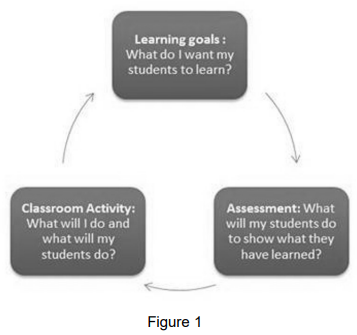
Assessment of, as, and for learning
In this sentence “My routine has been quite different since | moved to another city”, the word "quite" is:
Text 1
Structure of education in Singapore
The complete control and management of Singapore’s education is in the hands of the Ministry of Education (MOE). With continuous endeavour from MOE, today Singapore can be considered to have a strong and well-reputed education system. As per recent study Singapore is ranked fourth in terms of World’s Best Education System.
The preschools are run by the private sector, including religious bodies, community foundations, business groups, etc. However, every preschool need to register itself with the Singapore Ministry of Education before being functional.
After completion of 6 years of primary education, students have to appear for a Primary School Leaving Exam (PSLE). All those students who passed the exam are admitted in a secondary level course, which is usually completed in 4-5 years. It is similar to attending seventh grade through tenth grade in the American education system.
After completion of the secondary education, the students need to appear in Singaporean GCE ‘O’ Level exam. Based on the merit in that exam, students proceed to pre-university education, which is similar to attending eleventh grade and twelfth grade as per the American education system. At this level students can opt for a wide range of subjects from varied academic areas covering Humanities, Arts and Languages, Sciences and Mathematics streams.
www.singaporeeducation.info/Education-System/ Structure-of-Education
Read the following sentence from text 1:
However, every preschool need to register itself with the Singapore Ministry of Education before being functional.
Analyze the underlined words.
1. However is an adverb that can be used at the beginning of a sentence, to introduce a contrasting statement.
2. itself is a relative pronoun that can be used to refer back to register.
3. being is a verb in the progressive tense that means life.
Choose the alternative which contains the correct affirmatives.
Identify the sentence with the adverb placed in the correct position:
Text 4
Hope is the thing with feathers
(Emily Dickinson 1830 –1886)
Hope is the thing with feathers
That perches in the soul,
And sings the tune without the words,
And never stops at all,
And sweetest in the gale is heard;
And sore must be the storm
That could abash the little bird
That kept so many warm.
I've heard it in the chillest land,
And on the strangest sea;
Yet, never, in extremity,
It asked a crumb of me.
* This poem is in the public domain. Available in:< https://poets.org/poem/hope-thing-feathers-254>
I. In the structure “I've heard it in the chillest land” is in the present perfect continuous tense.
II. In the structure “And on the strangest sea” has a superlative form.
III. In the structure “Yet, never, in extremity” the word “yet” is an adversative conjunction.
IV. In the expression “It asked a crumb of me” the word “crumb” can be replace by “middle”.
Which ones are correct?
Text 1
The Courage to Be Imperfect
Perfectionism, self-examination and the kissing of frogs
Michael J. Formica
Posted July 9, 2009
Someone once said that there are two kinds of people in the world - those who are right... And nowhere are we more inclined to want to be right than with regard to ourselves. In fact, more often than not, we want to be perfect. What this striving for perfection often leads to is a kind of social paralysis.
If we are constantly focused on making the right decision, we will sometimes find ourselves in a place ranging from morbid indecision to outright fear. Getting it right, making the good choice and avoiding the faux pas endorse in us a rigidity of character and action that is limiting and, in derailing our momentum, deflects our potential evolution.
The willingness to be wrong or, as more properly suggested here, the courage to be imperfect, allows us the opportunity to discover many things about ourselves. Without exercising this courage, we put ourselves into a straightjacket of sorts, setting our thoughts and actions in a dismally fettered pattern.
This line of thinking was prompted by a conversation that I had with a client yesterday where in she had come to the conclusion that she was a bit of a perfectionist. What she had puzzled out for herself was that her perfectionism, rather than serving her, was actually hindering her ability to be flexible, open to new possibilities and clear about what she wanted for herself and her life.
At some point, I suggested that the fairy tale about the princess kissing frogs to find the prince was a good metaphor for stepping outside of one's comfort zone and "trying something on for size' without an overly self-conscious regard for the potential consequences of the choice. She mentioned that a few days earlier she had seen the trailer for a movie in which the princess kissed a frog and turned into a frog herself. Brilliant.
If we are unwilling to kiss a few frogs - to explore the possibilities that are presented to us in anticipation of finding something unexpected - then we, ourselves, may turn into frogs. That is, become stuck in our place and condemned to something that is not us. We can, without the willingness to be open to making mistakes, limit ourselves right into a state of personal inauthenticity.
Available
in:<https://www.psychologytoday.com/intl/blog/enlightened-living/200907/the-courage-be-imperfect>
The underlined words above “unwilling”, “then”, “unwillingness” and “into”, in the text, are respectively:
I - There’s __ great restaurant nearby. II - ___ next part will be next month, time and venue TBA. III - Is there anybody here?
Read Text I and answer question.
Text I
How to have a healthier relationship with your phone
A few years ago, a Google employee sent an email to thousands of her co-workers: What if for six weeks straight, you spent one night per week without technology? The email was from Laura Mae Martin, Google’s executive productivity adviser, a role that, among other things, was created to help staff members foster healthier relationships with their gadgets and apps. After she sent the note, Ms. Martin was flooded with responses from coworkers eager for a respite from some of the very products they helped build. Thousands of employees have since participated in the annual “No-Tech Tuesday Night Challenge,” said Ms. Martin.
The problem she was trying to solve isn’t unique to Google workers. One survey found that Americans say they spend too much time on their phones. But dramatic solutions – a digital detox, a phone downgrade or a complete exit from social media – may feel impractical.
Is it possible to have a healthy relationship with technology while still using it daily? Fortunately, according to experts, the answer is a resounding ‘yes’ and here are a few things you can try:
First, start with one simple question.
You know that urge you get to reach for your phone without realizing it? And then, before you know it, you’re an hour into a social media binge? If you want to peacefully coexist with technology, you need to get a handle on those impulses, said Richard J. Davidson, the founder and director of the Center for Healthy Minds at the University of Wisconsin-Madison. According to him, people should start by noticing when they have an urge to lift their phone or open social media on their browser window. By becoming conscious of what you’re about to do, you’re interrupting an automatic behavior and awakening the part of your brain that governs self-control, he added. As one research article suggests, awareness of your actions can help you rein in bad habits.
Secondly, take the “mobile” out of your mobile devices.
Dr. Anna Lembke, a professor of psychiatry and addiction medicine at Stanford University School of Medicine, said one of the biggest problems with smartphones is what she calls “texting while running to catch a bus.” Using our devices while we’re on the move – walking from meeting to meeting, taking a child to school or catching a bus – prevents us from being more engaged in our lives, Dr. Lembke said.
One way to create harmony with technology is to limit your phone use when you’re on the move. Headed out for a walk? Turn off your notifications. Going to grab a coffee? Leave your phone on your desk. If you’re feeling brave, try powering down your phone while in transit. It won’t buzz with notifications, text messages or phone calls, which Dr. Lembke said could help you focus on the world around you.
Last of all, make technology work for you.
One thing experts agree on: To forge a healthy relationship with technology, you need to be in control of it and not the other way around. Think about your gadgets as tools that you decide how to use.
“Make it work for you, not against you; whether it’s an email program or your dishwasher, it’s the intention behind how you’re using it that really makes the big difference”, said Ms. Martin, the productivity expert at Google.
(Adapted from:
https://www.nytimes.com/2024/03/21/well/social-media-phone-addiction.html)
Text 3
Digital habits across generations
Today’s grandparents are joining their grandchildren on social media, but the different generations’ online habits couldn’t be more different. In the UK the over55s are joining Facebook in increasing numbers, meaning that they will soon be the site’s second biggest user group, with 3.5 million users aged 55-64 and 2.9 million over-65s.
Sheila, aged 59, says, ‘I joined to see what my grandchildren are doing, as my daughter posts videos and photos of them. It’s a much better way to see what they’re doing than waiting for letters and photos in the post. That’s how we did it when I was a child, but I think I’m lucky I get to see so much more of their lives than my grandparents did.’ Ironically, Sheila’s grandchildren are less likely to use Facebook themselves. Children under 17 in the UK are leaving the site – only 2.2 million users are under 17 – but they’re not going far from their smartphones.
Chloe, aged 15, even sleeps with her phone. ‘It’s my alarm clock so I have to,’ she says. ‘I look at it before I go to sleep and as soon as I wake up.’ Unlike her grandmother’s generation, Chloe’s age group is spending so much time on their phones at home that they are missing out on spending time with their friends in real life. Sheila, on the other hand, has made contact with old friends from school she hasn’t heard from in forty years. ‘We use Facebook to arrange to meet all over the country,’ she says. ‘It’s changed my social life completely.’ Teenagers might have their parents to thank for their smartphone and social media addiction as their parents were the early adopters of the smartphone. Peter, 38 and father of two teenagers, reports that he used to be on his phone or laptop constantly. ‘I was always connected and I felt like I was always working,’ he says. ‘How could I tell my kids to get off their phones if I was always in front of a screen myself?’ So, in the evenings and at weekends, he takes his SIM card out of his smartphone and puts it into an old-style mobile phone that can only make calls and send text messages. ‘I’m not completely cut off from the world in case of emergencies, but the important thing is I’m setting a better example to my kids and spending more quality time with them.’ Is it only a matter of time until the generation above and below Peter catches up with the new trend for a less digital life?
Source: https://learnenglish.britishcouncil.org
Analyze the sentences from text 3 below according to structure and grammar use.
1. The phrasal verb in: Unlike her grandmother’s generation, Chloe’s age group is spending so much time on their phones at home that they are missing out on spending time with their friends in real life. means in its context that they are not be able to experience an opportunity or chance.
2. The word Ironically, in bold in the second paragraph is being used as an adverb to express irony.
3. The reference words in bold in the first paragraph their and they, create cohesion that
precedes coherence.
4. In the following sentence from the third paragraph: Unlike her grandmother’s generation, Chloe’s age group is spending so… the (‘s) in grandmother’s and Chloe’s indicates the short form of the verb to be in the present tense.
5. The conjunctive adverb Unlike in bold in the third paragraph, is used to introduce a statement that contrasts with a previous statement.
Choose the alternative which contains the correct
sentences.
Text 1
Youth and Adult Literacy in Brazil:
learning from practice
The Concept of functional ILLITERACY
[…] A person is considered functionally literate....................he or she is capable..........using reading and writing skills..........meet the demands of his or her social context, using them to continue learning and developing over their lifetimes. With the expansion of the access to schooling beyond literacy, the focus was shifted to the quality of the educational process offered to all. The issue here is not simply whether people know how to read or write, but what they are capable of doing with those skills. This means that, besides the issue of illiteracy, a social problem that still persists in Brazil, there is also the issue of functional illiteracy; in other words, the inability to effectively use reading and writing skills in the various areas of social life after a certain number of years of schooling. According to census criteria, individuals with less than 4 years of schooling are considered functionally illiterate. […]
Source: https://unesdoc.unesco.org
(1) Time/frequency. (2) Degree. (3) Manner.
( ) We split the money equally. ( ) I always do my tasks extremely fast. ( ) Jackson always gets his way.
Read the text and answer the question.
What is a consumer society?
A consumer is a person who buys things, and a
consumer society is a society that encourages people to
buy and use goods. Some people think that a consumer
society provides people with better lives. People in
consumer societies tend to live more comfortably.
They eat a wider variety of food. They go to restaurants
more often. They also buy a lot of products, maybe
more than they need. Products such as TVs, cell phones,
and computers used to be luxuries. Today people can
buy these things more easily than ever before. The
market for these goods is growing faster all the time.
Consumer societies encourage people to buy bigger
and better products. For example, “smarter” phones
come out every year. In a consumer society, people are
often buying newer and more advanced products. This
creates a lot of waste. Nowadays, many people are
thinking more seriously about the effects of consumer
societies on the environment, and they are trying to
become more responsible consumers.
(https://www.eltngl.com/assets/downloads/grex_pro
0000000538/grex2_su8.pdf).

 Conheça nossos planos