Foram encontradas 1.047 questões

Resolva questões gratuitamente!

Junte-se a mais de 4 milhões de concurseiros!

Q2016700 Inglês

The text below refers to question that follow it.
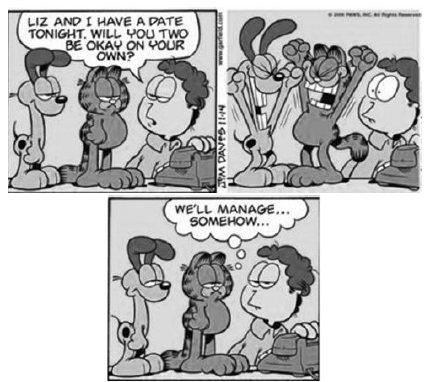


https://br.pinterest.com/pin/211669251227515501/

In the first panel, the question implies is whether or not both pets
Alternativas
Q2016699 Inglês
Critical Literacy

    Critical literacies are not new among scholars and researchers in literacy education. However, due to different theoretical bases, there is no unique definition of “critical literacy”. In their broadest sense, critical literacies refer to the ability to read texts going beyond their superficial meaning. That is, it implies approaching texts in a reflective way to understand working ideologies such as power, inequality, and injustice. In the realm of critical literacy, text is understood as a “vehicle through which individuals communicate with one another using the codes and conventions of society” (Robinson & Robinson, 2003, p. 3). Texts, in this sense, can be either songs, novels, poems, conversations, pictures, movies, and so on. […]

    Hence, the critical literacies approach is generally contrasted with functional literacy. The former views literacy as a social practice, while the latter views literacy as the mastery of linguistic skills. In addition, Manning (1999) developed a framework to distinguish critical literacies from functional literacy by establishing the difference between their respective ideology purpose, literacy curriculum, and instruction. On the one hand, the main objective of functional literacy is to produce skilled workers for the marketplace. Consequently, the curriculum is restrictive and the instruction is individualistic and competitive. On the other hand, for critical literacies, texts are not neutral but marked by power messages, dominating interests, and hidden agendas. In order to deconstruct these texts and unveil their ideological messages and power relationships, the curriculum is to employ materials from the everyday world as text and analytic tools.

    Critical scholars have overtly supported the idea that there is not a single procedure for incorporating critical literacies into the classroom, given that the particularities of the context where the foreign language is taught differ from one another. Thus, an approach to critical literacies “needs to be continually redefined in practice” (Comber, 2001, p. 274).


Adapted from: Jiménez, M.C. G. and Gutiérrez, C.P. “Engaging English as a Foreign Language Students in Critical Literacy Practices: The Case of a Teacher at a Private University” available at http://www.scielo.org.co/scielo.php?script= sci_arttext&pid=S1657-07902019000100091&lng=en&nrm=iso
The phrase “On the one hand” (2nd paragraph) indicates that the text will offer a(n)
Alternativas
Q2016698 Inglês
Critical Literacy

    Critical literacies are not new among scholars and researchers in literacy education. However, due to different theoretical bases, there is no unique definition of “critical literacy”. In their broadest sense, critical literacies refer to the ability to read texts going beyond their superficial meaning. That is, it implies approaching texts in a reflective way to understand working ideologies such as power, inequality, and injustice. In the realm of critical literacy, text is understood as a “vehicle through which individuals communicate with one another using the codes and conventions of society” (Robinson & Robinson, 2003, p. 3). Texts, in this sense, can be either songs, novels, poems, conversations, pictures, movies, and so on. […]

    Hence, the critical literacies approach is generally contrasted with functional literacy. The former views literacy as a social practice, while the latter views literacy as the mastery of linguistic skills. In addition, Manning (1999) developed a framework to distinguish critical literacies from functional literacy by establishing the difference between their respective ideology purpose, literacy curriculum, and instruction. On the one hand, the main objective of functional literacy is to produce skilled workers for the marketplace. Consequently, the curriculum is restrictive and the instruction is individualistic and competitive. On the other hand, for critical literacies, texts are not neutral but marked by power messages, dominating interests, and hidden agendas. In order to deconstruct these texts and unveil their ideological messages and power relationships, the curriculum is to employ materials from the everyday world as text and analytic tools.

    Critical scholars have overtly supported the idea that there is not a single procedure for incorporating critical literacies into the classroom, given that the particularities of the context where the foreign language is taught differ from one another. Thus, an approach to critical literacies “needs to be continually redefined in practice” (Comber, 2001, p. 274).


Adapted from: Jiménez, M.C. G. and Gutiérrez, C.P. “Engaging English as a Foreign Language Students in Critical Literacy Practices: The Case of a Teacher at a Private University” available at http://www.scielo.org.co/scielo.php?script= sci_arttext&pid=S1657-07902019000100091&lng=en&nrm=iso
The verb phrase in “where the foreign language is taught” (3rd paragraph) is in the
Alternativas
Q2016697 Inglês
Critical Literacy

    Critical literacies are not new among scholars and researchers in literacy education. However, due to different theoretical bases, there is no unique definition of “critical literacy”. In their broadest sense, critical literacies refer to the ability to read texts going beyond their superficial meaning. That is, it implies approaching texts in a reflective way to understand working ideologies such as power, inequality, and injustice. In the realm of critical literacy, text is understood as a “vehicle through which individuals communicate with one another using the codes and conventions of society” (Robinson & Robinson, 2003, p. 3). Texts, in this sense, can be either songs, novels, poems, conversations, pictures, movies, and so on. […]

    Hence, the critical literacies approach is generally contrasted with functional literacy. The former views literacy as a social practice, while the latter views literacy as the mastery of linguistic skills. In addition, Manning (1999) developed a framework to distinguish critical literacies from functional literacy by establishing the difference between their respective ideology purpose, literacy curriculum, and instruction. On the one hand, the main objective of functional literacy is to produce skilled workers for the marketplace. Consequently, the curriculum is restrictive and the instruction is individualistic and competitive. On the other hand, for critical literacies, texts are not neutral but marked by power messages, dominating interests, and hidden agendas. In order to deconstruct these texts and unveil their ideological messages and power relationships, the curriculum is to employ materials from the everyday world as text and analytic tools.

    Critical scholars have overtly supported the idea that there is not a single procedure for incorporating critical literacies into the classroom, given that the particularities of the context where the foreign language is taught differ from one another. Thus, an approach to critical literacies “needs to be continually redefined in practice” (Comber, 2001, p. 274).


Adapted from: Jiménez, M.C. G. and Gutiérrez, C.P. “Engaging English as a Foreign Language Students in Critical Literacy Practices: The Case of a Teacher at a Private University” available at http://www.scielo.org.co/scielo.php?script= sci_arttext&pid=S1657-07902019000100091&lng=en&nrm=iso
“Hence” (2nd paragraph) can be replaced without change of meaning by
Alternativas
Q2016696 Inglês
Critical Literacy

    Critical literacies are not new among scholars and researchers in literacy education. However, due to different theoretical bases, there is no unique definition of “critical literacy”. In their broadest sense, critical literacies refer to the ability to read texts going beyond their superficial meaning. That is, it implies approaching texts in a reflective way to understand working ideologies such as power, inequality, and injustice. In the realm of critical literacy, text is understood as a “vehicle through which individuals communicate with one another using the codes and conventions of society” (Robinson & Robinson, 2003, p. 3). Texts, in this sense, can be either songs, novels, poems, conversations, pictures, movies, and so on. […]

    Hence, the critical literacies approach is generally contrasted with functional literacy. The former views literacy as a social practice, while the latter views literacy as the mastery of linguistic skills. In addition, Manning (1999) developed a framework to distinguish critical literacies from functional literacy by establishing the difference between their respective ideology purpose, literacy curriculum, and instruction. On the one hand, the main objective of functional literacy is to produce skilled workers for the marketplace. Consequently, the curriculum is restrictive and the instruction is individualistic and competitive. On the other hand, for critical literacies, texts are not neutral but marked by power messages, dominating interests, and hidden agendas. In order to deconstruct these texts and unveil their ideological messages and power relationships, the curriculum is to employ materials from the everyday world as text and analytic tools.

    Critical scholars have overtly supported the idea that there is not a single procedure for incorporating critical literacies into the classroom, given that the particularities of the context where the foreign language is taught differ from one another. Thus, an approach to critical literacies “needs to be continually redefined in practice” (Comber, 2001, p. 274).


Adapted from: Jiménez, M.C. G. and Gutiérrez, C.P. “Engaging English as a Foreign Language Students in Critical Literacy Practices: The Case of a Teacher at a Private University” available at http://www.scielo.org.co/scielo.php?script= sci_arttext&pid=S1657-07902019000100091&lng=en&nrm=iso
In the second paragraph, when the authors argue that “Critical scholars have overtly supported the idea”, they mean that the idea has been
Alternativas
Q2016695 Inglês
Critical Literacy

    Critical literacies are not new among scholars and researchers in literacy education. However, due to different theoretical bases, there is no unique definition of “critical literacy”. In their broadest sense, critical literacies refer to the ability to read texts going beyond their superficial meaning. That is, it implies approaching texts in a reflective way to understand working ideologies such as power, inequality, and injustice. In the realm of critical literacy, text is understood as a “vehicle through which individuals communicate with one another using the codes and conventions of society” (Robinson & Robinson, 2003, p. 3). Texts, in this sense, can be either songs, novels, poems, conversations, pictures, movies, and so on. […]

    Hence, the critical literacies approach is generally contrasted with functional literacy. The former views literacy as a social practice, while the latter views literacy as the mastery of linguistic skills. In addition, Manning (1999) developed a framework to distinguish critical literacies from functional literacy by establishing the difference between their respective ideology purpose, literacy curriculum, and instruction. On the one hand, the main objective of functional literacy is to produce skilled workers for the marketplace. Consequently, the curriculum is restrictive and the instruction is individualistic and competitive. On the other hand, for critical literacies, texts are not neutral but marked by power messages, dominating interests, and hidden agendas. In order to deconstruct these texts and unveil their ideological messages and power relationships, the curriculum is to employ materials from the everyday world as text and analytic tools.

    Critical scholars have overtly supported the idea that there is not a single procedure for incorporating critical literacies into the classroom, given that the particularities of the context where the foreign language is taught differ from one another. Thus, an approach to critical literacies “needs to be continually redefined in practice” (Comber, 2001, p. 274).


Adapted from: Jiménez, M.C. G. and Gutiérrez, C.P. “Engaging English as a Foreign Language Students in Critical Literacy Practices: The Case of a Teacher at a Private University” available at http://www.scielo.org.co/scielo.php?script= sci_arttext&pid=S1657-07902019000100091&lng=en&nrm=iso
The phrase “the latter” in “the latter views literacy as the mastery of linguistic skills” (2nd paragraph) refers to
Alternativas
Q2016694 Inglês
Critical Literacy

    Critical literacies are not new among scholars and researchers in literacy education. However, due to different theoretical bases, there is no unique definition of “critical literacy”. In their broadest sense, critical literacies refer to the ability to read texts going beyond their superficial meaning. That is, it implies approaching texts in a reflective way to understand working ideologies such as power, inequality, and injustice. In the realm of critical literacy, text is understood as a “vehicle through which individuals communicate with one another using the codes and conventions of society” (Robinson & Robinson, 2003, p. 3). Texts, in this sense, can be either songs, novels, poems, conversations, pictures, movies, and so on. […]

    Hence, the critical literacies approach is generally contrasted with functional literacy. The former views literacy as a social practice, while the latter views literacy as the mastery of linguistic skills. In addition, Manning (1999) developed a framework to distinguish critical literacies from functional literacy by establishing the difference between their respective ideology purpose, literacy curriculum, and instruction. On the one hand, the main objective of functional literacy is to produce skilled workers for the marketplace. Consequently, the curriculum is restrictive and the instruction is individualistic and competitive. On the other hand, for critical literacies, texts are not neutral but marked by power messages, dominating interests, and hidden agendas. In order to deconstruct these texts and unveil their ideological messages and power relationships, the curriculum is to employ materials from the everyday world as text and analytic tools.

    Critical scholars have overtly supported the idea that there is not a single procedure for incorporating critical literacies into the classroom, given that the particularities of the context where the foreign language is taught differ from one another. Thus, an approach to critical literacies “needs to be continually redefined in practice” (Comber, 2001, p. 274).


Adapted from: Jiménez, M.C. G. and Gutiérrez, C.P. “Engaging English as a Foreign Language Students in Critical Literacy Practices: The Case of a Teacher at a Private University” available at http://www.scielo.org.co/scielo.php?script= sci_arttext&pid=S1657-07902019000100091&lng=en&nrm=iso
The phrase “That is” in “That is, it implies approaching texts in a reflective way” (1st paragraph) can be replaced without change of meaning by
Alternativas
Q2016693 Inglês
Critical Literacy

    Critical literacies are not new among scholars and researchers in literacy education. However, due to different theoretical bases, there is no unique definition of “critical literacy”. In their broadest sense, critical literacies refer to the ability to read texts going beyond their superficial meaning. That is, it implies approaching texts in a reflective way to understand working ideologies such as power, inequality, and injustice. In the realm of critical literacy, text is understood as a “vehicle through which individuals communicate with one another using the codes and conventions of society” (Robinson & Robinson, 2003, p. 3). Texts, in this sense, can be either songs, novels, poems, conversations, pictures, movies, and so on. […]

    Hence, the critical literacies approach is generally contrasted with functional literacy. The former views literacy as a social practice, while the latter views literacy as the mastery of linguistic skills. In addition, Manning (1999) developed a framework to distinguish critical literacies from functional literacy by establishing the difference between their respective ideology purpose, literacy curriculum, and instruction. On the one hand, the main objective of functional literacy is to produce skilled workers for the marketplace. Consequently, the curriculum is restrictive and the instruction is individualistic and competitive. On the other hand, for critical literacies, texts are not neutral but marked by power messages, dominating interests, and hidden agendas. In order to deconstruct these texts and unveil their ideological messages and power relationships, the curriculum is to employ materials from the everyday world as text and analytic tools.

    Critical scholars have overtly supported the idea that there is not a single procedure for incorporating critical literacies into the classroom, given that the particularities of the context where the foreign language is taught differ from one another. Thus, an approach to critical literacies “needs to be continually redefined in practice” (Comber, 2001, p. 274).


Adapted from: Jiménez, M.C. G. and Gutiérrez, C.P. “Engaging English as a Foreign Language Students in Critical Literacy Practices: The Case of a Teacher at a Private University” available at http://www.scielo.org.co/scielo.php?script= sci_arttext&pid=S1657-07902019000100091&lng=en&nrm=iso
The text suggests that if teachers opt for critical literacy activities, they should
Alternativas
Q2016692 Inglês
Critical Literacy

    Critical literacies are not new among scholars and researchers in literacy education. However, due to different theoretical bases, there is no unique definition of “critical literacy”. In their broadest sense, critical literacies refer to the ability to read texts going beyond their superficial meaning. That is, it implies approaching texts in a reflective way to understand working ideologies such as power, inequality, and injustice. In the realm of critical literacy, text is understood as a “vehicle through which individuals communicate with one another using the codes and conventions of society” (Robinson & Robinson, 2003, p. 3). Texts, in this sense, can be either songs, novels, poems, conversations, pictures, movies, and so on. […]

    Hence, the critical literacies approach is generally contrasted with functional literacy. The former views literacy as a social practice, while the latter views literacy as the mastery of linguistic skills. In addition, Manning (1999) developed a framework to distinguish critical literacies from functional literacy by establishing the difference between their respective ideology purpose, literacy curriculum, and instruction. On the one hand, the main objective of functional literacy is to produce skilled workers for the marketplace. Consequently, the curriculum is restrictive and the instruction is individualistic and competitive. On the other hand, for critical literacies, texts are not neutral but marked by power messages, dominating interests, and hidden agendas. In order to deconstruct these texts and unveil their ideological messages and power relationships, the curriculum is to employ materials from the everyday world as text and analytic tools.

    Critical scholars have overtly supported the idea that there is not a single procedure for incorporating critical literacies into the classroom, given that the particularities of the context where the foreign language is taught differ from one another. Thus, an approach to critical literacies “needs to be continually redefined in practice” (Comber, 2001, p. 274).


Adapted from: Jiménez, M.C. G. and Gutiérrez, C.P. “Engaging English as a Foreign Language Students in Critical Literacy Practices: The Case of a Teacher at a Private University” available at http://www.scielo.org.co/scielo.php?script= sci_arttext&pid=S1657-07902019000100091&lng=en&nrm=iso
According to the authors, critical literacy encourages students to 
Alternativas
Q2016691 Inglês
Critical Literacy

    Critical literacies are not new among scholars and researchers in literacy education. However, due to different theoretical bases, there is no unique definition of “critical literacy”. In their broadest sense, critical literacies refer to the ability to read texts going beyond their superficial meaning. That is, it implies approaching texts in a reflective way to understand working ideologies such as power, inequality, and injustice. In the realm of critical literacy, text is understood as a “vehicle through which individuals communicate with one another using the codes and conventions of society” (Robinson & Robinson, 2003, p. 3). Texts, in this sense, can be either songs, novels, poems, conversations, pictures, movies, and so on. […]

    Hence, the critical literacies approach is generally contrasted with functional literacy. The former views literacy as a social practice, while the latter views literacy as the mastery of linguistic skills. In addition, Manning (1999) developed a framework to distinguish critical literacies from functional literacy by establishing the difference between their respective ideology purpose, literacy curriculum, and instruction. On the one hand, the main objective of functional literacy is to produce skilled workers for the marketplace. Consequently, the curriculum is restrictive and the instruction is individualistic and competitive. On the other hand, for critical literacies, texts are not neutral but marked by power messages, dominating interests, and hidden agendas. In order to deconstruct these texts and unveil their ideological messages and power relationships, the curriculum is to employ materials from the everyday world as text and analytic tools.

    Critical scholars have overtly supported the idea that there is not a single procedure for incorporating critical literacies into the classroom, given that the particularities of the context where the foreign language is taught differ from one another. Thus, an approach to critical literacies “needs to be continually redefined in practice” (Comber, 2001, p. 274).


Adapted from: Jiménez, M.C. G. and Gutiérrez, C.P. “Engaging English as a Foreign Language Students in Critical Literacy Practices: The Case of a Teacher at a Private University” available at http://www.scielo.org.co/scielo.php?script= sci_arttext&pid=S1657-07902019000100091&lng=en&nrm=iso
Based on the text, mark the statements below as true (T) or false (F):
( ) The concept of critical literacy lacks precise definition.
( ) Functional and critical literacies have similar aims.
( ) Classroom practices based on critical literacy vary.
The statements are, respectively: 
Alternativas
Q1985726 Inglês

Read Text II and answer the question that follow it.


Text II



From: https://aghlc.com/resources/articles/2016/how-to-prevent-phishing-attacks160812.aspx?hss_channel=tw-2432542152

By using the phrase “throw it out”, the poster recommends that one should
Alternativas
Q1985725 Inglês

Read Text II and answer the question that follow it.


Text II



From: https://aghlc.com/resources/articles/2016/how-to-prevent-phishing-attacks160812.aspx?hss_channel=tw-2432542152

The use of “phishy” is a play on the word “fishy”, meaning that something looks rather
Alternativas
Q1985724 Inglês

Read Text II and answer the question that follow it.


Text II



From: https://aghlc.com/resources/articles/2016/how-to-prevent-phishing-attacks160812.aspx?hss_channel=tw-2432542152

The opening sentence in this poster is a
Alternativas
Q1985723 Inglês
Read Text I and answer the four question that follow it.

Text I

Behind the rise of ransomware

   The story of the ransomware surge is the story of the discovery, professionalization, and growth of the targeted attack extortion model. Prior to 2016, most ransomware campaigns targeted a large and effectively random pool of end users. This “spray-and-pray” business model privileged quantity over quality, meaning ransomware actors spent less time focusing on how to apply pressure on a given victim and more time trying to reach as many victims as possible. Until the tail end of this period, ransomware did not generate enormous profits. Being a secondtier avenue of cybercrime, it failed to attract as much talent or activity as it would in the years to come.

   Ransomware experienced its first period of significant growth between 2013 and 2016, when refinements to ransomware payloads, the emergence of virtual currencies, and enhanced anti-fraud measures from banks and cybersecurity vendors increased the profitability of digital extortion relative to other common avenues of cybercrime. What happened next remains unclear, but with more activity concentrating on ransomware, criminals appear to have learned how easy it was to extort organizations before piecing together how lucrative these attacks could be. Regardless, between 2016 and 2019, established cybercriminal gangs entered the targeted ransomware business en masse.

   From that point until the summer of 2021, cybercriminals invested growing time and resources to improve the targeted extortion model. During this period, digital extortion became more profitable because cybercriminal gangs and cybercrime markets reoriented around a near limitless demand for targeted ransomware. Moreover, as criminals learned how to best extract revenue from victims, they launched increasingly disruptive ransomware attacks.

    […]

   Even though it is tempting to hope that we are just one diplomatic agreement, one technological leap, or one regulation away from its elimination, targeted ransomware is here to stay. As with other forms of crime, the government can expect better outcomes by planning how to manage the issue over time rather than searching for quick and complete solutions.

Adapted from: https://www.atlanticcouncil.org/wpcontent/uploads/2022/08/Behind_the_rise_of_ransomware.pdf
The word “Regardless” in “Regardless, between 2016 and 2019, established cybercriminal gangs entered the targeted ransomware business en masse” is similar in meaning to
Alternativas
Q1985722 Inglês
Read Text I and answer the four question that follow it.

Text I

Behind the rise of ransomware

   The story of the ransomware surge is the story of the discovery, professionalization, and growth of the targeted attack extortion model. Prior to 2016, most ransomware campaigns targeted a large and effectively random pool of end users. This “spray-and-pray” business model privileged quantity over quality, meaning ransomware actors spent less time focusing on how to apply pressure on a given victim and more time trying to reach as many victims as possible. Until the tail end of this period, ransomware did not generate enormous profits. Being a secondtier avenue of cybercrime, it failed to attract as much talent or activity as it would in the years to come.

   Ransomware experienced its first period of significant growth between 2013 and 2016, when refinements to ransomware payloads, the emergence of virtual currencies, and enhanced anti-fraud measures from banks and cybersecurity vendors increased the profitability of digital extortion relative to other common avenues of cybercrime. What happened next remains unclear, but with more activity concentrating on ransomware, criminals appear to have learned how easy it was to extort organizations before piecing together how lucrative these attacks could be. Regardless, between 2016 and 2019, established cybercriminal gangs entered the targeted ransomware business en masse.

   From that point until the summer of 2021, cybercriminals invested growing time and resources to improve the targeted extortion model. During this period, digital extortion became more profitable because cybercriminal gangs and cybercrime markets reoriented around a near limitless demand for targeted ransomware. Moreover, as criminals learned how to best extract revenue from victims, they launched increasingly disruptive ransomware attacks.

    […]

   Even though it is tempting to hope that we are just one diplomatic agreement, one technological leap, or one regulation away from its elimination, targeted ransomware is here to stay. As with other forms of crime, the government can expect better outcomes by planning how to manage the issue over time rather than searching for quick and complete solutions.

Adapted from: https://www.atlanticcouncil.org/wpcontent/uploads/2022/08/Behind_the_rise_of_ransomware.pdf
In “What happened next remains unclear” (2nd paragraph) implies that this period is
Alternativas
Q1985721 Inglês
Read Text I and answer the four question that follow it.

Text I

Behind the rise of ransomware

   The story of the ransomware surge is the story of the discovery, professionalization, and growth of the targeted attack extortion model. Prior to 2016, most ransomware campaigns targeted a large and effectively random pool of end users. This “spray-and-pray” business model privileged quantity over quality, meaning ransomware actors spent less time focusing on how to apply pressure on a given victim and more time trying to reach as many victims as possible. Until the tail end of this period, ransomware did not generate enormous profits. Being a secondtier avenue of cybercrime, it failed to attract as much talent or activity as it would in the years to come.

   Ransomware experienced its first period of significant growth between 2013 and 2016, when refinements to ransomware payloads, the emergence of virtual currencies, and enhanced anti-fraud measures from banks and cybersecurity vendors increased the profitability of digital extortion relative to other common avenues of cybercrime. What happened next remains unclear, but with more activity concentrating on ransomware, criminals appear to have learned how easy it was to extort organizations before piecing together how lucrative these attacks could be. Regardless, between 2016 and 2019, established cybercriminal gangs entered the targeted ransomware business en masse.

   From that point until the summer of 2021, cybercriminals invested growing time and resources to improve the targeted extortion model. During this period, digital extortion became more profitable because cybercriminal gangs and cybercrime markets reoriented around a near limitless demand for targeted ransomware. Moreover, as criminals learned how to best extract revenue from victims, they launched increasingly disruptive ransomware attacks.

    […]

   Even though it is tempting to hope that we are just one diplomatic agreement, one technological leap, or one regulation away from its elimination, targeted ransomware is here to stay. As with other forms of crime, the government can expect better outcomes by planning how to manage the issue over time rather than searching for quick and complete solutions.

Adapted from: https://www.atlanticcouncil.org/wpcontent/uploads/2022/08/Behind_the_rise_of_ransomware.pdf
When the author uses the expression “the tail end of this period” (1st paragraph), he is referring to its 
Alternativas
Q1985720 Inglês
Read Text I and answer the four question that follow it.

Text I

Behind the rise of ransomware

   The story of the ransomware surge is the story of the discovery, professionalization, and growth of the targeted attack extortion model. Prior to 2016, most ransomware campaigns targeted a large and effectively random pool of end users. This “spray-and-pray” business model privileged quantity over quality, meaning ransomware actors spent less time focusing on how to apply pressure on a given victim and more time trying to reach as many victims as possible. Until the tail end of this period, ransomware did not generate enormous profits. Being a secondtier avenue of cybercrime, it failed to attract as much talent or activity as it would in the years to come.

   Ransomware experienced its first period of significant growth between 2013 and 2016, when refinements to ransomware payloads, the emergence of virtual currencies, and enhanced anti-fraud measures from banks and cybersecurity vendors increased the profitability of digital extortion relative to other common avenues of cybercrime. What happened next remains unclear, but with more activity concentrating on ransomware, criminals appear to have learned how easy it was to extort organizations before piecing together how lucrative these attacks could be. Regardless, between 2016 and 2019, established cybercriminal gangs entered the targeted ransomware business en masse.

   From that point until the summer of 2021, cybercriminals invested growing time and resources to improve the targeted extortion model. During this period, digital extortion became more profitable because cybercriminal gangs and cybercrime markets reoriented around a near limitless demand for targeted ransomware. Moreover, as criminals learned how to best extract revenue from victims, they launched increasingly disruptive ransomware attacks.

    […]

   Even though it is tempting to hope that we are just one diplomatic agreement, one technological leap, or one regulation away from its elimination, targeted ransomware is here to stay. As with other forms of crime, the government can expect better outcomes by planning how to manage the issue over time rather than searching for quick and complete solutions.

Adapted from: https://www.atlanticcouncil.org/wpcontent/uploads/2022/08/Behind_the_rise_of_ransomware.pdf
Based on Text I, mark the statements below as true (T) or false (F).

( ) The “spray-and-pray” business model belongs to a late period in the history of ransomware.
( ) The analysis indicates that cybercrime is far from mushrooming.
( ) The text argues that solutions to cybercrime can be reached in a jiffy.

The statements are, respectively
Alternativas
Ano: 2022 Banca: FGV Órgão: Senado Federal Prova: FGV - 2022 - Senado Federal - Advogado |
Q1984321 Inglês

Read Text II and answer the question that follow it.


Text II


The gist of this cartoon depends on the reader
Alternativas
Ano: 2022 Banca: FGV Órgão: Senado Federal Prova: FGV - 2022 - Senado Federal - Advogado |
Q1984317 Inglês
Read text I and answer the question that follow it.

Text I

The New Rules of Data Privacy

  The data harvested from our personal devices, along with our trail of electronic transactions and data from other sources, now provides the foundation for some of the world’s largest companies. […] For the past two decades, the commercial use of personal data has grown in wild-west fashion. But now, because of consumer mistrust, government actions, and competition for customers, those days are quickly coming to an end.
   For most of its existence, the data economy was structured around a “digital curtain” designed to obscure the industry’s practices from lawmakers and the public. Data was considered company property and a proprietary secret, even though the data originated from customers’ private behavior. That curtain has since been lifted and a convergence of consumer, government, and market forces are now giving users more control over the data they generate. Instead of serving as a resource that can be freely harvested, countries in every region of the world have begun to treat personal data as an asset owned by individuals and held in trust by firms.
   This will be a far better organizing principle for the data economy. Giving individuals more control has the potential to curtail the sector’s worst excesses while generating a new wave of customer-driven innovation, as customers begin to express what sort of personalization and opportunity they want their data to enable. And while Adtech firms in particular will be hardest hit, any firm with substantial troves of customer data will have to make sweeping changes to its practices, particularly large firms such as financial institutions, healthcare firms, utilities, and major manufacturers and retailers.
  Leading firms are already adapting to the new reality as it unfolds. The key to this transition — based upon our research on data and trust, and our experience working on this issue with a wide variety of firms— is for companies to reorganize their data operations around the new fundamental rules of consent, insight, and flow.
    […]
   Federal lawmakers are moving to curtail the power of big tech. Meanwhile, in 2021 state legislatures proposed or passed at least 27 online privacy bills regulating data markets and protecting personal digital rights. Lawmakers from California to China are implementing legislation that mirrors Europe’s GDPR, while the EU itself has turned its attention to regulating the use of AI. Where once companies were always ahead of regulators, now they struggle to keep up with compliance requirements across multiple jurisdictions.


Adapted from: https://hbr.org/2022/02/the-new-rules-of-data-privacy February 25, 2022 – Retrieved September 6, 2022
According to the 2nd paragraph, in relation to the industry’s practices, the function of the “digital curtain” was to 
Alternativas
Q1984092 Inglês

Read Text II and answer the question that follow it.


Text II 


From: https://www.glasbergen.com/ngg_tag/legal-department/

The character’s speech reveals that the legal department has
Alternativas
Respostas
581: A
582: A
583: C
584: B
585: E
586: E
587: A
588: B
589: B
590: D
591: E
592: A
593: C
594: B
595: D
596: B
597: A
598: C
599: D
600: B