Questões de Concurso
Para policial
Foram encontradas 59.354 questões
Resolva questões gratuitamente!
Junte-se a mais de 4 milhões de concurseiros!


Ano: 2026
Banca:
FGV
Órgão:
PC-PI
Prova:
FGV - 2026 - PC-PI - Perito Criminal - Engenharia Elétrica e Física |
Q3848636
Engenharia Elétrica
Devido a uma falha no processo de fabricação de uma junção PN
de silício, o lado P ficou sem dopagem.
Considerando a temperatura de 300 K, número intrínseco do silício de, aproximadamente, 10 e/cm3 e o número de doadores do lado N igual a 3 x 10¹⁶/cm3 , a voltagem na barreira de potencial dessa junção é de aproximadamente
(Obs: constante de Boltzman (k) = 1,38 x 10⁻²³ J/K; carga do elétron (q) = 1,6 x 10⁻¹⁹ C; ln(3)≈1,1 e ln(10)≈2,3)
Considerando a temperatura de 300 K, número intrínseco do silício de, aproximadamente, 10 e/cm3 e o número de doadores do lado N igual a 3 x 10¹⁶/cm3 , a voltagem na barreira de potencial dessa junção é de aproximadamente
(Obs: constante de Boltzman (k) = 1,38 x 10⁻²³ J/K; carga do elétron (q) = 1,6 x 10⁻¹⁹ C; ln(3)≈1,1 e ln(10)≈2,3)
Ano: 2026
Banca:
FGV
Órgão:
PC-PI
Prova:
FGV - 2026 - PC-PI - Perito Criminal - Engenharia Elétrica e Física |
Q3848635
Engenharia Elétrica
Analise as sentenças que descrevem, em cada cenário, o fator que
mais influencia nas características do contato elétrico:
I. Para peças de interrupção no ar, destinadas a correntes nominais de até 100 A, o fator que mais influencia é a capacidade térmica;
II. Para correntes nominais com diversas centenas de amperes e manobras no ar, o fator mais importante é a oxidação;
III. Nos contatos imersos em óleo, o fator que mais impacta é a dissipação do calor.
Está correto o que se afirma em
I. Para peças de interrupção no ar, destinadas a correntes nominais de até 100 A, o fator que mais influencia é a capacidade térmica;
II. Para correntes nominais com diversas centenas de amperes e manobras no ar, o fator mais importante é a oxidação;
III. Nos contatos imersos em óleo, o fator que mais impacta é a dissipação do calor.
Está correto o que se afirma em
Ano: 2026
Banca:
FGV
Órgão:
PC-PI
Prova:
FGV - 2026 - PC-PI - Perito Criminal - Engenharia Elétrica e Física |
Q3848634
Engenharia Elétrica
Em um teste realizado em um cabo de 1000 m de comprimento,
constituído de 19 fios de uma certa liga metálica de seção
transversal circular com 1,4 mm de diâmetro, observou-se uma
resistência à passagem de corrente contínua de 0,58 Ω.
Nestas condições, a resistividade da liga metálica do cabo é de aproximadamente
Nestas condições, a resistividade da liga metálica do cabo é de aproximadamente
Ano: 2026
Banca:
FGV
Órgão:
PC-PI
Prova:
FGV - 2026 - PC-PI - Perito Criminal - Biomedicina e Farmácia e Bioquímica e Biologia e Química e Engenharia Química |
Q3847221
Direito Sanitário
Durante uma perícia em um laboratório clandestino, o perito
constata a fabricação de cápsulas rotuladas como “suplemento
emagrecedor natural”, contendo substâncias de uso restrito a
medicamentos sob prescrição médica. O estabelecimento não
possui Autorização de Funcionamento (AFE) e não apresentou
registro do produto junto à autoridade sanitária. Diante disso, o
perito sugere a aplicação de penalidades cabíveis conforme a
legislação vigente.
É correto afirmar que
É correto afirmar que
Ano: 2026
Banca:
FGV
Órgão:
PC-PI
Prova:
FGV - 2026 - PC-PI - Perito Criminal - Biomedicina e Farmácia e Bioquímica e Biologia e Química e Engenharia Química |
Q3847220
Farmácia
Durante uma investigação policial, a equipe da perícia é acionada
para apurar o possível desvio de morfina em uma Unidade de
Terapia Intensiva (UTI). Durante a inspeção o perito constata
administração sem prescrição padronizada; Livro de Registro de
Substâncias Controladas desatualizado; rasuras na documentação
de entrada e saída e divergência entre o estoque físico e o estoque
declarado no sistema.
Considerando a Portaria SVS/MS nº 344/1998, a situação caracteriza principalmente
Considerando a Portaria SVS/MS nº 344/1998, a situação caracteriza principalmente
Ano: 2026
Banca:
FGV
Órgão:
PC-PI
Prova:
FGV - 2026 - PC-PI - Perito Criminal - Biomedicina e Farmácia e Bioquímica e Biologia e Química e Engenharia Química |
Q3847219
Criminalística
Durante a análise de vestígios de drogas apreendidas, o perito
observa que o lacre do frasco original se encontra parcialmente
violado. Apesar da irregularidade, decide utilizar o material para
não comprometer o prazo judicial, realizando o ensaio sem
registrar ocorrência, sem emitir ação corretiva e sem comunicação
ao gestor da qualidade.
De acordo com os princípios e requisitos da ABNT NBR ISO/IEC 17025:2017, a situação descrita evidencia não conformidade que compromete principalmente
De acordo com os princípios e requisitos da ABNT NBR ISO/IEC 17025:2017, a situação descrita evidencia não conformidade que compromete principalmente
Ano: 2026
Banca:
FGV
Órgão:
PC-PI
Prova:
FGV - 2026 - PC-PI - Perito Criminal - Biomedicina e Farmácia e Bioquímica e Biologia e Química e Engenharia Química |
Q3847218
Medicina Legal
Em um corpo encontrado após incêndio em ambiente fechado, a
necropsia revelou sangue de coloração vermelho-vivo, ausência de
fuligem nas vias aéreas e presença de espuma rosada nos
brônquios. A análise toxicológica indica altos níveis de
carboxiemoglobina (COHb).
Do ponto de vista fisiopatológico, a morte decorreu principalmente de hipóxia
Do ponto de vista fisiopatológico, a morte decorreu principalmente de hipóxia
Ano: 2026
Banca:
FGV
Órgão:
PC-PI
Prova:
FGV - 2026 - PC-PI - Perito Criminal - Biomedicina e Farmácia e Bioquímica e Biologia e Química e Engenharia Química |
Q3847217
Criminalística
Durante a extração de DNA de um fragmento ósseo exposto a
ambiente úmido por longo período, o perito observa intensa
degradação do DNA livre no citoplasma, mas ainda consegue
amplificar fragmentos específicos do DNA nuclear.
Essa preservação parcial ocorre porque determinadas regiões genômicas apresentam proteção estrutural conferida por
Essa preservação parcial ocorre porque determinadas regiões genômicas apresentam proteção estrutural conferida por
Ano: 2026
Banca:
FGV
Órgão:
PC-PI
Prova:
FGV - 2026 - PC-PI - Perito Criminal - Biomedicina e Farmácia e Bioquímica e Biologia e Química e Engenharia Química |
Q3847216
Criminalística
Durante a análise de vestígios biológicos por qPCR, o laboratório
incluiu um controle negativo (sem DNA alvo) e observou
fluorescência detectável apenas após o ciclo 38, próxima do limite
de detecção do equipamento.
Assinale a opção que apresenta a explicação para esse resultado e a medida preventiva que deveria ser adotada, respectivamente.
Assinale a opção que apresenta a explicação para esse resultado e a medida preventiva que deveria ser adotada, respectivamente.
Ano: 2026
Banca:
FGV
Órgão:
PC-PI
Prova:
FGV - 2026 - PC-PI - Perito Criminal - Biomedicina e Farmácia e Bioquímica e Biologia e Química e Engenharia Química |
Q3847215
Medicina Legal
Em uma investigação criminal, duas amostras biológicas (A e B) são
analisadas por qPCR com curva padrão conhecida e eficiência da
reação adequada. A amostra A apresenta um ciclo de
quantificação (Cq) menor que o da amostra B.
Considerando os princípios da PCR em tempo real, essa diferença indica que
Considerando os princípios da PCR em tempo real, essa diferença indica que
Ano: 2026
Banca:
FGV
Órgão:
PC-PI
Prova:
FGV - 2026 - PC-PI - Perito Criminal - Biomedicina e Farmácia e Bioquímica e Biologia e Química e Engenharia Química |
Q3847214
Criminalística
Durante o sequenciamento de uma amostra biológica recuperada
em uma cena de crime, observou-se uma sobreposição de picos no
eletroferograma, indicando múltiplas sequências em uma mesma
posição.
Esse resultado é explicado por
Esse resultado é explicado por
Ano: 2026
Banca:
FGV
Órgão:
PC-PI
Prova:
FGV - 2026 - PC-PI - Perito Criminal - Biomedicina e Farmácia e Bioquímica e Biologia e Química e Engenharia Química |
Q3847213
Medicina Legal
Durante a investigação de um crime, peritos coletaram um fio de
cabelo sem bulbo encontrado na cena.
Considerando as técnicas de biologia molecular utilizadas em análises forenses, o método mais adequado para tentar identificar o indivíduo ao qual o cabelo pertence, é a
Considerando as técnicas de biologia molecular utilizadas em análises forenses, o método mais adequado para tentar identificar o indivíduo ao qual o cabelo pertence, é a
Ano: 2026
Banca:
FGV
Órgão:
PC-PI
Prova:
FGV - 2026 - PC-PI - Perito Criminal - Biomedicina e Farmácia e Bioquímica e Biologia e Química e Engenharia Química |
Q3847212
Estatística
Os teores de álcool na gasolina de um posto em quatro amostras
foram: 29%, 30%, 28%, 29,5% e 28,5%.
Assinale a opção que apresenta, respectivamente, o desvio padrão amostral (s) e o coeficiente de variação (CV).
Dado: 0,0251/2 ≈ 0,158.
Assinale a opção que apresenta, respectivamente, o desvio padrão amostral (s) e o coeficiente de variação (CV).
Dado: 0,0251/2 ≈ 0,158.
Ano: 2026
Banca:
FGV
Órgão:
PC-PI
Prova:
FGV - 2026 - PC-PI - Perito Criminal - Biomedicina e Farmácia e Bioquímica e Biologia e Química e Engenharia Química |
Q3847211
Química
Considerando os princípios fundamentais da cinética química,
assinale a opção correta.
Ano: 2026
Banca:
FGV
Órgão:
PC-PI
Prova:
FGV - 2026 - PC-PI - Perito Criminal - Biomedicina e Farmácia e Bioquímica e Biologia e Química e Engenharia Química |
Q3847210
Medicina Legal
O estradiol é um hormônio da classe dos estrogênios, produzido
principalmente nos ovários de mulheres e testículos de homens,
mas também em outros órgãos. Medicamentos com estradiol são
usados para tratar sintomas de deficiência estrogênica e para
prevenir a perda óssea em mulheres com alto risco de fraturas.
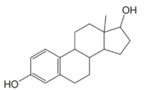
Acerca da estrutura molecular do estradiol, assinale a opção correta.
Acerca da estrutura molecular do estradiol, assinale a opção correta.
Ano: 2026
Banca:
FGV
Órgão:
PC-PI
Prova:
FGV - 2026 - PC-PI - Perito Criminal - Biomedicina e Farmácia e Bioquímica e Biologia e Química e Engenharia Química |
Q3847209
Química
Considere a reação abaixo:

Assinale a opção correta.
Assinale a opção correta.
Ano: 2026
Banca:
FGV
Órgão:
PC-PI
Prova:
FGV - 2026 - PC-PI - Perito Criminal - Biomedicina e Farmácia e Bioquímica e Biologia e Química e Engenharia Química |
Q3847208
Química
Sobre a espectrometria de massas, analise os itens a seguir e
assinale V para verdadeiro e F para falso.
( ) Em um CG-MS com ionização por impacto de elétrons, as moléculas que saem do cromatógrafo gasoso são bombardeadas por um feixe de elétrons de 170 eV.
( ) Em um LC-MS, o sistema de ionização APCI requer que a amostra apresente alguma volatilidade e o analito deve ser termicamente estável.
( ) No analisador de massas por tempo de voo, para uma dada energia cinética, massas menores terão velocidades maiores do que massas maiores. Íons com massas menores chegam ao detector mais cedo.
( ) O espectro a seguir corresponde à molécula de decano.
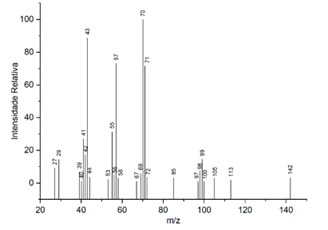
As afirmativas são, respectivamente,
( ) Em um CG-MS com ionização por impacto de elétrons, as moléculas que saem do cromatógrafo gasoso são bombardeadas por um feixe de elétrons de 170 eV.
( ) Em um LC-MS, o sistema de ionização APCI requer que a amostra apresente alguma volatilidade e o analito deve ser termicamente estável.
( ) No analisador de massas por tempo de voo, para uma dada energia cinética, massas menores terão velocidades maiores do que massas maiores. Íons com massas menores chegam ao detector mais cedo.
( ) O espectro a seguir corresponde à molécula de decano.
As afirmativas são, respectivamente,
Ano: 2026
Banca:
FGV
Órgão:
PC-PI
Prova:
FGV - 2026 - PC-PI - Perito Criminal - Biomedicina e Farmácia e Bioquímica e Biologia e Química e Engenharia Química |
Q3847207
Química
Assinale a opção que apresenta o pH de uma solução de um ácido
monoprótico (Ka = 2,0 x 10⁻⁶
) com concentração de 2,0 M. Dado:
log10 2 ≈ 0,3.
Ano: 2026
Banca:
FGV
Órgão:
PC-PI
Prova:
FGV - 2026 - PC-PI - Perito Criminal - Biomedicina e Farmácia e Bioquímica e Biologia e Química e Engenharia Química |
Q3847206
Criminalística
Um perito recebeu de um laboratório um espectro na região do
infravermelho para a identificação de cinco possíveis drogas:
cocaína, nicotina, MDMA (ecstasy), metanfetamina e bufotenina.
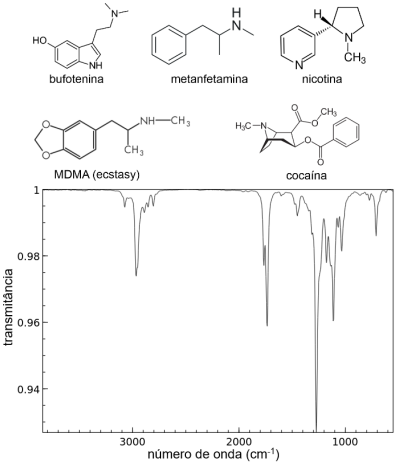
Com base na estrutura molecular de cada uma delas, o espectro da amostra analisada é compatível com:
Com base na estrutura molecular de cada uma delas, o espectro da amostra analisada é compatível com:
Ano: 2026
Banca:
FGV
Órgão:
PC-PI
Prova:
FGV - 2026 - PC-PI - Perito Criminal - Biomedicina e Farmácia e Bioquímica e Biologia e Química e Engenharia Química |
Q3847205
Química
O dióxido de nitrogênio é um gás poluente marrom-avermelhado
altamente tóxico, oriundo da queima de combustíveis fósseis.
Com relação à sua estrutura molecular, é incorreto afirmar que
Com relação à sua estrutura molecular, é incorreto afirmar que

 Conheça nossos planos