Questões de Concurso Público Prefeitura de Luiz Alves - SC 2025 para Professor de Língua Inglesa - Edital nº 12
Foram encontradas 2 questões


Ano: 2025
Banca:
UNIVALI
Órgão:
Prefeitura de Luiz Alves - SC
Prova:
UNIVALI - 2025 - Prefeitura de Luiz Alves - SC - Professor de Língua Inglesa - Edital nº 12 |
Q4034363
Pedagogia
Texto associado
Cold Kimchi Tomato Bibim Noodles
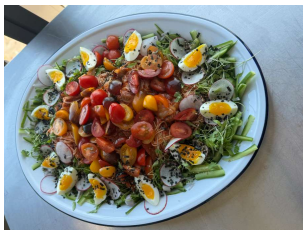
Ingredients
For the sauce
3 tablespoons tomato paste
2 tablespoons gochujang
1 teaspoon kosher salt
1 1/2 tablespoons sesame oil
3 tablespoons apple cider vinegar
3 tablespoons kimchi juice
1 tablespoon honey
1 cup chopped kimchi
For the noodles
150 grams somen noodles
For the toppings
2 Persian cucumbers, sliced into matchsticks
1 shallot, minced
2 cups cherry tomatoes, halved
2 soft-boiled eggs (7 minutes, jammy yolks)
4 radishes, thinly sliced
To finish
Extra sesame oil, for drizzling
2 tablespoons furikake
Handful of cilantro
Directions
•Step 1
Make the sauce: In a medium bowl, whisk together the
tomato paste, gochujang, salt, sesame oil, vinegar,
kimchi juice, and honey until smooth. Stir in the chopped
kimchi until evenly coated.
•Step 2
Cook the noodles: Bring a pot of water to a rolling boil.
Add the somen noodles and cook for 3 to 4 minutes, until
just tender. Drain and rinse under cold water until
completely cooled, then shake off excess water.
•Step 3
Toss together: Add the chilled noodles to the sauce bowl.
Using tongs, gently mix until each strand is coated in the
kimchi-gochujang sauce.
•Step 4
Assemble: Divide the noodles between bowls. Top with
cucumbers, shallot, tomatoes, soft-boiled eggs, and
radishes.
•Step 5
Finish & serve: Drizzle with a little extra sesame oil,
sprinkle with furikake, and top with cilantro. Mix
everything together at the table before eating.
https://food52.com/recipes/cold-kimchi-tomato-bibim-noodles
Read the pedagogical context below:
An English teacher is designing a lesson sequence based on the Cold Kimchi Tomato Bibim Noodles recipe, aiming to align with Brazil's Base Nacional Comum Curricular (BNCC) competencies for English language teaching. The BNCC emphasizes developing students' repertoires through contact with linguistic and cultural manifestations, critical language awareness, intercultural communication, and English as a lingua franca. The teacher plans activities exploring the recipe's fusion of Korean, Japanese, and Western ingredients as a metaphor for linguistic and cultural hybridity, discussing food globalization, analyzing how recipes constitute intercultural texts, and having students create their own fusion recipes using Brazilian ingredients. Regarding the BNCC's theoretical framework and contemporary approaches to English language teaching that reject native-speaker models and emphasize pluricentric, decolonial perspectives, which pedagogical approach best exemplifies BNCC-aligned practice?
An English teacher is designing a lesson sequence based on the Cold Kimchi Tomato Bibim Noodles recipe, aiming to align with Brazil's Base Nacional Comum Curricular (BNCC) competencies for English language teaching. The BNCC emphasizes developing students' repertoires through contact with linguistic and cultural manifestations, critical language awareness, intercultural communication, and English as a lingua franca. The teacher plans activities exploring the recipe's fusion of Korean, Japanese, and Western ingredients as a metaphor for linguistic and cultural hybridity, discussing food globalization, analyzing how recipes constitute intercultural texts, and having students create their own fusion recipes using Brazilian ingredients. Regarding the BNCC's theoretical framework and contemporary approaches to English language teaching that reject native-speaker models and emphasize pluricentric, decolonial perspectives, which pedagogical approach best exemplifies BNCC-aligned practice?
Ano: 2025
Banca:
UNIVALI
Órgão:
Prefeitura de Luiz Alves - SC
Prova:
UNIVALI - 2025 - Prefeitura de Luiz Alves - SC - Professor de Língua Inglesa - Edital nº 12 |
Q4034382
Pedagogia
In a classroom observation report, two English teachers
are compared.
The first organizes her lessons around translation exercises, explicit grammar explanation, and memorization of bilingual vocabulary lists.
The second designs communicative tasks, group interactions, and role-play activities that simulate real-life communication.
Considering the pedagogical orientations exemplified in both cases, the Communicative Approach (CA) differs from the Grammar-Translation Method (GTM) primarily because:
The first organizes her lessons around translation exercises, explicit grammar explanation, and memorization of bilingual vocabulary lists.
The second designs communicative tasks, group interactions, and role-play activities that simulate real-life communication.
Considering the pedagogical orientations exemplified in both cases, the Communicative Approach (CA) differs from the Grammar-Translation Method (GTM) primarily because:

 Conheça nossos planos