Questões de Concurso Público Prefeitura de Valparaíso de Goiás - GO 2026 para Professor de Ensino Fundamental dos Anos Finais - Inglês

Foram encontradas 9 questões

Q4117230 Inglês
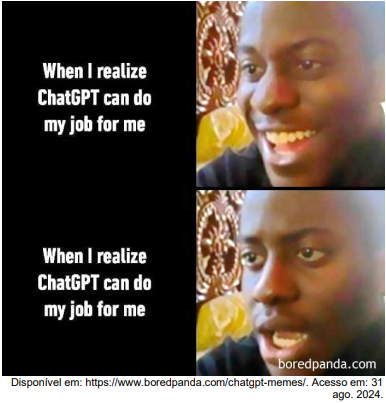
Which social issue is the meme highlighting?
Alternativas
Q4117231 Inglês
What is the semantic function of the expression “can do my job”?
Alternativas
Q4117235 Inglês
A principal diferença entre a perspectiva dos adolescentes e a do homem mais velho no cartum é que os adolescentes
Alternativas
Q4117237 Inglês
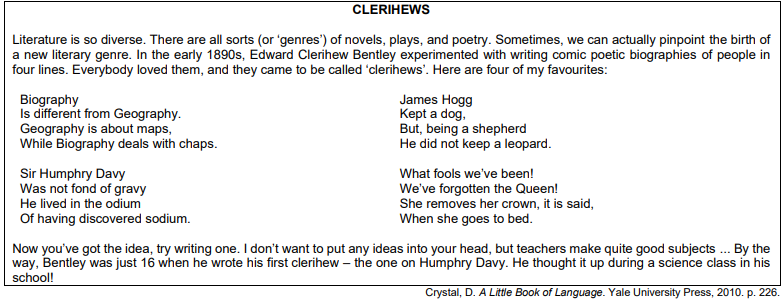
Os clerihews são considerados um novo gênero literário porque
Alternativas
Q4117238 Inglês
Imagine que uma professora de inglês decidiu aceitar o convite do autor expresso no excerto “Now you’ve got the idea, try writing one. I don’t want to put any ideas into your head, but teachers make quite good subjects” e propôs que os alunos escrevessem um clerihew sobre os "good subjects" sugeridos. O clerihew que atende a solicitação da professora é
Alternativas
Q4117243 Inglês

Texto 7


Lesson plan:

Aims:

1. to listen for the main idea of the text and for specific information.. to guess vocabulary from context and learn new vocabulary.

3. to discuss reations to the lyrics of a song.

4. to write a letter to a penfriend.

5. to develop critical thinking skills (making inferences, analysing).

6. to foster learner independence and cooperative learning.


Green, C.; Tanner, R. Tasks for Teacher Education: a reflective approach, Harlow, UK: Addison Wesley Longman Publishing. 1998. p. 78. [Adaptado].

De acordo com os objetivos listados, o professor espera que os alunos realizem a ação de: 
Alternativas
Q4117244 Inglês

Texto 7


Lesson plan:

Aims:

1. to listen for the main idea of the text and for specific information.. to guess vocabulary from context and learn new vocabulary.

3. to discuss reations to the lyrics of a song.

4. to write a letter to a penfriend.

5. to develop critical thinking skills (making inferences, analysing).

6. to foster learner independence and cooperative learning.


Green, C.; Tanner, R. Tasks for Teacher Education: a reflective approach, Harlow, UK: Addison Wesley Longman Publishing. 1998. p. 78. [Adaptado].

“To foster” in “to foster learner independence and cooperative learning” means
Alternativas
Q4117247 Inglês
Texto 8

All About TPACK: A Teacher’s Guide to the TPACK Tech Integration Model


TPACK, or Technological Pedagogical Content Knowledge, is a framework for the integration of technology in the classroom. The TPACK framework is a helpful guide to providing students with a high-quality educational experience, when technology is incorporated in the classroom.

Though its history is difficult to track, TPACK seems to have first been presented in research written by Punya Mishra and Matthew J. Koehler in 2006, and has since evolved into the framework teachers use today.

TPACK identifies three forms of knowledge:

Technological Knowledge: Knowledge about technology, including thinking about and working with technology, tools, and resources.
Pedagogical Knowledge: Knowledge about pedagogy, including practices or methods of teaching and learning.
Content Knowledge: Knowledge about the content or subject area to be learned or taught.

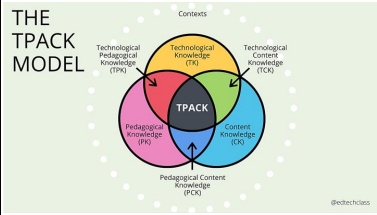
The TPACK approach does not view these knowledge areas in isolation. Instead, the framework emphasizes the intersections of these knowledge areas, as seen on the diagram: 


Pedagogical Content Knowledge (PCK)
Technological Content Knowledge (TCK)
Technological Pedagogical Knowledge (TPK)
Technological Pedagogical Content Knowledge (TPACK)

In the center of the diagram, you will see TPACK, which is the model for how to teach with technology.

TPACK therefore gives teachers a framework to combine their knowledge of technology, pedagogy, and content for an innovative approach to teaching and learning.

Disponível em: https://edtech-class.com/2021/06/30/all-about-tpack-a-teachersguide-to-the-tpack-tech-integration-model/. Acesso em: 07 set. 2024.
Segundo o texto, o principal objetivo do modelo TPACK é
Alternativas
Q4117249 Inglês
Texto 8

All About TPACK: A Teacher’s Guide to the TPACK Tech Integration Model


TPACK, or Technological Pedagogical Content Knowledge, is a framework for the integration of technology in the classroom. The TPACK framework is a helpful guide to providing students with a high-quality educational experience, when technology is incorporated in the classroom.

Though its history is difficult to track, TPACK seems to have first been presented in research written by Punya Mishra and Matthew J. Koehler in 2006, and has since evolved into the framework teachers use today.

TPACK identifies three forms of knowledge:

Technological Knowledge: Knowledge about technology, including thinking about and working with technology, tools, and resources.
Pedagogical Knowledge: Knowledge about pedagogy, including practices or methods of teaching and learning.
Content Knowledge: Knowledge about the content or subject area to be learned or taught.

The TPACK approach does not view these knowledge areas in isolation. Instead, the framework emphasizes the intersections of these knowledge areas, as seen on the diagram: 


Pedagogical Content Knowledge (PCK)
Technological Content Knowledge (TCK)
Technological Pedagogical Knowledge (TPK)
Technological Pedagogical Content Knowledge (TPACK)

In the center of the diagram, you will see TPACK, which is the model for how to teach with technology.

TPACK therefore gives teachers a framework to combine their knowledge of technology, pedagogy, and content for an innovative approach to teaching and learning.

Disponível em: https://edtech-class.com/2021/06/30/all-about-tpack-a-teachersguide-to-the-tpack-tech-integration-model/. Acesso em: 07 set. 2024.
Para o modelo TPACK, as três áreas de conhecimento
Alternativas
Respostas
1: B
2: A
3: B
4: B
5: C
6: C
7: A
8: D
9: B