Questões de Concurso Público IF-MT 2026 para Professor EBTT - Área: Português/Inglês
Foram encontradas 50 questões


Ano: 2026
Banca:
IF-MT
Órgão:
IF-MT
Prova:
IF-MT - 2026 - IF-MT - Professor EBTT - Área: Português/Inglês |
Q3870546
Português
Texto associado
TEXTO I - Base para responder à questão.
Qual é a diferença entre alfabetismo funcional, elementar e consolidado?
Analfabetos funcionais são pessoas que conseguem identificar palavras isoladas ou ler frases muito
simples, mas não são capazes de compreender, por exemplo, uma notícia de jornal. "O analfabeto
funcional lê textos simples, curtos, palavras isoladas. Ele entende coisas familiares, como um recibo do
mercado, resultado de jogo, receita de bolo, mas não interpreta uma tabela, um gráfico ou as nuances de
uma matéria jornalística", explica Lima.
Já os indivíduos no nível elementar de alfabetização conseguem ler frases mais longas e localizar
informações explícitas em pequenos textos. Mas ainda têm muita dificuldade para lidar com materiais
mais complexos, como interpretar uma tabela ou entender uma opinião embutida em um texto. Quem
atinge o nível de alfabetismo consolidado consegue ler e compreender integralmente notícias, textos opinativos, tabelas, gráficos e identificar nuances como ironia ou a distinção entre fato e opinião.
Escolaridade
Historicamente, o nível de escolaridade tem se mostrado o maior indutor do alfabetismo no Brasil.
Isso significa que, quanto maior o tempo de estudo, mais alfabetizado o indivíduo estará. Dados do ensino
superior mostram que 88% dos jovens que ingressaram ou concluíram uma graduação são considerados
plenamente alfabetizados, mas apenas seis em cada 10 (61%) alcançaram o nível de alfabetização consolidada.
Essa proporção é menor do que a observada em 2018, que era de 71%. Na prática, isso significa que
quase 4 em cada 10 estudantes que hoje estão ou já passaram por uma faculdade não dominam habilidades essenciais de leitura, escrita e matemática. "É no superior que deságuam as fragilidades. Quem estava
no Ensino Médio na pandemia hoje está no Superior, e com um recuo na alfabetização", explica Lima.
Estudo mostra que aumentou de 14%, em 2018, para 17%, em 2024, o número de estudantes do
Ensino Médio caracterizados como analfabetos funcionais. O estudo também mostrou que caiu de
45% para 38% a proporção de entrevistados que chegaram ao Ensino Médio nos dois níveis mais altos das
escalas de alfabetismo (elementar e consolidado).
Lima diz que escolas e faculdades estão atuando para reduzir as lacunas de aprendizado geradas
na pandemia. Alguns exemplos são a criação de semestres introdutórios para alinhar o nível de conhecimento dos alunos, e que as escolas estão correndo atrás para recuperar aprendizagens. "Mas não dá para
ficar esperando a educação resolver tudo. Depois de certa idade, quem não conseguiu desenvolver certas
habilidades na etapa escolar dificilmente vai voltar para a escola, por mais eficiente que seja uma política
de educação de jovens e adultos", afirma.
Coordenadora reforça que o ambiente de trabalho tem uma responsabilidade pouco explorada no
processo de letramento. "O trabalho é um lugar onde o letramento acontece." "Com ações simples, como
colocar no refeitório o cardápio com as calorias das refeições, cotidianamente, o trabalhador vai tendo contato com textos, informações, contextos —você está letrando a pessoa sem custo", diz.
Idade
Quando a análise é feita por faixa etária, o indicador aponta que entre 50 e 64 anos, mais da metade
(51%) são analfabetos funcionais. O maior percentual de pessoas funcionalmente alfabetizadas está nas faixas de 15 a 29 anos (84%) e de 30 a 39 anos (78%). Essa faixa foi alvo das políticas de inclusão de crianças
e jovens nas escolas nas últimas duas décadas.
Raça e cor
O estudo revela que a desigualdade racial nos níveis de alfabetismo se mantém no Brasil. Em 2024,
apenas 31% dos que se autodeclaram pretos e pardos alcançaram os dois níveis mais altos da escala de
alfabetismo, contra 41% entre os brancos.
O cenário piorou em relação à edição anterior, quando esses percentuais eram de SS% e 45%, respectivamente. "Não tivemos surpresa. Mesmo com dados do IBGE mostrando que aumentou o nível de
escolaridade entre as pessoas negras, a desigualdade em relação aos brancos ainda é muito grande", diz
Lima.
Fonte: https://educacao.uol.com.br/noticias/2025/05/05/estagnado-brasil-tem-29-de-analfabetos-funcionais-pandemia-piorou-quadro.htm.
De acordo com a Base Nacional Comum Curricular (BNCC), o ensino de Língua Portuguesa deve ser estruturado
para promover a formação de sujeitos críticos e capazes de atuar socialmente por meio da linguagem. Considerando os níveis de alfabetismo abordados no texto, qual dos seguintes enfoques a BNCC propõe para o Ensino
Médio?
Ano: 2026
Banca:
IF-MT
Órgão:
IF-MT
Prova:
IF-MT - 2026 - IF-MT - Professor EBTT - Área: Português/Inglês |
Q3870547
Pedagogia
Texto associado
TEXTO I - Base para responder à questão.
Qual é a diferença entre alfabetismo funcional, elementar e consolidado?
Analfabetos funcionais são pessoas que conseguem identificar palavras isoladas ou ler frases muito
simples, mas não são capazes de compreender, por exemplo, uma notícia de jornal. "O analfabeto
funcional lê textos simples, curtos, palavras isoladas. Ele entende coisas familiares, como um recibo do
mercado, resultado de jogo, receita de bolo, mas não interpreta uma tabela, um gráfico ou as nuances de
uma matéria jornalística", explica Lima.
Já os indivíduos no nível elementar de alfabetização conseguem ler frases mais longas e localizar
informações explícitas em pequenos textos. Mas ainda têm muita dificuldade para lidar com materiais
mais complexos, como interpretar uma tabela ou entender uma opinião embutida em um texto. Quem
atinge o nível de alfabetismo consolidado consegue ler e compreender integralmente notícias, textos opinativos, tabelas, gráficos e identificar nuances como ironia ou a distinção entre fato e opinião.
Escolaridade
Historicamente, o nível de escolaridade tem se mostrado o maior indutor do alfabetismo no Brasil.
Isso significa que, quanto maior o tempo de estudo, mais alfabetizado o indivíduo estará. Dados do ensino
superior mostram que 88% dos jovens que ingressaram ou concluíram uma graduação são considerados
plenamente alfabetizados, mas apenas seis em cada 10 (61%) alcançaram o nível de alfabetização consolidada.
Essa proporção é menor do que a observada em 2018, que era de 71%. Na prática, isso significa que
quase 4 em cada 10 estudantes que hoje estão ou já passaram por uma faculdade não dominam habilidades essenciais de leitura, escrita e matemática. "É no superior que deságuam as fragilidades. Quem estava
no Ensino Médio na pandemia hoje está no Superior, e com um recuo na alfabetização", explica Lima.
Estudo mostra que aumentou de 14%, em 2018, para 17%, em 2024, o número de estudantes do
Ensino Médio caracterizados como analfabetos funcionais. O estudo também mostrou que caiu de
45% para 38% a proporção de entrevistados que chegaram ao Ensino Médio nos dois níveis mais altos das
escalas de alfabetismo (elementar e consolidado).
Lima diz que escolas e faculdades estão atuando para reduzir as lacunas de aprendizado geradas
na pandemia. Alguns exemplos são a criação de semestres introdutórios para alinhar o nível de conhecimento dos alunos, e que as escolas estão correndo atrás para recuperar aprendizagens. "Mas não dá para
ficar esperando a educação resolver tudo. Depois de certa idade, quem não conseguiu desenvolver certas
habilidades na etapa escolar dificilmente vai voltar para a escola, por mais eficiente que seja uma política
de educação de jovens e adultos", afirma.
Coordenadora reforça que o ambiente de trabalho tem uma responsabilidade pouco explorada no
processo de letramento. "O trabalho é um lugar onde o letramento acontece." "Com ações simples, como
colocar no refeitório o cardápio com as calorias das refeições, cotidianamente, o trabalhador vai tendo contato com textos, informações, contextos —você está letrando a pessoa sem custo", diz.
Idade
Quando a análise é feita por faixa etária, o indicador aponta que entre 50 e 64 anos, mais da metade
(51%) são analfabetos funcionais. O maior percentual de pessoas funcionalmente alfabetizadas está nas faixas de 15 a 29 anos (84%) e de 30 a 39 anos (78%). Essa faixa foi alvo das políticas de inclusão de crianças
e jovens nas escolas nas últimas duas décadas.
Raça e cor
O estudo revela que a desigualdade racial nos níveis de alfabetismo se mantém no Brasil. Em 2024,
apenas 31% dos que se autodeclaram pretos e pardos alcançaram os dois níveis mais altos da escala de
alfabetismo, contra 41% entre os brancos.
O cenário piorou em relação à edição anterior, quando esses percentuais eram de SS% e 45%, respectivamente. "Não tivemos surpresa. Mesmo com dados do IBGE mostrando que aumentou o nível de
escolaridade entre as pessoas negras, a desigualdade em relação aos brancos ainda é muito grande", diz
Lima.
Fonte: https://educacao.uol.com.br/noticias/2025/05/05/estagnado-brasil-tem-29-de-analfabetos-funcionais-pandemia-piorou-quadro.htm.
Segundo os Parâmetros Curriculares Nacionais do Ensino Médio (PCNEM), qual é o papel da avaliação no processo de ensino de Língua Portuguesa?
Ano: 2026
Banca:
IF-MT
Órgão:
IF-MT
Prova:
IF-MT - 2026 - IF-MT - Professor EBTT - Área: Português/Inglês |
Q3870548
Português
Texto associado
TEXTO I - Base para responder à questão.
Qual é a diferença entre alfabetismo funcional, elementar e consolidado?
Analfabetos funcionais são pessoas que conseguem identificar palavras isoladas ou ler frases muito
simples, mas não são capazes de compreender, por exemplo, uma notícia de jornal. "O analfabeto
funcional lê textos simples, curtos, palavras isoladas. Ele entende coisas familiares, como um recibo do
mercado, resultado de jogo, receita de bolo, mas não interpreta uma tabela, um gráfico ou as nuances de
uma matéria jornalística", explica Lima.
Já os indivíduos no nível elementar de alfabetização conseguem ler frases mais longas e localizar
informações explícitas em pequenos textos. Mas ainda têm muita dificuldade para lidar com materiais
mais complexos, como interpretar uma tabela ou entender uma opinião embutida em um texto. Quem
atinge o nível de alfabetismo consolidado consegue ler e compreender integralmente notícias, textos opinativos, tabelas, gráficos e identificar nuances como ironia ou a distinção entre fato e opinião.
Escolaridade
Historicamente, o nível de escolaridade tem se mostrado o maior indutor do alfabetismo no Brasil.
Isso significa que, quanto maior o tempo de estudo, mais alfabetizado o indivíduo estará. Dados do ensino
superior mostram que 88% dos jovens que ingressaram ou concluíram uma graduação são considerados
plenamente alfabetizados, mas apenas seis em cada 10 (61%) alcançaram o nível de alfabetização consolidada.
Essa proporção é menor do que a observada em 2018, que era de 71%. Na prática, isso significa que
quase 4 em cada 10 estudantes que hoje estão ou já passaram por uma faculdade não dominam habilidades essenciais de leitura, escrita e matemática. "É no superior que deságuam as fragilidades. Quem estava
no Ensino Médio na pandemia hoje está no Superior, e com um recuo na alfabetização", explica Lima.
Estudo mostra que aumentou de 14%, em 2018, para 17%, em 2024, o número de estudantes do
Ensino Médio caracterizados como analfabetos funcionais. O estudo também mostrou que caiu de
45% para 38% a proporção de entrevistados que chegaram ao Ensino Médio nos dois níveis mais altos das
escalas de alfabetismo (elementar e consolidado).
Lima diz que escolas e faculdades estão atuando para reduzir as lacunas de aprendizado geradas
na pandemia. Alguns exemplos são a criação de semestres introdutórios para alinhar o nível de conhecimento dos alunos, e que as escolas estão correndo atrás para recuperar aprendizagens. "Mas não dá para
ficar esperando a educação resolver tudo. Depois de certa idade, quem não conseguiu desenvolver certas
habilidades na etapa escolar dificilmente vai voltar para a escola, por mais eficiente que seja uma política
de educação de jovens e adultos", afirma.
Coordenadora reforça que o ambiente de trabalho tem uma responsabilidade pouco explorada no
processo de letramento. "O trabalho é um lugar onde o letramento acontece." "Com ações simples, como
colocar no refeitório o cardápio com as calorias das refeições, cotidianamente, o trabalhador vai tendo contato com textos, informações, contextos —você está letrando a pessoa sem custo", diz.
Idade
Quando a análise é feita por faixa etária, o indicador aponta que entre 50 e 64 anos, mais da metade
(51%) são analfabetos funcionais. O maior percentual de pessoas funcionalmente alfabetizadas está nas faixas de 15 a 29 anos (84%) e de 30 a 39 anos (78%). Essa faixa foi alvo das políticas de inclusão de crianças
e jovens nas escolas nas últimas duas décadas.
Raça e cor
O estudo revela que a desigualdade racial nos níveis de alfabetismo se mantém no Brasil. Em 2024,
apenas 31% dos que se autodeclaram pretos e pardos alcançaram os dois níveis mais altos da escala de
alfabetismo, contra 41% entre os brancos.
O cenário piorou em relação à edição anterior, quando esses percentuais eram de SS% e 45%, respectivamente. "Não tivemos surpresa. Mesmo com dados do IBGE mostrando que aumentou o nível de
escolaridade entre as pessoas negras, a desigualdade em relação aos brancos ainda é muito grande", diz
Lima.
Fonte: https://educacao.uol.com.br/noticias/2025/05/05/estagnado-brasil-tem-29-de-analfabetos-funcionais-pandemia-piorou-quadro.htm.
De acordo com as Orientações Curriculares para o Ensino Médio (OCEM) e OCEM-MT, qual das seguintes estratégias de ensino deve ser priorizada no contexto do Ensino Médio, considerando os dados sobre alfabetismo
funcional apresentados no texto?
Ano: 2026
Banca:
IF-MT
Órgão:
IF-MT
Prova:
IF-MT - 2026 - IF-MT - Professor EBTT - Área: Português/Inglês |
Q3870549
Português
Texto associado
TEXTO I - Base para responder à questão.
Qual é a diferença entre alfabetismo funcional, elementar e consolidado?
Analfabetos funcionais são pessoas que conseguem identificar palavras isoladas ou ler frases muito
simples, mas não são capazes de compreender, por exemplo, uma notícia de jornal. "O analfabeto
funcional lê textos simples, curtos, palavras isoladas. Ele entende coisas familiares, como um recibo do
mercado, resultado de jogo, receita de bolo, mas não interpreta uma tabela, um gráfico ou as nuances de
uma matéria jornalística", explica Lima.
Já os indivíduos no nível elementar de alfabetização conseguem ler frases mais longas e localizar
informações explícitas em pequenos textos. Mas ainda têm muita dificuldade para lidar com materiais
mais complexos, como interpretar uma tabela ou entender uma opinião embutida em um texto. Quem
atinge o nível de alfabetismo consolidado consegue ler e compreender integralmente notícias, textos opinativos, tabelas, gráficos e identificar nuances como ironia ou a distinção entre fato e opinião.
Escolaridade
Historicamente, o nível de escolaridade tem se mostrado o maior indutor do alfabetismo no Brasil.
Isso significa que, quanto maior o tempo de estudo, mais alfabetizado o indivíduo estará. Dados do ensino
superior mostram que 88% dos jovens que ingressaram ou concluíram uma graduação são considerados
plenamente alfabetizados, mas apenas seis em cada 10 (61%) alcançaram o nível de alfabetização consolidada.
Essa proporção é menor do que a observada em 2018, que era de 71%. Na prática, isso significa que
quase 4 em cada 10 estudantes que hoje estão ou já passaram por uma faculdade não dominam habilidades essenciais de leitura, escrita e matemática. "É no superior que deságuam as fragilidades. Quem estava
no Ensino Médio na pandemia hoje está no Superior, e com um recuo na alfabetização", explica Lima.
Estudo mostra que aumentou de 14%, em 2018, para 17%, em 2024, o número de estudantes do
Ensino Médio caracterizados como analfabetos funcionais. O estudo também mostrou que caiu de
45% para 38% a proporção de entrevistados que chegaram ao Ensino Médio nos dois níveis mais altos das
escalas de alfabetismo (elementar e consolidado).
Lima diz que escolas e faculdades estão atuando para reduzir as lacunas de aprendizado geradas
na pandemia. Alguns exemplos são a criação de semestres introdutórios para alinhar o nível de conhecimento dos alunos, e que as escolas estão correndo atrás para recuperar aprendizagens. "Mas não dá para
ficar esperando a educação resolver tudo. Depois de certa idade, quem não conseguiu desenvolver certas
habilidades na etapa escolar dificilmente vai voltar para a escola, por mais eficiente que seja uma política
de educação de jovens e adultos", afirma.
Coordenadora reforça que o ambiente de trabalho tem uma responsabilidade pouco explorada no
processo de letramento. "O trabalho é um lugar onde o letramento acontece." "Com ações simples, como
colocar no refeitório o cardápio com as calorias das refeições, cotidianamente, o trabalhador vai tendo contato com textos, informações, contextos —você está letrando a pessoa sem custo", diz.
Idade
Quando a análise é feita por faixa etária, o indicador aponta que entre 50 e 64 anos, mais da metade
(51%) são analfabetos funcionais. O maior percentual de pessoas funcionalmente alfabetizadas está nas faixas de 15 a 29 anos (84%) e de 30 a 39 anos (78%). Essa faixa foi alvo das políticas de inclusão de crianças
e jovens nas escolas nas últimas duas décadas.
Raça e cor
O estudo revela que a desigualdade racial nos níveis de alfabetismo se mantém no Brasil. Em 2024,
apenas 31% dos que se autodeclaram pretos e pardos alcançaram os dois níveis mais altos da escala de
alfabetismo, contra 41% entre os brancos.
O cenário piorou em relação à edição anterior, quando esses percentuais eram de SS% e 45%, respectivamente. "Não tivemos surpresa. Mesmo com dados do IBGE mostrando que aumentou o nível de
escolaridade entre as pessoas negras, a desigualdade em relação aos brancos ainda é muito grande", diz
Lima.
Fonte: https://educacao.uol.com.br/noticias/2025/05/05/estagnado-brasil-tem-29-de-analfabetos-funcionais-pandemia-piorou-quadro.htm.
No contexto de produção textual, os gêneros discursivos são essenciais para a construção do sentido e da comunicação eficaz. Considerando o Texto I, qual das alternativas abaixo melhor exemplifica o gênero discursivo
predominante?
Ano: 2026
Banca:
IF-MT
Órgão:
IF-MT
Prova:
IF-MT - 2026 - IF-MT - Professor EBTT - Área: Português/Inglês |
Q3870550
Português
Texto associado
TEXTO I - Base para responder à questão.
Qual é a diferença entre alfabetismo funcional, elementar e consolidado?
Analfabetos funcionais são pessoas que conseguem identificar palavras isoladas ou ler frases muito
simples, mas não são capazes de compreender, por exemplo, uma notícia de jornal. "O analfabeto
funcional lê textos simples, curtos, palavras isoladas. Ele entende coisas familiares, como um recibo do
mercado, resultado de jogo, receita de bolo, mas não interpreta uma tabela, um gráfico ou as nuances de
uma matéria jornalística", explica Lima.
Já os indivíduos no nível elementar de alfabetização conseguem ler frases mais longas e localizar
informações explícitas em pequenos textos. Mas ainda têm muita dificuldade para lidar com materiais
mais complexos, como interpretar uma tabela ou entender uma opinião embutida em um texto. Quem
atinge o nível de alfabetismo consolidado consegue ler e compreender integralmente notícias, textos opinativos, tabelas, gráficos e identificar nuances como ironia ou a distinção entre fato e opinião.
Escolaridade
Historicamente, o nível de escolaridade tem se mostrado o maior indutor do alfabetismo no Brasil.
Isso significa que, quanto maior o tempo de estudo, mais alfabetizado o indivíduo estará. Dados do ensino
superior mostram que 88% dos jovens que ingressaram ou concluíram uma graduação são considerados
plenamente alfabetizados, mas apenas seis em cada 10 (61%) alcançaram o nível de alfabetização consolidada.
Essa proporção é menor do que a observada em 2018, que era de 71%. Na prática, isso significa que
quase 4 em cada 10 estudantes que hoje estão ou já passaram por uma faculdade não dominam habilidades essenciais de leitura, escrita e matemática. "É no superior que deságuam as fragilidades. Quem estava
no Ensino Médio na pandemia hoje está no Superior, e com um recuo na alfabetização", explica Lima.
Estudo mostra que aumentou de 14%, em 2018, para 17%, em 2024, o número de estudantes do
Ensino Médio caracterizados como analfabetos funcionais. O estudo também mostrou que caiu de
45% para 38% a proporção de entrevistados que chegaram ao Ensino Médio nos dois níveis mais altos das
escalas de alfabetismo (elementar e consolidado).
Lima diz que escolas e faculdades estão atuando para reduzir as lacunas de aprendizado geradas
na pandemia. Alguns exemplos são a criação de semestres introdutórios para alinhar o nível de conhecimento dos alunos, e que as escolas estão correndo atrás para recuperar aprendizagens. "Mas não dá para
ficar esperando a educação resolver tudo. Depois de certa idade, quem não conseguiu desenvolver certas
habilidades na etapa escolar dificilmente vai voltar para a escola, por mais eficiente que seja uma política
de educação de jovens e adultos", afirma.
Coordenadora reforça que o ambiente de trabalho tem uma responsabilidade pouco explorada no
processo de letramento. "O trabalho é um lugar onde o letramento acontece." "Com ações simples, como
colocar no refeitório o cardápio com as calorias das refeições, cotidianamente, o trabalhador vai tendo contato com textos, informações, contextos —você está letrando a pessoa sem custo", diz.
Idade
Quando a análise é feita por faixa etária, o indicador aponta que entre 50 e 64 anos, mais da metade
(51%) são analfabetos funcionais. O maior percentual de pessoas funcionalmente alfabetizadas está nas faixas de 15 a 29 anos (84%) e de 30 a 39 anos (78%). Essa faixa foi alvo das políticas de inclusão de crianças
e jovens nas escolas nas últimas duas décadas.
Raça e cor
O estudo revela que a desigualdade racial nos níveis de alfabetismo se mantém no Brasil. Em 2024,
apenas 31% dos que se autodeclaram pretos e pardos alcançaram os dois níveis mais altos da escala de
alfabetismo, contra 41% entre os brancos.
O cenário piorou em relação à edição anterior, quando esses percentuais eram de SS% e 45%, respectivamente. "Não tivemos surpresa. Mesmo com dados do IBGE mostrando que aumentou o nível de
escolaridade entre as pessoas negras, a desigualdade em relação aos brancos ainda é muito grande", diz
Lima.
Fonte: https://educacao.uol.com.br/noticias/2025/05/05/estagnado-brasil-tem-29-de-analfabetos-funcionais-pandemia-piorou-quadro.htm.
A coesão e a coerência são elementos fundamentais para a construção do sentido no texto. Com base no Texto
I, analise a seguinte frase: "O estudo também mostrou que caiu de 45% para 38% a proporção de entrevistados
que chegaram ao Ensino Médio nos dois níveis mais altos das escalas de alfabetismo (elementar e consolidado)."
Como o autor garante a coesão e a coerência da frase?
Como o autor garante a coesão e a coerência da frase?
Ano: 2026
Banca:
IF-MT
Órgão:
IF-MT
Prova:
IF-MT - 2026 - IF-MT - Professor EBTT - Área: Português/Inglês |
Q3870551
Português
Texto associado
TEXTO I - Base para responder à questão.
Qual é a diferença entre alfabetismo funcional, elementar e consolidado?
Analfabetos funcionais são pessoas que conseguem identificar palavras isoladas ou ler frases muito
simples, mas não são capazes de compreender, por exemplo, uma notícia de jornal. "O analfabeto
funcional lê textos simples, curtos, palavras isoladas. Ele entende coisas familiares, como um recibo do
mercado, resultado de jogo, receita de bolo, mas não interpreta uma tabela, um gráfico ou as nuances de
uma matéria jornalística", explica Lima.
Já os indivíduos no nível elementar de alfabetização conseguem ler frases mais longas e localizar
informações explícitas em pequenos textos. Mas ainda têm muita dificuldade para lidar com materiais
mais complexos, como interpretar uma tabela ou entender uma opinião embutida em um texto. Quem
atinge o nível de alfabetismo consolidado consegue ler e compreender integralmente notícias, textos opinativos, tabelas, gráficos e identificar nuances como ironia ou a distinção entre fato e opinião.
Escolaridade
Historicamente, o nível de escolaridade tem se mostrado o maior indutor do alfabetismo no Brasil.
Isso significa que, quanto maior o tempo de estudo, mais alfabetizado o indivíduo estará. Dados do ensino
superior mostram que 88% dos jovens que ingressaram ou concluíram uma graduação são considerados
plenamente alfabetizados, mas apenas seis em cada 10 (61%) alcançaram o nível de alfabetização consolidada.
Essa proporção é menor do que a observada em 2018, que era de 71%. Na prática, isso significa que
quase 4 em cada 10 estudantes que hoje estão ou já passaram por uma faculdade não dominam habilidades essenciais de leitura, escrita e matemática. "É no superior que deságuam as fragilidades. Quem estava
no Ensino Médio na pandemia hoje está no Superior, e com um recuo na alfabetização", explica Lima.
Estudo mostra que aumentou de 14%, em 2018, para 17%, em 2024, o número de estudantes do
Ensino Médio caracterizados como analfabetos funcionais. O estudo também mostrou que caiu de
45% para 38% a proporção de entrevistados que chegaram ao Ensino Médio nos dois níveis mais altos das
escalas de alfabetismo (elementar e consolidado).
Lima diz que escolas e faculdades estão atuando para reduzir as lacunas de aprendizado geradas
na pandemia. Alguns exemplos são a criação de semestres introdutórios para alinhar o nível de conhecimento dos alunos, e que as escolas estão correndo atrás para recuperar aprendizagens. "Mas não dá para
ficar esperando a educação resolver tudo. Depois de certa idade, quem não conseguiu desenvolver certas
habilidades na etapa escolar dificilmente vai voltar para a escola, por mais eficiente que seja uma política
de educação de jovens e adultos", afirma.
Coordenadora reforça que o ambiente de trabalho tem uma responsabilidade pouco explorada no
processo de letramento. "O trabalho é um lugar onde o letramento acontece." "Com ações simples, como
colocar no refeitório o cardápio com as calorias das refeições, cotidianamente, o trabalhador vai tendo contato com textos, informações, contextos —você está letrando a pessoa sem custo", diz.
Idade
Quando a análise é feita por faixa etária, o indicador aponta que entre 50 e 64 anos, mais da metade
(51%) são analfabetos funcionais. O maior percentual de pessoas funcionalmente alfabetizadas está nas faixas de 15 a 29 anos (84%) e de 30 a 39 anos (78%). Essa faixa foi alvo das políticas de inclusão de crianças
e jovens nas escolas nas últimas duas décadas.
Raça e cor
O estudo revela que a desigualdade racial nos níveis de alfabetismo se mantém no Brasil. Em 2024,
apenas 31% dos que se autodeclaram pretos e pardos alcançaram os dois níveis mais altos da escala de
alfabetismo, contra 41% entre os brancos.
O cenário piorou em relação à edição anterior, quando esses percentuais eram de SS% e 45%, respectivamente. "Não tivemos surpresa. Mesmo com dados do IBGE mostrando que aumentou o nível de
escolaridade entre as pessoas negras, a desigualdade em relação aos brancos ainda é muito grande", diz
Lima.
Fonte: https://educacao.uol.com.br/noticias/2025/05/05/estagnado-brasil-tem-29-de-analfabetos-funcionais-pandemia-piorou-quadro.htm.
No trecho: "É no superior que deságuam as fragilidades. Quem estava no Ensino Médio na pandemia hoje está
no Superior, e com um recuo na alfabetização.", a figura de linguagem presente na expressão em destaque é um
exemplo de:
Ano: 2026
Banca:
IF-MT
Órgão:
IF-MT
Prova:
IF-MT - 2026 - IF-MT - Professor EBTT - Área: Português/Inglês |
Q3870552
Português
Texto associado
TEXTO II - Base para responder à questão.
O Mistério da Herança
Um homem rico estava muito mal, agonizando. Dono de uma grande fortuna, não teve tempo de fazer o
seu testamento. Lembrou, nos momentos finais, que precisava fazer isso. Pediu, então, papel e caneta. Só
que, com a ansiedade em que estava para deixar tudo resolvido, acabou complicando ainda mais a situa -
ção, pois deixou um testamento sem nenhuma pontuação.
Escreveu assim:
"DEIXO MEUS BENS A MINHA IRMÃ NÃO A MEU SOBRINHO JAMAIS SERÁ PAGA A CONTA DO PADEIRO NADA DOU
AOS POBRES"
Morreu, antes de fazer a pontuação.
Fonte: https://viciadas-em-livros.blogspot.com/2014/06/o-misterio-da-heranca.html.
Considerando o seguinte trecho do testamento: "DEIXO MEUS BENS A MINHA IRMÃ NÃO A MEU SOBRINHO JAMAIS
SERÁ PAGA A CONTA DO PADEIRO NADA DOU AOS POBRES", identifique qual seria a principal implicação se o testamento fosse pontuado da seguinte maneira: "DEIXO MEUS BENS A MINHA IRMÃ. NÃO A MEU SOBRINHO. JAMAIS SERÁ
PAGA A CONTA DO PADEIRO. NADA DOU AOS POBRES."
Ano: 2026
Banca:
IF-MT
Órgão:
IF-MT
Prova:
IF-MT - 2026 - IF-MT - Professor EBTT - Área: Português/Inglês |
Q3870553
Português
Texto associado
TEXTO III - Base para responder à questão.
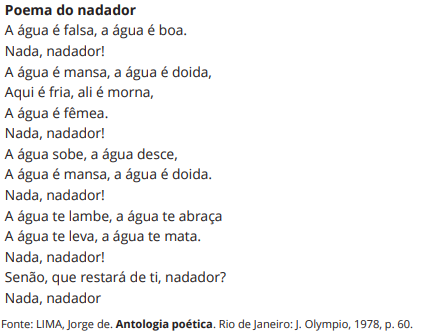
Considerando a construção do poema e a repetição do verso "Nada, nadador!", seguida da pergunta "Senão, que
restará de ti, nadador? / Nada, nadador.", é possível afirmar que o poema sugere:
Ano: 2026
Banca:
IF-MT
Órgão:
IF-MT
Prova:
IF-MT - 2026 - IF-MT - Professor EBTT - Área: Português/Inglês |
Q3870554
Português
Texto associado
TEXTO III - Base para responder à questão.
No trecho "A água te lambe, a água te abraça / A água te leva, a água te mata", as ações atribuídas à água indicam:
Ano: 2026
Banca:
IF-MT
Órgão:
IF-MT
Prova:
IF-MT - 2026 - IF-MT - Professor EBTT - Área: Português/Inglês |
Q3870555
Português
Texto associado
TEXTO III - Base para responder à questão.
No poema, a repetição da frase "Nada, nadador!" ao longo dos versos contribui principalmente para:
Ano: 2026
Banca:
IF-MT
Órgão:
IF-MT
Prova:
IF-MT - 2026 - IF-MT - Professor EBTT - Área: Português/Inglês |
Q3870556
Português
Texto associado
TEXTO III - Base para responder à questão.
Na última estrofe, o poeta afirma: "Senão, que restará de ti, nadador? / Nada, nadador." Nesse trecho, o valor
argumentativo decorre da:
Ano: 2026
Banca:
IF-MT
Órgão:
IF-MT
Prova:
IF-MT - 2026 - IF-MT - Professor EBTT - Área: Português/Inglês |
Q3870557
Português
Texto associado
TEXTO IV - Base para responder à questão.
Reflexões sobre ensino de gramática na realidade educacional brasileira
O ensino de gramática no contexto educacional brasileiro tem sido primordialmente prescritivo, baseado
nas regras da gramática normativa tida como o manual do bem falar (ILARI, 1992). A língua portuguesa é,
na prática, muitas vezes considerada homogênea, apesar de o Brasil ser um país marcado por grandes
contrastes, aliás, em vários sentidos. A variedade padrão é aquela ensinada na escola, instituição que representa uma força corretiva e unificadora da língua. A despeito do que preconizam os manuais gramaticais, a
heterogeneidade linguística está estabelecida no país e é influenciada tanto por fatores diatópicos, geográficos, quanto por fatores diastráticos, sociais. Devido ao acesso limitado à ampla e efetiva escolarização, as
diferenças linguísticas tornam-se acentuadas e, sobretudo, cada vez mais distantes da norma culta.
De um lado, há os que defendem o respeito com relação à variedade linguística das classes populares, pois
sua linguagem é considerada tão válida para a comunicação quanto a língua padrão. Por outro lado, há os
que afirmam a necessidade de as classes populares aprenderem a usar a variedade socialmente privilegiada, visto que a posse dessa linguagem constitui instrumento fundamental e indispensável na luta pela su -
peração das desigualdades sociais (POSSENTI, 1992). Mas o que gostaríamos de problematizar inicialmente
é o seguinte: diante da variedade linguística do português, como fica a questão do ensino? Qual variedade
deve ser ensinada pelo professor de língua portuguesa?
A primeira corrente expressa uma ideia muito simplista da língua, uma vez que restringe seu uso apenas
à comunicação, ignorando as demais concepções de linguagem. A língua(gem), além de se prestar ao ato
comunicativo, configura a expressão do pensamento, sendo, sobretudo, uma forma de interação humana, política e social. É sob essa ótica que defendemos que as atividades de ensino devem oportunizar aos alunos o domínio de um sistema valorizado, ou seja, da norma padrão, sem que isso signifique depreciação da
variante linguística de seu grupo social e regional de origem.
SILVA, Kleber Aparecido da; PILATI, Eloisa; e DIAS, Juliana de Freitas. O ensino de gramática na contemporaneidade: delimitando
e atravessando as fronteiras na formação inicial de professores de língua portuguesa. Disponível em: https://doi.org/10.1590/S1984-63982010000400008. Acesso em: 07 jul. 2025.
Com base na concepção discursiva de linguagem defendida no texto, é CORRETO afirmar que:
Ano: 2026
Banca:
IF-MT
Órgão:
IF-MT
Prova:
IF-MT - 2026 - IF-MT - Professor EBTT - Área: Português/Inglês |
Q3870558
Português
Texto associado
TEXTO IV - Base para responder à questão.
Reflexões sobre ensino de gramática na realidade educacional brasileira
O ensino de gramática no contexto educacional brasileiro tem sido primordialmente prescritivo, baseado
nas regras da gramática normativa tida como o manual do bem falar (ILARI, 1992). A língua portuguesa é,
na prática, muitas vezes considerada homogênea, apesar de o Brasil ser um país marcado por grandes
contrastes, aliás, em vários sentidos. A variedade padrão é aquela ensinada na escola, instituição que representa uma força corretiva e unificadora da língua. A despeito do que preconizam os manuais gramaticais, a
heterogeneidade linguística está estabelecida no país e é influenciada tanto por fatores diatópicos, geográficos, quanto por fatores diastráticos, sociais. Devido ao acesso limitado à ampla e efetiva escolarização, as
diferenças linguísticas tornam-se acentuadas e, sobretudo, cada vez mais distantes da norma culta.
De um lado, há os que defendem o respeito com relação à variedade linguística das classes populares, pois
sua linguagem é considerada tão válida para a comunicação quanto a língua padrão. Por outro lado, há os
que afirmam a necessidade de as classes populares aprenderem a usar a variedade socialmente privilegiada, visto que a posse dessa linguagem constitui instrumento fundamental e indispensável na luta pela su -
peração das desigualdades sociais (POSSENTI, 1992). Mas o que gostaríamos de problematizar inicialmente
é o seguinte: diante da variedade linguística do português, como fica a questão do ensino? Qual variedade
deve ser ensinada pelo professor de língua portuguesa?
A primeira corrente expressa uma ideia muito simplista da língua, uma vez que restringe seu uso apenas
à comunicação, ignorando as demais concepções de linguagem. A língua(gem), além de se prestar ao ato
comunicativo, configura a expressão do pensamento, sendo, sobretudo, uma forma de interação humana, política e social. É sob essa ótica que defendemos que as atividades de ensino devem oportunizar aos alunos o domínio de um sistema valorizado, ou seja, da norma padrão, sem que isso signifique depreciação da
variante linguística de seu grupo social e regional de origem.
SILVA, Kleber Aparecido da; PILATI, Eloisa; e DIAS, Juliana de Freitas. O ensino de gramática na contemporaneidade: delimitando
e atravessando as fronteiras na formação inicial de professores de língua portuguesa. Disponível em: https://doi.org/10.1590/S1984-63982010000400008. Acesso em: 07 jul. 2025.
Considerando a concepção de linguagem apresentada no texto, é INCORRETO afirmar que:
Ano: 2026
Banca:
IF-MT
Órgão:
IF-MT
Prova:
IF-MT - 2026 - IF-MT - Professor EBTT - Área: Português/Inglês |
Q3870559
Pedagogia
Texto associado
TEXTO IV - Base para responder à questão.
Reflexões sobre ensino de gramática na realidade educacional brasileira
O ensino de gramática no contexto educacional brasileiro tem sido primordialmente prescritivo, baseado
nas regras da gramática normativa tida como o manual do bem falar (ILARI, 1992). A língua portuguesa é,
na prática, muitas vezes considerada homogênea, apesar de o Brasil ser um país marcado por grandes
contrastes, aliás, em vários sentidos. A variedade padrão é aquela ensinada na escola, instituição que representa uma força corretiva e unificadora da língua. A despeito do que preconizam os manuais gramaticais, a
heterogeneidade linguística está estabelecida no país e é influenciada tanto por fatores diatópicos, geográficos, quanto por fatores diastráticos, sociais. Devido ao acesso limitado à ampla e efetiva escolarização, as
diferenças linguísticas tornam-se acentuadas e, sobretudo, cada vez mais distantes da norma culta.
De um lado, há os que defendem o respeito com relação à variedade linguística das classes populares, pois
sua linguagem é considerada tão válida para a comunicação quanto a língua padrão. Por outro lado, há os
que afirmam a necessidade de as classes populares aprenderem a usar a variedade socialmente privilegiada, visto que a posse dessa linguagem constitui instrumento fundamental e indispensável na luta pela su -
peração das desigualdades sociais (POSSENTI, 1992). Mas o que gostaríamos de problematizar inicialmente
é o seguinte: diante da variedade linguística do português, como fica a questão do ensino? Qual variedade
deve ser ensinada pelo professor de língua portuguesa?
A primeira corrente expressa uma ideia muito simplista da língua, uma vez que restringe seu uso apenas
à comunicação, ignorando as demais concepções de linguagem. A língua(gem), além de se prestar ao ato
comunicativo, configura a expressão do pensamento, sendo, sobretudo, uma forma de interação humana, política e social. É sob essa ótica que defendemos que as atividades de ensino devem oportunizar aos alunos o domínio de um sistema valorizado, ou seja, da norma padrão, sem que isso signifique depreciação da
variante linguística de seu grupo social e regional de origem.
SILVA, Kleber Aparecido da; PILATI, Eloisa; e DIAS, Juliana de Freitas. O ensino de gramática na contemporaneidade: delimitando
e atravessando as fronteiras na formação inicial de professores de língua portuguesa. Disponível em: https://doi.org/10.1590/S1984-63982010000400008. Acesso em: 07 jul. 2025.
Os PCN (1998, p. 24) adotam uma perspectiva sociointeracionista da linguagem. Segundo essa perspectiva, "a língua é um sistema de signos histórico e social que possibilita ao homem significar o mundo e a realidade. A partir
disso, essa perspectiva da linguagem pressupõe que:
Ano: 2026
Banca:
IF-MT
Órgão:
IF-MT
Prova:
IF-MT - 2026 - IF-MT - Professor EBTT - Área: Português/Inglês |
Q3870560
Português
Texto associado
TEXTO IV - Base para responder à questão.
Reflexões sobre ensino de gramática na realidade educacional brasileira
O ensino de gramática no contexto educacional brasileiro tem sido primordialmente prescritivo, baseado
nas regras da gramática normativa tida como o manual do bem falar (ILARI, 1992). A língua portuguesa é,
na prática, muitas vezes considerada homogênea, apesar de o Brasil ser um país marcado por grandes
contrastes, aliás, em vários sentidos. A variedade padrão é aquela ensinada na escola, instituição que representa uma força corretiva e unificadora da língua. A despeito do que preconizam os manuais gramaticais, a
heterogeneidade linguística está estabelecida no país e é influenciada tanto por fatores diatópicos, geográficos, quanto por fatores diastráticos, sociais. Devido ao acesso limitado à ampla e efetiva escolarização, as
diferenças linguísticas tornam-se acentuadas e, sobretudo, cada vez mais distantes da norma culta.
De um lado, há os que defendem o respeito com relação à variedade linguística das classes populares, pois
sua linguagem é considerada tão válida para a comunicação quanto a língua padrão. Por outro lado, há os
que afirmam a necessidade de as classes populares aprenderem a usar a variedade socialmente privilegiada, visto que a posse dessa linguagem constitui instrumento fundamental e indispensável na luta pela su -
peração das desigualdades sociais (POSSENTI, 1992). Mas o que gostaríamos de problematizar inicialmente
é o seguinte: diante da variedade linguística do português, como fica a questão do ensino? Qual variedade
deve ser ensinada pelo professor de língua portuguesa?
A primeira corrente expressa uma ideia muito simplista da língua, uma vez que restringe seu uso apenas
à comunicação, ignorando as demais concepções de linguagem. A língua(gem), além de se prestar ao ato
comunicativo, configura a expressão do pensamento, sendo, sobretudo, uma forma de interação humana, política e social. É sob essa ótica que defendemos que as atividades de ensino devem oportunizar aos alunos o domínio de um sistema valorizado, ou seja, da norma padrão, sem que isso signifique depreciação da
variante linguística de seu grupo social e regional de origem.
SILVA, Kleber Aparecido da; PILATI, Eloisa; e DIAS, Juliana de Freitas. O ensino de gramática na contemporaneidade: delimitando
e atravessando as fronteiras na formação inicial de professores de língua portuguesa. Disponível em: https://doi.org/10.1590/S1984-63982010000400008. Acesso em: 07 jul. 2025.
Em relação à opção metodológica indicada pelos PCNs, a proposta é tomar o conhecimento linguístico do aluno
como ponto de partida para definir o que será desenvolvido, considerando o valor da linguagem nos diferentes
círculos sociais (PCN - EM, 1998, p. 17). Com base nesse princípio, as tarefas de ensino da língua na sala de aula
devem:
Ano: 2026
Banca:
IF-MT
Órgão:
IF-MT
Prova:
IF-MT - 2026 - IF-MT - Professor EBTT - Área: Português/Inglês |
Q3870561
Inglês
"Teaching is characterized by many factors, such as teachers´ beliefs, preferences, personalities, and one of
the factors that mostly influences teaching is the method, which holds systematic procedures prescribed to
the teacher based on linguistic theory or legal documents." (Piazza, 2024, p.3)
PIAZZA, Paulo Thiago. The historical development of english as a foreign language teaching in brazilian schools: methods and legal documents. Revista Contribuciones a Las Ciencias Sociales, São José dos Pinhais, v.17, n.6, p. 01-23, 2024. Disponível em: https://ojs.revistacontribuciones.com/ojs/index.php/clcs. Acesso em: 10 mai. 2025.
According to Larsen-Freeman and Anderson (2011, p.38 apud PIAZZA, 2024, p. 5), in a class based on the GrammarTranslation method, the "fundamental purpose of learning a language is to be able to read literature written in the target language".
Choose the item that IS NOT applied to the Grammar-Translation method.
PIAZZA, Paulo Thiago. The historical development of english as a foreign language teaching in brazilian schools: methods and legal documents. Revista Contribuciones a Las Ciencias Sociales, São José dos Pinhais, v.17, n.6, p. 01-23, 2024. Disponível em: https://ojs.revistacontribuciones.com/ojs/index.php/clcs. Acesso em: 10 mai. 2025.
According to Larsen-Freeman and Anderson (2011, p.38 apud PIAZZA, 2024, p. 5), in a class based on the GrammarTranslation method, the "fundamental purpose of learning a language is to be able to read literature written in the target language".
Choose the item that IS NOT applied to the Grammar-Translation method.
Ano: 2026
Banca:
IF-MT
Órgão:
IF-MT
Prova:
IF-MT - 2026 - IF-MT - Professor EBTT - Área: Português/Inglês |
Q3870562
Inglês
Concerning the history of teaching English as a foreign language, in the 70s, teachers faced another approach to
teaching. Language was not seen as a set of sentences anymore, but as a set of communicative events.
PIAZZA, Paulo Thiago. The historical development of english as a foreign language teaching in brazilian schools: methods and legal documents. Revista Contribuciones a Las Ciencias Sociales, São José dos Pinhais, v.17, n.6, p. 01-23, 2024. Disponível em: https://ojs.revistacontribuciones.com/ojs/index.php/clcs. Acesso em: 10 mai. 2025.
Judge the items as ( T ) TRUE or ( F ) FALSE according to the Communicative Approach.
( ) Instead of organizing the syllabus based on grammar topics (simple past, simple present, if clauses, etc.), the organization is focused on developing students´ communicative competence.
( ) Classes based on Communicative Language Teaching (CLT) tend to be more teacher-centered, with a greater emphasis on teacher-student interactions and situations where the language must be used by students for communicative purposes.
( ) Errors are viewed as part of development, and most of the time are not corrected immediately. ( ) The role of the teacher in CLT is to promote situations where students need to communicate in their mother tongue.
( ) Students must be exposed to authentic materials, that is, language as it is actually used in daily routines in the real world.
Choose the CORRECT sequence.
PIAZZA, Paulo Thiago. The historical development of english as a foreign language teaching in brazilian schools: methods and legal documents. Revista Contribuciones a Las Ciencias Sociales, São José dos Pinhais, v.17, n.6, p. 01-23, 2024. Disponível em: https://ojs.revistacontribuciones.com/ojs/index.php/clcs. Acesso em: 10 mai. 2025.
Judge the items as ( T ) TRUE or ( F ) FALSE according to the Communicative Approach.
( ) Instead of organizing the syllabus based on grammar topics (simple past, simple present, if clauses, etc.), the organization is focused on developing students´ communicative competence.
( ) Classes based on Communicative Language Teaching (CLT) tend to be more teacher-centered, with a greater emphasis on teacher-student interactions and situations where the language must be used by students for communicative purposes.
( ) Errors are viewed as part of development, and most of the time are not corrected immediately. ( ) The role of the teacher in CLT is to promote situations where students need to communicate in their mother tongue.
( ) Students must be exposed to authentic materials, that is, language as it is actually used in daily routines in the real world.
Choose the CORRECT sequence.
Ano: 2026
Banca:
IF-MT
Órgão:
IF-MT
Prova:
IF-MT - 2026 - IF-MT - Professor EBTT - Área: Português/Inglês |
Q3870563
Pedagogia
According to some applied linguists, CLT was a very important approach, but it has some critical points that should
be considered.
PIAZZA, Paulo Thiago. The historical development of english as a foreign language teaching in brazilian schools: methods and legal documents. Revista Contribuciones a Las Ciencias Sociales, São José dos Pinhais, v.17, n.6, p. 01-23, 2024. Disponível em: https://ojs.revistacontribuciones.com/ojs/index.php/clcs. Acesso em: 10 mai. 2025.
Choose the item(s) that point(s) the criticism to the CLT approach.
I. Difficulties in defining which functions of language (or which tasks) should be presented to students (and in which sequence).
II. Dividing teaching into functions of language or tasks brings the negative argument of teaching atomization, i.e., of breaking the language in small pieces that do not form a coherent whole.
III. The debate if it is possible to have "real-life communication" in a classroom setting.
IV. The inability of CLT to adapt to the various contexts of language teaching, such as cultural contexts that posit a hierarchy between students and teachers.
Choose the CORRECT alternative.
PIAZZA, Paulo Thiago. The historical development of english as a foreign language teaching in brazilian schools: methods and legal documents. Revista Contribuciones a Las Ciencias Sociales, São José dos Pinhais, v.17, n.6, p. 01-23, 2024. Disponível em: https://ojs.revistacontribuciones.com/ojs/index.php/clcs. Acesso em: 10 mai. 2025.
Choose the item(s) that point(s) the criticism to the CLT approach.
I. Difficulties in defining which functions of language (or which tasks) should be presented to students (and in which sequence).
II. Dividing teaching into functions of language or tasks brings the negative argument of teaching atomization, i.e., of breaking the language in small pieces that do not form a coherent whole.
III. The debate if it is possible to have "real-life communication" in a classroom setting.
IV. The inability of CLT to adapt to the various contexts of language teaching, such as cultural contexts that posit a hierarchy between students and teachers.
Choose the CORRECT alternative.
Ano: 2026
Banca:
IF-MT
Órgão:
IF-MT
Prova:
IF-MT - 2026 - IF-MT - Professor EBTT - Área: Português/Inglês |
Q3870564
Inglês
"Teachers may wonder "which way they ought to go" before they enter a classroom. This usually means
that teachers need to plan what they want to do in their classrooms. So, lesson planning involves decisions
about the pedagogical dimensions of the lesson. But another important aspect of a lesson concerns the
management of learners during the lesson. This includes eliciting students´ attention, maintaining their
engagement in the lesson, and organizing them into pairs or groups." (Farrell, 2002, p.30)
FARRELL, T. S. C. Lesson Planning In: RICHARDS, J. C. & RENANDYA. W.A. Methodology in Language Teaching: an Anthology of Current Practice. Cambridge: Cambridge University Press 2002. Chapter 3 - pages 30-39.
After reading about the importance of lesson planning, match the CORRECT information to the number in the following Lesson Plan.
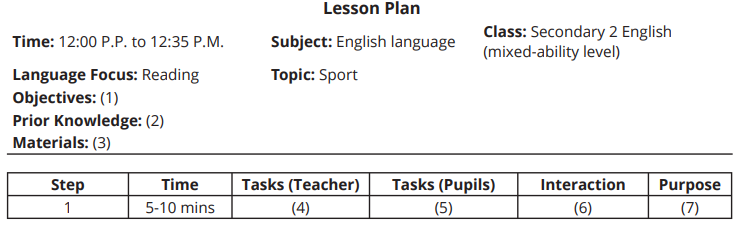
( ) 1. Reading materials - article from a book on sports 2. Television 3. Whiteboard
( ) To teach the students how to skim for main idea of the passage - identify key words.
( ) Students have learned how to locate information by reading and finding the main sentence of each paragraph.
( )
( )
( ) Arouse interest. Activate schema for sport
( )
Choose the CORRECT sequence.
FARRELL, T. S. C. Lesson Planning In: RICHARDS, J. C. & RENANDYA. W.A. Methodology in Language Teaching: an Anthology of Current Practice. Cambridge: Cambridge University Press 2002. Chapter 3 - pages 30-39.
After reading about the importance of lesson planning, match the CORRECT information to the number in the following Lesson Plan.
( ) 1. Reading materials - article from a book on sports 2. Television 3. Whiteboard
( ) To teach the students how to skim for main idea of the passage - identify key words.
( ) Students have learned how to locate information by reading and finding the main sentence of each paragraph.
( )
( )
( ) Arouse interest. Activate schema for sport
( )
Choose the CORRECT sequence.
Ano: 2026
Banca:
IF-MT
Órgão:
IF-MT
Prova:
IF-MT - 2026 - IF-MT - Professor EBTT - Área: Português/Inglês |
Q3870565
Inglês
Interests in learning strategies began with the publication of papers collectively known as the "good language
learner" studies (Cohen; Weaver, 1998). Since then, hundreds of studies have been generated that look at
different aspects of learning strategies and their roles in language learning. In an effort to make sense of
the huge database and numerous research findings in this area, Oxford (1990, as cited in Cohen; Weaver,
1998) differentiates learning strategies into four categories: cognitive, metacognitive, affective and social
(Oxford, 2002, p.121).
Oxford. L.Language Learning Strategies in a Nutshell: Update and ESL Suggestions.In: RICHARDS, J. C. & RENANDYA. W.A. Methodology in Language Teaching: an Anthology of Current Practice. Cambridge: Cambridge University Press 2002. Chapter 11 - pages 121 -132.
Identify the learning strategies as exposed by Oxford (2002) by matching each definition to the CORRECT category.
1. Cognitive
2. Metacognitive
3. Affective
4. Social
( ) This strategy deals with the planning, monitoring, and evaluation of language learning activities. For example, students may develop a plan for monitoring their progress by constantly comparing their current level of proficiency with the course goals outlined in the curriculum.
( ) This strategy involves the identification, retention, and retrieval of language elements. For example, students may use memory-enhancing strategies (e.g., the keyword method) to help them remember new words.
( ) This strategy refers to actions learners take to interact with users of the language. For example, students may deliberately seek out opportunities to use the target language with native speakers of the language.
( ) This strategy serves to regulate emotions, attitudes, and motivation. For example, students may read linguistically simplified books to develop a positive attitude toward reading materials.
Choose the CORRECT sequence.
Oxford. L.Language Learning Strategies in a Nutshell: Update and ESL Suggestions.In: RICHARDS, J. C. & RENANDYA. W.A. Methodology in Language Teaching: an Anthology of Current Practice. Cambridge: Cambridge University Press 2002. Chapter 11 - pages 121 -132.
Identify the learning strategies as exposed by Oxford (2002) by matching each definition to the CORRECT category.
1. Cognitive
2. Metacognitive
3. Affective
4. Social
( ) This strategy deals with the planning, monitoring, and evaluation of language learning activities. For example, students may develop a plan for monitoring their progress by constantly comparing their current level of proficiency with the course goals outlined in the curriculum.
( ) This strategy involves the identification, retention, and retrieval of language elements. For example, students may use memory-enhancing strategies (e.g., the keyword method) to help them remember new words.
( ) This strategy refers to actions learners take to interact with users of the language. For example, students may deliberately seek out opportunities to use the target language with native speakers of the language.
( ) This strategy serves to regulate emotions, attitudes, and motivation. For example, students may read linguistically simplified books to develop a positive attitude toward reading materials.
Choose the CORRECT sequence.

 Conheça nossos planos