Questões de Concurso Público USP 2025 para Enfermeiro (Enfermagem na Atenção Primária à Saúde) – Edital nº 38
Foram encontradas 60 questões


Ano: 2025
Banca:
FUVEST
Órgão:
USP
Prova:
FUVEST - 2025 - USP - Enfermeiro (Enfermagem na Atenção Primária à Saúde) – Edital nº 38 |
Q3533766
Inglês
Texto associado
How to write, according to the bestselling novelist of all time
Everyone has a book inside them, or so the saying goes. In
this day and age, those who want help coaxing the story out
can receive instruction online from some of the world’s most
popular authors. Lee Child and Harlan Coben, who have sold
hundreds of millions of books between them, teach thriller
writing; Jojo Moyes offers tips on romance yarns. And now
Agatha Christie, the world’s bestselling writer of fiction, with
more than 2 bn copies sold, is instructing viewers in the art of
the whodunnit—even though she died in 1976.
Christie’s course is the result not of recently unearthed
archival footage, but artificial intelligence. BBC Maestro, an
online education platform, brought the idea to the Christie
family, which still controls 36% of Agatha Christie Ltd (AMC
Networks, an entertainment giant, owns the rest). They
consented to bring the “Queen of Crime” back to life, to teach
the mysterious flair of her style.
A team of almost 100—including Christie scholars as well
as AI specialists—worked on the project. Vivien Keene, an
actor, provided a stand-in for the author; Christie’s face was
mapped on top. Crucially, Ms Keene’s eerily credible
performance employs only Christie’s words: a tapestry of
extracts from her own writings, notebooks and interviews.
In this way, the creator of Hercule Poirot and Miss Marple
shares handy writing tips, such as the neatest ways to dispatch
fictional victims. Firearms bring ballistic complications. Be
wary of poisons, as each works in a unique way. Novice
authors can “always rely on a dull blow to the head”.
Many of Christie’s writing rules concern playing fair. She
practiced misdirection and laid “false clues” alongside true
ones, but insisted that her plots do not cheat or hide key
evidence: “I never deceive my readers.” In sections devoted
to plot and setting, she explains how to plant key clues “in plain
sight” and plan events with detailed “maps and diagrams”. She
advises viewers to watch and listen to strangers on buses or in
shops and to spice up motives for murder with a love triangle.
Some of the most engaging sections come from “An
Autobiography”, published posthumously in 1977: Poirot’s
origins among the Belgian refugees who reached Devon
during the First World War, or fond memories of her
charismatic, feckless brother Monty, who had “broken the laws
of a lot of countries” and provided the inspiration for many of
Christie’s “wayward young male figures”.
By relying on Christie’s own words, BBC Maestro hopes to
avoid charges of creepy pedagogical deepfakery. At the same
time, it is that focus on quotation which limits the course’s value
as a creative-writing toolbox. The woman born Agatha Miller in
1890 speaks from her own time and place. She tells wannabe
writers to use snowstorms to isolate murder scenes (as they
bring down telephone wires) and cites the clue-generating
value of railway timetables, ink stains and cut-up newspapers.
These charming details are irrelevant to modern scribblers.
Yet anachronism is not the course’s biggest flaw: it is that it
lacks vitality. Christie enjoyed a richer life than learners will
glean from this prim phantom: she was a wartime nurse (hence
her deep knowledge of toxins), thwarted opera singer, keen
surfer and archaeological expert who joined her second
husband on digs in Iraq.Furthermore, her juiciest mysteries
smash crime-writing rules. The narrator does it; the detective
does it; all the suspects do it. Sometimes there’s no detective:
in “The Hollow” (1946) Christie regretted that Poirot appeared
at all. With its working-class antihero and gothic darkness,
“Endless Night” (1967) shatters every Christie cliché. This
high-tech, retrofitted version of the author feels smaller and
flatter than the ingenious original.
The Economist, May, 8th, 2025
Assinale a alternativa que sintetiza com mais precisão a crítica
principal do autor ao curso de escrita “ministrado” por Agatha
Christie via inteligência artificial.
Ano: 2025
Banca:
FUVEST
Órgão:
USP
Prova:
FUVEST - 2025 - USP - Enfermeiro (Enfermagem na Atenção Primária à Saúde) – Edital nº 38 |
Q3533767
Inglês
Texto associado
How to write, according to the bestselling novelist of all time
Everyone has a book inside them, or so the saying goes. In
this day and age, those who want help coaxing the story out
can receive instruction online from some of the world’s most
popular authors. Lee Child and Harlan Coben, who have sold
hundreds of millions of books between them, teach thriller
writing; Jojo Moyes offers tips on romance yarns. And now
Agatha Christie, the world’s bestselling writer of fiction, with
more than 2 bn copies sold, is instructing viewers in the art of
the whodunnit—even though she died in 1976.
Christie’s course is the result not of recently unearthed
archival footage, but artificial intelligence. BBC Maestro, an
online education platform, brought the idea to the Christie
family, which still controls 36% of Agatha Christie Ltd (AMC
Networks, an entertainment giant, owns the rest). They
consented to bring the “Queen of Crime” back to life, to teach
the mysterious flair of her style.
A team of almost 100—including Christie scholars as well
as AI specialists—worked on the project. Vivien Keene, an
actor, provided a stand-in for the author; Christie’s face was
mapped on top. Crucially, Ms Keene’s eerily credible
performance employs only Christie’s words: a tapestry of
extracts from her own writings, notebooks and interviews.
In this way, the creator of Hercule Poirot and Miss Marple
shares handy writing tips, such as the neatest ways to dispatch
fictional victims. Firearms bring ballistic complications. Be
wary of poisons, as each works in a unique way. Novice
authors can “always rely on a dull blow to the head”.
Many of Christie’s writing rules concern playing fair. She
practiced misdirection and laid “false clues” alongside true
ones, but insisted that her plots do not cheat or hide key
evidence: “I never deceive my readers.” In sections devoted
to plot and setting, she explains how to plant key clues “in plain
sight” and plan events with detailed “maps and diagrams”. She
advises viewers to watch and listen to strangers on buses or in
shops and to spice up motives for murder with a love triangle.
Some of the most engaging sections come from “An
Autobiography”, published posthumously in 1977: Poirot’s
origins among the Belgian refugees who reached Devon
during the First World War, or fond memories of her
charismatic, feckless brother Monty, who had “broken the laws
of a lot of countries” and provided the inspiration for many of
Christie’s “wayward young male figures”.
By relying on Christie’s own words, BBC Maestro hopes to
avoid charges of creepy pedagogical deepfakery. At the same
time, it is that focus on quotation which limits the course’s value
as a creative-writing toolbox. The woman born Agatha Miller in
1890 speaks from her own time and place. She tells wannabe
writers to use snowstorms to isolate murder scenes (as they
bring down telephone wires) and cites the clue-generating
value of railway timetables, ink stains and cut-up newspapers.
These charming details are irrelevant to modern scribblers.
Yet anachronism is not the course’s biggest flaw: it is that it
lacks vitality. Christie enjoyed a richer life than learners will
glean from this prim phantom: she was a wartime nurse (hence
her deep knowledge of toxins), thwarted opera singer, keen
surfer and archaeological expert who joined her second
husband on digs in Iraq.Furthermore, her juiciest mysteries
smash crime-writing rules. The narrator does it; the detective
does it; all the suspects do it. Sometimes there’s no detective:
in “The Hollow” (1946) Christie regretted that Poirot appeared
at all. With its working-class antihero and gothic darkness,
“Endless Night” (1967) shatters every Christie cliché. This
high-tech, retrofitted version of the author feels smaller and
flatter than the ingenious original.
The Economist, May, 8th, 2025
“Watch and listen to strangers on buses or in shops to gather
ideas.”
Assinale a alternativa que transforma a recomendação direta citada em um pedido ou sugestão mais polida, sem alteração do seu sentido básico.
Assinale a alternativa que transforma a recomendação direta citada em um pedido ou sugestão mais polida, sem alteração do seu sentido básico.
Ano: 2025
Banca:
FUVEST
Órgão:
USP
Prova:
FUVEST - 2025 - USP - Enfermeiro (Enfermagem na Atenção Primária à Saúde) – Edital nº 38 |
Q3533768
Inglês
Texto associado
Leveraging Student Interests to Teach Critical Analysis
Critical analysis often feels burdensome to students—an
exercise in sorting hazy ideas with no clear payoff. Yet, when
learners glimpse something of value—a “gem” amid the
clutter—the process becomes not just manageable but
invigorating. By tapping into topics they already care about,
we can model the habits of mind involved in deep thinking
before guiding students into unfamiliar territory. In this way,
what begins as an exploration of personal passion becomes a
transferable skill for any subject.
First, invite students to choose a subject that genuinely
interests them—whether it’s dissecting the social commentary
in a favorite song or debating the ethics of a beloved athlete’s
off-field behavior. Guide them through selecting an analytical
angle, unpacking layers of meaning, and celebrating
discoveries. As they experience critical analysis as an
energizing process rather than a dry requirement, they build
confidence in their own intellectual curiosity and learn to seek
connections between ideas.
Next, when faced with assignments that initially seem
remote—say, an art critique or a historical essay—provide a
lens that resonates with each student’s strengths. A budding
fiction writer, for example, can approach a painting as she
would a story: considering character, narrative arc, and
emotional impact. By framing unfamiliar topics through familiar
mindsets, you grant students an entry point that makes critical
analysis feel both relevant and compelling.
Once students have internalized the underlying process,
encourage them to take the reins. Rather than asking, “What
does this mean?” shift to, “What does this mean to me?”
Students might analyze ecological themes in a novel from their
passion for climate justice, or reinterpret a political speech
through the lens of family heritage. These personal
connections transform assignments from obligatory tasks into
opportunities for authentic inquiry.
Ultimately, teaching critical analysis in this way moves
learners from guided practice to independent exploration. By
beginning with their interests, scaffolding new angles, and then
inviting student-driven investigations, educators can help
every learner—from the avid gamer to the reluctant essaywriter—carry these skills into diverse subjects. In doing so,
critical analysis becomes not a chore but a doorway to richer
understanding.
Edutopia, May, 1st, 2025
Assinale a alternativa que apresenta, resumidamente, o
sentido geral do texto.
Ano: 2025
Banca:
FUVEST
Órgão:
USP
Prova:
FUVEST - 2025 - USP - Enfermeiro (Enfermagem na Atenção Primária à Saúde) – Edital nº 38 |
Q3533769
Inglês
Texto associado
Leveraging Student Interests to Teach Critical Analysis
Critical analysis often feels burdensome to students—an
exercise in sorting hazy ideas with no clear payoff. Yet, when
learners glimpse something of value—a “gem” amid the
clutter—the process becomes not just manageable but
invigorating. By tapping into topics they already care about,
we can model the habits of mind involved in deep thinking
before guiding students into unfamiliar territory. In this way,
what begins as an exploration of personal passion becomes a
transferable skill for any subject.
First, invite students to choose a subject that genuinely
interests them—whether it’s dissecting the social commentary
in a favorite song or debating the ethics of a beloved athlete’s
off-field behavior. Guide them through selecting an analytical
angle, unpacking layers of meaning, and celebrating
discoveries. As they experience critical analysis as an
energizing process rather than a dry requirement, they build
confidence in their own intellectual curiosity and learn to seek
connections between ideas.
Next, when faced with assignments that initially seem
remote—say, an art critique or a historical essay—provide a
lens that resonates with each student’s strengths. A budding
fiction writer, for example, can approach a painting as she
would a story: considering character, narrative arc, and
emotional impact. By framing unfamiliar topics through familiar
mindsets, you grant students an entry point that makes critical
analysis feel both relevant and compelling.
Once students have internalized the underlying process,
encourage them to take the reins. Rather than asking, “What
does this mean?” shift to, “What does this mean to me?”
Students might analyze ecological themes in a novel from their
passion for climate justice, or reinterpret a political speech
through the lens of family heritage. These personal
connections transform assignments from obligatory tasks into
opportunities for authentic inquiry.
Ultimately, teaching critical analysis in this way moves
learners from guided practice to independent exploration. By
beginning with their interests, scaffolding new angles, and then
inviting student-driven investigations, educators can help
every learner—from the avid gamer to the reluctant essaywriter—carry these skills into diverse subjects. In doing so,
critical analysis becomes not a chore but a doorway to richer
understanding.
Edutopia, May, 1st, 2025
Na oração “Once students have internalized the underlying
process, encourage them to take the reins.” a expressão take
the reins tem o mesmo sentido da expressão destacada em:
Ano: 2025
Banca:
FUVEST
Órgão:
USP
Prova:
FUVEST - 2025 - USP - Enfermeiro (Enfermagem na Atenção Primária à Saúde) – Edital nº 38 |
Q3533770
Inglês
Texto associado
Leveraging Student Interests to Teach Critical Analysis
Critical analysis often feels burdensome to students—an
exercise in sorting hazy ideas with no clear payoff. Yet, when
learners glimpse something of value—a “gem” amid the
clutter—the process becomes not just manageable but
invigorating. By tapping into topics they already care about,
we can model the habits of mind involved in deep thinking
before guiding students into unfamiliar territory. In this way,
what begins as an exploration of personal passion becomes a
transferable skill for any subject.
First, invite students to choose a subject that genuinely
interests them—whether it’s dissecting the social commentary
in a favorite song or debating the ethics of a beloved athlete’s
off-field behavior. Guide them through selecting an analytical
angle, unpacking layers of meaning, and celebrating
discoveries. As they experience critical analysis as an
energizing process rather than a dry requirement, they build
confidence in their own intellectual curiosity and learn to seek
connections between ideas.
Next, when faced with assignments that initially seem
remote—say, an art critique or a historical essay—provide a
lens that resonates with each student’s strengths. A budding
fiction writer, for example, can approach a painting as she
would a story: considering character, narrative arc, and
emotional impact. By framing unfamiliar topics through familiar
mindsets, you grant students an entry point that makes critical
analysis feel both relevant and compelling.
Once students have internalized the underlying process,
encourage them to take the reins. Rather than asking, “What
does this mean?” shift to, “What does this mean to me?”
Students might analyze ecological themes in a novel from their
passion for climate justice, or reinterpret a political speech
through the lens of family heritage. These personal
connections transform assignments from obligatory tasks into
opportunities for authentic inquiry.
Ultimately, teaching critical analysis in this way moves
learners from guided practice to independent exploration. By
beginning with their interests, scaffolding new angles, and then
inviting student-driven investigations, educators can help
every learner—from the avid gamer to the reluctant essaywriter—carry these skills into diverse subjects. In doing so,
critical analysis becomes not a chore but a doorway to richer
understanding.
Edutopia, May, 1st, 2025
Leia o excerto a seguir que apresenta um resumo, em inglês,
do texto original:
“After modeling the analysis process through students’ interests and providing familiar lenses for new topics, the author suggests that in the final stage, students independently apply this method to subjects previously unknown to them.”
Em relação ao trecho apresentado, qual das situações descritas a seguir melhor exemplifica o estágio em que o aluno “tome o controle” do próprio processo de aprendizagem?
“After modeling the analysis process through students’ interests and providing familiar lenses for new topics, the author suggests that in the final stage, students independently apply this method to subjects previously unknown to them.”
Em relação ao trecho apresentado, qual das situações descritas a seguir melhor exemplifica o estágio em que o aluno “tome o controle” do próprio processo de aprendizagem?
Ano: 2025
Banca:
FUVEST
Órgão:
USP
Prova:
FUVEST - 2025 - USP - Enfermeiro (Enfermagem na Atenção Primária à Saúde) – Edital nº 38 |
Q3533771
Português
Observe a charge a seguir:
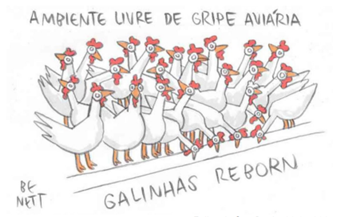
Folha de São Paulo, 20.05.2025.
Assinale a alternativa que melhor descreve o sentido da charge em face de recentes circunstâncias vivenciadas na sociedade brasileira.
Folha de São Paulo, 20.05.2025.
Assinale a alternativa que melhor descreve o sentido da charge em face de recentes circunstâncias vivenciadas na sociedade brasileira.
Ano: 2025
Banca:
FUVEST
Órgão:
USP
Prova:
FUVEST - 2025 - USP - Enfermeiro (Enfermagem na Atenção Primária à Saúde) – Edital nº 38 |
Q3533772
Português
“Pouco tempo depois de publicar meu primeiro romance, fui a
uma emissora de TV em Lagos [na Nigéria] para uma
entrevista. Uma mulher que trabalhava lá me abordou e disse:
‘Gostei muito do seu romance, mas não gostei do fim. Você
precisa escrever uma continuação, e é isso que vai
acontecer...’ – então começou a me dizer o que escrever”.
Chimamanda Ngozi Adichie. O perigo de uma história única.
O trecho apresentado está inserido num contexto em que a autora
Chimamanda Ngozi Adichie. O perigo de uma história única.
O trecho apresentado está inserido num contexto em que a autora
Ano: 2025
Banca:
FUVEST
Órgão:
USP
Prova:
FUVEST - 2025 - USP - Enfermeiro (Enfermagem na Atenção Primária à Saúde) – Edital nº 38 |
Q3533773
Português
“É claro que durante esses anos nós deixamos de ser colônia
para constituir o Estado brasileiro e entramos no século XXI,
quando a maior parte das previsões apostava que as
populações indígenas não sobreviveriam à ocupação do
território, pelo menos não mantendo formas próprias de
organização, capazes de gerir suas vidas. Isso porque a
máquina estatal atua para desfazer as formas de organização
das nossas sociedades, buscando uma integração entre
essas populações e o conjunto da sociedade brasileira”.
Ailton Krenak. Ideias para adiar o fim do mundo.
O trecho apresentado está inserido num contexto em que o autor critica a
Ailton Krenak. Ideias para adiar o fim do mundo.
O trecho apresentado está inserido num contexto em que o autor critica a
Ano: 2025
Banca:
FUVEST
Órgão:
USP
Prova:
FUVEST - 2025 - USP - Enfermeiro (Enfermagem na Atenção Primária à Saúde) – Edital nº 38 |
Q3533774
Administração Pública
Segundo as normas da USP, os docentes que assumem
funções de Direção e que, por isso, ficam desobrigados de
suas atividades docentes, são, além do Reitor,
Ano: 2025
Banca:
FUVEST
Órgão:
USP
Prova:
FUVEST - 2025 - USP - Enfermeiro (Enfermagem na Atenção Primária à Saúde) – Edital nº 38 |
Q3533775
Regimento Interno
Na hipótese de criação de uma nova Unidade da USP, ao
elaborar o Regimento Interno, são propostas 3 comissões.
Assinale a alternativa que apresenta as comissões possíveis
nos termos do Estatuto da USP.
Ano: 2025
Banca:
FUVEST
Órgão:
USP
Prova:
FUVEST - 2025 - USP - Enfermeiro (Enfermagem na Atenção Primária à Saúde) – Edital nº 38 |
Q3533776
Direito Administrativo
Nos termos do Estatuto da Universidade de São Paulo, pode-se dizer que a composição do Conselho Técnico-Administrativo das Unidades é
Ano: 2025
Banca:
FUVEST
Órgão:
USP
Prova:
FUVEST - 2025 - USP - Enfermeiro (Enfermagem na Atenção Primária à Saúde) – Edital nº 38 |
Q3533777
Matemática
A equação de segundo grau ax2 - 6x + c = 0 tem raízes 2 e 1/2. O valor de a + c é
Ano: 2025
Banca:
FUVEST
Órgão:
USP
Prova:
FUVEST - 2025 - USP - Enfermeiro (Enfermagem na Atenção Primária à Saúde) – Edital nº 38 |
Q3533778
Matemática
Um exemplar da bandeira do Brasil mede 20 metros de
comprimento por 14 metros de altura. Sabendo-se que o
losango interno a ela tem diagonais medindo 16,6 e¬¬
10,6 metros, a área da parte verde da bandeira mede:
Ano: 2025
Banca:
FUVEST
Órgão:
USP
Prova:
FUVEST - 2025 - USP - Enfermeiro (Enfermagem na Atenção Primária à Saúde) – Edital nº 38 |
Q3533779
Matemática
Uma progressão aritmética (PA) de razão x ≠ 0 e uma progressão geométrica (PG) de razão y começam ambas no
número 2 e possuem os dois primeiros termos coincidentes.
Sabendo que o terceiro termo da PG coincide com o quinto da
PA, pode-se afirmar
Ano: 2025
Banca:
FUVEST
Órgão:
USP
Prova:
FUVEST - 2025 - USP - Enfermeiro (Enfermagem na Atenção Primária à Saúde) – Edital nº 38 |
Q3533780
Matemática
O menor número inteiro que é múltiplo de todos os inteiros
entre 2 e o sexto número primo é:
Ano: 2025
Banca:
FUVEST
Órgão:
USP
Prova:
FUVEST - 2025 - USP - Enfermeiro (Enfermagem na Atenção Primária à Saúde) – Edital nº 38 |
Q3533781
Raciocínio Lógico
Uma senha tem 4 letras dentre as vogais AEIOU e deve seguir
as seguintes regras:
• Nenhuma letra pode aparecer mais do que duas vezes;
• A letra A só pode aparecer na primeira posição;
• A letra U só pode aparecer na última posição.
O número de possibilidades de senhas é:
• Nenhuma letra pode aparecer mais do que duas vezes;
• A letra A só pode aparecer na primeira posição;
• A letra U só pode aparecer na última posição.
O número de possibilidades de senhas é:
Ano: 2025
Banca:
FUVEST
Órgão:
USP
Prova:
FUVEST - 2025 - USP - Enfermeiro (Enfermagem na Atenção Primária à Saúde) – Edital nº 38 |
Q3533782
Matemática
Um corredor treina em uma pista circular que tem 100 metros
de diâmetro. O número de voltas que ele precisa percorrer
para completar a distância de 20 quilômetros está no intervalo
entre
Ano: 2025
Banca:
FUVEST
Órgão:
USP
Prova:
FUVEST - 2025 - USP - Enfermeiro (Enfermagem na Atenção Primária à Saúde) – Edital nº 38 |
Q3533783
Noções de Informática
Durante o controle de despesas mensais, utilizou-se o
Microsoft Excel, em português, para registrar os gastos com
materiais de escritório. Os valores foram inseridos nas células
de B2 até B6. Para calcular o total das despesas, deseja-se
usar a função SOMA de forma correta e eficiente, sem somar
célula por célula manualmente. Assinale a alternativa que
apresenta a fórmula que se deve utilizar para obter
corretamente o total entre as células B2 e B6.
Ano: 2025
Banca:
FUVEST
Órgão:
USP
Prova:
FUVEST - 2025 - USP - Enfermeiro (Enfermagem na Atenção Primária à Saúde) – Edital nº 38 |
Q3533784
Noções de Informática
No PowerPoint, do Microsoft Office 365, é possível tornar as
apresentações mais atrativas utilizando efeitos que controlam
o modo da entrada e da saída de um slide durante a
apresentação. Esses efeitos podem ser personalizados com
sons, tempo de duração e tipo de animação. Assinale a
alternativa que apresenta: o tipo de recurso para aplicar os
efeitos de entrada e saída de um slide durante a apresentação
e em qual opção do menu ela é encontrada na versão em
português do PowerPoint.
Ano: 2025
Banca:
FUVEST
Órgão:
USP
Prova:
FUVEST - 2025 - USP - Enfermeiro (Enfermagem na Atenção Primária à Saúde) – Edital nº 38 |
Q3533785
Noções de Informática
Em um ambiente de trabalho, três tarefas distintas precisam
ser executadas com os programas do Microsoft Office 365,
versão em português:
I. Editar um documento com mais de 20 páginas, substituindo todas as ocorrências de uma palavra-chave por outra e padronizando o estilo de títulos automaticamente.
II. Organizar dados de orçamento com fórmulas de soma, aplicar uma formatação visual automática em valores acima de R$ 5.000 e proteger a planilha contra edições acidentais.
III. Sugerir ajustes pontuais em uma apresentação já pronta, sem alterar o conteúdo, utilizando anotações não visíveis na exibição do slide.
Considerando os recursos mais adequados de cada programa para as atividades descritas, assinale a alternativa que apresenta, corretamente, a ferramenta utilizada em cada caso.
I. Editar um documento com mais de 20 páginas, substituindo todas as ocorrências de uma palavra-chave por outra e padronizando o estilo de títulos automaticamente.
II. Organizar dados de orçamento com fórmulas de soma, aplicar uma formatação visual automática em valores acima de R$ 5.000 e proteger a planilha contra edições acidentais.
III. Sugerir ajustes pontuais em uma apresentação já pronta, sem alterar o conteúdo, utilizando anotações não visíveis na exibição do slide.
Considerando os recursos mais adequados de cada programa para as atividades descritas, assinale a alternativa que apresenta, corretamente, a ferramenta utilizada em cada caso.

 Conheça nossos planos