Questões de Concurso Público IBGE 2016 para Analista - Auditoria

Foram encontradas 70 questões

Ano: 2016 Banca: FGV Órgão: IBGE Provas: FGV - 2016 - IBGE - Analista - Processos Administrativos e Disciplinares | FGV - 2016 - IBGE - Analista - Análise de Sistemas - Desenvolvimento de Aplicações - Web Mobile | FGV - 2016 - IBGE - Analista - Recursos Humanos - Administração de Pessoal | FGV - 2016 - IBGE - Tecnologista - Economia | FGV - 2016 - IBGE - Analista - Engenharia Civil | FGV - 2016 - IBGE - Analista - Geoprocessamento | FGV - 2016 - IBGE - Analista - Auditoria | FGV - 2016 - IBGE - Tecnologista - Geografia | FGV - 2016 - IBGE - Analista - Educação Corporativa | FGV - 2016 - IBGE - Analista - Análise Biodiversidade | FGV - 2016 - IBGE - Analista - Ciências Contábeis | FGV - 2016 - IBGE - Analista - Planejamento e Gestão | FGV - 2016 - IBGE - Tecnologista - Estatística | FGV - 2016 - IBGE - Analista - Design Instrucional | FGV - 2016 - IBGE - Analista - Orçamento e Finanças | FGV - 2016 - IBGE - Analista - Engenharia Agrônomica | FGV - 2016 - IBGE - Analista - Análise de Projetos | FGV - 2016 - IBGE - Analista - Recursos Materiais e Logística | FGV - 2016 - IBGE - Tecnologista - Bliblioteconomia | FGV - 2016 - IBGE - Tecnologista - Programação Visual - Webdesign | FGV - 2016 - IBGE - Analista - Jornalista - Redes Sociais | FGV - 2016 - IBGE - Analista - Análise de Sistemas - Suporte Operacional | FGV - 2016 - IBGE - Analista - Recursos Humanos - Desenvolvimento de Pessoas | FGV - 2016 - IBGE - Tecnologista - Engenharia Cartográfica | FGV - 2016 - IBGE - Analista - Análise de Sistemas - Desenvolvimentos de Sistemas | FGV - 2016 - IBGE - Tecnologista - Engenharia Florestal |
Q628260 Inglês

TEXT II

The backlash against big data

[…]

Big data refers to the idea that society can do things with a large body of data that weren’t possible when working with smaller amounts. The term was originally applied a decade ago to massive datasets from astrophysics, genomics and internet search engines, and to machine-learning systems (for voice-recognition and translation, for example) that work well only when given lots of data to chew on. Now it refers to the application of data-analysis and statistics in new areas, from retailing to human resources. The backlash began in mid-March, prompted by an article in Science by David Lazer and others at Harvard and Northeastern University. It showed that a big-data poster-child—Google Flu Trends, a 2009 project which identified flu outbreaks from search queries alone—had overestimated the number of cases for four years running, compared with reported data from the Centres for Disease Control (CDC). This led to a wider attack on the idea of big data.

The criticisms fall into three areas that are not intrinsic to big data per se, but endemic to data analysis, and have some merit. First, there are biases inherent to data that must not be ignored. That is undeniably the case. Second, some proponents of big data have claimed that theory (ie, generalisable models about how the world works) is obsolete. In fact, subject-area knowledge remains necessary even when dealing with large data sets. Third, the risk of spurious correlations—associations that are statistically robust but happen only by chance—increases with more data. Although there are new statistical techniques to identify and banish spurious correlations, such as running many tests against subsets of the data, this will always be a problem.

There is some merit to the naysayers' case, in other words. But these criticisms do not mean that big-data analysis has no merit whatsoever. Even the Harvard researchers who decried big data "hubris" admitted in Science that melding Google Flu Trends analysis with CDC’s data improved the overall forecast—showing that big data can in fact be a useful tool. And research published in PLOS Computational Biology on April 17th shows it is possible to estimate the prevalence of the flu based on visits to Wikipedia articles related to the illness. Behind the big data backlash is the classic hype cycle, in which a technology’s early proponents make overly grandiose claims, people sling arrows when those promises fall flat, but the technology eventually transforms the world, though not necessarily in ways the pundits expected. It happened with the web, and television, radio, motion pictures and the telegraph before it. Now it is simply big data’s turn to face the grumblers.

(From http://www.economist.com/blogs/economist explains/201 4/04/economist-explains-10)

The use of the phrase “the backlash” in the title of Text II means the:
Alternativas
Ano: 2016 Banca: FGV Órgão: IBGE Provas: FGV - 2016 - IBGE - Analista - Processos Administrativos e Disciplinares | FGV - 2016 - IBGE - Analista - Análise de Sistemas - Desenvolvimento de Aplicações - Web Mobile | FGV - 2016 - IBGE - Analista - Recursos Humanos - Administração de Pessoal | FGV - 2016 - IBGE - Tecnologista - Economia | FGV - 2016 - IBGE - Analista - Engenharia Civil | FGV - 2016 - IBGE - Analista - Geoprocessamento | FGV - 2016 - IBGE - Analista - Auditoria | FGV - 2016 - IBGE - Tecnologista - Geografia | FGV - 2016 - IBGE - Analista - Educação Corporativa | FGV - 2016 - IBGE - Analista - Análise Biodiversidade | FGV - 2016 - IBGE - Analista - Ciências Contábeis | FGV - 2016 - IBGE - Analista - Planejamento e Gestão | FGV - 2016 - IBGE - Tecnologista - Estatística | FGV - 2016 - IBGE - Analista - Design Instrucional | FGV - 2016 - IBGE - Analista - Orçamento e Finanças | FGV - 2016 - IBGE - Analista - Engenharia Agrônomica | FGV - 2016 - IBGE - Analista - Análise de Projetos | FGV - 2016 - IBGE - Analista - Recursos Materiais e Logística | FGV - 2016 - IBGE - Tecnologista - Bliblioteconomia | FGV - 2016 - IBGE - Tecnologista - Programação Visual - Webdesign | FGV - 2016 - IBGE - Analista - Jornalista - Redes Sociais | FGV - 2016 - IBGE - Analista - Análise de Sistemas - Suporte Operacional | FGV - 2016 - IBGE - Analista - Recursos Humanos - Desenvolvimento de Pessoas | FGV - 2016 - IBGE - Tecnologista - Engenharia Cartográfica | FGV - 2016 - IBGE - Analista - Análise de Sistemas - Desenvolvimentos de Sistemas | FGV - 2016 - IBGE - Tecnologista - Engenharia Florestal |
Q628261 Inglês

TEXT II

The backlash against big data

[…]

Big data refers to the idea that society can do things with a large body of data that weren’t possible when working with smaller amounts. The term was originally applied a decade ago to massive datasets from astrophysics, genomics and internet search engines, and to machine-learning systems (for voice-recognition and translation, for example) that work well only when given lots of data to chew on. Now it refers to the application of data-analysis and statistics in new areas, from retailing to human resources. The backlash began in mid-March, prompted by an article in Science by David Lazer and others at Harvard and Northeastern University. It showed that a big-data poster-child—Google Flu Trends, a 2009 project which identified flu outbreaks from search queries alone—had overestimated the number of cases for four years running, compared with reported data from the Centres for Disease Control (CDC). This led to a wider attack on the idea of big data.

The criticisms fall into three areas that are not intrinsic to big data per se, but endemic to data analysis, and have some merit. First, there are biases inherent to data that must not be ignored. That is undeniably the case. Second, some proponents of big data have claimed that theory (ie, generalisable models about how the world works) is obsolete. In fact, subject-area knowledge remains necessary even when dealing with large data sets. Third, the risk of spurious correlations—associations that are statistically robust but happen only by chance—increases with more data. Although there are new statistical techniques to identify and banish spurious correlations, such as running many tests against subsets of the data, this will always be a problem.

There is some merit to the naysayers' case, in other words. But these criticisms do not mean that big-data analysis has no merit whatsoever. Even the Harvard researchers who decried big data "hubris" admitted in Science that melding Google Flu Trends analysis with CDC’s data improved the overall forecast—showing that big data can in fact be a useful tool. And research published in PLOS Computational Biology on April 17th shows it is possible to estimate the prevalence of the flu based on visits to Wikipedia articles related to the illness. Behind the big data backlash is the classic hype cycle, in which a technology’s early proponents make overly grandiose claims, people sling arrows when those promises fall flat, but the technology eventually transforms the world, though not necessarily in ways the pundits expected. It happened with the web, and television, radio, motion pictures and the telegraph before it. Now it is simply big data’s turn to face the grumblers.

(From http://www.economist.com/blogs/economist explains/201 4/04/economist-explains-10)

The three main arguments against big data raised by Text II in the second paragraph are:
Alternativas
Ano: 2016 Banca: FGV Órgão: IBGE Provas: FGV - 2016 - IBGE - Analista - Processos Administrativos e Disciplinares | FGV - 2016 - IBGE - Analista - Análise de Sistemas - Desenvolvimento de Aplicações - Web Mobile | FGV - 2016 - IBGE - Analista - Recursos Humanos - Administração de Pessoal | FGV - 2016 - IBGE - Tecnologista - Economia | FGV - 2016 - IBGE - Analista - Engenharia Civil | FGV - 2016 - IBGE - Analista - Geoprocessamento | FGV - 2016 - IBGE - Analista - Auditoria | FGV - 2016 - IBGE - Tecnologista - Geografia | FGV - 2016 - IBGE - Analista - Educação Corporativa | FGV - 2016 - IBGE - Analista - Análise Biodiversidade | FGV - 2016 - IBGE - Analista - Ciências Contábeis | FGV - 2016 - IBGE - Analista - Planejamento e Gestão | FGV - 2016 - IBGE - Tecnologista - Estatística | FGV - 2016 - IBGE - Analista - Design Instrucional | FGV - 2016 - IBGE - Analista - Orçamento e Finanças | FGV - 2016 - IBGE - Analista - Engenharia Agrônomica | FGV - 2016 - IBGE - Analista - Análise de Projetos | FGV - 2016 - IBGE - Analista - Recursos Materiais e Logística | FGV - 2016 - IBGE - Tecnologista - Bliblioteconomia | FGV - 2016 - IBGE - Tecnologista - Programação Visual - Webdesign | FGV - 2016 - IBGE - Analista - Jornalista - Redes Sociais | FGV - 2016 - IBGE - Analista - Análise de Sistemas - Suporte Operacional | FGV - 2016 - IBGE - Analista - Recursos Humanos - Desenvolvimento de Pessoas | FGV - 2016 - IBGE - Tecnologista - Engenharia Cartográfica | FGV - 2016 - IBGE - Analista - Análise de Sistemas - Desenvolvimentos de Sistemas | FGV - 2016 - IBGE - Tecnologista - Engenharia Florestal |
Q628262 Inglês

TEXT II

The backlash against big data

[…]

Big data refers to the idea that society can do things with a large body of data that weren’t possible when working with smaller amounts. The term was originally applied a decade ago to massive datasets from astrophysics, genomics and internet search engines, and to machine-learning systems (for voice-recognition and translation, for example) that work well only when given lots of data to chew on. Now it refers to the application of data-analysis and statistics in new areas, from retailing to human resources. The backlash began in mid-March, prompted by an article in Science by David Lazer and others at Harvard and Northeastern University. It showed that a big-data poster-child—Google Flu Trends, a 2009 project which identified flu outbreaks from search queries alone—had overestimated the number of cases for four years running, compared with reported data from the Centres for Disease Control (CDC). This led to a wider attack on the idea of big data.

The criticisms fall into three areas that are not intrinsic to big data per se, but endemic to data analysis, and have some merit. First, there are biases inherent to data that must not be ignored. That is undeniably the case. Second, some proponents of big data have claimed that theory (ie, generalisable models about how the world works) is obsolete. In fact, subject-area knowledge remains necessary even when dealing with large data sets. Third, the risk of spurious correlations—associations that are statistically robust but happen only by chance—increases with more data. Although there are new statistical techniques to identify and banish spurious correlations, such as running many tests against subsets of the data, this will always be a problem.

There is some merit to the naysayers' case, in other words. But these criticisms do not mean that big-data analysis has no merit whatsoever. Even the Harvard researchers who decried big data "hubris" admitted in Science that melding Google Flu Trends analysis with CDC’s data improved the overall forecast—showing that big data can in fact be a useful tool. And research published in PLOS Computational Biology on April 17th shows it is possible to estimate the prevalence of the flu based on visits to Wikipedia articles related to the illness. Behind the big data backlash is the classic hype cycle, in which a technology’s early proponents make overly grandiose claims, people sling arrows when those promises fall flat, but the technology eventually transforms the world, though not necessarily in ways the pundits expected. It happened with the web, and television, radio, motion pictures and the telegraph before it. Now it is simply big data’s turn to face the grumblers.

(From http://www.economist.com/blogs/economist explains/201 4/04/economist-explains-10)

The base form, past tense and past participle of the verb “fall” in “The criticisms fall into three areas” are, respectively:
Alternativas
Ano: 2016 Banca: FGV Órgão: IBGE Provas: FGV - 2016 - IBGE - Analista - Processos Administrativos e Disciplinares | FGV - 2016 - IBGE - Analista - Análise de Sistemas - Desenvolvimento de Aplicações - Web Mobile | FGV - 2016 - IBGE - Analista - Recursos Humanos - Administração de Pessoal | FGV - 2016 - IBGE - Tecnologista - Economia | FGV - 2016 - IBGE - Analista - Engenharia Civil | FGV - 2016 - IBGE - Analista - Geoprocessamento | FGV - 2016 - IBGE - Analista - Auditoria | FGV - 2016 - IBGE - Tecnologista - Geografia | FGV - 2016 - IBGE - Analista - Educação Corporativa | FGV - 2016 - IBGE - Analista - Análise Biodiversidade | FGV - 2016 - IBGE - Analista - Ciências Contábeis | FGV - 2016 - IBGE - Analista - Planejamento e Gestão | FGV - 2016 - IBGE - Tecnologista - Estatística | FGV - 2016 - IBGE - Analista - Design Instrucional | FGV - 2016 - IBGE - Analista - Orçamento e Finanças | FGV - 2016 - IBGE - Analista - Engenharia Agrônomica | FGV - 2016 - IBGE - Analista - Análise de Projetos | FGV - 2016 - IBGE - Analista - Recursos Materiais e Logística | FGV - 2016 - IBGE - Tecnologista - Bliblioteconomia | FGV - 2016 - IBGE - Tecnologista - Programação Visual - Webdesign | FGV - 2016 - IBGE - Analista - Jornalista - Redes Sociais | FGV - 2016 - IBGE - Analista - Análise de Sistemas - Suporte Operacional | FGV - 2016 - IBGE - Analista - Recursos Humanos - Desenvolvimento de Pessoas | FGV - 2016 - IBGE - Tecnologista - Engenharia Cartográfica | FGV - 2016 - IBGE - Analista - Análise de Sistemas - Desenvolvimentos de Sistemas | FGV - 2016 - IBGE - Tecnologista - Engenharia Florestal |
Q628263 Inglês

TEXT II

The backlash against big data

[…]

Big data refers to the idea that society can do things with a large body of data that weren’t possible when working with smaller amounts. The term was originally applied a decade ago to massive datasets from astrophysics, genomics and internet search engines, and to machine-learning systems (for voice-recognition and translation, for example) that work well only when given lots of data to chew on. Now it refers to the application of data-analysis and statistics in new areas, from retailing to human resources. The backlash began in mid-March, prompted by an article in Science by David Lazer and others at Harvard and Northeastern University. It showed that a big-data poster-child—Google Flu Trends, a 2009 project which identified flu outbreaks from search queries alone—had overestimated the number of cases for four years running, compared with reported data from the Centres for Disease Control (CDC). This led to a wider attack on the idea of big data.

The criticisms fall into three areas that are not intrinsic to big data per se, but endemic to data analysis, and have some merit. First, there are biases inherent to data that must not be ignored. That is undeniably the case. Second, some proponents of big data have claimed that theory (ie, generalisable models about how the world works) is obsolete. In fact, subject-area knowledge remains necessary even when dealing with large data sets. Third, the risk of spurious correlations—associations that are statistically robust but happen only by chance—increases with more data. Although there are new statistical techniques to identify and banish spurious correlations, such as running many tests against subsets of the data, this will always be a problem.

There is some merit to the naysayers' case, in other words. But these criticisms do not mean that big-data analysis has no merit whatsoever. Even the Harvard researchers who decried big data "hubris" admitted in Science that melding Google Flu Trends analysis with CDC’s data improved the overall forecast—showing that big data can in fact be a useful tool. And research published in PLOS Computational Biology on April 17th shows it is possible to estimate the prevalence of the flu based on visits to Wikipedia articles related to the illness. Behind the big data backlash is the classic hype cycle, in which a technology’s early proponents make overly grandiose claims, people sling arrows when those promises fall flat, but the technology eventually transforms the world, though not necessarily in ways the pundits expected. It happened with the web, and television, radio, motion pictures and the telegraph before it. Now it is simply big data’s turn to face the grumblers.

(From http://www.economist.com/blogs/economist explains/201 4/04/economist-explains-10)

When Text II mentions “grumblers” in “to face the grumblers”, it refers to:
Alternativas
Ano: 2016 Banca: FGV Órgão: IBGE Provas: FGV - 2016 - IBGE - Analista - Processos Administrativos e Disciplinares | FGV - 2016 - IBGE - Analista - Análise de Sistemas - Desenvolvimento de Aplicações - Web Mobile | FGV - 2016 - IBGE - Analista - Recursos Humanos - Administração de Pessoal | FGV - 2016 - IBGE - Tecnologista - Economia | FGV - 2016 - IBGE - Analista - Engenharia Civil | FGV - 2016 - IBGE - Analista - Geoprocessamento | FGV - 2016 - IBGE - Analista - Auditoria | FGV - 2016 - IBGE - Tecnologista - Geografia | FGV - 2016 - IBGE - Analista - Educação Corporativa | FGV - 2016 - IBGE - Analista - Análise Biodiversidade | FGV - 2016 - IBGE - Analista - Ciências Contábeis | FGV - 2016 - IBGE - Analista - Planejamento e Gestão | FGV - 2016 - IBGE - Tecnologista - Estatística | FGV - 2016 - IBGE - Analista - Design Instrucional | FGV - 2016 - IBGE - Analista - Orçamento e Finanças | FGV - 2016 - IBGE - Analista - Engenharia Agrônomica | FGV - 2016 - IBGE - Analista - Análise de Projetos | FGV - 2016 - IBGE - Analista - Recursos Materiais e Logística | FGV - 2016 - IBGE - Tecnologista - Bliblioteconomia | FGV - 2016 - IBGE - Tecnologista - Programação Visual - Webdesign | FGV - 2016 - IBGE - Analista - Jornalista - Redes Sociais | FGV - 2016 - IBGE - Analista - Análise de Sistemas - Suporte Operacional | FGV - 2016 - IBGE - Analista - Recursos Humanos - Desenvolvimento de Pessoas | FGV - 2016 - IBGE - Tecnologista - Engenharia Cartográfica | FGV - 2016 - IBGE - Analista - Análise de Sistemas - Desenvolvimentos de Sistemas | FGV - 2016 - IBGE - Tecnologista - Engenharia Florestal |
Q628264 Inglês

TEXT II

The backlash against big data

[…]

Big data refers to the idea that society can do things with a large body of data that weren’t possible when working with smaller amounts. The term was originally applied a decade ago to massive datasets from astrophysics, genomics and internet search engines, and to machine-learning systems (for voice-recognition and translation, for example) that work well only when given lots of data to chew on. Now it refers to the application of data-analysis and statistics in new areas, from retailing to human resources. The backlash began in mid-March, prompted by an article in Science by David Lazer and others at Harvard and Northeastern University. It showed that a big-data poster-child—Google Flu Trends, a 2009 project which identified flu outbreaks from search queries alone—had overestimated the number of cases for four years running, compared with reported data from the Centres for Disease Control (CDC). This led to a wider attack on the idea of big data.

The criticisms fall into three areas that are not intrinsic to big data per se, but endemic to data analysis, and have some merit. First, there are biases inherent to data that must not be ignored. That is undeniably the case. Second, some proponents of big data have claimed that theory (ie, generalisable models about how the world works) is obsolete. In fact, subject-area knowledge remains necessary even when dealing with large data sets. Third, the risk of spurious correlations—associations that are statistically robust but happen only by chance—increases with more data. Although there are new statistical techniques to identify and banish spurious correlations, such as running many tests against subsets of the data, this will always be a problem.

There is some merit to the naysayers' case, in other words. But these criticisms do not mean that big-data analysis has no merit whatsoever. Even the Harvard researchers who decried big data "hubris" admitted in Science that melding Google Flu Trends analysis with CDC’s data improved the overall forecast—showing that big data can in fact be a useful tool. And research published in PLOS Computational Biology on April 17th shows it is possible to estimate the prevalence of the flu based on visits to Wikipedia articles related to the illness. Behind the big data backlash is the classic hype cycle, in which a technology’s early proponents make overly grandiose claims, people sling arrows when those promises fall flat, but the technology eventually transforms the world, though not necessarily in ways the pundits expected. It happened with the web, and television, radio, motion pictures and the telegraph before it. Now it is simply big data’s turn to face the grumblers.

(From http://www.economist.com/blogs/economist explains/201 4/04/economist-explains-10)

The phrase “lots of data to chew on” in Text II makes use of figurative language and shares some common characteristics with:
Alternativas
Ano: 2016 Banca: FGV Órgão: IBGE Provas: FGV - 2016 - IBGE - Analista - Processos Administrativos e Disciplinares | FGV - 2016 - IBGE - Analista - Análise de Sistemas - Desenvolvimento de Aplicações - Web Mobile | FGV - 2016 - IBGE - Analista - Recursos Humanos - Administração de Pessoal | FGV - 2016 - IBGE - Tecnologista - Economia | FGV - 2016 - IBGE - Analista - Engenharia Civil | FGV - 2016 - IBGE - Analista - Geoprocessamento | FGV - 2016 - IBGE - Analista - Auditoria | FGV - 2016 - IBGE - Tecnologista - Geografia | FGV - 2016 - IBGE - Analista - Educação Corporativa | FGV - 2016 - IBGE - Analista - Análise Biodiversidade | FGV - 2016 - IBGE - Analista - Ciências Contábeis | FGV - 2016 - IBGE - Analista - Planejamento e Gestão | FGV - 2016 - IBGE - Analista - Design Instrucional | FGV - 2016 - IBGE - Analista - Orçamento e Finanças | FGV - 2016 - IBGE - Analista - Engenharia Agrônomica | FGV - 2016 - IBGE - Analista - Análise de Projetos | FGV - 2016 - IBGE - Analista - Recursos Materiais e Logística | FGV - 2016 - IBGE - Tecnologista - Bliblioteconomia | FGV - 2016 - IBGE - Tecnologista - Programação Visual - Webdesign | FGV - 2016 - IBGE - Analista - Jornalista - Redes Sociais | FGV - 2016 - IBGE - Analista - Análise de Sistemas - Suporte Operacional | FGV - 2016 - IBGE - Analista - Recursos Humanos - Desenvolvimento de Pessoas | FGV - 2016 - IBGE - Tecnologista - Engenharia Cartográfica | FGV - 2016 - IBGE - Analista - Análise de Sistemas - Desenvolvimentos de Sistemas | FGV - 2016 - IBGE - Tecnologista - Engenharia Florestal |
Q628265 Raciocínio Lógico

Em uma caixa há doze dúzias de laranjas, sobre as quais sabe-se que:

I - há pelo menos duas laranjas estragadas;

II - dadas seis quaisquer dessas laranjas, há pelo menos duas não estragadas.

Sobre essas doze dúzias de laranjas, deduz-se que:

Alternativas
Ano: 2016 Banca: FGV Órgão: IBGE Provas: FGV - 2016 - IBGE - Analista - Processos Administrativos e Disciplinares | FGV - 2016 - IBGE - Analista - Análise de Sistemas - Desenvolvimento de Aplicações - Web Mobile | FGV - 2016 - IBGE - Analista - Recursos Humanos - Administração de Pessoal | FGV - 2016 - IBGE - Tecnologista - Economia | FGV - 2016 - IBGE - Analista - Engenharia Civil | FGV - 2016 - IBGE - Analista - Geoprocessamento | FGV - 2016 - IBGE - Analista - Auditoria | FGV - 2016 - IBGE - Tecnologista - Geografia | FGV - 2016 - IBGE - Analista - Educação Corporativa | FGV - 2016 - IBGE - Analista - Análise Biodiversidade | FGV - 2016 - IBGE - Analista - Ciências Contábeis | FGV - 2016 - IBGE - Analista - Planejamento e Gestão | FGV - 2016 - IBGE - Analista - Design Instrucional | FGV - 2016 - IBGE - Analista - Orçamento e Finanças | FGV - 2016 - IBGE - Analista - Engenharia Agrônomica | FGV - 2016 - IBGE - Analista - Análise de Projetos | FGV - 2016 - IBGE - Analista - Recursos Materiais e Logística | FGV - 2016 - IBGE - Tecnologista - Bliblioteconomia | FGV - 2016 - IBGE - Tecnologista - Programação Visual - Webdesign | FGV - 2016 - IBGE - Analista - Jornalista - Redes Sociais | FGV - 2016 - IBGE - Analista - Análise de Sistemas - Suporte Operacional | FGV - 2016 - IBGE - Analista - Recursos Humanos - Desenvolvimento de Pessoas | FGV - 2016 - IBGE - Tecnologista - Engenharia Cartográfica | FGV - 2016 - IBGE - Analista - Análise de Sistemas - Desenvolvimentos de Sistemas | FGV - 2016 - IBGE - Tecnologista - Engenharia Florestal |
Q628266 Raciocínio Lógico

De um grupo de controle para o acompanhamento de uma determinada doença, 4% realmente têm a doença. A tabela a seguir mostra as porcentagens das pessoas que têm e das que não têm a doença e que apresentaram resultado positivo em um determinado teste.
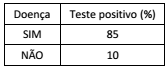
Imagem associada para resolução da questão

Entre as pessoas desse grupo que apresentaram resultado positivo no teste, a porcentagem daquelas que realmente têm a doença é aproximadamente:

Alternativas
Ano: 2016 Banca: FGV Órgão: IBGE Provas: FGV - 2016 - IBGE - Analista - Processos Administrativos e Disciplinares | FGV - 2016 - IBGE - Analista - Análise de Sistemas - Desenvolvimento de Aplicações - Web Mobile | FGV - 2016 - IBGE - Analista - Recursos Humanos - Administração de Pessoal | FGV - 2016 - IBGE - Tecnologista - Economia | FGV - 2016 - IBGE - Analista - Engenharia Civil | FGV - 2016 - IBGE - Analista - Geoprocessamento | FGV - 2016 - IBGE - Analista - Auditoria | FGV - 2016 - IBGE - Tecnologista - Geografia | FGV - 2016 - IBGE - Analista - Educação Corporativa | FGV - 2016 - IBGE - Analista - Análise Biodiversidade | FGV - 2016 - IBGE - Analista - Ciências Contábeis | FGV - 2016 - IBGE - Analista - Planejamento e Gestão | FGV - 2016 - IBGE - Analista - Design Instrucional | FGV - 2016 - IBGE - Analista - Orçamento e Finanças | FGV - 2016 - IBGE - Analista - Engenharia Agrônomica | FGV - 2016 - IBGE - Analista - Análise de Projetos | FGV - 2016 - IBGE - Analista - Recursos Materiais e Logística | FGV - 2016 - IBGE - Tecnologista - Bliblioteconomia | FGV - 2016 - IBGE - Tecnologista - Programação Visual - Webdesign | FGV - 2016 - IBGE - Analista - Jornalista - Redes Sociais | FGV - 2016 - IBGE - Analista - Análise de Sistemas - Suporte Operacional | FGV - 2016 - IBGE - Analista - Recursos Humanos - Desenvolvimento de Pessoas | FGV - 2016 - IBGE - Tecnologista - Engenharia Cartográfica | FGV - 2016 - IBGE - Analista - Análise de Sistemas - Desenvolvimentos de Sistemas | FGV - 2016 - IBGE - Tecnologista - Engenharia Florestal |
Q628267 Raciocínio Lógico
Dos 40 funcionários de uma empresa, o mais novo tem 25 anos e o mais velho tem 37 anos. Considerando a idade de cada funcionário como um número inteiro de anos, conclui-se que:
Alternativas
Q628268 Raciocínio Lógico

Sem A, não se tem B.

Sem B, não se tem C.

Assim, conclui-se que:

Alternativas
Ano: 2016 Banca: FGV Órgão: IBGE Provas: FGV - 2016 - IBGE - Analista - Processos Administrativos e Disciplinares | FGV - 2016 - IBGE - Analista - Análise de Sistemas - Desenvolvimento de Aplicações - Web Mobile | FGV - 2016 - IBGE - Analista - Recursos Humanos - Administração de Pessoal | FGV - 2016 - IBGE - Tecnologista - Economia | FGV - 2016 - IBGE - Analista - Engenharia Civil | FGV - 2016 - IBGE - Analista - Geoprocessamento | FGV - 2016 - IBGE - Analista - Auditoria | FGV - 2016 - IBGE - Tecnologista - Geografia | FGV - 2016 - IBGE - Analista - Educação Corporativa | FGV - 2016 - IBGE - Analista - Análise Biodiversidade | FGV - 2016 - IBGE - Analista - Ciências Contábeis | FGV - 2016 - IBGE - Analista - Planejamento e Gestão | FGV - 2016 - IBGE - Analista - Design Instrucional | FGV - 2016 - IBGE - Analista - Orçamento e Finanças | FGV - 2016 - IBGE - Analista - Engenharia Agrônomica | FGV - 2016 - IBGE - Analista - Análise de Projetos | FGV - 2016 - IBGE - Analista - Recursos Materiais e Logística | FGV - 2016 - IBGE - Tecnologista - Bliblioteconomia | FGV - 2016 - IBGE - Tecnologista - Programação Visual - Webdesign | FGV - 2016 - IBGE - Analista - Jornalista - Redes Sociais | FGV - 2016 - IBGE - Analista - Análise de Sistemas - Suporte Operacional | FGV - 2016 - IBGE - Analista - Recursos Humanos - Desenvolvimento de Pessoas | FGV - 2016 - IBGE - Tecnologista - Engenharia Cartográfica | FGV - 2016 - IBGE - Analista - Análise de Sistemas - Desenvolvimentos de Sistemas | FGV - 2016 - IBGE - Tecnologista - Engenharia Florestal |
Q628269 Raciocínio Lógico

Sobre os amigos Marcos, Renato e Waldo, sabe-se que:

I - Se Waldo é flamenguista, então Marcos não é tricolor;

II - Se Renato não é vascaíno, então Marcos é tricolor;

III - Se Renato é vascaíno, então Waldo não é flamenguista.

Logo, deduz-se que:

Alternativas
Ano: 2016 Banca: FGV Órgão: IBGE Provas: FGV - 2016 - IBGE - Analista - Processos Administrativos e Disciplinares | FGV - 2016 - IBGE - Analista - Análise de Sistemas - Desenvolvimento de Aplicações - Web Mobile | FGV - 2016 - IBGE - Analista - Recursos Humanos - Administração de Pessoal | FGV - 2016 - IBGE - Tecnologista - Economia | FGV - 2016 - IBGE - Analista - Engenharia Civil | FGV - 2016 - IBGE - Analista - Geoprocessamento | FGV - 2016 - IBGE - Analista - Auditoria | FGV - 2016 - IBGE - Analista - Educação Corporativa | FGV - 2016 - IBGE - Analista - Análise Biodiversidade | FGV - 2016 - IBGE - Analista - Ciências Contábeis | FGV - 2016 - IBGE - Analista - Planejamento e Gestão | FGV - 2016 - IBGE - Analista - Design Instrucional | FGV - 2016 - IBGE - Analista - Orçamento e Finanças | FGV - 2016 - IBGE - Analista - Engenharia Agrônomica | FGV - 2016 - IBGE - Analista - Análise de Projetos | FGV - 2016 - IBGE - Analista - Recursos Materiais e Logística | FGV - 2016 - IBGE - Tecnologista - Bliblioteconomia | FGV - 2016 - IBGE - Tecnologista - Programação Visual - Webdesign | FGV - 2016 - IBGE - Analista - Jornalista - Redes Sociais | FGV - 2016 - IBGE - Analista - Análise de Sistemas - Suporte Operacional | FGV - 2016 - IBGE - Analista - Recursos Humanos - Desenvolvimento de Pessoas | FGV - 2016 - IBGE - Tecnologista - Engenharia Cartográfica | FGV - 2016 - IBGE - Analista - Análise de Sistemas - Desenvolvimentos de Sistemas | FGV - 2016 - IBGE - Tecnologista - Engenharia Florestal |
Q628270 Estatística

Após a extração de uma amostra, as observações obtidas são tabuladas, gerando a seguinte distribuição de frequências:

Imagem associada para resolução da questão

Considerando que E(X) = Média de X, Mo(X) = Moda de X e Me(X) = Mediana de X, é correto afirmar que:

Alternativas
Ano: 2016 Banca: FGV Órgão: IBGE Provas: FGV - 2016 - IBGE - Analista - Processos Administrativos e Disciplinares | FGV - 2016 - IBGE - Analista - Análise de Sistemas - Desenvolvimento de Aplicações - Web Mobile | FGV - 2016 - IBGE - Analista - Recursos Humanos - Administração de Pessoal | FGV - 2016 - IBGE - Tecnologista - Economia | FGV - 2016 - IBGE - Analista - Engenharia Civil | FGV - 2016 - IBGE - Analista - Geoprocessamento | FGV - 2016 - IBGE - Analista - Auditoria | FGV - 2016 - IBGE - Analista - Educação Corporativa | FGV - 2016 - IBGE - Analista - Análise Biodiversidade | FGV - 2016 - IBGE - Analista - Ciências Contábeis | FGV - 2016 - IBGE - Analista - Planejamento e Gestão | FGV - 2016 - IBGE - Analista - Design Instrucional | FGV - 2016 - IBGE - Analista - Orçamento e Finanças | FGV - 2016 - IBGE - Analista - Engenharia Agrônomica | FGV - 2016 - IBGE - Analista - Análise de Projetos | FGV - 2016 - IBGE - Analista - Recursos Materiais e Logística | FGV - 2016 - IBGE - Tecnologista - Bliblioteconomia | FGV - 2016 - IBGE - Tecnologista - Programação Visual - Webdesign | FGV - 2016 - IBGE - Analista - Jornalista - Redes Sociais | FGV - 2016 - IBGE - Analista - Análise de Sistemas - Suporte Operacional | FGV - 2016 - IBGE - Analista - Recursos Humanos - Desenvolvimento de Pessoas | FGV - 2016 - IBGE - Tecnologista - Engenharia Cartográfica | FGV - 2016 - IBGE - Analista - Análise de Sistemas - Desenvolvimentos de Sistemas | FGV - 2016 - IBGE - Tecnologista - Engenharia Florestal |
Q628272 Estatística
Suponha que, de um baralho normal, contendo 52 cartas de quatro naipes, é extraído, sem reposição e aleatoriamente, um total de quatro cartas. Se a carta “Ás” é equivalente a uma figura (ou seja, são 4 figuras e 9 números de cada naipe), é correto afirmar que a probabilidade de que todas sejam:
Alternativas
Ano: 2016 Banca: FGV Órgão: IBGE Provas: FGV - 2016 - IBGE - Analista - Processos Administrativos e Disciplinares | FGV - 2016 - IBGE - Analista - Análise de Sistemas - Desenvolvimento de Aplicações - Web Mobile | FGV - 2016 - IBGE - Analista - Recursos Humanos - Administração de Pessoal | FGV - 2016 - IBGE - Tecnologista - Economia | FGV - 2016 - IBGE - Analista - Engenharia Civil | FGV - 2016 - IBGE - Analista - Geoprocessamento | FGV - 2016 - IBGE - Analista - Auditoria | FGV - 2016 - IBGE - Tecnologista - Geografia | FGV - 2016 - IBGE - Analista - Educação Corporativa | FGV - 2016 - IBGE - Analista - Análise Biodiversidade | FGV - 2016 - IBGE - Analista - Ciências Contábeis | FGV - 2016 - IBGE - Analista - Planejamento e Gestão | FGV - 2016 - IBGE - Analista - Design Instrucional | FGV - 2016 - IBGE - Analista - Orçamento e Finanças | FGV - 2016 - IBGE - Analista - Engenharia Agrônomica | FGV - 2016 - IBGE - Analista - Análise de Projetos | FGV - 2016 - IBGE - Analista - Recursos Materiais e Logística | FGV - 2016 - IBGE - Tecnologista - Bliblioteconomia | FGV - 2016 - IBGE - Tecnologista - Programação Visual - Webdesign | FGV - 2016 - IBGE - Analista - Jornalista - Redes Sociais | FGV - 2016 - IBGE - Analista - Análise de Sistemas - Suporte Operacional | FGV - 2016 - IBGE - Analista - Recursos Humanos - Desenvolvimento de Pessoas | FGV - 2016 - IBGE - Tecnologista - Engenharia Cartográfica | FGV - 2016 - IBGE - Analista - Análise de Sistemas - Desenvolvimentos de Sistemas | FGV - 2016 - IBGE - Tecnologista - Engenharia Florestal |
Q628273 Estatística

Sejam Y, X, Z e W variáveis aleatórias tais que Z = 2.Y - 3.X, sendo E(X2 ) = 25, E(X) = 4, Var (Y) =16, Cov(X,Y)= 6.

Então a variância de Z é:

Alternativas
Ano: 2016 Banca: FGV Órgão: IBGE Prova: FGV - 2016 - IBGE - Analista - Auditoria |
Q629087 Administração Geral
A Motores X é uma indústria mecânica de médio porte que adota tecnologia de produção por unidade. Recentemente, ela venceu uma concorrência para fornecer três modelos de motor para uma empresa pública. A direção da Motores X projeta triplicar os atuais 150 funcionários nos próximos três anos, adotar tecnologia de produção em massa e mudar a estratégia competitiva da empresa, de diferenciação para liderança em custos. Na opinião da direção da Motores X, todas essas transformações exigirão uma mudança na estrutura da empresa. A estrutura mais adequada à situação projetada para a Motores X é a:
Alternativas
Ano: 2016 Banca: FGV Órgão: IBGE Prova: FGV - 2016 - IBGE - Analista - Auditoria |
Q629088 Engenharia de Produção
A área de produção de uma fábrica de instrumentos médicos vem apresentando alto índice de produtos defeituosos e baixa produtividade da mão de obra. O gerente de produção gostaria de adotar controles preventivos, a fim de antecipar problemas para o desempenho das atividades da área. Seriam exemplos de controles preventivos adequados à situação descrita, respectivamente:
Alternativas
Ano: 2016 Banca: FGV Órgão: IBGE Prova: FGV - 2016 - IBGE - Analista - Auditoria |
Q629089 Administração Geral
O proprietário e principal executivo de uma empresa de pequeno porte gostaria de desenhar um sistema de controle como forma de monitorar o desempenho de processos e pessoas. A empresa fabrica pães e bolos e adota estrutura simples, com cultura participativa. O principal executivo é um líder democrático e o clima organizacional é bom. Tendo em vista as características de um sistema de controle eficaz, seria adequado adotar, no contexto descrito, os seguintes controles, entre outros:
Alternativas
Ano: 2016 Banca: FGV Órgão: IBGE Prova: FGV - 2016 - IBGE - Analista - Auditoria |
Q629090 Administração Geral
O diretor de recursos humanos de uma empresa de varejo recebeu as seguintes incumbências: estabelecer metas de desempenho para os empregados da empresa; definir a estrutura de cargos e salários; implementar as políticas organizacionais relativas à gestão participativa. Ao realizar essas incumbências, o diretor estará exercendo, respectivamente, as seguintes funções administrativas:
Alternativas
Ano: 2016 Banca: FGV Órgão: IBGE Prova: FGV - 2016 - IBGE - Analista - Auditoria |
Q629091 Administração Geral

A ZYX é uma empresa de produtos alimentícios de médio porte. A ZYX está crescendo e sua presidente quer aprimorar o controle estratégico da empresa, utilizando-se de indicadores que permitam monitorar o seu desempenho global na realização de sua missão, estratégias e objetivos.


São indicadores adequados para tal:

Alternativas
Ano: 2016 Banca: FGV Órgão: IBGE Prova: FGV - 2016 - IBGE - Analista - Auditoria |
Q629092 Psicologia
O gerente de uma empresa de grande porte, que passa por uma reestruturação depois de uma forte crise, afirmou que seu trabalho pode ser descrito como “resolver problemas que impedem que as pessoas desempenhem normalmente suas tarefas – basicamente, resolver disputas entre os membros da equipe e auxiliá-los no processo de mudança”. O gerente desempenha, precipuamente, um papel:
Alternativas
Ano: 2016 Banca: FGV Órgão: IBGE Prova: FGV - 2016 - IBGE - Analista - Auditoria |
Q629093 Administração Geral
O laboratório clínico XYZ atua em uma cidade de médio porte há mais de vinte anos, dominando o mercado local sem nenhum concorrente capaz de ameaçar sua posição. Há um ano, foi inaugurada na cidade a filial de uma grande rede de laboratórios de abrangência nacional. Desde a chegada desse concorrente, o XYZ vem percebendo um aumento significativo do número de reclamações dos clientes sobre demora no atendimento, mau tratamento dispensado pelos funcionários e mesmo quanto ao preço cobrado pelos serviços. A presidente do XYZ reconhece que, embora a qualidade técnica dos serviços prestados seja indiscutível, a posição de liderança no mercado criou uma “zona de conforto” que resultou em uma cultura reativa, caracterizada pela falta de foco no cliente e pela acomodação dos funcionários e das lideranças do XYZ. Ela gostaria de transformar a cultura do laboratório, de forma a torná-la mais responsiva aos clientes e, assim, garantir o sucesso do XYZ no longo prazo. Para tal, seriam ações gerenciais adequadas, entre outras:
Alternativas
Respostas
21: D
22: B
23: C
24: B
25: A
26: B
27: D
28: E
29: C
30: D
31: E
32: D
33: B
34: C
35: D
36: E
37: B
38: E
39: A
40: B