Questões de Concurso Público Prefeitura de Seara - SC 2025 para Professor de Inglês
Foram encontradas 20 questões


Ano: 2025
Banca:
AMAUC
Órgão:
Prefeitura de Seara - SC
Prova:
AMAUC - 2025 - Prefeitura de Seara - SC - Professor de Inglês |
Q3610227
Português
Em uma atividade de interpretação, a professora pediu
que os alunos analisassem diferentes usos das palavras
e identificassem quando estavam em sentido próprio ou
em sentido figurado. Após a leitura, os estudantes
deveriam julgar as seguintes afirmativas:
I.Em "O menino caiu da bicicleta e machucou o braço", a palavra braço está em sentido próprio, pois se refere diretamente a uma parte do corpo humano.
II.Em "Aquele político tem um braço forte no Congresso", o termo braço está em sentido figurado, pois designa apoio ou influência.
III.Em "O banco estava fechado durante o feriado", a palavra banco está em sentido figurado, pois não se refere ao objeto de sentar, mas a uma instituição financeira.
IV.Em "O banco de madeira estava quebrado", a palavra banco está em sentido próprio, pois nomeia diretamente o assento.
V.Em "O coração do poeta chorava de saudade", a palavra coração está em sentido próprio, pois designa o órgão humano responsável por bombear o sangue.
Assinale a alternativa que apresenta qual afirmativa está incorreta:
I.Em "O menino caiu da bicicleta e machucou o braço", a palavra braço está em sentido próprio, pois se refere diretamente a uma parte do corpo humano.
II.Em "Aquele político tem um braço forte no Congresso", o termo braço está em sentido figurado, pois designa apoio ou influência.
III.Em "O banco estava fechado durante o feriado", a palavra banco está em sentido figurado, pois não se refere ao objeto de sentar, mas a uma instituição financeira.
IV.Em "O banco de madeira estava quebrado", a palavra banco está em sentido próprio, pois nomeia diretamente o assento.
V.Em "O coração do poeta chorava de saudade", a palavra coração está em sentido próprio, pois designa o órgão humano responsável por bombear o sangue.
Assinale a alternativa que apresenta qual afirmativa está incorreta:
Ano: 2025
Banca:
AMAUC
Órgão:
Prefeitura de Seara - SC
Prova:
AMAUC - 2025 - Prefeitura de Seara - SC - Professor de Inglês |
Q3610228
Português
Em uma aula de gramática, o professor apresentou algumas frases para os alunos para discutir as vozes verbais.
Assinale a alternativa que apresenta corretamente uma oração na voz passiva:
Ano: 2025
Banca:
AMAUC
Órgão:
Prefeitura de Seara - SC
Prova:
AMAUC - 2025 - Prefeitura de Seara - SC - Professor de Inglês |
Q3610229
Matemática
Um pedreiro está empilhando blocos em uma parede e
decide aumentar o número de blocos por fileira a cada
nova camada. Na primeira camada, ele usou 10 blocos;
na segunda, 14; na terceira, 18, seguindo essa lógica até
a 8ª camada. Quantos blocos ele usará na 8ª camada?
Ano: 2025
Banca:
AMAUC
Órgão:
Prefeitura de Seara - SC
Prova:
AMAUC - 2025 - Prefeitura de Seara - SC - Professor de Inglês |
Q3610230
Matemática
Um agricultor deseja instalar um sistema de irrigação em
uma horta retangular com 18 metros de comprimento e
12 metros de largura. Ele precisa saber a área exata
para comprar a quantidade correta de mangueiras. Qual
é a área total dessa horta em metros quadrados?
Ano: 2025
Banca:
AMAUC
Órgão:
Prefeitura de Seara - SC
Prova:
AMAUC - 2025 - Prefeitura de Seara - SC - Professor de Inglês |
Q3610231
Sociologia
Movimentos como a Revolta dos Malês em 1835, Diretas
Já de 1983 a 1984 e tantos que hoje atuam em defesa
daqueles que de alguma forma são colocados à margem
da sociedade, compõem a história do povo brasileiro,
destacando sua valorização e sua representatividade.
Considerando essa perspectiva histórica e
contemporânea, assinale a alternativa correta.
Ano: 2025
Banca:
AMAUC
Órgão:
Prefeitura de Seara - SC
Prova:
AMAUC - 2025 - Prefeitura de Seara - SC - Professor de Inglês |
Q3610232
Arqueologia
O estado de Santa Catarina é um dos lugares do Brasil
onde foi constatada a presença de sítios arqueológicos
consequentes da presença de grupos humanos que se
instalaram na região há mais de 6 mil anos, que efetivamente se configuraram como montes de conchas,
mas que atualmente, também são encontrados
diferentes tipos de sedimento, ossos de animais
aquáticos e terrestres, ossos humanos e uma grande
diversidade de artefatos e estruturas fabricadas,
utilizadas e descartadas pelas pessoas que ocuparam
estes locais. Estes sítios são chamados de:
Ano: 2025
Banca:
AMAUC
Órgão:
Prefeitura de Seara - SC
Prova:
AMAUC - 2025 - Prefeitura de Seara - SC - Professor de Inglês |
Q3610233
Noções de Informática
Durante a elaboração de um relatório no Microsoft Word,
um servidor público precisou inserir uma tabela de dados
extraída do Excel. Considerando o uso em nível de
usuário dos programas do pacote Office, assinale a
alternativa CORRETA.
Ano: 2025
Banca:
AMAUC
Órgão:
Prefeitura de Seara - SC
Prova:
AMAUC - 2025 - Prefeitura de Seara - SC - Professor de Inglês |
Q3610234
Noções de Informática
As ferramentas de navegação, no uso cotidiano,
correspondem principalmente aos navegadores de
Internet, como Chrome, Firefox, Edge ou Safari. Esses
programas são a porta de entrada do usuário para a
Web, permitindo acessar páginas, enviar informações,
realizar transações e consumir diferentes tipos de
conteúdo. Julgue as sentenças abaixo como
VERDADEIRAS (V) ou FALSAS (F):
(__)O processo de navegação inicia-se quando digitamos ou clicamos em um endereço eletrônico (URL). Nesse momento, o navegador aciona mecanismos que localizam o servidor responsável pelo site por meio da resolução de nomes (DNS), estabelecem uma conexão segura quando necessário (no caso de endereços que começam com "https") e, em seguida, solicitam os recursos ao servidor, como textos, imagens, vídeos ou documentos.
(__)Os navegadores oferecem recursos que impactam diretamente a experiência do usuário: o histórico de navegação, os favoritos, os modos de privacidade e as extensões que ampliam as funções do programa. Também são responsáveis por interpretar o código que estrutura os sites, transformando linhas de instruções em interfaces visuais que podem ser compreendidas e utilizadas de forma intuitiva.
(__)A navegação moderna não se limita apenas ao acesso a páginas estáticas. Ela envolve mecanismos de busca, que ajudam a localizar informações na imensidão da rede, e ferramentas de correio eletrônico, como o Outlook ou o Gmail, que dependem da navegação para envio e recebimento de mensagens.
A sequência CORRETA é
(__)O processo de navegação inicia-se quando digitamos ou clicamos em um endereço eletrônico (URL). Nesse momento, o navegador aciona mecanismos que localizam o servidor responsável pelo site por meio da resolução de nomes (DNS), estabelecem uma conexão segura quando necessário (no caso de endereços que começam com "https") e, em seguida, solicitam os recursos ao servidor, como textos, imagens, vídeos ou documentos.
(__)Os navegadores oferecem recursos que impactam diretamente a experiência do usuário: o histórico de navegação, os favoritos, os modos de privacidade e as extensões que ampliam as funções do programa. Também são responsáveis por interpretar o código que estrutura os sites, transformando linhas de instruções em interfaces visuais que podem ser compreendidas e utilizadas de forma intuitiva.
(__)A navegação moderna não se limita apenas ao acesso a páginas estáticas. Ela envolve mecanismos de busca, que ajudam a localizar informações na imensidão da rede, e ferramentas de correio eletrônico, como o Outlook ou o Gmail, que dependem da navegação para envio e recebimento de mensagens.
A sequência CORRETA é
Ano: 2025
Banca:
AMAUC
Órgão:
Prefeitura de Seara - SC
Prova:
AMAUC - 2025 - Prefeitura de Seara - SC - Professor de Inglês |
Q3610235
Inglês
Texto associado
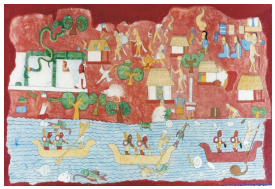
Postclassic Period
The end of the Terminal Classic Period has been viewed
as the death knell for the Maya civilization, and the
Postclassic Period has traditionally been described as a
militaristic, decadent, and degenerate phase in Maya
history. But more enlightened views would see that the
militarism was part and parcel with other features that
suggest a tendency towards secularism and the resultant
downplaying of the ceremonial rituals that dominated the
Classic Period. Moreover, much of our interpretations of
the Postclassic were projected from ethnohistoric
accounts of the Spanish intrusions in the region. Very
little attention has been directed towards understanding
the Postclassic through archaeology, although recent
research on the period, particularly at Santa Rita in
northern Belize, suggests continuity from the Classic
Period.The focus of cultural developments moved from
the Central Maya Lowlands north, to the Yucatan, where
the Spanish first contacted the Maya culture.
Once the Spanish established their base in northern
Yucatan by 1546, they began to impose their views and
customs upon the Maya. This was a time of great
disruption. The Maya people suffered from introduction of
European diseases suppression of native traditions
conscription of labor.
Tragically, the vast majority of Maya documents were
destroyed by Spanish religious zealots. The Auto de Fe
of Fray DeLanda is among the most famed. Credited with
providing scraps of information on the Mayan language,
in truth he is responsible for burning the majority of the
known text at the time. The created a huge void of information about the language and practices of this
advanced civilization. The Maya of the Yucatan struggled
to maintain their life ways under Spanish rule. The Maya
forest garden and milpa strategy, unfamiliar to and
unappreciated by the Spanish, was not accepted.
After the conquest of the northern Yucatan, the southern
Maya Itza kingdom still dominated the southern lowlands,
where Tikal once ruled. Hostile to their neighbors and
ensconced in the Maya forest, they were able to maintain
their independence for nearly two centuries after the
Spanish arrived.
Postclassic Mural
It was not until 1696 that the Spanish conquered the last
of the independent Maya city-states, the Itza of Tayasal,
the descendants of the ancient Maya realm. The Central
Maya Lowlands, which today include most of Belize and
the Peten of Guatemala, are still home to Maya who can
trace their ancestry back into prehistory as attested by
the patronyms of local villagers: Teck, Bacab, Mai,
Cocom, and Panti to name a few.
https://www.marc.ucsb.edu/research/maya/ancient-maya-civilization/po
stclassic-period
Within the sentence explaining how independence was
maintained in the southern lowlands, to whom does the
pronoun "they" most plausibly refer, given the
surrounding details?
Ano: 2025
Banca:
AMAUC
Órgão:
Prefeitura de Seara - SC
Prova:
AMAUC - 2025 - Prefeitura de Seara - SC - Professor de Inglês |
Q3610236
Inglês
Texto associado
Postclassic Period
The end of the Terminal Classic Period has been viewed
as the death knell for the Maya civilization, and the
Postclassic Period has traditionally been described as a
militaristic, decadent, and degenerate phase in Maya
history. But more enlightened views would see that the
militarism was part and parcel with other features that
suggest a tendency towards secularism and the resultant
downplaying of the ceremonial rituals that dominated the
Classic Period. Moreover, much of our interpretations of
the Postclassic were projected from ethnohistoric
accounts of the Spanish intrusions in the region. Very
little attention has been directed towards understanding
the Postclassic through archaeology, although recent
research on the period, particularly at Santa Rita in
northern Belize, suggests continuity from the Classic
Period.The focus of cultural developments moved from
the Central Maya Lowlands north, to the Yucatan, where
the Spanish first contacted the Maya culture.
Once the Spanish established their base in northern
Yucatan by 1546, they began to impose their views and
customs upon the Maya. This was a time of great
disruption. The Maya people suffered from introduction of
European diseases suppression of native traditions
conscription of labor.
Tragically, the vast majority of Maya documents were
destroyed by Spanish religious zealots. The Auto de Fe
of Fray DeLanda is among the most famed. Credited with
providing scraps of information on the Mayan language,
in truth he is responsible for burning the majority of the
known text at the time. The created a huge void of information about the language and practices of this
advanced civilization. The Maya of the Yucatan struggled
to maintain their life ways under Spanish rule. The Maya
forest garden and milpa strategy, unfamiliar to and
unappreciated by the Spanish, was not accepted.
After the conquest of the northern Yucatan, the southern
Maya Itza kingdom still dominated the southern lowlands,
where Tikal once ruled. Hostile to their neighbors and
ensconced in the Maya forest, they were able to maintain
their independence for nearly two centuries after the
Spanish arrived.
Postclassic Mural
It was not until 1696 that the Spanish conquered the last
of the independent Maya city-states, the Itza of Tayasal,
the descendants of the ancient Maya realm. The Central
Maya Lowlands, which today include most of Belize and
the Peten of Guatemala, are still home to Maya who can
trace their ancestry back into prehistory as attested by
the patronyms of local villagers: Teck, Bacab, Mai,
Cocom, and Panti to name a few.
https://www.marc.ucsb.edu/research/maya/ancient-maya-civilization/po
stclassic-period
Considering tone, organization, and intent, which label
best classifies the overall text you read about the
Postclassic and Spanish intrusion?
Ano: 2025
Banca:
AMAUC
Órgão:
Prefeitura de Seara - SC
Prova:
AMAUC - 2025 - Prefeitura de Seara - SC - Professor de Inglês |
Q3610237
Inglês
Texto associado
Postclassic Period
The end of the Terminal Classic Period has been viewed
as the death knell for the Maya civilization, and the
Postclassic Period has traditionally been described as a
militaristic, decadent, and degenerate phase in Maya
history. But more enlightened views would see that the
militarism was part and parcel with other features that
suggest a tendency towards secularism and the resultant
downplaying of the ceremonial rituals that dominated the
Classic Period. Moreover, much of our interpretations of
the Postclassic were projected from ethnohistoric
accounts of the Spanish intrusions in the region. Very
little attention has been directed towards understanding
the Postclassic through archaeology, although recent
research on the period, particularly at Santa Rita in
northern Belize, suggests continuity from the Classic
Period.The focus of cultural developments moved from
the Central Maya Lowlands north, to the Yucatan, where
the Spanish first contacted the Maya culture.
Once the Spanish established their base in northern
Yucatan by 1546, they began to impose their views and
customs upon the Maya. This was a time of great
disruption. The Maya people suffered from introduction of
European diseases suppression of native traditions
conscription of labor.
Tragically, the vast majority of Maya documents were
destroyed by Spanish religious zealots. The Auto de Fe
of Fray DeLanda is among the most famed. Credited with
providing scraps of information on the Mayan language,
in truth he is responsible for burning the majority of the
known text at the time. The created a huge void of information about the language and practices of this
advanced civilization. The Maya of the Yucatan struggled
to maintain their life ways under Spanish rule. The Maya
forest garden and milpa strategy, unfamiliar to and
unappreciated by the Spanish, was not accepted.
After the conquest of the northern Yucatan, the southern
Maya Itza kingdom still dominated the southern lowlands,
where Tikal once ruled. Hostile to their neighbors and
ensconced in the Maya forest, they were able to maintain
their independence for nearly two centuries after the
Spanish arrived.
Postclassic Mural
It was not until 1696 that the Spanish conquered the last
of the independent Maya city-states, the Itza of Tayasal,
the descendants of the ancient Maya realm. The Central
Maya Lowlands, which today include most of Belize and
the Peten of Guatemala, are still home to Maya who can
trace their ancestry back into prehistory as attested by
the patronyms of local villagers: Teck, Bacab, Mai,
Cocom, and Panti to name a few.
https://www.marc.ucsb.edu/research/maya/ancient-maya-civilization/po
stclassic-period
Considering the passage's account of cultural
reorientation after the Classic decline, which geographic
shift characterizes developments in the Postclassic as
described by the author?
Ano: 2025
Banca:
AMAUC
Órgão:
Prefeitura de Seara - SC
Prova:
AMAUC - 2025 - Prefeitura de Seara - SC - Professor de Inglês |
Q3610238
Inglês
Texto associado
Postclassic Period
The end of the Terminal Classic Period has been viewed
as the death knell for the Maya civilization, and the
Postclassic Period has traditionally been described as a
militaristic, decadent, and degenerate phase in Maya
history. But more enlightened views would see that the
militarism was part and parcel with other features that
suggest a tendency towards secularism and the resultant
downplaying of the ceremonial rituals that dominated the
Classic Period. Moreover, much of our interpretations of
the Postclassic were projected from ethnohistoric
accounts of the Spanish intrusions in the region. Very
little attention has been directed towards understanding
the Postclassic through archaeology, although recent
research on the period, particularly at Santa Rita in
northern Belize, suggests continuity from the Classic
Period.The focus of cultural developments moved from
the Central Maya Lowlands north, to the Yucatan, where
the Spanish first contacted the Maya culture.
Once the Spanish established their base in northern
Yucatan by 1546, they began to impose their views and
customs upon the Maya. This was a time of great
disruption. The Maya people suffered from introduction of
European diseases suppression of native traditions
conscription of labor.
Tragically, the vast majority of Maya documents were
destroyed by Spanish religious zealots. The Auto de Fe
of Fray DeLanda is among the most famed. Credited with
providing scraps of information on the Mayan language,
in truth he is responsible for burning the majority of the
known text at the time. The created a huge void of information about the language and practices of this
advanced civilization. The Maya of the Yucatan struggled
to maintain their life ways under Spanish rule. The Maya
forest garden and milpa strategy, unfamiliar to and
unappreciated by the Spanish, was not accepted.
After the conquest of the northern Yucatan, the southern
Maya Itza kingdom still dominated the southern lowlands,
where Tikal once ruled. Hostile to their neighbors and
ensconced in the Maya forest, they were able to maintain
their independence for nearly two centuries after the
Spanish arrived.
Postclassic Mural
It was not until 1696 that the Spanish conquered the last
of the independent Maya city-states, the Itza of Tayasal,
the descendants of the ancient Maya realm. The Central
Maya Lowlands, which today include most of Belize and
the Peten of Guatemala, are still home to Maya who can
trace their ancestry back into prehistory as attested by
the patronyms of local villagers: Teck, Bacab, Mai,
Cocom, and Panti to name a few.
https://www.marc.ucsb.edu/research/maya/ancient-maya-civilization/po
stclassic-period
Interpreting temporal prepositions in context, what does
"by" convey in the clause "Once the Spanish established
their base in northern Yucatan by 1546"?
Ano: 2025
Banca:
AMAUC
Órgão:
Prefeitura de Seara - SC
Prova:
AMAUC - 2025 - Prefeitura de Seara - SC - Professor de Inglês |
Q3610239
Inglês
Texto associado
Postclassic Period
The end of the Terminal Classic Period has been viewed
as the death knell for the Maya civilization, and the
Postclassic Period has traditionally been described as a
militaristic, decadent, and degenerate phase in Maya
history. But more enlightened views would see that the
militarism was part and parcel with other features that
suggest a tendency towards secularism and the resultant
downplaying of the ceremonial rituals that dominated the
Classic Period. Moreover, much of our interpretations of
the Postclassic were projected from ethnohistoric
accounts of the Spanish intrusions in the region. Very
little attention has been directed towards understanding
the Postclassic through archaeology, although recent
research on the period, particularly at Santa Rita in
northern Belize, suggests continuity from the Classic
Period.The focus of cultural developments moved from
the Central Maya Lowlands north, to the Yucatan, where
the Spanish first contacted the Maya culture.
Once the Spanish established their base in northern
Yucatan by 1546, they began to impose their views and
customs upon the Maya. This was a time of great
disruption. The Maya people suffered from introduction of
European diseases suppression of native traditions
conscription of labor.
Tragically, the vast majority of Maya documents were
destroyed by Spanish religious zealots. The Auto de Fe
of Fray DeLanda is among the most famed. Credited with
providing scraps of information on the Mayan language,
in truth he is responsible for burning the majority of the
known text at the time. The created a huge void of information about the language and practices of this
advanced civilization. The Maya of the Yucatan struggled
to maintain their life ways under Spanish rule. The Maya
forest garden and milpa strategy, unfamiliar to and
unappreciated by the Spanish, was not accepted.
After the conquest of the northern Yucatan, the southern
Maya Itza kingdom still dominated the southern lowlands,
where Tikal once ruled. Hostile to their neighbors and
ensconced in the Maya forest, they were able to maintain
their independence for nearly two centuries after the
Spanish arrived.
Postclassic Mural
It was not until 1696 that the Spanish conquered the last
of the independent Maya city-states, the Itza of Tayasal,
the descendants of the ancient Maya realm. The Central
Maya Lowlands, which today include most of Belize and
the Peten of Guatemala, are still home to Maya who can
trace their ancestry back into prehistory as attested by
the patronyms of local villagers: Teck, Bacab, Mai,
Cocom, and Panti to name a few.
https://www.marc.ucsb.edu/research/maya/ancient-maya-civilization/po
stclassic-period
Converting a statement from the text into formal reported
speech, which option correctly reports: "The Spanish first
contacted the Maya culture in the Yucatan"?
Ano: 2025
Banca:
AMAUC
Órgão:
Prefeitura de Seara - SC
Prova:
AMAUC - 2025 - Prefeitura de Seara - SC - Professor de Inglês |
Q3610240
Inglês
Texto associado
Postclassic Period
The end of the Terminal Classic Period has been viewed
as the death knell for the Maya civilization, and the
Postclassic Period has traditionally been described as a
militaristic, decadent, and degenerate phase in Maya
history. But more enlightened views would see that the
militarism was part and parcel with other features that
suggest a tendency towards secularism and the resultant
downplaying of the ceremonial rituals that dominated the
Classic Period. Moreover, much of our interpretations of
the Postclassic were projected from ethnohistoric
accounts of the Spanish intrusions in the region. Very
little attention has been directed towards understanding
the Postclassic through archaeology, although recent
research on the period, particularly at Santa Rita in
northern Belize, suggests continuity from the Classic
Period.The focus of cultural developments moved from
the Central Maya Lowlands north, to the Yucatan, where
the Spanish first contacted the Maya culture.
Once the Spanish established their base in northern
Yucatan by 1546, they began to impose their views and
customs upon the Maya. This was a time of great
disruption. The Maya people suffered from introduction of
European diseases suppression of native traditions
conscription of labor.
Tragically, the vast majority of Maya documents were
destroyed by Spanish religious zealots. The Auto de Fe
of Fray DeLanda is among the most famed. Credited with
providing scraps of information on the Mayan language,
in truth he is responsible for burning the majority of the
known text at the time. The created a huge void of information about the language and practices of this
advanced civilization. The Maya of the Yucatan struggled
to maintain their life ways under Spanish rule. The Maya
forest garden and milpa strategy, unfamiliar to and
unappreciated by the Spanish, was not accepted.
After the conquest of the northern Yucatan, the southern
Maya Itza kingdom still dominated the southern lowlands,
where Tikal once ruled. Hostile to their neighbors and
ensconced in the Maya forest, they were able to maintain
their independence for nearly two centuries after the
Spanish arrived.
Postclassic Mural
It was not until 1696 that the Spanish conquered the last
of the independent Maya city-states, the Itza of Tayasal,
the descendants of the ancient Maya realm. The Central
Maya Lowlands, which today include most of Belize and
the Peten of Guatemala, are still home to Maya who can
trace their ancestry back into prehistory as attested by
the patronyms of local villagers: Teck, Bacab, Mai,
Cocom, and Panti to name a few.
https://www.marc.ucsb.edu/research/maya/ancient-maya-civilization/po
stclassic-period
The author critiques earlier wording and perspectives;
choose the revision that best corrects quantifier−noun
agreement while preserving the original meaning of the
sentence.
Ano: 2025
Banca:
AMAUC
Órgão:
Prefeitura de Seara - SC
Prova:
AMAUC - 2025 - Prefeitura de Seara - SC - Professor de Inglês |
Q3610241
Inglês
Texto associado
Postclassic Period
The end of the Terminal Classic Period has been viewed
as the death knell for the Maya civilization, and the
Postclassic Period has traditionally been described as a
militaristic, decadent, and degenerate phase in Maya
history. But more enlightened views would see that the
militarism was part and parcel with other features that
suggest a tendency towards secularism and the resultant
downplaying of the ceremonial rituals that dominated the
Classic Period. Moreover, much of our interpretations of
the Postclassic were projected from ethnohistoric
accounts of the Spanish intrusions in the region. Very
little attention has been directed towards understanding
the Postclassic through archaeology, although recent
research on the period, particularly at Santa Rita in
northern Belize, suggests continuity from the Classic
Period.The focus of cultural developments moved from
the Central Maya Lowlands north, to the Yucatan, where
the Spanish first contacted the Maya culture.
Once the Spanish established their base in northern
Yucatan by 1546, they began to impose their views and
customs upon the Maya. This was a time of great
disruption. The Maya people suffered from introduction of
European diseases suppression of native traditions
conscription of labor.
Tragically, the vast majority of Maya documents were
destroyed by Spanish religious zealots. The Auto de Fe
of Fray DeLanda is among the most famed. Credited with
providing scraps of information on the Mayan language,
in truth he is responsible for burning the majority of the
known text at the time. The created a huge void of information about the language and practices of this
advanced civilization. The Maya of the Yucatan struggled
to maintain their life ways under Spanish rule. The Maya
forest garden and milpa strategy, unfamiliar to and
unappreciated by the Spanish, was not accepted.
After the conquest of the northern Yucatan, the southern
Maya Itza kingdom still dominated the southern lowlands,
where Tikal once ruled. Hostile to their neighbors and
ensconced in the Maya forest, they were able to maintain
their independence for nearly two centuries after the
Spanish arrived.
Postclassic Mural
It was not until 1696 that the Spanish conquered the last
of the independent Maya city-states, the Itza of Tayasal,
the descendants of the ancient Maya realm. The Central
Maya Lowlands, which today include most of Belize and
the Peten of Guatemala, are still home to Maya who can
trace their ancestry back into prehistory as attested by
the patronyms of local villagers: Teck, Bacab, Mai,
Cocom, and Panti to name a few.
https://www.marc.ucsb.edu/research/maya/ancient-maya-civilization/po
stclassic-period
Drawing on the passage's contrasting evaluations of the
period, which pair of nouns taken (or inferable) from the
text functions as antonyms in context?
Ano: 2025
Banca:
AMAUC
Órgão:
Prefeitura de Seara - SC
Prova:
AMAUC - 2025 - Prefeitura de Seara - SC - Professor de Inglês |
Q3610242
Inglês
Texto associado
Postclassic Period
The end of the Terminal Classic Period has been viewed
as the death knell for the Maya civilization, and the
Postclassic Period has traditionally been described as a
militaristic, decadent, and degenerate phase in Maya
history. But more enlightened views would see that the
militarism was part and parcel with other features that
suggest a tendency towards secularism and the resultant
downplaying of the ceremonial rituals that dominated the
Classic Period. Moreover, much of our interpretations of
the Postclassic were projected from ethnohistoric
accounts of the Spanish intrusions in the region. Very
little attention has been directed towards understanding
the Postclassic through archaeology, although recent
research on the period, particularly at Santa Rita in
northern Belize, suggests continuity from the Classic
Period.The focus of cultural developments moved from
the Central Maya Lowlands north, to the Yucatan, where
the Spanish first contacted the Maya culture.
Once the Spanish established their base in northern
Yucatan by 1546, they began to impose their views and
customs upon the Maya. This was a time of great
disruption. The Maya people suffered from introduction of
European diseases suppression of native traditions
conscription of labor.
Tragically, the vast majority of Maya documents were
destroyed by Spanish religious zealots. The Auto de Fe
of Fray DeLanda is among the most famed. Credited with
providing scraps of information on the Mayan language,
in truth he is responsible for burning the majority of the
known text at the time. The created a huge void of information about the language and practices of this
advanced civilization. The Maya of the Yucatan struggled
to maintain their life ways under Spanish rule. The Maya
forest garden and milpa strategy, unfamiliar to and
unappreciated by the Spanish, was not accepted.
After the conquest of the northern Yucatan, the southern
Maya Itza kingdom still dominated the southern lowlands,
where Tikal once ruled. Hostile to their neighbors and
ensconced in the Maya forest, they were able to maintain
their independence for nearly two centuries after the
Spanish arrived.
Postclassic Mural
It was not until 1696 that the Spanish conquered the last
of the independent Maya city-states, the Itza of Tayasal,
the descendants of the ancient Maya realm. The Central
Maya Lowlands, which today include most of Belize and
the Peten of Guatemala, are still home to Maya who can
trace their ancestry back into prehistory as attested by
the patronyms of local villagers: Teck, Bacab, Mai,
Cocom, and Panti to name a few.
https://www.marc.ucsb.edu/research/maya/ancient-maya-civilization/po
stclassic-period
Analyzing the non-finite structure in "Hostile to their
neighbors and ensconced in the Maya forest," what is the
syntactic role of "ensconced in the Maya forest" with
respect to the subject?
Ano: 2025
Banca:
AMAUC
Órgão:
Prefeitura de Seara - SC
Prova:
AMAUC - 2025 - Prefeitura de Seara - SC - Professor de Inglês |
Q3610243
Inglês
Texto associado
Postclassic Period
The end of the Terminal Classic Period has been viewed
as the death knell for the Maya civilization, and the
Postclassic Period has traditionally been described as a
militaristic, decadent, and degenerate phase in Maya
history. But more enlightened views would see that the
militarism was part and parcel with other features that
suggest a tendency towards secularism and the resultant
downplaying of the ceremonial rituals that dominated the
Classic Period. Moreover, much of our interpretations of
the Postclassic were projected from ethnohistoric
accounts of the Spanish intrusions in the region. Very
little attention has been directed towards understanding
the Postclassic through archaeology, although recent
research on the period, particularly at Santa Rita in
northern Belize, suggests continuity from the Classic
Period.The focus of cultural developments moved from
the Central Maya Lowlands north, to the Yucatan, where
the Spanish first contacted the Maya culture.
Once the Spanish established their base in northern
Yucatan by 1546, they began to impose their views and
customs upon the Maya. This was a time of great
disruption. The Maya people suffered from introduction of
European diseases suppression of native traditions
conscription of labor.
Tragically, the vast majority of Maya documents were
destroyed by Spanish religious zealots. The Auto de Fe
of Fray DeLanda is among the most famed. Credited with
providing scraps of information on the Mayan language,
in truth he is responsible for burning the majority of the
known text at the time. The created a huge void of information about the language and practices of this
advanced civilization. The Maya of the Yucatan struggled
to maintain their life ways under Spanish rule. The Maya
forest garden and milpa strategy, unfamiliar to and
unappreciated by the Spanish, was not accepted.
After the conquest of the northern Yucatan, the southern
Maya Itza kingdom still dominated the southern lowlands,
where Tikal once ruled. Hostile to their neighbors and
ensconced in the Maya forest, they were able to maintain
their independence for nearly two centuries after the
Spanish arrived.
Postclassic Mural
It was not until 1696 that the Spanish conquered the last
of the independent Maya city-states, the Itza of Tayasal,
the descendants of the ancient Maya realm. The Central
Maya Lowlands, which today include most of Belize and
the Peten of Guatemala, are still home to Maya who can
trace their ancestry back into prehistory as attested by
the patronyms of local villagers: Teck, Bacab, Mai,
Cocom, and Panti to name a few.
https://www.marc.ucsb.edu/research/maya/ancient-maya-civilization/po
stclassic-period
As used in the opening evaluation of the Terminal
Classic, the phrase "the death knell for the Maya
civilization" serves a rhetorical purpose; which
interpretation best captures its figurative force in this
context?
Ano: 2025
Banca:
AMAUC
Órgão:
Prefeitura de Seara - SC
Prova:
AMAUC - 2025 - Prefeitura de Seara - SC - Professor de Inglês |
Q3610244
Inglês
Choose the only sentence that is free of spelling errors
(ignore punctuation and capitalization).
Ano: 2025
Banca:
AMAUC
Órgão:
Prefeitura de Seara - SC
Prova:
AMAUC - 2025 - Prefeitura de Seara - SC - Professor de Inglês |
Q3610245
Inglês
Which pair exemplifies back-formation (rather than
affixation, compounding, clipping, or conversion)?
Ano: 2025
Banca:
AMAUC
Órgão:
Prefeitura de Seara - SC
Prova:
AMAUC - 2025 - Prefeitura de Seara - SC - Professor de Inglês |
Q3610246
Inglês
Which sentence avoids a comma splice and uses the
linker appropriately to join two independent clauses?

 Conheça nossos planos