Questões de Concurso
Comentadas sobre sinônimos | synonyms em inglês
Foram encontradas 1.059 questões
The following text refers to question

Disponível em: https://www.inglesnasescolas.org/en/headline/english-language-in-bncc/. Adaptado.
rooted – however – intelligibility – fostering
These words can be respectively substituted without losing their meaning by:
Text CB1A2-II
There’s one fact that seems to stand out for anyone who has read Rama Gheerawo’s 2022 book, Creative leadership: born from design. It likely sticks with people because it seems so absurd as to border on very bleak comedy, but also because it reveals a fundamental truth about how unnervingly simple us humans can be.
In the very first chapter of the book, we learn that a study of Fortune 500 companies showed that (in America), something as arbitrary as height can be the key to the C-suite: 4% of adult men in the general US population are 6’2” or taller, but 30% in the CEO sample reached those heights. It feels pathetically caveman-like that even now, in the 21st century, we implicitly place power in the hands of those who are taller than us — or that those taller than us have a natural propensity to get that power for themselves.
For Gheerawo, issues around leadership really came to a head around 15 years ago, he says, when he found himself “really disillusioned” with the constant and innumerable ways the world excluded certain groups of people, and how much of that could be solved if there was far more willingness from decision-makers to involve design early on as a key tool for problem-solving.
<R>Emily Gosling. Why the world needs a new type of leader.
Internet:
“So I was quite offended by my doctor who, when we ran into each other in the street one day, took one look at me and told me that I was definitely overweight”.
Text CB1A2-II
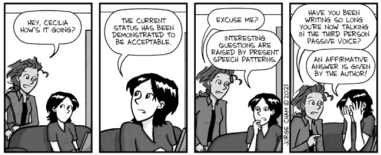
Jorge Cham. Piled higher and deeper. Internet: <www.phdcomics.com>.
Text CB1A2-II

Jorge Cham. Piled higher and deeper. Internet: <www.phdcomics.com>.

Text CB2A2
Anyone who has interacted with superbot ChatGPT or image generator DALL-E might be wondering what the future of artificial intelligence (AI) holds for humanity.
ChatGPT is an AI program that generates text in a very human-like manner when asked questions. Just ask DALL-E or similar programs to create a picture of a French bulldog driving a pink convertible and voila: you’ll see several versions in seconds.
Science fiction in the mid-20th century created good-natured AI such as the computer on Star Trek helping the Enterprise crew, as well as its evil twin set on destroying its creators like HAL in Arthur C. Clarke’s famous book (or Stanley Kubrick’s 1968 film adaptation) 2001: A Space Odyssey. In 2023, however, we’re surrounded by AI that’s far more mundane than those examples. The virtual assistant in your smartphone, the airline chatbot and the robot vacuum cleaning your floors don’t seem to have any aspirations to rise above humanity and have been designed to help us.
We should be prepared for bigger things to come than games, better chatbots or photo generators. Connectivity is key: think of AI as a general-purpose innovation like electricity that powers and connects other technologies, including sensors, robots, genomic devices and 3D printers. AI’s use will only intensify and accelerate as faster computing technology is developed, along with greater sensors capturing data, often called the Internet of Things (IoT). In the future, AI will be interwoven in virtually every aspect of commercial and personal activities.
Peter Marber. Artificial Intelligence: Why Should We Care?.
Internet:
Considering the linguistic and semantic aspects of text CB2A2, judge the following item.
The word “wonder”, in the first paragraph, is used here in the
sense of “decide”.
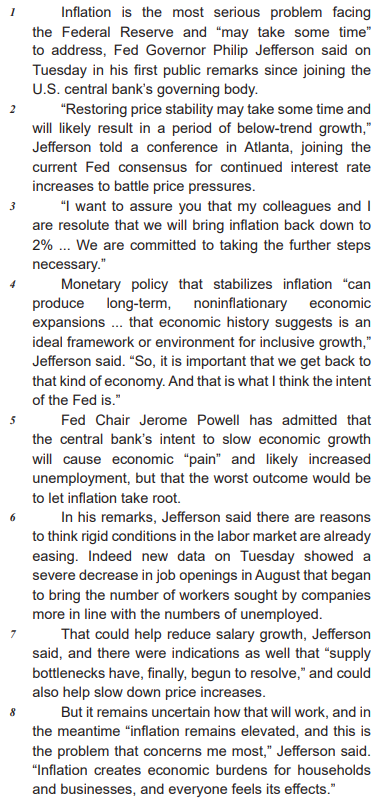
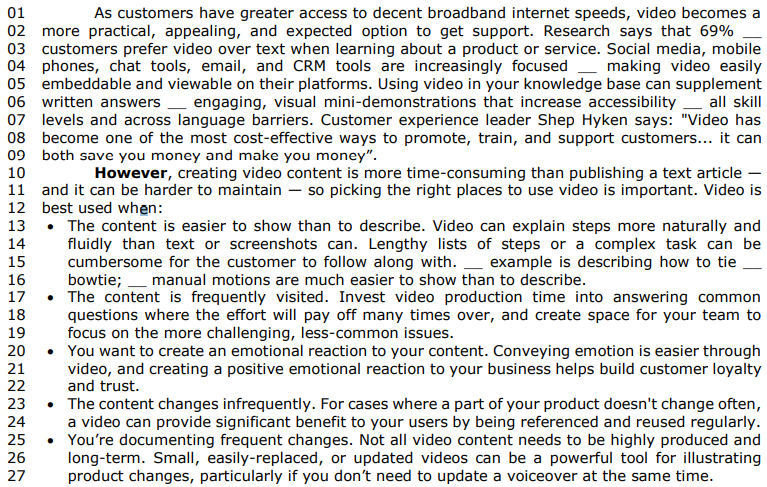


I. Its past form is “could”. II. It could be replaced by “must” with no significative changes in meaning. III. It expresses permission.
Which statements are correct?

Text I
Trust and audit
Trust is what auditors sell. They review the accuracy, adequacy or propriety of other people’s work. Financial statement audits are prepared for the owners of a company and presented publically to provide assurance to the market and the wider public. Public service audits are presented to governing bodies and, in some cases, directly to parliament.
It is the independent scepticism of the auditor that allows shareholders and the public to be confident that they are being given a true and fair account of the organisation in question. The auditor’s signature pledges his or her reputational capital so that the audited body’s public statements can be trusted. […]
Given the fundamental importance of trust, should auditors not then feel immensely valuable in the context of declining trust? Not so. Among our interviewees, a consensus emerged that the audit profession is under-producing trust at a critical time. One aspect of the problem is the quietness of audit: it is a profession that literally goes about its work behind the scenes. The face and processes of the auditor are rarely seen in the organisations they scrutinise, and relatively rarely in the outside world. Yet, if we listen to the mounting evidence of the importance of social capital, we know that frequent and reliable contacts between groups are important to strengthening and expanding trust.
So what can be done? Our research suggests that more frequent dialogue with audit committees and a more ambitious outward facing role for the sector’s leadership would be welcome. But we think more is needed. Audit for the 21st century should be understood and designed as primarily a confidence building process within the audited organisation and across its stakeholders. If the audit is a way of ensuring the client’s accountability, much more needs to be done to make the audit itself exemplary in its openness and inclusiveness.
Instead of an audit report being a trust-producing product, the audit process could become a trust-producing practice in which the auditor uses his or her position as a trusted intermediary to broker rigorous learning across all dimensions of the organisation and its stakeholders. The views of investors, staff, suppliers and customers could routinely be considered, as could questions from the general public; online technologies offer numerous opportunities to inform, involve and invite.
From being a service that consists almost exclusively of external investigation by a warranted professional, auditing needs to become more co-productive, with the auditor’s role expanding to include that of an expert convenor who is willing to share the tools of enquiry. Audit could move from ‘black box’ to ‘glass box’.
But the profession will still struggle to secure trust unless it can stake a stronger claim to supporting improvement. Does it increase the economic, social or environmental value of the organisations it reviews? It is one thing to believe in the accuracy of a financial statement audit, but it is another thing to believe in its utility.
Adapted from: https://auditfutures.net/pdf/AuditFutures-RSA-EnlighteningProfessions.pdf
Adding ethics to public finance
Evolutionary moral psychologists point the way to garnering broader support for fiscal policies
Policy decisions on taxation and public expenditures intrinsically reflect moral choices. How much of your hard-earned money is it fair for the state to collect through taxes? Should the rich pay more? Should the state provide basic public services such as education and health care for free to all citizens? And so on.
Economists and public finance practitioners have traditionally focused on economic efficiency. When considering distributional issues, they have generally steered clear of moral considerations, perhaps fearing these could be seen as subjective. However, recent work by evolutionary moral psychologists suggests that policies can be better designed and muster broader support if policymakers consider the full range of moral perspectives on public finance. A few pioneering empirical applications of this approach in the field of economics have shown promise.
For the most part, economists have customarily analyzed redistribution in a way that requires users to provide their own preferences with regard to inequality: Tell economists how much you care about inequality, and they can tell you how much redistribution is appropriate through the tax and benefit system. People (or families or households) have usually been considered as individuals, and the only relevant characteristics for these exercises have been their incomes, wealth, or spending potential.
There are two — understandable but not fully satisfactory — reasons for this approach. First, economists often wish to be viewed as objective social scientists. Second, most public finance scholars have been educated in a tradition steeped in values of societies that are WEIRD (Western, Educated, Industrialized, Rich, and Democratic). In this context, individuals are at the center of the analysis, and morality is fundamentally about the golden rule — treat other people the way that you would want them to treat you, regardless of who those people are. These are crucial but ultimately insufficient perspectives on how humans make moral choices.
Evolutionary moral psychologists during the past couple of decades have shown that, faced with a moral dilemma, humans decide quickly what seems right or wrong based on instinct and later justify their decision through more deliberate reasoning. Based on evidence presented by these researchers, our instincts in the moral domain evolved as a way of fostering cooperation within a group, to help ensure survival. This modern perspective harks back to two moral philosophers of the Scottish Enlightenment — David Hume and Adam Smith — who noted that sentiments are integral to people’s views on right and wrong. But most later philosophers in the Western tradition sought to base morality on reason alone.
Moral psychologists have recently shown that many people draw on moral perspectives that go well beyond the golden rule. Community, authority, divinity, purity, loyalty, and sanctity are important considerations not only in many non-Western countries, but also among politically influential segments of the population in advanced economies, as emphasized by proponents of moral foundations theory.
Regardless of whether one agrees with those broader moral perspectives, familiarity with them makes it easier to understand the underlying motivations for various groups’ positions in debates on public policies. Such understanding may help in the design of policies that can muster support from a wide range of groups with differing moral values.
Adapted from: https://www.imf.org/en/Publications/fandd/issues/2022/03/Addingethics-to-public-finance-Mauro