Questões de Concurso Comentadas sobre sinônimos | synonyms em inglês

Questões Discursivas

Foram encontradas 1.059 questões

Q2232327 Inglês
DIET COKE BREAK? Should you stop drinking Diet Coke? All you need to know about the aspartame scandal affecting more than just soda

(1º§)The ingredient aspartame, which gives the drink its sweet touch, is about to be designated as "possibly carcinogenic" by the World Health Organisation, insiders claimed this week. Aspartame is found in a variety of foods and fizzy drinks, including Diet Coke and in the EU, as for all food additives, the presence of aspartame must be indicated on the label either by its name or its E number (E951).

(2º§)Diet Coke has been made popular over the years by deals with celebs including Whitney Houston, Kate Moss, Taylor Swift and even Holly Willoughby. But the argument over whether sugar or sweeteners is better for your health has raged for years and is one of the most debated topics in nutritional science.

(3º§)WHAT'S THE DEAL? Aspartame is a sweetener that's been used for over 30 years in thousands of products to add sweetness to lower calorie and sugar-free products, including drinks, cereal bars and yoghurts.

(4º§)WHY THE FUSS? This week it emerged that the International Agency for Research on Cancer, an arm of the WHO, could declare aspartame a class 2B carcinogen. That means they deem it "possibly carcinogenic to humans". Other products that fall into this category include aloe vera extract, lead and Asian pickled vegetables. There is no denying it is complicated. Here, we take a look at aspartame, its potential dangers and whether or not you should be going cold-turkey on the popular drink. Gunter Kuhnle, professor of nutrition and food science at the University of Reading, tells The Sun: "Aspartame turns into methanol and phenylalanine in the intestinal tract. "Methanol is converted into formaldehyde by the human body, and formaldehyde is a known carcinogen. "This is at least one of the possible mechanisms."

(5º§)WHAT DOES THE SCIENCE SAY? Whether or not sweeteners are linked to cancer has long been studied. One of the most recent studies of 100,000 people in France - showed those who consumed larger quantities of artificial sweeteners, including aspartame, had a slightly higher cancer risk. But Dr Caitlin Hall, chief dietitian and head of clinical research at myota, tells The Sun: "There is some controversy surrounding these studies. "The French study could not prove definitively that aspartame caused the increased cancer risk. More research is needed."

(6º§)WHAT OF OTHER HEALTH RISKS? Only last month, the WHO issued guidelines advising people not to drink sweeteners if they want to lose weight. It said although short-term weight loss may occur, there could be "undesirable effects" in the long term, such as an increased risk of heart disease and type 2 diabetes. Dr Hall says the chemicals produced by sweeteners have been found to "disrupt the delicate balance of bacteria in our gut microbiome" which do "all sorts of amazing things, like strengthening our immune system and keeping our metabolism in check". Registered dietitian Aisling Pigott, a British Dietetic Association spokesperson, says if you're eating "diet" foods to help lose weight, "it's worth making sure these are not displacing fruit, veggies and fibre rich foods too". Other studies have suggested sweeteners could affect male and female fertility, by decreasing sperm motility and affecting the ovaries. Meanwhile people with a rare inherited disease, called phenylketonuria (PKU) cannot safely consume aspartame.

(7º§)SO, SHOULD YOU QUIT DIET COKE NOW? The general consensus is that there is no need to worry. Prof Jones says: "The question is not, 'Does aspartame cause cancer or not,' but 'Does it do so at the level we are exposed to it?' The answer, I think, is no. "Think of it a bit like driving a car; the hazard is that you might get in an accident and be hurt or die but the risk is low enough that most of us don't think it will be an issue." Prof Oliver Jones, professor of chemistry at RMIT University in Melbourne, Australia, adds: "The amounts of methanol released are lower than found in orange juice, so unlikely an issue."

(8º§)WHAT'S THE RISK? Health experts across the globe have ruled aspartame is safe to consume, if you stick to accepted daily limits. The average Brit could guzzle 15 cans of Diet Coke in a day before exceeding the 40 milligrams of aspartame per kilogram of body weight threshold. In 2013, the European Food Safety Authority, looked at how much formaldehyde is produced from consuming aspartame and had little concern "as the amount was too low", Prof Kuhnle says. "They do not comment on whether higher intakes will cause harm. It is possible that aspartame causes cancer when consumed in amounts much higher than normally consumed." The IARC will review the evidence to determine whether or not to classify aspartame as a hazard. Statistics expert, Prof Kevin McConway from the Open University says: "They assess whether it would ever be capable of presenting a risk, under any circumstances. "Even if the only harmful circumstances are really, really unlikely." Prof Kuhnle adds: "Many things are carcinogens, but in many cases, the exposure to them is too low for this to matter. "The sun can cause cancer, but we can manage the risk." Frances Hunt-Wood, from the International Sweeteners Association, adds: "Aspartame is one of the most thoroughly researched ingredients in history with over 90 food safety agencies across the globe declaring it is safe." Rick Mumford, the deputy chief scientific adviser to the UK's Food Standards Agency, says: "Our view is that the safety of this sweetener has been evaluated by various scientific committees and it is considered safe at current permitted use levels."


https://www.thesun.co.uk/health/22888001/shouldyou-stop-drinking-diet-coke-about-aspartame/
Mark the alternative that does have a synonym to the word "hazard" (8º§). 
Alternativas
Q2217633 Inglês


Available at: https://www.idfcfirstbank.com/finfirst-blogs/beyond- -banking/what-is-the-impact-of-it-on-the-banking-sector. Retrieved on: Dec. 9, 2022. Adapted.

In the fragment in the seventh paragraph of the text, “have all increased considerably, indicating an essential shift in the customers’ preferences” the word in bold can be replaced, without any change in meaning, by:
Alternativas
Q2215004 Inglês
          As new technologies take on increasingly humanlike qualities, there’s been a push to make them genderless. Apple’s Siri digital assistant unveiled a gender-neutral option last year, and when asked about their gender identities, the AI chatbots ChatGPT and Google Bard each reply, “I do not have a gender.”
     There have been concerns over gendering technology, since doing so reinforces societal stereotypes. That happens because the stereotypes commonly associated with men, such as competitiveness and dominance, are more valued than those associated with women. That is likely true, says Ashley Martin, a professor at Stanford University. “People are stereotyping their gendered objects in very traditional ways,” she says.
          Removing gender from the picture altogether seems like a simple way to fix this. Yet, as Martin has found in her latest research, conducted with Malia Mason, of Columbia Universty, gender is one of the fundamental ways people form connections with objects, particularly those designed to evoke human characteristics.
          Throughout the experiments, Martin and Mason found that gender increased users’ feelings of attachment to devices such as digital voice assistants –– and their interest in purchasing them. For example, participants said they would be less likely to buy a genderless voice assistant than versions with male or female voices.

Hope Reese. Is That Self-Driving Car a Boy or a Girl? In: Insights by Stanford Business. Internet:<http://www.gsb.stanford.edu/>  (adapted)

Judge the following item, related to the vocabulary and to the grammar in the precedent text.


In the first paragraph, the word “humanlike” can be correctly replaced by humane without this changing the meaning relations in the paragraph.

Alternativas
Q2209852 Inglês


Try these expert tips for a safer solo trip
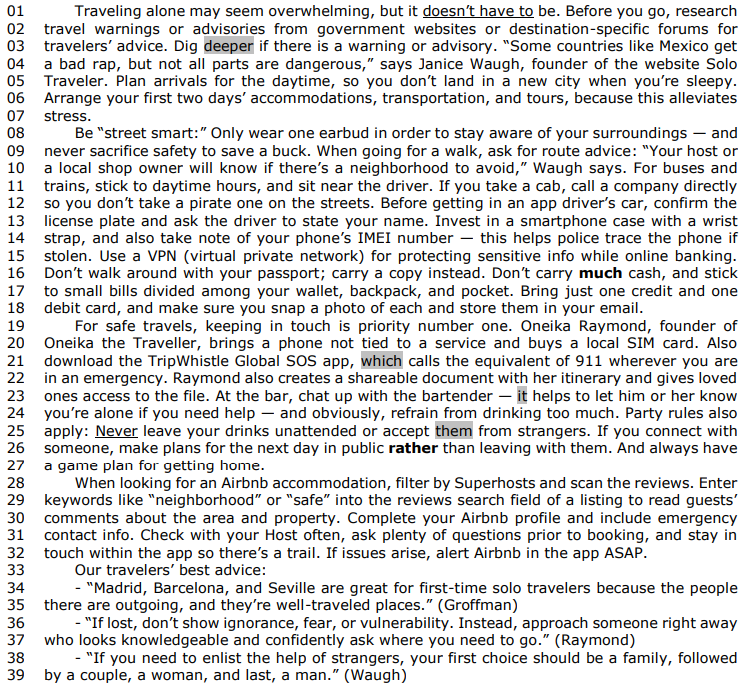


(Available at: https://news.airbnb.com/try-these-expert-tips-for-a-safer-solo-trip/ – text especially adapted for this text).
In which of the sentences below the word “rather” is used with the same meaning as in line 26? 
Alternativas
Q2209851 Inglês


Try these expert tips for a safer solo trip


(Available at: https://news.airbnb.com/try-these-expert-tips-for-a-safer-solo-trip/ – text especially adapted for this text).

In line 01 the author says “Traveling alone may seem overwhelming, but it doesn’t have to be”. Considering the context presented in the article, the underlined structure expresses a (an): 
Alternativas
Q2206474 Inglês
Text VIII 


From: https://slideplayer.com/slide/7593575/
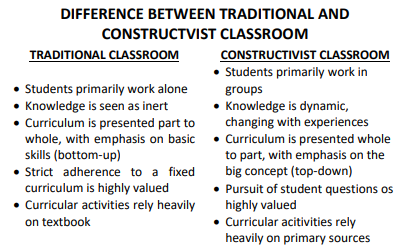
In “strict adherence”, the adjective that is similar to “strict” is
Alternativas
Q2206440 Inglês
Text I

What is “World Englishes?”

        The term World Englishes refers to the differences in the English language that emerge as it is used in various contexts across the world. Scholars of World Englishes identify the varieties of English used in different sociolinguistic contexts, analyzing their history, background, function, and influence.
       Languages develop to fulfill the needs of the societies that use them. Because societies contain a diverse range of social needs, and because these needs can differ across cultures and geographies, multiple varieties of the English language exist. These include American English, British English, Australian English, Canadian English, Indian English, and so on.
         While there is no single way for a new variety of English to emerge, its development can generally be described as a process of adaptation. A certain group of speakers take a familiar variety of English and adapt the features of that variety to suit the needs of their social context.
          For example, a store selling alcoholic beverages is called a “liquor store” in American English, whereas it is called an “offlicence” in British English. The latter term derives from British law, which distinguishes between businesses licensed to sell alcoholic beverages for consumption off the premises and those licensed for consumption at the point of sale (i.e., bars and pubs).
      Such variations do not occur in terms of word choice only. They happen also in terms of spelling, pronunciation, sentence structure, accent, and meaning. As new linguistic adaptations accumulate over time, a distinct variety of English eventually emerges.
       World Englishes scholars use a range of different criteria to recognize a new English variant as an established World English. These include the sociolinguistic context of its use, its range of functional domains, and the ease with which new speakers can become acculturated to it, among other criteria. 


Adapted from:
https://owl.purdue.edu/owl/multilingual/world_englishes/#:~:text=The%20term%2 0World%20Englishes%20refers,background%2C%20function%2C%20and%20influen ce.
The phrase “The latter term” in “The latter term derives from British law” (4th paragraph) is replacing
Alternativas
Q2206439 Inglês
Text I

What is “World Englishes?”

        The term World Englishes refers to the differences in the English language that emerge as it is used in various contexts across the world. Scholars of World Englishes identify the varieties of English used in different sociolinguistic contexts, analyzing their history, background, function, and influence.
       Languages develop to fulfill the needs of the societies that use them. Because societies contain a diverse range of social needs, and because these needs can differ across cultures and geographies, multiple varieties of the English language exist. These include American English, British English, Australian English, Canadian English, Indian English, and so on.
         While there is no single way for a new variety of English to emerge, its development can generally be described as a process of adaptation. A certain group of speakers take a familiar variety of English and adapt the features of that variety to suit the needs of their social context.
          For example, a store selling alcoholic beverages is called a “liquor store” in American English, whereas it is called an “offlicence” in British English. The latter term derives from British law, which distinguishes between businesses licensed to sell alcoholic beverages for consumption off the premises and those licensed for consumption at the point of sale (i.e., bars and pubs).
      Such variations do not occur in terms of word choice only. They happen also in terms of spelling, pronunciation, sentence structure, accent, and meaning. As new linguistic adaptations accumulate over time, a distinct variety of English eventually emerges.
       World Englishes scholars use a range of different criteria to recognize a new English variant as an established World English. These include the sociolinguistic context of its use, its range of functional domains, and the ease with which new speakers can become acculturated to it, among other criteria. 


Adapted from:
https://owl.purdue.edu/owl/multilingual/world_englishes/#:~:text=The%20term%2 0World%20Englishes%20refers,background%2C%20function%2C%20and%20influen ce.

The phrase “to suit the needs” (3rd paragraph) means that the needs will be
Alternativas
Q2206414 Inglês
The Latest Avatar 3

Adapted from the internet

     The latest Avatar 3 updates have confirmed that Captain Mick Scoresby (Brendan Cowell) will return for Avatar 3. This could spell either good news or bad for the next Avatar instalment, as his storyline was similar to Quaritch’s in that it was presumed he bit the dust, only to come back for another sequel. In addition, Zoe Saldana recently gave a filming update while speaking to Entertainment Tonight. While director James Cameron had stated that filming is nearly done for Avatar 3 back in 2020, Saldana reported to ET that the crew was going back to film for the summer, and that the process was “70% done there”.
      That being said, conflicting Avatar 3 updates come from a Q&A session with producer John Landau, who said that Avatar 3 and the first act of Avatar 4 were filmed simultaneously with Avatar 2. Either way, the consensus is the sequel is nearly done with the filming process. In the same Q&A, Landau revealed that Avatar 3 will introduce two new Na’vi cultures. "But we're going to meet at least two new clans in the next movie, culturally, and go on and on as we continue that," Landau said. Likely one of these new cultures will be the fire Na’vi, of which Oona Chaplin's Varang will be a part of.
       In addition, other Avatar 3 updates have confirmed two major character returns. The first is that of Avatar: The Way of Water's breakout character Payakan, the gentle and intelligent Tulkun. In an interview with The Wrap, Landau confirmed that Payakan would be back for Avatar 3, saying, "I always viewed Payakan a little bit like Lassie. And I would say this is a story like a boy and his dog, and they’re both outcasts, and they need each other." In the same interview, Landau also stated that the Avatar secondary villain Parker Selfridge (Giovanni Ribisi), who was absent for the sequel, would come back in a major way for Avatar 3. 
“each other”, underlined in the text (paragraph 3), can be replaced by _____________ without any changing of meaning. 
Alternativas
Q2206413 Inglês
The Latest Avatar 3

Adapted from the internet

     The latest Avatar 3 updates have confirmed that Captain Mick Scoresby (Brendan Cowell) will return for Avatar 3. This could spell either good news or bad for the next Avatar instalment, as his storyline was similar to Quaritch’s in that it was presumed he bit the dust, only to come back for another sequel. In addition, Zoe Saldana recently gave a filming update while speaking to Entertainment Tonight. While director James Cameron had stated that filming is nearly done for Avatar 3 back in 2020, Saldana reported to ET that the crew was going back to film for the summer, and that the process was “70% done there”.
      That being said, conflicting Avatar 3 updates come from a Q&A session with producer John Landau, who said that Avatar 3 and the first act of Avatar 4 were filmed simultaneously with Avatar 2. Either way, the consensus is the sequel is nearly done with the filming process. In the same Q&A, Landau revealed that Avatar 3 will introduce two new Na’vi cultures. "But we're going to meet at least two new clans in the next movie, culturally, and go on and on as we continue that," Landau said. Likely one of these new cultures will be the fire Na’vi, of which Oona Chaplin's Varang will be a part of.
       In addition, other Avatar 3 updates have confirmed two major character returns. The first is that of Avatar: The Way of Water's breakout character Payakan, the gentle and intelligent Tulkun. In an interview with The Wrap, Landau confirmed that Payakan would be back for Avatar 3, saying, "I always viewed Payakan a little bit like Lassie. And I would say this is a story like a boy and his dog, and they’re both outcasts, and they need each other." In the same interview, Landau also stated that the Avatar secondary villain Parker Selfridge (Giovanni Ribisi), who was absent for the sequel, would come back in a major way for Avatar 3. 
“In addition”, underlined in the text (paragraph 3), can be replaced by _____________ without any changing of meaning.
Alternativas
Q2204979 Inglês


From: https://www.glasbergen.com/teen-cartoons/

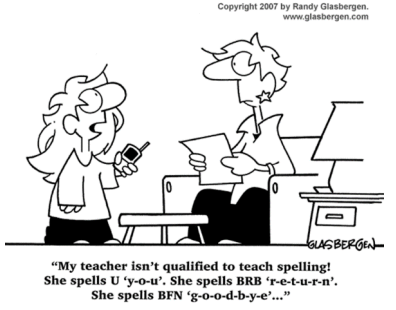
The verb “to return” is similar in meaning to
Alternativas
Q2204967 Inglês
Discover” is to “Discovery” as
Alternativas
Q2204966 Inglês
The verb “assisting” can be replaced without change in meaning by
Alternativas
Q2204961 Inglês
Text I

What is English as a Lingua Franca?

      ‘English’, as a language, has for some time been seen as a global phenomenon and, therefore, as no longer defined by fixed territorial, cultural and social functions. At the same time, people using English around the world have been shaping it and adapting it to their contexts of use and have made it relevant to their socio-cultural settings. English as a Lingua Franca, or ELF for short, is a field of research interest that was born out of this tension between the global and the local, and it originally began as a ramification of the World Englishes framework in order to address the international, or, rather, transnational perspective on English in the world. The field of ELF very quickly took on a nature of its own in its attempt to address the communication, attitudes, ideologies in transnational contexts, which go beyond the national categorisations of World Englishes (such as descriptions of Nigerian English, Malaysian English and other national varieties). ELF research, therefore, has built on World Englishes research by focusing on the diversity of English, albeit from more transnational, intercultural and multilingual perspectives.
      ELF is an intercultural medium of communication used among people from different socio-cultural and linguistic backgrounds, and usually among people from different first languages. Although it is possible that many people who use ELF have learnt it formally as a foreign language, at school or in an educational institution, the emphasis is on using rather than on learning. And this is a fundamental difference between ELF and English as a Foreign Language, or EFL, whereby people learn English to assimilate to or emulate native speakers. In ELF, instead, speakers are considered language users in their own right, and not failed native speakers or deficient learners of English. Some examples of typical ELF contexts may include communication among a group of neuroscientists, from, say, Belgium, Brazil and Russia, at an international conference on neuroscience, discussing their work in English, or an international call concerning a business project between Chinese and German business experts, or a group of migrants from Syria, Ethiopia and Iraq discussing their migration documents and requirements in English. The use of English will of course depend on the linguistic profile of the participants in these contexts, and they may have another common language at their disposal (other than English), but today ELF is the most common medium of intercultural communication, especially in transnational contexts.
        So, research in ELF pertains to roughly the same area of research as English as a contact language and English sociolinguistics. However, the initial impetus to conducting research in ELF originated from a pedagogical rationale – it seemed irrelevant and unrealistic to expect learners of English around the world to conform to native norms, British or American, or even to new English national varieties, which would be only suitable to certain socio-cultural and geographical locations. So, people from Brazil, France, Russia, Mozambique, or others around the world, would not need to acquire the norms originated and relevant to British or American English speakers, but could orientate themselves towards more appropriate and relevant ways of using English, or ELF. Researchers called for “closing a conceptual gap” between descriptions of native English varieties and new empirical and analytical approaches to English in the world. With the compilation of a number of corpora, ELF empirical research started to explore how English is developing, emerging and changing in its international uses around the world. Since the empirical corpus work started, research has expanded beyond the pedagogical aim, to include explorations of communication in different domains of expertise (professional, academic, etc.) and in relation to other concepts and research, such as culture, ideology and identity.

Adapted from https://www.gold.ac.uk/glits-e/ back-issues/english-as-a-lingua-franca/

Emulate” in “emulate native speakers” (2nd paragraph) is a synonym of 
Alternativas
Q2204960 Inglês
Text I

What is English as a Lingua Franca?

      ‘English’, as a language, has for some time been seen as a global phenomenon and, therefore, as no longer defined by fixed territorial, cultural and social functions. At the same time, people using English around the world have been shaping it and adapting it to their contexts of use and have made it relevant to their socio-cultural settings. English as a Lingua Franca, or ELF for short, is a field of research interest that was born out of this tension between the global and the local, and it originally began as a ramification of the World Englishes framework in order to address the international, or, rather, transnational perspective on English in the world. The field of ELF very quickly took on a nature of its own in its attempt to address the communication, attitudes, ideologies in transnational contexts, which go beyond the national categorisations of World Englishes (such as descriptions of Nigerian English, Malaysian English and other national varieties). ELF research, therefore, has built on World Englishes research by focusing on the diversity of English, albeit from more transnational, intercultural and multilingual perspectives.
      ELF is an intercultural medium of communication used among people from different socio-cultural and linguistic backgrounds, and usually among people from different first languages. Although it is possible that many people who use ELF have learnt it formally as a foreign language, at school or in an educational institution, the emphasis is on using rather than on learning. And this is a fundamental difference between ELF and English as a Foreign Language, or EFL, whereby people learn English to assimilate to or emulate native speakers. In ELF, instead, speakers are considered language users in their own right, and not failed native speakers or deficient learners of English. Some examples of typical ELF contexts may include communication among a group of neuroscientists, from, say, Belgium, Brazil and Russia, at an international conference on neuroscience, discussing their work in English, or an international call concerning a business project between Chinese and German business experts, or a group of migrants from Syria, Ethiopia and Iraq discussing their migration documents and requirements in English. The use of English will of course depend on the linguistic profile of the participants in these contexts, and they may have another common language at their disposal (other than English), but today ELF is the most common medium of intercultural communication, especially in transnational contexts.
        So, research in ELF pertains to roughly the same area of research as English as a contact language and English sociolinguistics. However, the initial impetus to conducting research in ELF originated from a pedagogical rationale – it seemed irrelevant and unrealistic to expect learners of English around the world to conform to native norms, British or American, or even to new English national varieties, which would be only suitable to certain socio-cultural and geographical locations. So, people from Brazil, France, Russia, Mozambique, or others around the world, would not need to acquire the norms originated and relevant to British or American English speakers, but could orientate themselves towards more appropriate and relevant ways of using English, or ELF. Researchers called for “closing a conceptual gap” between descriptions of native English varieties and new empirical and analytical approaches to English in the world. With the compilation of a number of corpora, ELF empirical research started to explore how English is developing, emerging and changing in its international uses around the world. Since the empirical corpus work started, research has expanded beyond the pedagogical aim, to include explorations of communication in different domains of expertise (professional, academic, etc.) and in relation to other concepts and research, such as culture, ideology and identity.

Adapted from https://www.gold.ac.uk/glits-e/ back-issues/english-as-a-lingua-franca/

Instead” in “In ELF, instead, speakers are considered language users” (2nd paragraph) can be replaced without change of meaning by 
Alternativas
Q2204959 Inglês
Text I

What is English as a Lingua Franca?

      ‘English’, as a language, has for some time been seen as a global phenomenon and, therefore, as no longer defined by fixed territorial, cultural and social functions. At the same time, people using English around the world have been shaping it and adapting it to their contexts of use and have made it relevant to their socio-cultural settings. English as a Lingua Franca, or ELF for short, is a field of research interest that was born out of this tension between the global and the local, and it originally began as a ramification of the World Englishes framework in order to address the international, or, rather, transnational perspective on English in the world. The field of ELF very quickly took on a nature of its own in its attempt to address the communication, attitudes, ideologies in transnational contexts, which go beyond the national categorisations of World Englishes (such as descriptions of Nigerian English, Malaysian English and other national varieties). ELF research, therefore, has built on World Englishes research by focusing on the diversity of English, albeit from more transnational, intercultural and multilingual perspectives.
      ELF is an intercultural medium of communication used among people from different socio-cultural and linguistic backgrounds, and usually among people from different first languages. Although it is possible that many people who use ELF have learnt it formally as a foreign language, at school or in an educational institution, the emphasis is on using rather than on learning. And this is a fundamental difference between ELF and English as a Foreign Language, or EFL, whereby people learn English to assimilate to or emulate native speakers. In ELF, instead, speakers are considered language users in their own right, and not failed native speakers or deficient learners of English. Some examples of typical ELF contexts may include communication among a group of neuroscientists, from, say, Belgium, Brazil and Russia, at an international conference on neuroscience, discussing their work in English, or an international call concerning a business project between Chinese and German business experts, or a group of migrants from Syria, Ethiopia and Iraq discussing their migration documents and requirements in English. The use of English will of course depend on the linguistic profile of the participants in these contexts, and they may have another common language at their disposal (other than English), but today ELF is the most common medium of intercultural communication, especially in transnational contexts.
        So, research in ELF pertains to roughly the same area of research as English as a contact language and English sociolinguistics. However, the initial impetus to conducting research in ELF originated from a pedagogical rationale – it seemed irrelevant and unrealistic to expect learners of English around the world to conform to native norms, British or American, or even to new English national varieties, which would be only suitable to certain socio-cultural and geographical locations. So, people from Brazil, France, Russia, Mozambique, or others around the world, would not need to acquire the norms originated and relevant to British or American English speakers, but could orientate themselves towards more appropriate and relevant ways of using English, or ELF. Researchers called for “closing a conceptual gap” between descriptions of native English varieties and new empirical and analytical approaches to English in the world. With the compilation of a number of corpora, ELF empirical research started to explore how English is developing, emerging and changing in its international uses around the world. Since the empirical corpus work started, research has expanded beyond the pedagogical aim, to include explorations of communication in different domains of expertise (professional, academic, etc.) and in relation to other concepts and research, such as culture, ideology and identity.

Adapted from https://www.gold.ac.uk/glits-e/ back-issues/english-as-a-lingua-franca/

In the 1st paragraph, “in order to address” indicates
Alternativas
Q2201495 Inglês

Text 2 – Computers

(Text adapted from History of Computing. Retrieved from

https://www.cs.utexas.edu/~mitra/csFall2006/cs 303/lectures/history.html)


When you hear the term computers, it’s difficult to imagine different devices from a laptop or a small desktop. Believe it or not, they weren’t always like they are today. They used to be very large and heavy, sometimes as big as an entire room. Some technology professors historically define computers, as “a device that can help with computations”. The word computation involves counting, calculating, adding, subtracting, etc. The modern definition of a computer is a little wider, because in our day and age, computers store, compile, analyze and compute an enormous amount of information. Ancient computers were very interesting. Actually, the first computer may have been located in Great Britain, at Stonehenge. It is a man-made circle of large stones. Citizens used it to measure the weather and forecast the change of seasons. Some specialists say that another ancient computer is the abacus. It was used by the early Romans, Greeks, and Egyptians to count and calculate. Even though they are no longer in use, certainly, these early devices are fascinating. Computers are embedded in our history and some people say that we are completely dependent of them. No matter the complexity of the task, easy or difficult, some people can’t do anything without them. Do you contest or share this opinion? 

The word “located”, highlighted in the text, has a meaning equivalent to one of the following alternatives, check it.
Alternativas
Q2200706 Inglês
Why Easter is bad for ducks

      On Christmas Eve, two Pekin ducks were found frozen to a pond in Smithville, Ohio. They flapped their wings and squawked, fruitlessly struggling to free themselves until two locals, Maiara and Helder Bertolucci, spotted them. The pair slid on their stomachs over razor-thin ice and chiseled the animals free.
       The rescued ducks—later named Olaf and Elsa, after characters from Disney’s Frozen—were two of 109 domestic ducks abandoned in a pond outside of a restaurant. A local group ________ Good Sprout Rescue and Sanctuary rescued the animals; two died, but the rest were rehomed to sanctuaries or adopted. Every spring, the Barn Restaurant would buy a hundred new babies for its patrons to enjoy— but since this incident they’ve __________ not to do so again.
         Every year in springtime, particularly at Easter, many people “impulse buy” ducklings as gifts, often for their kids. But after the holiday, sometimes months later, animal rescuers routinely see an uptick in abandoned adult ducks in local parks and ponds, Di Leonardo says. There’s no ________ data on how often this happens, but he estimates tens of thousands of domestic ducks are dumped each year throughout the U.S. His organization rescues as many as 500 ducks per year in the New York City area alone.
Fonte: (National Geographic – adaptado.)
In “[…] domestic ducks are dumped each year throughout the U.S.”, the underlined word can be substituted, without loss of meaning, by:
Alternativas
Q2184934 Inglês
Text: The importance of the PowerPoint as a classroom resource
(Text adapted from Teachers: 5 Tips for Creating Great PowerPoint Presentations, retrieved

   PowerPoint is a resource developed by Microsoft and released initially in 1990. It is mainly used in professional meeting presentations all over the world.
    One of these professions is in educational area: teacher.
    PowerPoint presentation is spread among teachers because it is different from lecturing or teaching with a textbook; it is also a way of sharing content with students.
    To produce a PowerPoint correctly, teachers need to know how to put the slides together, it can be an effective way of reinforcing content to students so that they are better able to retain it. Otherwise, teachers can print and distribute the PowerPoint presentation or post it online, so students can go back and access it as reference material. However, if it is not put together correctly, a PowerPoint presentation can disengage and make students bored.
   To develop PowerPoint presentation is simple and it can also provide a fun time noticed by its characteristics: basic, simple, and not distracting, it can be focused on keywords; for instance, always be sure to include a summary slide of what the presentation is intending to accomplish as well as a table of contents on the different topics that will be covered in the program. The summary slide serves as the main topic and what students should learn after viewing the presentation. Then, at the end of the PowerPoint presentation, teachers should include another summary slide, going over everything that was just covered and, again, highlighting the main point.

Bottom line
    PowerPoint presentations need to have a purpose and the teacher must make sure that the purpose is understood.

Add pictures
    Teachers can reinforce the content with pictures, charts, symbols, and other images. In fact, sometimes it’s better to have more pictures than text in a PowerPoint presentation, because images work to reinforce a content main point.
     Teachers typically will just share it with their classes, so they can pull images straight from the Internet. However, for teachers who are making more public and widespread presentations, copyright law needs to be considered (Brazil Information Access Law nº 12.527; Art. 31; paragraph 3; item II). 

Add video
      Pictures can help to reinforce a main point or support content, as well as videos. Some research affirm that students enjoy watching videos and retain information from them well, especially if the video is engaging, interesting and informative. Teachers can embed videos right from YouTube or from their desktops to complement a PowerPoint presentation.

Practice
      Nothing turns off a class like a poorly put together PowerPoint presentation, so teachers should always be sure to do a quick rehearsal before they present it to the class. While testing it, make sure all the images load up on the slides, videos load up properly and audio works, too. Also, it’s important for teachers to make sure that there’s a way to connect their computer, or upload anything that’s storing the PowerPoint presentation, to a larger TV monitor or projector screen so the whole class does not have to huddle around a computer screen to view it. Teachers should also make sure that any text can be read and understood. Be sure that the color scheme is good.

Make it fun
    A PowerPoint presentation can be an innovative way of teaching. It’s a more interesting and engaging way for students to learn than the typical lecture. Teachers should embrace this teaching resource and have fun with it. Throw in some jokes, possibly some funny pictures and be sure to get creative with presentations.

      As we previously noted, the more students enjoy a lecture, presentation, or activity, the more likely they are to retain information. 
Read the following fragment and choose the alternative that best replaces the highlighted words, respectively:
“However, if it is not put together correctly, a PowerPoint presentation can disengage and make students bored.” 
Alternativas
Q2184929 Inglês
Text: The importance of the PowerPoint as a classroom resource
(Text adapted from Teachers: 5 Tips for Creating Great PowerPoint Presentations, retrieved

   PowerPoint is a resource developed by Microsoft and released initially in 1990. It is mainly used in professional meeting presentations all over the world.
    One of these professions is in educational area: teacher.
    PowerPoint presentation is spread among teachers because it is different from lecturing or teaching with a textbook; it is also a way of sharing content with students.
    To produce a PowerPoint correctly, teachers need to know how to put the slides together, it can be an effective way of reinforcing content to students so that they are better able to retain it. Otherwise, teachers can print and distribute the PowerPoint presentation or post it online, so students can go back and access it as reference material. However, if it is not put together correctly, a PowerPoint presentation can disengage and make students bored.
   To develop PowerPoint presentation is simple and it can also provide a fun time noticed by its characteristics: basic, simple, and not distracting, it can be focused on keywords; for instance, always be sure to include a summary slide of what the presentation is intending to accomplish as well as a table of contents on the different topics that will be covered in the program. The summary slide serves as the main topic and what students should learn after viewing the presentation. Then, at the end of the PowerPoint presentation, teachers should include another summary slide, going over everything that was just covered and, again, highlighting the main point.

Bottom line
    PowerPoint presentations need to have a purpose and the teacher must make sure that the purpose is understood.

Add pictures
    Teachers can reinforce the content with pictures, charts, symbols, and other images. In fact, sometimes it’s better to have more pictures than text in a PowerPoint presentation, because images work to reinforce a content main point.
     Teachers typically will just share it with their classes, so they can pull images straight from the Internet. However, for teachers who are making more public and widespread presentations, copyright law needs to be considered (Brazil Information Access Law nº 12.527; Art. 31; paragraph 3; item II). 

Add video
      Pictures can help to reinforce a main point or support content, as well as videos. Some research affirm that students enjoy watching videos and retain information from them well, especially if the video is engaging, interesting and informative. Teachers can embed videos right from YouTube or from their desktops to complement a PowerPoint presentation.

Practice
      Nothing turns off a class like a poorly put together PowerPoint presentation, so teachers should always be sure to do a quick rehearsal before they present it to the class. While testing it, make sure all the images load up on the slides, videos load up properly and audio works, too. Also, it’s important for teachers to make sure that there’s a way to connect their computer, or upload anything that’s storing the PowerPoint presentation, to a larger TV monitor or projector screen so the whole class does not have to huddle around a computer screen to view it. Teachers should also make sure that any text can be read and understood. Be sure that the color scheme is good.

Make it fun
    A PowerPoint presentation can be an innovative way of teaching. It’s a more interesting and engaging way for students to learn than the typical lecture. Teachers should embrace this teaching resource and have fun with it. Throw in some jokes, possibly some funny pictures and be sure to get creative with presentations.

      As we previously noted, the more students enjoy a lecture, presentation, or activity, the more likely they are to retain information. 
Read this fragment: “Nothing turns off a class like a poorly put together PowerPoint presentation”, about the vocabulary, tick the alternative with the synonym of the highlighted expression.
Alternativas
Respostas
361: A
362: A
363: E
364: C
365: E
366: B
367: A
368: B
369: A
370: D
371: C
372: A
373: B
374: A
375: E
376: C
377: C
378: C
379: A
380: C