Questões de Concurso Sobre inglês
Foram encontradas 25.425 questões


4 Types of Deceptive Advertising
By Apryl Duncan
Deceptive advertising is officially defined
by the Federal Trade Commission (FTC) as “practices that have been found
misleading or deceptive. Specific cases include false oral or written
representations, misleading price claims, sales of hazardous or systematically
defective products or services without adequate disclosures, failure to
disclose information regarding pyramid sales, use of bait and switch
techniques, failure to perform promised services, and failure to meet warranty
obligations.

However, it’s important to note that deceptive advertising does not represent the entire industry, and makes up a very small percentage of the ads you will encounter every day. But there are always people out there looking to dupe consumers and make money in any way that they can. Here are some examples of deceptive and unethical advertising practices and scams that you need to look out for.
Often, hidden fees can be spotted by the asterisk (*) that accompanies the incredible deal. Guaranteed, there will be a big difference between “Only $99!” and “Only $99!*” That asterisk basically says “hey, this is not the final price, you will have to jump through major hoops or fork over a lot more cash.” So, if you see an asterisk, read the small print carefully. Whether it’s a small item, a car, or even a home, hidden fees are a deceptive way of luring you in. By the time you realize there’s more to pay, it can be too late.
For instance, suddenly the laptop you wanted is not in stock, but there is a different one that is lower spec and costs twice as much. Chances are that the original laptop was never in stock, or at least, not for the price advertised.
Another example would be advertising a car at the base price, but with all of the top-of-the-line features included in the ad. When you get to the dealership, you have to pay much more to get the car actually shown in the ad. Sometimes, an offer can feel like bait and switch but it’s not. If you want that laptop and it is sold out, but you are offered a similar laptop with a very similar spec, at an almost identical price, that’s perfectly fine. You just missed out on the original deal.
At no time do the hustlers break the law by making claims that are untrue, but the verbiage leads people to believe they are buying something way better than they’re actually getting. One of the cruelest was advertising a DIY model plane for a price that seemed like a steal. Things like “easy to assemble” and “it really flies” were on the box. But inside... it was just a blank sheet of paper, with a set of instructions on how to make a paper plane. Did they break the law? No. Did they deceive? Yes.
Food photography can suffer from the “best case scenario” photography. If you have ever ordered a burger from a fast food place, you will know this well. The burger on the menu is perfect. It’s thick, juicy, 4 inches high, and looks incredible. But the burger you receive, while it may have the same ingredients, is a sad interpretation of that image. The bun is flat, the burger is a mess, ketchup and mustard are pouring out of the sides.
This is something we accept as consumers because we know the burger in the photograph was assembled by expert designers and food artists, over the course of many hours, whereas the poor kitchen hand has to throw your burger together in a few seconds to meet your time demands. But, don’t take that to mean you can never complain about this kind of photography. If you buy something that is clearly of poorer quality than the item shown in the picture, you can demand a refund.(Adapted from www.thebalancecareers.com, February 02, 2019)
4 Types of Deceptive Advertising
By Apryl Duncan
Deceptive advertising is officially defined
by the Federal Trade Commission (FTC) as “practices that have been found
misleading or deceptive. Specific cases include false oral or written
representations, misleading price claims, sales of hazardous or systematically
defective products or services without adequate disclosures, failure to
disclose information regarding pyramid sales, use of bait and switch
techniques, failure to perform promised services, and failure to meet warranty
obligations.
However, it’s important to note that deceptive advertising does not represent the entire industry, and makes up a very small percentage of the ads you will encounter every day. But there are always people out there looking to dupe consumers and make money in any way that they can. Here are some examples of deceptive and unethical advertising practices and scams that you need to look out for.
Often, hidden fees can be spotted by the asterisk (*) that accompanies the incredible deal. Guaranteed, there will be a big difference between “Only $99!” and “Only $99!*” That asterisk basically says “hey, this is not the final price, you will have to jump through major hoops or fork over a lot more cash.” So, if you see an asterisk, read the small print carefully. Whether it’s a small item, a car, or even a home, hidden fees are a deceptive way of luring you in. By the time you realize there’s more to pay, it can be too late.
For instance, suddenly the laptop you wanted is not in stock, but there is a different one that is lower spec and costs twice as much. Chances are that the original laptop was never in stock, or at least, not for the price advertised.
Another example would be advertising a car at the base price, but with all of the top-of-the-line features included in the ad. When you get to the dealership, you have to pay much more to get the car actually shown in the ad. Sometimes, an offer can feel like bait and switch but it’s not. If you want that laptop and it is sold out, but you are offered a similar laptop with a very similar spec, at an almost identical price, that’s perfectly fine. You just missed out on the original deal.
At no time do the hustlers break the law by making claims that are untrue, but the verbiage leads people to believe they are buying something way better than they’re actually getting. One of the cruelest was advertising a DIY model plane for a price that seemed like a steal. Things like “easy to assemble” and “it really flies” were on the box. But inside... it was just a blank sheet of paper, with a set of instructions on how to make a paper plane. Did they break the law? No. Did they deceive? Yes.
Food photography can suffer from the “best case scenario” photography. If you have ever ordered a burger from a fast food place, you will know this well. The burger on the menu is perfect. It’s thick, juicy, 4 inches high, and looks incredible. But the burger you receive, while it may have the same ingredients, is a sad interpretation of that image. The bun is flat, the burger is a mess, ketchup and mustard are pouring out of the sides.
This is something we accept as consumers because we know the burger in the photograph was assembled by expert designers and food artists, over the course of many hours, whereas the poor kitchen hand has to throw your burger together in a few seconds to meet your time demands. But, don’t take that to mean you can never complain about this kind of photography. If you buy something that is clearly of poorer quality than the item shown in the picture, you can demand a refund.(Adapted from www.thebalancecareers.com, February 02, 2019)

Yesterday misunderstands what made the Beatles so popular
By Noah Berlatsky
The film Yesterday has an intriguing premise: What if the Beatles never existed? Unsuccessful, moderately talented singersongwriter Jack Malik wakes up one day and is the only one who remembers the Beatles’ songs. Suddenly he can pose as the creator of the greatest music ever written. As a result, he quickly becomes a worldrenowned superstar.
Jack is successful because the Beatles’ songs, removed from their original context, still maintain the universal, instant appeal that has canonized them in our non-fictional world, offscreen. Label execs, other musicians, and huge numbers of fans are all won over by “Jack’s” music; Even decades after the Soviet Union disintegrated, “Back in the USSR” still rocks people’s world.
But would “Back in the USSR” really be an automatic, surefire hit if it were released today, into a music scene whose interests have evolved far beyond the Beatles? Is quality in the arts so transcendent that it can overcome all differences of era, culture, and happenstance? Is music a meritocracy — an art form that privileges natural talent over everything else?
There’s good reason to believe that the answer to all three of those questions is no. Wonderful songs aren’t always hits; talented musicians don’t always achieve success commensurate with their abilities. And sometimes a twist of fate lands the less talented in a position to reap massive rewards.
We tend to expect that good things don’t always come to the most deserving people. Sometimes the most successful people get that way because they’re in the right place at the right time, or know the right people, or were even born into it. And art is no exception.
There’s research to back up the notion that fame and fortune come from more than pure talent. Sociologists Matthew Salganik of Princeton and Duncan Watts of Microsoft have conducted a number of studies to determine what makes a song popular. They discovered that when someone approaches a song knowing only that it’s popular and well-liked within the cultural mass, that person is more inclined to come away liking the song too. This can create a ripple effect, with songs becoming more and more popular because they already are popular. Salganik and Watts’s research suggests that the more visible something is the more highly regarded it is, and the more popular it is likely to become.
Social influence has a powerful effect on which songs become popular. As art is a form of communication we often share and experience socially, it makes sense that we like art that we believe will connect us to others.
Our instincts to spread what we like, and to like what others like, mean that what seem like small advantages for a song — perhaps a well-placed promo on Spotify, or appearing on the soundtrack of a Netflix show — can lead to a big chart presence. A good review at the right time or being used in a viral meme on a slow news day could help more people discover a song just out of happenstance. Songs that get an initial bump can ride that wave, so more people seek them out, buy them, and boost their popularity. This cycle can lead to one song, good or not, becoming a hit, while another disappears into obscurity.
The Beatles were very good by most qualitative metrics. But the band’s quantitative achievements don’t mean they are indisputably the most meritorious musicians of all time, or even of their day. More likely, the band also managed to be in the right place at the right time, on top of everything else.
Western racial inequalities also stymied many homegrown artists. Influential African American singers and girl groups like the Shirelles didn’t have much opportunity to turn their Billboard hits into widespread celebrity and lasting cultural recognition. Paul McCartney and John Lennon are household names, but there aren’t many casual music fans who know the name of the Shirelles’ lead singer, Shirley Owens.
The Beatles were white, male English speakers who were able to tour and didn’t die young. But they had other advantages as well. Perhaps most obviously, they were working in a genre that was broadly popular.
By contrast, today’s most popular music is split between contemporary hip-hop and dance music that relies on synthesizers, electronics, and myriad crossgenre references. Pure rock ’n’ roll, built on a simple four-person setup of guitar, bass, drums, and vocals, is no longer the dominant genre. ”If a Beatles song came out today, it would sound dated,” Charlie Harding, host of Vox’s Switched on Pop podcast, told me. “There are hardly any synthesizers. It’s all live drumming. Plus, so much of their music is blues-based, and blues-based music just isn’t popular right now.”
At their height, the Beatles famously pushed boundaries in the studio, creating psychedelic effects and soundscapes that no one at the time had ever heard before. But that’s old hat in 2019. You can do all of what the Beatles did and more in your room with a laptop, at least technically speaking.
Sure, it’s fun to think, as Yesterday does, that our love for the Beatles is universal, true, and incontrovertible. Where’s the harm in that?
The problem is that people often don’t see the myth of meritocracy as a myth; they really believe in it. And when they do, it can have some unfortunate effects. The myth of meritocracy can make us less willing to invest in the collective good.
If we convince ourselves that talented artists like the Beatles will be successful no matter what, we can also convince ourselves that we don’t really need to provide people with safety nets or resources. After all, the best will win out anyway. Why invest in school arts programs, or fund arts grants, if great musicians will be just fine on their own?
The Beatles made wonderful, undoubtedly influential art. But if Yesterday weren’t so hypnotized by the supposedly unmatchable quality of the Beatles’ music, it might be able to see that there are great songs being written by people like Jack Malik too. The film believes that songs like “Yesterday” are just so good, they would become mega-popular under any circumstances. And yet many people who think “Yesterday” is the best song ever have been inevitably swayed by the Beatles’ popularity and legacy, the song’s quality aside.
Maybe instead, the best song ever is one we haven’t heard yet; maybe it’s the one you’re going to write. Part of what happens when we abandon the myth of meritocracy is that we’re better able to see the merit all around us. And that gives everyone a greater chance at success.
(adapted from https://www.vox.com, Jun 29, 2019)
Yesterday misunderstands what made the Beatles so popular
By Noah Berlatsky
The film Yesterday has an intriguing premise: What if the Beatles never existed? Unsuccessful, moderately talented singersongwriter Jack Malik wakes up one day and is the only one who remembers the Beatles’ songs. Suddenly he can pose as the creator of the greatest music ever written. As a result, he quickly becomes a worldrenowned superstar.
Jack is successful because the Beatles’ songs, removed from their original context, still maintain the universal, instant appeal that has canonized them in our non-fictional world, offscreen. Label execs, other musicians, and huge numbers of fans are all won over by “Jack’s” music; Even decades after the Soviet Union disintegrated, “Back in the USSR” still rocks people’s world.
But would “Back in the USSR” really be an automatic, surefire hit if it were released today, into a music scene whose interests have evolved far beyond the Beatles? Is quality in the arts so transcendent that it can overcome all differences of era, culture, and happenstance? Is music a meritocracy — an art form that privileges natural talent over everything else?
There’s good reason to believe that the answer to all three of those questions is no. Wonderful songs aren’t always hits; talented musicians don’t always achieve success commensurate with their abilities. And sometimes a twist of fate lands the less talented in a position to reap massive rewards.
We tend to expect that good things don’t always come to the most deserving people. Sometimes the most successful people get that way because they’re in the right place at the right time, or know the right people, or were even born into it. And art is no exception.
There’s research to back up the notion that fame and fortune come from more than pure talent. Sociologists Matthew Salganik of Princeton and Duncan Watts of Microsoft have conducted a number of studies to determine what makes a song popular. They discovered that when someone approaches a song knowing only that it’s popular and well-liked within the cultural mass, that person is more inclined to come away liking the song too. This can create a ripple effect, with songs becoming more and more popular because they already are popular. Salganik and Watts’s research suggests that the more visible something is the more highly regarded it is, and the more popular it is likely to become.
Social influence has a powerful effect on which songs become popular. As art is a form of communication we often share and experience socially, it makes sense that we like art that we believe will connect us to others.
Our instincts to spread what we like, and to like what others like, mean that what seem like small advantages for a song — perhaps a well-placed promo on Spotify, or appearing on the soundtrack of a Netflix show — can lead to a big chart presence. A good review at the right time or being used in a viral meme on a slow news day could help more people discover a song just out of happenstance. Songs that get an initial bump can ride that wave, so more people seek them out, buy them, and boost their popularity. This cycle can lead to one song, good or not, becoming a hit, while another disappears into obscurity.
The Beatles were very good by most qualitative metrics. But the band’s quantitative achievements don’t mean they are indisputably the most meritorious musicians of all time, or even of their day. More likely, the band also managed to be in the right place at the right time, on top of everything else.
Western racial inequalities also stymied many homegrown artists. Influential African American singers and girl groups like the Shirelles didn’t have much opportunity to turn their Billboard hits into widespread celebrity and lasting cultural recognition. Paul McCartney and John Lennon are household names, but there aren’t many casual music fans who know the name of the Shirelles’ lead singer, Shirley Owens.
The Beatles were white, male English speakers who were able to tour and didn’t die young. But they had other advantages as well. Perhaps most obviously, they were working in a genre that was broadly popular.
By contrast, today’s most popular music is split between contemporary hip-hop and dance music that relies on synthesizers, electronics, and myriad crossgenre references. Pure rock ’n’ roll, built on a simple four-person setup of guitar, bass, drums, and vocals, is no longer the dominant genre. ”If a Beatles song came out today, it would sound dated,” Charlie Harding, host of Vox’s Switched on Pop podcast, told me. “There are hardly any synthesizers. It’s all live drumming. Plus, so much of their music is blues-based, and blues-based music just isn’t popular right now.”
At their height, the Beatles famously pushed boundaries in the studio, creating psychedelic effects and soundscapes that no one at the time had ever heard before. But that’s old hat in 2019. You can do all of what the Beatles did and more in your room with a laptop, at least technically speaking.
Sure, it’s fun to think, as Yesterday does, that our love for the Beatles is universal, true, and incontrovertible. Where’s the harm in that?
The problem is that people often don’t see the myth of meritocracy as a myth; they really believe in it. And when they do, it can have some unfortunate effects. The myth of meritocracy can make us less willing to invest in the collective good.
If we convince ourselves that talented artists like the Beatles will be successful no matter what, we can also convince ourselves that we don’t really need to provide people with safety nets or resources. After all, the best will win out anyway. Why invest in school arts programs, or fund arts grants, if great musicians will be just fine on their own?
The Beatles made wonderful, undoubtedly influential art. But if Yesterday weren’t so hypnotized by the supposedly unmatchable quality of the Beatles’ music, it might be able to see that there are great songs being written by people like Jack Malik too. The film believes that songs like “Yesterday” are just so good, they would become mega-popular under any circumstances. And yet many people who think “Yesterday” is the best song ever have been inevitably swayed by the Beatles’ popularity and legacy, the song’s quality aside.
Maybe instead, the best song ever is one we haven’t heard yet; maybe it’s the one you’re going to write. Part of what happens when we abandon the myth of meritocracy is that we’re better able to see the merit all around us. And that gives everyone a greater chance at success.
(adapted from https://www.vox.com, Jun 29, 2019)
Yesterday misunderstands what made the Beatles so popular
By Noah Berlatsky
The film Yesterday has an intriguing premise: What if the Beatles never existed? Unsuccessful, moderately talented singersongwriter Jack Malik wakes up one day and is the only one who remembers the Beatles’ songs. Suddenly he can pose as the creator of the greatest music ever written. As a result, he quickly becomes a worldrenowned superstar.
Jack is successful because the Beatles’ songs, removed from their original context, still maintain the universal, instant appeal that has canonized them in our non-fictional world, offscreen. Label execs, other musicians, and huge numbers of fans are all won over by “Jack’s” music; Even decades after the Soviet Union disintegrated, “Back in the USSR” still rocks people’s world.
But would “Back in the USSR” really be an automatic, surefire hit if it were released today, into a music scene whose interests have evolved far beyond the Beatles? Is quality in the arts so transcendent that it can overcome all differences of era, culture, and happenstance? Is music a meritocracy — an art form that privileges natural talent over everything else?
There’s good reason to believe that the answer to all three of those questions is no. Wonderful songs aren’t always hits; talented musicians don’t always achieve success commensurate with their abilities. And sometimes a twist of fate lands the less talented in a position to reap massive rewards.
We tend to expect that good things don’t always come to the most deserving people. Sometimes the most successful people get that way because they’re in the right place at the right time, or know the right people, or were even born into it. And art is no exception.
There’s research to back up the notion that fame and fortune come from more than pure talent. Sociologists Matthew Salganik of Princeton and Duncan Watts of Microsoft have conducted a number of studies to determine what makes a song popular. They discovered that when someone approaches a song knowing only that it’s popular and well-liked within the cultural mass, that person is more inclined to come away liking the song too. This can create a ripple effect, with songs becoming more and more popular because they already are popular. Salganik and Watts’s research suggests that the more visible something is the more highly regarded it is, and the more popular it is likely to become.
Social influence has a powerful effect on which songs become popular. As art is a form of communication we often share and experience socially, it makes sense that we like art that we believe will connect us to others.
Our instincts to spread what we like, and to like what others like, mean that what seem like small advantages for a song — perhaps a well-placed promo on Spotify, or appearing on the soundtrack of a Netflix show — can lead to a big chart presence. A good review at the right time or being used in a viral meme on a slow news day could help more people discover a song just out of happenstance. Songs that get an initial bump can ride that wave, so more people seek them out, buy them, and boost their popularity. This cycle can lead to one song, good or not, becoming a hit, while another disappears into obscurity.
The Beatles were very good by most qualitative metrics. But the band’s quantitative achievements don’t mean they are indisputably the most meritorious musicians of all time, or even of their day. More likely, the band also managed to be in the right place at the right time, on top of everything else.
Western racial inequalities also stymied many homegrown artists. Influential African American singers and girl groups like the Shirelles didn’t have much opportunity to turn their Billboard hits into widespread celebrity and lasting cultural recognition. Paul McCartney and John Lennon are household names, but there aren’t many casual music fans who know the name of the Shirelles’ lead singer, Shirley Owens.
The Beatles were white, male English speakers who were able to tour and didn’t die young. But they had other advantages as well. Perhaps most obviously, they were working in a genre that was broadly popular.
By contrast, today’s most popular music is split between contemporary hip-hop and dance music that relies on synthesizers, electronics, and myriad crossgenre references. Pure rock ’n’ roll, built on a simple four-person setup of guitar, bass, drums, and vocals, is no longer the dominant genre. ”If a Beatles song came out today, it would sound dated,” Charlie Harding, host of Vox’s Switched on Pop podcast, told me. “There are hardly any synthesizers. It’s all live drumming. Plus, so much of their music is blues-based, and blues-based music just isn’t popular right now.”
At their height, the Beatles famously pushed boundaries in the studio, creating psychedelic effects and soundscapes that no one at the time had ever heard before. But that’s old hat in 2019. You can do all of what the Beatles did and more in your room with a laptop, at least technically speaking.
Sure, it’s fun to think, as Yesterday does, that our love for the Beatles is universal, true, and incontrovertible. Where’s the harm in that?
The problem is that people often don’t see the myth of meritocracy as a myth; they really believe in it. And when they do, it can have some unfortunate effects. The myth of meritocracy can make us less willing to invest in the collective good.
If we convince ourselves that talented artists like the Beatles will be successful no matter what, we can also convince ourselves that we don’t really need to provide people with safety nets or resources. After all, the best will win out anyway. Why invest in school arts programs, or fund arts grants, if great musicians will be just fine on their own?
The Beatles made wonderful, undoubtedly influential art. But if Yesterday weren’t so hypnotized by the supposedly unmatchable quality of the Beatles’ music, it might be able to see that there are great songs being written by people like Jack Malik too. The film believes that songs like “Yesterday” are just so good, they would become mega-popular under any circumstances. And yet many people who think “Yesterday” is the best song ever have been inevitably swayed by the Beatles’ popularity and legacy, the song’s quality aside.
Maybe instead, the best song ever is one we haven’t heard yet; maybe it’s the one you’re going to write. Part of what happens when we abandon the myth of meritocracy is that we’re better able to see the merit all around us. And that gives everyone a greater chance at success.
(adapted from https://www.vox.com, Jun 29, 2019)
Yesterday misunderstands what made the Beatles so popular
By Noah Berlatsky
The film Yesterday has an intriguing premise: What if the Beatles never existed? Unsuccessful, moderately talented singersongwriter Jack Malik wakes up one day and is the only one who remembers the Beatles’ songs. Suddenly he can pose as the creator of the greatest music ever written. As a result, he quickly becomes a worldrenowned superstar.
Jack is successful because the Beatles’ songs, removed from their original context, still maintain the universal, instant appeal that has canonized them in our non-fictional world, offscreen. Label execs, other musicians, and huge numbers of fans are all won over by “Jack’s” music; Even decades after the Soviet Union disintegrated, “Back in the USSR” still rocks people’s world.
But would “Back in the USSR” really be an automatic, surefire hit if it were released today, into a music scene whose interests have evolved far beyond the Beatles? Is quality in the arts so transcendent that it can overcome all differences of era, culture, and happenstance? Is music a meritocracy — an art form that privileges natural talent over everything else?
There’s good reason to believe that the answer to all three of those questions is no. Wonderful songs aren’t always hits; talented musicians don’t always achieve success commensurate with their abilities. And sometimes a twist of fate lands the less talented in a position to reap massive rewards.
We tend to expect that good things don’t always come to the most deserving people. Sometimes the most successful people get that way because they’re in the right place at the right time, or know the right people, or were even born into it. And art is no exception.
There’s research to back up the notion that fame and fortune come from more than pure talent. Sociologists Matthew Salganik of Princeton and Duncan Watts of Microsoft have conducted a number of studies to determine what makes a song popular. They discovered that when someone approaches a song knowing only that it’s popular and well-liked within the cultural mass, that person is more inclined to come away liking the song too. This can create a ripple effect, with songs becoming more and more popular because they already are popular. Salganik and Watts’s research suggests that the more visible something is the more highly regarded it is, and the more popular it is likely to become.
Social influence has a powerful effect on which songs become popular. As art is a form of communication we often share and experience socially, it makes sense that we like art that we believe will connect us to others.
Our instincts to spread what we like, and to like what others like, mean that what seem like small advantages for a song — perhaps a well-placed promo on Spotify, or appearing on the soundtrack of a Netflix show — can lead to a big chart presence. A good review at the right time or being used in a viral meme on a slow news day could help more people discover a song just out of happenstance. Songs that get an initial bump can ride that wave, so more people seek them out, buy them, and boost their popularity. This cycle can lead to one song, good or not, becoming a hit, while another disappears into obscurity.
The Beatles were very good by most qualitative metrics. But the band’s quantitative achievements don’t mean they are indisputably the most meritorious musicians of all time, or even of their day. More likely, the band also managed to be in the right place at the right time, on top of everything else.
Western racial inequalities also stymied many homegrown artists. Influential African American singers and girl groups like the Shirelles didn’t have much opportunity to turn their Billboard hits into widespread celebrity and lasting cultural recognition. Paul McCartney and John Lennon are household names, but there aren’t many casual music fans who know the name of the Shirelles’ lead singer, Shirley Owens.
The Beatles were white, male English speakers who were able to tour and didn’t die young. But they had other advantages as well. Perhaps most obviously, they were working in a genre that was broadly popular.
By contrast, today’s most popular music is split between contemporary hip-hop and dance music that relies on synthesizers, electronics, and myriad crossgenre references. Pure rock ’n’ roll, built on a simple four-person setup of guitar, bass, drums, and vocals, is no longer the dominant genre. ”If a Beatles song came out today, it would sound dated,” Charlie Harding, host of Vox’s Switched on Pop podcast, told me. “There are hardly any synthesizers. It’s all live drumming. Plus, so much of their music is blues-based, and blues-based music just isn’t popular right now.”
At their height, the Beatles famously pushed boundaries in the studio, creating psychedelic effects and soundscapes that no one at the time had ever heard before. But that’s old hat in 2019. You can do all of what the Beatles did and more in your room with a laptop, at least technically speaking.
Sure, it’s fun to think, as Yesterday does, that our love for the Beatles is universal, true, and incontrovertible. Where’s the harm in that?
The problem is that people often don’t see the myth of meritocracy as a myth; they really believe in it. And when they do, it can have some unfortunate effects. The myth of meritocracy can make us less willing to invest in the collective good.
If we convince ourselves that talented artists like the Beatles will be successful no matter what, we can also convince ourselves that we don’t really need to provide people with safety nets or resources. After all, the best will win out anyway. Why invest in school arts programs, or fund arts grants, if great musicians will be just fine on their own?
The Beatles made wonderful, undoubtedly influential art. But if Yesterday weren’t so hypnotized by the supposedly unmatchable quality of the Beatles’ music, it might be able to see that there are great songs being written by people like Jack Malik too. The film believes that songs like “Yesterday” are just so good, they would become mega-popular under any circumstances. And yet many people who think “Yesterday” is the best song ever have been inevitably swayed by the Beatles’ popularity and legacy, the song’s quality aside.
Maybe instead, the best song ever is one we haven’t heard yet; maybe it’s the one you’re going to write. Part of what happens when we abandon the myth of meritocracy is that we’re better able to see the merit all around us. And that gives everyone a greater chance at success.
(adapted from https://www.vox.com, Jun 29, 2019)
Yesterday misunderstands what made the Beatles so popular
By Noah Berlatsky
The film Yesterday has an intriguing premise: What if the Beatles never existed? Unsuccessful, moderately talented singersongwriter Jack Malik wakes up one day and is the only one who remembers the Beatles’ songs. Suddenly he can pose as the creator of the greatest music ever written. As a result, he quickly becomes a worldrenowned superstar.
Jack is successful because the Beatles’ songs, removed from their original context, still maintain the universal, instant appeal that has canonized them in our non-fictional world, offscreen. Label execs, other musicians, and huge numbers of fans are all won over by “Jack’s” music; Even decades after the Soviet Union disintegrated, “Back in the USSR” still rocks people’s world.
But would “Back in the USSR” really be an automatic, surefire hit if it were released today, into a music scene whose interests have evolved far beyond the Beatles? Is quality in the arts so transcendent that it can overcome all differences of era, culture, and happenstance? Is music a meritocracy — an art form that privileges natural talent over everything else?
There’s good reason to believe that the answer to all three of those questions is no. Wonderful songs aren’t always hits; talented musicians don’t always achieve success commensurate with their abilities. And sometimes a twist of fate lands the less talented in a position to reap massive rewards.
We tend to expect that good things don’t always come to the most deserving people. Sometimes the most successful people get that way because they’re in the right place at the right time, or know the right people, or were even born into it. And art is no exception.
There’s research to back up the notion that fame and fortune come from more than pure talent. Sociologists Matthew Salganik of Princeton and Duncan Watts of Microsoft have conducted a number of studies to determine what makes a song popular. They discovered that when someone approaches a song knowing only that it’s popular and well-liked within the cultural mass, that person is more inclined to come away liking the song too. This can create a ripple effect, with songs becoming more and more popular because they already are popular. Salganik and Watts’s research suggests that the more visible something is the more highly regarded it is, and the more popular it is likely to become.
Social influence has a powerful effect on which songs become popular. As art is a form of communication we often share and experience socially, it makes sense that we like art that we believe will connect us to others.
Our instincts to spread what we like, and to like what others like, mean that what seem like small advantages for a song — perhaps a well-placed promo on Spotify, or appearing on the soundtrack of a Netflix show — can lead to a big chart presence. A good review at the right time or being used in a viral meme on a slow news day could help more people discover a song just out of happenstance. Songs that get an initial bump can ride that wave, so more people seek them out, buy them, and boost their popularity. This cycle can lead to one song, good or not, becoming a hit, while another disappears into obscurity.
The Beatles were very good by most qualitative metrics. But the band’s quantitative achievements don’t mean they are indisputably the most meritorious musicians of all time, or even of their day. More likely, the band also managed to be in the right place at the right time, on top of everything else.
Western racial inequalities also stymied many homegrown artists. Influential African American singers and girl groups like the Shirelles didn’t have much opportunity to turn their Billboard hits into widespread celebrity and lasting cultural recognition. Paul McCartney and John Lennon are household names, but there aren’t many casual music fans who know the name of the Shirelles’ lead singer, Shirley Owens.
The Beatles were white, male English speakers who were able to tour and didn’t die young. But they had other advantages as well. Perhaps most obviously, they were working in a genre that was broadly popular.
By contrast, today’s most popular music is split between contemporary hip-hop and dance music that relies on synthesizers, electronics, and myriad crossgenre references. Pure rock ’n’ roll, built on a simple four-person setup of guitar, bass, drums, and vocals, is no longer the dominant genre. ”If a Beatles song came out today, it would sound dated,” Charlie Harding, host of Vox’s Switched on Pop podcast, told me. “There are hardly any synthesizers. It’s all live drumming. Plus, so much of their music is blues-based, and blues-based music just isn’t popular right now.”
At their height, the Beatles famously pushed boundaries in the studio, creating psychedelic effects and soundscapes that no one at the time had ever heard before. But that’s old hat in 2019. You can do all of what the Beatles did and more in your room with a laptop, at least technically speaking.
Sure, it’s fun to think, as Yesterday does, that our love for the Beatles is universal, true, and incontrovertible. Where’s the harm in that?
The problem is that people often don’t see the myth of meritocracy as a myth; they really believe in it. And when they do, it can have some unfortunate effects. The myth of meritocracy can make us less willing to invest in the collective good.
If we convince ourselves that talented artists like the Beatles will be successful no matter what, we can also convince ourselves that we don’t really need to provide people with safety nets or resources. After all, the best will win out anyway. Why invest in school arts programs, or fund arts grants, if great musicians will be just fine on their own?
The Beatles made wonderful, undoubtedly influential art. But if Yesterday weren’t so hypnotized by the supposedly unmatchable quality of the Beatles’ music, it might be able to see that there are great songs being written by people like Jack Malik too. The film believes that songs like “Yesterday” are just so good, they would become mega-popular under any circumstances. And yet many people who think “Yesterday” is the best song ever have been inevitably swayed by the Beatles’ popularity and legacy, the song’s quality aside.
Maybe instead, the best song ever is one we haven’t heard yet; maybe it’s the one you’re going to write. Part of what happens when we abandon the myth of meritocracy is that we’re better able to see the merit all around us. And that gives everyone a greater chance at success.
(adapted from https://www.vox.com, Jun 29, 2019)
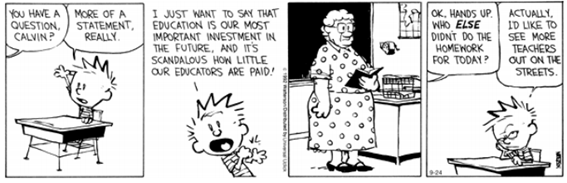
In the comic strip above, Calvin becomes upset because:
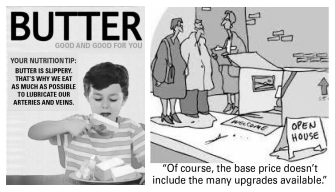
4 Types of Deceptive Advertising
By Apryl Duncan
Deceptive advertising is officially defined by the Federal Trade Commission (FTC) as “practices that have been found misleading or deceptive. Specific cases include false oral or written representations, misleading price claims, sales of hazardous or systematically defective products or services without adequate disclosures, failure to disclose information regarding pyramid sales, use of bait and switch techniques, failure to perform promised services, and failure to meet warranty obligations.

Segundo o texto, é correto afirmar que:
Assinale a afirmativa coerente com o texto.
Quando o aprendiz apenas decodifica um texto, podemos afirmar que:

 Conheça nossos planos