Questões de Concurso Sobre inglês
Foram encontradas 25.431 questões


Ano: 2011
Banca:
CESGRANRIO
Órgão:
Petrobras
Provas:
CESGRANRIO - 2011 - Petrobras - Administrador Júnior
|
CESGRANRIO - 2011 - Petrobrás - Auditor Júnior |
CESGRANRIO - 2011 - Petrobrás - Contador Júnior |
CESGRANRIO - 2011 - Petrobrás - Químico de Petróleo Júnior |
CESGRANRIO - 2011 - Petrobrás - Engenheiro Civil Júnior |
CESGRANRIO - 2011 - Petrobrás - Enfermeiro do Trabalho Júnior |
CESGRANRIO - 2011 - Petrobras - Engenheiro de Equipamento Júnior - Mecânica |
CESGRANRIO - 2011 - Petrobras - Engenheiro de Equipamento Júnior - Inspeção |
CESGRANRIO - 2011 - Petrobras - Engenheiro de Equipamento Júnior - Elétrica |
CESGRANRIO - 2011 - Petrobras - Engenheiro de Equipamento Júnior - Terminais e Dutos |
CESGRANRIO - 2011 - Petrobras - Engenheiro de Equipamento Júnior - Eletrônica |
CESGRANRIO - 2011 - Petrobras - Engenheiro de Produção Júnior |
CESGRANRIO - 2011 - Petrobras - Engenheiro de Meio Ambiente Júnior |
CESGRANRIO - 2011 - Petrobras - Engenheiro de Telecomunicações Júnior |
CESGRANRIO - 2011 - Petrobrás - Engenheiro de Segurança do Trabalho |
CESGRANRIO - 2011 - Petrobras - Engenheiro Naval Júnior |
CESGRANRIO - 2011 - Petrobras - Engenheiro de Petróleo Júnior |
CESGRANRIO - 2011 - Petrobras - Geólogo Júnior |
CESGRANRIO - 2011 - Petrobras - Médico do trabalho |
CESGRANRIO - 2011 - Petrobras - Profissional de Comunicação Júnior - Publicidade e Propaganda |
CESGRANRIO - 2011 - Petrobrás - Profissional de Comunicação Júnior - Jornalismo |
CESGRANRIO - 2011 - Petrobras - Geofísico Júnior - Geologia |
CESGRANRIO - 2011 - Petrobrás - Engenheiro de Processamento Júnior |
CESGRANRIO - 2011 - Petrobrás - Geofísico Júnior - Física |
Q87922
Inglês
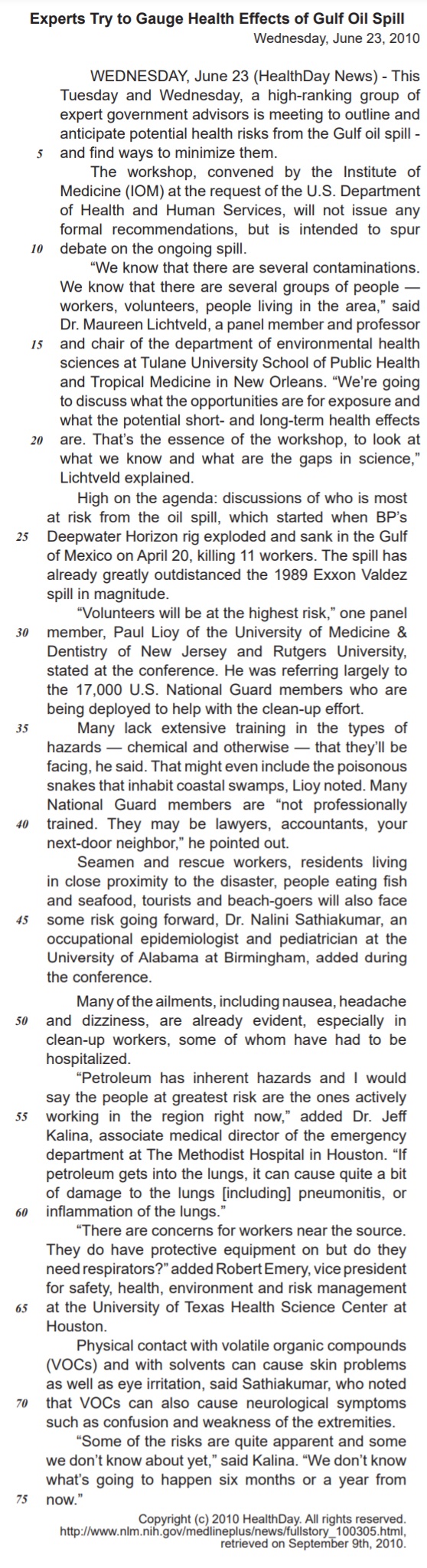
The main purpose of the article is to
Ano: 2011
Banca:
COPEVE-UFAL
Órgão:
UFAL
Provas:
COPEVE-UFAL - 2011 - UFAL - Secretário Executivo
|
COPEVE-UFAL - 2011 - UFAL - Analista de Tecnologia da Informação |
Q87751
Inglês
Cada opção abaixo revela uma mensagem eletrônica que um aluno universitário enviou para uma universidade americana solicitando informações sobre os cursos de pós-graduação. Qual é a única opção que apresenta a mensagem gramaticalmente correta?
Ano: 2011
Banca:
COPEVE-UFAL
Órgão:
UFAL
Provas:
COPEVE-UFAL - 2011 - UFAL - Secretário Executivo
|
COPEVE-UFAL - 2011 - UFAL - Analista de Tecnologia da Informação |
Q87750
Inglês
Dados os procedimentos abaixo que se referem ao processo de organizar um evento (pré-evento, evento propriamente dito e pós evento),
I. One procedure the person in charge should do is to gather essential information (contact information, checklist, logistical details, etc) that will be referred to on a continuous basis throughout the event planning process and organize it into a userfriendly system.
II. After organizing reference information, the person responsible for the event has to establish communication with the team. It is important to develop a support network and preventing duplication of efforts. The first meeting should bring all participants to the same page.
III. In order to follow up, it is important to have some sort of follow up in form of document for the purpose of evaluating the planned activities and determining whether the projected goals of the event were met.
IV. If the big day has arrived, make sure that you have checked and double checked to verify that all items. The best way to do this may be by using a checklist.
verifica-se que
I. One procedure the person in charge should do is to gather essential information (contact information, checklist, logistical details, etc) that will be referred to on a continuous basis throughout the event planning process and organize it into a userfriendly system.
II. After organizing reference information, the person responsible for the event has to establish communication with the team. It is important to develop a support network and preventing duplication of efforts. The first meeting should bring all participants to the same page.
III. In order to follow up, it is important to have some sort of follow up in form of document for the purpose of evaluating the planned activities and determining whether the projected goals of the event were met.
IV. If the big day has arrived, make sure that you have checked and double checked to verify that all items. The best way to do this may be by using a checklist.
verifica-se que
Ano: 2011
Banca:
COPEVE-UFAL
Órgão:
UFAL
Provas:
COPEVE-UFAL - 2011 - UFAL - Secretário Executivo
|
COPEVE-UFAL - 2011 - UFAL - Analista de Tecnologia da Informação |
Q87749
Inglês
Cada item abaixo é uma definição de uma etapa de um projeto.
I. A multilevel, multi-sectored package of measures, requiring multilevel planning and structuring, leading towards an overall goal.
II. One or more processes in which an individual or group takes part in specific decision-making and action, and over which they may exercise specific controls.
III. Result of a project relative to its objective that are sufficient and necessary to achieve the objective and are generated by its respective partner’s output.
IV. The intended physical, financial, institutional, social, environmental, educational or other goals which a project is expected to achieve and which lies in its own sphere of influence.
Associe cada definição com um substantivo que a sinteza:
I. A multilevel, multi-sectored package of measures, requiring multilevel planning and structuring, leading towards an overall goal.
II. One or more processes in which an individual or group takes part in specific decision-making and action, and over which they may exercise specific controls.
III. Result of a project relative to its objective that are sufficient and necessary to achieve the objective and are generated by its respective partner’s output.
IV. The intended physical, financial, institutional, social, environmental, educational or other goals which a project is expected to achieve and which lies in its own sphere of influence.
Associe cada definição com um substantivo que a sinteza:
Ano: 2011
Banca:
COPEVE-UFAL
Órgão:
UFAL
Provas:
COPEVE-UFAL - 2011 - UFAL - Secretário Executivo
|
COPEVE-UFAL - 2011 - UFAL - Analista de Tecnologia da Informação |
Q87748
Inglês
Em uma das páginas eletrônicas de uma universidade americana, podemos encontrar as 3 recomendações transcritas abaixo e que foram escritas para os usuários dos computadores da universidade.
1. Student users have a responsibility to use University computer resources in an efficient, ethical, and lawful manner.
2. The University has a right and a duty to protect its valuable computer resources and to restrict student access to uses that are strictly related to the students' university related programs as well as reasonably limited in time. The University reserves the right to define what are unauthorized student uses.
3. Violations of University computer policy which do not constitute an immediate, clear danger to the University computer systems or networks will be referred to the regular student disciplinary process.
Escolha a opção que melhor sintetiza e nomeia a página. Leve em consideração os conhecimentos gramatical e lexical.
1. Student users have a responsibility to use University computer resources in an efficient, ethical, and lawful manner.
2. The University has a right and a duty to protect its valuable computer resources and to restrict student access to uses that are strictly related to the students' university related programs as well as reasonably limited in time. The University reserves the right to define what are unauthorized student uses.
3. Violations of University computer policy which do not constitute an immediate, clear danger to the University computer systems or networks will be referred to the regular student disciplinary process.
Escolha a opção que melhor sintetiza e nomeia a página. Leve em consideração os conhecimentos gramatical e lexical.
Ano: 2011
Banca:
COPEVE-UFAL
Órgão:
UFAL
Provas:
COPEVE-UFAL - 2011 - UFAL - Secretário Executivo
|
COPEVE-UFAL - 2011 - UFAL - Analista de Tecnologia da Informação |
Q87747
Inglês
Escolha a única opção que apresenta uma oração com um verbo modal. As orações foram retiradas do texto acima.
Ano: 2011
Banca:
COPEVE-UFAL
Órgão:
UFAL
Provas:
COPEVE-UFAL - 2011 - UFAL - Secretário Executivo
|
COPEVE-UFAL - 2011 - UFAL - Analista de Tecnologia da Informação |
Q87746
Inglês
Texto associado
'CityVille' now bigger on Facebook than 'FarmVille'
(Mashable) -- Facebook game developer Zynga has proved once
again that it knows exactly what it needs to do to keep millions of
Facebook users happy and occupied.
In less than a month, its latest game "CityVille"___ ______
(become) the most popular application on Facebook, surpassing
Zynga's previous hit "FarmVille" in all areas.
According to AppData, "CityVille" now has 16.8 million daily
active users, compared to "FarmVille's" 16.4 million. Looking at
monthly active users, "CityVille" is also ahead with 61.7 million
users, while "FarmVille" trails behind with 56.8 million users.
Zynga's "FrontierVille" and "Texas HoldEm Poker" also round out
the top five: put those four apps together (we'll disregard the fact
that many of those users overlap for a second) and you have a
very impressive number: 184 million active users across four
games.
The only non-Zynga app in the top five list is "Phrases," _____ at
one point threatened to take the top place, but is now
overshadowed by both "CityVille" and "FarmVille."
"CityVille's" future success wasn't hard to predict after an
amazingly good start at the beginning of December, but it's still
impressive to see Zynga amassing tens of millions of users in a
matter of days, proving that all that venture capital that went into
the company isn't there by accident.
Fonte :cnn.com
'CityVille' now bigger on Facebook than 'FarmVille'
(Mashable) -- Facebook game developer Zynga has proved once
again that it knows exactly what it needs to do to keep millions of
Facebook users happy and occupied.
In less than a month, its latest game "CityVille"___ ______
(become) the most popular application on Facebook, surpassing
Zynga's previous hit "FarmVille" in all areas.
According to AppData, "CityVille" now has 16.8 million daily
active users, compared to "FarmVille's" 16.4 million. Looking at
monthly active users, "CityVille" is also ahead with 61.7 million
users, while "FarmVille" trails behind with 56.8 million users.
Zynga's "FrontierVille" and "Texas HoldEm Poker" also round out
the top five: put those four apps together (we'll disregard the fact
that many of those users overlap for a second) and you have a
very impressive number: 184 million active users across four
games.
The only non-Zynga app in the top five list is "Phrases," _____ at
one point threatened to take the top place, but is now
overshadowed by both "CityVille" and "FarmVille."
"CityVille's" future success wasn't hard to predict after an
amazingly good start at the beginning of December, but it's still
impressive to see Zynga amassing tens of millions of users in a
matter of days, proving that all that venture capital that went into
the company isn't there by accident.
Fonte :cnn.com
According to the text, the correct sentence is:
Ano: 2011
Banca:
COPEVE-UFAL
Órgão:
UFAL
Provas:
COPEVE-UFAL - 2011 - UFAL - Secretário Executivo
|
COPEVE-UFAL - 2011 - UFAL - Analista de Tecnologia da Informação |
Q87745
Inglês
Texto associado
'CityVille' now bigger on Facebook than 'FarmVille'
(Mashable) -- Facebook game developer Zynga has proved once
again that it knows exactly what it needs to do to keep millions of
Facebook users happy and occupied.
In less than a month, its latest game "CityVille"___ ______
(become) the most popular application on Facebook, surpassing
Zynga's previous hit "FarmVille" in all areas.
According to AppData, "CityVille" now has 16.8 million daily
active users, compared to "FarmVille's" 16.4 million. Looking at
monthly active users, "CityVille" is also ahead with 61.7 million
users, while "FarmVille" trails behind with 56.8 million users.
Zynga's "FrontierVille" and "Texas HoldEm Poker" also round out
the top five: put those four apps together (we'll disregard the fact
that many of those users overlap for a second) and you have a
very impressive number: 184 million active users across four
games.
The only non-Zynga app in the top five list is "Phrases," _____ at
one point threatened to take the top place, but is now
overshadowed by both "CityVille" and "FarmVille."
"CityVille's" future success wasn't hard to predict after an
amazingly good start at the beginning of December, but it's still
impressive to see Zynga amassing tens of millions of users in a
matter of days, proving that all that venture capital that went into
the company isn't there by accident.
Fonte :cnn.com
'CityVille' now bigger on Facebook than 'FarmVille'
(Mashable) -- Facebook game developer Zynga has proved once
again that it knows exactly what it needs to do to keep millions of
Facebook users happy and occupied.
In less than a month, its latest game "CityVille"___ ______
(become) the most popular application on Facebook, surpassing
Zynga's previous hit "FarmVille" in all areas.
According to AppData, "CityVille" now has 16.8 million daily
active users, compared to "FarmVille's" 16.4 million. Looking at
monthly active users, "CityVille" is also ahead with 61.7 million
users, while "FarmVille" trails behind with 56.8 million users.
Zynga's "FrontierVille" and "Texas HoldEm Poker" also round out
the top five: put those four apps together (we'll disregard the fact
that many of those users overlap for a second) and you have a
very impressive number: 184 million active users across four
games.
The only non-Zynga app in the top five list is "Phrases," _____ at
one point threatened to take the top place, but is now
overshadowed by both "CityVille" and "FarmVille."
"CityVille's" future success wasn't hard to predict after an
amazingly good start at the beginning of December, but it's still
impressive to see Zynga amassing tens of millions of users in a
matter of days, proving that all that venture capital that went into
the company isn't there by accident.
Fonte :cnn.com
In the sentence: “Zynga's "FrontierVille" and "Texas HoldEm Poker" also round out the top five: put those four apps together…”, round out means the same
as:
as:
Ano: 2011
Banca:
COPEVE-UFAL
Órgão:
UFAL
Provas:
COPEVE-UFAL - 2011 - UFAL - Secretário Executivo
|
COPEVE-UFAL - 2011 - UFAL - Analista de Tecnologia da Informação |
Q87744
Inglês
Texto associado
'CityVille' now bigger on Facebook than 'FarmVille'
(Mashable) -- Facebook game developer Zynga has proved once
again that it knows exactly what it needs to do to keep millions of
Facebook users happy and occupied.
In less than a month, its latest game "CityVille"___ ______
(become) the most popular application on Facebook, surpassing
Zynga's previous hit "FarmVille" in all areas.
According to AppData, "CityVille" now has 16.8 million daily
active users, compared to "FarmVille's" 16.4 million. Looking at
monthly active users, "CityVille" is also ahead with 61.7 million
users, while "FarmVille" trails behind with 56.8 million users.
Zynga's "FrontierVille" and "Texas HoldEm Poker" also round out
the top five: put those four apps together (we'll disregard the fact
that many of those users overlap for a second) and you have a
very impressive number: 184 million active users across four
games.
The only non-Zynga app in the top five list is "Phrases," _____ at
one point threatened to take the top place, but is now
overshadowed by both "CityVille" and "FarmVille."
"CityVille's" future success wasn't hard to predict after an
amazingly good start at the beginning of December, but it's still
impressive to see Zynga amassing tens of millions of users in a
matter of days, proving that all that venture capital that went into
the company isn't there by accident.
Fonte :cnn.com
'CityVille' now bigger on Facebook than 'FarmVille'
(Mashable) -- Facebook game developer Zynga has proved once
again that it knows exactly what it needs to do to keep millions of
Facebook users happy and occupied.
In less than a month, its latest game "CityVille"___ ______
(become) the most popular application on Facebook, surpassing
Zynga's previous hit "FarmVille" in all areas.
According to AppData, "CityVille" now has 16.8 million daily
active users, compared to "FarmVille's" 16.4 million. Looking at
monthly active users, "CityVille" is also ahead with 61.7 million
users, while "FarmVille" trails behind with 56.8 million users.
Zynga's "FrontierVille" and "Texas HoldEm Poker" also round out
the top five: put those four apps together (we'll disregard the fact
that many of those users overlap for a second) and you have a
very impressive number: 184 million active users across four
games.
The only non-Zynga app in the top five list is "Phrases," _____ at
one point threatened to take the top place, but is now
overshadowed by both "CityVille" and "FarmVille."
"CityVille's" future success wasn't hard to predict after an
amazingly good start at the beginning of December, but it's still
impressive to see Zynga amassing tens of millions of users in a
matter of days, proving that all that venture capital that went into
the company isn't there by accident.
Fonte :cnn.com
According to the text:
Ano: 2011
Banca:
COPEVE-UFAL
Órgão:
UFAL
Provas:
COPEVE-UFAL - 2011 - UFAL - Secretário Executivo
|
COPEVE-UFAL - 2011 - UFAL - Analista de Tecnologia da Informação |
Q87743
Inglês
Texto associado
'CityVille' now bigger on Facebook than 'FarmVille'
(Mashable) -- Facebook game developer Zynga has proved once
again that it knows exactly what it needs to do to keep millions of
Facebook users happy and occupied.
In less than a month, its latest game "CityVille"___ ______
(become) the most popular application on Facebook, surpassing
Zynga's previous hit "FarmVille" in all areas.
According to AppData, "CityVille" now has 16.8 million daily
active users, compared to "FarmVille's" 16.4 million. Looking at
monthly active users, "CityVille" is also ahead with 61.7 million
users, while "FarmVille" trails behind with 56.8 million users.
Zynga's "FrontierVille" and "Texas HoldEm Poker" also round out
the top five: put those four apps together (we'll disregard the fact
that many of those users overlap for a second) and you have a
very impressive number: 184 million active users across four
games.
The only non-Zynga app in the top five list is "Phrases," _____ at
one point threatened to take the top place, but is now
overshadowed by both "CityVille" and "FarmVille."
"CityVille's" future success wasn't hard to predict after an
amazingly good start at the beginning of December, but it's still
impressive to see Zynga amassing tens of millions of users in a
matter of days, proving that all that venture capital that went into
the company isn't there by accident.
Fonte :cnn.com
'CityVille' now bigger on Facebook than 'FarmVille'
(Mashable) -- Facebook game developer Zynga has proved once
again that it knows exactly what it needs to do to keep millions of
Facebook users happy and occupied.
In less than a month, its latest game "CityVille"___ ______
(become) the most popular application on Facebook, surpassing
Zynga's previous hit "FarmVille" in all areas.
According to AppData, "CityVille" now has 16.8 million daily
active users, compared to "FarmVille's" 16.4 million. Looking at
monthly active users, "CityVille" is also ahead with 61.7 million
users, while "FarmVille" trails behind with 56.8 million users.
Zynga's "FrontierVille" and "Texas HoldEm Poker" also round out
the top five: put those four apps together (we'll disregard the fact
that many of those users overlap for a second) and you have a
very impressive number: 184 million active users across four
games.
The only non-Zynga app in the top five list is "Phrases," _____ at
one point threatened to take the top place, but is now
overshadowed by both "CityVille" and "FarmVille."
"CityVille's" future success wasn't hard to predict after an
amazingly good start at the beginning of December, but it's still
impressive to see Zynga amassing tens of millions of users in a
matter of days, proving that all that venture capital that went into
the company isn't there by accident.
Fonte :cnn.com
Complete the sentence from the text with a pronoun: “The only non-Zynga app in the top five list is "Phrases,"_____ at one point threatened to take the top place,…”
Ano: 2011
Banca:
COPEVE-UFAL
Órgão:
UFAL
Provas:
COPEVE-UFAL - 2011 - UFAL - Secretário Executivo
|
COPEVE-UFAL - 2011 - UFAL - Analista de Tecnologia da Informação |
Q87742
Inglês
Texto associado
'CityVille' now bigger on Facebook than 'FarmVille'
(Mashable) -- Facebook game developer Zynga has proved once
again that it knows exactly what it needs to do to keep millions of
Facebook users happy and occupied.
In less than a month, its latest game "CityVille"___ ______
(become) the most popular application on Facebook, surpassing
Zynga's previous hit "FarmVille" in all areas.
According to AppData, "CityVille" now has 16.8 million daily
active users, compared to "FarmVille's" 16.4 million. Looking at
monthly active users, "CityVille" is also ahead with 61.7 million
users, while "FarmVille" trails behind with 56.8 million users.
Zynga's "FrontierVille" and "Texas HoldEm Poker" also round out
the top five: put those four apps together (we'll disregard the fact
that many of those users overlap for a second) and you have a
very impressive number: 184 million active users across four
games.
The only non-Zynga app in the top five list is "Phrases," _____ at
one point threatened to take the top place, but is now
overshadowed by both "CityVille" and "FarmVille."
"CityVille's" future success wasn't hard to predict after an
amazingly good start at the beginning of December, but it's still
impressive to see Zynga amassing tens of millions of users in a
matter of days, proving that all that venture capital that went into
the company isn't there by accident.
Fonte :cnn.com
'CityVille' now bigger on Facebook than 'FarmVille'
(Mashable) -- Facebook game developer Zynga has proved once
again that it knows exactly what it needs to do to keep millions of
Facebook users happy and occupied.
In less than a month, its latest game "CityVille"___ ______
(become) the most popular application on Facebook, surpassing
Zynga's previous hit "FarmVille" in all areas.
According to AppData, "CityVille" now has 16.8 million daily
active users, compared to "FarmVille's" 16.4 million. Looking at
monthly active users, "CityVille" is also ahead with 61.7 million
users, while "FarmVille" trails behind with 56.8 million users.
Zynga's "FrontierVille" and "Texas HoldEm Poker" also round out
the top five: put those four apps together (we'll disregard the fact
that many of those users overlap for a second) and you have a
very impressive number: 184 million active users across four
games.
The only non-Zynga app in the top five list is "Phrases," _____ at
one point threatened to take the top place, but is now
overshadowed by both "CityVille" and "FarmVille."
"CityVille's" future success wasn't hard to predict after an
amazingly good start at the beginning of December, but it's still
impressive to see Zynga amassing tens of millions of users in a
matter of days, proving that all that venture capital that went into
the company isn't there by accident.
Fonte :cnn.com
Complete the sentence from the text using the correct verb tense: “In less than a month, its latest game "CityVille" ___ ______ the most popular application on Facebook,…”
Ano: 2011
Banca:
CESPE / CEBRASPE
Órgão:
MMA
Provas:
CESPE - 2011 - MMA - Analista Ambiental - III
|
CESPE - 2011 - MMA - Analista Ambiental - V |
CESPE - 2011 - MMA - Analista Ambiental - IV |
Q86399
Inglês
Texto associado
1 Climate change is a defining issue of our time, a
challenge that already affects and will increasingly impact all
nations, including some whose very survival is at risk. The
4 complexity of the problem is intrinsically linked with overarching societal issues, such as poverty reduction, economic development and population growth
7 After a decade of work on integrating Earth- and satellite-based observing networks, thereby establishing new observation methods that have made a tremendous impact on
10 the way climate change and physical oceanic variability is measured, scientists are once again exploring uncharted waters and looking to set a new course for the future at the
13 OceanObs'09 Conference in Venice, Italy on September 21-25. Ten years ago — at the first conference for a comprehensive ocean observing system — scientists envisioned measuring
16 satellite altimetry of sea-surface height with tide gauges and buoy measurements in order to forecast ocean currents. They brainstormed methods for monitoring changes in temperature
19 and salinity in the Southern Ocean and the South Atlantic which had never been systematically monitored. They also drew up a plan for implementing a global array of temperature
22 and salinity floats that would profile the water column down to a depth of 2,000 meters in real time. The initiatives launched at that conference a decade ago have since provided data that
25 fed the International Panel on Climate Change (IPCC) assessments of human influence on climate change, improved seasonal forecasts crucial for agriculture, hydropower, and
28 storm prediction and provided information invaluable to the lives and safety of mariners. Internet: (adapted).
4 complexity of the problem is intrinsically linked with overarching societal issues, such as poverty reduction, economic development and population growth
7 After a decade of work on integrating Earth- and satellite-based observing networks, thereby establishing new observation methods that have made a tremendous impact on
10 the way climate change and physical oceanic variability is measured, scientists are once again exploring uncharted waters and looking to set a new course for the future at the
13 OceanObs'09 Conference in Venice, Italy on September 21-25. Ten years ago — at the first conference for a comprehensive ocean observing system — scientists envisioned measuring
16 satellite altimetry of sea-surface height with tide gauges and buoy measurements in order to forecast ocean currents. They brainstormed methods for monitoring changes in temperature
19 and salinity in the Southern Ocean and the South Atlantic which had never been systematically monitored. They also drew up a plan for implementing a global array of temperature
22 and salinity floats that would profile the water column down to a depth of 2,000 meters in real time. The initiatives launched at that conference a decade ago have since provided data that
25 fed the International Panel on Climate Change (IPCC) assessments of human influence on climate change, improved seasonal forecasts crucial for agriculture, hydropower, and
28 storm prediction and provided information invaluable to the lives and safety of mariners. Internet: (adapted).
The adverb “thereby" (L.8) is synonymous with because of that.
Ano: 2011
Banca:
CESPE / CEBRASPE
Órgão:
MMA
Provas:
CESPE - 2011 - MMA - Analista Ambiental - III
|
CESPE - 2011 - MMA - Analista Ambiental - V |
CESPE - 2011 - MMA - Analista Ambiental - IV |
Q86398
Inglês
Texto associado
1 Climate change is a defining issue of our time, a
challenge that already affects and will increasingly impact all
nations, including some whose very survival is at risk. The
4 complexity of the problem is intrinsically linked with overarching societal issues, such as poverty reduction, economic development and population growth
7 After a decade of work on integrating Earth- and satellite-based observing networks, thereby establishing new observation methods that have made a tremendous impact on
10 the way climate change and physical oceanic variability is measured, scientists are once again exploring uncharted waters and looking to set a new course for the future at the
13 OceanObs'09 Conference in Venice, Italy on September 21-25. Ten years ago — at the first conference for a comprehensive ocean observing system — scientists envisioned measuring
16 satellite altimetry of sea-surface height with tide gauges and buoy measurements in order to forecast ocean currents. They brainstormed methods for monitoring changes in temperature
19 and salinity in the Southern Ocean and the South Atlantic which had never been systematically monitored. They also drew up a plan for implementing a global array of temperature
22 and salinity floats that would profile the water column down to a depth of 2,000 meters in real time. The initiatives launched at that conference a decade ago have since provided data that
25 fed the International Panel on Climate Change (IPCC) assessments of human influence on climate change, improved seasonal forecasts crucial for agriculture, hydropower, and
28 storm prediction and provided information invaluable to the lives and safety of mariners. Internet: (adapted).
4 complexity of the problem is intrinsically linked with overarching societal issues, such as poverty reduction, economic development and population growth
7 After a decade of work on integrating Earth- and satellite-based observing networks, thereby establishing new observation methods that have made a tremendous impact on
10 the way climate change and physical oceanic variability is measured, scientists are once again exploring uncharted waters and looking to set a new course for the future at the
13 OceanObs'09 Conference in Venice, Italy on September 21-25. Ten years ago — at the first conference for a comprehensive ocean observing system — scientists envisioned measuring
16 satellite altimetry of sea-surface height with tide gauges and buoy measurements in order to forecast ocean currents. They brainstormed methods for monitoring changes in temperature
19 and salinity in the Southern Ocean and the South Atlantic which had never been systematically monitored. They also drew up a plan for implementing a global array of temperature
22 and salinity floats that would profile the water column down to a depth of 2,000 meters in real time. The initiatives launched at that conference a decade ago have since provided data that
25 fed the International Panel on Climate Change (IPCC) assessments of human influence on climate change, improved seasonal forecasts crucial for agriculture, hydropower, and
28 storm prediction and provided information invaluable to the lives and safety of mariners. Internet: (adapted).
Scientists are once again exploring waters which have not yet been explored.
Ano: 2011
Banca:
CESPE / CEBRASPE
Órgão:
MMA
Provas:
CESPE - 2011 - MMA - Analista Ambiental - III
|
CESPE - 2011 - MMA - Analista Ambiental - V |
CESPE - 2011 - MMA - Analista Ambiental - IV |
Q86397
Inglês
Texto associado
1 Climate change is a defining issue of our time, a
challenge that already affects and will increasingly impact all
nations, including some whose very survival is at risk. The
4 complexity of the problem is intrinsically linked with overarching societal issues, such as poverty reduction, economic development and population growth
7 After a decade of work on integrating Earth- and satellite-based observing networks, thereby establishing new observation methods that have made a tremendous impact on
10 the way climate change and physical oceanic variability is measured, scientists are once again exploring uncharted waters and looking to set a new course for the future at the
13 OceanObs'09 Conference in Venice, Italy on September 21-25. Ten years ago — at the first conference for a comprehensive ocean observing system — scientists envisioned measuring
16 satellite altimetry of sea-surface height with tide gauges and buoy measurements in order to forecast ocean currents. They brainstormed methods for monitoring changes in temperature
19 and salinity in the Southern Ocean and the South Atlantic which had never been systematically monitored. They also drew up a plan for implementing a global array of temperature
22 and salinity floats that would profile the water column down to a depth of 2,000 meters in real time. The initiatives launched at that conference a decade ago have since provided data that
25 fed the International Panel on Climate Change (IPCC) assessments of human influence on climate change, improved seasonal forecasts crucial for agriculture, hydropower, and
28 storm prediction and provided information invaluable to the lives and safety of mariners. Internet: (adapted).
4 complexity of the problem is intrinsically linked with overarching societal issues, such as poverty reduction, economic development and population growth
7 After a decade of work on integrating Earth- and satellite-based observing networks, thereby establishing new observation methods that have made a tremendous impact on
10 the way climate change and physical oceanic variability is measured, scientists are once again exploring uncharted waters and looking to set a new course for the future at the
13 OceanObs'09 Conference in Venice, Italy on September 21-25. Ten years ago — at the first conference for a comprehensive ocean observing system — scientists envisioned measuring
16 satellite altimetry of sea-surface height with tide gauges and buoy measurements in order to forecast ocean currents. They brainstormed methods for monitoring changes in temperature
19 and salinity in the Southern Ocean and the South Atlantic which had never been systematically monitored. They also drew up a plan for implementing a global array of temperature
22 and salinity floats that would profile the water column down to a depth of 2,000 meters in real time. The initiatives launched at that conference a decade ago have since provided data that
25 fed the International Panel on Climate Change (IPCC) assessments of human influence on climate change, improved seasonal forecasts crucial for agriculture, hydropower, and
28 storm prediction and provided information invaluable to the lives and safety of mariners. Internet: (adapted).
Scientists have worked on integrating Earth- and satellite-based observing networks for decades.
Ano: 2011
Banca:
CESPE / CEBRASPE
Órgão:
MMA
Provas:
CESPE - 2011 - MMA - Analista Ambiental - III
|
CESPE - 2011 - MMA - Analista Ambiental - V |
CESPE - 2011 - MMA - Analista Ambiental - IV |
Q86393
Inglês
Texto associado
1 As the evidence and knowledge of the physical effects
of climate change continue to grow, the world is starting to
dissect how those physical changes (e.g. water scarcity, sea-
4 level rise, increased temperatures), both current and predicted, will intersect with society and economies and the potentially significant environmental and human impacts that will result.
7 Of emerging interest are the potential impacts of climate change on the enjoyment of human rights and wellbeing. Weather and environmental degradation have, as one of
10 multiple stressors, threatened lives and livelihoods throughout history, but what makes this interaction more relevant today is the growing evidence that greenhouse gases (GHG) emissions
13 have contributed and will continue to contribute to long-term or permanent changes to our ecosystems and landscapes and will increase the frequency and severity of extreme events. This
16 amplifies existing social risks and vulnerabilities and will therefore increase the pressures faced by many disadvantaged individuals and populations in Canada and abroad.
19 On January 15 2009, the United Nations High Commissioner for Human Rights (UNHCHR) released a study on climate change and human rights in response to UN
22 Resolution 7/23 in which signatories expressed concern “that climate change poses an immediate and far-reaching threat to people and communities around the world and has implications
25 for the full enjoyment of human rights.” Internet: (adapted)
4 level rise, increased temperatures), both current and predicted, will intersect with society and economies and the potentially significant environmental and human impacts that will result.
7 Of emerging interest are the potential impacts of climate change on the enjoyment of human rights and wellbeing. Weather and environmental degradation have, as one of
10 multiple stressors, threatened lives and livelihoods throughout history, but what makes this interaction more relevant today is the growing evidence that greenhouse gases (GHG) emissions
13 have contributed and will continue to contribute to long-term or permanent changes to our ecosystems and landscapes and will increase the frequency and severity of extreme events. This
16 amplifies existing social risks and vulnerabilities and will therefore increase the pressures faced by many disadvantaged individuals and populations in Canada and abroad.
19 On January 15 2009, the United Nations High Commissioner for Human Rights (UNHCHR) released a study on climate change and human rights in response to UN
22 Resolution 7/23 in which signatories expressed concern “that climate change poses an immediate and far-reaching threat to people and communities around the world and has implications
25 for the full enjoyment of human rights.” Internet: (adapted)
In the line 22, the pronoun “which" refers to “signatories".
Ano: 2011
Banca:
CESPE / CEBRASPE
Órgão:
MMA
Provas:
CESPE - 2011 - MMA - Analista Ambiental - III
|
CESPE - 2011 - MMA - Analista Ambiental - V |
CESPE - 2011 - MMA - Analista Ambiental - IV |
Q86392
Inglês
Texto associado
1 As the evidence and knowledge of the physical effects
of climate change continue to grow, the world is starting to
dissect how those physical changes (e.g. water scarcity, sea-
4 level rise, increased temperatures), both current and predicted, will intersect with society and economies and the potentially significant environmental and human impacts that will result.
7 Of emerging interest are the potential impacts of climate change on the enjoyment of human rights and wellbeing. Weather and environmental degradation have, as one of
10 multiple stressors, threatened lives and livelihoods throughout history, but what makes this interaction more relevant today is the growing evidence that greenhouse gases (GHG) emissions
13 have contributed and will continue to contribute to long-term or permanent changes to our ecosystems and landscapes and will increase the frequency and severity of extreme events. This
16 amplifies existing social risks and vulnerabilities and will therefore increase the pressures faced by many disadvantaged individuals and populations in Canada and abroad.
19 On January 15 2009, the United Nations High Commissioner for Human Rights (UNHCHR) released a study on climate change and human rights in response to UN
22 Resolution 7/23 in which signatories expressed concern “that climate change poses an immediate and far-reaching threat to people and communities around the world and has implications
25 for the full enjoyment of human rights.” Internet: (adapted)
4 level rise, increased temperatures), both current and predicted, will intersect with society and economies and the potentially significant environmental and human impacts that will result.
7 Of emerging interest are the potential impacts of climate change on the enjoyment of human rights and wellbeing. Weather and environmental degradation have, as one of
10 multiple stressors, threatened lives and livelihoods throughout history, but what makes this interaction more relevant today is the growing evidence that greenhouse gases (GHG) emissions
13 have contributed and will continue to contribute to long-term or permanent changes to our ecosystems and landscapes and will increase the frequency and severity of extreme events. This
16 amplifies existing social risks and vulnerabilities and will therefore increase the pressures faced by many disadvantaged individuals and populations in Canada and abroad.
19 On January 15 2009, the United Nations High Commissioner for Human Rights (UNHCHR) released a study on climate change and human rights in response to UN
22 Resolution 7/23 in which signatories expressed concern “that climate change poses an immediate and far-reaching threat to people and communities around the world and has implications
25 for the full enjoyment of human rights.” Internet: (adapted)
The conjunction “therefore" (L.17) expresses an idea of consequence.
Ano: 2011
Banca:
CESPE / CEBRASPE
Órgão:
MMA
Provas:
CESPE - 2011 - MMA - Analista Ambiental - III
|
CESPE - 2011 - MMA - Analista Ambiental - V |
CESPE - 2011 - MMA - Analista Ambiental - IV |
Q86391
Inglês
Texto associado
1 As the evidence and knowledge of the physical effects
of climate change continue to grow, the world is starting to
dissect how those physical changes (e.g. water scarcity, sea-
4 level rise, increased temperatures), both current and predicted, will intersect with society and economies and the potentially significant environmental and human impacts that will result.
7 Of emerging interest are the potential impacts of climate change on the enjoyment of human rights and wellbeing. Weather and environmental degradation have, as one of
10 multiple stressors, threatened lives and livelihoods throughout history, but what makes this interaction more relevant today is the growing evidence that greenhouse gases (GHG) emissions
13 have contributed and will continue to contribute to long-term or permanent changes to our ecosystems and landscapes and will increase the frequency and severity of extreme events. This
16 amplifies existing social risks and vulnerabilities and will therefore increase the pressures faced by many disadvantaged individuals and populations in Canada and abroad.
19 On January 15 2009, the United Nations High Commissioner for Human Rights (UNHCHR) released a study on climate change and human rights in response to UN
22 Resolution 7/23 in which signatories expressed concern “that climate change poses an immediate and far-reaching threat to people and communities around the world and has implications
25 for the full enjoyment of human rights.” Internet: (adapted)
4 level rise, increased temperatures), both current and predicted, will intersect with society and economies and the potentially significant environmental and human impacts that will result.
7 Of emerging interest are the potential impacts of climate change on the enjoyment of human rights and wellbeing. Weather and environmental degradation have, as one of
10 multiple stressors, threatened lives and livelihoods throughout history, but what makes this interaction more relevant today is the growing evidence that greenhouse gases (GHG) emissions
13 have contributed and will continue to contribute to long-term or permanent changes to our ecosystems and landscapes and will increase the frequency and severity of extreme events. This
16 amplifies existing social risks and vulnerabilities and will therefore increase the pressures faced by many disadvantaged individuals and populations in Canada and abroad.
19 On January 15 2009, the United Nations High Commissioner for Human Rights (UNHCHR) released a study on climate change and human rights in response to UN
22 Resolution 7/23 in which signatories expressed concern “that climate change poses an immediate and far-reaching threat to people and communities around the world and has implications
25 for the full enjoyment of human rights.” Internet: (adapted)
The author of the text affirms that although evidence of physical effects of climate change continues to grow, the world is starting to dissect how physical changes will intersect with society and economies .
Ano: 2011
Banca:
FUNIVERSA
Órgão:
EMBRATUR
Prova:
FUNIVERSA - 2011 - EMBRATUR - Técnico Especializado II |
Q85975
Inglês

It can be deduced from the text IV that
Ano: 2011
Banca:
FUNIVERSA
Órgão:
EMBRATUR
Prova:
FUNIVERSA - 2011 - EMBRATUR - Técnico Especializado II |
Q85974
Inglês
The expression “the Dark Ages” (lines 11 and 12)
Ano: 2011
Banca:
FUNIVERSA
Órgão:
EMBRATUR
Prova:
FUNIVERSA - 2011 - EMBRATUR - Técnico Especializado II |
Q85973
Inglês
The expression “In turn” (line 24) can be paraphrased as

 Conheça nossos planos