Questões de Concurso Sobre inglês
Foram encontradas 26.136 questões


Poor Things – Emma Stone transfixes in Lanthimos’s thrilling carnival of oddness
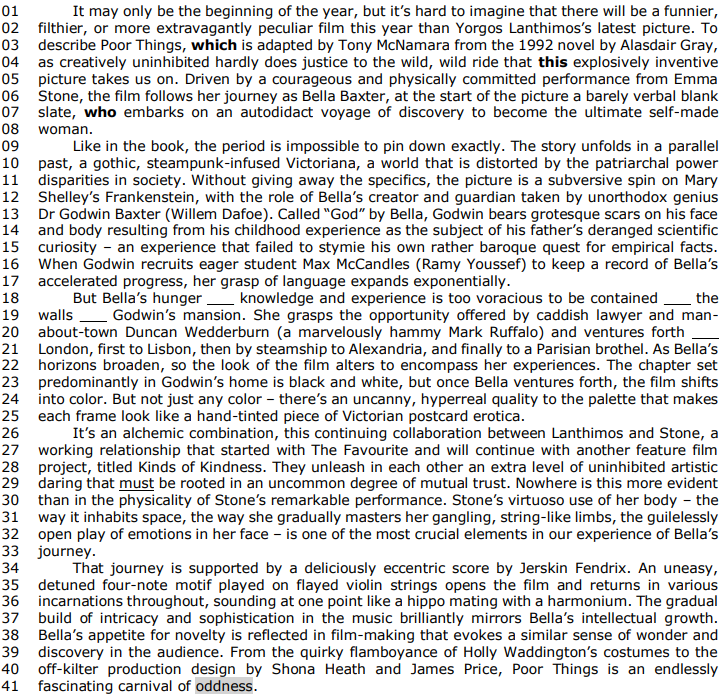
(Available at: www.theguardian.com/film/2024/jan/14/poor-things-review-yorgos-lanthimos-emma-stonefrankenstein – text specially adapted for this test).
Poor Things – Emma Stone transfixes in Lanthimos’s thrilling carnival of oddness
(Available at: www.theguardian.com/film/2024/jan/14/poor-things-review-yorgos-lanthimos-emma-stonefrankenstein – text specially adapted for this test).
Poor Things – Emma Stone transfixes in Lanthimos’s thrilling carnival of oddness
(Available at: www.theguardian.com/film/2024/jan/14/poor-things-review-yorgos-lanthimos-emma-stonefrankenstein – text specially adapted for this test).
I. “Mais engraçado” e “mais sujo” são formas comparativas de adjetivos curtos.
II. “Extravagantly” é um advérbio e não deve ser usado em uma estrutura comparativa.
III. “Último” é uma forma superlativa.
Quais afirmações estão corretas?
Poor Things – Emma Stone transfixes in Lanthimos’s thrilling carnival of oddness
(Available at: www.theguardian.com/film/2024/jan/14/poor-things-review-yorgos-lanthimos-emma-stonefrankenstein – text specially adapted for this test).
( ) The article considers that the main character develops throughout the story from a “blank slate” to a “self-made woman”.
( ) Duncan Wedderburn’s role in the story was to offer Bella the opportunity to experience the world.
( ) The author highlights the historical accuracy of costumes and props as a captivating feature in the movie.
The correct order of filling the parentheses, from top to bottom, is:
Poor Things – Emma Stone transfixes in Lanthimos’s thrilling carnival of oddness
(Available at: www.theguardian.com/film/2024/jan/14/poor-things-review-yorgos-lanthimos-emma-stonefrankenstein – text specially adapted for this test).
Poor Things – Emma Stone transfixes in Lanthimos’s thrilling carnival of oddness
(Available at: www.theguardian.com/film/2024/jan/14/poor-things-review-yorgos-lanthimos-emma-stonefrankenstein – text specially adapted for this test).
Analyze the cartoon below:
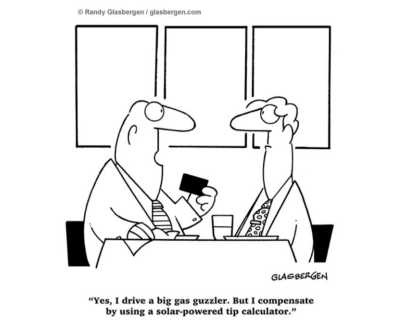
Why is the hyphen used in “solar-powered”?
Which of the alternatives below is an example of a correctly written indirect question?
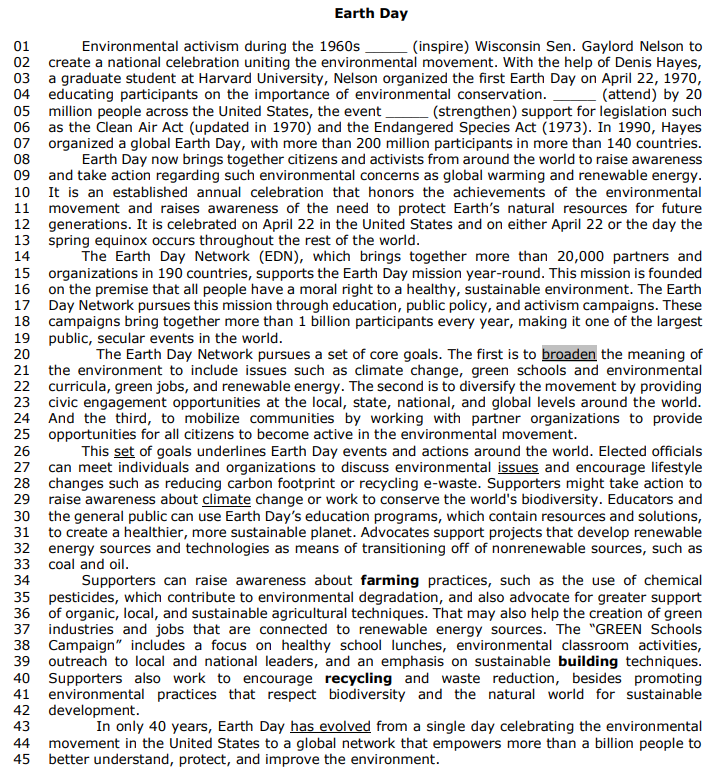
(Available at: education.nationalgeographic.org/resource/earth-day/– text specially adapted for this test).
I. The noun “set” (l. 26) is countable, just as in the sentence “There are two sets of pens over the table, take one to your office”.
II. The word “issues” (l. 27) is uncountable, just as in the sentence “Have you seen the latest issue of the paper? I’m sure it arrived this morning”.
III. The word “climate” (l. 29) is uncountable, just as in the sentence “A climate of uncertainty took over the room”.
Which ones are correct?
(Available at: education.nationalgeographic.org/resource/earth-day/– text specially adapted for this test).
(Available at: education.nationalgeographic.org/resource/earth-day/– text specially adapted for this test).
(Available at: education.nationalgeographic.org/resource/earth-day/– text specially adapted for this test).
(Available at: education.nationalgeographic.org/resource/earth-day/– text specially adapted for this test).
I. The verb “farm” is in its gerund form in line 34 because it follows the preposition “about”.
II. The verb “build” is in its gerund form in line 39 because it serves as an adjective for “techniques”.
III. The verb “recycle” is in its gerund form in line 40 because it follows the verb “encourage”.
Which ones are correct?
(Available at: education.nationalgeographic.org/resource/earth-day/– text specially adapted for this test).
(Available at: education.nationalgeographic.org/resource/earth-day/– text specially adapted for this test).
( ) The first Earth Day event gathered 20 million people in the United States.
( ) Earth Days usually happens on the Spring equinox, which is on April 22.
( ) The Clean Air Act and the Endangered Species Act were proposed by Sen. Gaylord Nelson after the first Earth Day, in 1970.
The correct order of filling the parentheses, from top to bottom, is:
(Available at: education.nationalgeographic.org/resource/earth-day/– text specially adapted for this test).
What does Michael's preparation for the parentteacher conference reveal about his approach to teaching?
What emotions does Sarah experience about her workshop, and how do they reflect her overall attitude towards the event?
Lisa reported : “_____________________________”
Mark is giving advice to a colleague about professional development. Choose the correct conditional form to complete the sentence.
"If you ___ (dedicate yourself) to continuous learning, you ___ (excel) in your teaching career."

 Conheça nossos planos