Questões de Concurso Sobre pronome possessivo adjetivo | possessive adjective em inglês

Foram encontradas 86 questões

Q2316883 Inglês

Julgue o item subsequente. 


Possessive nouns, expressing ownership or association, play a vital role in sentence structure. Understanding how to form possessives, whether through apostrophes or other constructions, ensures grammatical accuracy. Proficiency in handling possessive nouns contributes to clear and effective communication in written and spoken English.
Alternativas
Q2170179 Inglês
Assinale a alternativa correta quanto ao uso dos possessivos:
Alternativas
Q2166435 Inglês
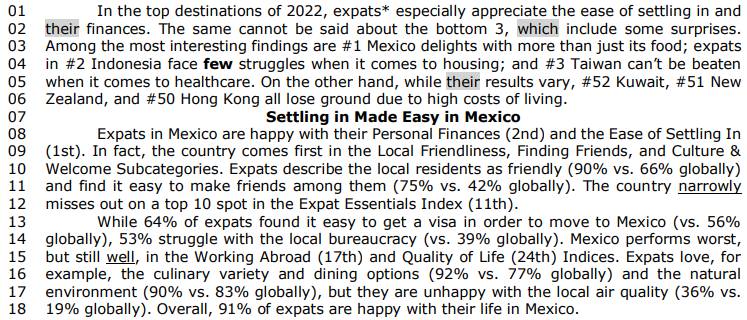
Instruction: answer question based on the following text. The highlights throughout the text are cited in the questions.

The Best & Worst Places for Expats in 2022 (Part 1)


*expat: informal for expatriate, someone who does not live in their own country. 
Consider the following statements about the excerpt “Among the most interesting findings are #1 Mexico delights with more than just its food” (l. 03):
I. The excerpt contains both a comparative and a superlative structure. II. To convey the opposite meaning, it would be grammatically correct to replace the superlative structure with “the less interesting” or “the more boring”. III. The word “its” is a possessive adjective. IV. There would be no significative changes in meaning if the word “among” were replaced by “between” because they are always interchangeable.
Which statements are correct?
Alternativas
Q2115842 Inglês
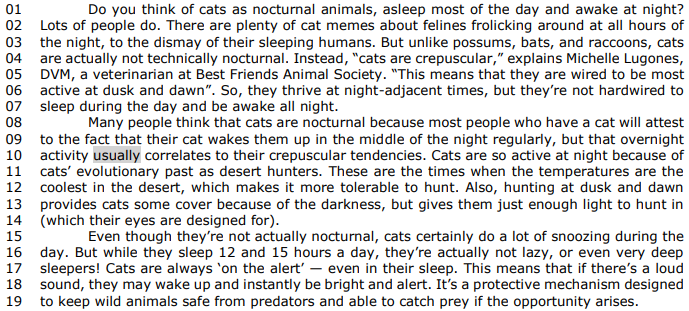
Instruction: answer question based on the following text. The highlights throughout the text are cited in the question.


Are Cats Nocturnal? Your Cat’s Overnight Activity, Explained


(Available at: https://www.rd.com/article/are-cats-nocturnal/ – text especially adapted for this test).
Which type of pronoun used in the sentence "It’s a protective mechanism designed to keep wild animals safe from predators and able to catch prey if the opportunity arises."?
Alternativas
Q4115373 Inglês
O adjetivo é uma palavra que serve para qualificar ou determinar o substantivo. Em inglês, o adjetivo não concorda em gênero e número com o substantivo; portanto, não sofre mudança alguma na terminação.

(CAMPOS, Giovana Teixeira. Manual compacto de gramática da língua inglesa. São Paulo: Rideel, 2010. p. 95.)

Analise as asserções a seguir e a relação proposta entre elas.

I - A função de um adjetivo é mudar um substantivo, ou seja, o adjetivo possessivo deve ser sempre acompanhado da palavra (substantivo): my book, his father, their mother; são chamados adjetivos, e não pronomes

PORQUE

II - são sempre seguidos de um substantivo, nunca aparecendo no lugar dele.

Sobre as asserções, é correto afirmar que
Alternativas
Q1866956 Inglês

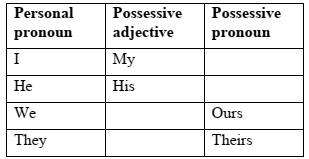
Observe a tabela a seguir: 


Imagem associada para resolução da questão


Assinale a alternativa que preenche corretamente os espaços em branco na tabela acima: 

Alternativas
Q2101333 Inglês
Investment in primary health care urgently needed to ensure COVID-19 recovery in the Americas.

Increased public health spending must continue to improve hardest-hit primary care services such as routine immunization programs, says PAHO Director.

Washington, DC, November 10, 2021 (PAHO) – With countries in the Americas reporting severe disruptions in essential primary health care services, urgent investment is key to improving health systems continuously weakened by the pandemic, said Pan American Health Organization (PAHO) Director Carissa F. Etienne.

With cases rising in some parts of the region following a two-month decline, it is vital that countries remain vigilant and prioritize public spending in heath so that no one is left behind.

“Few countries invest as much public spending in their health services as they should, leaving them prone to shortages in health personnel and essential supplies.”

With the pandemic siphoning off financial and human resources, many countries have reported interruptions in vital areas, such as routine immunization programs, support for chronic conditions and mental- and reproductive health services. 

Despite these disruptions, public investment in health has risen in many countries to ramp up ICU capacity, increase hospital services, and deploy COVID-19 vaccines. But these increases cannot be a short-term trend, the Director said.

All countries should increase public expenditures in their health systems to the recommended 6% of national GDP or higher and should ensure that 30% of this funding goes to first level care.

“Primary care, as you have heard us say over and over again, is the backbone of our health systems,” Dr. Etienne said, and more important than ever. “It’s at the primary care level that COVID testing, contact tracking and tracing and immunizations take place.”

As economies remain strained, countries face difficult choices about how to spend limited funds. “We cannot forget that health is an investment, not an expense,” the Director said. “As we learned with COVID-19, health is at the core of vibrant societies. It keeps people working, kids in schools, companies productive and economies growing.”

Turning to the COVID-19 situation in the region, Dr. Etienne said that in the past week countries reported 700,000 new COVID infections and 13,000 deaths.

Several countries, including parts of Colombia and Bolivia and the Southern Cone countries, are seeing upward trends after relaxing public health measures.

In the Caribbean, Cuba, Jamaica, and Puerto Rico have reported a drop in new infections while cases are rising in the Dominican Republic, Trinidad and Tobago and Barbados. High numbers of cases are also being seen in the Cayman Islands and Dominica.

Vaccination rates, however, continue to pick up pace, reaching an overall coverage of 48% in Latin America and the Caribbean.

PAHO continues to work with manufacturers to secure additional doses, the Director added. The organization has signed supply agreements with three manufacturers of WHO Emergency Use Listing (EUL) vaccines and is in final negotiations with a fourth supplier of mRNA vaccines.

Available at: https://www.paho.org/en/news/10-11-2021-investment-primary-health-care-urgentlyneeded-ensure-covid-19-recovery-americas
Assinale a alternativa que apresenta um trecho do texto em que o uso do possessive adjectives é aplicado, corretamente: 
Alternativas
Q1877296 Inglês
Analise as frases abaixo e assinale a que apresenta desvios das regras de utilização dos pronomes possessivos:
Alternativas
Q1858194 Inglês

Instruction: answer based on the following text.


(Available in: https://www.marthastewart.com/syndication/new-study-dogs-understand-commands-withouttraining – text adapted specially for this test).

The pronouns and possessive adjectives “which” (l. 04), “them” (l. 09), “They” (l. 09), and “its” (l. 10) are referring to: 
Alternativas
Q1820850 Inglês
Em qual sentença abaixo, o pronome foi corretamente utilizado?
Alternativas
Q1785443 Inglês
You met these people at a party:
Imagem associada para resolução da questão Fonte: Murphy Raymond: English Grammar in Use (1997).
Later you tell a friend about the people you met. Complete the sentences using WHO or WHOSE. 1 - I met somebody... 2 - I met Jacob... 3 - I met Mary... 4 - I met Carol... 5 - I met Jhon and Ann.. 6 - I met Enzo...
Alternativas
Q1738044 Inglês
Complete: Anny has many friends. Chris and Karen are friends of ____. She likes _________ very much.
Alternativas
Q1692091 Inglês

Complete the sentences with one of the words in the brackets:

a) _____ house is at 667, Great Avenue . [MyMine-Me]

b) His house is near ________. [my- mine-me]

c) I want to see him. Call ______when he arrives. [my- mine-me]

d) Girls, don't limit _______________. [herselfyourselves- themselves] e) John and Mary has a new car. ______car is a Volvo. [Their- Its- Theirs]

Respectively, the correct order is:

Alternativas
Q1682985 Inglês

CORONAVIRUS


Coronavirus is a newly discovered virus. It causes a disease called Covid-19. In some parts of the world, it has made lots ............ people sick. Corona is a Latin for crown, because ............. the microscope, these viruses look like a crown .............. spikes ending ............... little blobs.


A lot of symptoms are similar to the flu. You may have dry and itchy cough, fever, lots of sneezing and even hard to breathe. Most of people who has gotten sick with this coronavirus have had a mild case. It means you will not feel the disease. But, for people who are much older or who already have health problems are more likely to get sicker with coronavirus.


If anyone gets sick and feels like they may have coronavirus, they can immediately call their doctors and get help. If there is something we are not sure about the information, confused or worried about, don’t be afraid to ask someone we trust.


Here are some things you can do to protect yourself, family and friends from getting sick: 1) wash your hands often using soap and water. 2) Sneeze into your elbows. It is believed that coronavirus spread through little liquid from our lungs. If you sneeze into your elbows, you can prevent germs for going far into the air. 3) Avoid touching your face. Don’t pick your nose. Don’t touch your mouth. Don’t rub your eyes. They are the places where the virus enter our bodies. 


Remember that this kind of virus can affect anybody. It doesn’t matter where you come from or what country you are from. Don’t forget, there are a lot of helpers out there who are working to protect us from the virus. We can take a part by keeping our health and stay at home to stop the virus spread to others.

In the sentence “Here are some things you can do to protect yourself, family and friends from getting sick: 1) wash your hands often using soap and water.” the underlined words can be correctly classified as:
Alternativas
Q1791126 Inglês
“Is that Mary’s or Susan’s car out there?” “I don’t know it is.
Alternativas
Q1757147 Inglês
The sentence that doesn´t contain a “commom” mistake is:
Alternativas
Q1739275 Inglês
Read the text bellow in order to answer the question:

“Coronavirus, Social Distancing and Self-Quarantine
Now that the new coronavirus and COVID-19, the illness it causes, are spreading among communities in the United States and other countries, phrases such as ‘social distancing’, ‘self-quarantine’ and ‘flattening the curve’ are showing up in the media.

What is ‘flattening the curve’?
Flattening the curve refers to using protective practices to slow the rate of COVID-19 infection so hospitals have room, supplies and doctors for all of the patients who need care.


A large number of people becoming very sick over the course of a few days could overwhelm a hospital or care facility. Too many people becoming severely ill with COVID-19 at roughly the same time could result in a shortage of hospital beds, equipment or doctors.
On a graph, a sudden surge in patients over a short time could be represented as a tall, narrow curve.
On the other hand, if that same large number of patients arrived at the hospital at a slower rate, for example, over the course of several weeks, the line of the graph would look like a longer, flatter curve.
In this situation, fewer patients would arrive at the hospital each day. There would be a better chance of the hospital being able to keep up with adequate supplies, beds and health care providers to care for them.”
https://www.hopkinsmedicine.org/health/conditions-and-diseases/coronavirus/coronavirus-social-distancing-and-self-quarantine
Read the statements about the text from question and classify them as true (T) or false (F):
( ) The pronoun “it” in the first paragraph refers to the word “illness”. ( ) The modal verb “would”, in the excerpt “fewer patients would arrive at the hospital each day”, adds the idea of possibility to the sentence. ( ) The expressions “showing up”, “look like” and “keep up” are examples of phrasal verbs used in the text. ( ) If the text was all written using Past Simple Tense, none of the words become, have, cause, refer and show would be written using the suffix ed. ( ) The pronoun “them” in the last paragraph refers to “supplies, beds and health care providers”.
Choose the alternative with the correct sequence:
Alternativas
Q1735528 Inglês
Answers the question according to the text below.

TEXT II 

When you’re in a long line waiting for your turn with a bunch of other cranky people, a good wallet is essential. For everyone’s benefit, you want to be able to find the right card or bills, make your transaction, and get out of there as quickly as possible. Mobile payments, vendor apps, and the decline of cash have lessened the amount of space you need for library cards and twenties, and they’ve lessened the need for bulky, old-school leather cash carriers. There’s never been a better time to trim down your wallet and your carbon footprint in turn by choosing a wallet made from recycled or eco-friendly materials. 
https://www.popsci.com/story/shop/eco-friendly-wallets/  
The highlighted words: YOUR (line 01), EVERYONE (line 02), YOU(line 05), and YOUR (line 07) in the text are, respectively:
Alternativas
Q1694192 Inglês


(Avaliable in: https://theplaylist.net/matrix-4-keanu-reeves-script-20200608/ – text adapted specially for this test). 

Considering the highlighted words in lines 05, 06 and 08, and the context presented in the text, the words are, respectively:
Alternativas
Q1151106 Inglês

                     Read the following article and answer question


Can Allergies Cause Coughing — Or Is It Just A Cold?

Important q: Is it phlegmy or dry?

BY CASSIE SHORTSLEEVE


No matter why it's happening, a cough is always annoying—it's loud, it's uncomfortable, and it never fails to garner unwanted attention.

But what's really behind that cough? Can allergies cause coughing — or do you just have an annoying cold?

Well, turns out, there are some pretty distinct differences between allergy coughs and cold coughs...

Just curious: Why do we cough, anyway? "The purpose of a cough is to help us," says Monica Lee, MD, an otolaryngologist at Massachusetts Eye and Ear. It’s your body’s way of trying to expel something it perceives as a threat in the airway, she says.

Those perceived threats can be a bunch of different things: a piece of food stuck in your throat, pollen, air pollution, or swelling or drainage from extra mucus in your throat. All those things irritate the sensory fibers in your airway, which then stimulate a cough.

As for what exactly happens in your body during a cough? It's kind of complex, says Dr. Lee. Basically, your vocal chords close briefly to generate pressure in the lungs. Once enough pressure is built up, your vocal chords open back up, and air flows quickly through your voice box, which generates that coughing sound. Kinda cool, huh?

7So...can allergies cause coughing? Give it to me straight. In short, yes. Usually, allergies create dry coughs (it’s a direct reaction to something you’re sensitive or allergic to in the airways). If that's the case, you’ll likely have other symptoms (think: itchy, watery eyes; a runny nose; an itchy throat; and sneezing, says Dr. Lee). Headaches and wheezing often come with allergies, too, according to the American College of Allergy, Asthma, and Immunology.


Remind Me: When Is Allergy Season?


Timing's also a factor. If you're allergic to pollen (or your BFF's new adorable kitten), for example, you’ll likely notice symptoms (including your cough) almost immediately, or within an hour of being exposed. And those symptoms could last for hours after you've been exposed — even after the allergen isn't nearby anymore.

Coughs related to allergies are also dependent on patterns, so doctors always try to look at the big picture. Say you get a cough every single March. That could be a sign you're actually suffering from allergies, instead of the common cold. "You need to look at everything that's going on," says Paul Bryson, MD, an otolaryngologist at the Cleveland Clinic.

Your best defense for a cough from allergies? Antihistamines like Allegra, Claritin, and Zyrtec, which are all available over-the-counter. Other options include steroid nasal sprays and immunotherapy shots, which can work to regulate your body's response to allergens, instead of just relieving the symptoms.


How do I know my cough is from a cold?


You know how allergy coughs are typically on the drier side? Coughs from colds (or the flu) tend to be on the wetter side (that "wetness" is actually mucus your body which is trying to move out of your body, says Dr. Lee).

Coughs that come along with a cold usually come along with stuffiness, along with postnasal drip (a.k.a., mucus running down the back of your throat), which can cause a sore throat or chest discomfort. A low-grade fever may also signal a cold instead of allergies.

Colds aren't as immediate as allergies. Instead, they tend to develop over the course of a few days, says Dr. Bryson.

You can try a few different things to help relieve a cough. Decongestants can work for, well, congestion. And ingredients like dextromethorphan (found in many multi-symptom products like Vicks NyQuil Cold & Flu Nighttime Relief) can help ease the coughing itself. Just make sure you take any products as-directed. It should be said, however, that a dry cough isn't always allergies, just like a wet cough isn't always a cold. Allergies can plague your nose, for example, causing post-nasal drip (a wet cough), while mild colds might not leave you stuffed up enough to produce any phlegm.


Do I ever need to worry about a cough?


Something important to remember: A cough — no matter its cause — shouldn’t be your norm. Colds usually run their course within a couple of weeks, which means a cough associated with a cold should go away in about three weeks time (though some can linger on for as long as eight weeks), according to the U.S. National Library of Medicine. The length of an allergy-related cough will vary depending on how (if) you're treating it. But if you notice you’re still barking after two months of symptoms, see your doc. You could either be dealing with an allergy you’re not aware of (this is where an allergy test could come into play) or potentially suffering from another issue such as asthma (especially if you notice shortness of breath with any of your symptoms), reflux, pneumonia, or bronchitis, says Dr. Bryson. And if something (allergies or a pesky cold) is bothering you enough to disrupt your life, don't put off getting it checked out. If nothing else, seeing a doc will give you peace of mind and maybe even speed up your recovery time.


SOURCE:https://www.womenshealthmag.com/health/a26289646/co ughing-from-allergies-or-cold/. Access: 02/12/2019

Taking into account the excerpt “And if something (allergies or a pesky cold) is bothering you enough to disrupt your life, don't put off getting it checked out”, analyze the following statements and mark the INCORRECT one:
Alternativas
Respostas
21: C
22: A
23: A
24: E
25: D
26: D
27: A
28: C
29: C
30: B
31: D
32: A
33: C
34: A
35: D
36: D
37: E
38: B
39: E
40: C