Questões de Concurso Comentadas sobre presente progressivo | present continuous em inglês

Foram encontradas 71 questões

Q1757686 Inglês

Use the text below to answer the question

Japanese Emperor

    A Japanese emperor has abdicated for the first time in more than 200 years. Emperor Akihito stepped down from the Chrysanthemum Throne on April 30 after 30 years of being the Japanese monarch. He made way for his son Crown Prince Naruhito to become the new emperor. Akihito decided to step down because of his health. At the age of 85, he has been visibly slowing down for the past few years. He has also had a couple of health scares. He believes his son is now better able to carry out the duties of emperor. Emperor Akihito will be remembered for using a personal touch to bring his people together after many national disasters. He continually visited people after earthquakes, tsunami and other tragedies.

    The new Emperor Naruhito became the 126th emperor to ascend the throne of the world's oldest monarchy. Naruhito, 59, spent two years studying at Oxford University. His wife, the new Empress Masako, studied at Harvard University and worked as a diplomat. A traditional ceremony took place as part of the historic handover. In the ceremony, Naruhito received a sacred sword, a jewel and official seals that date back thousands of years. The ceremony took place in the middle of a ten-day Japanese holiday. The traditional Golden Week holiday was extended to allow people to celebrate the new emperor. Millions of Japanese were glued to their TVs and smartphones watching the historic event.

Available at: https://breakingnewsenglish.com Accessed on May,

06th 2019.

Mark the alternative with an incorrect description:

Alternativas
Q1721806 Inglês

For the question, fill in the blanks with the correct alternative.


I think your phone is ___________.

Alternativas
Q1721805 Inglês

For the question, fill in the blanks with the correct alternative.


Please be quiet. My baby ___________.

Alternativas
Q1708859 Inglês
Text

CrashDetech: The app that could save your life in a car crash

    (CNN) It's the killer that, by some measures, takes more young lives each year than conflict or some forms of cancer. Every 30 seconds a person is killed in a road crash, according to figures from the Global Road Safety Partnership. That's more than 3,400 people per day and 1.25 million people per year. Perhaps even more arresting is World Health Organization (WHO) analysis which says that 90% of all road based fatalities occur in low to middle income countries, despite such nations having only half of the world's vehicles. It's a tragedy that even takes a toll on development costing some nations up to 5% of GDP, according to the International Road Assessment Programme (iRAP). The problem is so pressing that the U.N. declared the years between 2011 and 2020 as the "Decade of Action for Road Safety," with over 100 countries pledging to reduce killer car accidents. Some of the highest rates of road deaths can be found in Africa. According to the WHO's 2015 Global Status on Road safety report, Libya is at the top of the table (73 deaths per 100,000 people), followed by Thailand (36) and Malawi (35). Automatic detection
    Yet one South African company has designed a system that it believes can help cut Africa's dismal rate of road fatalities. CrashDetech is a smartphone application designed by Johannesburg- based entrepreneur Jaco Gerrits. It operates while a user is driving and detects the sudden motion and G-forces of a car crash. The app then pinpoints the location of the accident and automatically calls an emergency response center, which will dispatch the nearest medical emergency team. CrashDetechs also sends personal medical information, such as allergies and blood type, to enable doctors and paramedics to offer more effective treatment. The aim is to reduce waiting times, and in doing so, save lives. Race against time
    In South Africa, the WHO estimate that roughly 38 people are killed in road accidents each day. "It's a major global public health problem," Gerrits told CNN. "They [the WHO] have identified that how quickly you respond to a crash and how effectively obviously can make a massive difference‖. Let's say in a rural area you're involved in a crash and you're off the road. There's a good chance that nobody might even notice the crash. You can't speak for yourself, and those patients will probably never get the right kind of treatment to them in time." According to Dr Pieter Venter of the Global Road Safety partnership, mobile technology start-up's like CrashDetech have exciting potential. "A number of providers of such services have launched both here in South Africa and right around the world, and there is a growing body of anecdotal evidence which supports the position that this technology can play a key role in helping to save lives," Venter said. But Venter also states that changing attitudes to the wearing of seatbelts and highlighting the dangers of drink-driving are also important factors in reducing road fatalities in the likes of South Africa.
    One of the app's key advantages is it has grouped together 113 different private emergency medical providers in South Africa, meaning its customers have a greater chance of accessing an ambulance that's near. "You might be familiar with one specific [ambulance] number, for example ER24, [but] there's a good chance they're half an hour away. Whereas let's say Netcare 911 might be 5 minutes away," Gerrits continued "If you've got medical aid [insurance], it normally has a relationship with one of the private companies. They'll typically try and dispatch the company's resources that they have a relationship with," said Gerrits.


Adaptado de (http://edition.cnn.com/2016/08/08/africa/crashdetech-appcar-crash/index.html)
In this piece from the text: ―The aim is to reduce waiting times, and in doing so, save lives.‖
Alternativas
Ano: 2019 Banca: FAU Órgão: IF-PR Prova: FAU - 2019 - IF-PR - Professor - Letras Inglês |
Q1646461 Inglês
Analyse the current sentences and choose the option that describes their verb tense:
I - My brother has been teasing me since this morning. II - I am reading an excellent book. III - I have been to England twice. IV - My husband works everyday.
Alternativas
Q1640491 Inglês

Complete the sentence with the appropriate option:


I ________________________ for the test at the moment.

Alternativas
Q1250590 Inglês
Which VERB TENSE the sentences below refer to? Choose the CORRECT answer.


I - To talk about permanent situations II - To talk about habitual situations III - In time clauses IV - In zero conditionals V - Future intentions VI - Events based on a timetable or known date
Alternativas
Q1218640 Inglês


Gil Ragsdale. Recipes for success in language learning. Internet: <www.elgazette.com> (adapted).

O texto relata uma experiência de aprendizagem de inglês e francês por meio da troca de receitas entre refugiados em um campo de refugiados de Calais. A respeito das ideias e informações do texto precedente e de seus aspectos linguísticos, julgue o item que se segue.


In the sentences ‘First chop the onions. Then fry them in oil.’ (ℓ.10), the verbs “chop” and “fry” are used in the present continuous.

Alternativas
Q1042865 Inglês

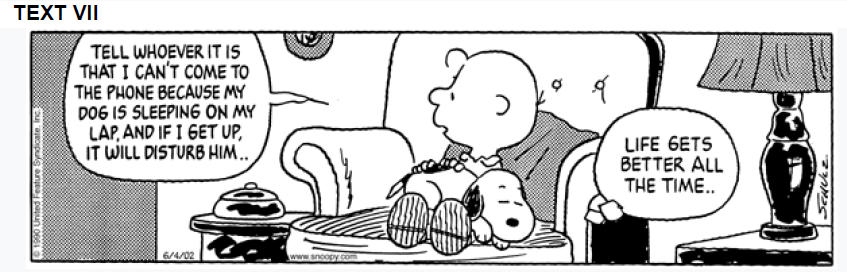
Read the two cartoons and answer questions.


Na oração “Your teacher told me that you’re having trouble…”, os verbos em negrito estão nos mesmos tempos verbais que os da alternativa:
Alternativas
Q1798468 Inglês
TEACHING GRAMMAR IN THE POST COMMUNICATIVE APPROACH ERA
D I A N A B A U D U C C O

   Grammar. To teach or not to teach? This has been the question that language teachers have asked themselves for ages. It has been a matter of debate for teachers, linguists and second language acquisition experts.
   Historically, language teaching approaches and methods have moved from one extreme of the spectrum to another as regards the explicit teaching of grammar. Long before our times, grammar was at the centre of language teaching, as it was believed that the study of the grammar of X‟s language was the best way to its mastery. So, from medieval times till around the 1970s, the fixation of language teaching on the study and description of structures manifested in approaches such as the Grammar Translation and the Audio Lingual method, with short interludes of the other approaches such as the Direct Method, Total Physical Response and the Silent way which although claiming to differ still based their syllabus on grammar points.
   From the Grammar-dominated end of the spectrum, we moved to the Absolutely-noGrammar end. Grammar based approaches proved inadequate in that students were unable to communicate outside the classroom. Based mainly on Hymes‟ “communicative competence” and Krashen‟s models of language acquisition, the Communicative Approach emerged as the meaning-focused alternative to the formfocused approaches of the past. Strong versions of the approach emphasized the teaching of functions and absolutely discouraged the teaching of grammar structures arguing that communication – and not language description- was the aim of language teaching.
   However, the studies of the last 30 years have proved that the lack of grammar instruction has not encouraged language acquisition. On the contrary, more recent studies show that grammar instruction and explicit knowledge of the target language do have positive effects on language acquisition. So, how should we approach the teaching of Grammar in the Post- CommunicativeApproach Era?

Source: https://www.eflmagazine.com/teachinggrammar-post-communicative-approach-era/ Accessed on 17/06/2018
(Concurso Milagres/2018) In the clause that language teachers have asked themselves for ages, the verbal form is in the:
Alternativas
Q1784414 Inglês

A Brief and Simplified Description of Papermaking


The paper we use today is created from individual wood fibers that are first suspended in water and then pressed and dried into sheets. The process of converting the wood to a suspension of wood fibers in water is known as pulp making, while the manufacture of the dried and pressed sheets of paper is formally termed papermaking. The process of making paper has undergone a steady evolution, and larger and more sophisticated equipment and better technology continue to improve it.


The Wood yard and Wood rooms


The process at Androscogging began with receiving wood in the form of chips or of logs 4 or 8 feet in length. From 6 AM to 10 PM a steady stream of trucks and railroad cars were weighted and unloaded. About 40 percent were suplied by independents who were paid by weight their logs. The mill also received wood chips from lumber mills in the area. The chips and logs were stored in mammoth piles with separate piles for wood of different species (such as pine, spruce, hemlock).


When needed, logs were floated in flumes......(1).....the wood yard.....(2).....one of the mill’s three wood rooms. There, bark was rubbed......(3)........in long, ribbed debarking drums by tumbling the logs against one another. The logs then fell into a chipper;......(4)......seconds a large log was reduced to a pile of chips approximately 1 inch by 1 inch by 1/4 inch.


The chips were stored in silos. There were separate silos for softwoods (spruce, fir, hemlock, and pine) and hardwoods (maple, oak, beech, and birch). This separate and temporary storage of chips permitted the controlled mixing of chips into the precise recipe for the grade of paper being produced.


The wood chips were then sorted through large, flat vibrating screens. Oversized chips were rechipped, and ones that were too small were collected for burning in the power house. (The mill provided approximately 20 percent of all its own steam and electricity needs from burning waste. An additional 50 percent of total electricity needs was produced by harnessing the river for hydroelectric power.)


Once drawn from the silo into the digesters, there was no stopping the flow of chips into paper. 


Pulpmaking


The pulp made at Androscoggin was of two types: Kraft pulp (produced chemically) and ground wood pulp (produced mechanically). Kraft pulp was far more important to the high quality white papers produced at Androscoggin, accounting for 80 percent of all the pulp used. Kraft pulp makes strong paper. (Kraft is German for strength. A German invented the Kraft pulp process in 1884.) A paper’s strength generally comes from the overlap and binding of long fibers of softwood; only chemically was it initially possible to separate long wood fibers for suspension in water. Hardwood fibers are generally smaller and thinner and help smooth the paper and make it less porous.


The ground wood pulping process was simpler and less expensive than the Kraft process. It took high quality spruce and fir logs and pressed them continuously against a revolving stone that broke apart the wood’s fibers. The fibers, however, were smaller than those produced by the Kraft process and, although used to make newsprint, were useful at Androscoggin in providing “fill” for the coated publication gloss papers of machines 2 and 3, as will be described later.


(A)The chemical Kraft process worked by dissolving the lignin that bonds wood fibers together. (B) It did this in a tall pressure cooker, called a digester, by “cooking” the chips in a solution of caustic soda (NaOH) and sodium sulfide (Na2S), which was termed the “white liquor.” (C)The two digesters at Androscoggin were continuous digesters; chips and liquor went into the top, were cooked together as they slowly settled down to the bottom, and were drawn off the bottom after about three hours. (D) By this time, the white liquor had changed chemically to “black liquor’’; the digested chips were then separated from this black liquor. (E)


In what was known as the “cold blow” process, the hot, pressurized chips were gradually cooled and depressurized. A “cold liquor’’ (170°F) was introduced to the bottom of the digester and served both to cool and to transport the digested chips to a diffusion washer that washed and depressurized the chips. Because so much of the lignin bonding the fibers together had been removed, the wood fiber in the chips literally fell apart at this stage.


The black liquor from the digester entered a separate four-step recovery process. Over 95 percent of the black liquor could be reconstituted as white liquor, thereby saving on chemical costs and significantly lowering pollution. The four-step process involved (1) washing the black liquor from the cooked fiber to produce weak black liquor, (2) evaporating the weak black liquor to a thicker consistency, (3) combustion of this heavy black liquor with sodium sulfate (Na2SO4 ), and redissolving the smelt, yielding a “green liquor” (sodium carbonate + sodium sulfide), and (4) adding lime, which reacted with the green liquor to produce white liquor. The last step was known as causticization.


Meanwhile, the wood-fiber pulp was purged of impurities like bark and dirt by mechanical screening and by spinning the mixture in centrifugal cleaners. The pulp was then concentrated by removing water from it so that it could be stored and bleached more economically.


By this time, depending on the type of pulp being made, it had been between 3 1/2 and 5 hours since the chips had entered the pulp mill. 


All the Kraft pulp was then bleached. Bleaching took between 5 and 6 hours. It consisted of a three-step process in which (1) a mix of chlorine (Cl2 ) and chlorine dioxide (CIO2 ) was introduced to the pulp and the pulp was washed; (2) a patented mix of sodium hydroxide (NaOH), liquid oxygen, and hydrogen peroxide (H2 O2 ) was then added to the pulp and the pulp was again washed; and (3) chlorine dioxide (ClO2 ) was introduced and the pulp washed a final time. The result was like fluffy cream of wheat. By this time the pulp was nearly ready to be made into paper.


From the bleachery, the stock of pulp was held for a short time in storage (a maximum of 16 hours) and then proceeded through a series of blending operations that permitted a string of additives (for example, filler clay, resins, brighteners, alum, dyes) to be mixed into the pulp according to the recipe for the paper grade being produced. Here, too, “broke” (paper wastes from the mill itself) was recycled into the pulp. The pulp was then once again cleaned and blended into an even consistency before moving to the papermaking machine itself.


It made a difference whether the broke was of coated or uncoated paper, and whether it was white or colored. White, uncoated paper could be recycled immediately. Colored, uncoated paper had to be rebleached. Coated papers, because of the clays in them, could not be reclaimed.



In the sentence “The process of making paper has undergone a steady evolution…”, the word “making” is being used in the:
Alternativas
Q1750018 Inglês
“Carl Uris ___________________________ really fast, but he gets very annoyed at distracted drivers when he's off the track.” Choose the option which expresses correctly that the subject is accustomed to something.
Alternativas
Q1750014 Inglês
“Photographer captures bittersweet spirit of a dog who has been living in a park for 13 years.” The underlined verb tense expresses:
Alternativas
Q1727363 Inglês
READ THE FOLLOWING TEXT CAREFULLY, AND THEN CHOOSE THE ALTERNATIVE THAT BEST COMPLETES THE STATEMENTS BELOW, ACCORDING TO THE TEXT. 

Mrs Parker died suddenly in October. She and Mr Parker lived in a Victorian house next to ours, and Mr Parker was my piano teacher. He commuted to Wall Street, where he was a securities analyst, but he had studied at Juilliard and gave lessons on the side – for the pleasure of it, not for money. His only students were me and the church organist.
The word “tragic” was mentioned in connection with her death. She and Mr Parker were in the middle of their middle age, and neither of them had ever been seriously ill. It was heart failure, and unexpected. My parents went to see Mr Parker as soon as they got the news, since they took their responsibilities as neighbours seriously, and two days later they took me to pay a formal condolence call. 
I loved the Parkers’ house. It was a Victorian house, and was shaped like a wedding cake. The living-room was round, and all the walls curved. The third floor was a tower. Every five years the house was painted chocolate brown, which faded gradually to the colour of weak tea. The front-wall window was a stained-glass picture of a fat baby holding a bunch of roses.
On Wednesday afternoons, Mr Parker came home on an early train, and I had my lesson. Mr Parker’s teaching method never varied. He never scolded or corrected. The first fifteen minutes were devoted to a warm-up in which I could play anything I liked. Then Mr Parker played the lesson of the week. His playing was terrifically precise, but his eyes became dreamy and unfocused. Then I played the same lesson, and after that we worked on the difficult passages, but basically he wanted me to hear my mistakes. After that, we sat in the solarium and discussed the next week’s lesson. Mr Parker usually played a record and talked in detail about the composer, his life and times. Mrs Parker used to leave us a tray of cookies and lemonade, cold in the summer and hot in the winter. When the cookies were gone, the lesson was over and I left, passing the Victorian child in the hallway. 

(COLWIN, Laurie. Mr Parker. In: PIERCE, Tina and COCHRANE, Edward (eds.). Twentieth century English short stories. London: Bell & Hyman, 1979, p. 48-9. Adapted.)

The verbal tense in “He had studied at Juilliard” is
Alternativas
Q1631991 Inglês
Find the alternative that shows a Present Continuous tense.
Alternativas
Q1627583 Inglês

If we rewrite the sentence below in the Present Continuous we’ll have:


“Fergie bought new shoes.”

Alternativas
Q1343019 Inglês

 News trom China


Outcry as Chinese school makes iPads compulsory


Apple produets are incredibly popular in China, but not everyone can afford them A school in northern China has been criticised for enforcing iPad learning as part of its new curriculum, it's reported.


According to China Economic Daily, the Danfeng High School in Shaanxi province recently issued a notice saying that, “as part of a teaching requirement, students are required to bring their own iPad” when they start the new school year in September. Stafftold the paper that using an iPad would “improve classroom efficiency”, and that the school would manage an internet firewall, so that parents would not have to worry about students using the device for other means.

However, China Economic Daily says that after criticism from parents, who felt that it would be an “unnecessary financial burden”, headmaster Yao Hushan said that having an iPad was no longer a mandatory requirement. Mr Yao added that children who don't have a device could still enrol, but that he recommended students bring an iPad as part of a “process of promoting the digital classroom”.

The incident led to lively discussion on the Sina Weibo social media platform. “Those parents that can't afford one will have to sell a kidney!” one user quipped.

Others expressed concerns about the health implications of long-term electronic device use. “I worry about their Vision,” one user said, and another said they would all become “short-sighted and have to wear glasses.”

But others felt that it was a good move in line with new modem ways of teaching. “They are affordable for the average family,” one said, “they don't necessarily need to buy the latest model.”

Reporting by KerryAllen

Taken from: www.bbc.com/news/blogs-news-from-elsewhere

Choose the option that completes the sentence below correctly.

The parents would like:

Alternativas
Q1110374 Inglês
Fill in the blanks with the appropriate active and passive verb forms (present simple, present continuous, past simple, past continuous, past perfect). Julius ________ (buy) an engagement ring to surprise his girlfriend, but it _______ (steal) from him when he _________ (leave) the establishment. He ________ (go after) the thief, who - he found out later - __________ (tell) to rob him. It was his girlfriend all along: she ________ (discover) about his plans and __________ (decide) to make a bigger surprise before him!
Alternativas
Q843171 Inglês
In the sentence of Text I “Today the importance of oil to the economy is still diminishing” (lines 57-58), the verb form is diminishing indicates
Alternativas
Ano: 2016 Banca: FEPESE Órgão: Prefeitura de São José - SC
Q1185254 Inglês
The words in bold in the following sentence: ”…preferred heating and cooking with wood.”, are being used as examples of:
Alternativas
Respostas
41: B
42: A
43: D
44: C
45: C
46: B
47: D
48: E
49: C
50: C
51: B
52: D
53: C
54: B
55: B
56: D
57: B
58: A
59: D
60: A